A piece placed beside a pool, fountain or reflecting basin has to satisfy three things before it ever reaches fabrication: it needs to hold up visually in reflection, drain properly at its base, and have any lighting or pump wiring bonded and routed safely near the water. Skip one of these and the garden sculptures still get installed – they just come back with a fogged finish, a cracked footing, or a wiring detail an electrical inspector won’t sign off on, usually after the hardscape is already down and much harder to fix. At Pegasus, pieces destined for water features go through all three checks during design, not after a site visit flags them.
Why Does a Water Feature Change the Design Brief for a Sculpture?
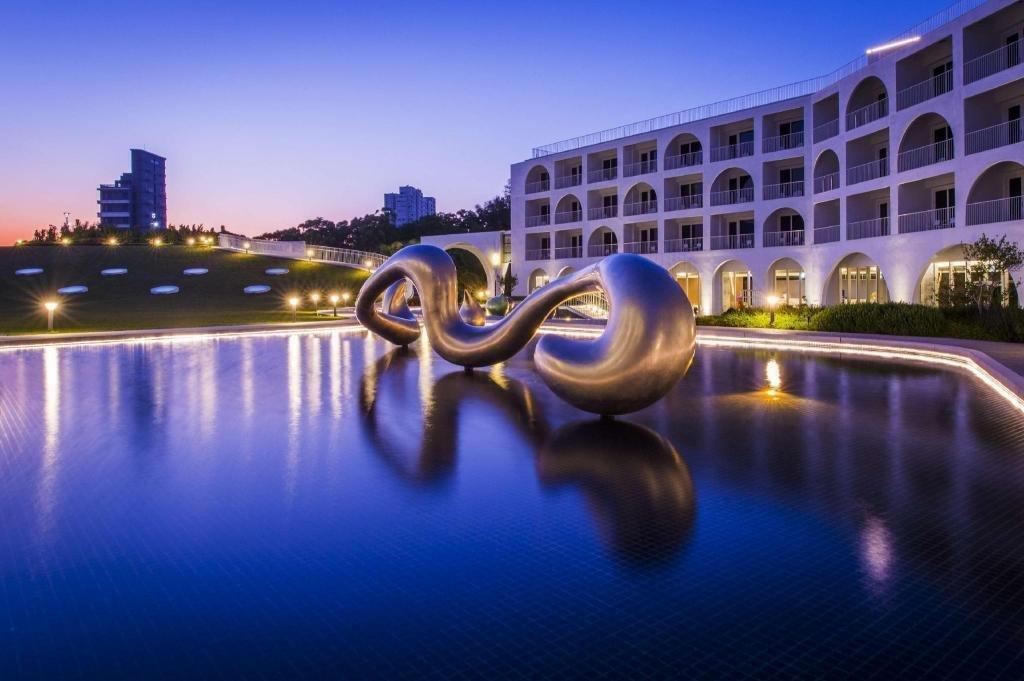
On open lawn, a sculpture mainly has to satisfy structural loading and finish tolerance. Move it next to water and the brief gets longer: water now has to be managed away from the piece rather than left to pool around it, any submerged or splash-zone metal needs electrical bonding, and the finish gets judged twice – once as an object, once as a mirror. Take a resort courtyard as an example. A centrepiece sculpture set into a reflecting pool has to look right from the lobby, from poolside loungers, and in the water itself, at three different times of day. That’s a different design problem than a lawn piece, and it’s usually the outdoor sculptures specified without this in mind that end up needing rework once the water feature contractor is on site.
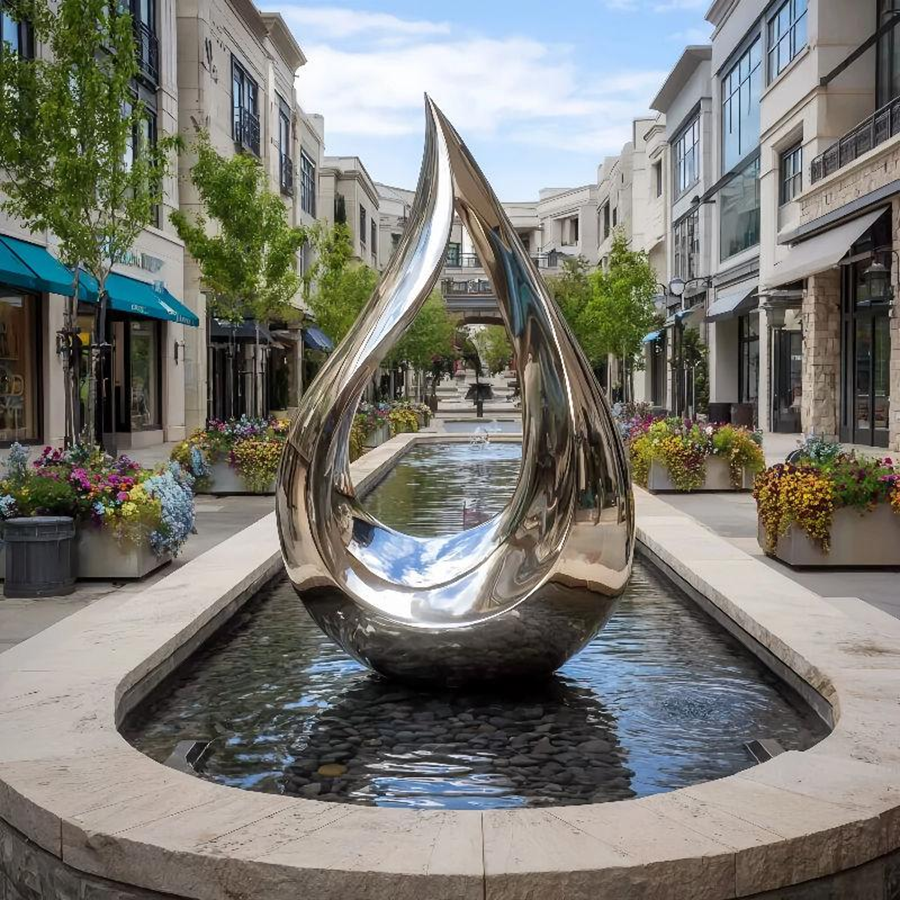
How Do Reflections Change Form, Finish and Placement?
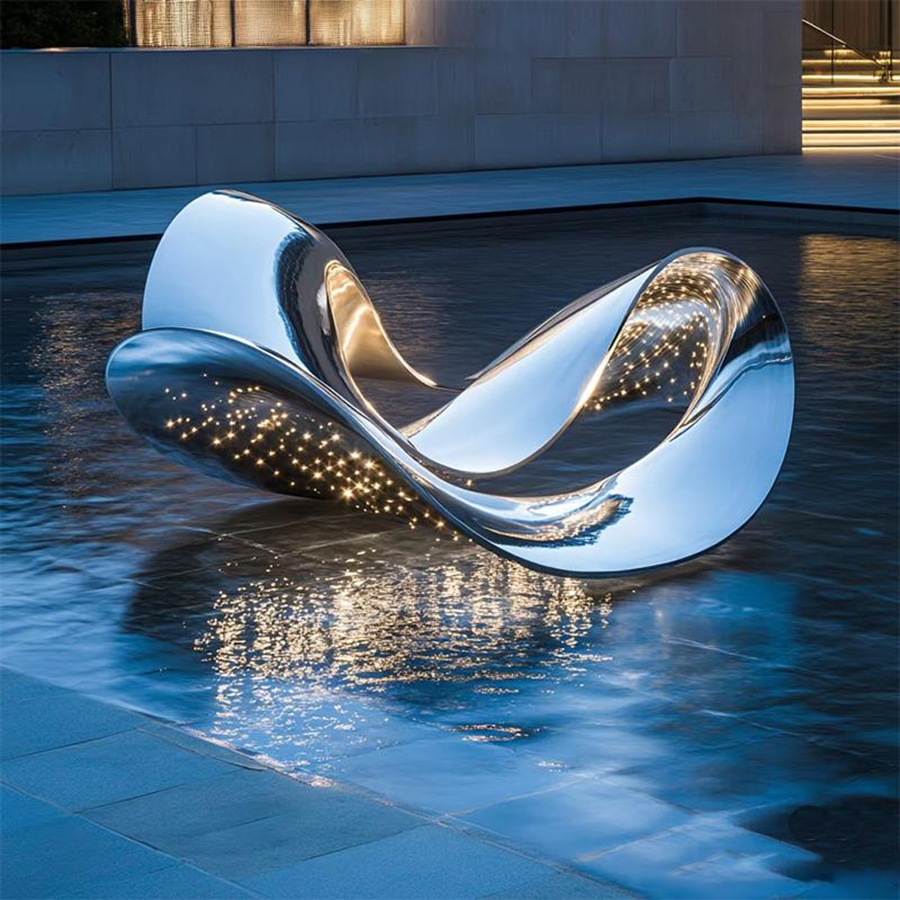
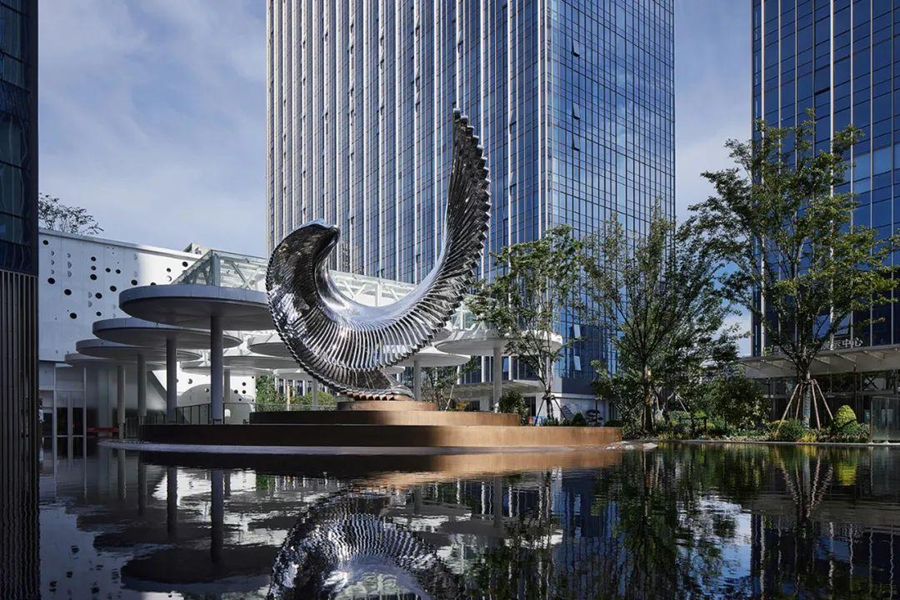
Water doubles a sculpture visually. The underside, the silhouette against the sky, and how negative space reads all matter more here than they would on a plinth in a garden bed. A highly polished piece will pick up sky, cloud movement and nearby planting – dramatic beside a still reflecting pool, but often too busy next to a fountain with constant surface disturbance, where the reflection breaks apart and competes with the sculpture’s own form. In moving water, a brushed or satin finish tends to hold a cleaner, more legible silhouette than a mirror polish, because there’s less mirrored surface for the disturbed water to break apart and scatter. That’s a difference in how the piece reads visually, not in how well it holds up over time – properly specified polished, brushed and satin stainless are all durable finishes near water; what changes with the water condition is which one is actually visible the way it was intended once the piece is installed. This is why Pegasus reviews the intended water condition – still, cascading or jetted – during design development, so the finish is approved for how it will actually be viewed, not just how it renders in a static concept image. One recurring example: a mirror-polished piece approved from a rendering next to a still pond can look completely different once installed beside an aerated fountain, because the constant ripple changes what the surface reflects. Catching that mismatch on paper costs nothing; catching it after fabrication means a second finishing pass.
For designers weighing this trade-off, the underlying question is less about which finish looks better and more about which one the water condition will actually let you see. That’s the practical reasoning worth putting in front of a client before a finish gets locked in – not just the aesthetic preference, but what the specific water feature will do to it.
What Drainage Details Have to Be Solved Before the Foundation Is Poured?
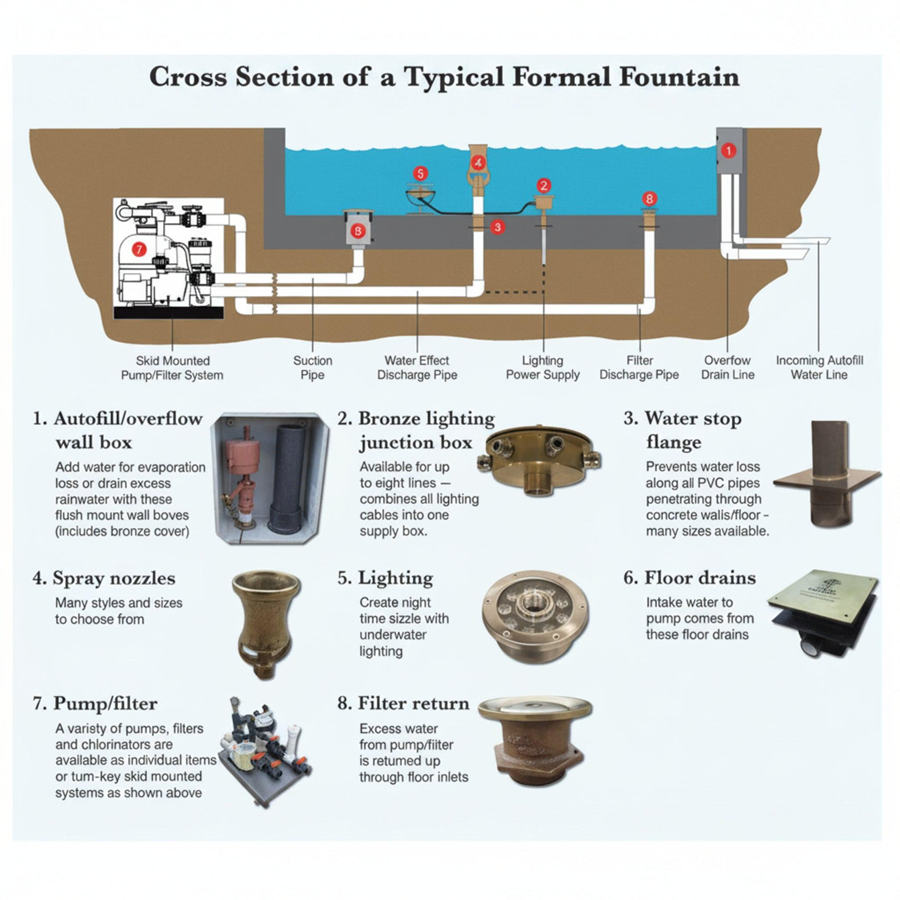
Drainage is the part of the brief that’s easiest to defer and the most expensive to fix afterward. Once a footing is set beside a basin, changing the grading around it usually means breaking out finished hardscape – paving, planting beds, sometimes irrigation lines that were never meant to be touched again. On a commercial site, that’s not a small change order; it can mean weeks of delay while the area is closed off. Before concrete is poured, four things need to be confirmed:
Water management at the footing: the objective is to keep splash and rain from pooling around the base of the garden sculptures and undermining it over time. Grading the surrounding paving or planting bed to fall away from the footing is the simplest way to do this where the site has room to fall; on tighter or flatter sites, a French or channel drain around the footing, a permeable sub-base layer, or a small sump and pump can achieve the same result instead. Which approach fits depends on the site’s grading, hardscape design and how close the footing sits to the water feature’s edge.
Overflow path: fountains and basins need a defined route for excess water during heavy rain, kept separate from the sculpture’s own drainage so the two systems don’t compete during a storm.
Footing waterproofing: any anchor plate or embedded bolt pattern near a wet zone needs a sealed interface, checked against the sculpture’s foundation and anchoring drawings rather than left for the site contractor to interpret on the day.
Material tolerance: coastal or high-humidity sites raise the bar on corrosion resistance for any submerged or splash-zone metal – a material decision, not a drainage one, but it’s usually caught late if it isn’t flagged here.
The cost of getting this wrong isn’t abstract. A footing that traps water instead of shedding it will eventually stain the base, loosen the anchor bond, or, in freeze-thaw climates, crack the surrounding paving. None of that shows up in the first year. It shows up in year three or four, once it’s the property’s maintenance budget carrying the cost instead of the project’s.
How Should Electrical Coordination Be Planned for Lit or Plumbed Sculptures?
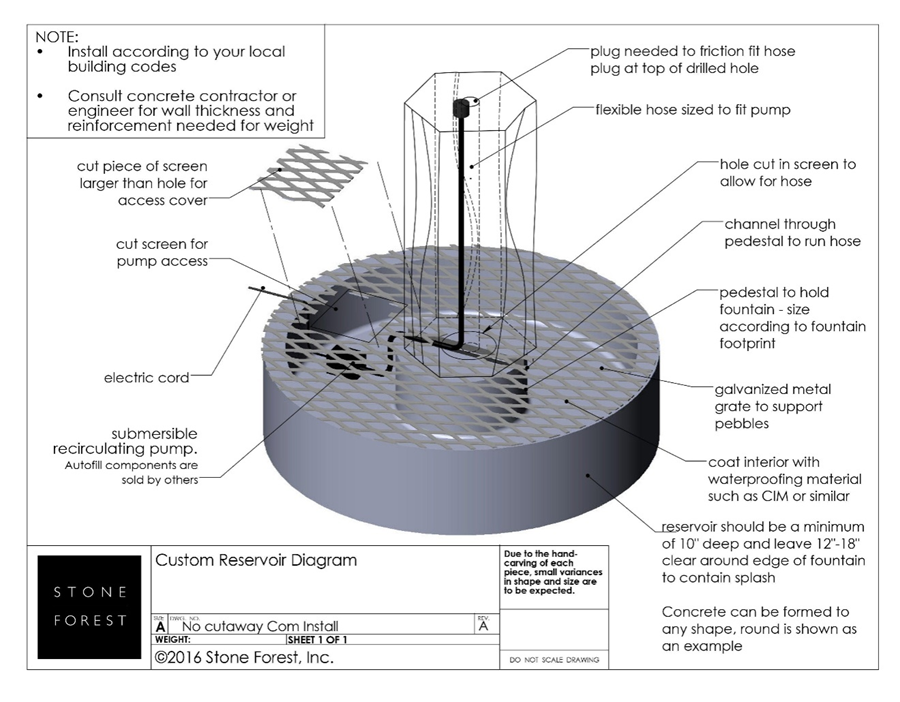
Sculptures that are illuminated, or that have water running through an internal channel, carry a genuine safety requirement: conductive metal components within the wet zone typically need to be electrically bonded, so no part of the assembly can sit at a different voltage potential than another. Exactly which components require bonding, and at what size or distance from the water, is set by the applicable local electrical code and varies by jurisdiction – a threshold drawn from one country’s swimming pool code shouldn’t be assumed to apply to a commercial water feature elsewhere. Rather than working from a fixed rule of thumb, bonding, grounding and RCD/GFCI requirements should be confirmed for each project by a licensed electrical professional against the local code, which on a full-scale metal garden sculptures installation often means treating the entire piece as within scope, not just the base. In practice, four coordination points are worth planning for regardless of jurisdiction:
Bonding and grounding: confirm which parts of the sculpture’s structure tie into the pool or fountain’s equipotential grid, and get it signed off by a licensed electrician – not assumed from the fabrication drawings alone.
Conduit routing: power and lighting cable should run through protected, weatherproof conduit specified before the base is poured, not surface-mounted afterward as a fix.
Fixture placement: uplights and concealed fixtures need to be positioned during design development, so cable runs don’t cross drainage paths or footing waterproofing later.
RCD/GFCI protection: outdoor circuits feeding the sculpture or its pump should sit on a dedicated, protected circuit, separate from general landscape lighting.
Pegasus coordinates these points with the client’s electrical and landscape consultants during engineering review, so lighting or plumbing routing is built into the sculpture’s internal structure rather than added as a retrofit once the piece is on site. The risk of skipping this step isn’t hypothetical – a fountain sculpture wired after installation, with conduit chased into finished paving, is one of the more common sources of change orders on hospitality projects, and it’s almost always avoidable with a single coordination call during design.
The right balance of reflection, drainage and electrical work shifts with the type of water feature involved. The table below is a starting point for scoping metal garden sculptures against a specific water condition before the design is finalised.
Water Feature Types and Their Coordination Needs
| Water Feature | Reflection Behaviour | Drainage Priority | Electrical Priority |
| Still reflecting pool | Sharp, mirror-like reflection | Moderate – stable water level | Low, unless lit at night |
| Cascading water wall | Broken, moving reflection | High – constant splash zone | Moderate – pump and lighting |
| Fountain with jets | Distorted, dynamic reflection | High – overflow and drift | High – bonding required |
| Plumbed-through sculpture | Minimal external reflection | High – internal + external drainage | High – bonding and conduit |
What Does This Look Like on an Actual Project?
A typical version of this problem runs like this. A resort or mixed-use development wants a centrepiece near the pool deck – something that reads well from the lobby, holds a reflection in the water below, and lights up at night. If the sculpture, the fountain, and the electrical scope are specified by three separate consultants without a shared drawing, the usual result is a piece that arrives on schedule but can’t be installed on schedule: the footing waterproofing wasn’t detailed against the anchor plan, the lighting conduit wasn’t roughed in before the paving went down, and the finish looks different in the aerated water than it did in the rendering. Fixing any one of those after the fact is manageable. Fixing all three at once, days before a soft opening, is the scenario early coordination is meant to prevent. This is the practical case for involving the sculpture manufacturer earlier than most project schedules assume – not because the fabrication itself takes longer, but because the footing, the bonding grid and the finish decision all depend on information usually locked in during landscape and MEP design. Once those drawings are final, changing any of the three gets expensive fast.
How Does Pegasus Coordinate Reflection, Drainage and Electrical Work Across One Project?
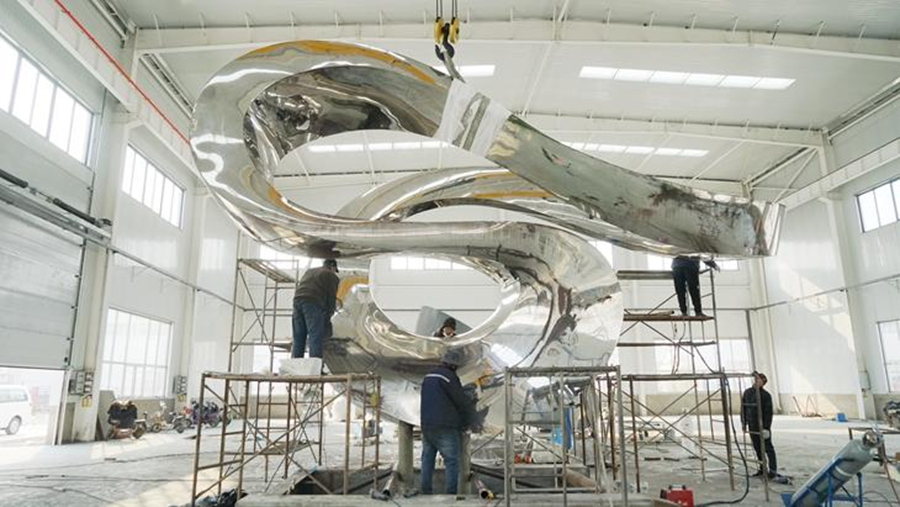
Pegasus treats water-feature integration as part of the same workflow used for every commission, rather than a separate site problem to solve after delivery: design review, structural and drainage engineering, fabrication, quality control, packaging and installation support run as one connected process. During design, the finish gets checked against the water condition. During engineering, footing and bonding requirements get confirmed against the architect’s drawings. During fabrication, welds and seams in splash zones get inspected to a tighter tolerance, because they’re harder to service once the piece is installed. For coastal or high-humidity sites, material specification is checked against the guidance covered in Pegasus’ coastal stainless steel material planning, and the finished piece ships with installation notes flagging the exact anchor and conduit positions the site team needs prepared in advance.
Long-term ownership cost is worth budgeting for at the same stage. A piece near water runs on a shorter cleaning and inspection cycle than one on dry lawn – algae, mineral deposits and splash residue accumulate faster than dust does – and it’s considerably easier to plan for that cost before installation than to discover it in year two. Pegasus’ lifecycle inspection and cleaning guidance covers what that schedule typically looks like. Architects and developers scoping a piece for a resort courtyard or hotel water garden can review Pegasus’ stainless steel sculpture range or bring site drawings to an early design conversation, so drainage and electrical requirements sit alongside the concept from the start instead of being resolved afterward. The same coordination scales whether the commission is a single reflecting-pool centrepiece or a series of outdoor sculptures placed through a resort’s water gardens – the design, drainage and electrical review doesn’t get repeated from scratch for each piece; it extends from the first one.
Frequently Asked Questions
Do all garden sculptures near water need electrical bonding?
Only if the piece is lit, plumbed, or has metal components sitting within the water feature’s splash or immersion zone. A sculpture set well back on dry paving, with no lighting run to it, typically won’t trigger bonding requirements – but that should be confirmed with the project’s electrician rather than assumed from the sculpture drawings.
Does the finish need to change for a sculpture placed beside moving water?
Not for durability – properly specified polished, brushed and satin stainless all hold up structurally near water. The difference is visual: next to a fountain or cascade, constant surface disturbance breaks a mirror polish into a busier reflection that can read as unfinished rather than intentional, while brushed or satin finishes hold a cleaner line under the same conditions. Beside a still reflecting pool, a mirror polish stays coherent and can be the stronger visual choice instead. Matching the finish to the water condition is worth reviewing during design, rather than assuming one finish is simply better than another.
Can an existing sculpture be relocated next to a new water feature?
Sometimes, but the original footing, drainage and material grade were most likely specified for a dry-land setting. Relocating a piece near water usually means re-evaluating anchor waterproofing and, in coastal or humid climates, the corrosion resistance of the base material – it isn’t just a matter of moving the piece.
Who is responsible for coordinating drainage between the sculpture and the water feature contractor?
This needs to be assigned explicitly in the project scope, ideally to the landscape architect or a single named point of contact, because it sits between two trades. Leaving it unassigned is one of the more common causes of on-site rework, and it’s an easy gap to close with one line in the coordination schedule.
How early should electrical requirements be shared with the sculpture manufacturer?
Before the footing is engineered. Conduit routing and bonding points need to be built into the internal structure and foundation drawings, which is far harder – and more expensive – to retrofit once the piece is cast or welded.
Conclusion
A sculpture beside water gets judged on more than its silhouette. The grading around it, the bonding on its metal, and how well it holds a reflection all become part of how the piece performs over years, not just how it photographs on day one. Resolving reflection, drainage and electrical coordination together, early in design, is what separates a water-feature centrepiece that still looks sharp five years on from one that needs early rework and an unplanned line item in someone’s maintenance budget. If you’re planning garden sculptures for a courtyard pool, resort water garden or fountain plaza, get in touch with the Pegasus team early with your site and water-feature drawings, so these details are built into the design from the start rather than solved on site.