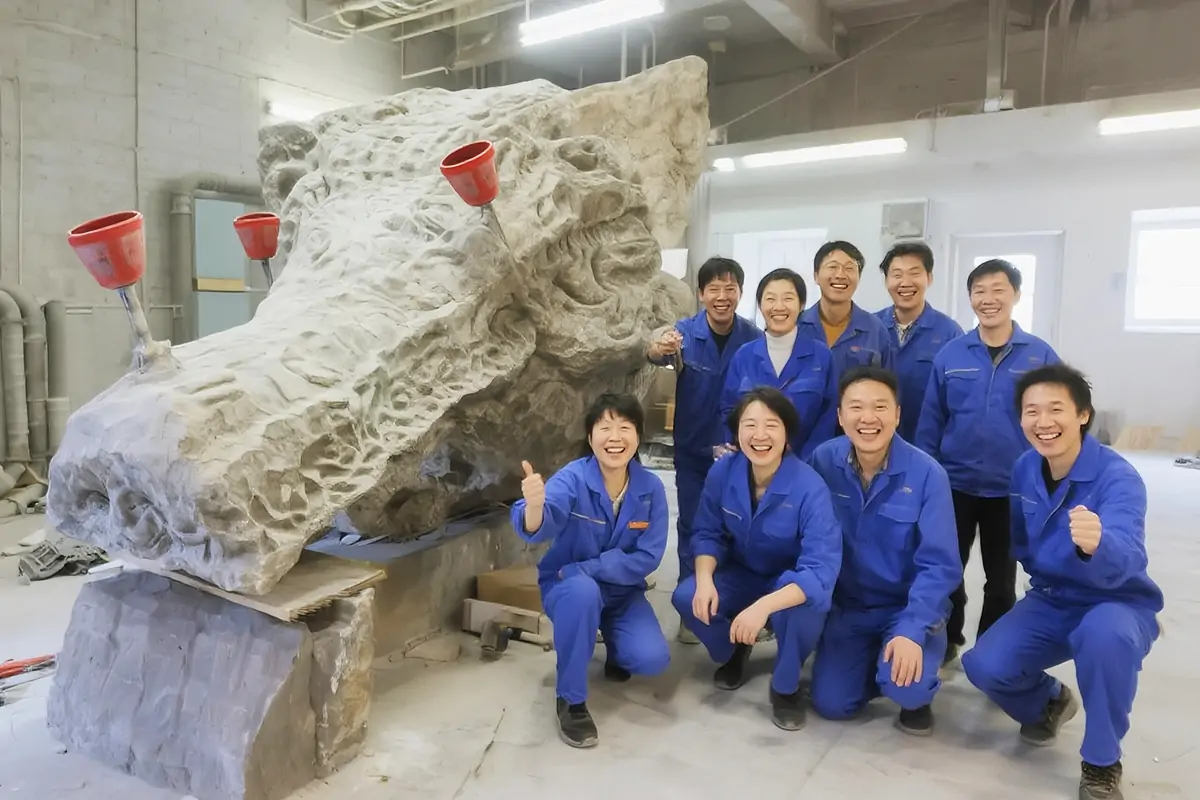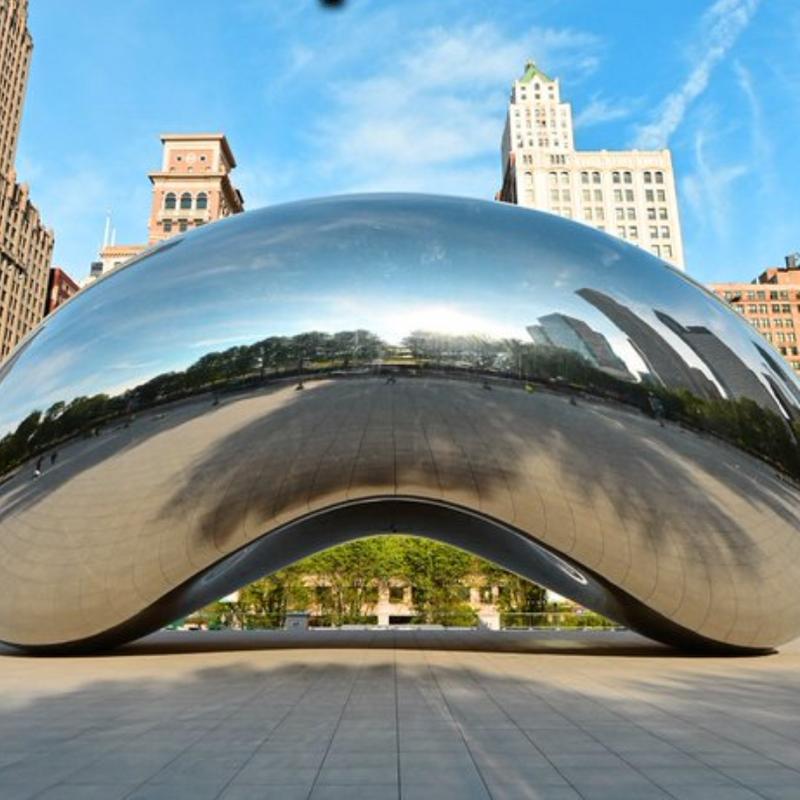
A mirror-polished stainless steel sculpture avoids visual distortion when buyers make three decisions before fabrication: approving the panel layout, approving the weld-seam plan, and approving a reflection test on a physical sample under real site light. These aren’t approvals to leave to the fabricator alone – each one shapes how the finished piece performs on your site, and catching an issue at this stage costs a signature, while catching the same issue after installation costs a re-fabrication. Skip any one of these, and even a technically flawless polish can read as wavy or “funhouse-mirror” once the piece is standing in full sun. This is the approval sequence Pegasus walks architects, developers, and procurement teams through before a single sheet of steel is cut – along with the finish decisions and delivery details that go with it – and it’s worth knowing before you sign off on any abstract metal sculpture destined for a lobby, plaza, or waterfront site.
What Actually Causes Distortion in a Mirror Finish?
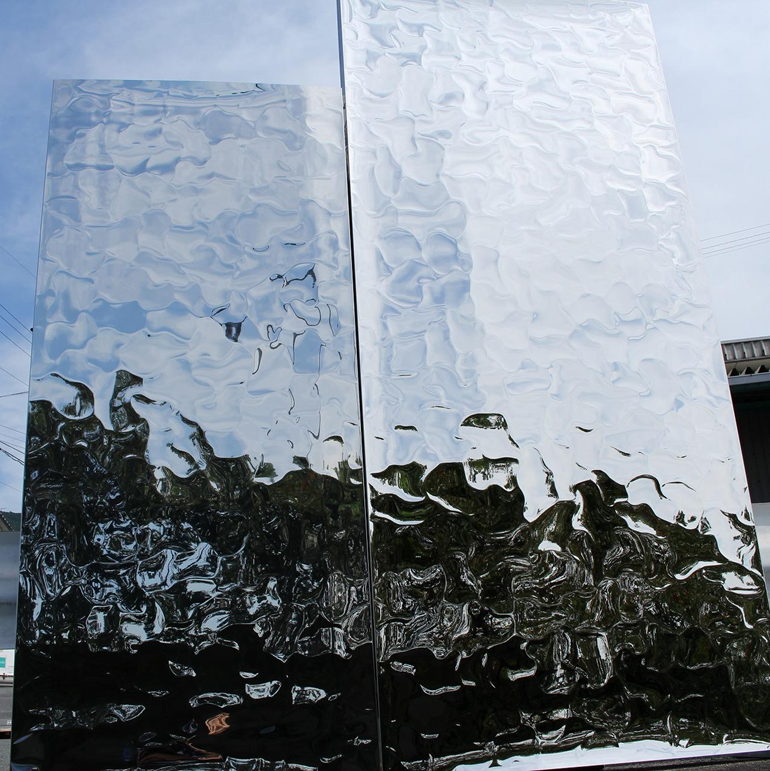
Distortion rarely comes from bad polishing alone. It usually starts earlier, during forming and welding, when small inconsistencies get locked into the metal before anyone has touched a buffing wheel. A panel that’s been hand-hammered slightly out of plane will still take a bright shine, but its reflection will ripple. A weld seam that’s ground down unevenly leaves a shadow line that no amount of polishing compound will erase. Even sheet thickness matters: thin gauge steel flexes under its own weight and against wind load, and that flex shows up instantly in a reflective surface the way a dent shows up on a car door. It’s a risk that applies to outdoor metal sculptures generally, but a mirror finish makes any inconsistency impossible to hide.
This is why reflection accuracy has to be engineered, not just finished. At Pegasus, forming begins with CNC laser cutting held to roughly 0.5mm tolerance, so every panel that reaches the welding stage already fits the intended curvature instead of being coaxed into shape afterward. That single decision, made weeks before polishing starts, has more influence on the final reflection than the polishing sequence itself. For a buyer, the practical takeaway is simple: the earlier a forming or welding issue is caught, the cheaper it is to fix. Reworking a panel that’s out of plane costs a fraction of what it costs to correct – or remake – a finished, welded, and polished piece.
Mirror Polish or Brushed Finish: How Do You Decide?
Not every project calls for a mirror finish, and choosing one because it looks striking in a render can create problems a buyer only discovers after installation. The right finish depends on where the sculpture sits, how close people get to it, and how much upkeep the site can commit to.
Mirror polish makes sense when the reflection is part of the design intent – a plaza piece meant to catch the sky and surrounding buildings, or a lobby centerpiece viewed up close under controlled lighting. It also demands the most from ongoing maintenance: fingerprints, water spots, and light scratches show immediately on a mirror surface, so it suits sites with a cleaning routine already in place, or applications where routine wiping is realistic.
Brushed or satin finishes hold up better in high-traffic areas where the surface gets touched often, and they’re more forgiving of minor handling marks during installation. They also come with a shorter production timeline, since they skip the multiple compound-buffing passes a mirror finish needs. For sculptures viewed mostly from a distance – a highway median, a large public park – the visual difference between a mirror and a fine satin finish is often smaller than buyers expect, which makes satin the more practical choice when budget or lead time is tight.
| Finish | Best For | Maintenance Needs | Typical Lead-Time Impact |
| Mirror Polish | Close-viewing feature pieces; plazas and lobbies where reflection is part of the design | High – fingerprints, water spots, and scratches are highly visible | Longest – multiple polishing passes |
| Satin / Brushed | High-traffic or high-touch sites; sculptures viewed from a distance | Moderate – handling marks blend into the finish | Shorter – fewer finishing passes |
| Matte / Bead-Blasted | Budget- or timeline-driven projects; textured design intent | Low – resists visible marking | Shortest |
Buyers who ask Pegasus for a finish recommendation get an answer based on site conditions and the maintenance plan – not on which finish is easiest to fabricate.
How Do Panel Transitions Affect Reflection Accuracy?
Most buyers spot problems first at the seams, not the open panel surfaces. It’s actually the easiest place to check quality before you approve anything. If a transition is done right, you won’t see it – the reflected skyline just continues, no break, no bend, no step where one plate meets the next. That takes full-penetration TIG welding instead of spot welding, then grinding and blending the seam so it goes through the same polishing steps as the panel around it. Skip that last part and you’ll see a faint line even after the weld itself looks clean.
Pegasus builds this into its production workflow rather than treating it as a finishing afterthought: welders work from a shared digital model so panel curvature is matched before assembly, and every weld seam goes through the same multi-stage abrasive polishing – sanding progressively through finer grits, then compound buffing – used on the open panel surfaces. The goal is a stainless steel sculpture where a client can stand at the seam line and not tell where one plate ends and the next begins.
Approving the seam map before the first weld – rather than reviewing it after the panels are joined – is what keeps this stage from turning into a second trip through the shop. A seam that needs to be reground and repolished after final assembly adds weeks a buyer usually didn’t budget for.
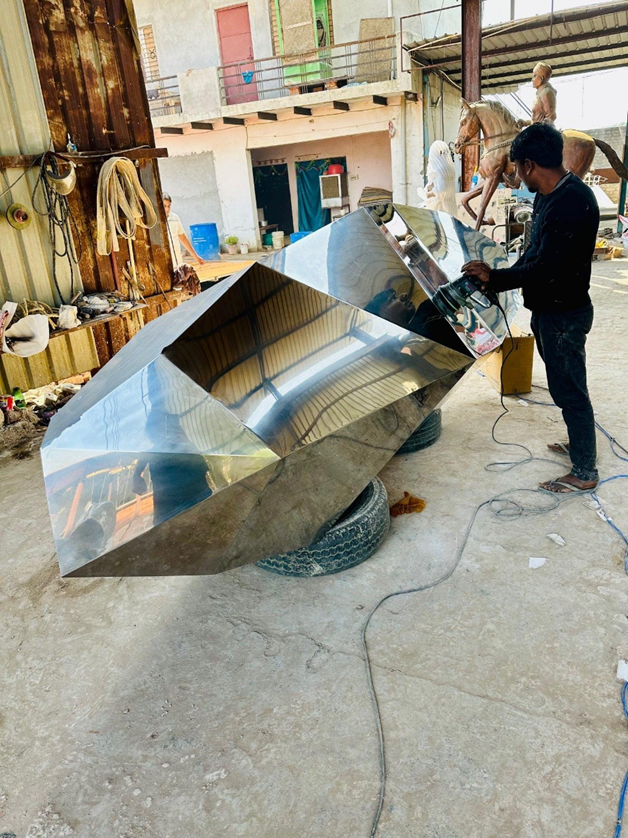
What Should Buyers Approve and Decide Before Fabrication Begins?
Before production starts, ask your manufacturer to walk you through – and formally sign off on – the following. Each one is a decision point where the buyer’s input changes the outcome, not just a technical checkbox to initial:
- A finish sample – a flat or curved test panel polished to the exact grit sequence proposed for the final piece, viewed under both daylight and artificial lighting
- The panel and seam map – a drawing showing exactly where welds will fall relative to the sculpture’s most visible viewing angles
- Material grade confirmation – 316L for coastal or high-humidity sites, 304 for sheltered inland locations, backed by a material test certificate
- A reflection mock-up or render – showing how nearby buildings, water features, or landscaping will appear in the finished surface
- Structural tolerance figures – cutting and forming tolerances in writing, not just verbally confirmed
- Finish selection matched to the site and maintenance plan – mirror, satin, or matte, decided against how the sculpture will actually be viewed and maintained, not just how it renders
- Installation and handling responsibilities – confirmed in writing so it’s clear who protects the polished surface between delivery and final placement
- A maintenance plan appropriate to the finish – agreed before delivery, so upkeep doesn’t become a surprise cost
Skipping the physical sample is the single most common reason buyers are surprised by the finished sculpture. A rendering can suggest a mirror finish; only a polished sample under real light can confirm one. Approving each of these points before fabrication is what keeps a project on schedule – most delays and rework trace back to a decision that was assumed rather than confirmed in writing.
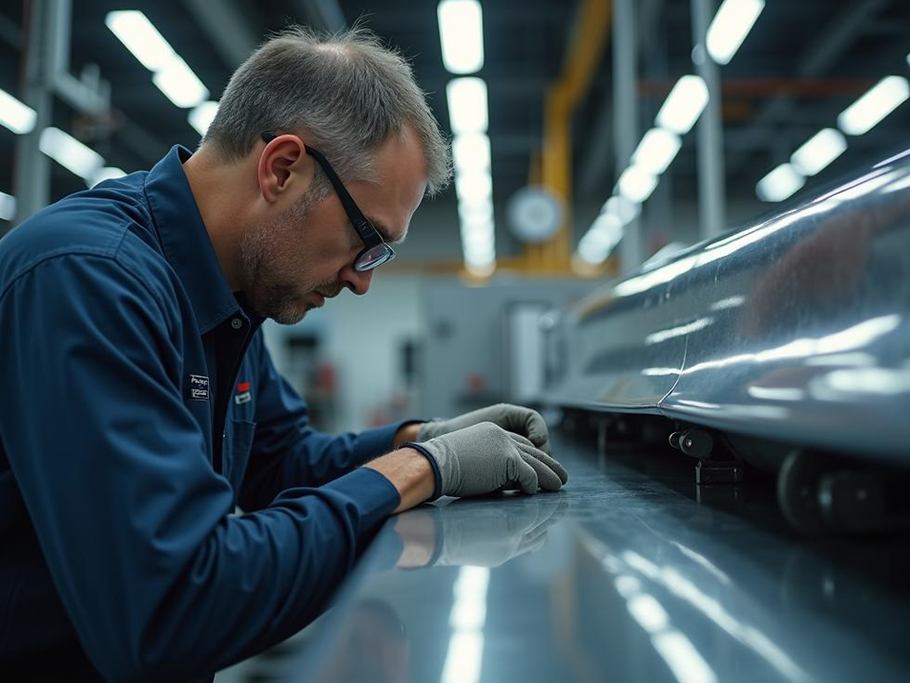
Reflection Verification Methods, Compared
Buyers don’t need to choose just one of these – most projects use several at different stages, and knowing which one answers which question keeps the approval timeline moving instead of stalling on rework.
| Method | What It Confirms | Best Used When |
| Digital render | General form, proportion, colour | Early concept approval |
| Flat test panel | Achievable gloss level, grit quality | Before ordering full material |
| Curved mock-up section | Reflection behaviour on the actual geometry | Complex or organic sculptural forms |
| On-site light walk | How reflections shift across the day | Final approval before shipping |
How Does Pegasus Verify Reflection Quality Before Delivery?
Quality control happens at more than one stage, not only at the very end. Panels are checked for flatness before welding, seams are inspected under raking light to catch shadow lines while they can still be corrected, and the completed sculpture is examined under both natural daylight and artificial lighting before packaging – the same two conditions the client will actually experience on site. PMI testing confirms the alloy composition matches the specification on the material certificate, so buyers aren’t relying on a visual guess about grade. For coastal projects, that verification step matters as much as the finish itself, since 316L and 304 look identical off the shelf but perform very differently after a few seasons of salt exposure. For buyers, the value isn’t the inspection itself – it’s that a flaw caught at the panel stage costs a re-polish, while the same flaw caught after packaging costs a shipping delay and an on-site repair. Multi-stage inspection is what keeps quality consistent without adding time to the schedule.
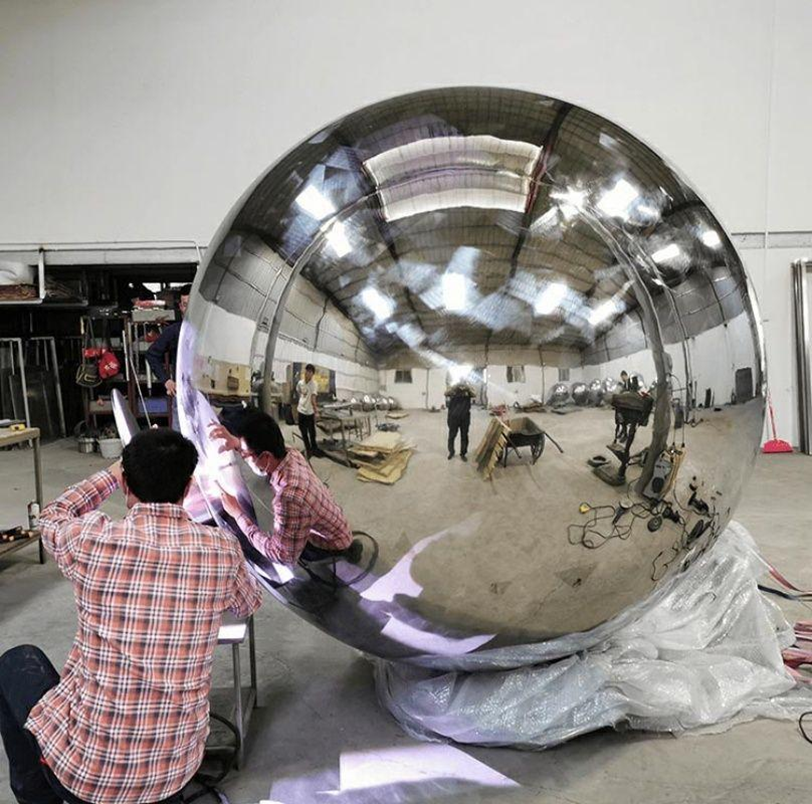
Pegasus as Your Project Partner: Support Beyond Fabrication
Buyers of a mirror-polished sculpture are rarely just buying a finished object – they’re managing a project with dependencies on architects, site contractors, and installation crews. Pegasus works alongside that team rather than handing over a crate and stepping back.
That support starts before production, confirming panel layout, seam location, and finish sample sign-off against the actual site drawings rather than a generic render. During production, buyers get inspection updates at the panel, weld, and polish stages instead of a single report at the end, so any issue surfaces while it’s still cheap to correct. Before shipping, Pegasus handles packaging specific to a reflective surface – the padding and crating that prevent a scratch a general freight carrier’s standard packaging wouldn’t catch – and coordinates delivery timing with the buyer’s installation schedule, so the sculpture doesn’t sit exposed on site waiting for a crew.
For procurement teams juggling multiple vendors on one project, this single point of contact is often the difference between a smooth delivery and a sculpture that arrives before the site is ready to protect it.
What Documentation Should Buyers Request From the Manufacturer?
A manufacturer confident in its own quality control will hand this over without being pushed:
- Material test certificates confirming alloy grade and thickness
- Photographs of the panel and seam layout prior to polishing
- Finish inspection records from the final quality check
- Structural engineering drawings covering wind-load performance and the internal support frame
- Packaging specifications describing how the polished surface is protected during transit – a detail that matters more for shipped metal sculptures than for almost any other export category, given how easily a scratch shows on a reflective surface
Buyers evaluating Pegasus’ broader stainless steel sculpture capabilities can review completed installations to see how these approvals translate into finished results across different site conditions and viewing distances.
Frequently Asked Questions
1. How long does mirror polishing take on a large-scale piece?
Longer than most people expect. Curved or complex geometry often needs two or three polishing passes, which can add several weeks versus a brushed finish.
2. If it gets scratched after installation, can that be fixed on site?
Light marks, yes – a quick buff usually does it. Deeper scratches need re-polishing that section, so good packaging during shipping matters more than people think.
3. Does a mirror finish hold up in every climate, or are there limits?
It comes down to the alloy. Coastal or humid sites need 316L; inland, 304 is usually fine. Get the grade wrong and it’ll pit eventually, no matter how well it’s polished.
4. Will a mirror-polished sculpture show fingerprints or water spots?
Yes, to some degree, though routine cleaning with a mild detergent and a soft cloth keeps the surface looking clean without damaging the finish.
5. How do I know if a supplier’s sample will match the final sculpture?
Ask for the sample to be polished using the exact same grit sequence and equipment planned for full production, and request that it be reviewed under the lighting conditions closest to your actual site.Before You Approve Fabrication
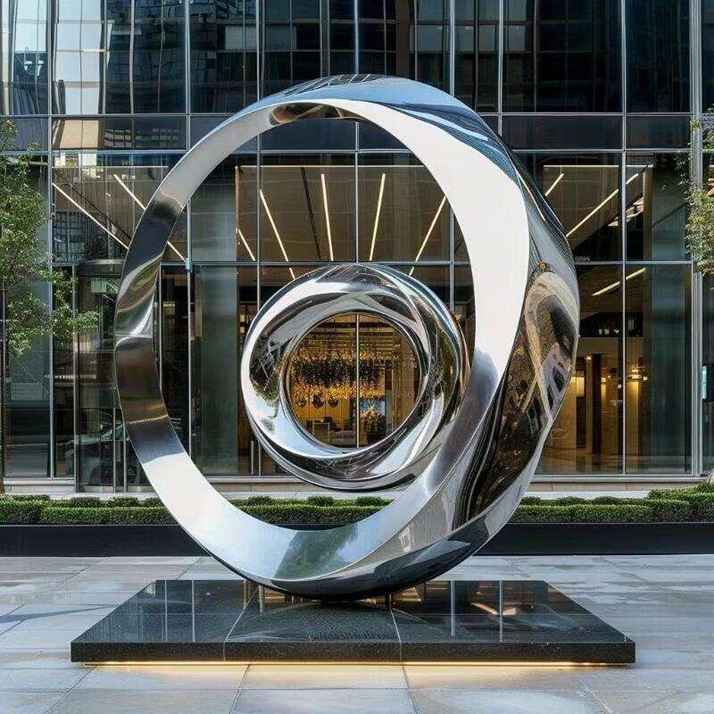
A distortion-free mirror finish isn’t the result of one skilled polisher working harder. It’s the outcome of decisions made at forming, welding, and quality control, each one checked before the next stage begins. Buyers who ask to see a physical finish sample, a seam map, and material certification before signing off tend to get the result they expected; those who approve from a render alone sometimes don’t.
If you’re planning a mirror-polished stainless steel sculpture or a broader abstract metal sculpture commission, Pegasus can walk you through sample approval, panel layout, and material certification before fabrication begins – reach out to discuss your project and site conditions.