A Photo Landmark Has a Different Job From Background Scenery
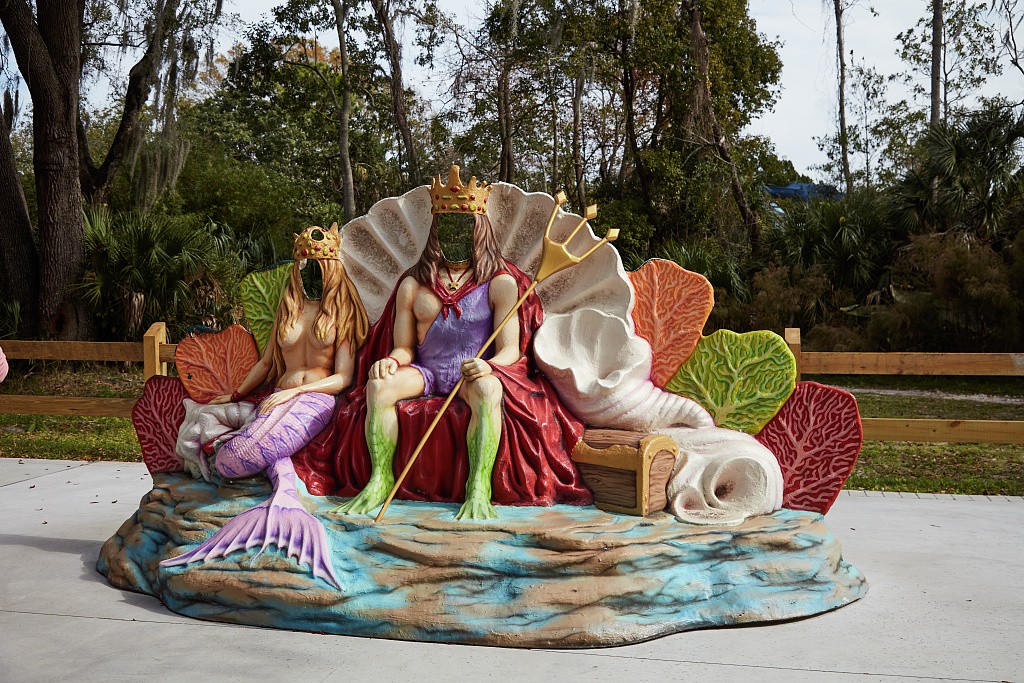
An attraction can contain beautifully made themed figures and still lack one place visitors instinctively choose for a photograph. Background scenery builds atmosphere; a photo landmark gives guests a clear subject, a place to stand and a visual reminder of the destination. For creative teams commissioning fiberglass statues, those are different design briefs.
Imagine a wildlife-themed family attraction. A detailed animal statue beside a pathway may enrich the setting, but a visitor photograph could show mostly pavement, fencing and other guests. A purpose-designed landmark instead places the character and the family within one recognizable composition. The goal is not to make every figure bigger. It is to make one encounter worth remembering.
1. Choose the Photo Story Before Choosing the Character Pose
A photo landmark needs a deliberate guest role: standing beside a signature animal, appearing to enter a fictional world, or celebrating a completed experience. At concept review, test at least three camera positions: the approaching guest’s first view, the intended photographer’s standing point, and the resulting frame with a small family group. Mark the camera point and guest standing zone on a scaled site plan; a striking isolated sculpture is not proof that the photo composition works.
For a family-oriented park, mock up adults and children at different heights in the same frame. Check that the character’s face remains visible, that people can enter and leave the photo area without stepping into the main circulation route, and that the photographer can stand without backing into a queue. An adventure attraction may need a wider view to include the themed gateway; a compact discovery trail may favor a close-up composition. These are distinct briefs and should be approved as complete visitor scenes.
A useful approval package includes a dimensioned site view, representative guest silhouettes, a marked photographer position, proposed standing space, and sample portrait and landscape crops. Test these against real sightlines, nearby signs and planting, not only a clean studio rendering. The park operator should validate available space and accessibility; no universal clearance dimension can be assumed without the actual site.

2. Make the Destination Recognizable in the Finished Photograph
The next decision is destination identity. The finished photograph should suggest where the experience happened through a recognizable themed setting or a visual motif unique to the venue. A large logo is not necessarily the most effective solution.
For example, a fantasy creature may become generic if its distinguishing horns disappear against the scenery. The creative team should decide which distinctive motifs belong in the environment itself and which must remain on the figure. The brand or licensing owner then confirms that those choices are authorized.
The test is whether the complete scene communicates the destination—not simply whether the statue resembles the original artwork.
3. Select the Visitor Encounter That Fits the Attraction
The best location depends on the intended photo moment and the space available for people to stop. Use the comparison below to shortlist candidate locations, then walk each location at realistic busy-period conditions. Record where a family stands, where the photographer stands, and how other guests bypass the group. This is a visitor-experience decision, not a generic fabrication checklist.
| Setting | Distinct photo objective | Design implication |
| Entrance plaza | Identify the destination before the visit begins | Readable character identity within a wide arrival composition |
| Themed-zone threshold | Signal entry into a particular story world | Figure relates visibly to the surrounding themed architecture |
| Post-experience exit | Mark an achievement or emotional high point | Composition leaves a clear guest position without concealing the figure |
| Family discovery trail | Reward exploration with a memorable encounter | Subject works at a closer viewing distance and a family-friendly framing |
A themed-zone threshold can be memorable but unsuitable if photo-taking blocks the entry stream. A post-ride exit may capture excitement but conflict with discharge flow. Prefer a location with a distinct photo zone outside the through-route, clear wayfinding, and a workable alternative when the area becomes crowded. One well-planned landmark is often more valuable than several figures that invite guests to stop in circulation pinch points.
4. Protect the Guest Experience Around the Sculpture
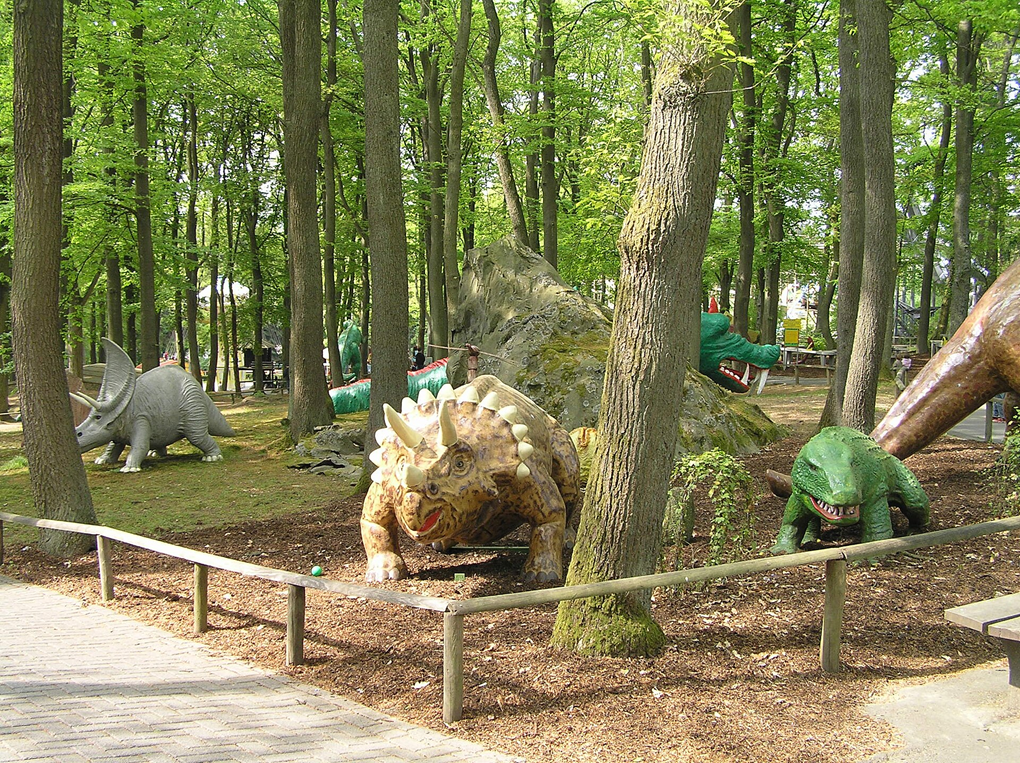
A successful photograph is not enough if guests waiting for a turn obstruct the queue, an accessible route, an emergency path or the discharge from a nearby ride. In the park’s site plan, distinguish three areas: the photo group’s standing zone, the photographer’s position, and the waiting area. Show how the next group approaches and how finished groups leave without crossing the camera view or blocking through-traffic. Review the proposed arrangement with operations, accessibility and safety teams during both normal and peak-flow scenarios.
The operator should also decide whether the sculpture is decorative, touchable, or intended for supervised interaction. A low platform, open mouth or projecting tail may invite climbing even if it was designed only as scenery. Use that decision to define barriers, supervision, cleaning access and the appropriate project-specific engineering and public-safety checks. Decorative fiberglass should never be presented as automatically suitable for climbing.
Before approving a photo point, ask the park team to walk the actual location and record: (1) where a group waits; (2) where the photographer stands; (3) whether wheelchair users and strollers can reach the designated photo position; (4) whether the installation obscures sightlines or signs; and (5) how the area operates when photography is temporarily paused. The attraction operator remains responsible for site circulation and applicable requirements.
5. Translate the Approved Photo Concept Into Production Controls
For a theme park, production planning should begin with the approved photo composition and the realities of getting the figure into its final themed location. Pegasus describes fiberglass model development, molding, lamination, assembly and finishing; the park-specific question is how those stages connect to transportable modules, scenic interfaces, installation windows and successive owner approvals. The following are recommended project checkpoints, not a claim that Pegasus follows an identical contractual process for every attraction.
Concept and park-operator approval
Approve the guest-and-statue composition first, including the photo position, surrounding themed backdrop, intended interaction and operator-approved location. Record the authorized creative or IP approver and the park operations contact. Freeze the defining expression and scenic integration before detailed fabrication drawings; later changes to the photo area can affect both the sculpture and adjacent guest routes.
Module design, fabrication and pre-shipment approval
Where site access or installation sequencing requires sectional fabrication, agree a proposed module breakdown before molding. Review transport access, delivery restrictions, the location of visible joins and how each section will be identified for assembly. During production, request project-specific photographs of representative molded sections, surface details, finish samples and a trial fit of critical interfaces where feasible. The park and manufacturer should agree who signs off appearance and who approves structural or connection details; these are not interchangeable approvals.
On-site assembly and attraction handover
Plan installation around the park’s actual access route, permitted work periods and adjacent attractions. Confirm which party supplies lifting arrangements, foundations or anchors, site protection, seam finishing and final touch-up; these responsibilities must be set in the project scope. After assembly, review the figure from the approved photo point and confirm that joints, backdrop alignment and guest positioning still match the concept. Operator safety and accessibility acceptance should precede public use.
An attractive factory finish does not establish on-site readiness. Structural adequacy, anchoring, permitted interaction, local approvals and operational sign-off remain project-specific responsibilities. Use written hold points for concept approval, module and finish approval, pre-shipment release and final site acceptance, with the responsible party named at each stage.
6. Know When a Statue Should Stay Background Scenery
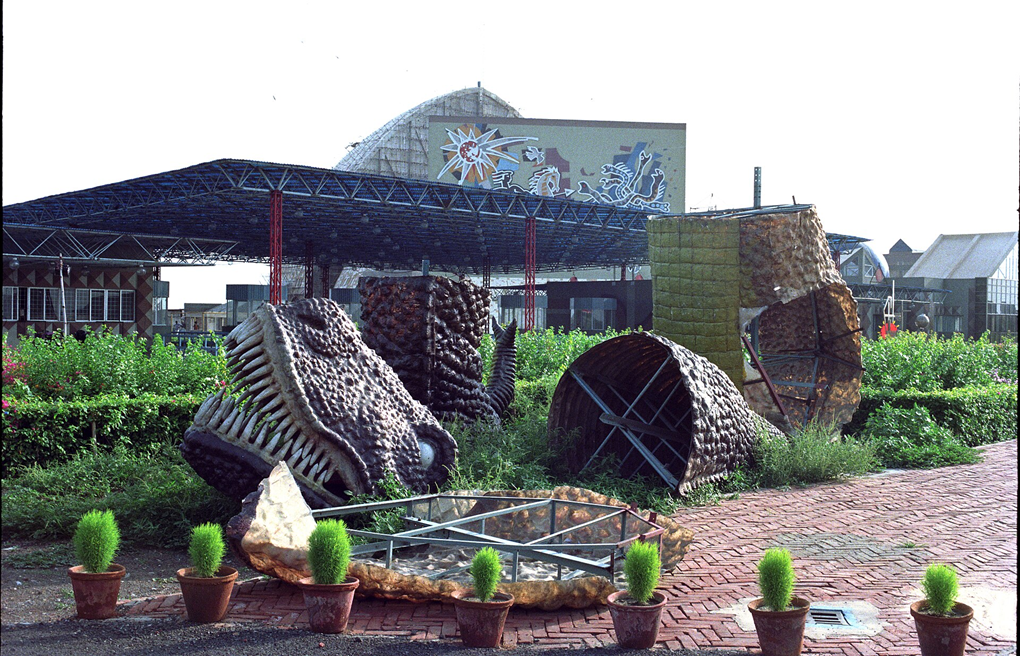
Consider a creature beside the exit of a high-throughput ride. A queue of families waiting for photographs could block the exit just when staff need to move guests onward. That sculpture may be better as background scenery visible in motion. A designated photo landmark should be placed where a group can pause, another group can wait, and everyone else can continue past without a conflict.
An attraction plan should distinguish atmospheric scenery, orientation landmarks and intentionally managed photo moments. Review the distinction against actual guest behavior, queue layout and the operations team’s capacity to manage the location. Fiberglass figures can serve all three roles, but the photo-landmark brief belongs only where a memorable image and safe visitor flow can coexist.
Frequently Asked Questions
Can a park use an existing licensed character for a new photo landmark?
Only with the necessary rights and brand approvals. The attraction should confirm whether the proposed pose, scale and three-dimensional interpretation are permitted before authorizing manufacture.
Should the photo landmark be designed for portrait or landscape pictures?
That depends on the intended composition and where the image is likely to be used. A park can ask its creative team to test both formats with a representative guest silhouette before approving the final arrangement; no single orientation is universally best.
What if the attraction wants to update the surrounding scene seasonally?
The creative team can consider a stable central statue with changeable scenic elements, but the separation between permanent and temporary components must be reviewed for visual continuity, maintenance and public safety.
How should an operator assess whether the photo point is successful after opening?
Observe whether guests can identify where to stand, whether photography creates conflicts with circulation, and whether the intended destination identity remains visible in actual guest photographs. Any measurement of dwell time or sharing should use the operator’s own agreed methods rather than assumed industry benchmarks.
What are the typical stages from theme park concept to completed photo landmark?
A practical sequence is concept and site brief → guest-photo and circulation review → licensed-character or creative approval → 3D model and module plan → engineering and park-operator review → fabrication and finish sign-off → transport and scheduled on-site assembly → final operational acceptance. Stages may overlap, and timing depends on the park’s approvals, site access, fabrication complexity and installation window; Pegasus should confirm its contracted responsibilities for each stage.
Which factors have the greatest effect on the project budget and schedule?
Key inputs include figure dimensions and complexity, number of unique models versus repeat units, surface detail and finish, engineering and anchoring scope, sectional fabrication and trial assembly, delivery distance and route limitations, site access and permitted work windows, licensing approvals, and the number of revision rounds. Ask for a written quotation that separates sculpture manufacture from transport, foundations, lifting, installation and site finishing where applicable. No fixed price or lead time should be inferred without a project brief.
Discuss a Custom Fiberglass Photo Landmark With Pegasus
If you are planning a character-led photo moment for a theme park or visitor attraction, Pegasus can discuss how the approved creative concept may translate into a custom sculpture. Explore its fiberglass statue manufacturing capabilities, review its customization approach and contact the team with your attraction concept and proposed visitor experience.