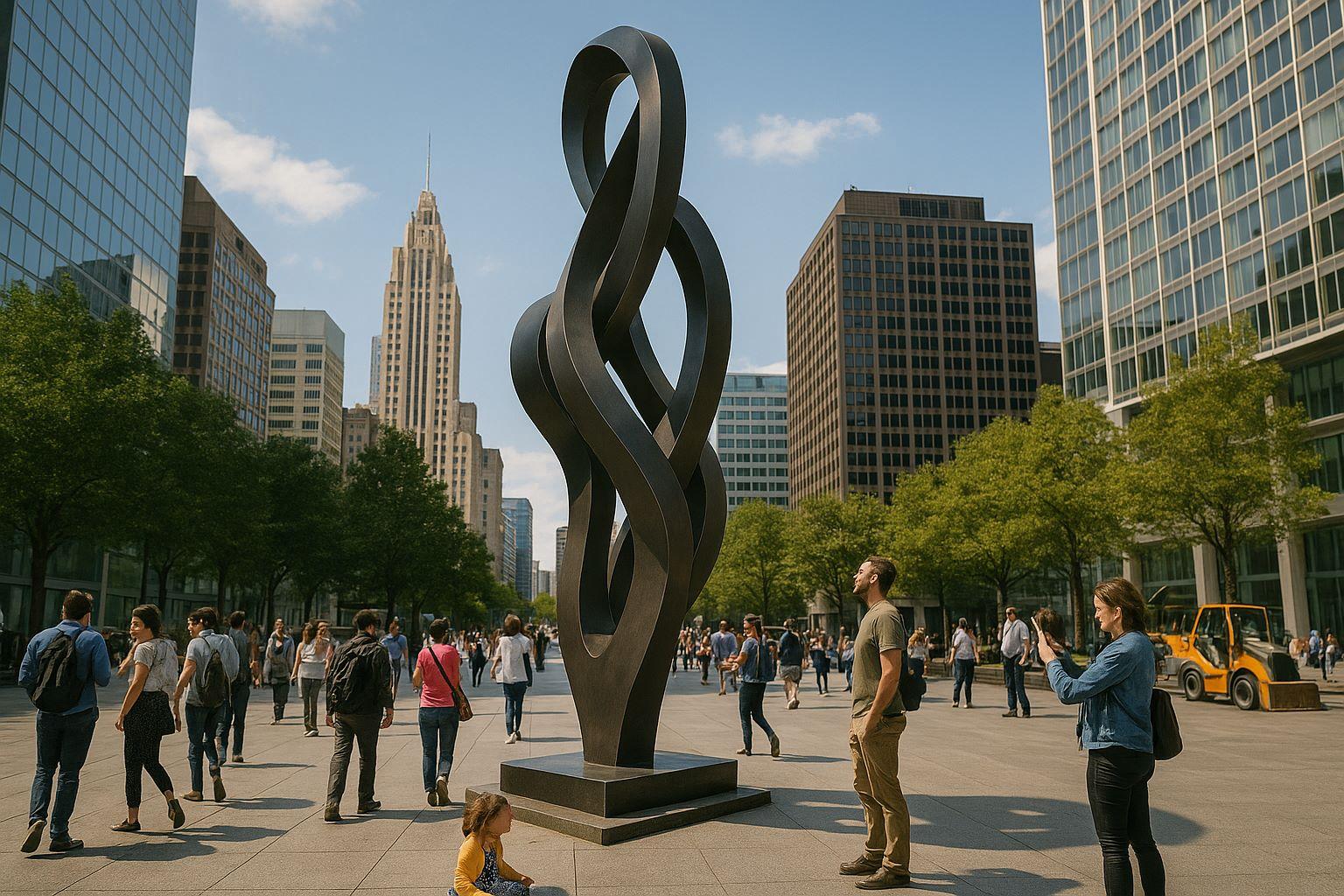
A safe outdoor sculpture starts with three numbers: 36 inches of clear pedestrian path, 80 inches of overhead clearance, and a written risk review that covers touch zones and seasonal hazards before the design gets signed off. Skip any of these early and the buyer, not the artist, is usually the one paying for the change order later. Most commercial sculpture projects don’t stall because the artwork was weak; they stall because the buyer’s team raises accessibility and safety questions after a design is already approved, or after a foundation is poured. Every clearance, touchpoint, and finish decision below is meant to be reviewed and resolved before production starts, not caught during a site walkthrough once the piece is already in the ground.
Pegasus reviews clearance, structural, and touchpoint requirements with architects and municipal teams at the design stage, while changes are still cheap to make. The sections below are written for the buyer, the municipality, architect, landscape designer, or developer signing the commission, and cover what to specify in an RFP, what to ask a manufacturer before signing, and what to confirm before final payment.
What Clearance Do Outdoor Sculptures Need Around Pedestrian Paths?
Pedestrian clearance is usually the first thing a public art review checks, and for outdoor sculptures it follows fairly fixed accessible-design rules rather than a judgment call. A continuous route needs at least 36 inches of clear width past the base or any projecting element, with only short reductions allowed.
- 36-inch continuous clear width along any accessible route passing the artwork
- Reductions to 32 inches allowed only across a short section, generally under 24 inches
- A 60-inch passing space every 200 feet or so, if the route narrows below that width
- 48 to 60 inches of turning clearance anywhere the route bends around the base
Garden sculptures placed along a curving path or courtyard sightline need this checked against the finished planting and lighting plan, not just the paved layout, since mature landscaping tends to eat into a clearance that looked fine on paper. A buyer can put this exact clearance envelope in the RFP or design brief so every bidder is designing to the same constraint, rather than discovering a conflict during review.
How Much Overhead Clearance Should a Sculpture’s Silhouette Allow?
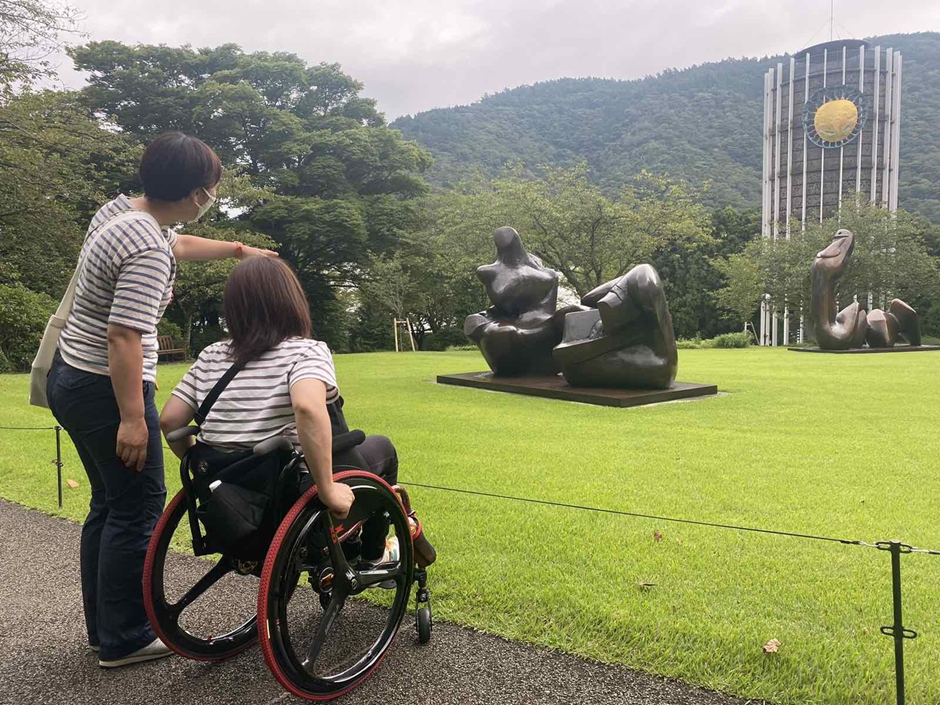
Ground clearance only covers half the picture. Wherever someone can walk under part of a piece, 80 inches of vertical clearance is the benchmark, and anything lower needs a cane-detectable barrier at 27 inches so it registers before a visitor reaches it. Wings, branches, and extended limbs are the usual culprits in outdoor sculptures, and each one needs checking individually rather than assuming the main body clearing the height rule covers it.
Between 27 and 80 inches, any projecting feature is also capped at a 4-inch reach into the walking path, a detail that trips up a lot of first-time public art commissions, since a wingtip that looks fine in a rendering can break this rule once it’s scaled to full size. This is worth asking directly when comparing manufacturers during a bid: request projection measurements on a full-scale model or drawing, not a render, before signing a contract for anything with a cantilevered element. Pegasus checks these against CAD models and, for complex pieces, a full 1:1 dry-lay assembly before cutting any material, part of why architects treat the stainless steel sculpture process as an engineering review rather than just an artistic sign-off.
The table below covers the numbers most reviewers check first.
| Zone or Element | Recommended Minimum | Why It Matters |
| Pedestrian path width | 36 in. continuous (32 in. for max. 24 in.) | Keeps the route usable for wheelchairs, strollers, and maintenance carts |
| Overhead clearance | 80 in. minimum | Prevents head-strike injuries beneath arms, wings, or canopies |
| Low overhang detection | Cane-detectable barrier at 27 in. | Warns visitors with visual impairments of an overhang below 80 in. |
| Mid-height protrusion (27–80 in.) | Max. 4 in. projection into path | Limits snag and collision hazards from arms, blades, or plinth edges |
| Narrow-route passing space | 60 in. wide, every 200 ft. | Lets two mobility-device users pass safely on a constrained path |
What Counts as a Touchpoint on a Public Sculpture, and Why Does It Change the Risk Profile?
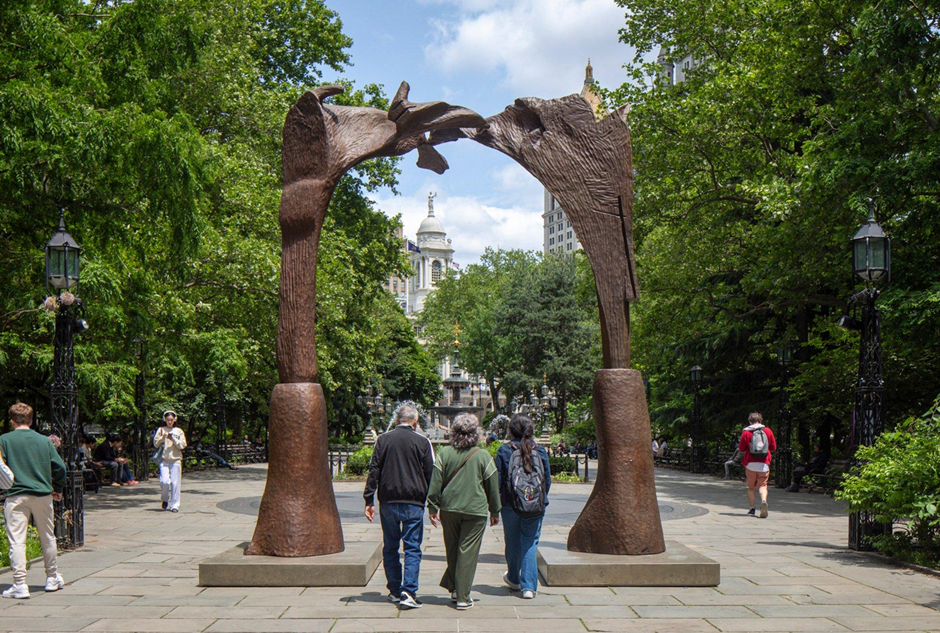
A touchpoint is anywhere a visitor is likely to actually touch: a base people lean on for photos, a polished surface at hand height, a texture people can’t resist running a hand across. These pieces carry different risk than a monument set behind planting, because the design has to assume contact, not just viewing.
- Height bands people naturally reach, roughly 24 to 60 inches for adults and lower for children, need extra attention to edge finishing
- Seams, welds, and edges within that band should be deburred and radius-finished rather than left sharp
- The base-to-ground transition needs a stable, slip-resistant footing, especially where water or ice can collect
- Surface grip changes in wet weather, so a mirror-polish finish that photographs beautifully may need a textured band at touch height
Whether a piece is meant to be touched or only viewed is worth deciding at the concept stage, since it’s what sets the finishing spec and the inspection checklist that follows, and in some jurisdictions which code section applies. A buyer comparing manufacturers can ask directly whether touch-height finishing is inspected as its own QC step, since not every shop treats it as one. Pegasus checks weld finish, edge radius, and coating adhesion at these exact touch-height zones as part of quality control, before anything ships, so a public art sculpture built for interaction actually holds up to it.
How Does the Type of Public Space Change the Safety Plan?
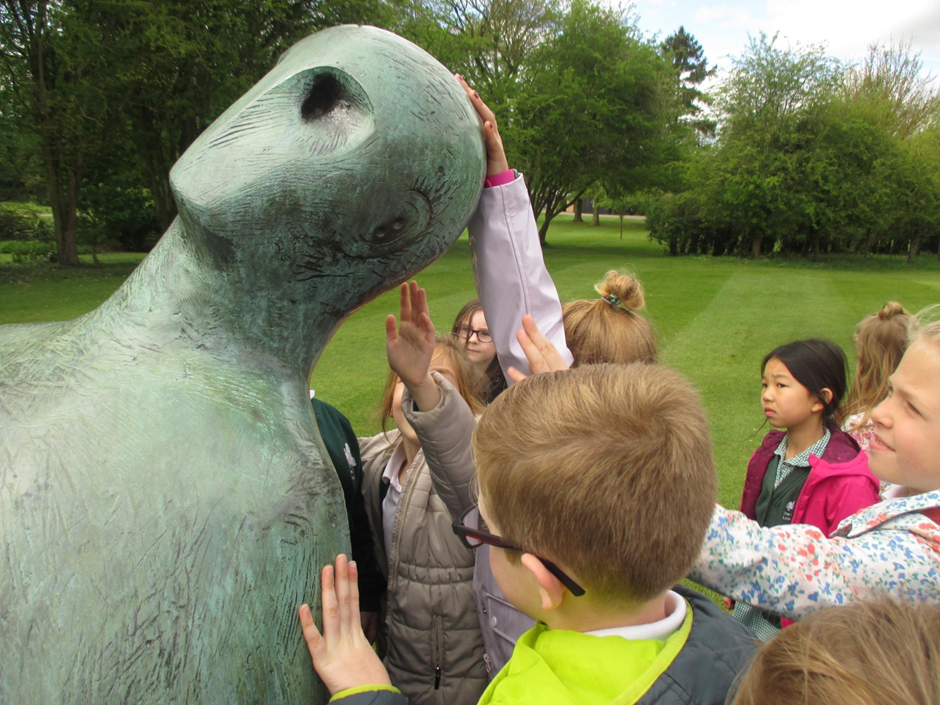
Clearance and touchpoint rules don’t change by site type, but how much they matter in practice does. A park, a commercial plaza, and a hotel landscape see different visitor volumes, different levels of physical interaction, and different maintenance realities, so the same outdoor sculpture can need a different clearance margin, finish, or anchoring approach depending on where it’s installed.
- Parks and public greenways: highest volume of pedestrian and cyclist traffic, mixed ages including unsupervised children, and the least controlled surroundings, so clearance width, cane-detection, and edge finishing carry the most weight
- Commercial plazas and retail centers: heavy foot traffic concentrated at predictable peak hours, frequent touch and photo interaction near entrances, and higher expectations around slip resistance and surface temperature on unshaded paving
- Hotel and resort landscapes: lower overall traffic but closer, more repeated contact from guests circulating the same paths daily, plus evening lighting and pool-adjacent placement that raise their own slip and glare considerations
- Corporate and institutional campuses: scheduled, predictable movement around shift changes or event hours, which can concentrate risk around specific times rather than spreading it evenly through the day
A buyer working across more than one site type can note these differences directly in the design brief, so the manufacturer engineers clearance and finish choices to each install location instead of applying one generic spec everywhere. Pegasus reviews expected visitor flow with the buyer’s landscape or facilities team for each site before finalizing these choices, so a piece designed for a plaza isn’t simply relocated to a park without a second look.
How Hot Can a Sculpture’s Surface Get in Direct Sun?
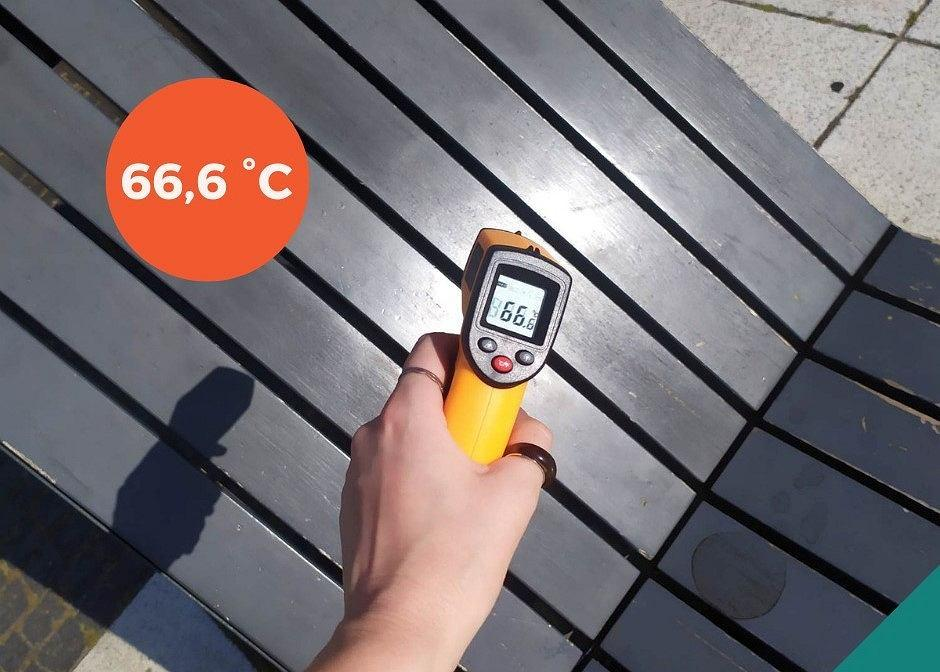
Metal in direct sun gets hotter than most people expect, and it doesn’t take a heat wave to do it. Contact-burn incidents have been recorded on days as mild as 74°F, and studies of sun-exposed metal have measured surface temperatures above 80°C, hot enough to burn skin within seconds. Bare, uncoated metal is consistently the worst performer in these studies.
For any touch-height surface in an unshaded spot on outdoor sculptures, finish becomes a safety choice as much as an aesthetic one. Matte and brushed finishes run cooler than mirror polish, light tones reflect more heat than dark patinas, and partial shading helps more than most people assume. This is a reasonable line to negotiate in the material proposal: a buyer can request a side-by-side finish and temperature comparison before approving a sample, usually at no real added cost or delay. Pegasus factors expected sun exposure into finish recommendations at that stage, alongside the client’s own site orientation.
How Should Risk Planning Fit Into Design Approval, Production, and Installation?
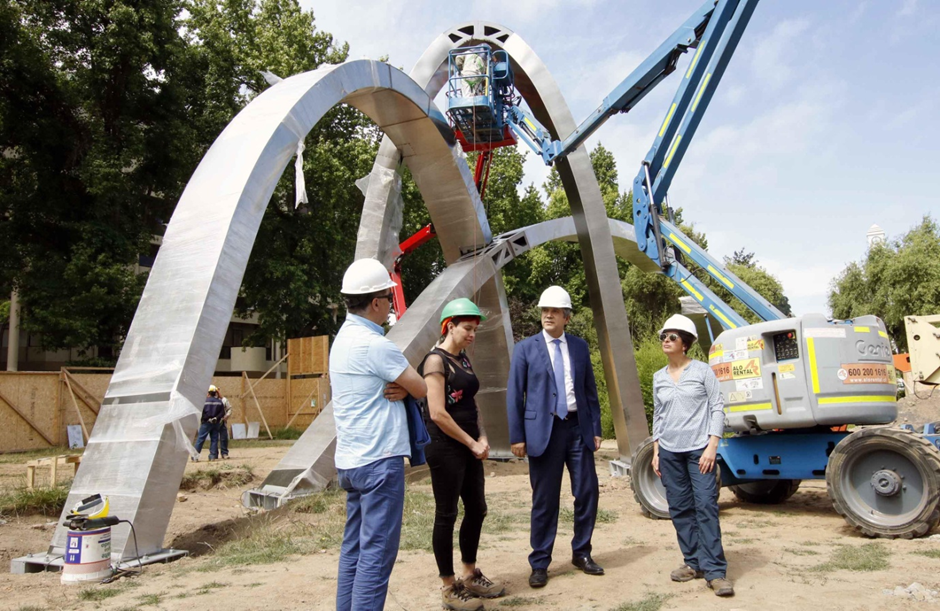
Clearances and touchpoints only hold up if someone checks them at every stage, not just once at the start. A structural and accessibility review at design approval catches problems while they’re still cheap to fix, which is also the point where a buyer has the most leverage to ask for changes without a cost penalty. Sample or prototype approval during production lets a buyer confirm dimensions and finish in person, or through detailed photos, before the full run is made. QC inspection records then prove the finished piece matches what was approved, which matters to insurers and code officials as much as to the buyer. Installation documentation, anchor patterns, foundation loads, on-site clearance checks, closes the loop. This is standard for any commercial public art sculpture program, whether it’s one plaza piece or a phased, multi-site rollout, and a buyer can name these four checkpoints as line-item deliverables in the purchase order rather than leaving them as internal manufacturing steps; that’s what makes them enforceable if a dispute comes up later, and what a buyer can point to when comparing bids on more than just price. Pegasus manages design consultation, engineering review, prototype approval, QC, and installation coordination as one connected process, so contact the Pegasus team early if a project has multiple sites or phases to line up.
Who Is Responsible for Safety Once the Sculpture Is Installed?
The safety conversation doesn’t end at installation. Once outdoor sculptures are up, the property owner or municipality usually takes on inspection: loosened anchors, worn touch-height finishes, vegetation creeping into the clearance zone, faded signage. This is one of the last things a buyer should confirm before releasing final payment: exactly what maintenance documentation comes with the piece, and who owns the ongoing inspection schedule, the manufacturer, a facilities team, or a third party. Naming that owner at handover, in writing, is what keeps a piece from going unchecked for years.
A workable long-term plan usually comes down to a handful of recurring checks, at minimum:
- Anchor and base inspection at least annually, and again after any major storm, freeze-thaw cycle, or seismic event
- Touch-height surface checks for developing sharp edges, coating wear, or corrosion, especially on pieces installed for interaction
- Clearance zone re-checks as planting matures, since encroaching vegetation is one of the most common ways a compliant install drifts out of compliance over time
- Foundation and drainage checks for cracking, settling, or standing water at the base
- Signage and lighting checks to confirm any low-overhang or cane-detection warning is still visible and functioning
Putting these on a recurring calendar, rather than waiting for a complaint or a visible problem to trigger a look, is what carries the original design-stage safety work through to a piece that stays compliant for the life of the installation. Pegasus hands over as-built drawings, anchor specs, and inspection guidance through its project portfolio and installation support process.
Frequently Asked Questions
Do outdoor sculptures on private property need to meet accessibility clearance standards?
Usually yes, if the surrounding path connects to a public entrance or space, accessible design standards typically apply even on private land.
What’s the minimum clearance around the base of a public sculpture?
At least 36 inches of clear width, with only short 24-inch sections allowed to narrow to 32 inches.
Can an interactive or climbable sculpture still meet safety requirements?
Yes, but only if it’s engineered for that use from the start, edge finishing, fall height, and grip all need to be part of the original design.
Who reviews accessibility and structural compliance before installation?
Usually the project architect, a structural engineer, and the local building authority, with the manufacturer’s engineering team weighing in on complex pieces.
How does Pegasus build accessibility and safety into its process?
Clearance, overhang, and touch-height finishing get reviewed at the design and engineering stage, then confirmed again at prototype approval and QC.
Conclusion
Well-planned outdoor sculptures get judged on more than how they photograph at unveiling. They have to hold up to years of foot traffic, weather, curious hands, and the occasional code review, without becoming the reason a project gets flagged, or the buyer gets the call about it. None of this needs to slow a project down. For the buyer, it mostly comes down to specifying these requirements in the RFP, asking for them in writing during the bid, and confirming them again at prototype approval and handover, instead of resolving them under pressure after a design is already locked.
If a design needs its clearance, overhang, touchpoint, or finish decisions reviewed against a specific site before sign-off, contact the Pegasus team with drawings and a timeline for a written answer on each one.