Introduction
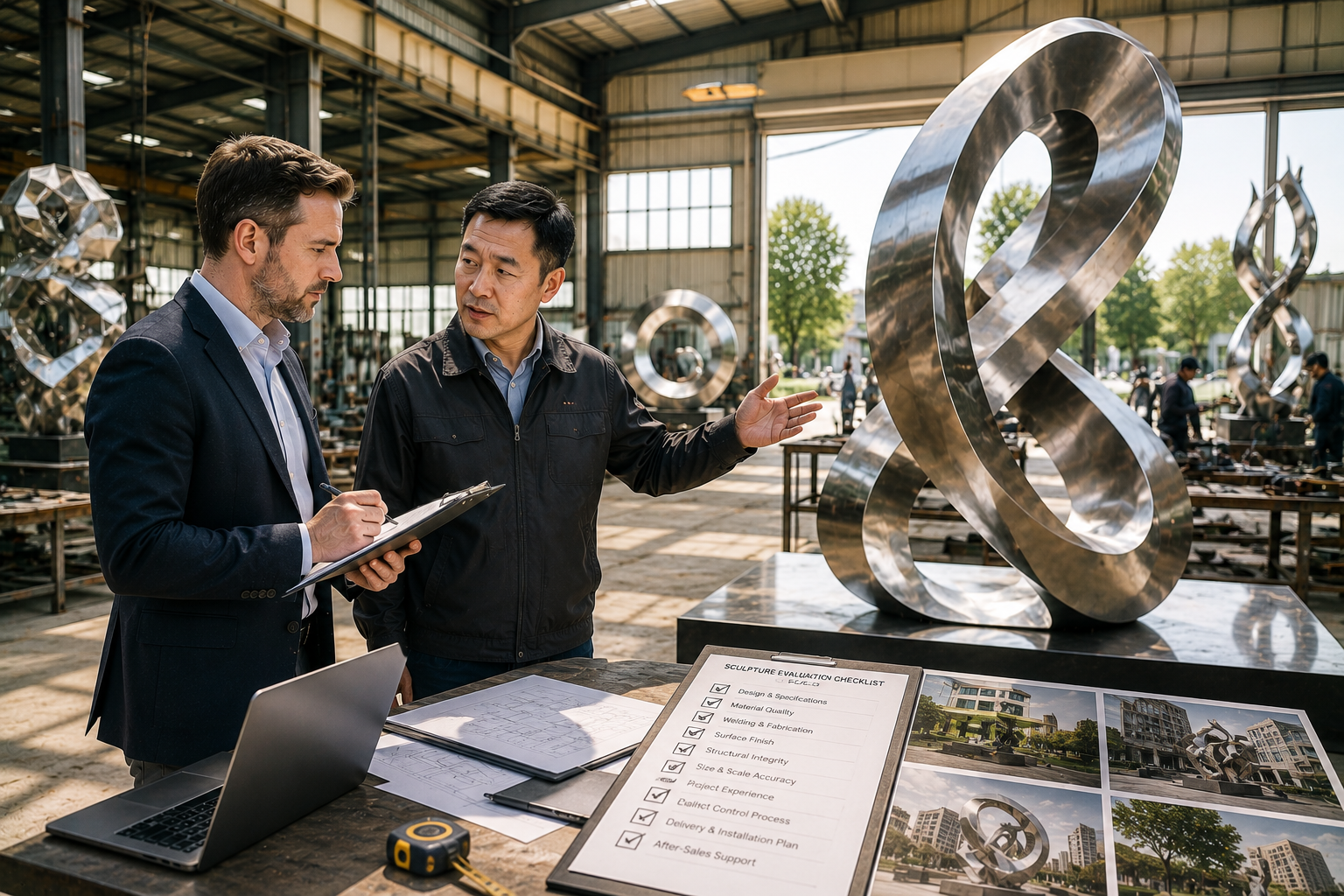
Whether you’re developing a luxury resort, designing a civic plaza, planning a corporate headquarters, or commissioning public art, selecting the right sculpture manufacturer is one of the most important decisions in the entire project.
While the appearance of a sculpture often receives the most attention, experienced architects, developers, landscape designers, and procurement teams understand that long-term project success depends on much more than aesthetics. Structural engineering, fabrication quality, corrosion resistance, logistics, installation planning, and manufacturing transparency all determine whether a sculpture performs beautifully for decades—or becomes an expensive maintenance problem.
The market offers countless large outdoor sculptures for sale, but not every manufacturer has the engineering capability required for commercial-scale installations. Choosing the lowest quotation without evaluating production standards can result in project delays, unexpected costs, installation challenges, or premature deterioration.
As a vertically integrated manufacturer, Pegasus Sculpture Manufacturer supports commercial projects from engineering consultation and material selection to fabrication, quality assurance, worldwide shipping, and installation planning. Understanding what separates an experienced manufacturing partner from a general supplier can significantly reduce project risks.
This guide explains how commercial buyers can confidently evaluate a sculpture manufacturer before placing an order. Whether your project involves monumental public art, architectural installations, hospitality developments, or premium commercial landscapes, these evaluation criteria will help you identify a manufacturing partner capable of delivering reliable, long-term results.
Why Choosing the Right Sculpture Manufacturer Matters More Than Choosing the Sculpture
Large outdoor sculptures represent significant investments. Beyond fabrication costs, commercial projects often involve architectural coordination, civil engineering, foundation design, transportation planning, crane operations, installation teams, permits, and strict construction schedules.
If the manufacturer cannot support these requirements, even a beautifully designed sculpture can become a costly project liability.
An experienced manufacturing partner helps reduce project risks by providing:
- Engineering support before fabrication begins
- Accurate production planning
- Material recommendations based on project conditions
- Quality control throughout manufacturing
- Reliable export packaging
- Installation guidance
- Long-term technical support
Rather than simply purchasing artwork, commercial buyers are investing in a permanent architectural asset expected to perform safely under demanding environmental conditions for decades.
10 Questions Every Commercial Buyer Should Ask Before Choosing a Sculpture Manufacturer
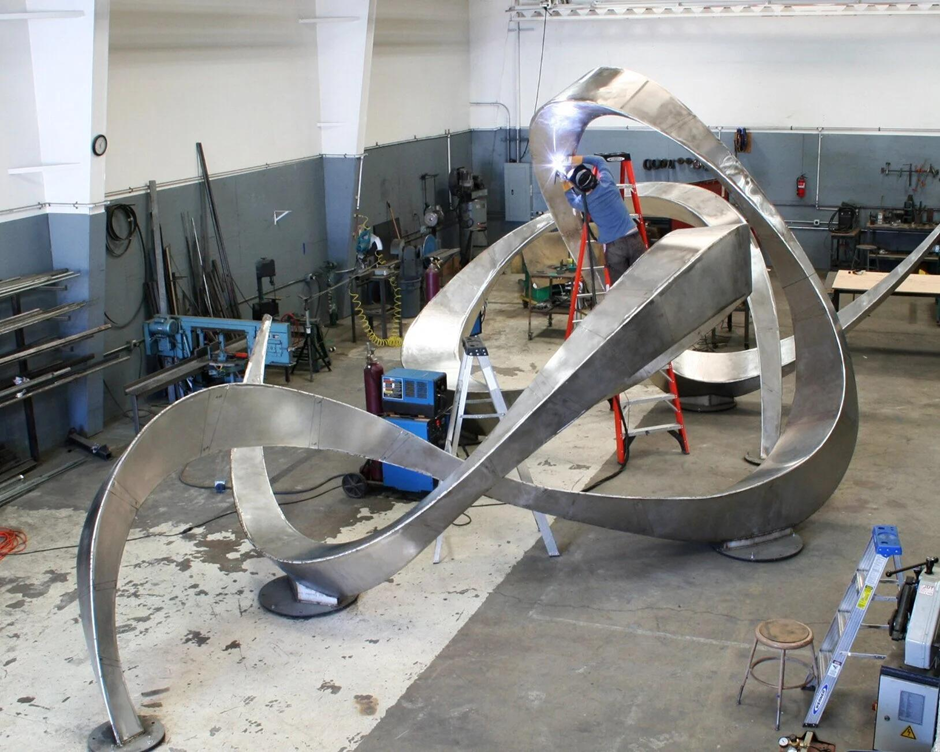
1. Is Everything Manufactured In-House?
Many companies market themselves as manufacturers while outsourcing major production stages to different workshops.
Although outsourcing is common across many industries, it often creates communication gaps, inconsistent workmanship, extended lead times, and limited accountability when problems occur.
Before selecting a supplier, ask exactly which production stages are completed inside their own factory.
A professionally integrated manufacturing facility should ideally control:
- 3D Modeling
- CNC Machining
- Mold Production
- Metal Fabrication
- FRP Manufacturing
- Surface Finishing
- Protective Coatings
- Final Assembly
- Quality Inspection
Manufacturers that maintain complete control over production can resolve engineering challenges immediately without waiting for third-party suppliers.
For commercial developments working to strict construction schedules, this level of production control substantially reduces project risk.
2. Can They Provide Engineering Drawings Instead of Only Beautiful Renderings?
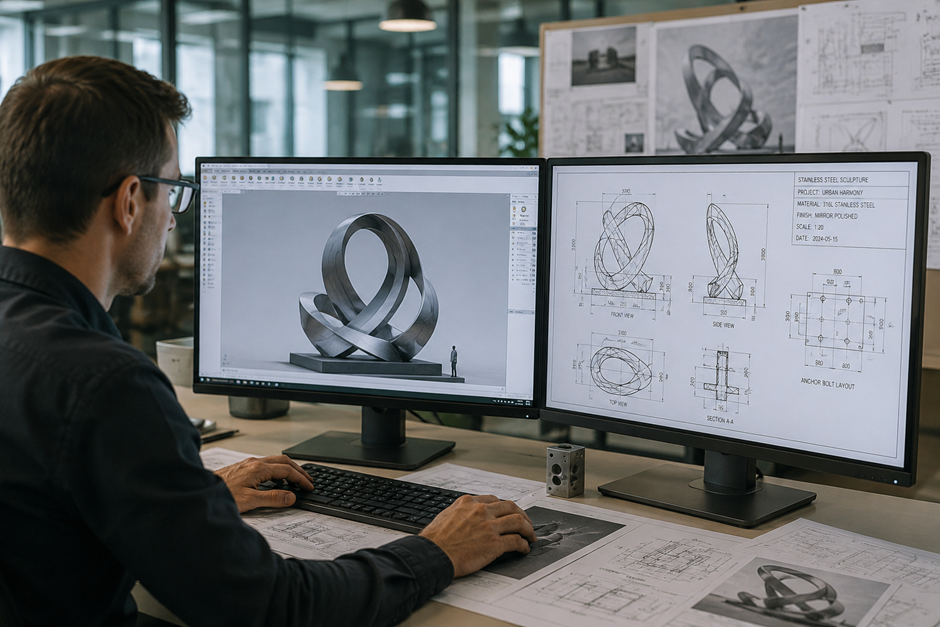
Many suppliers showcase attractive concept renderings but cannot provide the engineering documentation required for commercial construction.
Professional sculpture manufacturing extends far beyond artistic creativity.
Ask whether the manufacturer provides:
- CAD Drawings
- Structural Connection Details
- Anchor Bolt Layouts
- Fabrication Drawings
- Installation Guides
- Section Drawings
- Digital 3D Models
- Material Specifications
These technical documents allow architects, contractors, and structural consultants to coordinate installation long before fabrication begins, reducing expensive site modifications.
Manufacturers supported by dedicated engineering teams generally deliver smoother commercial projects than workshops focused only on artistic production.
3. Do They Have Experience Across Multiple Materials?
Every commercial project presents unique structural, environmental, and aesthetic requirements.
A sculpture installed beside the ocean faces different challenges than artwork inside a luxury hotel lobby, while a municipal plaza often demands different materials than a retail development.
Instead of forcing every project into one manufacturing process, experienced suppliers recommend materials based on engineering requirements.
For example:
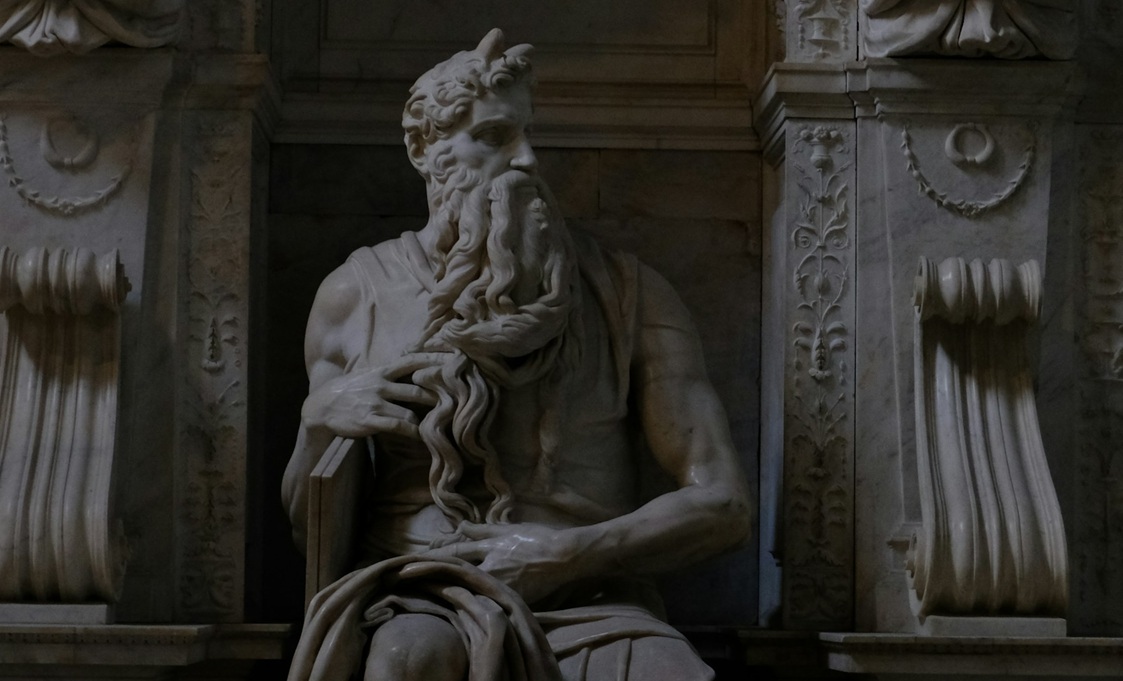
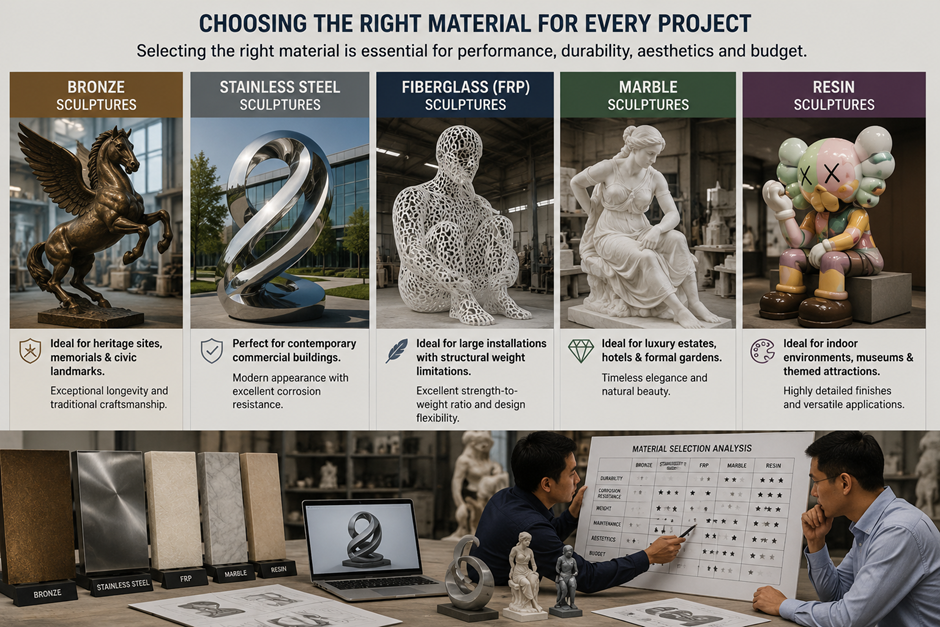
- Bronze Sculptures remain one of the preferred choices for civic monuments, memorials, and heritage projects because of their exceptional durability and timeless appearance.
- Modern architectural developments frequently specify Stainless Steel Sculptures thanks to their corrosion resistance, reflective finishes, and contemporary design possibilities.
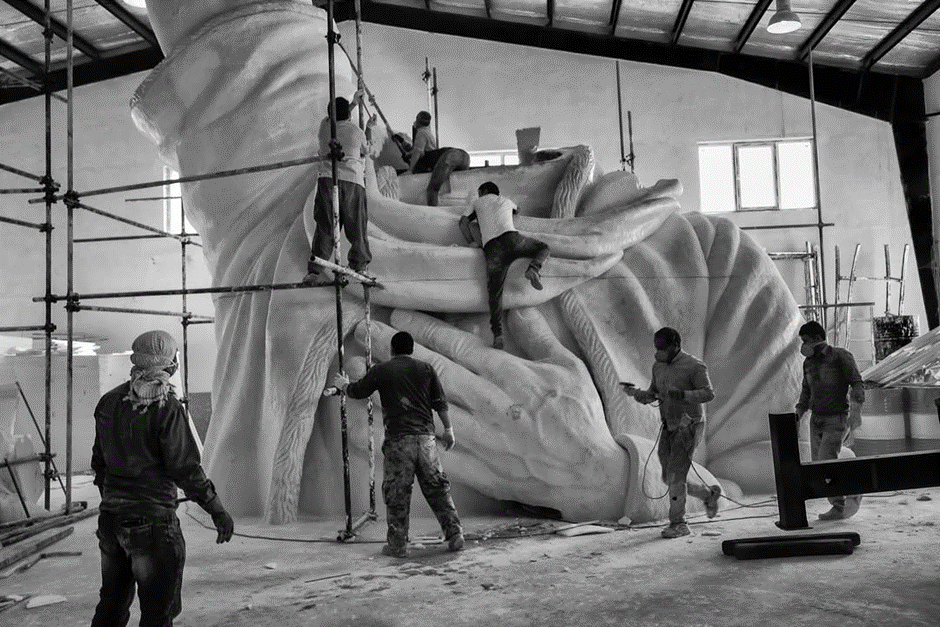
- Oversized commercial installations often benefit from lightweight Fiberglass (FRP) Sculptures, reducing structural loads without compromising visual impact.
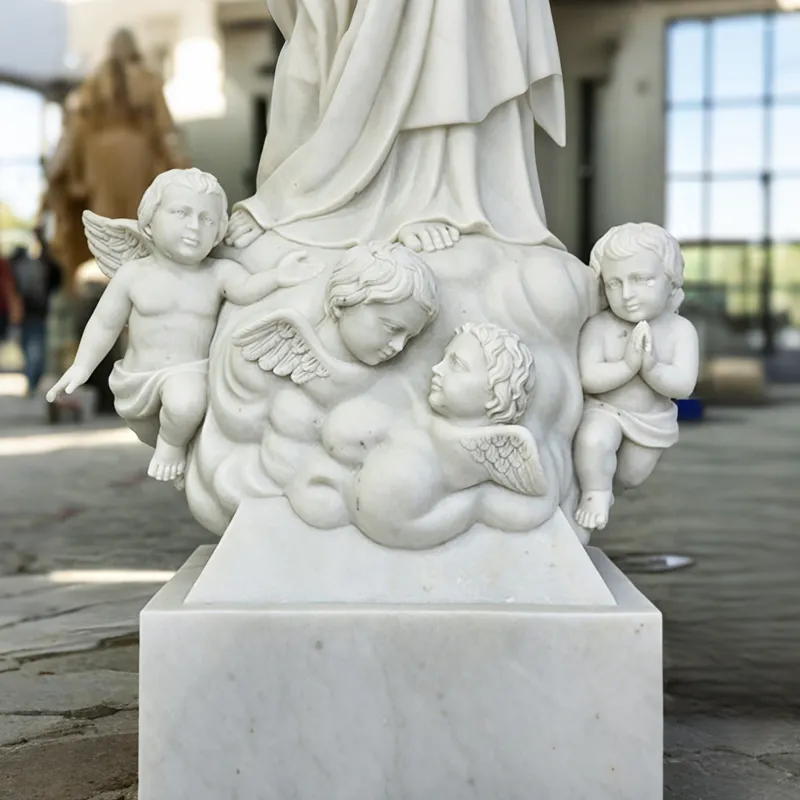
- Classical landscapes, luxury estates, and memorial gardens continue to favour Marble Sculptures for their natural elegance and long-term value.
- Highly detailed indoor branding projects and themed commercial environments frequently utilise Resin Sculptures because of their ability to reproduce intricate artistic details.
Working with a manufacturer experienced across multiple materials ensures recommendations are based on project performance—not manufacturing limitations.
4. What Quality Control Procedures Exist Before Shipment?
One of the biggest differences between residential artwork and commercial sculpture manufacturing is the inspection process.
Professional manufacturers should never rely solely on a final visual inspection before shipping.
Instead, quality assurance should be integrated throughout the production workflow.
Important inspection stages typically include:
- Raw Material Verification
- Weld Inspection
- Dimensional Accuracy Checks
- Surface Finish Evaluation
- Protective Coating Inspection
- Structural Connection Testing
- Packaging Verification
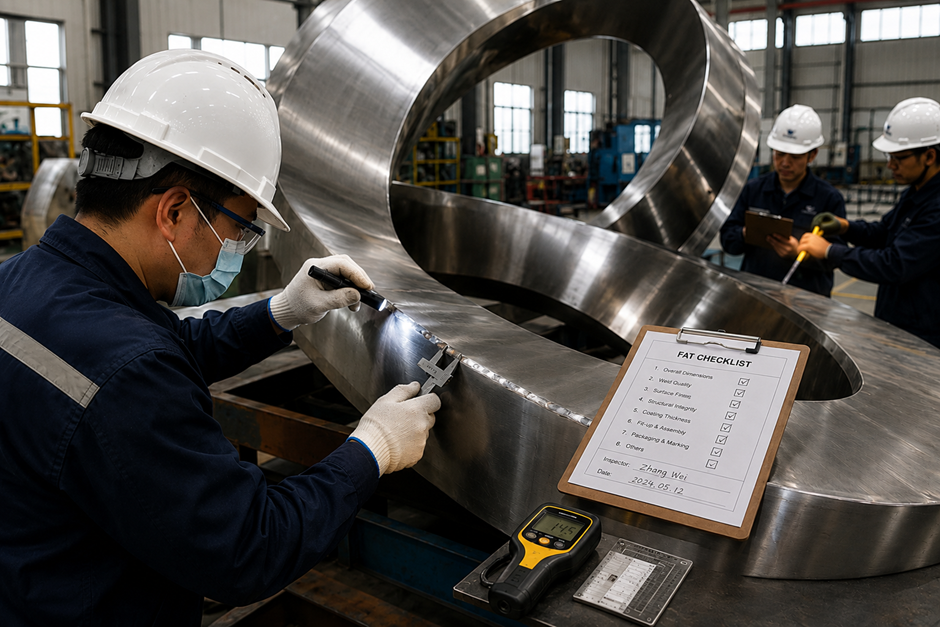
For monumental projects, manufacturers should also perform a comprehensive Factory Acceptance Test (FAT) before shipment.
During FAT, the completed sculpture is assembled, inspected, documented, and formally approved before leaving the factory. This process significantly reduces installation issues after international delivery, where correcting defects can be costly and time-consuming.
5. Can They Demonstrate Real Commercial Project Experience?
An attractive catalogue filled with product photographs does not necessarily demonstrate experience delivering complex commercial commissions.
Instead, request detailed case studies.
Strong case studies typically include:
- Project Location
- Client Type
- Material Selection
- Engineering Challenges
- Manufacturing Process
- Installation Method
- Final Project Outcome
These details reveal how a manufacturer approaches complex engineering problems instead of simply producing decorative sculptures.
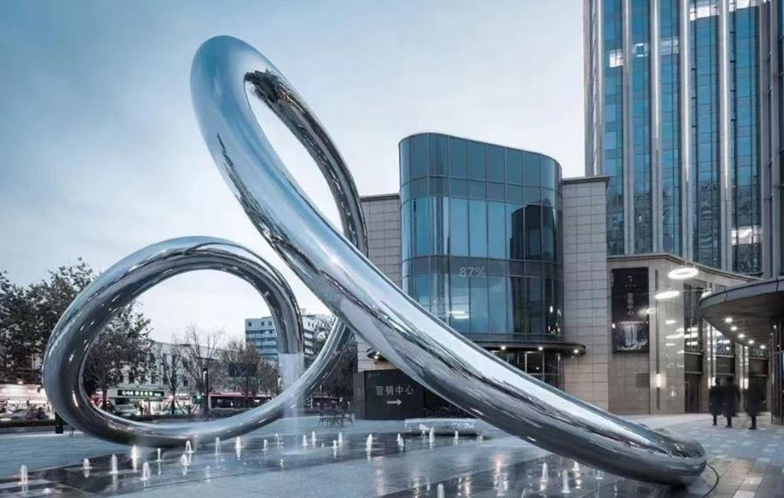
Case Study: Architectural Stainless Steel Sculpture for a Public Waterfront
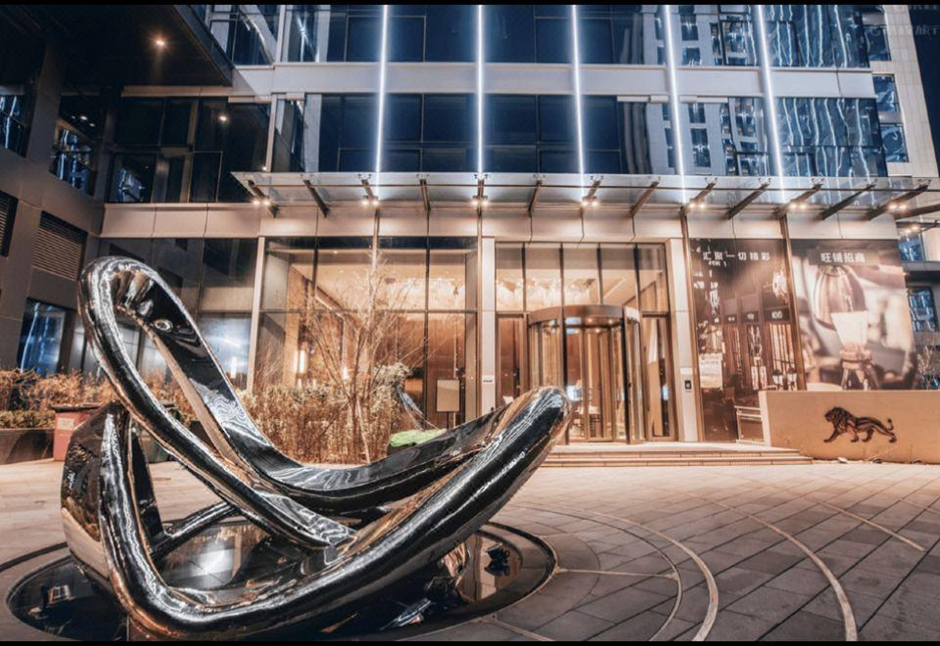
One excellent example is Pegasus’ Lunar Tide project, developed for the Hangzhou Municipal Planning Bureau along the Qiantang River waterfront.
Rather than moving directly into fabrication, Pegasus first created a detailed digital engineering model, verified structural connections, completed a full factory pre-assembly, and conducted extensive quality inspections before shipment.
This systematic approach reduced installation uncertainty while ensuring the finished sculpture achieved both structural integrity and the flawless mirror-polished finish required for a prominent public location.
Commercial buyers interested in seeing additional completed installations can explore the Pegasus Project Portfolio to understand how different engineering challenges have been successfully addressed across hospitality, civic, architectural, and public art projects.
6. How Do They Protect Your Intellectual Property (IP)?
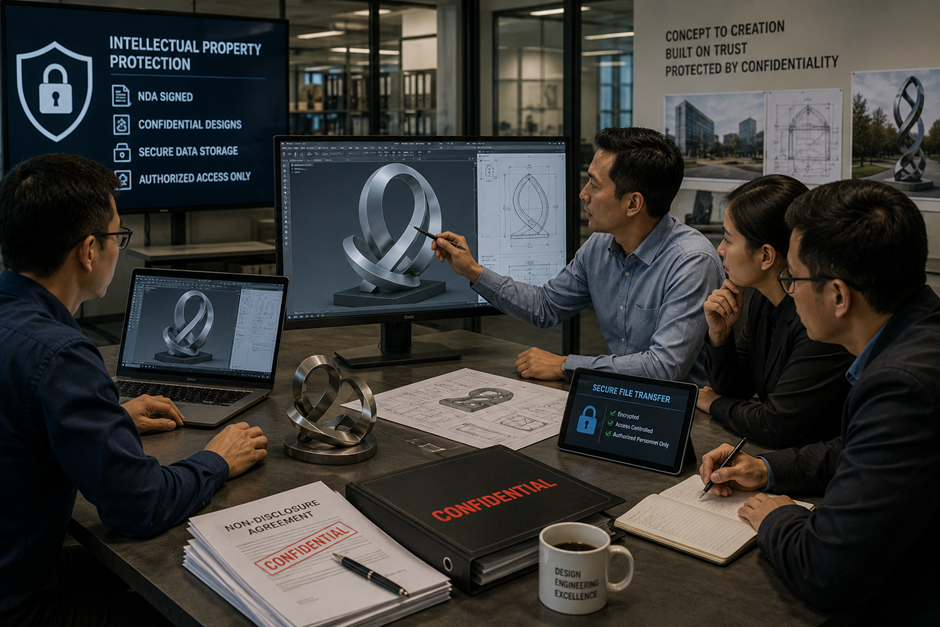
For architects, artists, design studios, and developers commissioning bespoke sculptures, intellectual property protection is just as important as manufacturing quality.
Whether you’re supplying original sketches, CAD drawings, digital models, or a hand-crafted maquette, those creative assets represent significant investment. Before sharing them with any supplier, ask how your designs will be protected throughout production.
A professional sculpture manufacturer should be able to explain:
- Whether Non-Disclosure Agreements (NDAs) are supported
- Who has access to your design files
- How digital models are securely stored
- Whether production is completed internally or subcontracted
- Who owns the moulds once the project is complete
Manufacturers that rely heavily on third-party workshops often expose confidential project information to multiple suppliers, increasing the risk of design duplication.
Factories with fully integrated production workflows provide greater control over confidential files because engineering, prototyping, fabrication, finishing, and quality inspection remain under one roof. This approach helps protect both intellectual property and long-term commercial interests.
7. Will You Receive Regular Production Updates Throughout Manufacturing?
One of the most common frustrations in international procurement is not knowing what is happening after production begins.
Some suppliers provide updates only when a customer requests them. Others communicate only after production has finished, leaving buyers uncertain about schedules, quality, and project progress.
Professional commercial manufacturers take a more transparent approach.
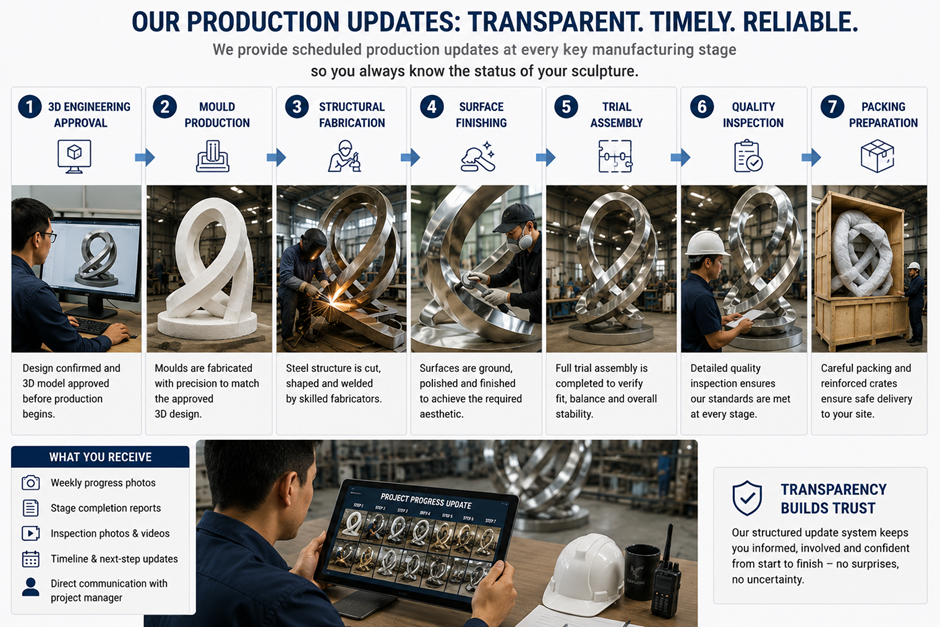
Rather than waiting until completion, they provide scheduled production updates showing the progress of each manufacturing stage.
Typical updates may include:
- 3D engineering approval
- Mould production
- Structural fabrication
- Surface finishing
- Trial assembly
- Quality inspection
- Packing preparation
These reports allow project managers to verify progress, approve details early, and identify any required adjustments before production reaches the next stage.
For projects involving architects, municipalities, hotels, or commercial developers, this level of transparency reduces uncertainty and improves coordination with overall construction schedules.
8. Do They Conduct Full-Scale Pre-Assembly Before Shipping?
One of the biggest differences between decorative sculpture suppliers and experienced commercial manufacturers is what happens before the sculpture is packed for export.
Large sculptures often consist of multiple engineered components that must fit together perfectly during installation.
Without pre-assembly, minor manufacturing tolerances can create significant problems once the sculpture reaches the project site.
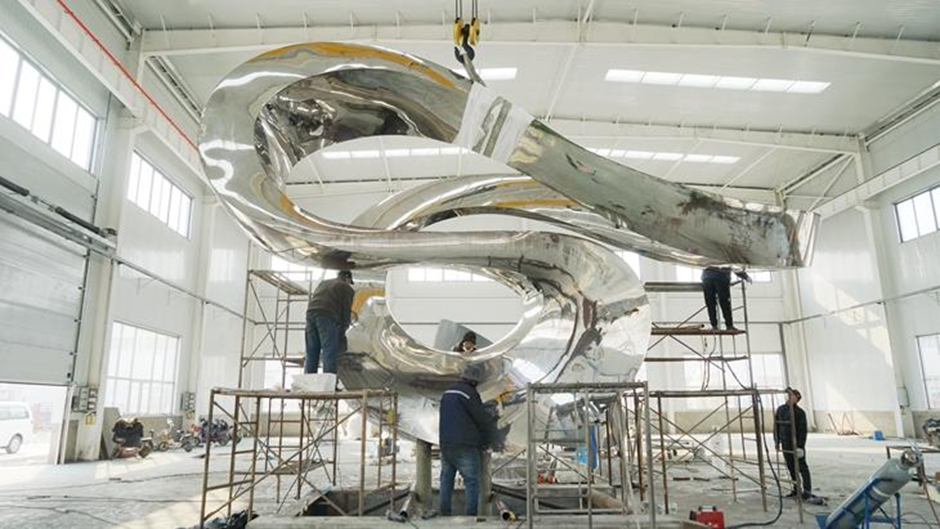
Professional manufacturers reduce this risk by assembling the sculpture inside the factory before shipment.
During this process they verify:
- Structural alignment
- Connection accuracy
- Weld positioning
- Joint tolerances
- Surface continuity
- Installation sequence
Instead of discovering fitting problems after international delivery, potential issues are identified and corrected while the sculpture is still inside the factory.
This process becomes particularly valuable for large public sculptures, hospitality developments, airports, museums, and commercial landscapes where installation time is tightly scheduled.
Expert Insight
The cost of a factory pre-assembly is minimal compared with the cost of cranes, contractors, delayed site works, and international rework. For large commercial commissions, pre-assembly should be viewed as an essential quality assurance step rather than an optional service.
9. Can They Support Installation After Delivery?
Manufacturing the sculpture is only one part of a successful commercial project.
Installation often involves multiple contractors, structural engineers, crane operators, project managers, and local construction teams.
Ask what level of post-production support the manufacturer provides.
Professional manufacturers should be able to supply:
- Installation drawings
- Component numbering
- Anchor bolt layouts
- Lifting point information
- Assembly instructions
- Packing documentation
- Remote engineering assistance when required
These documents simplify installation while reducing unnecessary delays on-site.
Commercial buyers should also ask whether replacement components can be manufactured if accidental damage occurs during transportation or installation.
Manufacturers that remain involved after shipment usually deliver smoother projects than suppliers whose responsibility ends once the container leaves the factory.
10. Can They Recommend the Right Material Instead of Simply Selling One?
Not every sculpture should be manufactured from stainless steel.
Likewise, bronze is not always the most practical solution, and lightweight FRP is not suitable for every environment.
Experienced manufacturers begin by understanding:
- Project location
- Environmental conditions
- Structural requirements
- Design intent
- Maintenance expectations
- Available budget
- Installation constraints
Only then should they recommend materials.
For example:
- Bronze Sculptures are often selected for heritage sites, memorials, and civic landmarks where longevity and traditional craftsmanship are priorities.
- Contemporary commercial buildings frequently specify Stainless Steel Sculptures because of their modern appearance and exceptional corrosion resistance.
- Large feature installations with structural weight limitations commonly benefit from Fiberglass Sculptures due to their excellent strength-to-weight ratio.
- Luxury residential estates, hotels, and formal gardens often favour Marble Sculptures for their timeless elegance.
- Indoor commercial environments, museums, exhibitions, and themed attractions regularly use Resin Sculptures when highly detailed finishes are required.
A manufacturer capable of producing multiple materials provides unbiased recommendations focused on project performance rather than production convenience.
Comparison Checklist: What Should You Expect from a Commercial Sculpture Manufacturer?
| Evaluation Criteria | Standard Supplier | Pegasus Manufacturing Approach |
| Production Workflow | Partial outsourcing | Fully integrated in-house manufacturing |
| Engineering Support | Basic drawings | Dedicated engineering team with CAD & 3D modelling |
| Material Expertise | Limited material options | Bronze, Stainless Steel, FRP, Marble & Resin manufacturing |
| Production Visibility | Occasional updates | Scheduled visual production reporting |
| Factory Acceptance Test | Sometimes available | Structured inspection before shipment |
| Full-Scale Pre-Assembly | Rarely provided | Standard procedure for monumental projects |
| Material Recommendation | Product-focused | Engineering-led material selection |
| Installation Support | Limited | Installation documentation and technical guidance |
| Commercial Case Studies | Product galleries | Real project-based engineering experience |
| Long-Term Partnership | Transactional | Ongoing B2B manufacturing partnership |
The objective isn’t to find the cheapest quotation—it’s to identify the manufacturer that offers the lowest long-term project risk. Factors such as engineering expertise, quality assurance, documentation, and manufacturing transparency often have a greater impact on project success than the initial purchase price.
Warning Signs That Should Raise Immediate Concerns
Before signing any manufacturing agreement, watch for these common warning signs:
- Prices that seem significantly lower than every other quotation without a clear explanation.
- No factory photographs or production facility information.
- Inability to provide engineering drawings or CAD files.
- Limited experience with large commercial installations.
- No documented quality control process.
- No completed project case studies.
- No pre-shipment inspection procedure.
- No installation documentation.
- Poor communication during the quotation stage.
- Reluctance to answer technical questions.
If several of these warning signs appear together, consider evaluating additional suppliers before committing to production.
Case Study: Reducing Structural Weight without Compromising Visual Impact
Selecting the correct material is often the difference between a successful installation and an over-engineered project.
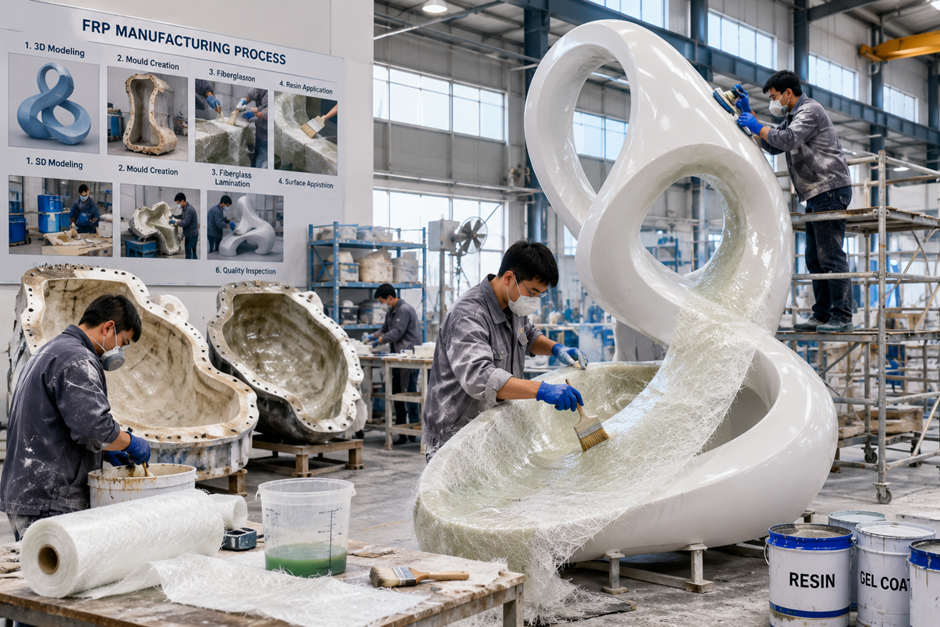
A good example is Pegasus’ Golden Secret Realm, a large-scale installation created for the National Children’s Museum at Wonder Art Center.
The project required an oversized sculpture that would appear visually substantial while remaining light enough for installation within an indoor atrium.
Instead of using cast metal, the engineering team recommended a custom Fiberglass (FRP) Sculpture solution. By combining digital modelling, precision mould production, fire-retardant resin systems, and factory quality control, the sculpture achieved the required appearance while significantly reducing structural loading.
This approach simplified transportation, lowered installation costs, and reduced the engineering requirements for the supporting building structure.
The project demonstrates an important lesson for commercial buyers:
The best material is not always the strongest material—it is the material best suited to the project’s engineering requirements.
Case Study: Balancing Traditional Craftsmanship with Modern Engineering
Not every commercial commission requires contemporary materials.
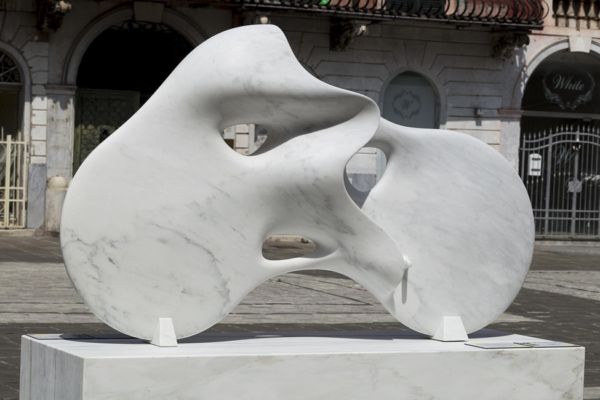
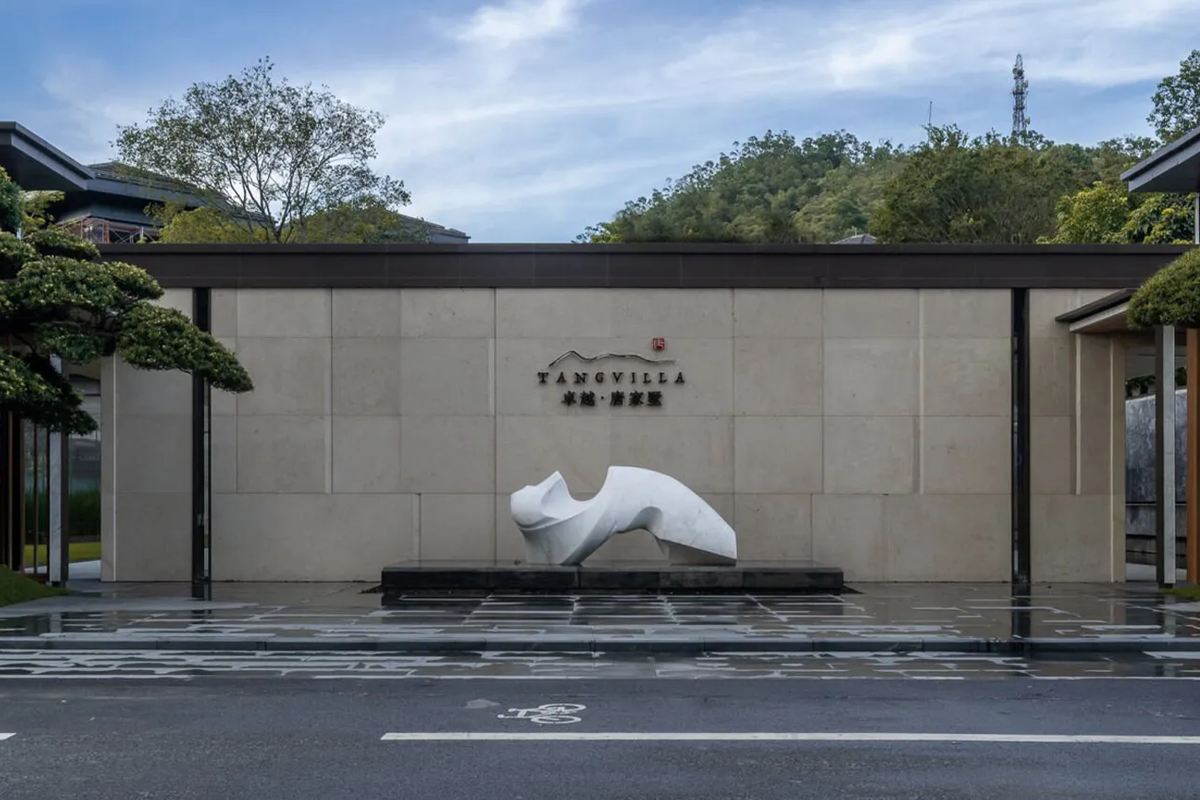
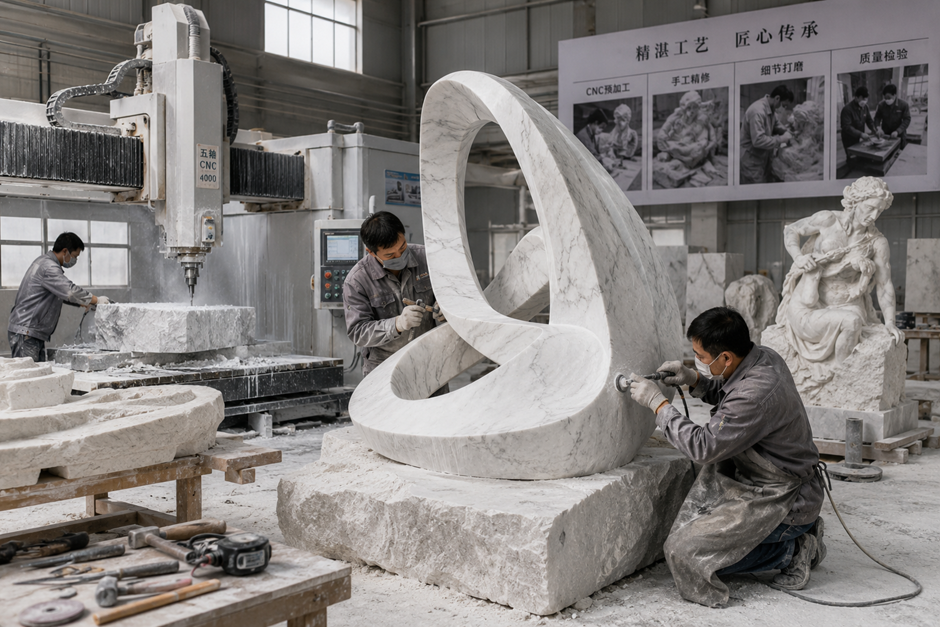
Pegasus’ Landscape project for the Sydney Waterfront Arts Council demonstrates how traditional materials can benefit from modern manufacturing techniques.
Although the finished sculpture retained the timeless appearance expected from natural stone, its production incorporated digital modelling, precision CNC pre-shaping, careful hand finishing, and detailed quality inspections before shipment.
By combining digital engineering with skilled craftsmanship, the project reduced production uncertainty while maintaining the artistic qualities expected from hand-finished Marble Sculptures.
For commercial buyers, this illustrates that modern manufacturing technology should enhance craftsmanship—not replace it.
Commercial Procurement Checklist Before Selecting a Sculpture Manufacturer
Before approving a supplier, review the following checklist with your procurement team.
| Evaluation Item | Verified |
| Factory manufactures major production stages in-house | ☐ |
| Engineering team available for technical discussions | ☐ |
| CAD drawings and structural documentation provided | ☐ |
| Multiple material capabilities available | ☐ |
| Material recommendations based on project requirements | ☐ |
| Factory Acceptance Test (FAT) included | ☐ |
| Full-scale pre-assembly completed before shipment | ☐ |
| Scheduled production progress updates provided | ☐ |
| Commercial case studies available | ☐ |
| Installation documentation included | ☐ |
| Intellectual property protection discussed | ☐ |
| Export packing and shipping experience demonstrated | ☐ |
| After-sales engineering support available | ☐ |
Completing this checklist before placing an order can help reduce manufacturing risks and improve communication throughout the project lifecycle.

Questions to Ask During Your First Meeting with a Sculpture Manufacturer
The first conversation with a manufacturer often reveals more than a quotation ever will.
Consider asking questions such as:
- Which production stages are completed inside your own factory?
- Who prepares the engineering drawings?
- Can you recommend the most suitable material for this project?
- Will I receive weekly production updates?
- Do you perform a Factory Acceptance Test before shipment?
- Is the sculpture assembled inside the factory before export?
- How do you protect confidential designs and digital files?
- Can you provide installation drawings and engineering support?
- What commercial projects have you completed that are similar to mine?
- Who owns the moulds after production is complete?
Manufacturers able to answer these questions clearly usually demonstrate stronger project management systems and greater commercial experience.
Why Long-Term Manufacturing Partnerships Deliver Better Commercial Results
Commercial sculpture projects rarely end after one installation.
Hotels expand.
Developers launch new phases.
Architectural firms work across multiple locations.
Municipalities commission additional public artworks.
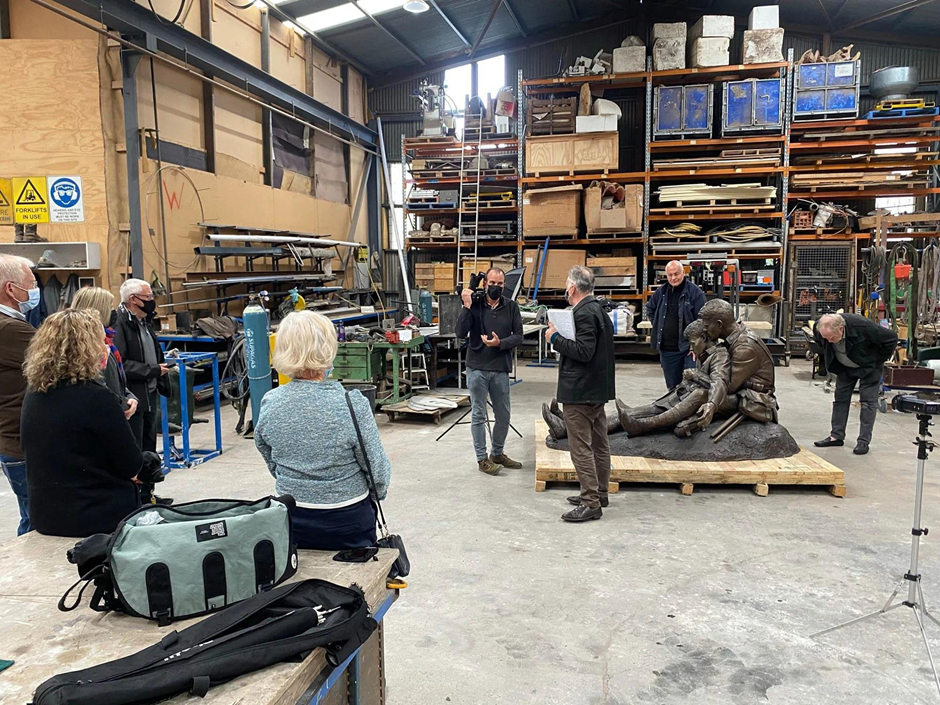
Working with a trusted manufacturing partner creates consistency across future projects.
The manufacturer already understands your design standards, preferred finishes, engineering expectations, quality requirements, and documentation process.
Instead of beginning each project from scratch, both teams continue building on an established working relationship.
This continuity often leads to:
- Faster project development
- More accurate quotations
- Better engineering coordination
- Consistent finishing quality
- Simplified communication
- Greater long-term value
Rather than becoming another supplier, an experienced sculpture manufacturer becomes an extension of your project team.
Conclusion
Finding the right large outdoor sculptures for sale involves far more than selecting an attractive design. For commercial projects, the greater decision is choosing a manufacturing partner capable of delivering engineering expertise, production transparency, quality assurance, and long-term support.
From in-house fabrication and material selection to Factory Acceptance Testing, pre-assembly, installation documentation, and ongoing technical guidance, every stage contributes to the overall success of the finished installation.
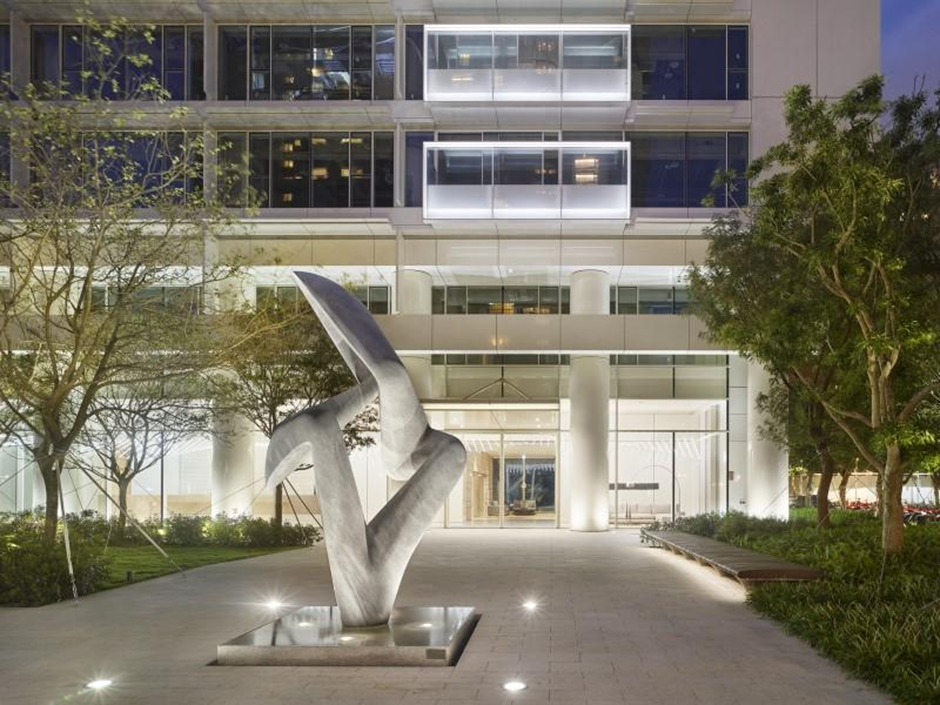
Whether you’re planning a public landmark, luxury hospitality development, corporate headquarters, museum installation, or architectural feature, taking the time to evaluate your manufacturer carefully can reduce project risks, improve construction coordination, and protect your investment for decades to come.
If you’re currently evaluating options for a commercial sculpture project, the engineering specialists at Pegasus can help assess your design requirements, recommend suitable materials, and provide practical manufacturing guidance. You can also contact the Pegasus team to discuss your project or explore completed commercial sculpture projects for inspiration.