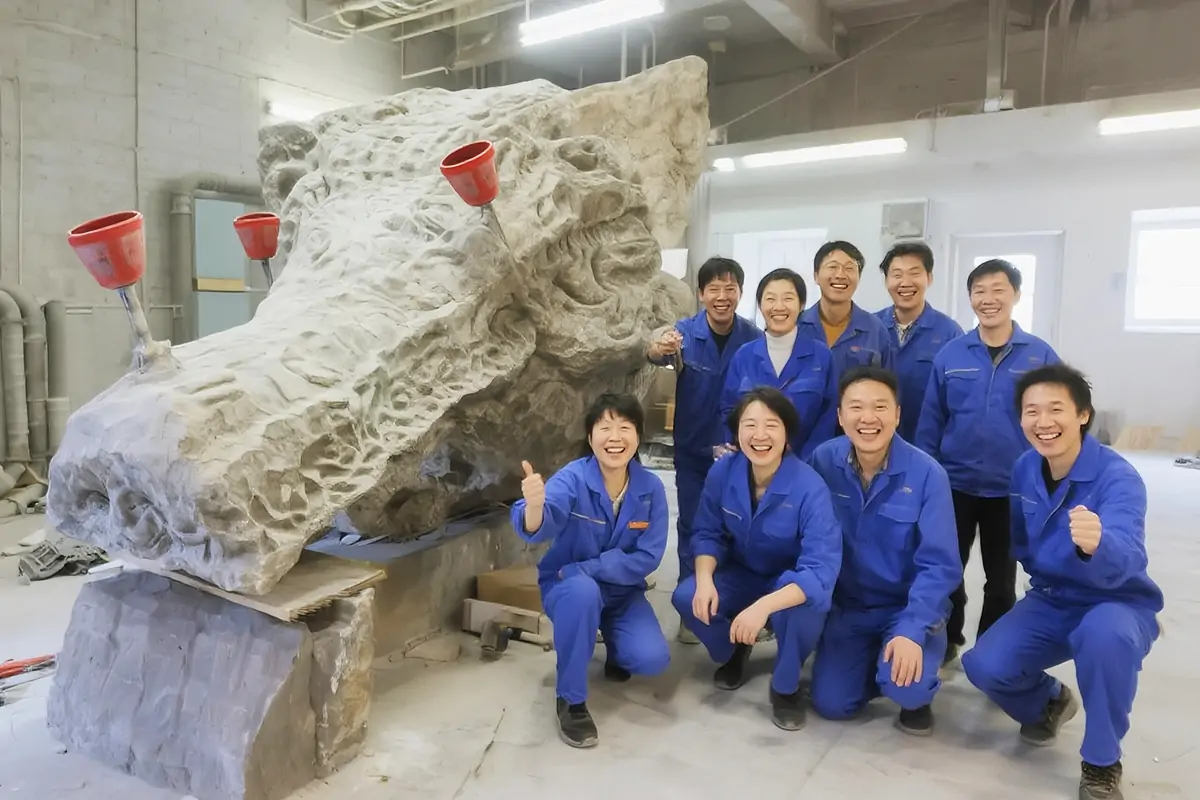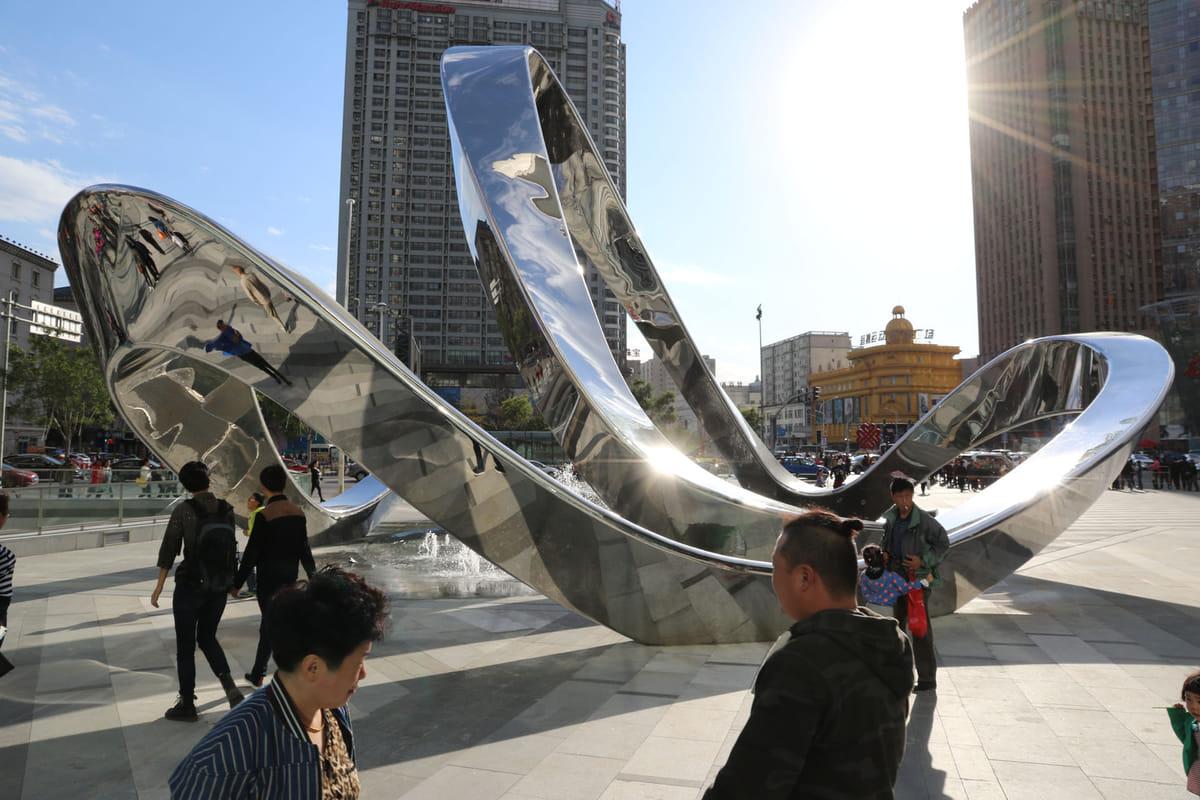
Buying a large outdoor sculpture isn’t like purchasing furniture or décor. Once it’s fabricated and installed, changing materials, dimensions, or structural components becomes expensive and, in many cases, impractical. A sculpture that looks impressive in a showroom can quickly become a costly mistake if it isn’t engineered for its environment or manufactured to the right specifications.
This buyer’s guide is designed for property developers, landscape architects, hospitality groups, municipalities, and private collectors looking to invest in large outdoor sculptures for sale. Beyond comparing materials, it also explains how to evaluate scale, placement, structural engineering requirements, wind loads, thermal movement, fabrication processes, and what separates an experienced sculpture manufacturer from a simple reseller. The goal is to help buyers make informed decisions that deliver both visual impact and long-term durability.
Why Material Choice Comes First
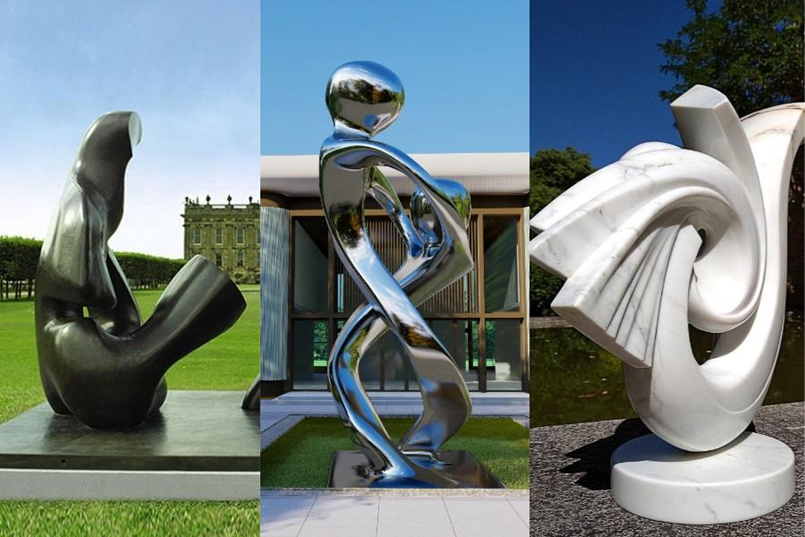
Every other decision—scale, finish, location, engineering requirements, maintenance, and budget—flows from the material you choose. Selecting the wrong material can increase maintenance costs, reduce structural lifespan, or limit where a sculpture can be safely installed. Understanding the strengths and limitations of each material makes every later decision much easier.
| Material | Typical Cost | Expected Lifespan | Maintenance | Weight | Best Applications |
| Stainless Steel | High | 50+ years | Low | Medium | Contemporary architecture, commercial plazas, public spaces |
| Bronze | Premium | 100+ years | Moderate | Heavy | Heritage projects, civic monuments, luxury developments |
| Marble | High | 75+ years | Moderate | Very Heavy | Classical gardens, estates, hotels, luxury landscapes |
| FRP (Fiberglass) | Medium | 20–40 years | Low | Lightweight | Theme parks, resorts, commercial art installations |
| Resin | High | Varies by construction | Low | Medium | Decorative sculptures, custom artistic installations, complex sculptural forms |
Stainless Steel
Many large outdoor sculptures for sale today are manufactured from stainless steel because it offers an excellent balance of durability, structural strength, and modern aesthetics. For outdoor installations, particularly in coastal or humid environments, marine-grade 316L stainless steel remains the preferred specification due to its superior resistance to chloride corrosion.
Its highly reflective mirror finish allows the sculpture to interact with changing light and surrounding architecture throughout the day, while brushed or satin finishes create a softer, more understated appearance without sacrificing durability.
Beyond appearance, stainless steel offers significant engineering advantages. Its higher yield strength compared to mild steel allows designers to create thinner, lighter-looking forms without compromising structural integrity—particularly important for sculptures exceeding six metres in height or incorporating cantilevered elements.
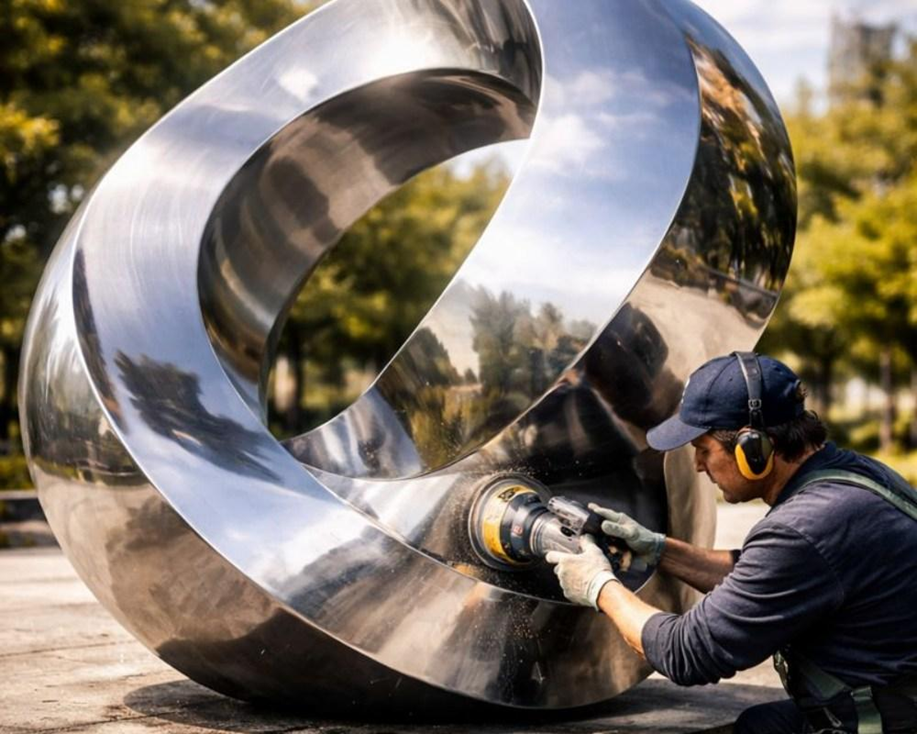
Rather than relying solely on supplier certificates, professional sculpture manufacturers often perform Positive Material Identification (PMI) testing before fabrication to verify that the specified alloy matches project requirements. This additional quality-control step helps ensure long-term performance, especially for landmark outdoor installations.
Bronze
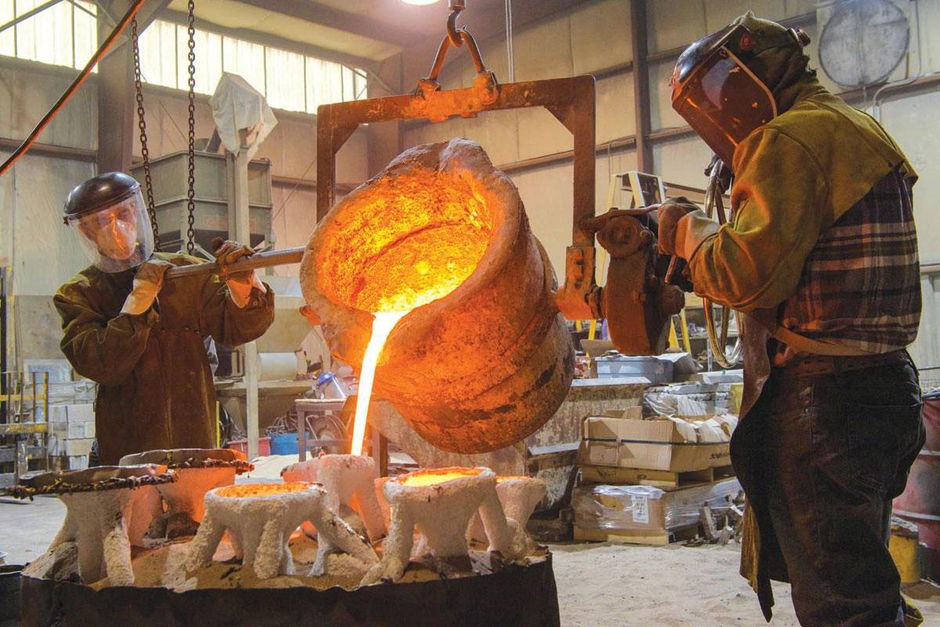
Bronze has remained the benchmark for monumental sculpture for centuries because it combines exceptional durability with remarkable artistic detail. Cast silicon bronze develops a natural patina over time, gradually changing from warm brown tones to rich greens depending on climate and environmental conditions. Rather than being considered deterioration, this evolving surface is one of bronze’s most valued characteristics.
Bronze is particularly suited to figurative sculpture, heritage projects, civic commissions, and luxury developments where craftsmanship and longevity are priorities. Although it generally represents the highest material investment in this guide, buyers often consider it a long-term asset capable of lasting for generations with appropriate maintenance.
Instead of focusing solely on material cost, buyers should also evaluate casting quality, wall thickness consistency, alloy composition, and the manufacturer’s finishing process, as these factors have a significant impact on both appearance and lifespan.
Marble
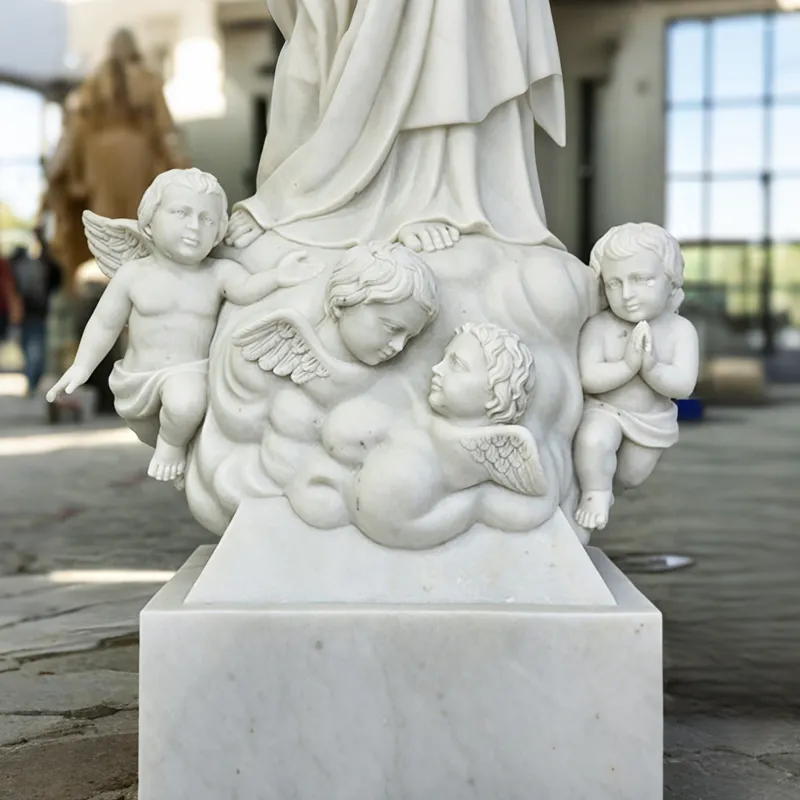
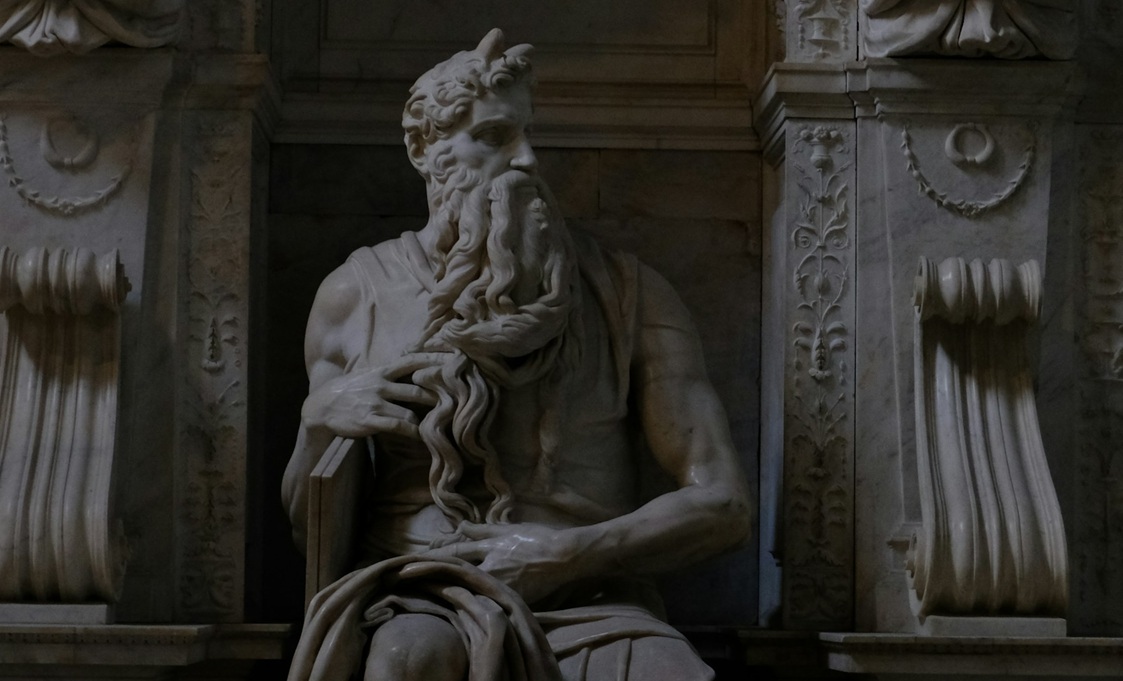
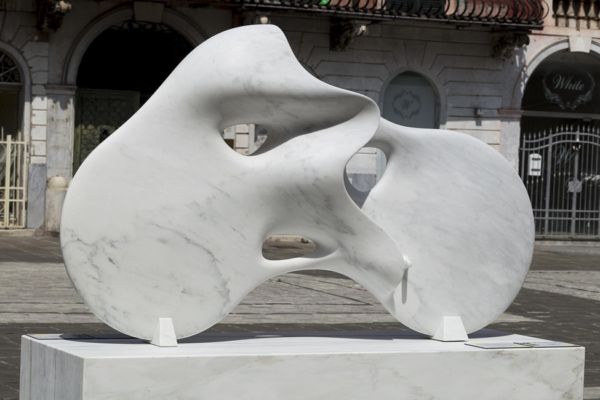
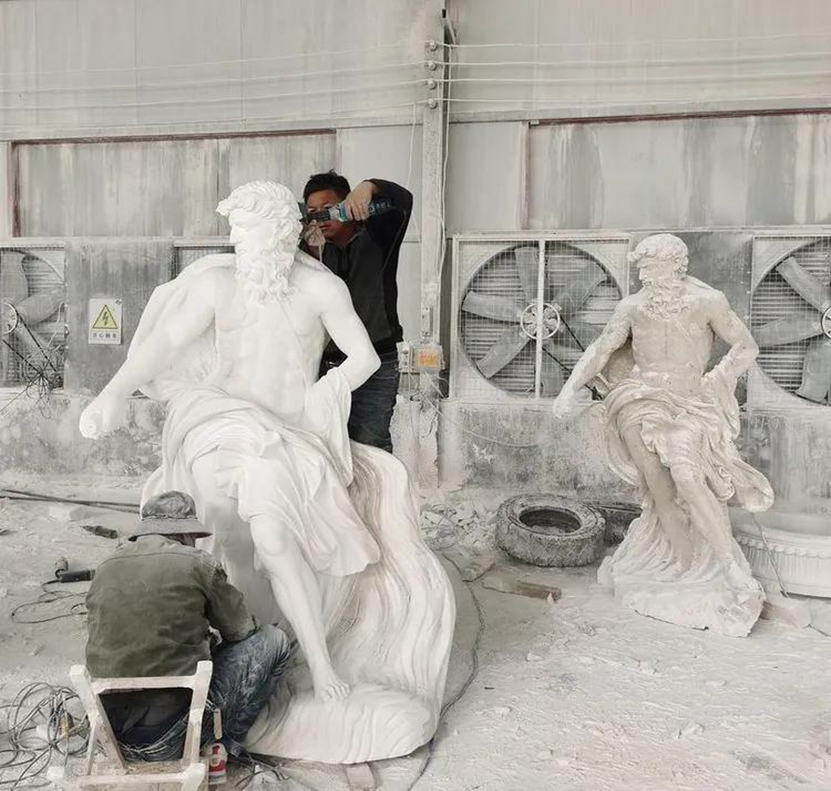
Natural marble has been used for monumental sculpture since antiquity, and its appeal continues today in luxury landscapes, hotels, public gardens, and civic spaces. Premium stones such as Carrara marble, Travertine, and black-veined marble offer a timeless appearance that cannot be replicated by manufactured materials.
However, buyers should understand that not all marble performs equally outdoors. Stone density, porosity, climate, and installation conditions all influence long-term durability. In regions with freezing temperatures, highly porous marble may absorb moisture that expands during freeze-thaw cycles, eventually leading to internal cracking.
For large outdoor sculptures, it is equally important to evaluate the internal reinforcement system, anchoring methods, and surface treatment used during fabrication. A professional sculpture manufacturer should be transparent about these structural details rather than focusing only on the appearance of the finished piece.
FRP (Fiberglass-Reinforced Polymer)
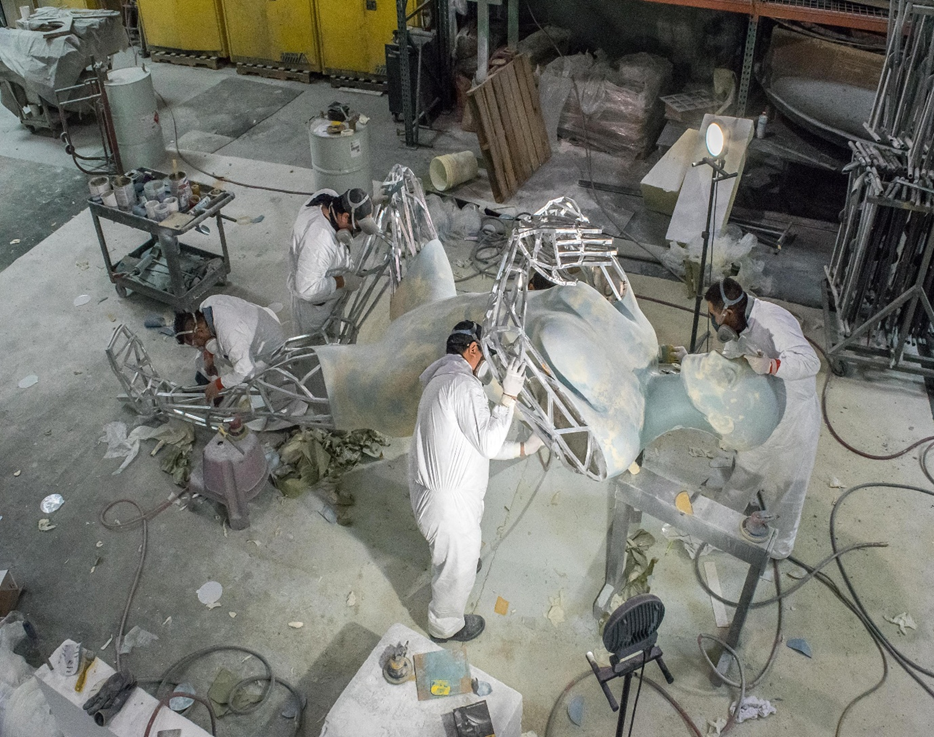
FRP is often misunderstood because quality varies significantly between manufacturers. Poorly manufactured fiberglass sculptures may suffer from delamination, fading, or structural weakness. However, when engineered correctly using premium resins, controlled fiberglass lamination, UV-resistant coatings, and an integrated internal steel framework, FRP becomes one of the most versatile materials available for large-scale outdoor installations.
Its lightweight nature allows designers to create sculptures that would be difficult or expensive to fabricate in bronze or stone while significantly reducing transportation and installation costs. This makes FRP particularly suitable for theme parks, resorts, commercial developments, branded installations, exhibitions, and projects where crane access or structural loading is limited.
Instead of judging FRP solely by price, buyers should ask about resin quality, fiberglass layering, fire-retardant materials, UV protection, and the engineering of the internal support structure.
Resin
Resin is often misunderstood as simply a low-cost material, but that only tells part of the story.
Small decorative resin sculptures and mass-produced ornaments are generally affordable because they use simple moulds and minimal structural reinforcement. However, large custom resin sculptures are an entirely different category.
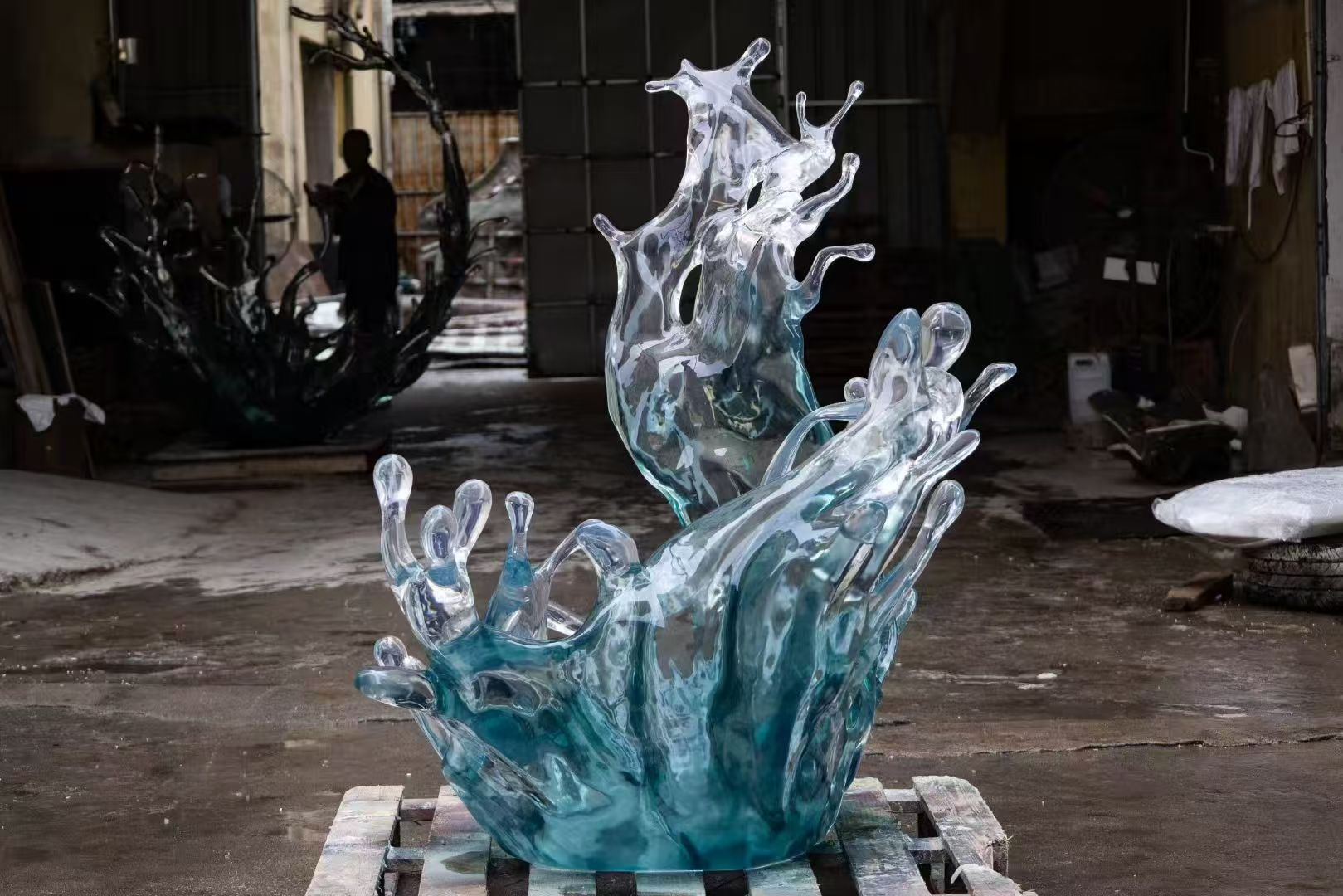
Producing a monumental resin sculpture typically involves clay sculpting, precision silicone mould creation, substantial internal steel reinforcement, multiple resin layups, detailed hand finishing, and durable UV-resistant protective coatings. Much of the project cost comes from skilled craftsmanship, engineering, and mould production rather than the resin itself.
For this reason, high-quality custom resin sculptures can represent a significant investment, particularly when complex artistic forms or large dimensions are involved. Buyers should evaluate the fabrication process, structural engineering, weather protection, and finishing techniques rather than assuming resin automatically means “budget.”
How to Think About Scale (and Why You’ll Probably Underestimate It)
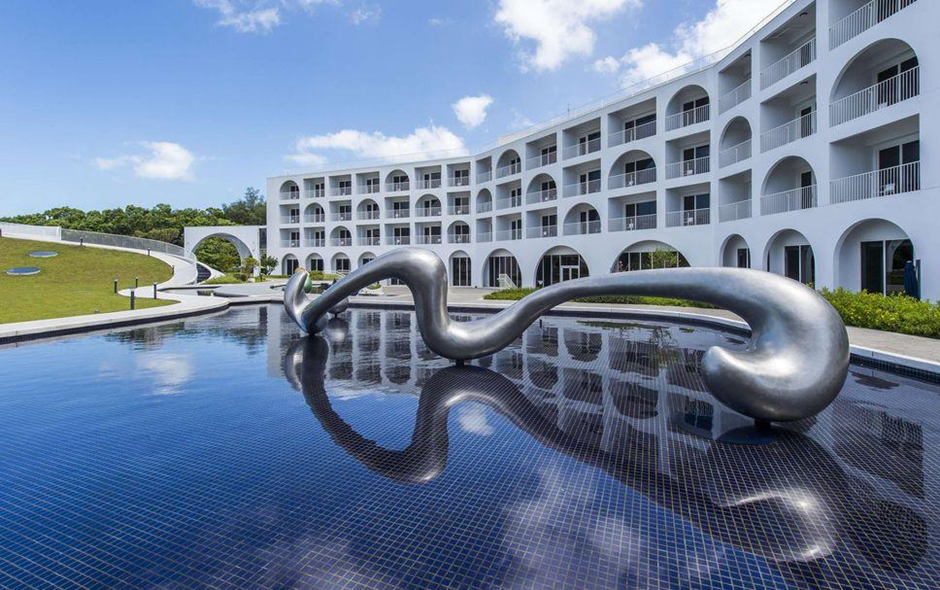
Open landscapes absorb scale surprisingly quickly. A sculpture that appears impressive in a showroom or digital rendering may feel much smaller once installed within a hotel forecourt, resort entrance, or expansive public plaza. Underestimating scale remains one of the most common—and expensive—mistakes buyers make.
Before finalising dimensions, stand at the primary viewing location and consider what the sculpture will compete with. Mature trees, multi-storey buildings, wide water features, and large open spaces all influence how people perceive size in the finished environment.
Some practical guidance:
- Hotel entrances and arrival areas: A sculpture should generally stand at least 3–4 metres tall to create a strong first impression.
- Open landscapes and resort grounds: Sculptures below 3 metres often lose their visual impact because viewing distances frequently exceed 30–50 metres.
- Corporate atriums and covered outdoor spaces: Ceiling height becomes the main reference point. A sculpture approximately one-third of the ceiling height usually creates a balanced visual presence.
- Residential gardens: Closer viewing distances allow sculptures between 1.5 and 2.5 metres to feel substantial without overwhelming the landscape.
When working with an experienced sculpture manufacturer using 3D modelling and CNC prototyping, buyers can request realistic scale visualisations placed within actual site photographs before fabrication begins. This simple step can prevent costly sizing mistakes later.
Placement: Where the Sculpture Actually Works
Successful placement is not simply about finding available space—it’s about understanding how people naturally experience the surrounding environment.
Many large outdoor sculptures for sale are installed in the middle of open lawns or randomly along pathways. While these locations may appear convenient, they often reduce the sculpture’s visual impact by making it feel isolated rather than intentionally integrated into the landscape.
More effective placement strategies include:
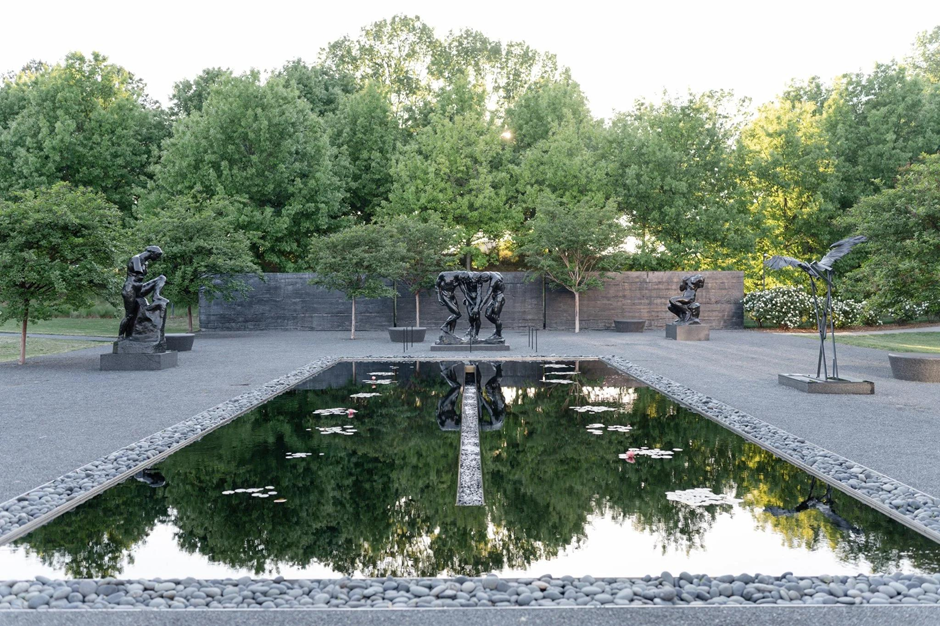
Axial Terminus
Positioning the sculpture at the end of a reflecting pool, formal pathway, or garden axis naturally guides visitors’ attention towards the artwork.
Arrival Threshold
Placing a sculpture where it gradually reveals itself as visitors approach creates anticipation and strengthens the arrival experience.
Reflective Pairing
Highly polished stainless steel sculptures become even more dynamic when positioned near water features or reflective architectural surfaces.
Architectural Anchor
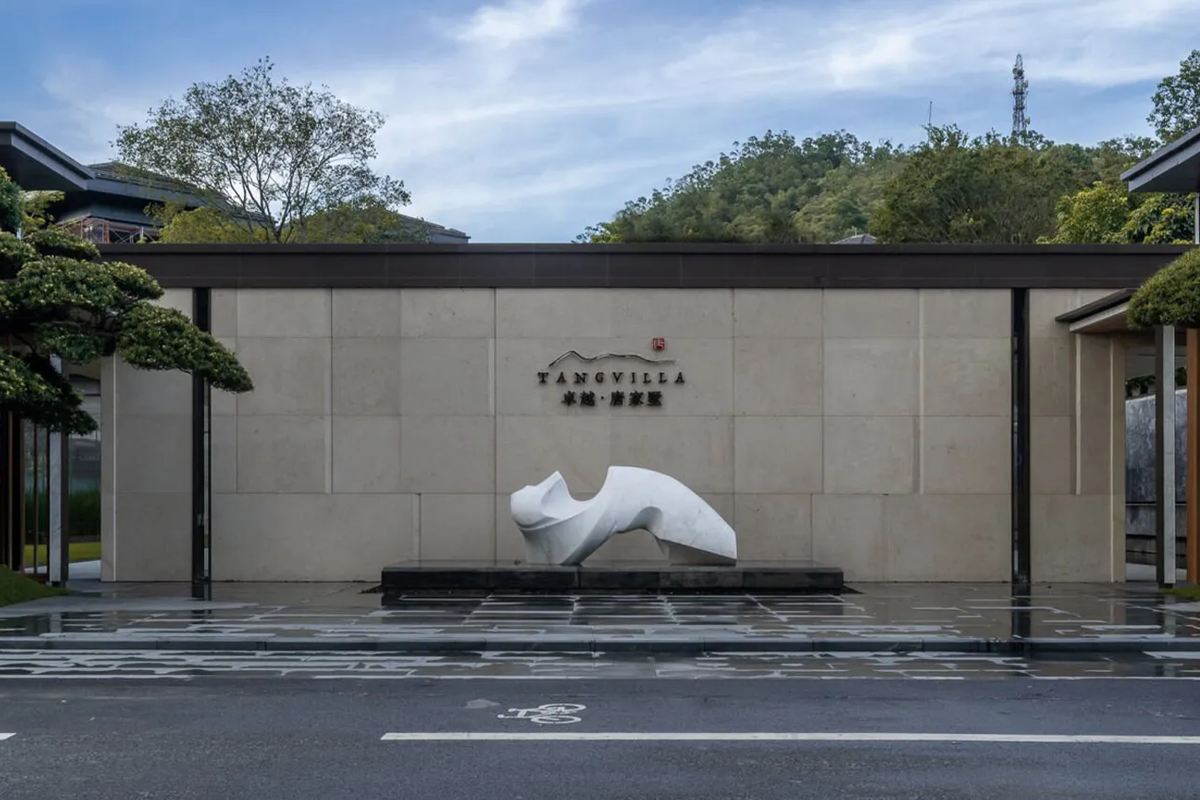
Bronze or marble sculptures positioned against building façades, retaining walls, or carefully designed planting create stronger visual contrast and improve overall composition.
One common mistake is centring a sculpture within a large, flat open space without any surrounding visual framework. Unless the artwork is genuinely monumental, this often makes it appear smaller than intended.
Engineering: The Part Nobody Photographs
While engineering is rarely visible after installation, it is often the single most important factor determining how a large outdoor sculpture performs over decades.
Wind Load Calculation
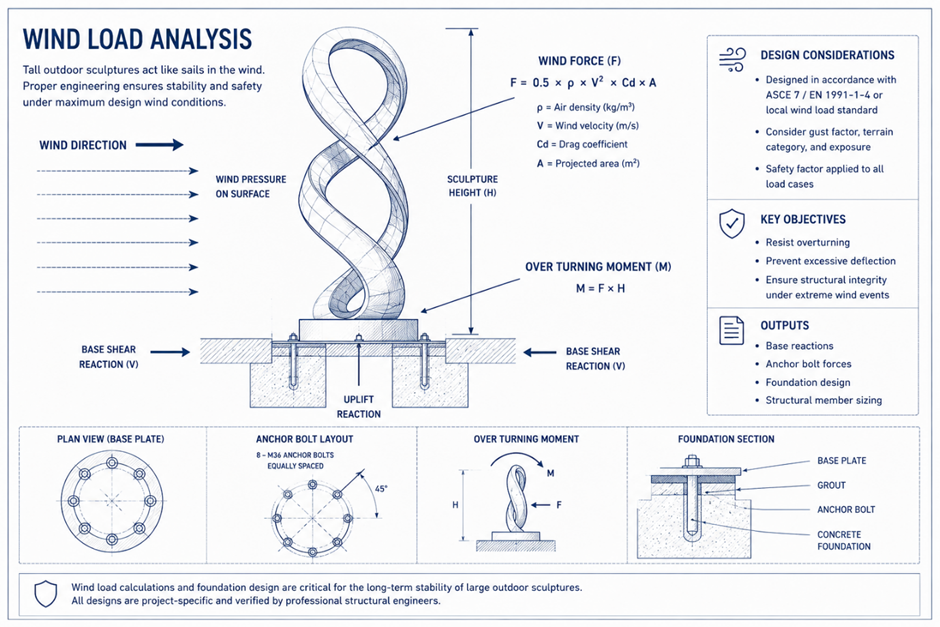
Tall sculptures behave much like sails when exposed to wind. Installations above approximately two metres should include project-specific wind load calculations based on the actual site location rather than generic assumptions.
Internal Structure
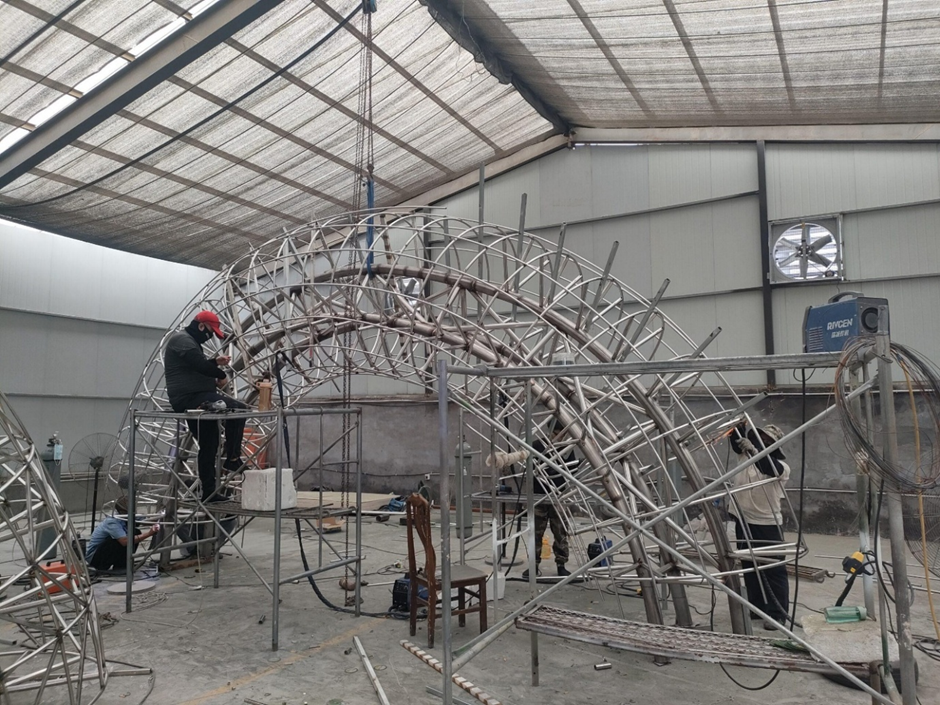
Large outdoor sculptures rely on engineered internal steel frameworks that carry structural loads while allowing the outer material to perform its aesthetic function. Proper engineering ensures stability throughout the sculpture’s lifespan.
Foundation Design
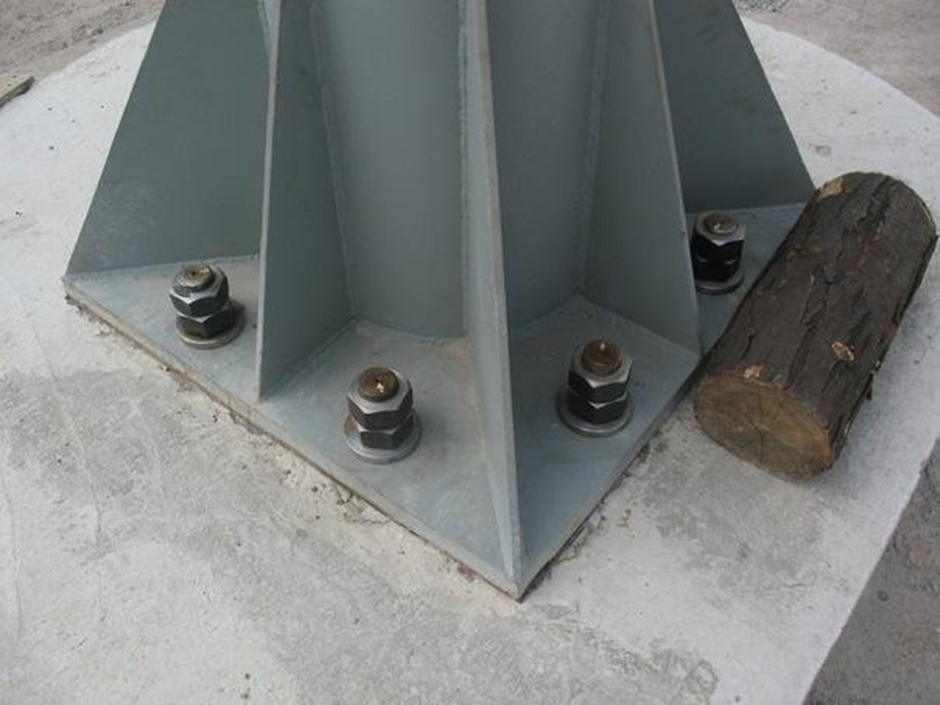
The connection between sculpture and foundation must safely resist both vertical loads and overturning forces. Reinforced concrete foundations with correctly engineered anchor systems remain standard practice for permanent outdoor installations.
Thermal Movement
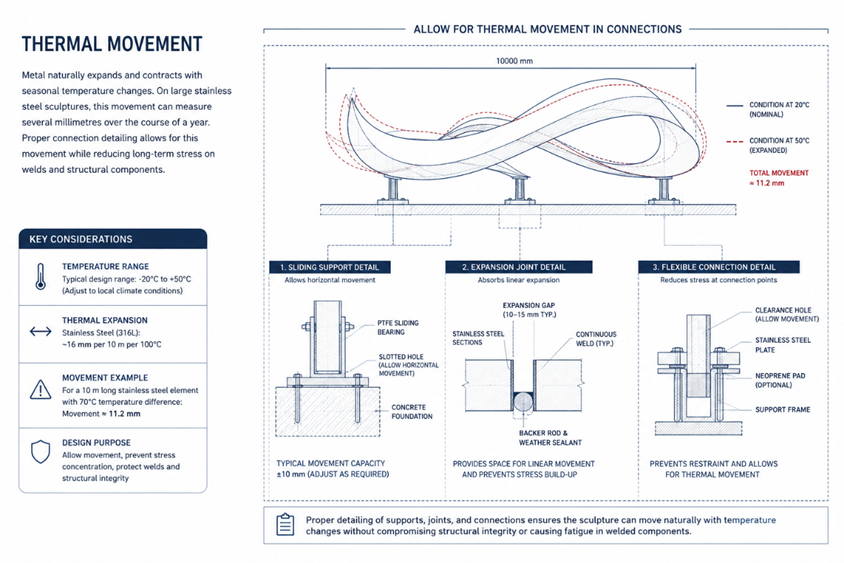
Metal naturally expands and contracts with seasonal temperature changes. On large stainless steel sculptures, this movement can measure several millimetres over the course of a year. Proper connection detailing allows for this movement while reducing long-term stress on welds and structural components.
Seismic and Site-Specific Requirements
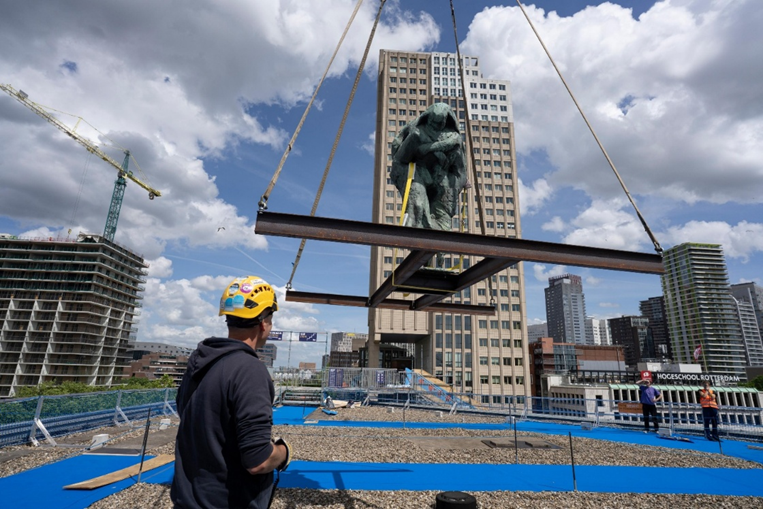
Projects located in seismic regions, rooftop installations, or elevated podium landscapes require additional engineering considerations. Structural calculations should always reflect the specific installation environment.
A professional sculpture manufacturer should provide engineering documentation as part of the project package rather than offering it as an optional service.
Choosing a Sculpture Manufacturer: What to Ask
The gap between manufacturers in this industry is significant. Buying large outdoor sculptures for sale from a catalogue is very different from commissioning a sculpture through a manufacturer with genuine in-house production capabilities.
Before making a decision, buyers should ask the following questions:
Is fabrication completed in-house?
Outsourcing casting, metal fabrication, plating, or composite work often creates quality control gaps and communication issues. Manufacturers with integrated production facilities generally maintain greater consistency across every stage of fabrication.
How do you verify material quality?
For stainless steel projects, ask whether the manufacturer performs Positive Material Identification (PMI) testing. Verifying the difference between 304 and marine-grade 316L stainless steel is particularly important for coastal, humid, or high-exposure environments.
What engineering documentation is included?
A professional manufacturer should provide wind load calculations, structural drawings, armature specifications, foundation recommendations, and material certifications as part of the project package—not as optional extras.
What quality assurance procedures are followed before shipping?
Large outdoor sculptures should undergo a comprehensive Factory Acceptance Test (FAT), including dimensional verification, structural inspection, finish approval, and pre-assembly where required. These checks help avoid costly installation issues later.
Can you manage international delivery?
Shipping monumental sculptures involves far more than booking freight. Modular fabrication, export-grade crating, logistics planning, and installation guidance all contribute to a successful international project. Buyers should look for manufacturers with proven experience handling overseas commissions.
Custom Metal Sculpture Fabrication: What the Process Looks Like
Understanding the fabrication process helps buyers set realistic expectations while reducing delays and unexpected costs during production.
A professionally managed custom sculpture project typically follows these stages:
1. Discovery and Feasibility
Before design work begins, the project team evaluates artistic intent, installation conditions, engineering requirements, timeline, and budget. Investing time at this stage prevents expensive design revisions later.
2. 3D Modelling and Digital Engineering
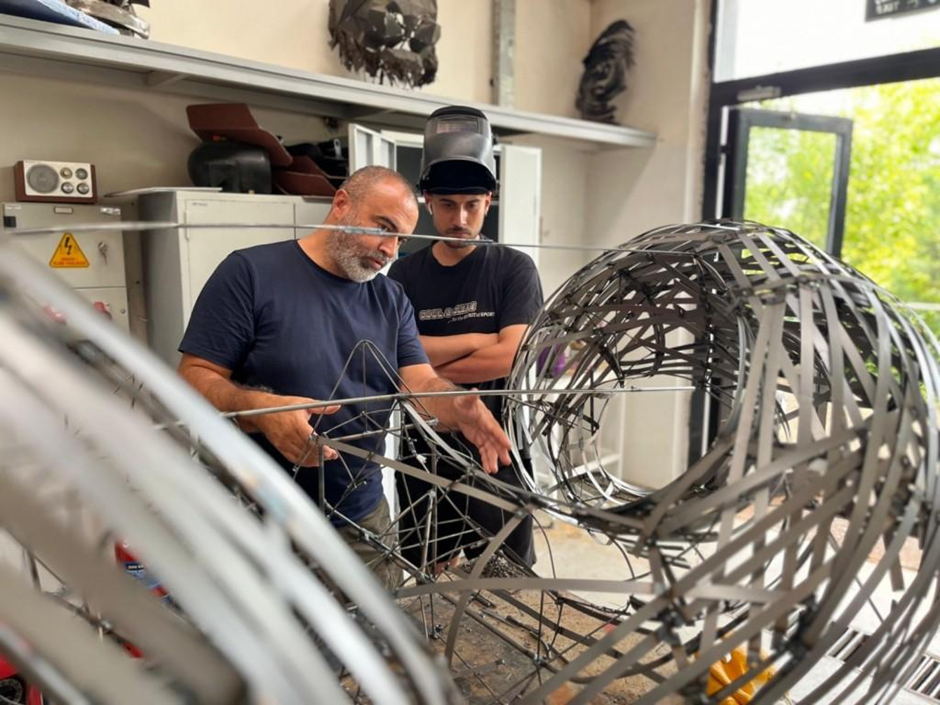
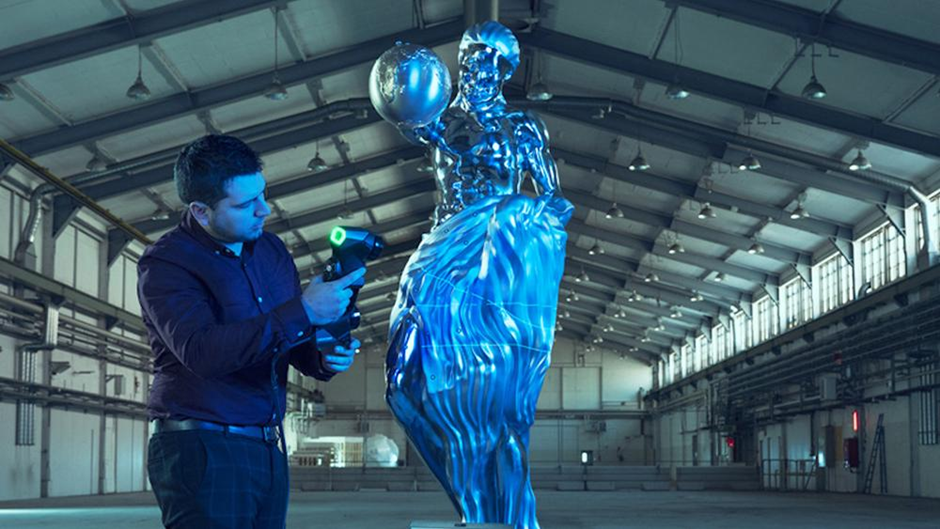
Advanced 3D modelling, CNC machining, and rapid prototyping allow complex forms to be reviewed and refined before fabrication begins. This improves dimensional accuracy while reducing material waste and production risks.
3. Fabrication with Progress Visibility
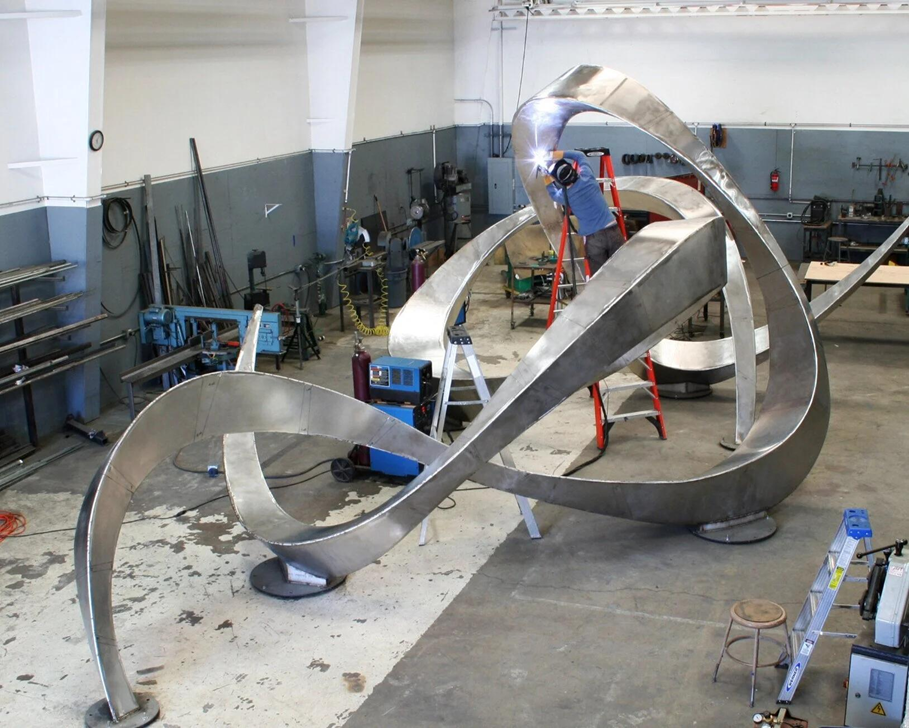
Professional manufacturers typically provide regular production updates, photographs, or videos throughout fabrication. Consistent communication gives buyers confidence while allowing potential issues to be addressed early.
4. Factory Acceptance Testing
Before shipment, the sculpture should be fully inspected for structural integrity, dimensions, finish quality, assembly accuracy, and compliance with the approved specifications. This stage significantly reduces installation risks once the sculpture reaches site.
5. Logistics and Installation Support
Large outdoor sculptures require specialised crating, transportation planning, customs documentation where applicable, and installation guidance. Experienced manufacturers continue supporting the project beyond factory production until installation is successfully completed.
Frequently Asked Questions
What is the best material for large outdoor sculptures?
There is no single best material for every project. Stainless steel offers excellent durability and a contemporary appearance, bronze provides exceptional longevity and craftsmanship, marble delivers timeless elegance, while FRP and resin offer greater flexibility for lightweight or highly customised installations.
How long do outdoor sculptures typically last?
When properly engineered and maintained, stainless steel and bronze sculptures can last for several decades or even centuries. Marble also offers outstanding longevity, while high-quality FRP and resin sculptures can perform reliably for many years when manufactured using premium materials and protective finishes.
Are engineering calculations necessary for outdoor sculptures?
Yes. Large outdoor sculptures should always include structural engineering appropriate to the installation site. Wind loads, foundation design, internal reinforcement, thermal movement, and site-specific conditions all influence long-term safety and performance.
Can outdoor sculptures be fully customised?
Absolutely. Most large-scale commissions are custom-made to meet specific design requirements, allowing buyers to choose dimensions, materials, finishes, colours, engineering specifications, and installation details.
What should I look for when choosing a sculpture manufacturer?
Look beyond price. Consider fabrication capability, engineering expertise, material verification, quality assurance procedures, project experience, international shipping capabilities, and transparency throughout the manufacturing process.
Why Work Directly with a Sculpture Manufacturer
Working directly with the manufacturer gives buyers greater control over every stage of the project—from material selection and engineering to fabrication, quality assurance, and delivery. It also allows direct communication with the production team, reducing misunderstandings that often occur when projects pass through multiple intermediaries.
Manufacturers with dedicated in-house facilities can typically offer greater flexibility for customisation, improved quality control, and better visibility throughout production. This becomes especially valuable on large commercial, hospitality, civic, or public art projects where structural performance and long-term durability are just as important as visual design.
Pegasus has over 20 years of experience producing custom sculptures for clients worldwide, supported by specialised production teams across metal fabrication, stone carving, composite manufacturing, finishing, and engineering. Whether the project involves stainless steel, bronze, marble, FRP, or resin, buyers work directly with experienced professionals from concept through installation support.
Conclusion
Choosing large outdoor sculptures for sale involves much more than selecting a material or an attractive design. Long-term success depends on understanding how material performance, scale, placement, engineering, fabrication quality, and installation all work together.
By asking the right questions and partnering with an experienced sculpture manufacturer, buyers can avoid costly mistakes while investing in artwork that delivers lasting visual impact and structural reliability.
Whether you’re planning a public art installation, luxury hospitality project, commercial development, or private landscape commission, taking a specification-first approach will help ensure your sculpture continues to perform beautifully for decades to come.