Lighting problems with modern sculptures usually come down to three things: harsh reflections instead of a gentle glow, unflattering shadows, and poor visibility after dark. None of that comes from buying the wrong fixture. It comes from lighting a sculpture without first understanding how its surface, form and placement will behave once daylight is gone. For lighting designers, architects, hotels and developers commissioning abstract sculptures for public, hospitality and commercial sites, that understanding is what turns a piece into a landmark rather than a shadow on the lawn after dark.
The core issue is that a sculpture is really two designs in one: a daytime object shaped by sunlight, and a night-time object shaped entirely by whichever fixtures are pointed at it. The same piece can read as sleek and sculptural at noon and as flat, glary or barely visible after sunset – not because the sculpture changed, but because nobody designed for the second version of it. That is why lighting works best as part of the sculpture’s design brief, alongside form, finish and site, rather than a fixture package selected once the piece is already on order.
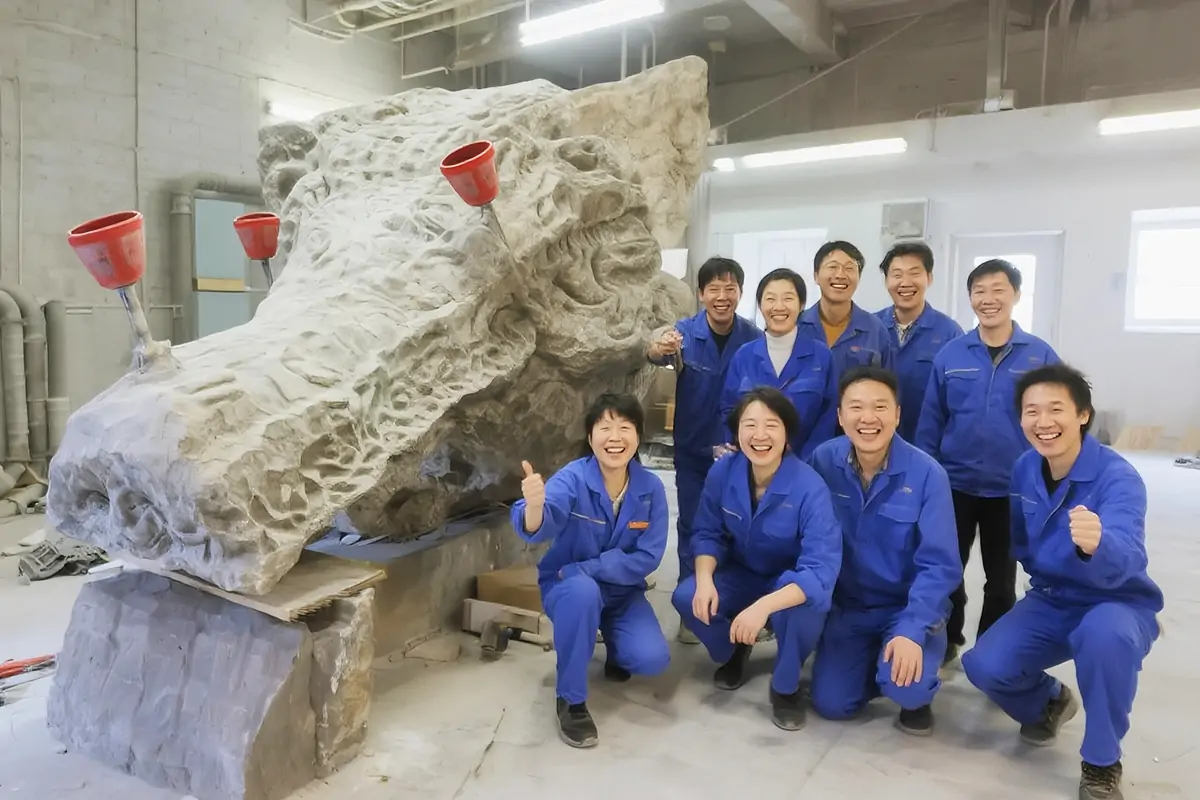
Lighting is part of Pegasus’s initial design thinking, not an element introduced after the fabrication stage. Because design, engineering and manufacturing all happen under one roof, decisions about surface finish, internal void placement and mounting orientation can be made with night-time visibility in mind from the first concept sketch – not worked around after the sculpture has already been cast and shipped.
Why Does Lighting Change How Sculptures Are Perceived at Night?
Daylight is forgiving. Ambient sunlight fills in every surface evenly, so even a modestly designed piece reads clearly against its background. Night removes that forgiveness almost entirely. Once ambient light drops away, a sculpture is only as visible as the fixtures aimed at it, and only as interesting as the shadows those fixtures create.
Take a mirror-polished centrepiece positioned at a hotel’s porte-cochère. In a daytime rendering, it looks striking – reflecting sky, palms and passing cars. Install it with a single unshielded floodlight at ground level, though, and the same piece can flatten into a glare-y silhouette by 8pm, with guests squinting rather than pausing to look. This is a common outcome for modern sculptures that photograph beautifully in renderings but were never actually modelled for artificial light. The lighting plan was treated as decoration, added after the design was signed off, instead of being built into the design itself.
This gap matters most for pieces meant to define a space after dark: hotel entrances, plaza centrepieces, waterfront installations. In many hospitality and commercial settings, more people will actually experience the sculpture between dusk and midnight than during business hours.
None of that is fixable with a better fixture after the fact. If the day and night versions of a sculpture are going to work equally hard, the fixture positions, cable routes and finish all need to be decided alongside the sculpture’s form – while the design is still on paper, not once it is standing on site.
How Does Reflection Affect a Sculpture’s Finish Once Lighting Is Added?
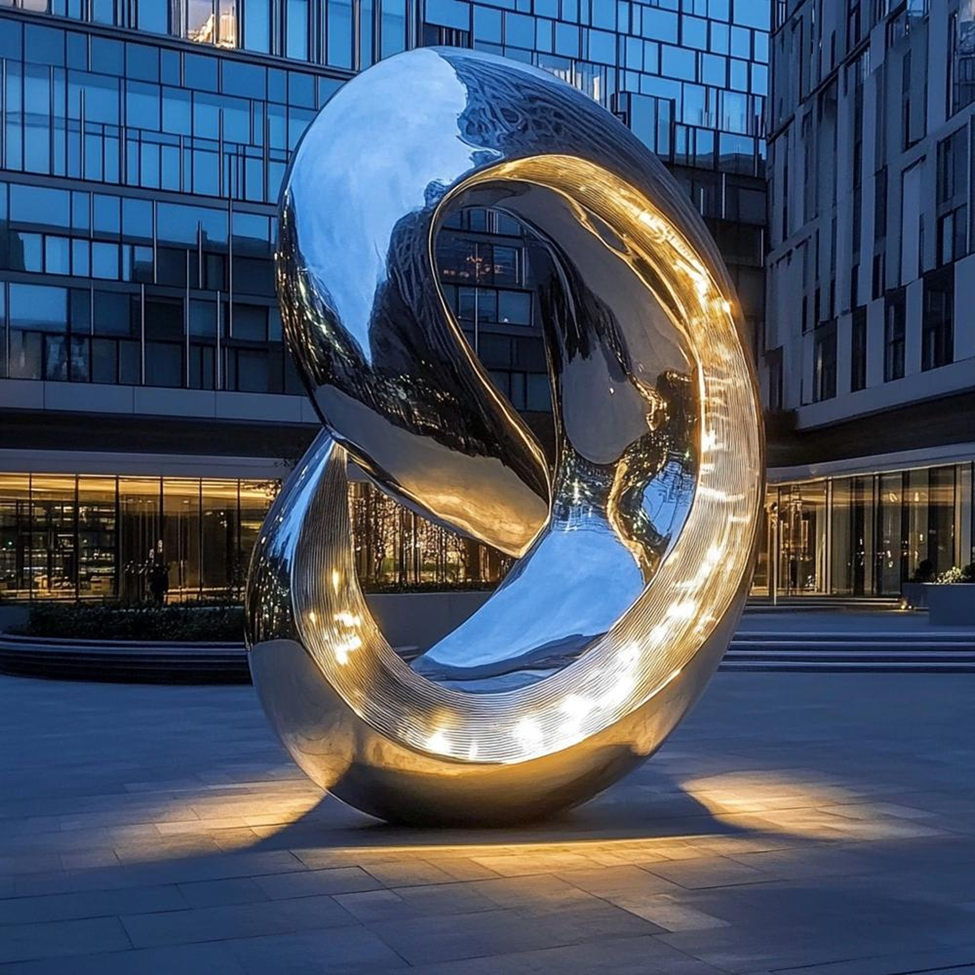
A stainless steel sculpture finished to a mirror polish behaves almost like a moving mirror once lighting hits it. As a rough guide, a high-grade mirror polish reflects light far more directly than a matte or bead-blasted finish – the exact difference depends on the polish grade, the fixture and the angle involved, and a lighting designer or fixture manufacturer should confirm the figures for the specific finish and product being used. In practice, that means the fixture itself, its housing, its glare shield and even its colour temperature become part of the sculpture’s appearance – whether that was intended or not. Point a 4000K neutral-white spotlight at a mirror-polished piece sitting beside a lobby lit at 2700K warm-white, for instance, and the two will visibly clash the moment a guest looks between them.
Brushed and satin finishes are more forgiving. They soften and diffuse reflected light instead of mirroring it directly, which gives a lighting designer more room to work with fixture placement and makes everyday marks – fingerprints, water spots, dust – far less noticeable after dark. Choosing between a mirror-polished, brushed or satin finish early in the project gives the lighting team far more flexibility than trying to correct reflection problems once the piece is already anchored in place.
Miss that step, and the fix happens on site- the costly way. Footings get moved. Fixtures get re-angled. Sometimes part of the surface even needs refinishing just to cut the glare nobody spotted until the piece was switched on.
How Do Sculpture, Lighting and Site Work Together?
None of these decisions works in isolation. Surface finish sets how much light a piece reflects and in which direction; the fixture layout sets how much light reaches it and from where; and the site sets everything neither of those can control – how much ambient light is already there, what else is reflecting nearby, and how close people actually get. A mirror-polished piece on an open, dim lawn behaves nothing like the same finish beside a lit water feature or a glazed hotel façade, where reflections off the water or the glass are already competing for attention. A rooftop centrepiece has to read correctly from below as well as from an adjacent terrace at eye level, which a ground-level plaza sculpture never has to account for.
That is why finish, fixture and site get reviewed together rather than signed off one at a time. A polish that looks right in a studio render can behave very differently once it is reflecting a car park, a pool, or the coloured lighting of a neighbouring building – and the only way to catch that is to look at all three at once, ideally before the piece leaves the workshop.
What Causes Unwanted Glare and Harsh Shadows on Outdoor Sculptures?
Glare and harsh shadows are the two complaints that come up most often about lit modern sculptures, and both usually trace back to a handful of avoidable causes on site:
- Fixtures aimed straight into a mirror-polished surface at eye level, instead of angled to graze across it
- A single unshielded floodlight sitting too close to the base, which flattens the form rather than revealing it
- Ground-recessed fixtures without a sufficiently weatherproof housing (typically IP65 or higher for wet or exposed sites – the exact rating needed depends on the location), which fail or fog within a season.
- Lighting angles set without accounting for how nearby planting will grow and shade the fixtures within a year or two
- Colour temperatures that clash with nearby architectural or landscape lighting – a 5000K spotlight next to 2700K facade lighting, for example.
- No plan for how the piece will read from vehicle headlights, pedestrian pathways or an elevated terrace at different times of night
Most of this is avoidable by testing on site, or on a full-scale mock-up, before any fixture is permanently anchored. A rendering can only approximate how real light behaves once it actually meets a real, three-dimensional, reflective surface – the two rarely match exactly.
How Should Lighting Fixtures Be Positioned Around Abstract Sculptures?
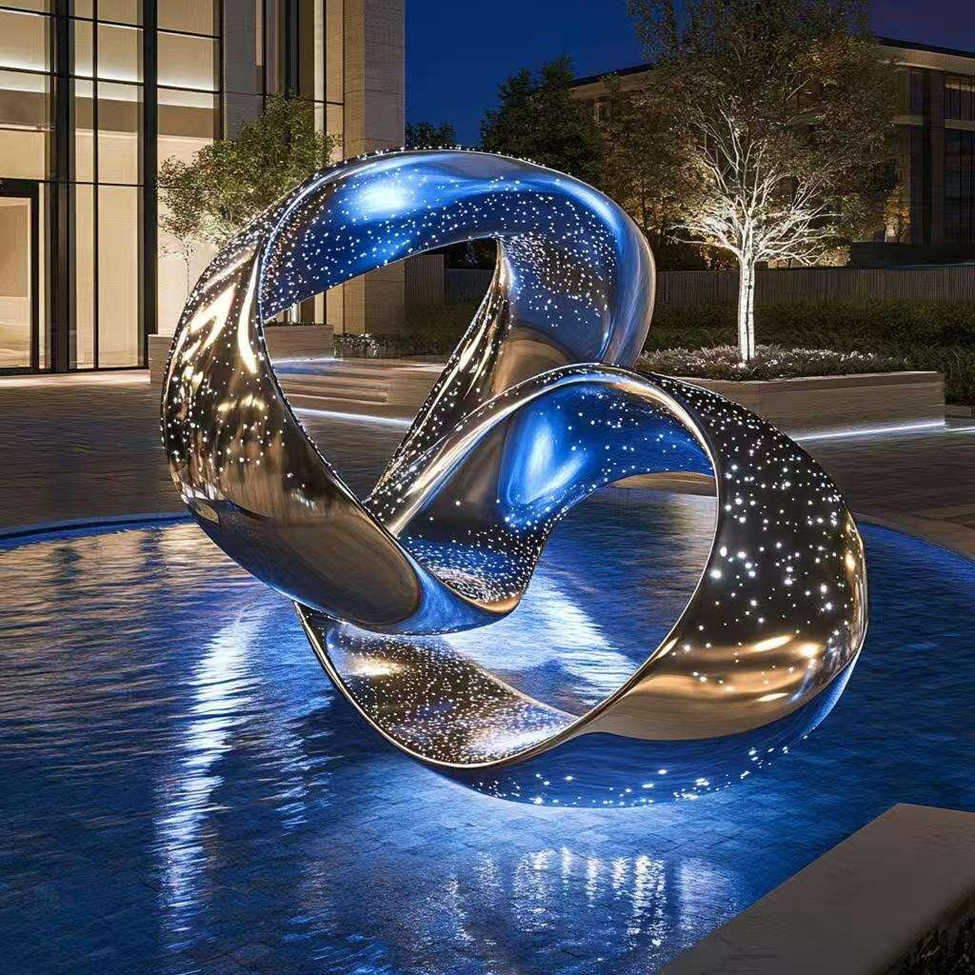
Positioning fixtures around a piece like this calls for a different approach than lighting a flat facade, simply because the viewing angle keeps changing as people walk around it. A handful of techniques tend to hold up well in practice:
- Grazing light at a low angle across a textured or faceted surface to bring out form and edge detail without hotspots – well suited to a commercial plaza piece viewed up close by passers-by
- Uplighting from a discreet, ground-recessed fixture, typically a narrow beam (often somewhere in the 15–25° range, though the right angle depends on the fixture and the piece), to reveal height and internal voids from below – a common choice for a tall hotel entrance or porte-cochère centrepiece
- Backlighting or silhouetting against a wall or water feature to create a strong, legible outline after dark – particularly effective for sculptures set against a pool, fountain or reflecting pond
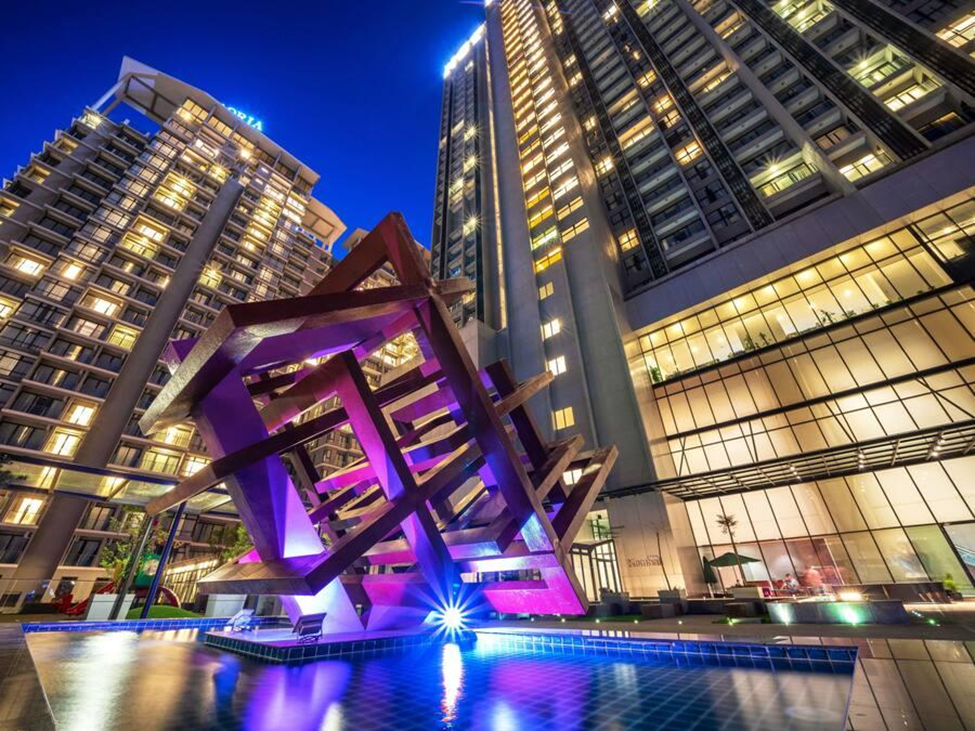
- Layering two or three fixtures at different angles and intensities rather than relying on one dominant light source – the usual approach for a landmark courtyard or plaza centrepiece meant to hold attention from every direction
- Siting ground-recessed fixtures where irrigation, foot traffic and seasonal planting won’t disturb or block them later – a recurring consideration on landscaped rooftops and garden pathways
Layering is usually the single biggest improvement available, and it’s often the cheapest one too. A sculpture lit from one angle tends to read as flat and one-dimensional; the same piece lit from two or three angles at different intensities develops real depth, texture and presence once the sun goes down.
Why Does Night-Time Presence Matter for Hotels, Architects and Developers?
For hotels, architects and developers, this is where the commercial case is strongest. The night-time appearance of modern sculptures often matters more than the daytime one, because arrival experiences, evening events, restaurant terraces and social-media photography overwhelmingly happen after dark. A hotel entrance piece that photographs beautifully at noon but goes dark and flat by 9pm has effectively lost half its working life as a brand asset – exactly the hours when guests are checking in, dining, and taking the photos that end up on booking sites and Instagram.
That’s why night-time presence deserves the same planning weight as the daytime design. A sculpture that only performs in daylight is only half the investment paying off. Building lighting into the engineering from the start protects that second half – the arrival moments, the evening photography, the impression guests actually carry home.
How Does Pegasus Support Lighting Integration From Design Through Installation?
Most lighting problems trace back to one thing: the sculpture was engineered before anyone thought about where the fixtures would go. Pegasus reverses that order for modern sculptures that need lighting built in, not bolted on.
Take a rooftop terrace piece with internal uplighting. Plan the void and cable channel during design, and the conduit ends up flush, sealed and invisible once the sculpture is finished. Skip that step, and installers usually end up surface-mounting the wiring along the base instead – visible, workable, but never as clean as the render promised.
That’s why cable routes and mounting points get locked in before fabrication starts, not adjusted around it. Welds near any cable channel are held to the same finish standard as the rest of the piece, and every stainless steel sculpture is checked against its actual lighting plan before it’s packaged – connectors, access panels, everything below grade rated for it.
The payoff shows up on site. Pegasus hands the local lighting contractor drawings that already account for the wiring, so nobody’s improvising a fix once the piece has arrived and the crane is booked.
All of that groundwork exists to support whichever technique the lighting designer ultimately chooses for the piece. Here’s how the main options compare:
| Technique | Effect Created | Best Suited For | Key Consideration |
| Grazing | Emphasises texture, facets and surface detail | Commercial plazas with faceted or textured forms | Close fixture placement and precise angling |
| Uplighting | Reveals height, internal voids and vertical lines | Hotel entrances and tall centrepiece sculptures | Needs a discreet, ground-recessed housing |
| Backlighting / Silhouette | Creates a strong outline against a backdrop | Water features and sculptures near walls or feature backdrops | Best where the background itself is controlled |
| Ground-Recessed Accent | Subtle, low-profile illumination from below | Rooftop gardens, landscaped grounds and pathways | Protect from irrigation and planting changes |
| Layered Multi-Angle | Adds depth, contrast and dimensional presence | Commercial plazas and landmark courtyard centrepieces | Needs two to three coordinated fixtures, not one |
Frequently Asked Questions
Does lighting need to be planned before a sculpture is manufactured?
It should be. Once a piece is cast and welded, adding cable routes or mounting points means cutting into finished work – slower, pricier, and it shows.
Will the same sculpture really look different by day and by night?
Yes, often dramatically. Daylight fills in a piece evenly regardless of how it’s designed, while at night it is only as visible, and only as interesting, as the fixtures aimed at it. That’s why finish and fixture layout need to be planned together rather than treated as two separate jobs.
What surface finish works best for a sculpture that will be lit at night?
Depends what you’re going for. Mirror polish throws bold, high-contrast reflections but demands precise fixture placement. Brushed or satin finishes are more forgiving and diffuse light more evenly.
Can lighting fixtures be built into the sculpture itself?
Often, yes – cable channels and mounting voids can go into the design from day one, so fixtures sit integrated rather than tacked on after the fact.
How much difference does fixture positioning actually make?
A significant amount. The same sculpture lit from a single angle can look flat, while the same piece lit from two or three coordinated angles typically develops noticeably more depth, texture and presence after dark.
Does Pegasus coordinate with lighting contractors on international projects?
Yes. Pegasus can provide technical drawings, mounting details and coordination notes so that local lighting and installation teams work from the same plan as the sculpture’s engineering documentation.
Conclusion
Lighting an abstract or modern sculpture well isn’t really about adding more fixtures. It’s about planning for reflection, shadow and night-time visibility from the first design conversation, not the final week before opening. Surface finish, fixture positioning and cable integration all shape how a piece will actually look after dark – long before a lighting designer ever sets foot on site. Treating that as part of the original design brief, rather than a job for whoever gets hired last, is usually what separates forgettable modern sculptures from the ones that genuinely define a property after dark.
Planning a lighting-integrated sculpture for a hotel, commercial development or public space? Contact the Pegasus team early in the design process to talk through finish, fixture coordination and installation planning before construction begins.