In contemporary Western urban design and landscape architecture, material selection for monumental installations is shifting away from traditional copper alloys and polymers. High-profile civic plazas, coastal hospitality developments, and corporate headquarters across Europe and North America are increasingly specifying Grade 316/316L stainless steel for prominent art installations.
For architectural procurement managers, structural engineers, and landscape designers, an outdoor sculpture is not merely an aesthetic centerpiece; it is a long-term material asset subject to environmental degradation.
This article provides a technical analysis of why 316L stainless steel has become the empirical standard for Western commercial projects, evaluated through the lenses of material science, structural engineering, and contemporary design philosophy.
1. Material Science & Environmental Mitigation: The 316L Corrosion Advantage
From the perspective of asset lifecycle management, the primary risk for outdoor architectural metalwork is atmospheric corrosion. Western coastal metropolises (e.g., California, Florida, the Mediterranean coast) and dense European urban centers present aggressive environments characterized by high chloride salinity and acidic industrial emissions.
The Failure of Standard Alloys
While Grade 304 stainless steel is widely utilized in controlled or interior settings, it frequently fails under coastal conditions. Exposure to chloride ions disrupts the chromium oxide passive layer, initiating localized pitting and the unsightly ferric staining commonly referred to as “tea staining.”
The Chemistry of Resilience
Grade 316L stainless steel mitigates these risks through precise chemical alloying:
- Molybdenum ($Mo$) Enrichment: The integration of 2% to 3% Molybdenum significantly raises the alloy’s Pitting Resistance Equivalent Number (PREN). This chemical modification alters the repassivation kinetics, allowing the protective layer to reform instantly when compromised by aggressive chloride environments.
- Low-Carbon ($L$) Specification: By restricting the carbon content to below 0.03%, 316L prevents chromium carbide precipitation during the welding phase. This eliminates intergranular corrosion within the heat-affected zone (HAZ), preserving the sculpture’s structural integrity along all fabricated seams.
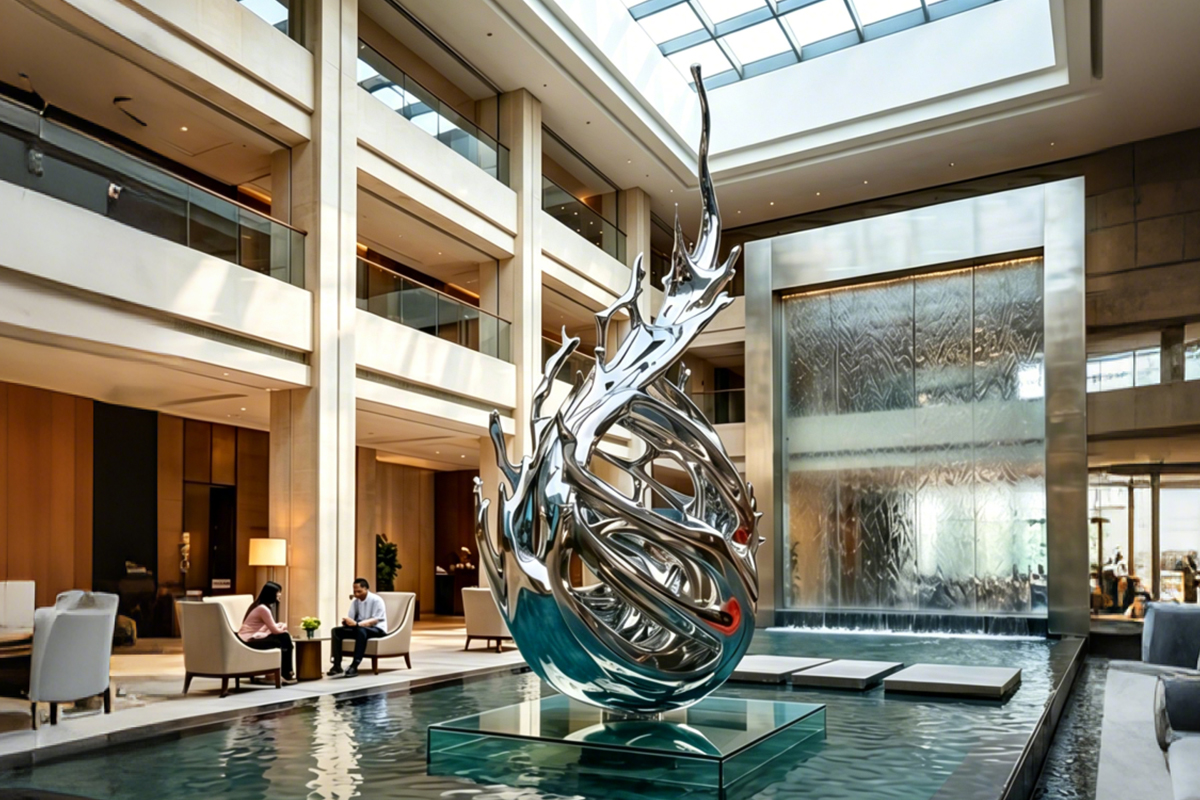
2. Spatial Aesthetics: Reflective Synergy and Fluid Modernism
The architectural dialogue in Western modernism heavily prioritizes spatial interaction, clean geometries, and structural honesty. The aesthetic success of a contemporary sculpture is judged by its capacity to engage with its architectural context.Specular Reflection and Environmental Integration
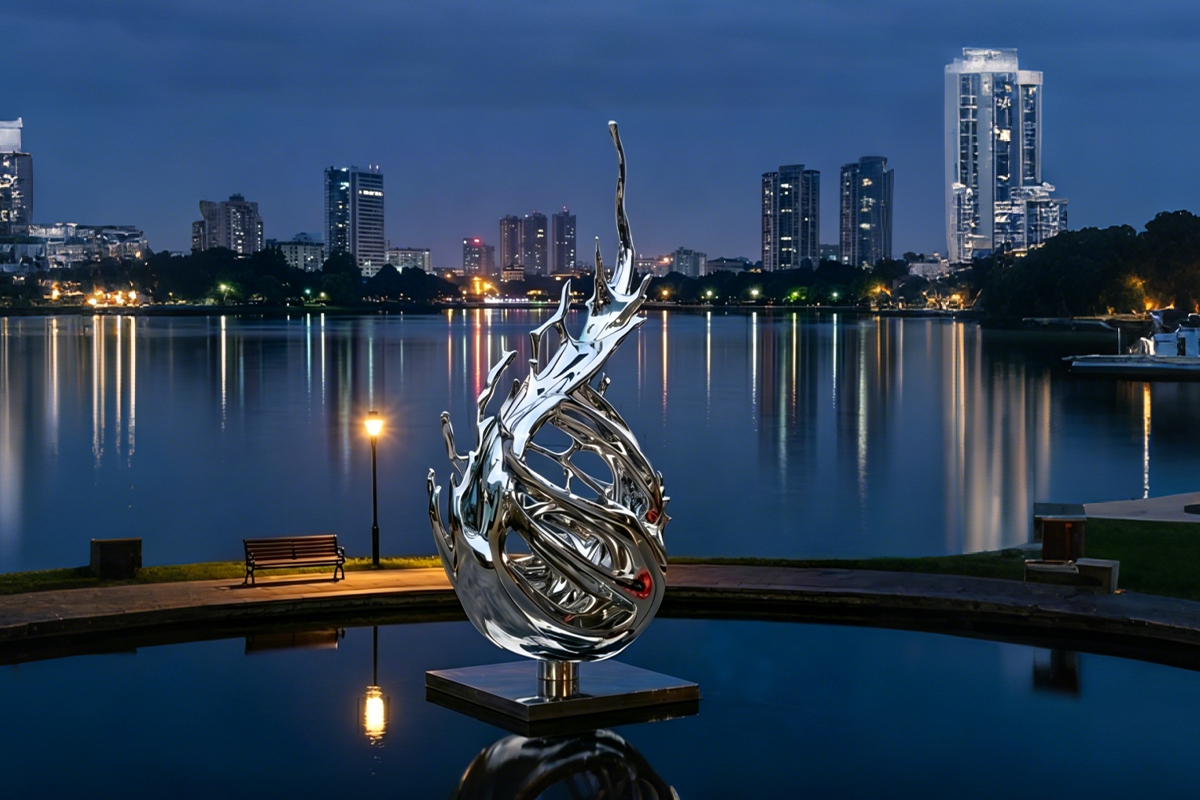
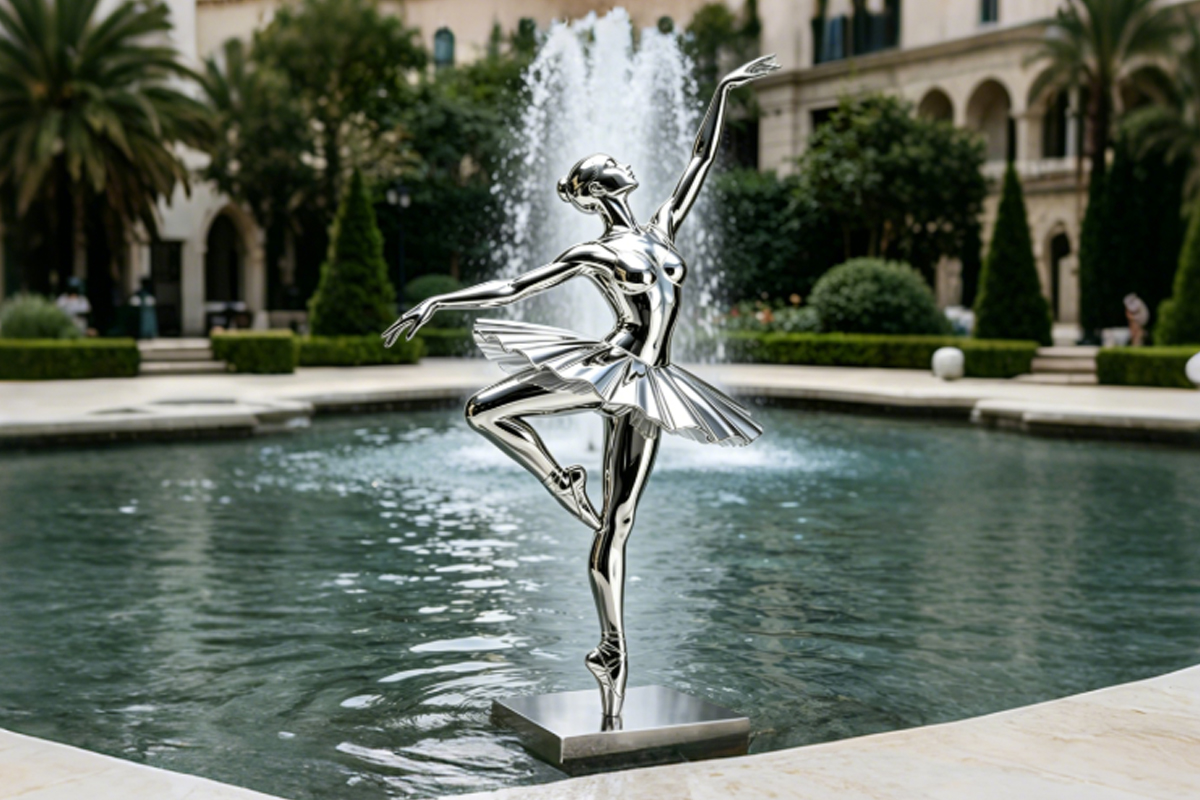
Unlike painted surfaces or dark bronze, which impose static color profiles on a landscape, a mirror-polished stainless steel surface functions as a dynamic canvas. It exhibits highly specular reflection, continuously mirroring shifting diurnal light cycles, microclimate conditions, and surrounding architectural facades. This allows a large-scale installation to integrate naturally into its spatial context without creating visual clutter.
Tensile Capability and Structural Fluidity
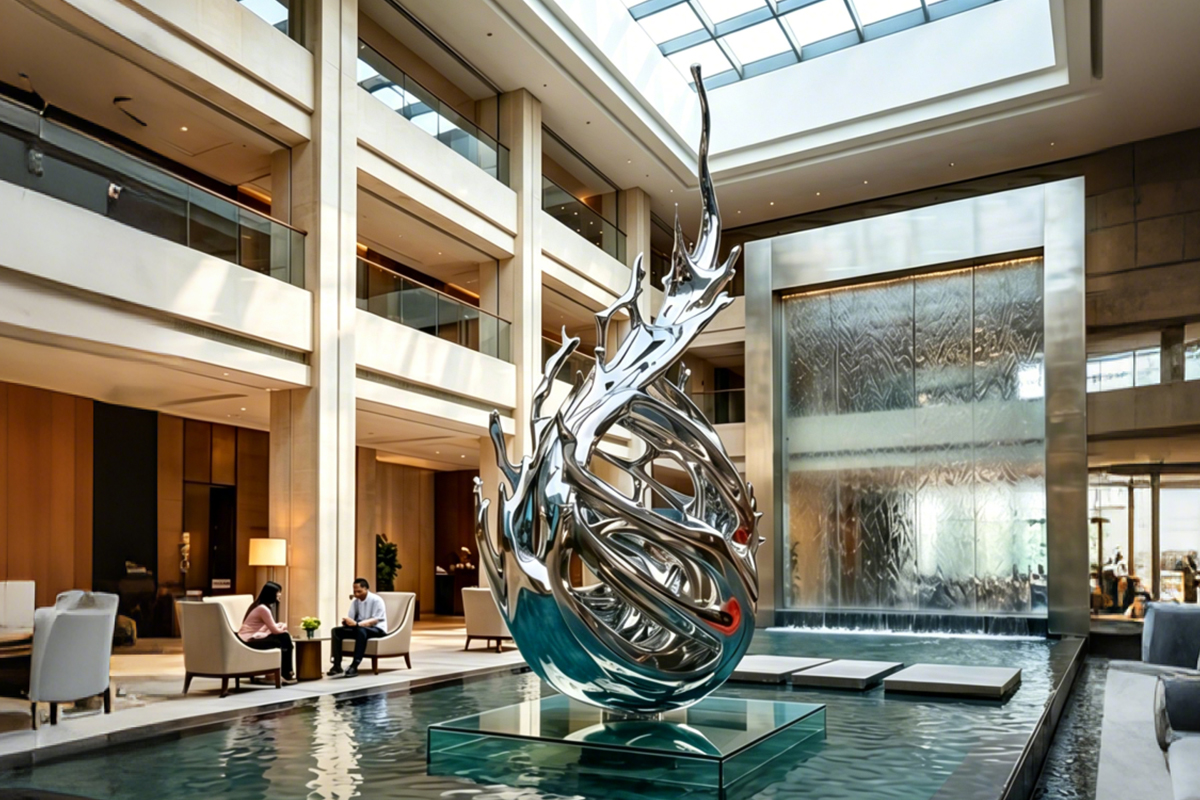
The high tensile strength and ductility of austenitic stainless steel allow fabricators to achieve sweeping, curvilinear forms—such as fluid water splashes, complex kinetic ribbons, or deconstructive shells—that would be impossible to cast in traditional bronze without excessive wall thickness and weight.
3. Structural Engineering & Compliance with Western Codes
Monumental outdoor structures standing between 2.0 to 2.5 meters or higher must comply with stringent Western engineering protocols, including ASTM international standards in North America and Eurocodes (EN 1993) in Europe.
Internal Load-Bearing Armatures
The external shell of a fluid sculpture provides the aesthetic profile, but wind load resistance depends on an internally engineered structural frame. Professional B2B fabrication utilizes a rigid internal skeleton—often composed of heavy-gauge structural carbon steel or matching stainless steel profiles—calculated to withstand localized wind velocity pressures.
Galvanic Isolation Protocols
When utilizing dissimilar metals internally (e.g., a carbon steel core inside a 316L stainless steel shell), fabricators must strictly implement galvanic isolation. Without specialized non-conductive barrier coatings and isolating fasteners, the electrochemical potential difference between the metals will induce severe galvanic corrosion inside the sculpture, compromising structural safety over time.
4. The Craftsmanship Boundary: Sub-Micron Surface Finishing and Metallurgy
In the high-end architectural procurement market, surface topography dictates the perceived value of the installation. Discerning Western architects evaluate finishes through both visual clarity and metallurgical consistency.
Seamless Weld Integration
A premium architectural sculpture requires full-penetration Gas Tungsten Arc Welding (GTAW / TIG). The weld beads must undergo meticulous grinding, leveling, and blending. The final assembly must exhibit zero visible seam lines or localized thermal distortion, presenting the sculpture as a monolithic, continuous piece of liquid metal.
Multi-Stage Mechanical Polishing
Achieving a non-distorting, true mirror finish requires a systematic, multi-stage mechanical polishing sequence. Fabricators progress from coarse abrasives down to sub-micron diamond compounding pads:
| Polishing Stage | Abrasive Media / Compound | Surface Characteristic |
| Stage 1: Leveling | Coarse Grit Alumina ($Grit\ 80 – 240$) | Weld removal, structural flattening |
| Stage 2: Pre-Buffing | Fine Silicon Carbide ($Grit\ 400 – 800$) | Elimination of directional scratch patterns |
| Stage 3: Mirror Buffing | Sisal Buffs & Chromium Oxide Compounds | Development of specular reflectivity |
| Stage 4: Super-Mirror | Flannel Wheels & Sub-Micron Diamond Paste | Flawless, non-distorting architectural finish |
Any shortcut in this technical progression creates surface waviness or cloudy patches under direct daylight, which instantly degrades the premium aesthetic required for luxury commercial spaces.
Conclusion: Securing Quality and Compliance in Global B2B Procurement
Procuring a monumental 316L stainless steel sculpture involves navigating a complex intersection of digital design fidelity, material science, and hand-craftsmanship. From initial 3D digital prototyping and structural calculations to custom protective packaging designed for global maritime logistics, every phase must align with industrial B2B standards.
Are you managing a high-profile commercial landscape, a luxury hospitality water feature, or a public civic development?
[Download Our Sculptures & Products Catalog] to review our full range of material certifications, technical fabrication capabilities, and past global engineering case studies.