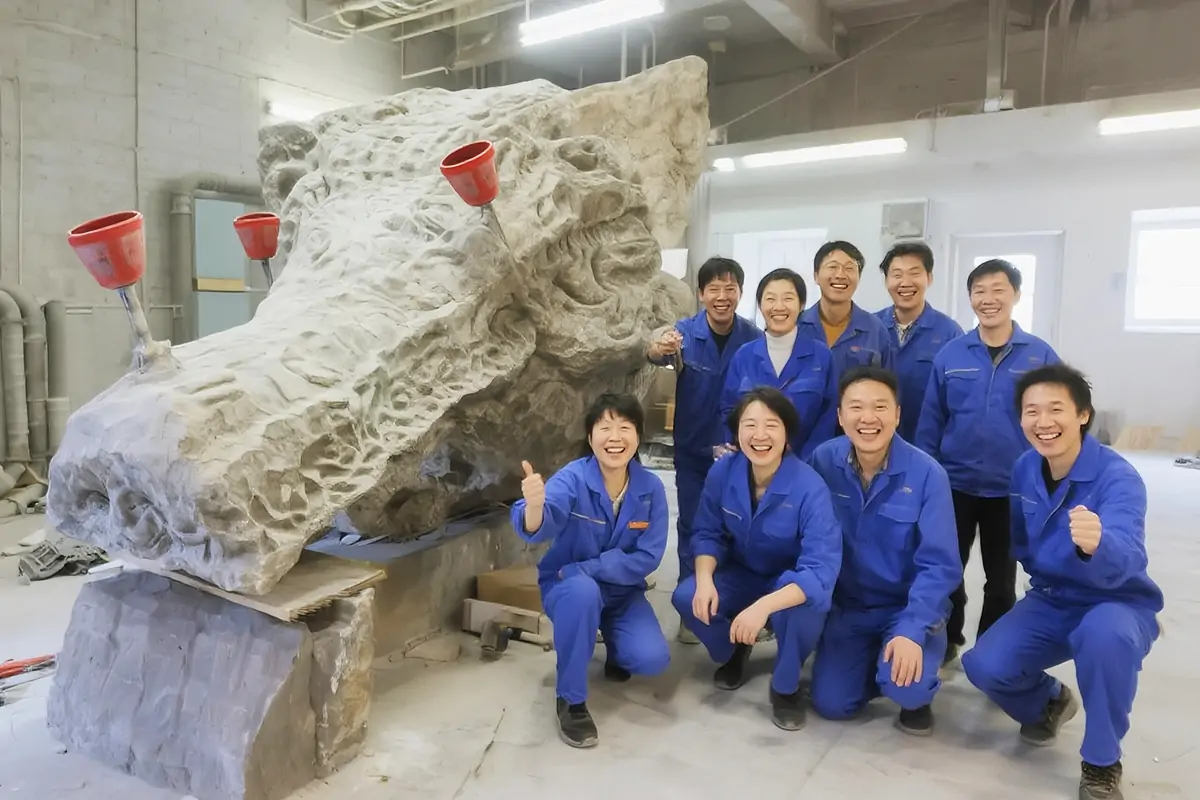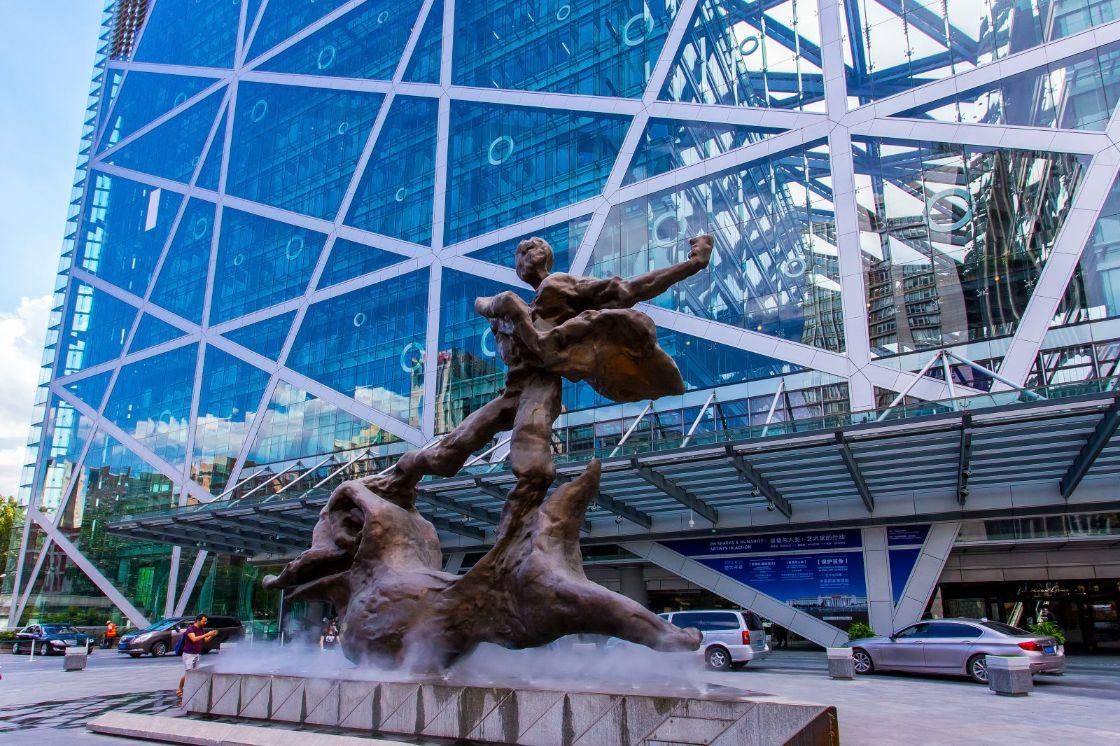
A three-metre bronze maquette on a designer’s desk and a twelve-metre bronze centerpiece in a hotel atrium are not the same project scaled up. They are, in engineering terms, almost different disciplines. The moment a large bronze sculpture crosses from “big art object” into “structural installation,” the questions change. Instead of asking what the piece should look like, procurement teams, architects and developers start asking whether it can stand up to wind loading, whether it can physically leave the foundry, and whether the crane on site can actually lift it into place.
This is the gap where most commercial bronze projects run into trouble. A design that looks resolved in a rendering can be structurally unworkable at full scale, and a foundry that handles tabletop and garden-scale bronze work comfortably may not have the internal engineering, sectional casting capacity, or shipping infrastructure to take on a monumental bronze sculpture. Understanding what actually changes at scale – and how to verify a supplier can handle it – is what separates a smooth installation from a costly change order.
Where “Large” Becomes “Monumental”
There is no single industry threshold that turns a large bronze statue into a monumental one, but the practical shift tends to happen once a piece moves beyond what a single mold, a single pour, or a single crew can reasonably handle. At that point, the sculpture stops being a casting problem and becomes an engineering problem: the artwork now has to answer to gravity, wind, seismic activity, foundation loads and transport logistics, not just to the sculptor’s original form.
This is also the point where a bronze monument sculpture needs a feasibility review before anything is finalized. At Pegasus, this happens at the discovery stage, before production begins – the design team reviews the original concept or maquette against real-world engineering constraints, flags any geometry that would be unstable or impossible to cast in one piece, and works with the client to resolve those issues while the piece is still a digital model rather than a half-cast bronze section. Scanning a maquette into a high-resolution digital twin at this stage lets engineers test proportions, wall thickness and center of gravity long before metal is poured, which is far cheaper to correct on screen than on the foundry floor.
For projects still defining engineering, installation and approval requirements, a sculpture specification brief can help align the design team, manufacturer and site stakeholders before fabrication starts.
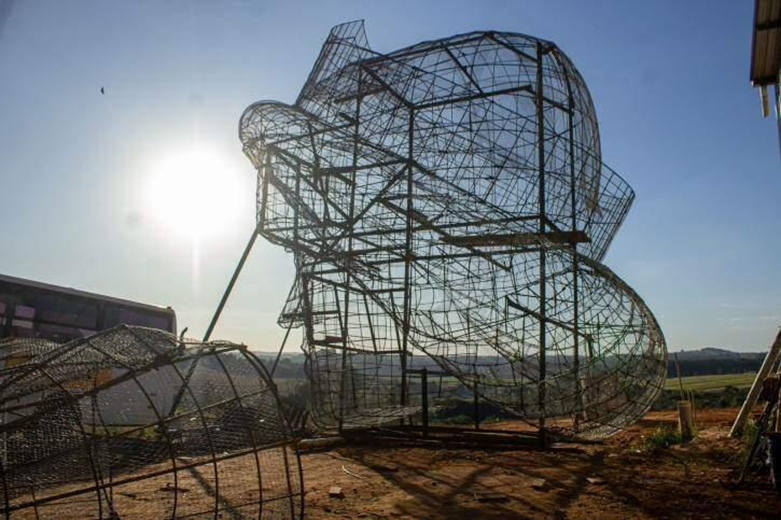
Even one real project photo with two or three lines on the challenge and how it was handled carries more weight with buyers than another rendering – send over the details and I’ll drop them in.
What Changes Structurally: Internal Support and Sectional Casting
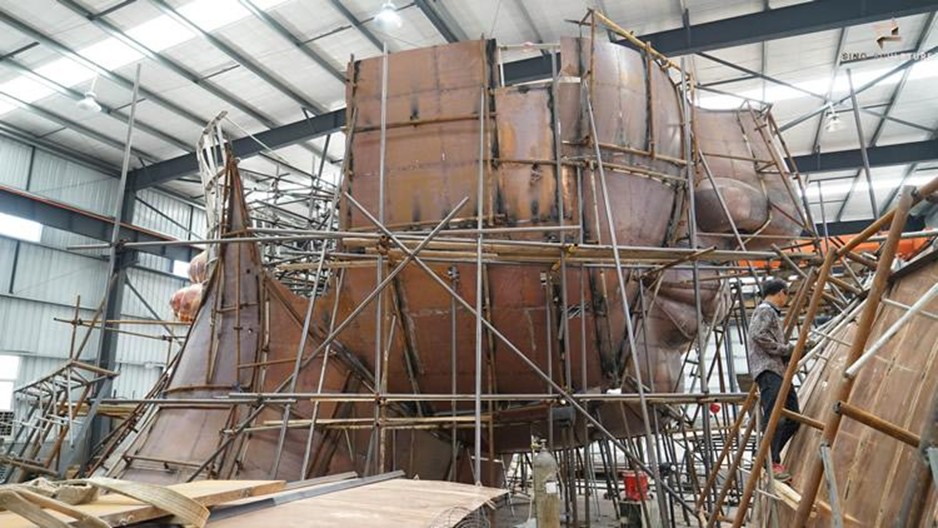
A small bronze statue may be able to rely largely on the strength of the metal shell itself, depending on its size, geometry and installation conditions. An oversized bronze sculpture generally cannot. Once height, cantilever, or exposed surface area increase past a certain point, wind load and the sheer weight of the bronze shell demand an internal steel armature – essentially a structural skeleton hidden inside the sculpture that carries the actual load, while the bronze skin carries the visual form.
Designing that armature is structural engineering, not sculpture finishing. It requires calculating wind and seismic loads specific to the installation site, determining how the load transfers from the highest point of the piece down through the armature to the foundation, and deciding where structural steel needs to tie into the casting rather than simply sit inside it. This is precisely why a large bronze sculpture commissioned for a coastal plaza or a seismically active region needs a different internal structure than an identical design placed in a sheltered corporate courtyard – the geometry may look the same, but the engineering behind it will not.
For outdoor installations, the engineering review also has to account for moisture, salt exposure and other environmental conditions the piece will face over its service life.
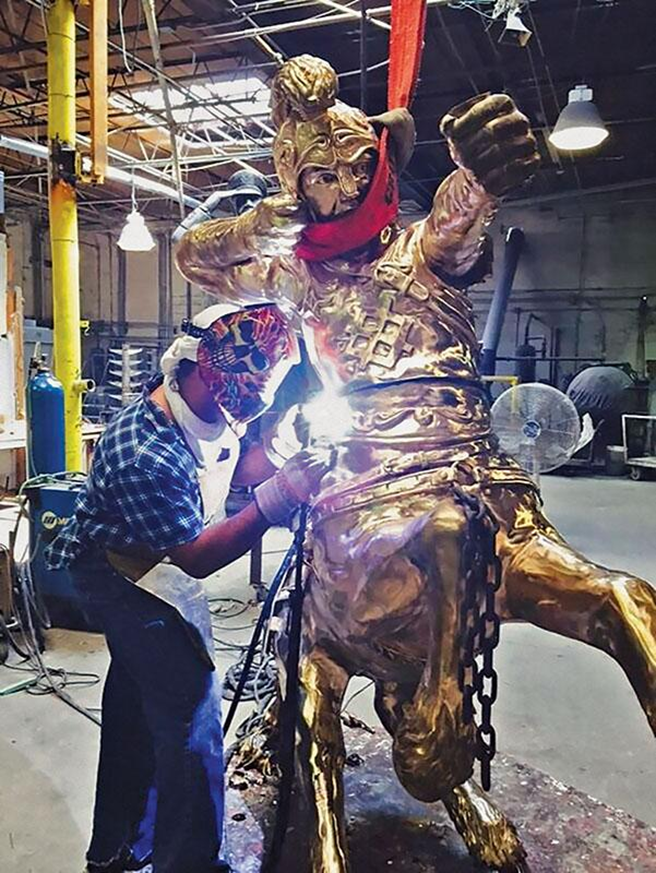
The same shift in scale also changes how the piece is cast. Traditional lost-wax bronze casting works well at modest scale, but a monumental piece is rarely cast as one continuous pour – mold size, metal volume and the cooling behavior of bronze all impose practical limits. Instead, a large bronze statue is engineered in sections – arms, torso panels, drapery folds, or structural segments – each cast individually and then reassembled.
The skill is in where those seams fall and how they’re closed. A poorly planned segmentation shows visible weld lines across a face or a smooth surface; a well-planned one hides the joints inside natural folds, shadow lines, or texture breaks in the sculpture’s own form. Once the sections are cast, welding brings them back into a single structural shell, and the weld itself has to be strong enough to carry load, not just cosmetically sound. After welding, the surface is chased, textured and patinated so the joins disappear entirely – the finishing work is what makes a sectioned monumental bronze read as one continuous piece rather than an assembly of parts.
This is also where a dry-lay, or trial assembly, becomes essential. Before any section is shipped, the full sculpture is temporarily reassembled on the factory floor so every seam, bolt connection and structural tie-in can be checked under real conditions rather than on a drawing. Catching a misalignment in the factory costs a few days of rework; catching it on site, after the crane has already lifted a section into place, costs considerably more.
| Project Scale | Typical Approach to Casting | Internal Support Needed | Primary Engineering Focus |
| Studio / garden bronze (up to ~life-size) | Single or few-piece pour | Minimal or none | Surface detail and finish |
| Large bronze statue (life-size to several meters) | Multi-section casting with welded joints | Partial steel armature | Load-bearing joints, wind exposure |
| Monumental bronze sculpture (multi-meter, public-scale) | Fully segmented, engineered casting plan | Full internal steel structure, engineered to site loads | Wind/seismic loading, foundation transfer, transport logistics |
Foundations: Where the Sculpture Meets the Ground
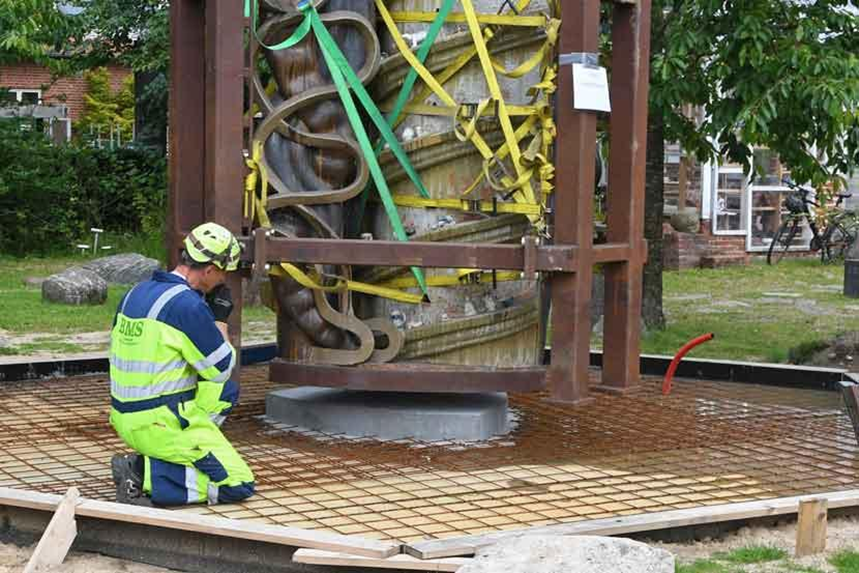
An architect or landscape designer specifying a large bronze sculpture for a plaza, atrium or waterfront site needs more than a base – they need a foundation designed to carry the specific load, wind profile and soil conditions of that location. The internal armature engineered in the previous stage has to terminate in anchor points that transfer load cleanly into a footing, and that footing has to be coordinated with the site’s structural engineer of record, not treated as an afterthought once the sculpture arrives.
For projects intended for exterior landscape settings, reviewing the garden sculpture capabilities can also help buyers compare material, placement and site-planning considerations.
This is where manufacturer and site team need to be working from the same information early. A responsible foundry provides anchor point drawings, base-plate dimensions and load data well before installation, so the client’s structural engineer can design the footing in parallel with production rather than waiting until the crate arrives on site.
Shipping and Crane Planning for a Monumental Bronze
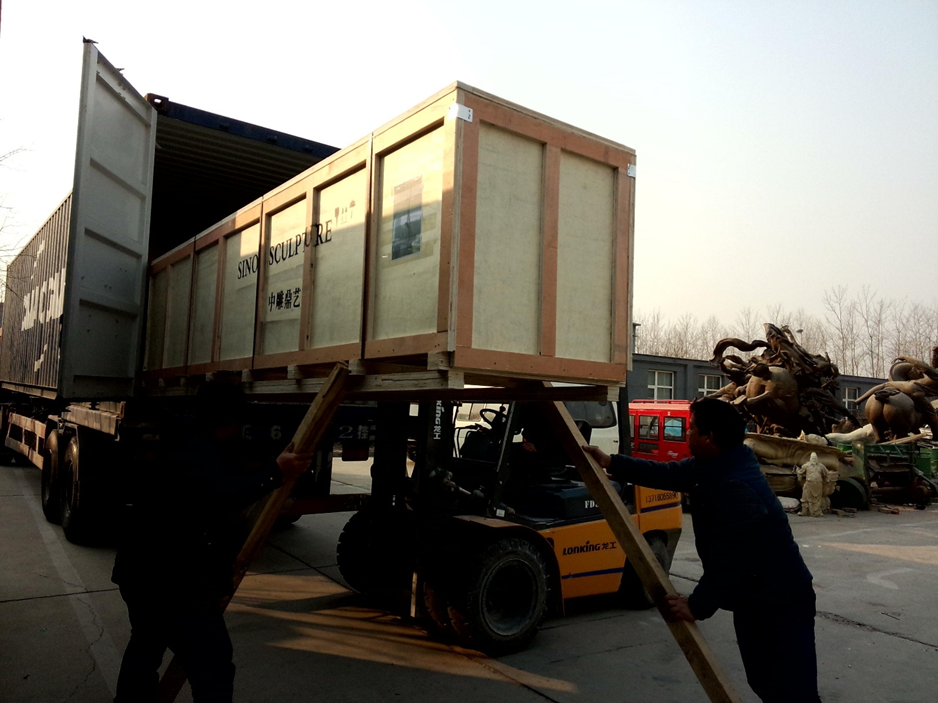
A large bronze statue rarely travels as one piece. The same segmentation engineered for casting is used for shipping – the piece is disassembled at its engineered joints, packed into custom steel-framed crates sized for ocean freight, and reassembled on site rather than transported as a single unmanageable mass.
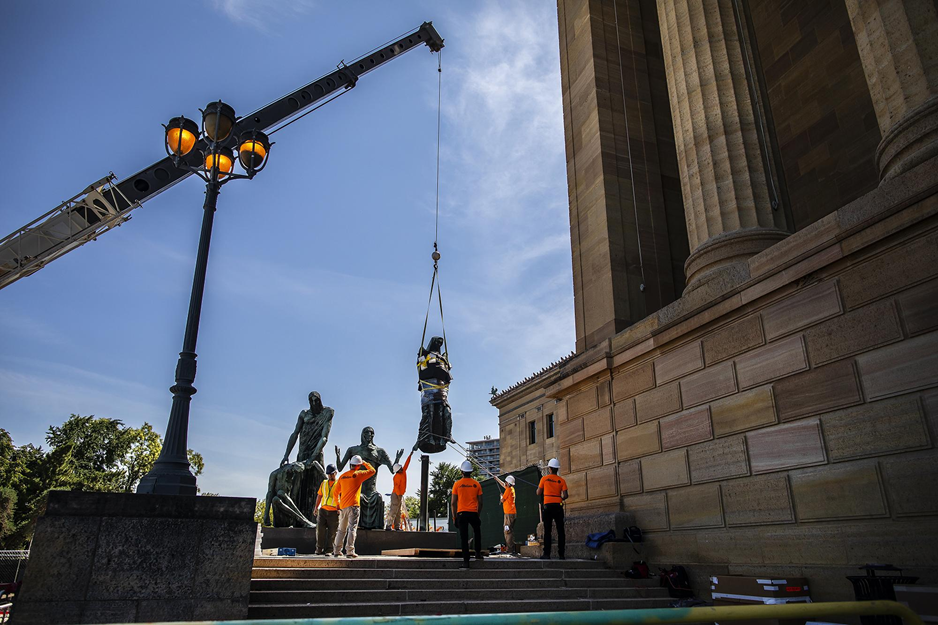
Getting this right requires planning that starts long before the sculpture ships. Container and crate dimensions have to be confirmed against the shipping route and any site access constraints – narrow gates, low bridges, or restricted delivery windows can all affect how a piece is packed. On the receiving end, a crane and rigging plan needs to account for the actual lift points engineered into the sculpture, not improvised attachment points chosen on the day.
Depending on the design and installation sequence, temporary external supports or bracing may also be needed while sections are being positioned and permanently anchored. These supports have to be planned alongside the lift sequence so they do not interfere with crane access or the final assembly.Pegasus coordinates this process end-to-end: sections are engineered for reassembly from the outset, clients receive dimensional reports and weekly progress updates through production, and technical supervisors can be dispatched to the installation site to guide the client’s local crew through final assembly and anchoring.
Before Production Begins: A Site and Planning Checklist
For procurement teams and developers managing a monumental bronze commission, a short amount of upfront diligence prevents most of the costly surprises later. Before signing off on production, it’s worth confirming:
- Site load capacity and soil conditions at the installation point, reviewed by a structural engineer
- Crane access, including turning radius, boom clearance and any overhead obstructions
- Delivery route constraints – bridge heights, road widths and container size limits
- Wind and seismic data specific to the installation location, shared with the foundry’s engineering team
- Foundation and anchor-point drawings coordinated between the foundry and the site’s engineer of record
- Installation timeline, including any weather-dependent scheduling for the final lift
How to Evaluate Whether a Supplier Can Actually Handle It?
Because a bronze monument sculpture is as much an engineering commitment as an artistic one, a portfolio of finished images only shows what a foundry has made look good – not whether it can execute a monumental piece for your site. Buyers comparing suppliers can also review what to look for when selecting a bronze sculpture manufacturer for large-scale commercial work. Before signing a contract, it’s worth pushing for evidence in four areas.
1. Engineering documentation
Ask for: internal wind and seismic load calculations for a comparable piece, not just a finished-piece render.
What a credible supplier can show: in-house structural or 3D engineers rather than work outsourced to a third party, a documented feasibility review process, and load calculations specific to your site’s wind and seismic data rather than generic figures reused across projects.
2. Sectional casting and welding plan
Ask for: how the piece will be divided into sections, where the seams will fall, and how they’ll be concealed.
What a credible supplier can show: examples of past segmentation plans, photos or video of dry-lay trial assemblies, and finished pieces where weld lines aren’t visible in the final patina.
3. Shipping and logistics experience
Ask for: examples of monumental pieces actually shipped internationally – crate design, container sizing, and how lift points were engineered into the casting.
What a credible supplier can show: crate and rigging drawings from past projects, and a track record of resolving delivery-route constraints – bridge heights, road widths, site access – before a piece ships, not after it arrives.
4. Installation support
Ask for: who manages crane planning and on-site assembly, and whether technical supervision is included or left entirely to the client’s crew.
What a credible supplier can show: anchor-point and base-plate drawings delivered well ahead of installation, and a documented process for supervising or supporting the final lift and anchoring on site.
How quality is verified during production – through in-person visits, video documentation or third-party material testing – and how confidentiality is handled for commissioned designs are also worth confirming early, since both are harder to retrofit once production has already started.
Manufacturing a Sculpture at This Scale
Producing a large bronze sculpture that performs structurally as well as it reads visually depends on a manufacturer that controls the entire process in-house rather than outsourcing individual stages to separate vendors. At Pegasus, that begins with the discovery and feasibility review, moves into 3D engineering and CAD development where the internal armature and sectioning plan are finalized, and continues through mold-making, casting, welding and finishing inside a single 10,000 m² facility. Structural and 3D engineers, master mold technicians and finishing artisans work on the same floor, which means a segmentation decision made during engineering can be checked against casting reality the same week, rather than passed between separate outsourced workshops.
Quality control runs alongside production rather than as a final inspection: material certifications, dimensional reports and a formal factory acceptance test give the client documented sign-off before a piece is crated, with staged reviews available during casting, assembly and finishing on complex projects. For buyers who cannot travel to inspect the work in person, weekly video updates and virtual walk-throughs provide the same transparency a site visit would.
Frequently Asked Questions
How is a monumental bronze sculpture different from a smaller bronze statue in terms of engineering?
A monumental piece requires an internal steel armature engineered for the site’s specific wind and seismic loads, foundation design coordinated with the site’s structural engineer, and a casting plan built around segmented sections rather than a single pour.
Why is a large bronze statue cast in sections instead of one piece?
Mold size, metal volume and cooling behavior all limit how much bronze can be poured continuously. Sectional casting also matches how the piece will later be shipped and reassembled on site.
How long does a large bronze sculpture project typically take from concept to installation?
Timelines vary by scale and complexity, but they generally span design and engineering review, mold-making and casting, welding and finishing, shipping, and on-site installation – each stage dependent on the size and structural complexity of the piece.
Do I need to hire a separate structural engineer for the installation site?
Your site’s structural engineer of record should still review foundation design and site-specific loads, but a manufacturer experienced in monumental bronze work will provide the anchor point data, load information and installation drawings needed to support that review.
Can a large bronze sculpture be shipped internationally without damage?
Yes, when it’s engineered for disassembly from the start. Pieces built for sectional reassembly are packed into custom crates sized for ocean freight, with lift points and reassembly sequencing planned before the sculpture ever leaves the foundry.
Commissioning a large bronze sculpture is ultimately a question of who is managing the engineering behind the artwork, not just the artistry in front of it. If your project involves scale, structural complexity or international shipping, it’s worth reviewing the bronze sculpture capabilities behind a potential manufacturer, looking at completed monumental projects for comparable scale and site conditions, and discussing your specific design through custom sculpture development before finalizing a brief. The right foundry partner should be able to walk you through the engineering, not just the finish.
If you are planning a monumental bronze project, contact the Pegasus team to discuss scale, site conditions, engineering requirements and installation planning.