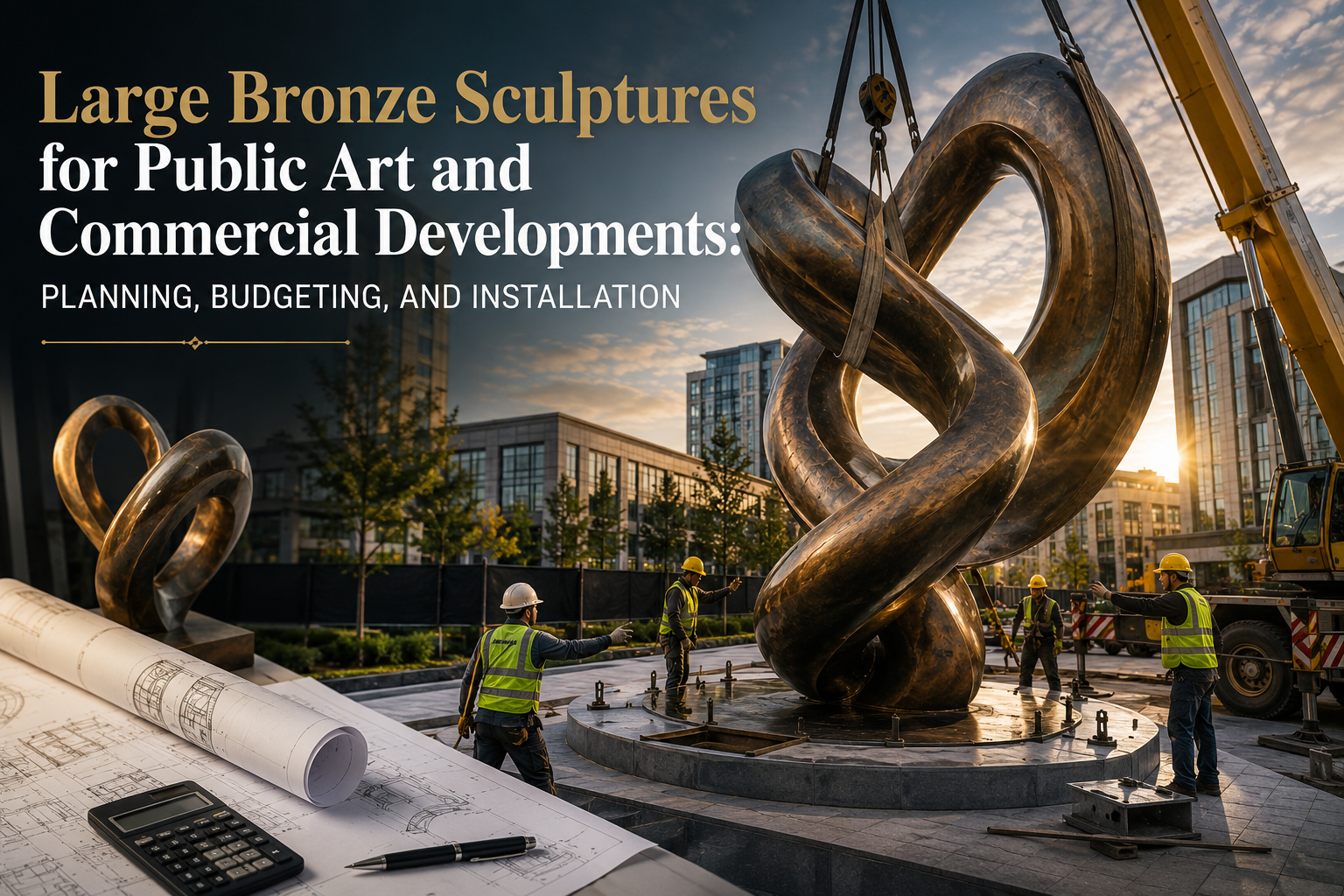
Large bronze sculptures have become defining features of luxury hotels, corporate headquarters, public plazas, cultural institutions, and mixed-use developments. Beyond their artistic value, these installations often represent significant commercial investments that require careful planning long before fabrication begins. From selecting the right manufacturing partner to coordinating engineering, budgeting, transportation, and installation, every stage influences the project’s overall success.
For architects, developers, landscape designers, and procurement teams, purchasing a large bronze sculpture is not simply about choosing a design. It involves understanding manufacturing capabilities, evaluating long-term project requirements, and ensuring the sculpture can be fabricated, transported, and installed safely within both budget and schedule.
Working with an experienced bronze sculpture manufacturer from the early planning stages allows buyers to identify technical challenges before production begins. Engineering reviews, structural assessments, fabrication planning, and installation coordination all contribute to reducing project risks while supporting smoother execution throughout the project lifecycle.
This guide explains the key considerations commercial buyers should evaluate when planning a large bronze sculpture project, helping them make informed procurement decisions while understanding the manufacturing expertise required behind every successful installation.
Why Large Bronze Sculpture Projects Require Early Planning
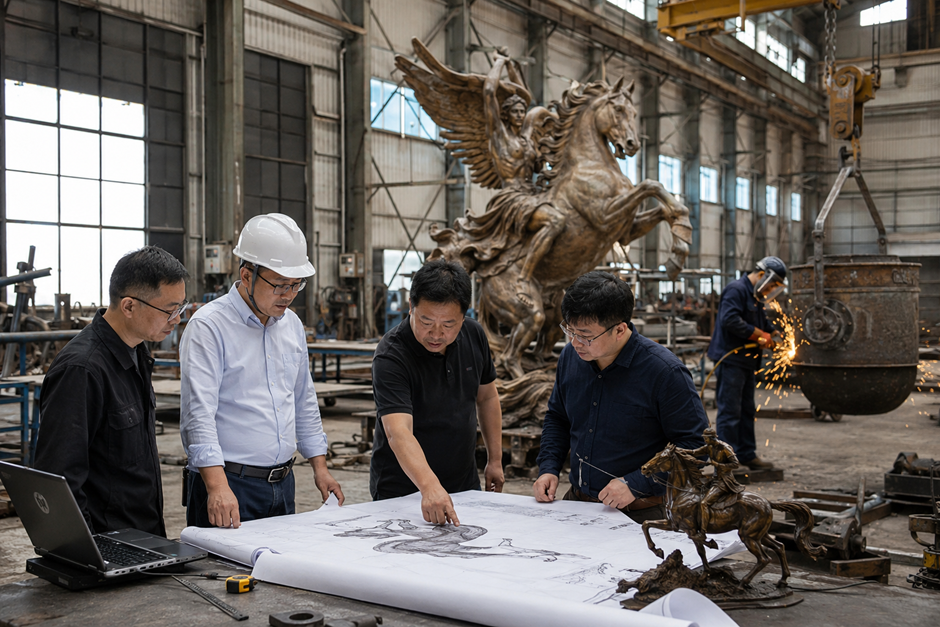
Unlike smaller decorative sculptures, large commercial bronze installations involve multiple disciplines working together throughout the project. Structural engineers, architects, artists, fabrication teams, project managers, logistics specialists, and installation crews all contribute to delivering a successful outcome.
Many of the most expensive project challenges occur long before the sculpture reaches the installation site. Site accessibility, foundation requirements, lifting equipment, transportation routes, structural loading, and local regulations can all influence manufacturing decisions. Addressing these factors during the planning stage helps reduce costly redesigns, minimise construction delays, and improve coordination between all project stakeholders.
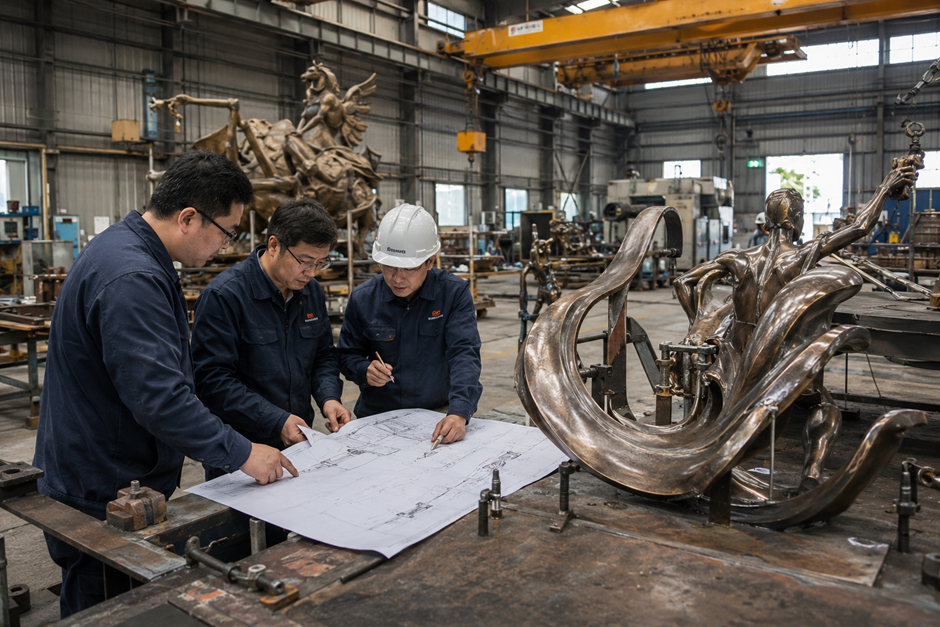
At Pegasus, project planning begins before mould production or bronze casting starts. Engineering teams review design intent, structural feasibility, manufacturing complexity, transportation requirements, and installation conditions to ensure each stage of production supports the overall commercial project. This collaborative planning process allows potential risks to be identified early while helping clients maintain realistic budgets and construction schedules.
For commercial developments where sculptures become permanent architectural features, early planning provides far greater long-term value than resolving technical issues after fabrication has already begun.
Understanding What Influences the Total Project Budget
One of the most common misconceptions among buyers is that the size of a sculpture alone determines its cost. In reality, the overall budget reflects a combination of artistic, engineering, manufacturing, logistics, and installation requirements.
Project costs may be influenced by factors such as:
- Sculpture dimensions and structural complexity
- Design development and engineering requirements
- Bronze casting methods and mould production
- Internal structural framework
- Surface finishing and patina application
- Quality inspections throughout fabrication
- Transportation and export packaging
- Crane lifting and on-site installation
Comparing quotations without understanding these individual cost components often leads to inaccurate procurement decisions. A lower quotation may exclude engineering support, installation planning, quality assurance, or logistics coordination, creating additional costs later in the project.
Rather than comparing price alone, commercial buyers should evaluate the complete project scope included within each proposal. Understanding how manufacturing capabilities support engineering, quality control, and installation planning provides a much clearer picture of the project’s overall value.
Engineering and Structural Planning Protect Long-Term Project Value
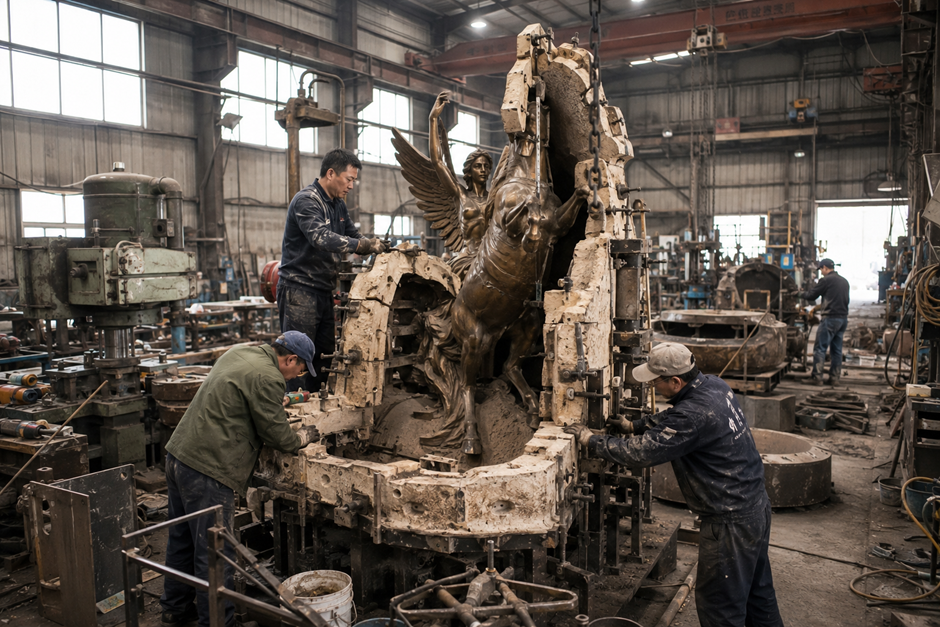
For large bronze sculptures installed in commercial developments and public spaces, engineering is just as important as artistic design. A sculpture may appear visually impressive, but without proper structural planning, it can become difficult to transport, install, or maintain safely over its lifetime.
Engineering begins well before bronze casting. Every project should be reviewed to determine load distribution, internal support structures, connection points, foundation requirements, and environmental conditions such as wind exposure or seismic considerations. These technical evaluations help ensure the finished sculpture performs safely while preserving the original design intent.
At Pegasus, engineering teams work alongside designers and production specialists before manufacturing begins. Digital models, fabrication drawings, and structural reviews are completed to verify that the sculpture can be produced efficiently while meeting installation requirements for the project site. This early collaboration reduces unnecessary design revisions and helps commercial buyers avoid unexpected costs during later project stages.
How Large Bronze Sculptures Are Manufactured
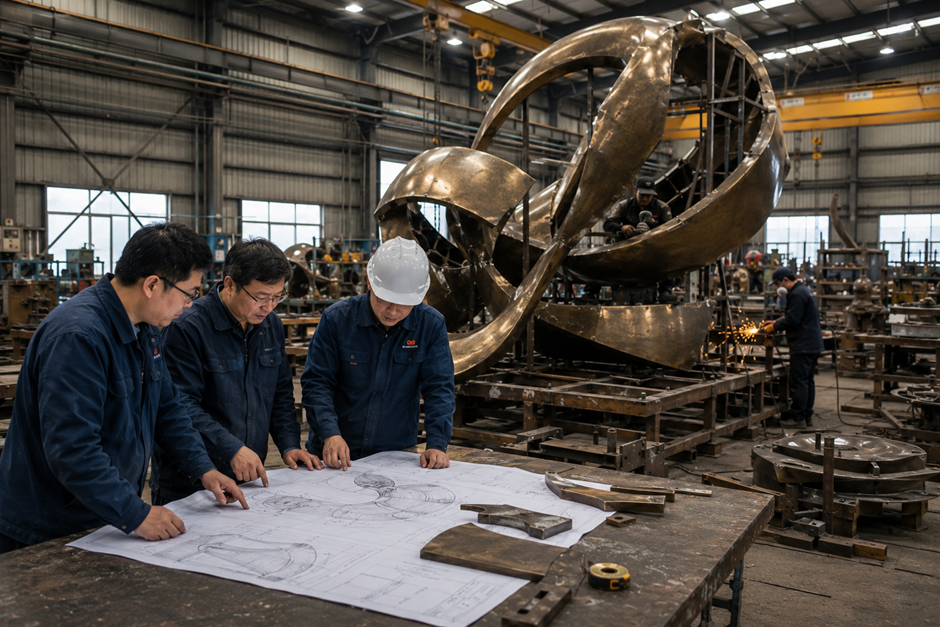
Many commercial buyers focus only on the finished sculpture without fully understanding the manufacturing expertise required to produce it. Knowing the production process helps buyers evaluate whether a manufacturer has the capability to deliver complex projects consistently.
Although individual projects vary, large bronze sculptures generally move through several coordinated production stages:
Design Development and Engineering
Once the concept is approved, detailed production drawings and engineering reviews are prepared to confirm structural integrity, manufacturing feasibility, transportation planning, and installation requirements.
Pattern and Mould Production
Depending on the design, craftsmen create accurate patterns and moulds that capture every artistic detail while supporting efficient bronze casting. Precision at this stage directly influences the quality of the final sculpture.
Bronze Casting and Fabrication
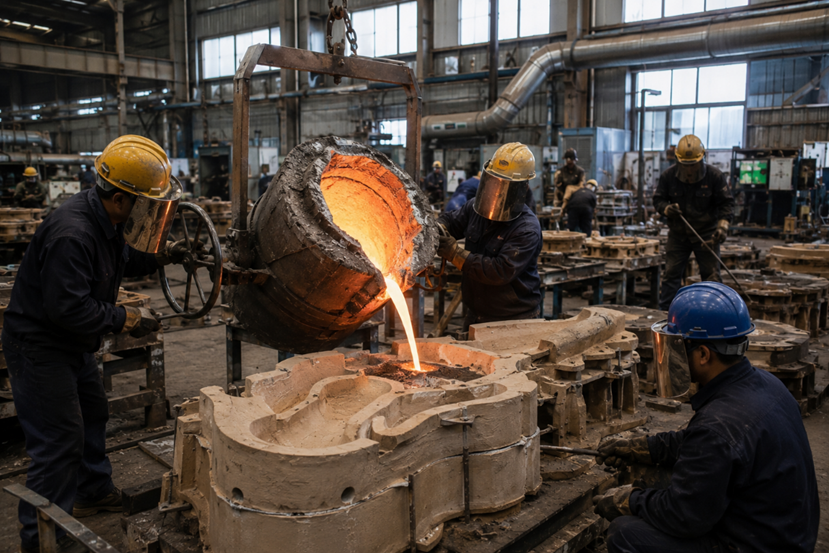
Molten bronze is poured into prepared moulds before individual cast sections are carefully cleaned, assembled, and welded together. Skilled fabricators then refine joints and transitions so the sculpture appears as a unified piece rather than separate cast components.
Surface Finishing and Patina
After fabrication, craftsmen grind, polish, and texture the surface before applying the selected patina. The finishing process not only enhances appearance but also contributes to long-term durability in outdoor environments.
Rather than treating each production stage independently, Pegasus manages the entire manufacturing workflow through close coordination between engineering, foundry production, fabrication, finishing, quality control, and project management teams. Before each stage progresses, production drawings, casting quality, structural assemblies, weld integrity, and surface preparation are reviewed to ensure they meet both technical specifications and project requirements. This integrated manufacturing approach helps minimise production risks, maintain consistent quality across large bronze components, and support reliable delivery for complex commercial installations.
Manufacturing Capability Matters More Than Production Capacity Alone
When evaluating a bronze sculpture manufacturer, buyers often compare workshop size or production capacity. While these factors are important, they do not necessarily reflect the manufacturer’s ability to deliver complex commercial projects.
A reliable manufacturing partner should demonstrate:
| Evaluation Area | Why It Matters |
| Engineering capability | Supports structural safety and fabrication planning. |
| Bronze casting expertise | Ensures consistent casting quality across large components. |
| Skilled fabrication team | Produces seamless assembly and accurate detailing. |
| Quality management | Identifies issues before final assembly and shipment. |
| Project coordination | Keeps engineering, production, logistics, and installation aligned. |
| Commercial project experience | Helps anticipate challenges unique to public and architectural installations. |
At Pegasus, engineering, bronze casting, fabrication, quality inspection, and project management operate as a coordinated manufacturing system rather than separate departments. This allows technical decisions to be evaluated alongside production realities before manufacturing progresses. For commercial developments involving multiple contractors, this integrated approach helps reduce unnecessary revisions, improves production efficiency, and keeps manufacturing aligned with the overall construction programme.
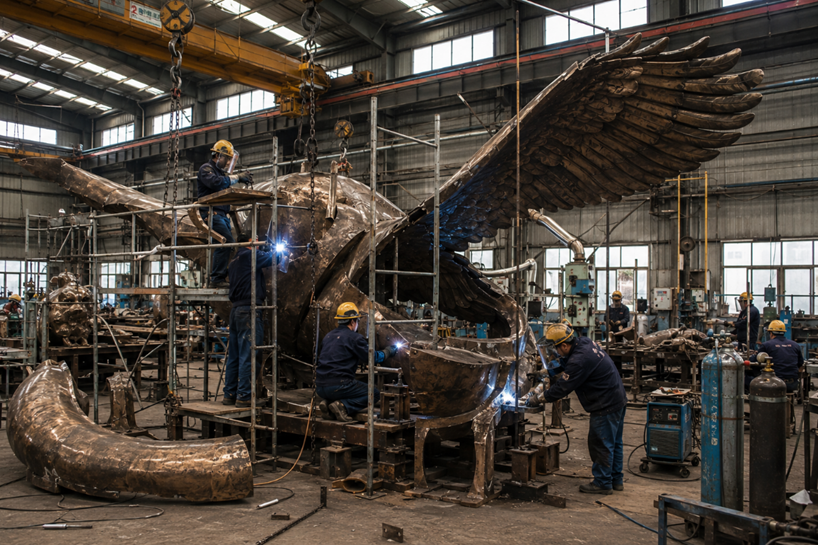
Buyer Tip: Evaluate the Entire Manufacturing Process
When comparing quotations, ask suppliers to explain how the sculpture will be manufactured, not just what it will cost.
Useful questions include:
- How will the internal structure be engineered?
- What bronze casting method will be used?
- How are individual castings joined and inspected?
- How many quality inspections occur during production?
- Will trial assembly be completed before shipment?
- How will the sculpture be packaged and transported?
- Who coordinates installation planning?
These questions help buyers understand whether a quotation reflects comprehensive manufacturing support or simply covers the production of the sculpture itself.
Quality Control Continues Throughout Production
For large bronze sculptures, quality control should not be treated as a final inspection before delivery. Instead, it should be integrated throughout the manufacturing process to ensure every production stage meets the required engineering and artistic standards.
At Pegasus, quality control is integrated into every major manufacturing stage. Pattern dimensions are verified before casting, bronze castings are inspected before fabrication begins, welded assemblies are checked for structural accuracy, surface preparation is reviewed before patina application, and trial assemblies are completed before packaging. By carrying out inspections throughout production instead of relying only on a final review, potential issues can be corrected earlier, helping maintain manufacturing quality while reducing unnecessary rework.
This staged approach not only protects the final appearance of the sculpture but also helps maintain structural integrity, dimensional accuracy, and installation readiness. For commercial buyers, consistent quality control reduces project risk while improving confidence that the finished sculpture will perform as expected once installed. Rather than simply asking whether quality inspections are included, procurement teams should understand how quality is managed throughout manufacturing, what documentation is provided, and whether approval checkpoints are built into the production schedule.
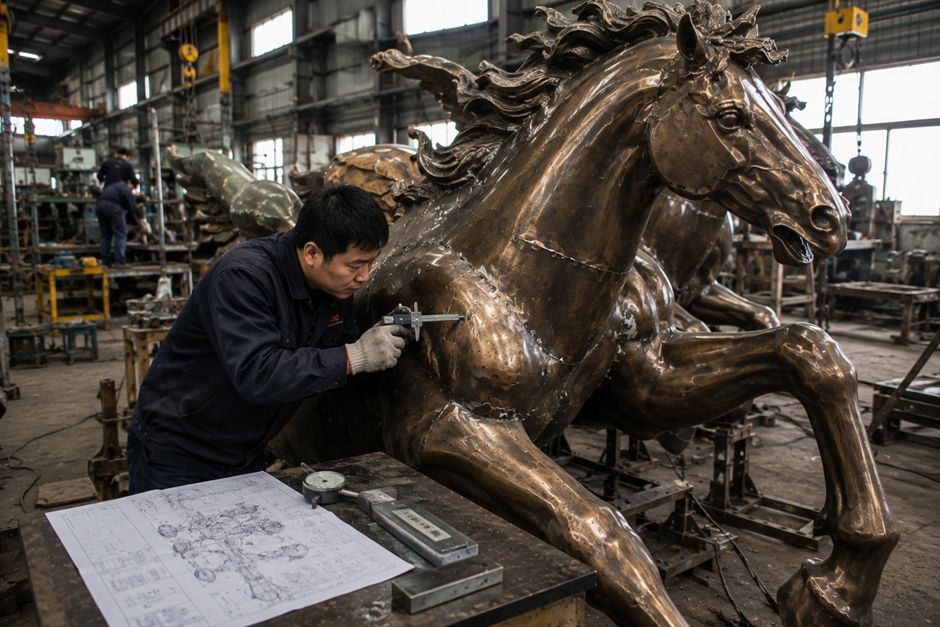
Real Project Example: Planning Beyond Bronze Casting
One recent Pegasus project involved producing a large bronze sculpture for a commercial public space where the artwork needed to become a permanent architectural feature while meeting strict construction deadlines.
Before bronze casting began, the engineering and production teams reviewed the sculpture’s dimensions, internal structural framework, transportation restrictions, crane access, and foundation requirements. This early planning allowed several manufacturing adjustments to be made before production, reducing fabrication complexity while preserving the approved artistic design.
Following engineering approval, Pegasus scheduled pattern production, bronze casting, fabrication, precision welding, metal chasing, surface finishing, patina application, staged quality inspections, and full trial assembly before shipment. Throughout production, engineering and manufacturing teams worked together to resolve fabrication challenges, verify dimensional accuracy, and ensure each bronze section aligned correctly before final assembly. Completing these manufacturing reviews before packaging helped reduce installation risks while ensuring the finished sculpture met both structural requirements and the approved artistic design.
Once fabrication was completed, the sculpture was protected using custom export packaging designed around its dimensions and surface finish before being transported to site for installation. Close coordination between the manufacturing team, logistics specialists, and installation contractors helped ensure the sculpture was installed safely and in line with the wider construction programme.
The commercial value of this approach extended beyond the finished artwork. Early engineering reduced production risks, staged quality control minimised rework, and coordinated manufacturing and installation planning helped support predictable project delivery. For commercial buyers, this demonstrates why evaluating a manufacturer’s production capability can be just as important as comparing project quotations.
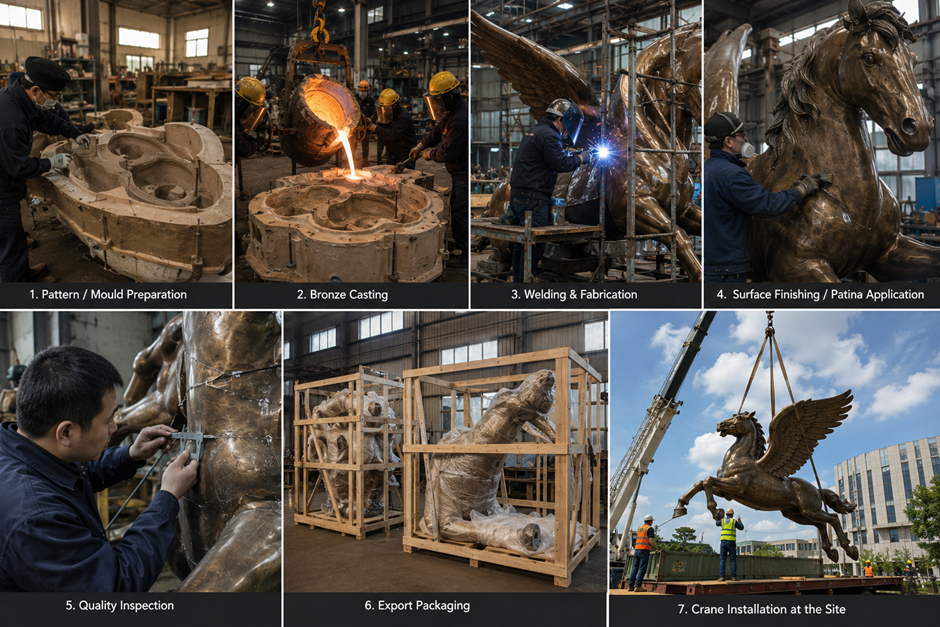
Planning for Installation Before Manufacturing Begins
Successful installation begins long before a sculpture leaves the factory. Transportation routes, lifting methods, foundation preparation, site access, and installation sequencing should all be considered during the engineering stage rather than after fabrication has been completed.
Large bronze sculptures often require customised lifting points, temporary supports, segmented transportation, or specialist lifting equipment depending on the project’s scale and location. Incorporating these considerations during manufacturing helps reduce installation time while minimising the risk of on-site modifications.
At Pegasus, installation planning is incorporated into the manufacturing process from the earliest engineering reviews. Production teams coordinate lifting points, transportation methods, protective packaging, crane requirements, and site installation sequences before fabrication is completed. This collaboration between engineering, manufacturing, logistics, and installation teams helps ensure the sculpture arrives on site ready for efficient installation while reducing the likelihood of unexpected modifications during construction.
For architects, developers, and contractors managing complex commercial developments, this integrated planning approach helps improve coordination across the wider construction programme.
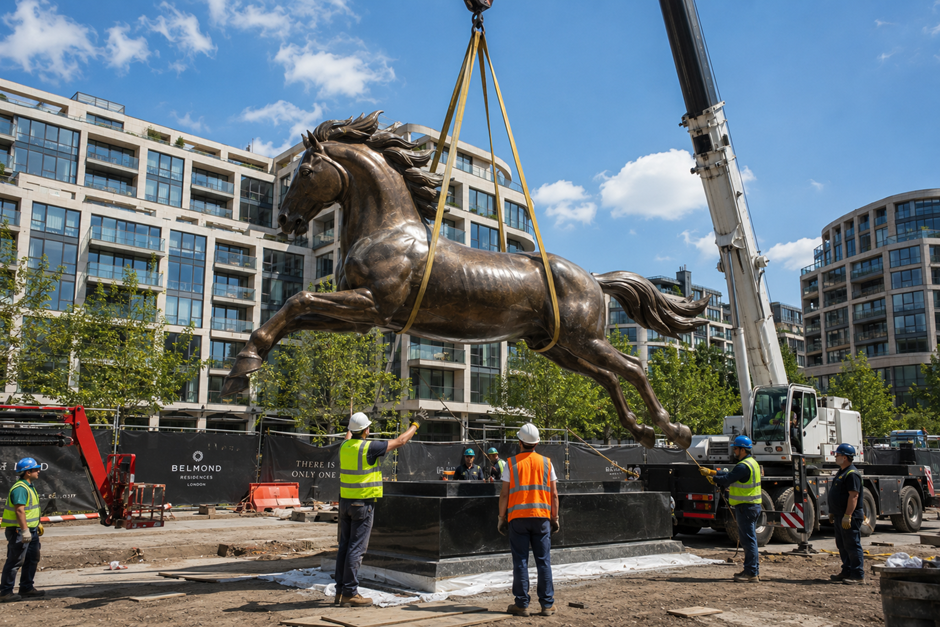
Conclusion
Planning a large bronze sculpture project involves far more than selecting an artwork. Commercial buyers must consider engineering, manufacturing capability, bronze casting expertise, quality assurance, transportation, installation planning, and long-term project coordination before approving production.
By understanding how these elements influence both project outcomes and overall costs, architects, developers, procurement teams, and commercial clients can evaluate proposals more effectively while reducing technical and commercial risks.
Working with an experienced bronze sculpture manufacturer that combines engineering expertise with integrated production capabilities helps ensure each stage of the project progresses efficiently from concept approval through fabrication and final installation.
For organisations planning public art, hospitality developments, or commercial architectural projects, taking a structured approach to project planning ultimately delivers greater long-term value than focusing solely on the initial quotation.
Frequently Asked Questions
What factors influence the cost of a large bronze sculpture?
Project costs are influenced by sculpture size, engineering requirements, bronze casting, fabrication complexity, surface finishing, transportation, installation planning, and quality control throughout manufacturing.
Why is engineering important before bronze casting begins?
Engineering ensures the sculpture can be fabricated, transported, installed, and structurally supported safely while reducing the likelihood of costly modifications during production.
How can buyers evaluate a bronze sculpture manufacturer?
Buyers should assess engineering capability, manufacturing workflow, bronze casting expertise, quality management, commercial project experience, and installation planning rather than comparing quotations alone.
Why is staged quality control important?
Quality inspections performed throughout manufacturing help identify issues before they affect later production stages, reducing rework while improving consistency and long-term durability.
When should installation planning begin?
Installation planning should begin during engineering and fabrication so transportation methods, lifting strategies, foundation requirements, and site access can all be incorporated into the manufacturing process.