When a commercial project calls for dozens—or even hundreds—of custom resin statues, selecting the right manufacturing partner becomes one of the most important decisions in the procurement process. Whether the sculptures are intended for a hotel chain, retail environment, theme park, residential development, museum, or public installation, a successful outcome depends on far more than obtaining a competitive quotation.
A supplier may present attractive product images and pricing, but large-scale production introduces additional challenges. Maintaining consistent quality across every piece, meeting agreed production schedules, protecting sculptures during international transportation, and providing reliable project support all require careful planning and proven manufacturing capabilities.
For architects, developers, distributors, wholesalers, and procurement teams, evaluating resin sculpture manufacturers should involve a structured assessment of their experience, production processes, quality standards, and ability to deliver projects at scale. Taking the time to ask the right questions before placing a bulk order can significantly reduce project risks while helping ensure the finished sculptures meet both aesthetic and commercial expectations.
This guide explains how commercial buyers can systematically evaluate resin statue manufacturers before placing a bulk order, helping reduce procurement risks while selecting a supplier capable of delivering consistent quality, reliable project management, and long-term support.
Begin with Clearly Defined Project Requirements
Before requesting quotations from different suppliers, it is worth investing time in defining the project’s technical and commercial requirements. Clear specifications allow manufacturers to provide accurate recommendations while reducing misunderstandings later in production.
Beyond dimensions and quantity, buyers should consider factors such as installation environment, structural requirements, finish preferences, colour consistency, weather exposure, maintenance expectations, and project deadlines. For outdoor installations, UV resistance and environmental durability may influence both material selection and finishing methods, while indoor decorative projects often prioritise surface detail and visual consistency.
Projects that involve multiple installation locations or phased deliveries should also communicate logistical expectations early. These details help manufacturers develop realistic production schedules and packaging solutions that align with the project’s overall timeline.
Having a well-defined project brief also makes it easier to compare supplier proposals objectively rather than relying solely on pricing.
Readers interested in understanding why resin has become a popular material for custom sculptures can also explore Why Resin Is the Preferred Material for Custom Statues, Sculptures and Decorative Ornaments, which explains the material’s advantages across different commercial applications.
Evaluate Relevant Project Experience Instead of Product Catalogues
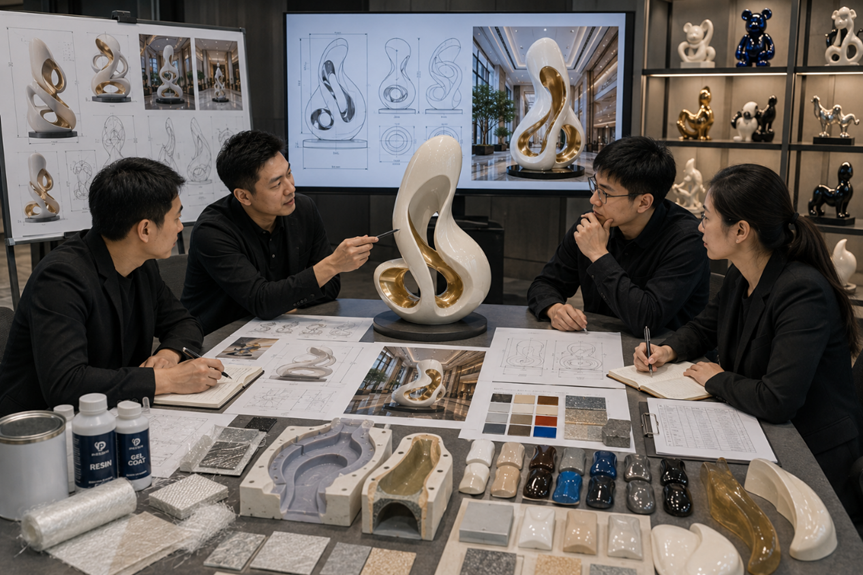
Many suppliers showcase impressive galleries of completed sculptures, but photographs alone rarely reveal whether they have managed projects similar to yours. A more meaningful evaluation focuses on the type of work they have successfully delivered rather than the number of products displayed.
For example, a manufacturer experienced in producing decorative indoor sculptures may require a different level of planning than one regularly handling large outdoor installations for commercial developments. Likewise, producing a single custom artwork differs considerably from manufacturing hundreds of identical pieces that must maintain consistent dimensions, finishes, and colours throughout the entire production run.
When reviewing a supplier’s portfolio, buyers should look beyond aesthetics and ask practical questions such as:
- Have they completed projects of similar scale?
- Have they worked with international clients?
- Can they demonstrate experience across different installation environments?
- Do they understand packaging and export requirements for large sculptures?
- Have they managed custom projects with unique engineering or structural considerations?
Reviewing completed commercial projects often provides greater confidence than simply browsing individual product images because it demonstrates how the manufacturer approaches planning, production, and project execution from start to finish.
Sample Approval Often Predicts Production Success
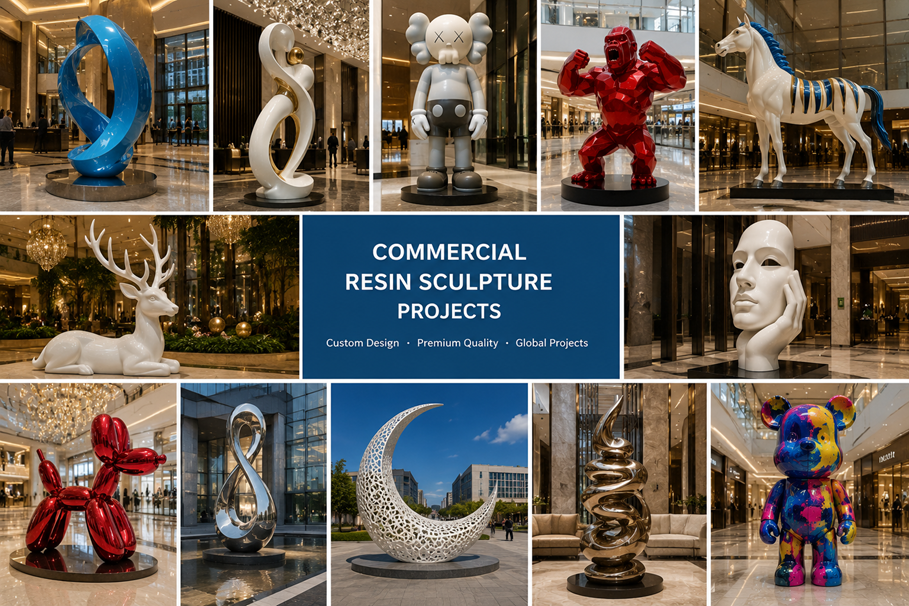
One of the most effective ways to evaluate a manufacturer is through the prototype or sample approval process. A well-managed sampling stage allows both parties to confirm expectations before full production begins, helping reduce costly adjustments later.
Rather than focusing only on appearance, buyers should assess how the manufacturer responds to feedback, documents revisions, and communicates throughout the approval process. Attention to detail during this stage often reflects the level of organisation that can be expected during large-scale production.
A comprehensive prototype review may include:
- Overall proportions and dimensions
- Surface texture and sculptural detail
- Colour matching and finishing quality
- Structural stability
- Installation or mounting requirements
- Opportunities for design refinement before production
Establishing approval criteria at the prototype stage creates a consistent reference for the remaining production run, making it easier to evaluate finished pieces against the agreed standard.
Look Beyond Production Capacity and Assess Manufacturing Consistency
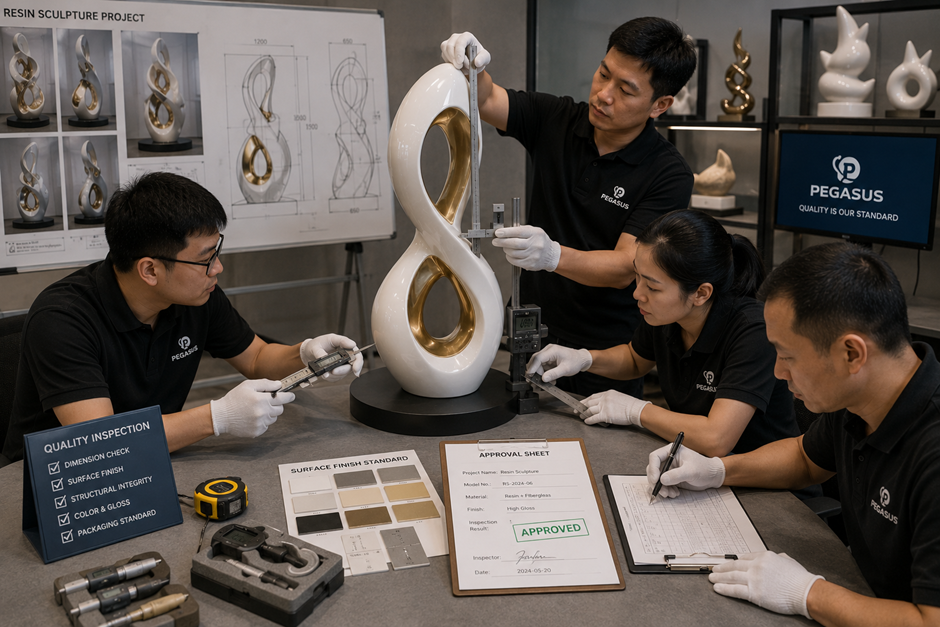
Large production capacity is often promoted as a competitive advantage, but capacity alone does not guarantee consistent quality. For bulk orders, maintaining uniformity from the first sculpture to the final shipment is frequently a more important indicator of manufacturing capability.
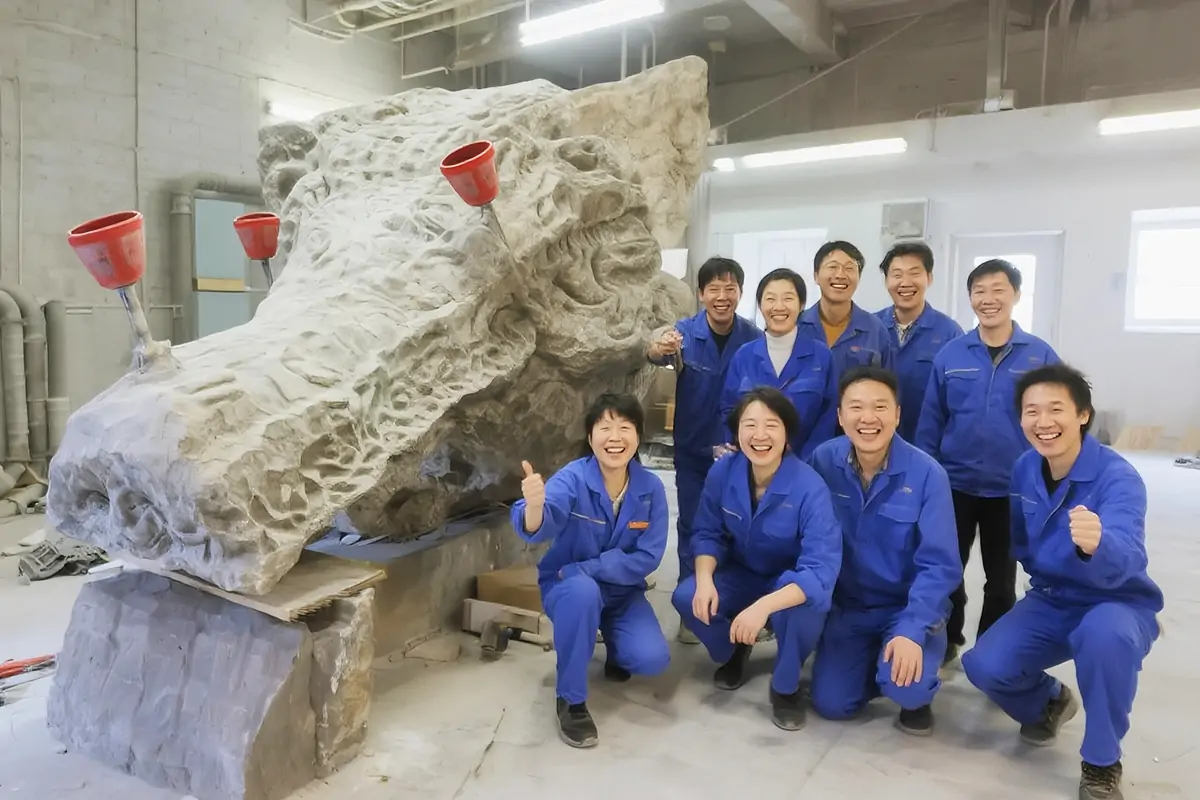
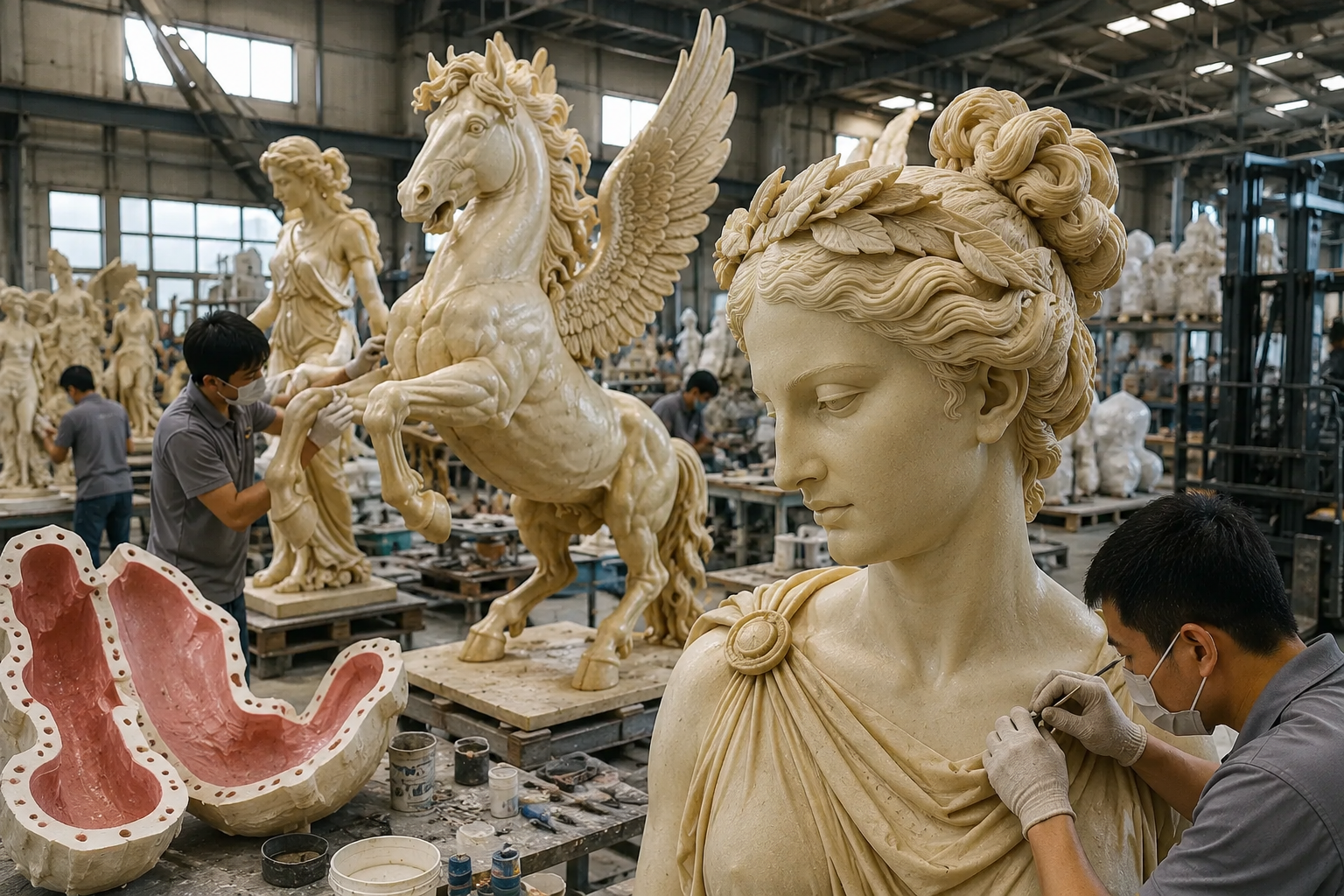
At Pegasus, maintaining production consistency begins with controlled mould preparation, standardised finishing procedures, organised workflow management, and systematic quality inspections throughout manufacturing. Buyers evaluating resin statue manufacturers should look for similarly structured production systems, as even small variations in colour, texture, or dimensions can become noticeable when multiple sculptures are displayed together in commercial environments.
During supplier evaluation, buyers should understand how production quality is monitored at different stages rather than only inspecting completed products. Manufacturers that implement structured inspection procedures throughout production are generally better positioned to minimise inconsistencies before packaging and shipment.
Similarly, discussing realistic lead times helps establish whether production schedules are based on genuine manufacturing capacity or overly optimistic estimates intended to secure an order. Transparent communication regarding production planning often provides a stronger indication of supplier reliability than ambitious delivery promises.
Quality Assurance Should Extend Throughout the Production Process
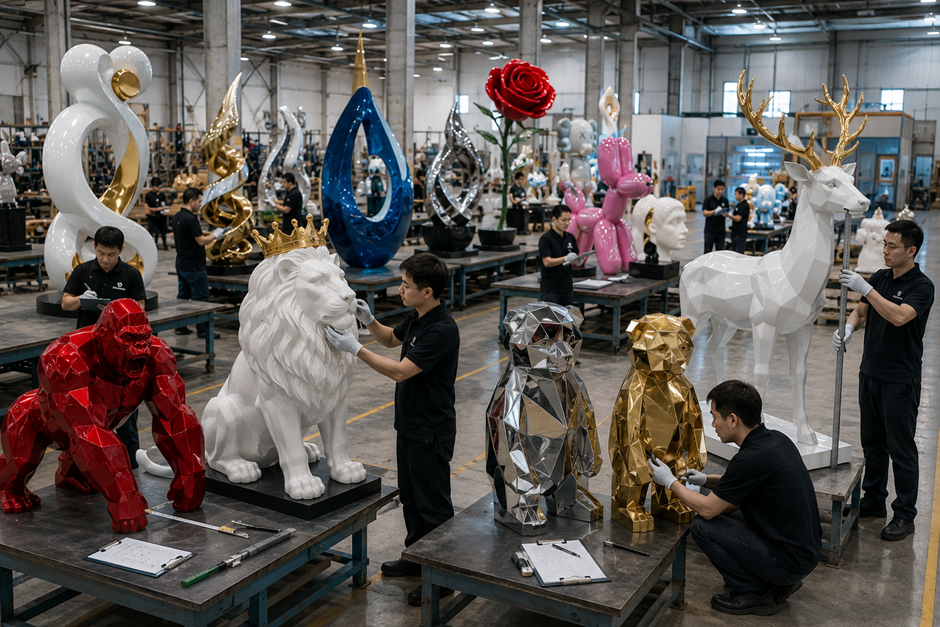
For bulk orders, quality control is far more effective when it is integrated into every stage of production rather than being limited to a final inspection before shipment.
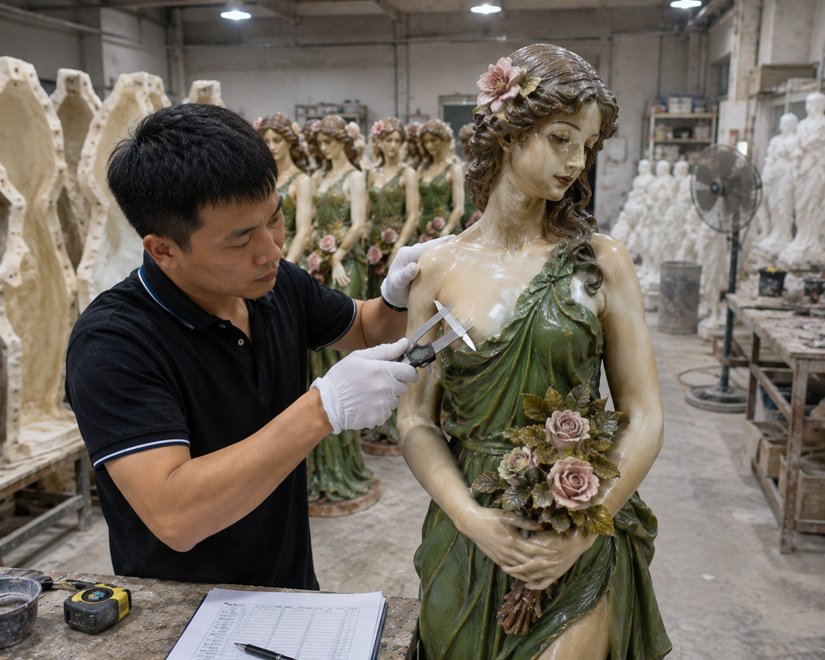
At Pegasus, quality assurance is integrated throughout the production process rather than being limited to a final inspection before shipment. Buyers evaluating resin statue manufacturers should look for similarly structured inspection procedures, including dimensional verification after mould preparation, surface finish assessments during production, colour consistency checks between batches, and final inspections before packaging.
A structured quality assurance process helps identify small issues before they affect an entire production run. It also reduces the likelihood of delays, rework, or inconsistencies that can become costly once sculptures have been shipped internationally.
During supplier discussions, buyers may wish to understand:
- How quality standards are documented throughout production.
- Whether inspections are carried out at multiple stages rather than only after completion.
- How non-conforming pieces are identified and corrected.
- What approval process is followed before export packaging begins.
These conversations often provide a clearer picture of a manufacturer’s operational discipline than promotional marketing materials alone.
Packaging and Logistics Can Be Just as Important as Manufacturing
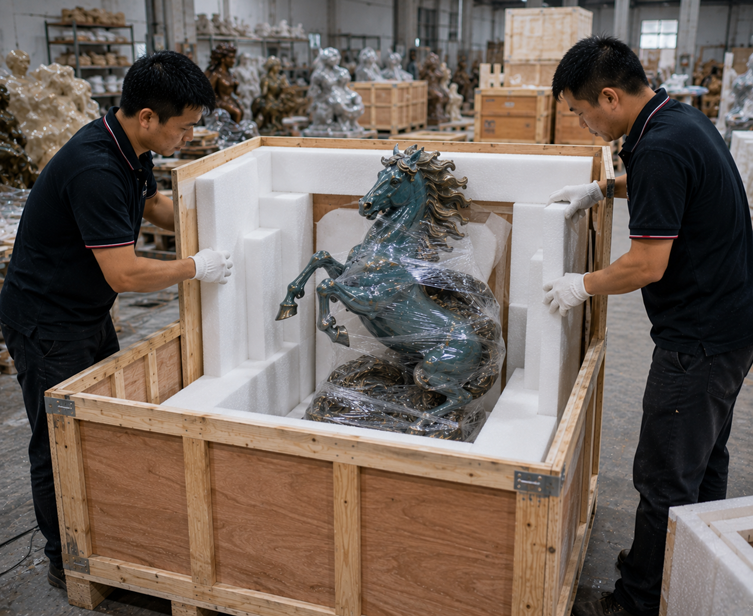
A beautifully manufactured sculpture can still arrive damaged if packaging and transportation have not been planned carefully. For this reason, experienced procurement teams evaluate a supplier’s export capability alongside its manufacturing expertise.
Bulk resin statue orders frequently involve long-distance transportation, multiple handling stages, customs procedures, and coordinated delivery schedules. Protective packaging should therefore be designed around the sculpture’s dimensions, weight, surface finish, and structural characteristics rather than using a standard approach for every project.
Manufacturers with international project experience generally consider factors such as protective wrapping, internal cushioning, reinforced wooden crates, moisture protection, container loading, and shipment sequencing to reduce transportation risks.
When projects involve installation across multiple locations, organised labelling and phased packing can also simplify unloading and on-site coordination.
Rather than asking only, “How will the sculptures be shipped?”, buyers often gain more useful information by asking, “How has the packaging been designed to protect these sculptures throughout the entire journey?
Communication Often Determines the Success of Large Projects
Large sculpture projects rarely remain unchanged from beginning to end. Design refinements, scheduling adjustments, shipping updates, and installation coordination are all common during commercial production.
For this reason, communication should be evaluated alongside technical capability.
Reliable manufacturers typically establish clear approval stages, provide regular production updates, respond promptly to technical questions, and communicate any potential scheduling changes before they become larger issues.
This level of transparency allows architects, developers, procurement teams, and project managers to coordinate their own schedules more effectively, particularly when sculpture installation forms part of a wider construction programme.
A supplier that communicates consistently throughout the project often becomes a long-term manufacturing partner rather than simply a vendor for a single order.
Review the Complete Project Workflow—Not Just the Finished Sculpture
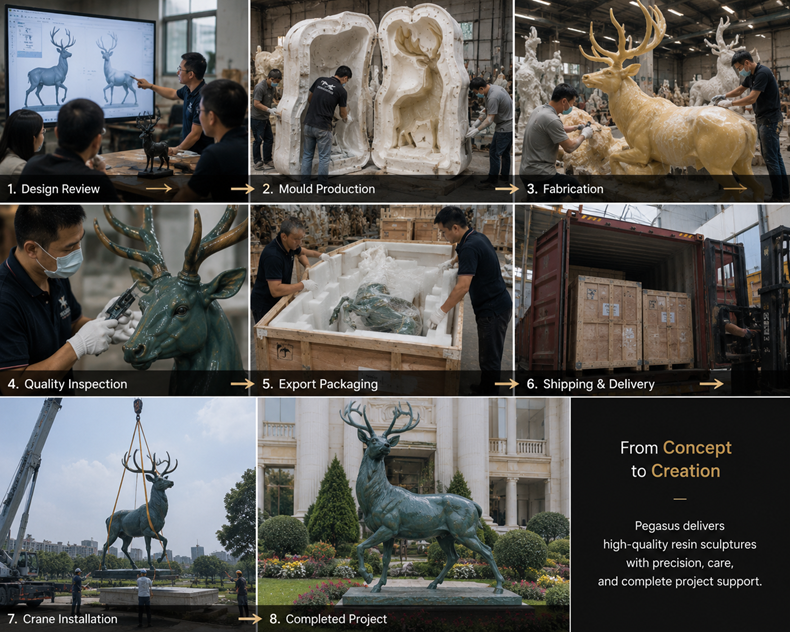
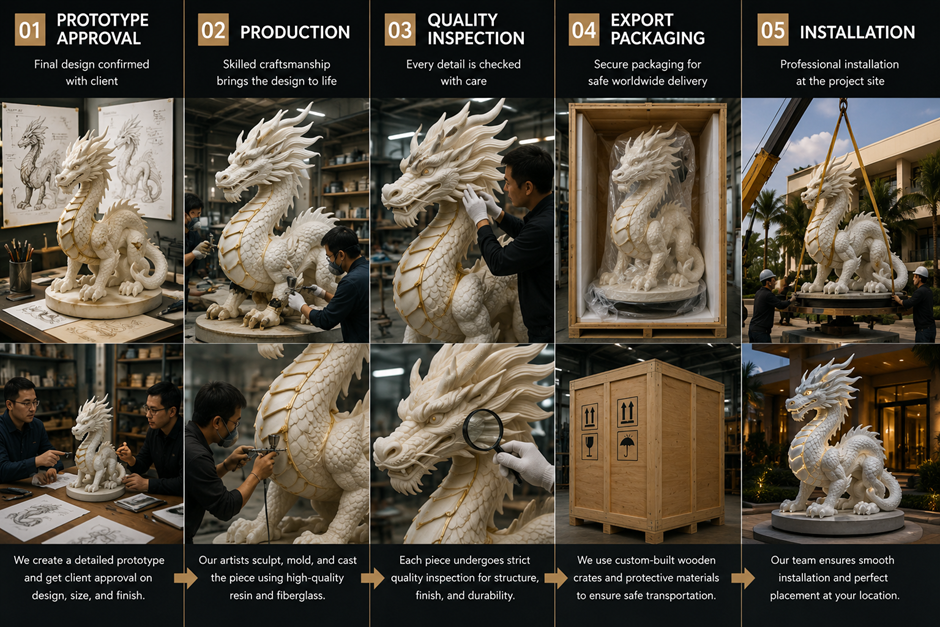
One of the clearest indicators of an experienced manufacturing partner is the ability to demonstrate how projects progress from initial consultation through to final installation.
Instead of relying solely on finished product photography, buyers should ask to see examples of the complete project journey. This provides valuable insight into how the manufacturer manages planning, production, quality assurance, packaging, and site coordination.
A comprehensive project workflow often includes:
- Initial project consultation
- Design and technical review
- Prototype approval
- Mould preparation
- Batch production
- Quality inspections
- Protective packaging
- International shipping
- Installation support
- Final project completion
Reviewing each stage helps buyers understand not only what the manufacturer produces, but also how they manage the many practical considerations that contribute to a successful commercial installation.
For organisations investing in large quantities of custom sculptures, this broader perspective often provides greater confidence than evaluating finished products alone.
Exploring a manufacturer’s project portfolio can provide a clearer understanding of how commercial sculpture projects progress from concept development through fabrication, delivery, and final installation.
Real Project Example: Managing a Multi-Location Bulk Resin Sculpture Order
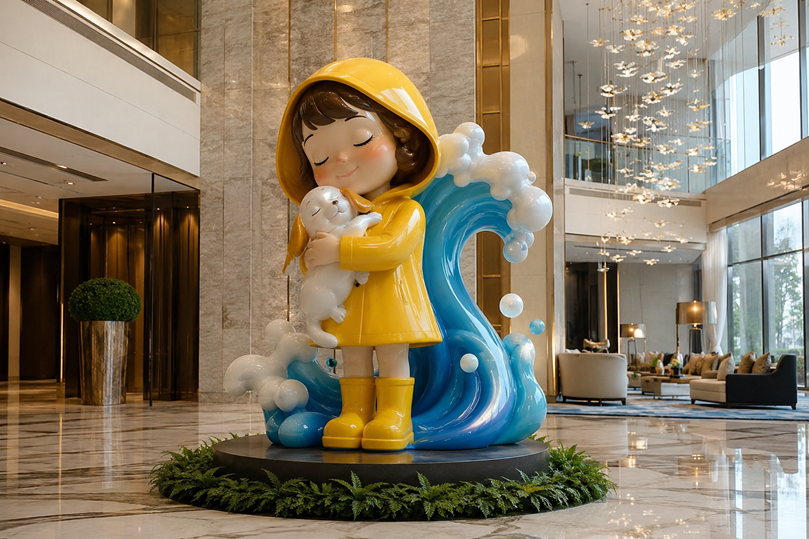
A hospitality group commissioned a series of custom resin statues for installation across several hotel properties. Although the sculptures shared a common design language, each installation location required slight adjustments to dimensions, mounting methods, and delivery schedules.
Before production began, prototype samples were reviewed to confirm sculptural details, surface finish, and colour consistency. Once approved, manufacturing proceeded in planned batches, allowing quality inspections to be completed throughout production rather than only after every sculpture had been finished.
Each statue was individually protected using custom packaging designed to minimise movement during international transportation. Shipment scheduling was coordinated with the installation programme so sculptures could be delivered in sequence, reducing unnecessary storage and handling at each property.
By combining structured production planning, consistent quality control, organised logistics, and ongoing project communication, the installation progressed efficiently while helping the client maintain visual consistency across multiple locations.
Although every commercial project presents different requirements, this type of collaborative workflow illustrates why many buyers evaluate project management capability alongside manufacturing expertise when selecting a supplier.
Building a Long-Term Manufacturing Partnership
Evaluating resin statue manufacturers is rarely about finding the lowest quotation. For commercial buyers, the more valuable decision is selecting a manufacturing partner capable of delivering consistent quality, reliable communication, realistic production planning, and dependable support throughout the life of the project.
By carefully evaluating project experience, sample approval processes, manufacturing consistency, quality assurance systems, packaging methods, logistics planning, and communication practices, buyers can make more informed procurement decisions while reducing unnecessary project risks.
For organisations planning custom commercial sculptures, working with an experienced manufacturing partner from the early planning stages often creates opportunities to improve production efficiency, simplify installation, and achieve more predictable project outcomes.
For businesses planning a bulk resin statue project, discussing design objectives, production requirements, and project timelines early can help establish a clear manufacturing strategy before production begins. Pegasus works closely with commercial clients throughout this planning process to support efficient project execution from concept through installation.
Learn more about custom resin sculpture manufacturing, explore completed commercial sculpture projects, or contact the Pegasus team to discuss your project requirements and production goals.

Frequently Asked Questions
How do I evaluate resin sculpture manufacturers before placing a bulk order?
Look beyond pricing by assessing project experience, prototype approval processes, production consistency, quality control procedures, export packaging, logistics capability, and communication throughout the project.
Why is sample approval important before bulk production?
A prototype helps confirm dimensions, surface finish, colour, and overall design before full-scale manufacturing begins. It also establishes a quality benchmark for the remaining production run.
Can resin statues maintain consistent quality across large production runs?
Yes, provided the manufacturer follows structured production methods, standardised finishing procedures, and quality inspections throughout manufacturing rather than relying solely on final inspections.
What should buyers ask about packaging for international shipments?
Ask how sculptures are protected during transportation, what export packaging materials are used, how crates are designed, and whether packaging is customised for the size and finish of each sculpture.
Is previous project experience more important than product photographs?
In many cases, yes. Reviewing completed commercial projects helps buyers understand how a manufacturer manages planning, production, logistics, and installation instead of evaluating appearance alone.
How early should I involve a resin statue manufacturer in my project?
Engaging a manufacturer during the planning stage allows time to discuss design feasibility, material selection, production scheduling, logistics, and installation considerations before fabrication begins.