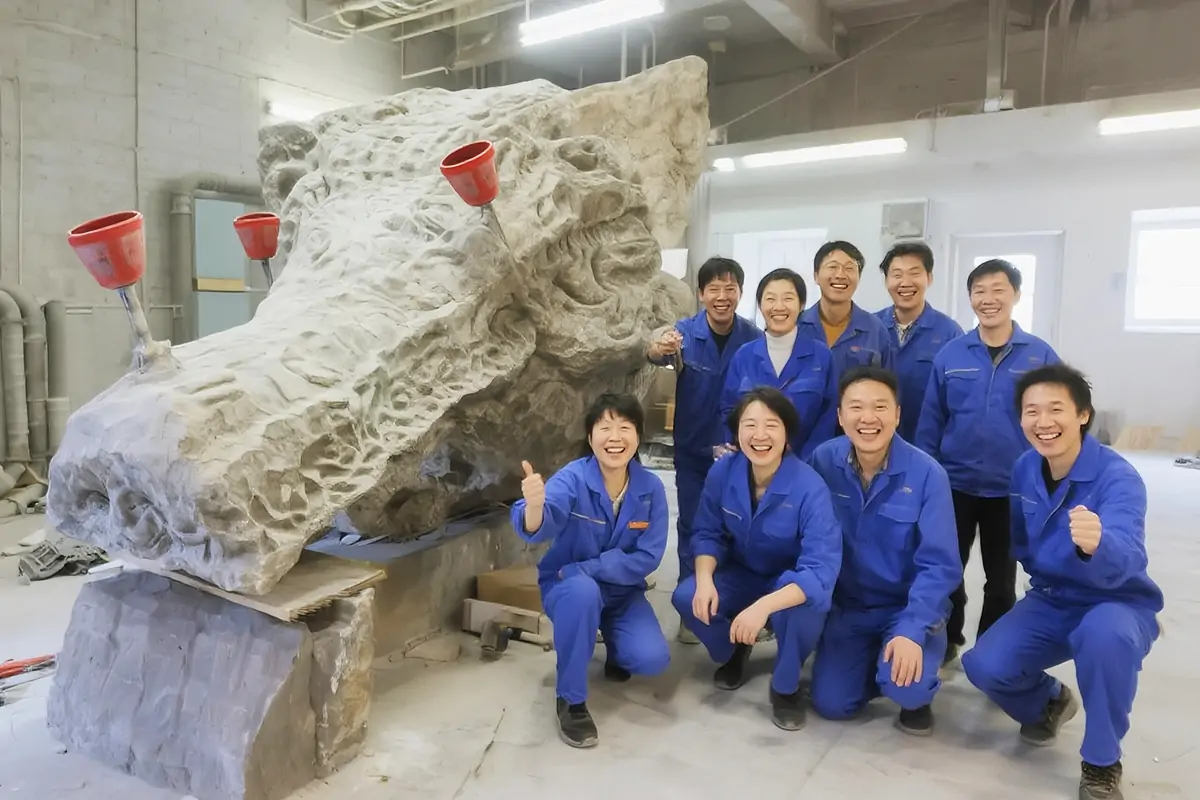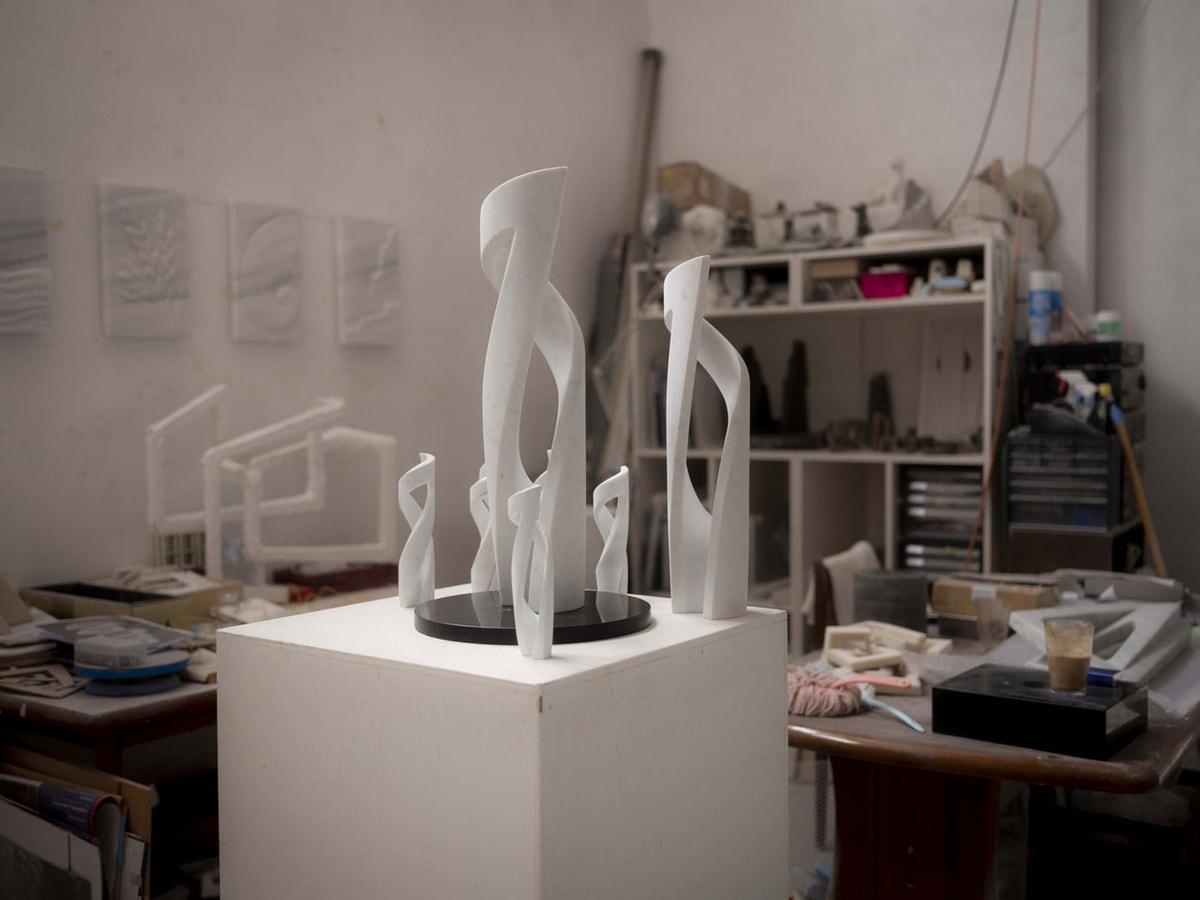
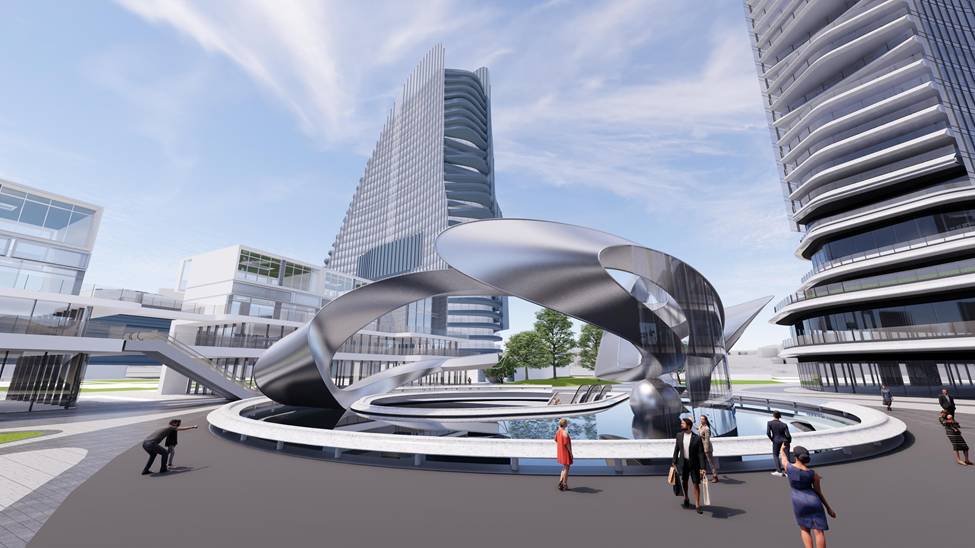
Approving an abstract sculptures concept for a commercial or architectural project comes down to three checkpoints: a physical maquette that confirms form and proportion, a photorealistic rendering that confirms scale and site placement, and, for large or structurally complex commissions, a full-scale mock-up that confirms how the piece will actually read once it’s standing on site. Each tool is checking something the other two can’t, and skipping one is usually why an approved concept and an installed sculpture end up looking different. At Pegasus, all three checkpoints are built into the concept approval stage, so a design is fully signed off before it ever moves toward fabrication.
Why Isn’t a Rendering Alone Enough to Approve an Abstract Sculpture?
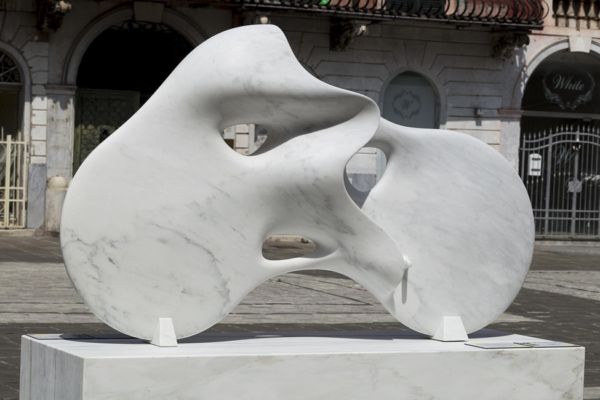
Digital renderings are persuasive, which is exactly the problem. A screen flattens depth, compresses negative space, and lets lighting do work that real daylight won’t necessarily repeat. For work built around voids, asymmetry and reflection rather than a recognisable figure, that compression matters more, not less – proportions that read as balanced in a 3D file can feel top-heavy or thin the moment you’re standing in front of the actual object. A custom sculpture proposal that looks fully resolved on a monitor can still feel wrong at full scale, particularly once mirror-polished or brushed metal starts interacting with real sky, glass façades and passing shadows instead of a rendered backdrop. This is why architects and procurement teams are increasingly asking for a maquette alongside the rendering, not instead of it, before signing off on abstract sculptures intended for a permanent site.
What Should a Maquette Show Before You Sign Off on It?
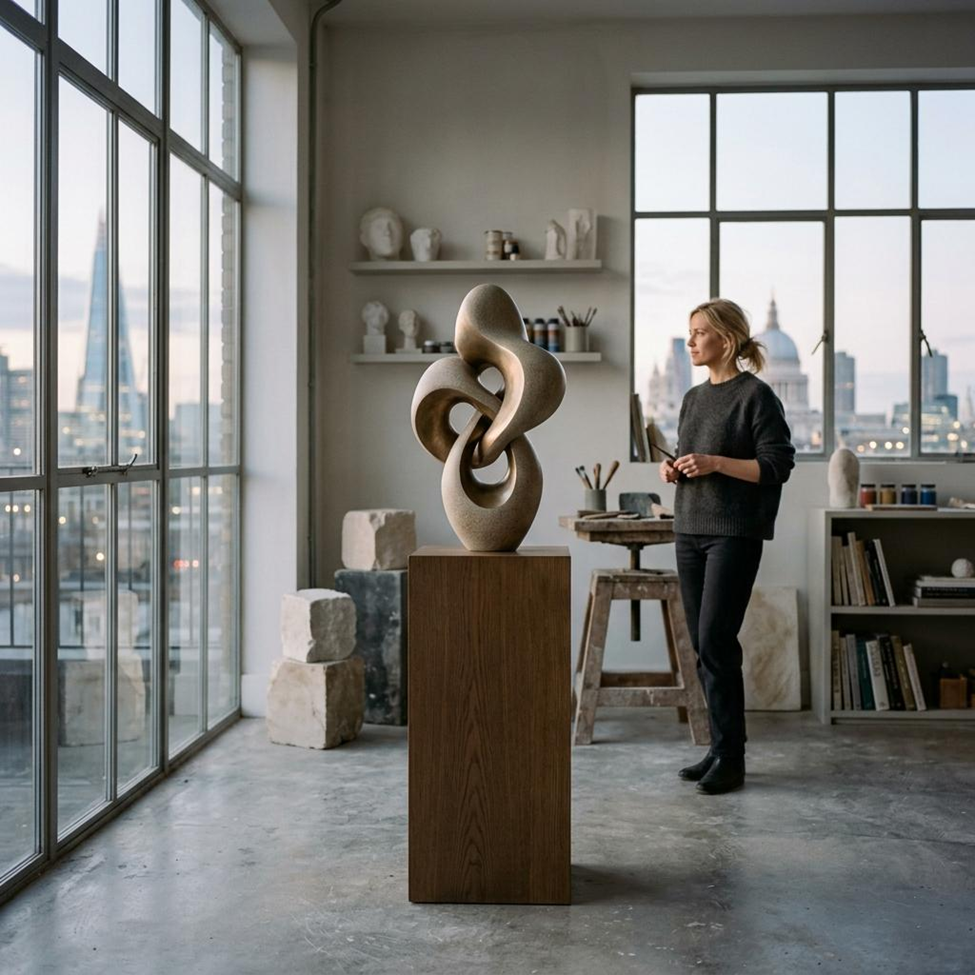
A maquette earns its place in the approval process only if it’s doing a job the rendering can’t: letting you hold the form, walk around it, and judge it as a physical object rather than an image. Before approving a scale model for an abstract sculptures commission, buyers should expect it to demonstrate:
- Silhouette and proportion from at least three realistic viewing angles, not just the “hero” angle used in the rendering
- The behaviour of voids, cantilevers or asymmetrical weight that a flat image tends to compress or exaggerate
- A believable indication of material and finish family – mirror, brushed, patinated or painted – even if the final surface sample follows later
- How the form reads at a walking pace, since most outdoor sculpture is experienced in motion rather than from a single fixed viewpoint
What a maquette can’t do is confirm site context or structural performance – it’s judging form in isolation, not form in place. That’s exactly why it’s paired with a rendering rather than used on its own.
How Do Renderings Complete the Picture a Maquette Can’t?
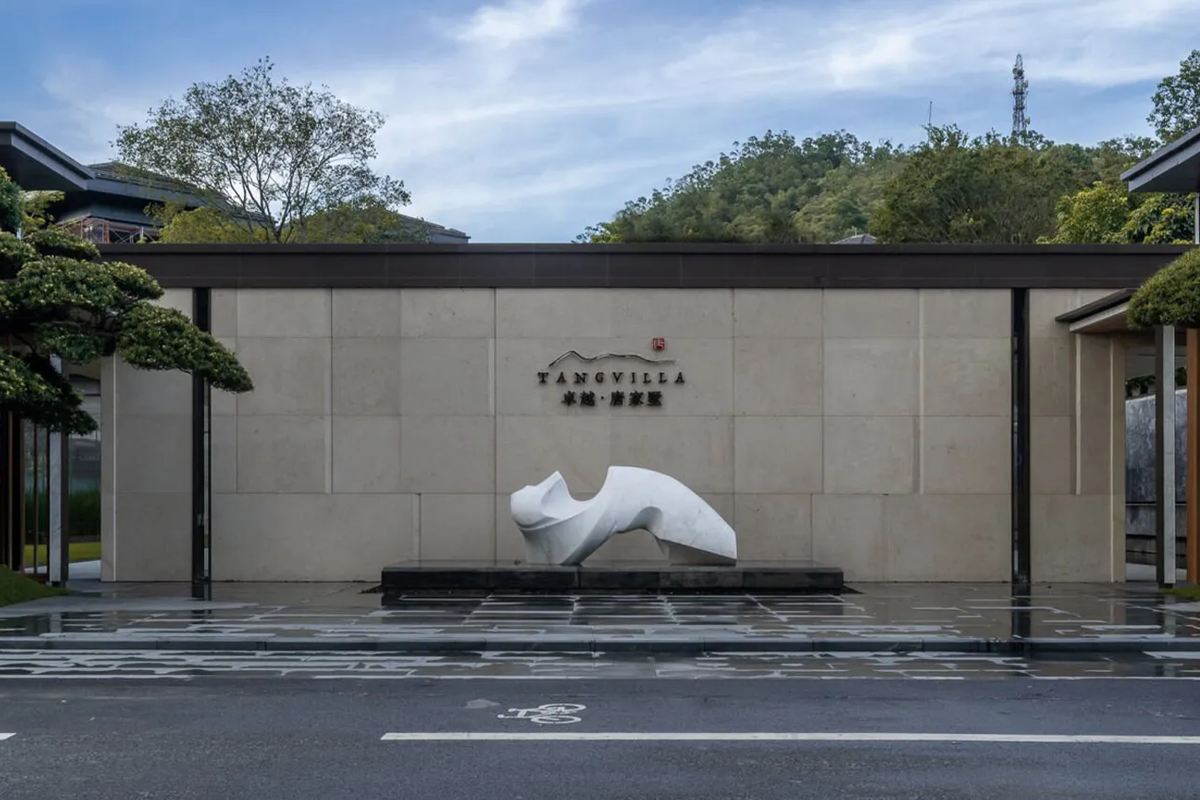
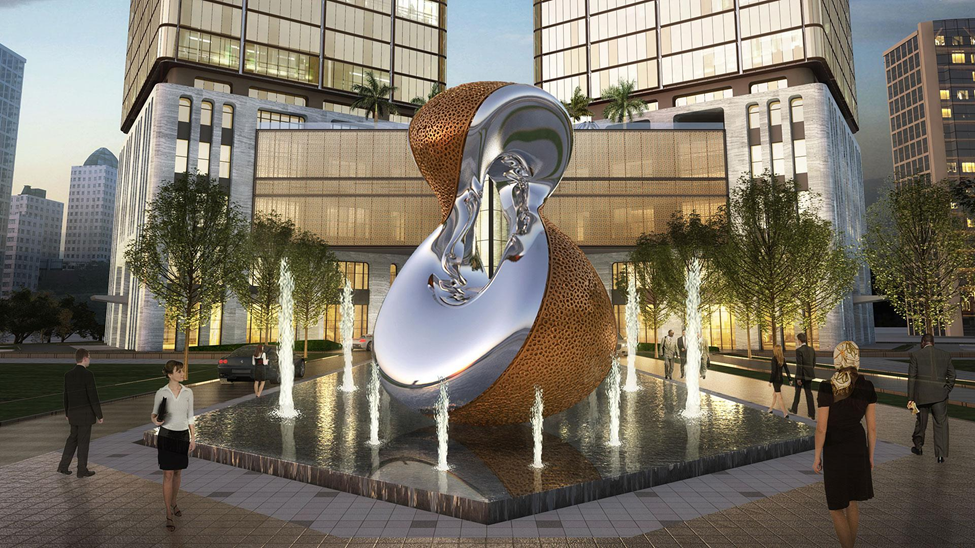
Where a maquette is a physical object with no fixed address, a rendering is the opposite: it exists only as an image, but it’s an image of a specific place. A well-built rendering places the sculpture against the actual building elevation, the real paving material, the correct planting height and the specific lighting conditions of the site – context a tabletop model simply can’t carry. For projects using mirror-polished stainless steel, a good rendering will also show how the surface is expected to reflect its surroundings at different times of day, which matters enormously for abstract sculptures designed around reflection as a core part of the concept. Pegasus reviews renderings alongside architectural drawings and the client’s own site photography, so the approved image reflects the real installation environment rather than a generic studio backdrop.
When Does a Project Need a Full-Scale Mock-Up?
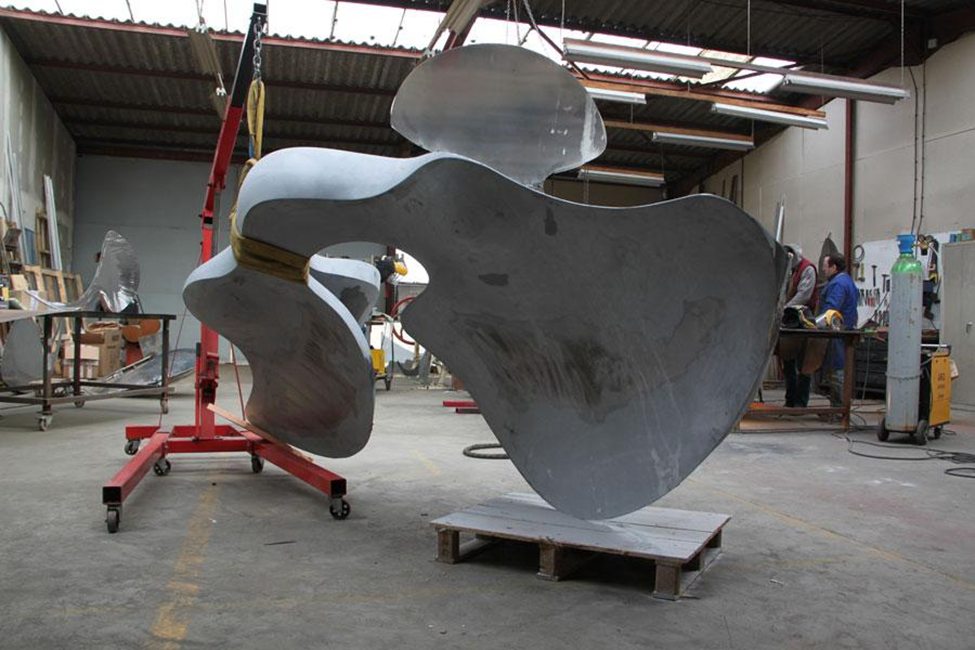
Not every commission needs a full-scale mock-up, but a few conditions usually justify one: monumental scale, cantilevered or open-form geometry, mirror-polished surfaces, or a location where the public will view the sculpture up close every day. This is particularly true for modern sculptures built in reflective metal, where distortion, seam visibility and reflected glare behave differently at fourteen feet than they do on a thirty-inch model – a difference no maquette or rendering can fully predict. At this stage, the goal is simple: confirm at true scale what the maquette and rendering could only estimate, before the design is treated as final.
This is a familiar pattern on mirror-polished entrance pieces for hotels and corporate plazas: a maquette barely larger than a hand can look perfectly resolved, but the same curve at twelve or fourteen feet can catch and distort a nearby glass façade in ways no small model reveals. Rather than mocking up the entire sculpture, Pegasus often builds a full-scale panel or section covering just the most complex curve or seam, which is enough to catch a distortion or alignment issue while the design can still be adjusted.
Maquette, Rendering or Full-Scale Mock-Up: Which Tool Answers Which Question?
For modern sculptures finished in mirror or brushed metal, the difference between these three approval tools comes down to what each one lets you check, and what it deliberately leaves for another stage:
| Approval Tool | What It Confirms | What It Won’t Tell You |
| Maquette | Physical form, proportion and silhouette – judged in your hand, from multiple angles | Site context, lighting, or how the piece will actually be experienced in place |
| Rendering | How the sculpture will sit in its real site – scale, placement, surroundings and lighting mood | Physical presence, tactile finish, or how the form behaves at true size |
| Full-Scale Mock-Up | True proportion, reflection behaviour, seam and surface continuity, exactly as it will be built | Long-term weathering, which only becomes clear after years on site |
What Happens Once a Concept Is Approved?
Approval isn’t the finish line, but it is the point where the design stops changing. Once a concept is signed off, the approved maquette, rendering or mock-up becomes the reference that engineering, fabrication and installation are checked against – not a looser interpretation of it. At Pegasus, the same team that manages concept approval stays involved through production, so there’s no handoff point where the design can quietly drift from what was actually agreed. It’s a workflow the Pegasus team applies across its full abstract sculptures portfolio, and one clients can see in detail through completed commissions.
What Goes Wrong When Approval Steps Are Skipped?
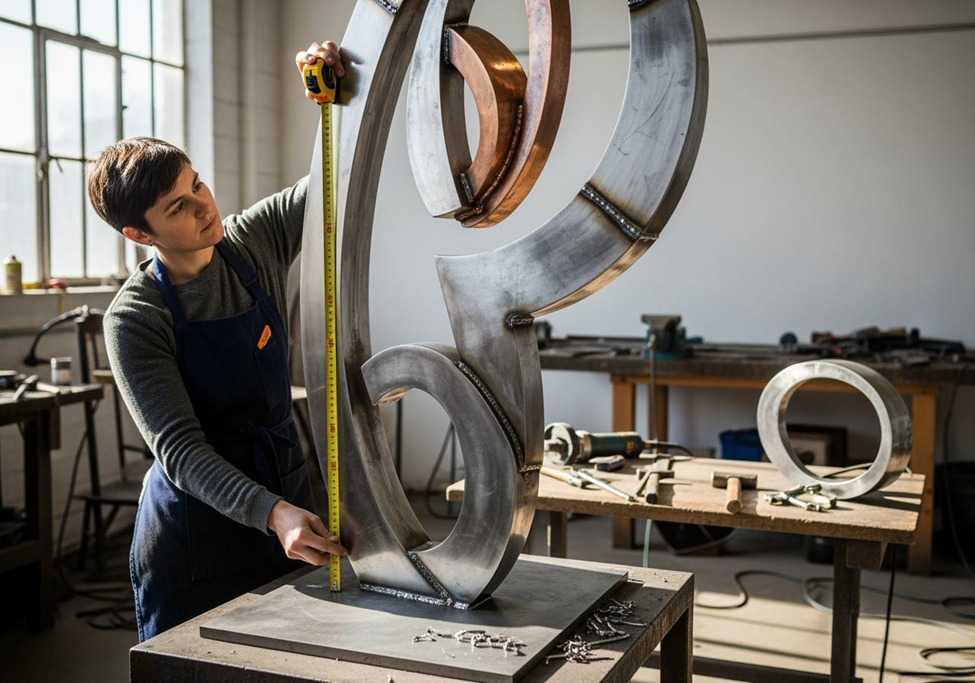
Most costly revisions on sculpture projects don’t come from a bad design – they come from a design that was approved at the wrong resolution. A rendering approved without a maquette can produce a sculpture that’s structurally sound but visually off-balance in person. A maquette approved without a site-accurate rendering can result in a piece that overwhelms, or disappears into, its plaza. And skipping a full-scale mock-up on a monumental or mirror-finished commission is one of the more common reasons architects report seam lines, reflection distortion or proportion issues after installation. None of these are material failures; they’re approval-process failures, and they’re avoidable. For architects and developers evaluating a manufacturing partner for abstract sculptures, asking exactly which of these three checkpoints are included, and at what stage, is one of the more useful questions to ask before signing a contract.
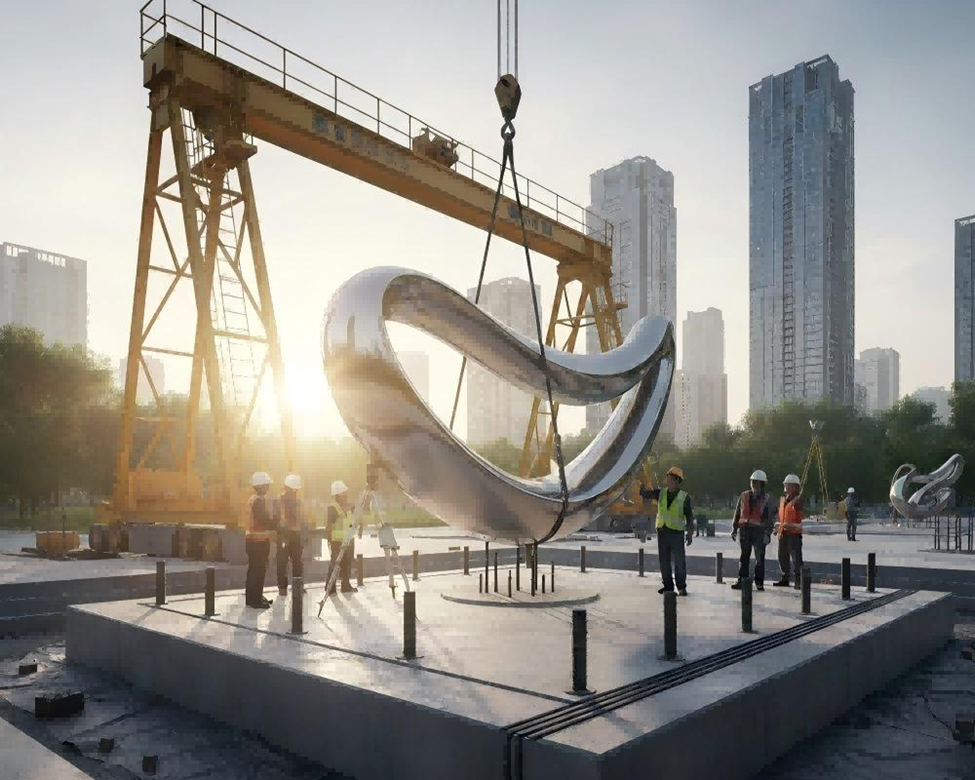
A typical example: a cantilevered, open-form piece is approved from a rendering alone for a corporate courtyard. The concept reads as fully resolved on screen, but once a full-scale section is built, the cantilever sits visibly top-heavy against the building’s actual proportions – a proportion problem that a maquette or mock-up review would have caught before the design was ever signed off. That’s precisely what the additional checkpoints at the approval stage are designed to prevent.
Frequently Asked Questions
Do I need a maquette if I already have a detailed 3D rendering?
Not always, but for anything monumental, cantilevered or reflective, a physical maquette catches proportion and viewing-angle issues that a rendering can hide. For smaller interior pieces, a strong rendering combined with a material sample is often sufficient.
How long does the approval stage typically add to a project timeline?
It varies by scale and complexity, but civic and architectural sculpture commissions commonly run from around four months to a year in total, so building the maquette-and-rendering review into the early schedule rarely adds meaningful delay.
Who typically needs to sign off on an abstract sculpture concept?
On commercial and civic projects, this usually includes the architect or developer, sometimes a design review committee, and occasionally a planning or public-art authority, depending on the site.
Can changes still be made after a maquette is approved?
Yes, though changes become more expensive the further a project moves into engineering and fabrication. Most revisions are far cheaper to make at the maquette or rendering stage than once full-scale production has started.
Does Pegasus charge separately for maquettes or full-scale mock-ups?
This depends on project scale and complexity. Architects and developers planning a commission are welcome to discuss maquette, rendering and mock-up requirements directly with the Pegasus team during early project consultation.
Conclusion
A maquette, a rendering and a full-scale mock-up each answer a different question, and none of them fully replaces the other two: the maquette checks form, the rendering checks context, and the mock-up checks reality at true scale. Treating design approval as a single-step sign-off is how avoidable proportion problems, reflection surprises and late-stage revisions end up in finished installations. Building all three checkpoints into the process, as Pegasus does for every abstract sculptures commission, costs relatively little time against the length of a typical architectural project, and it’s considerably cheaper than correcting a monumental piece after it’s already on site.
If you’re planning a commission and want to walk through which approval stages your project actually needs, get in touch with the Pegasus team to discuss your concept, site conditions and timeline before design work begins.