The Real Buying Risk Begins After Sample Approval
An approved first sculpture proves that a supplier can make one acceptable piece. It does not yet prove that the same silhouette, color balance, surface quality and packing method will appear across the rest of the order.
For a buyer, inconsistency creates more than an aesthetic problem. It can delay a coordinated installation, trigger arguments over what was approved, increase rework costs and leave units looking unrelated when they are displayed together. The most useful supplier review therefore focuses on six practical questions—not on how many inspection terms a factory can list.
The following questions help purchasing teams evaluate fiberglass sculpture manufacturers using evidence that connects directly to the finished order.
1. What, Exactly, Must Every Unit Match?
“Match the sample” is too broad unless the supplier and buyer identify the features that carry the design. Those may include the overall profile, face or logo details, the position of color boundaries, surface texture, sheen, mounting points and the way separate parts meet.
Ask the supplier to preserve the accepted unit or an approved reference set and label the views and details that matter most. If hand finishing is meant to create small variations, record what is acceptable. This prevents intentional character from being treated as a defect—and prevents avoidable drift from being excused as handmade variation.
Buyer evidence to request:
- A protected approved sample or clearly identified physical reference set.
- A short list of non-negotiable visual and installation features.
- Approved exceptions, such as planned colorways or location-specific bases.
2. How Will the Supplier Know the Form Is Starting to Drift?
Buyers do not need to supervise moldmaking. They do need to know how the supplier will notice changes before several units are completed. The right checkpoints depend on the sculpture: a character may rely on facial alignment, a branded object on an exact outline, and an assembled installation on base or connection points.
A useful answer names a few design-critical checks and explains when they are compared. It should not hide behind “we inspect everything.” Ask to see the same profile views or critical measurements from an early unit and a later unit. The purpose is to protect appearance and site fit, not to impose arbitrary tolerances on every curve.
3. How Will Color and Visible Finish Be Compared?
Color and sheen can look different under changing light, camera settings and viewing angles. A buyer should ask for comparisons made against the same physical reference, under similar lighting and from repeatable views. Glossy or metallic finishes also benefit from angled images because reflections can reveal waves, sanding marks or local repair boundaries that a straight-on image misses.
The acceptance standard should reflect how the sculptures will be seen after installation. A close-range retail display may need tighter visual alignment than a piece viewed from a distance. Defining that context helps both sides focus on differences that matter to the customer experience.

Project Evidence: Protecting the Features That Make a Design Recognizable
The production challenge in “Gravity Offset” was not simply creating a fiberglass figure. The digitally distorted form depended on a flowing asymmetric profile and sharply controlled red-and-white divisions. If either feature wandered during fabrication or finishing, the final work would lose the visual effect established in the approved design.
Pegasus translated the digital concept into the 1.65-meter finished sculpture by using the approved form and graphic boundaries as the key comparison points through fabrication and surface finishing. The completed work shows the intended offset silhouette and high-contrast color separation together, rather than treating shape and paint as unrelated checks.
For a repeat order, the buyer lesson is clear: define the two or three features that make the artwork immediately recognizable, then require consistent evidence of those features on later units. That is more useful than a generic instruction to “match the original.”
4. Which Checks Apply to Every Unit?
Not every detail needs the same level of review. The supplier should explain which items are checked on every unit and which are reviewed on selected units. Identity, visible damage, required components and installation interfaces usually deserve unit-level confirmation. More detailed comparisons can follow an agreed plan based on order size, finish difficulty and the cost of a missed problem.
The important buyer question is what happens when a selected unit fails. A practical plan expands the review around that issue instead of allowing the rest of the order to continue unchanged.
5. What Happens If One Unit Does Not Match?
A credible supplier should be able to describe a realistic response to a mismatched color, distorted edge or damaged high point. The unit should be held back, compared with the approved requirement, repaired or remade as appropriate, and checked again before release. The buyer should receive enough evidence to understand the issue and its resolution.
This conversation is more revealing than a claim of “zero defects.” It shows whether the supplier can keep one problem from affecting the remaining quantity and whether the proposed correction protects the appearance buyers actually approved.
6. Will Packing Be Repeated as Carefully as Production?
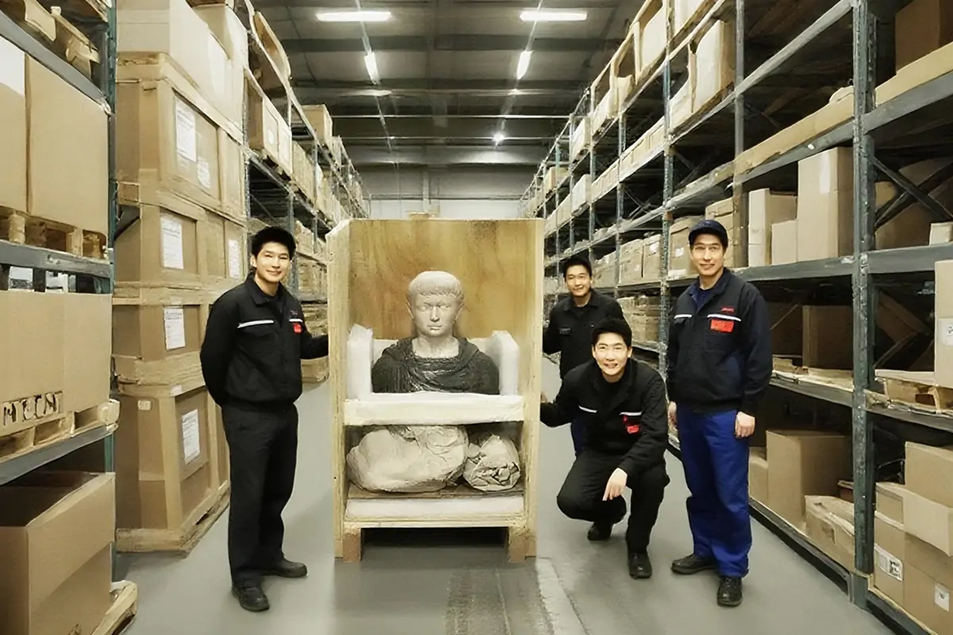
A consistent sculpture can still arrive damaged or incomplete if each crate is handled differently. The first completed pack should establish how projections are protected, removable parts are secured, accessories are identified and handling orientation is shown. Later crates should follow the same approved method.
Before closure, request photographs that connect the unit identity to its protection and included components. This gives the buyer a usable shipment record and makes it easier to resolve a problem without guessing what happened inside the crate.
The Minimum Evidence a Buyer Should Receive
| Evidence | Why It Matters to the Buyer | Timing |
| Accepted reference | Defines the approved result and the features that cannot drift. | Before quantity production |
| Repeat-unit comparison | Shows the same critical views, finish references or installation points on later units. | At agreed production stages |
| Exception record | Explains what differed, what was corrected and what was checked again. | Whenever a unit misses the requirement |
| Packing record | Links each finished unit to its protected projections, parts and accessories. | Before shipment |
When Is the Order Ready to Scale?
A multi-unit order is ready to move beyond the accepted sample when the buyer can answer yes to the following points:
- The approved result is physically identifiable and protected from accidental change.
- The features that control appearance and installation are named.
- Later units can be compared through consistent, reviewable evidence.
- A mismatch has a clear hold, correction and reapproval path.
- The packing method is documented and repeatable across the shipment.
If one of these points remains vague, increasing quantity only increases the cost of discovering the ambiguity later.
Pegasus supports custom fiberglass sculpture projects from design development through production and packing. For a repeat-order inquiry, share the design, quantity, finish expectations, installation interfaces and the evidence your team needs to approve. This gives the production team a clear basis for building an order-specific control plan.
Explore custom fiberglass sculpture capabilities | Discuss a multi-unit project
Questions Buyers Often Ask
How should acceptable handmade variation be documented?
Use the approved sample to identify where variation is part of the design and where consistency is required. Photographs of acceptable examples are more useful than broad phrases such as “minor variation allowed.”
Does the buyer need to approve every finished unit?
Not necessarily. Agree in advance which evidence is supplied for every unit, which points are reviewed at defined production stages and which exceptions require buyer reapproval. The level of review should match the project risk.
What should be retained for a future reorder?
Keep the approved design files, color and finish references, key profile views, installation details and packing record. Before the reorder begins, confirm the condition of any stored tooling and identify which elements need fresh approval.