Most people commissioning a custom bronze sculpture for the first time run into the same problem including- three foundries, three wildly different quotes, and no clear idea why. One number is double the other. One timeline is twice as long. Without understanding what actually happens between “we approve the concept” and “the crate arrives on site,” it’s almost impossible to tell whether a quote is realistic or a proposal is cutting corners you won’t notice until the piece is already installed.
That gap in visibility is where most commercial projects run into trouble – not at the casting stage, but earlier, when specifications, approvals, and material choices are still being negotiated on paper. This article walks through what a bronze sculpture commission looks like in practice, stage by stage, so architects, developers, and procurement teams know what to ask for and what to expect at each checkpoint.
How a Custom Bronze Sculpture Commission Actually Moves Forward
A bespoke bronze sculpture doesn’t go from sketch to finished monument in one continuous push. It moves through distinct, sequential stages – design translation, mold and wax work, casting, structural reinforcement, surface finishing, and finally logistics and installation – and each one produces something the client is expected to review before the project continues.
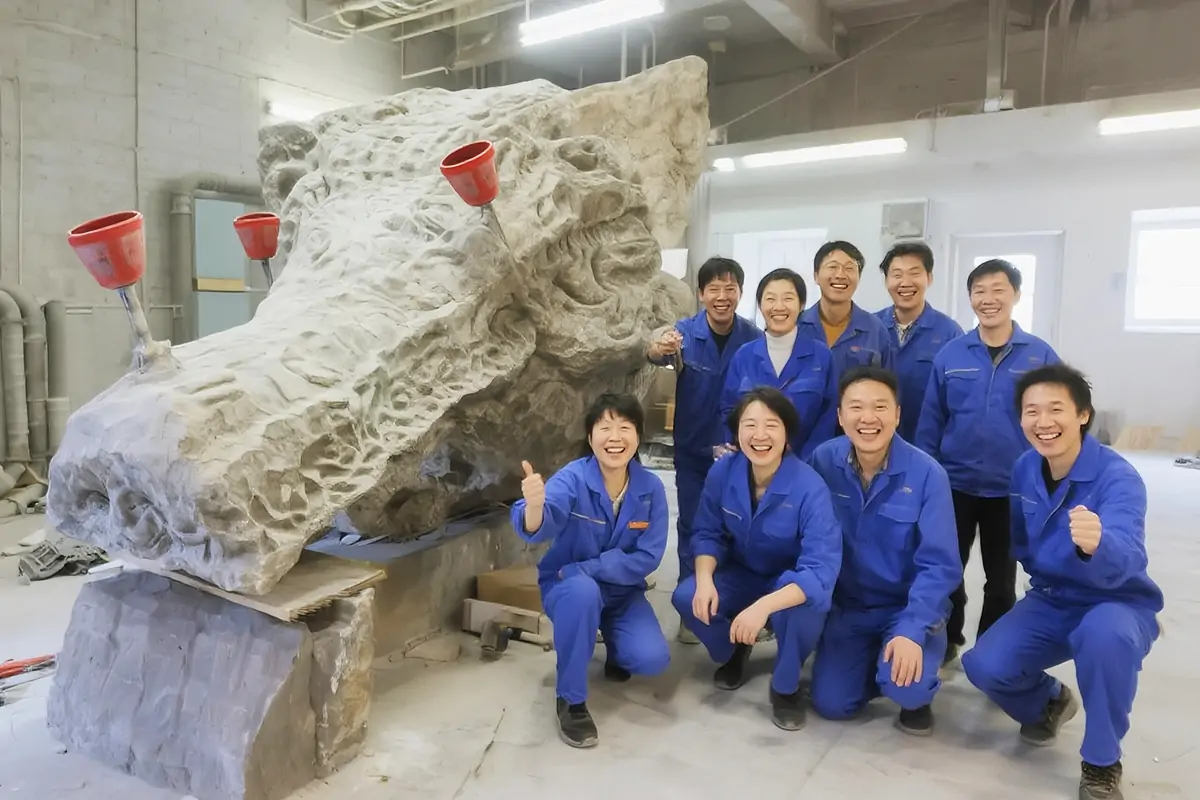
At Pegasus, key production stages can be reviewed through photos and videos, helping clients confirm progress and approvals before the project moves forward.
Step 1: Design Translation – From Concept to Clay or Digital Maquette
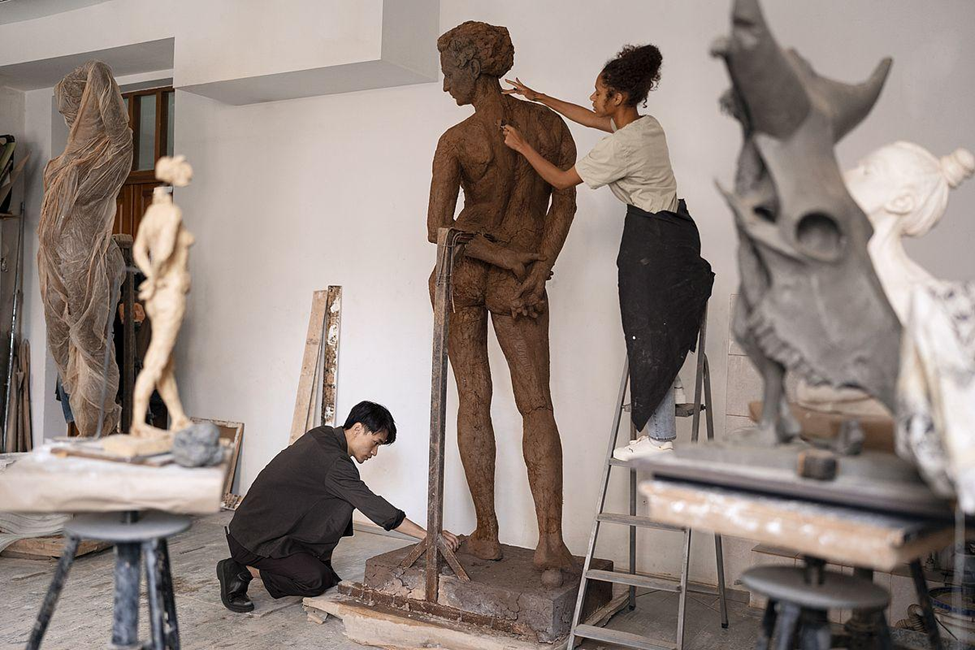
Every project starts with whatever the client already has: a sketch, a small maquette, a 3D file, or sometimes just a reference image and a rough sense of scale. The foundry’s job at this stage is to translate that into a workable production model.
If the starting point is a small hand-made maquette, it can typically be scanned to create a high-resolution digital reference. Once the digital model is approved, engineers can enlarge it to the target size using CNC-milled foam or clay, creating the master pattern for mold-making. If the starting point is CAD or a finalized 3D model, engineering can review structural feasibility, including wall thickness, load-bearing points and sectioning, before the physical build begins.
This is also where site conditions should enter the conversation. A sculpture planned for a coastal plaza may face different requirements from one installed inside a climate-controlled hotel lobby. sharing installation-site details early helps the production team account for those conditions while the design is still being developed.
Buyer approval checkpoint: Confirm the final concept, scale, proportions, production model and relevant site information before mold-making begins.
The reason is straightforward: changes are easier to make at the modeling stage than after molds or bronze sections are already in production.
Step 2: Mold-Making and Lost-Wax Casting
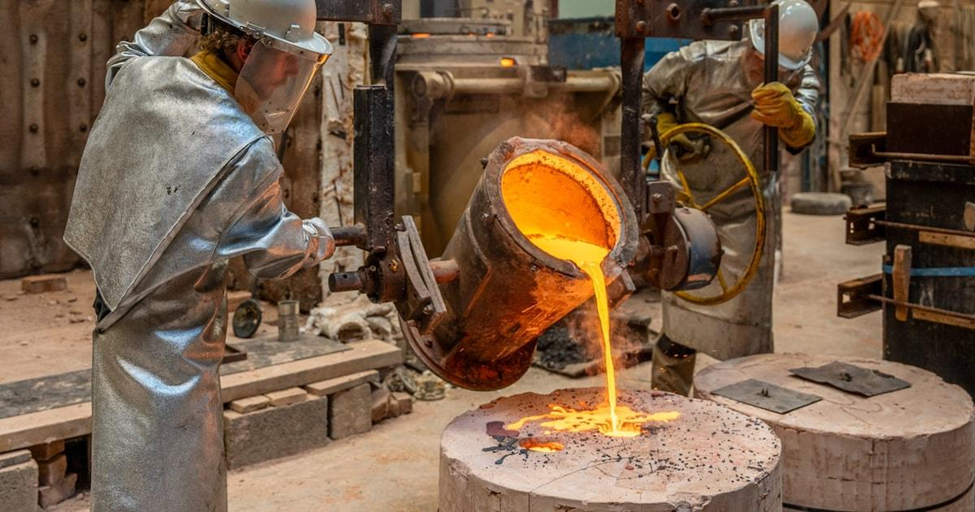
Once the master model is approved, the foundry builds the mold and moves into casting. Pegasus produces monumental and fine-detail bronze work primarily through the lost-wax casting process, also known as cire perdue. A wax replica is created from the mold, coated in a ceramic shell, and then heated so the wax melts out. Molten bronze is poured into the resulting cavity.
For larger architectural forms, different casting methods may sometimes be used for different sections depending on their shape, level of detail and structural requirements. If a particular bronze alloy has been specified for the project, the exact grade should be confirmed in the production documentation before casting. This matters when the project specification, client requirements or documentation needs to identify the material actually used.
Construction also needs to be considered at this stage. For large sculptures, hollow construction can reduce unnecessary weight and material use, but the final construction still needs to suit the sculpture’s size, geometry and structural requirements.
Wall thickness matters because it affects the amount of bronze used, finished weight, and requirements for lifting and shipping. Buyers should therefore ask how the proposed wall construction relates to the sculpture’s dimensions and installation rather than treating it as an isolated technical number.
Buyer approval checkpoint: Confirm the alloy grade, casting approach, sectioning plan and relevant construction specifications before pouring begins.
Step 3: Welding, Structural Reinforcement, and Chasing
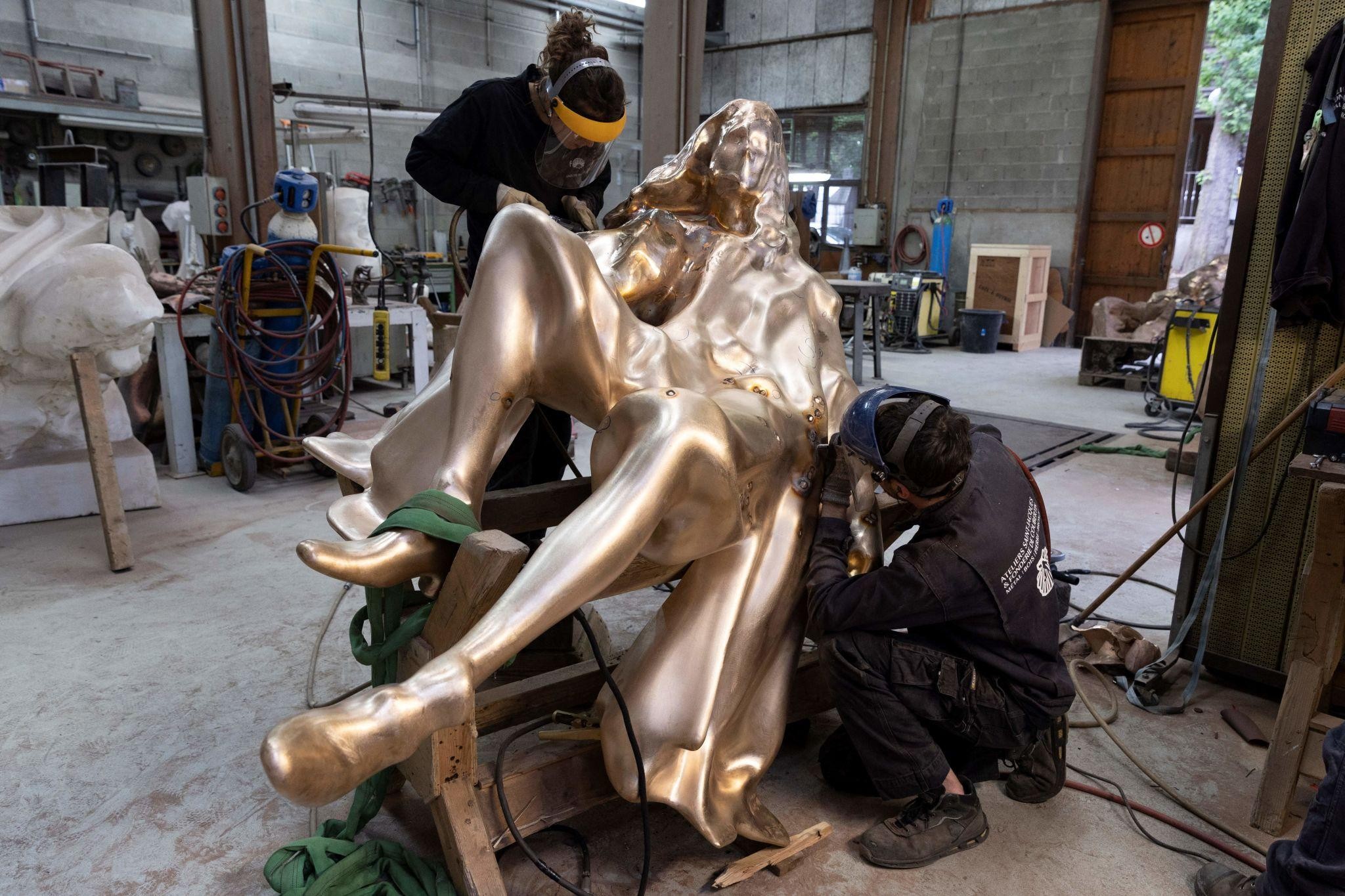
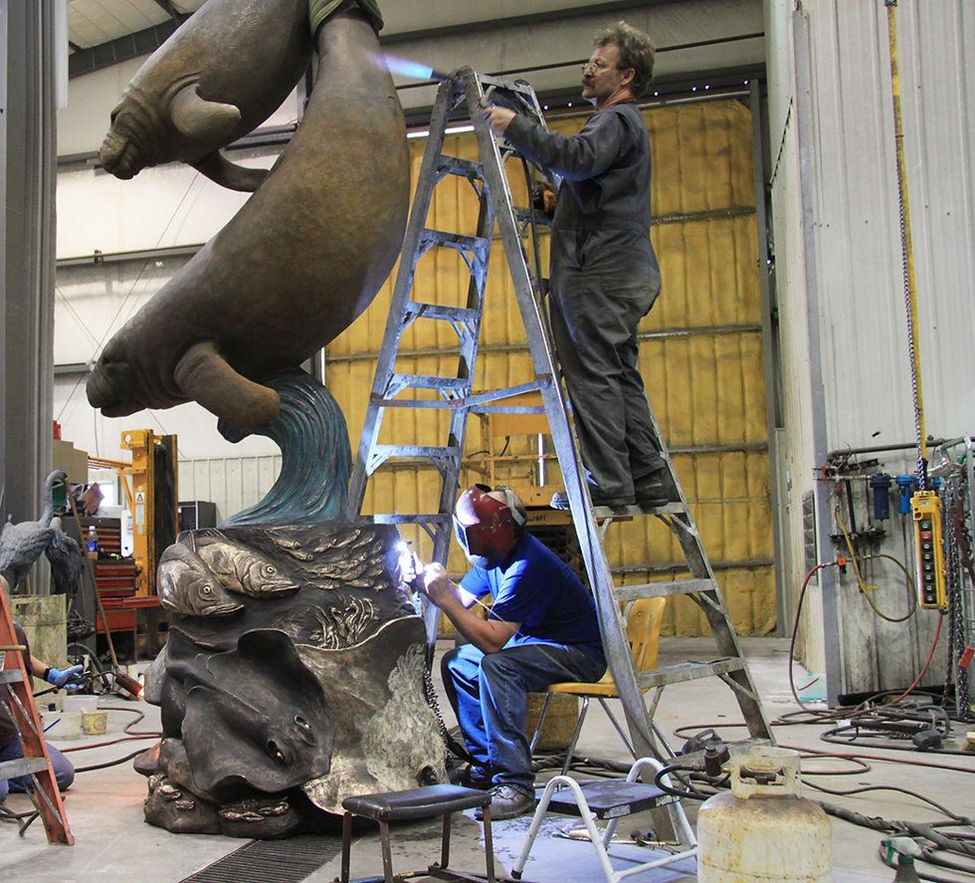
A monumental custom bronze sculpture is rarely cast as one piece. Large works are generally divided into sections so they can be cast, handled and transported more practically. The sections are joined through welding where appropriate, after which artisans chase and blend the joins, refining the surface until the seams integrate with the surrounding form.
Large outdoor sculptures may also require an internal armature or reinforcement system. Stainless steel may be incorporated into the internal structure, but the exact approach depends on the sculpture itself.
For a bronze sculpture commission, dimensions, geometry, weight distribution, installation method, wind exposure and other site conditions can all influence the structural approach. This information also becomes important later when the sculpture needs to be lifted, transported, anchored and installed.
Buyer approval checkpoint: Review section joins, internal structure, connection points and the relationship between the armature and the installation plan before the sculpture moves into final finishing.
Step 4: Patina, Finishing, and Quality Control
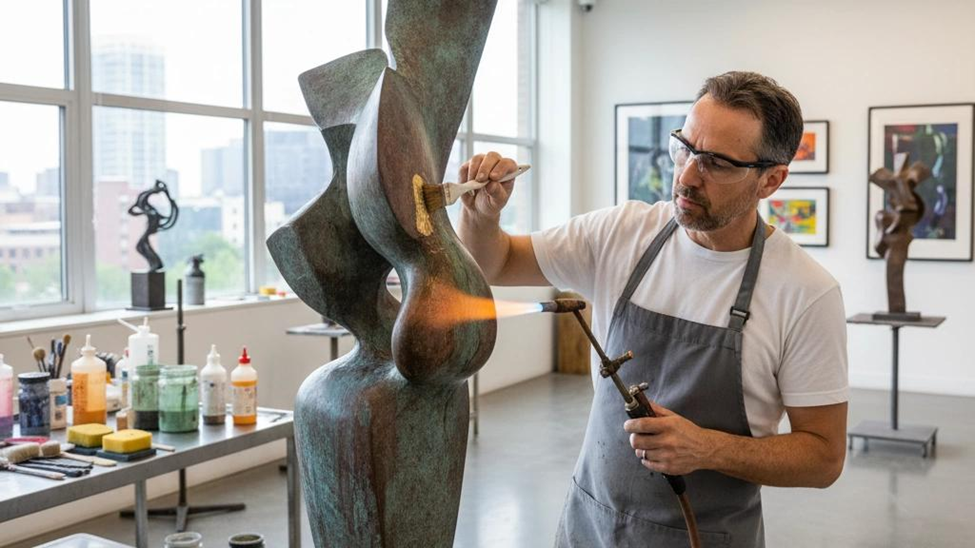
Bronze is a reactive metal, and patina is where much of the sculpture’s final visual character is established. Heat and chemical patination can produce finishes ranging from antique verdigris to deeper brown tones. An appropriate protective treatment may also be applied depending on the intended finish and installation environment.
Patina approval and final quality review. serve slightly different purposes. A patina sample confirms what the client wants the finished surface to look like, while final inspection confirms that the completed sculpture matches what was approved.
Before packing, a structured quality review can include:
- Dimensional and structural check – confirming the finished piece matches approved drawings and that internal armature points align with the installation plan.
- Surface and patina inspection – Checking color consistency, surface treatment and blending of welded areas.
- Material verification – Confirming material documentation where the project requires it, such as bronze alloy or steel specifications.
- Trial or dry-lay assembly – for multi-piece sculptures, a full-scale pre-assembly to confirm every section fits before it’s crated, turning final on-site installation into a predictable event rather than a guessing exercise.
- Client sign-off – a formal factory acceptance step, often supported by detailed photos or a live video walkthrough for clients who can’t inspect the piece in person.
These checks also create a useful record for the project team. Drawings, inspection reports, material certificates, photographs, and approval records give the architect, procurement team, contractor, and installation crew a shared reference for what was actually approved and produced.
Skipping any of these isn’t necessarily a red flag on its own, but it’s worth asking a supplier directly which of these steps are included by default versus offered as a paid add-on.Buyer approval checkpoint: Approve the patina sample before full application where possible, then review the completed sculpture against the approved design, finish, dimensions and required documentation.
Step 5: Packaging, International Shipping, and Installation
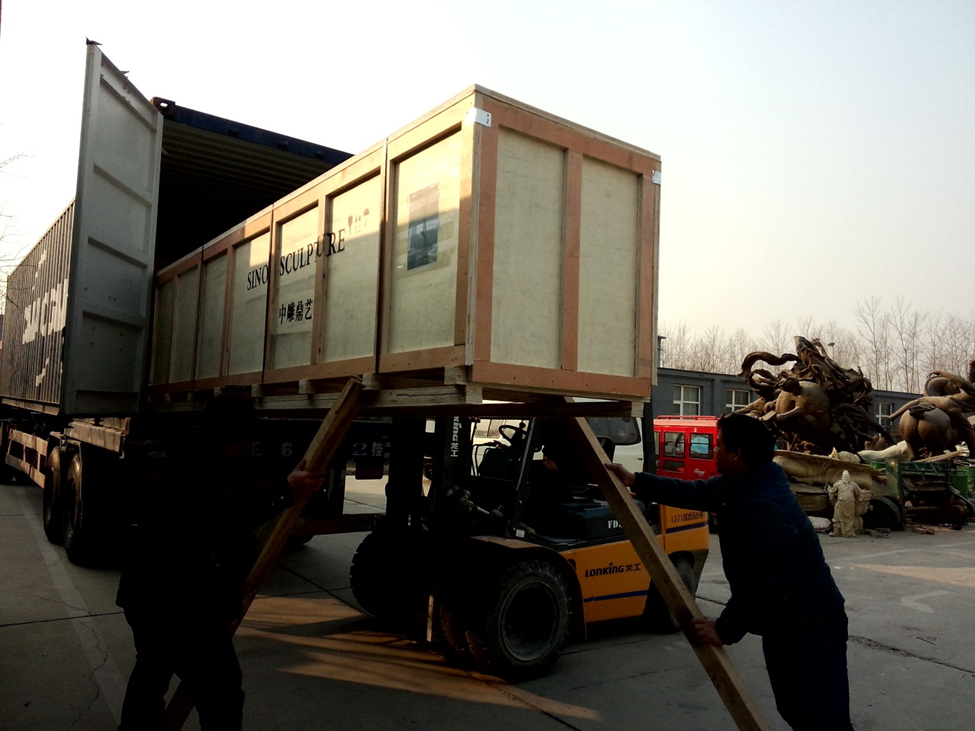
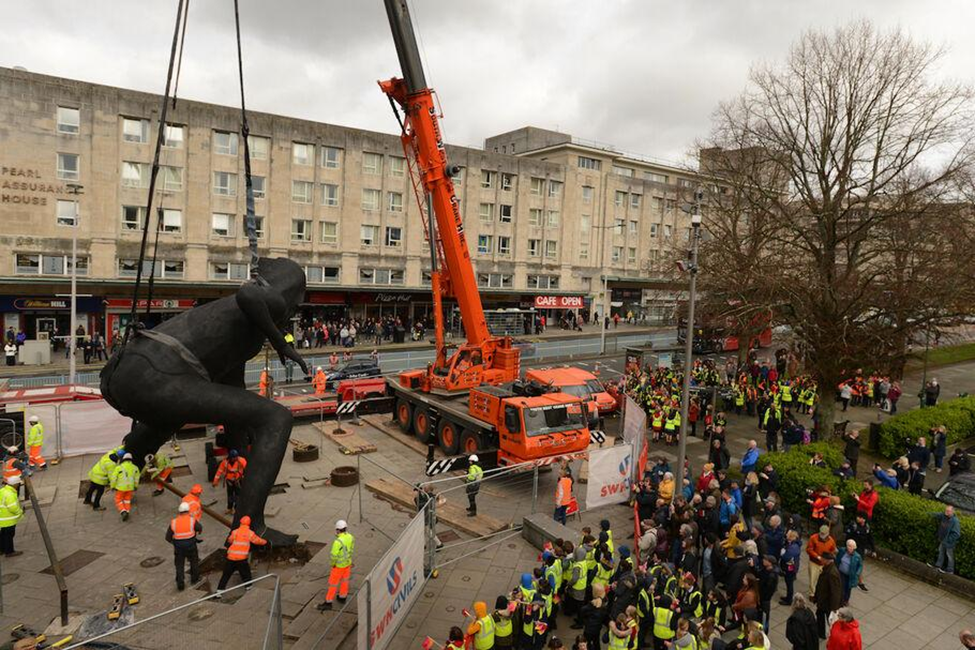
Bronze presents a specific shipping problem: it’s extremely heavy, but often has fine, fragile surface detail that can’t tolerate vibration or shifting in transit. Getting a bronze sculpture commission from the foundry to the installation site without damage requires packaging engineered around the piece’s actual center of gravity, rather than a generic crate.
What buyers should expect from the packaging and delivery stage:
- Custom-built, shock-absorbent crating with internal bracing that isolates the sculpture from contact points that could scuff the patina.
- Protective wrapping and appropriate moisture-control measures for the expected transit conditions, particularly on humid or long-haul routes.
- LCL (less-than-container-load) or full-container ocean freight, depending on scale, with engineered lifting points planned into the sculpture so it can be rigged safely without ad-hoc modifications on site.
- Installation documentation – anchoring schematics, dead-load calculations, and connection details for the foundation team – plus, for complex commissions, an on-site technical supervisor to guide the local installation crew.
These documents are not just paperwork. They give the receiving team the information needed to prepare the foundation, coordinate lifting, understand connection points, and install the sculpture according to the approved plan. That can reduce uncertainty at the point where changes are usually most expensive: on site.
For a manufacturer with in-house engineering, this stage connects directly back to Step 3: the armature and rigging points can be planned with the intended shipping and installation method in mind. Keeping design, casting, and logistics under one roof can also reduce the number of handoff points between vendors.
For additional project context, buyers can review Pegasus’s completed sculpture projects to see how large-scale works are developed for commercial and public environments.
Buyer approval checkpoint: Before shipment, confirm the final inspection, crating arrangement, handling and lifting requirements, anchoring information and installation arrangements.
What to Approve at Each Stage: A Quick Reference
Because so much of a successful commission comes down to catching issues at the right checkpoint rather than at the end, it helps to see the approval structure laid out plainly:
| Stage | What the Foundry Delivers | What You Should Review & Approve |
| Design Translation | Digital scan or 3D model, CAD drawings | Scale accuracy, proportions, structural feasibility |
| Mold & Wax Casting | Master mold, material specification sheet | Alloy grade, wall thickness, sectioning plan |
| Welding & Reinforcement | Assembled casting with internal armature | Seam quality, armature engineering for your site conditions |
| Patina & Finishing | Patina sample plates, finished surface | Color match, sealing method, weld-blend consistency |
| Quality Control | Inspection report, dry-lay assembly photos/video | Dimensional accuracy, material certificates, final sign-off |
| Packaging & Shipping | Crating plan, rigging and anchoring schematics | Insurance coverage, delivery timeline, installation support |
The point isn’t to create more paperwork for the sake of it. Each approval gives the buyer a chance to confirm that the sculpture still matches the brief before the next stage makes changes harder or more expensive.
What Buyers Should Prepare Before Approaching a Foundry
The quality of the initial brief can affect how accurately a foundry understands the project before pricing it. Before requesting proposals for a custom bronze statue, it’s worth having:
- A concept reference: a sketch, maquette, 3D file, or clear photo reference of the intended design.
- Approximate final dimensions and installation location, including whether it’s coastal, urban, indoor, or a high-traffic public space.
- Any structural or regulatory requirements tied to the site – wind zone, seismic rating, or public safety codes that apply locally.
- A target installation date, working backward from any event, opening, or handover deadline.
- Budget range, even approximate, so the foundry can recommend solid versus hollow casting, alloy grade, and finishing options that actually fit the project rather than presenting options outside the real budget.
Sharing this upfront is also what separates a commodity quote from an engineered proposal – a foundry that asks these questions before pricing is usually the one thinking about your installation, not just the casting.
How Long Does the Process Typically Take?
Timelines vary by scale and complexity, but a monumental custom bronze sculpture commonly runs several months from approved design to delivery once mold-making, casting, welding, patina and finishing are taken into account. Multi-section sculptures with complex armatures or customized finishes may require additional time.
The production period is also only part of the overall schedule. Client approvals, material decisions, factory acceptance, packing, international shipping, site preparation and installation can all affect the final handover date.
For that reason, it is more useful to build the project around stage-by-stage approval checkpoints than to focus only on a single production number.
Frequently Asked Questions
What’s the difference between solid and hollow bronze casting?
Solid casting uses significantly more material and is generally reserved for smaller pieces where weight isn’t a constraint. Hollow casting, reinforced internally with a structural armature, is the standard approach for many monumental outdoor works because it balances visual impact with more manageable weight and shipping requirements.
Can a foundry match an existing patina or create a custom color?
Yes, within the range chemical patination allows. A reputable foundry will provide physical patina sample plates for approval before applying the finish to the full sculpture, rather than asking you to approve a color from a photo.
Will an outdoor bronze sculpture change color over time?
Bronze naturally reacts with its environment and can develop changes in surface color over time. Sealing with an appropriate protective finish can slow this process and help preserve the approved patina, though periodic maintenance may be recommended to maintain the original finish long-term.
Can a large bronze sculpture be shipped internationally?
Yes. Large bronze sculptures can be divided into transportable sections and packed in custom-engineered crates. Freight, handling and lifting requirements should be planned according to the sculpture’s size and destination, with installation information prepared for the receiving site.
How is the final bronze finish protected after patination?
After patination, an appropriate protective treatment may be applied to help maintain the approved surface appearance, particularly for outdoor installations. The choice of treatment depends on the intended finish and installation environment, and ongoing maintenance may be needed as the bronze naturally reacts with its surroundings.
Planning a Custom Bronze Sculpture for Your Project?
If you’re weighing proposals or still shaping the brief, the details worth pinning down before signing include the material specification, construction and armature requirements, patina approval, quality-control documentation, and who is responsible for installation support.
Pegasus manages the full bronze sculpture commission process in-house, from the first maquette review through casting, finishing, and on-site installation guidance, which is worth exploring further on our bronze sculpture manufacturing page or our custom fabrication and OEM/ODM capabilities overview.
If you have a concept, a rough sketch, or even just a set of site photos, reach out to our team, and we’ll walk you through what’s realistic for your scale, timeline, and budget.