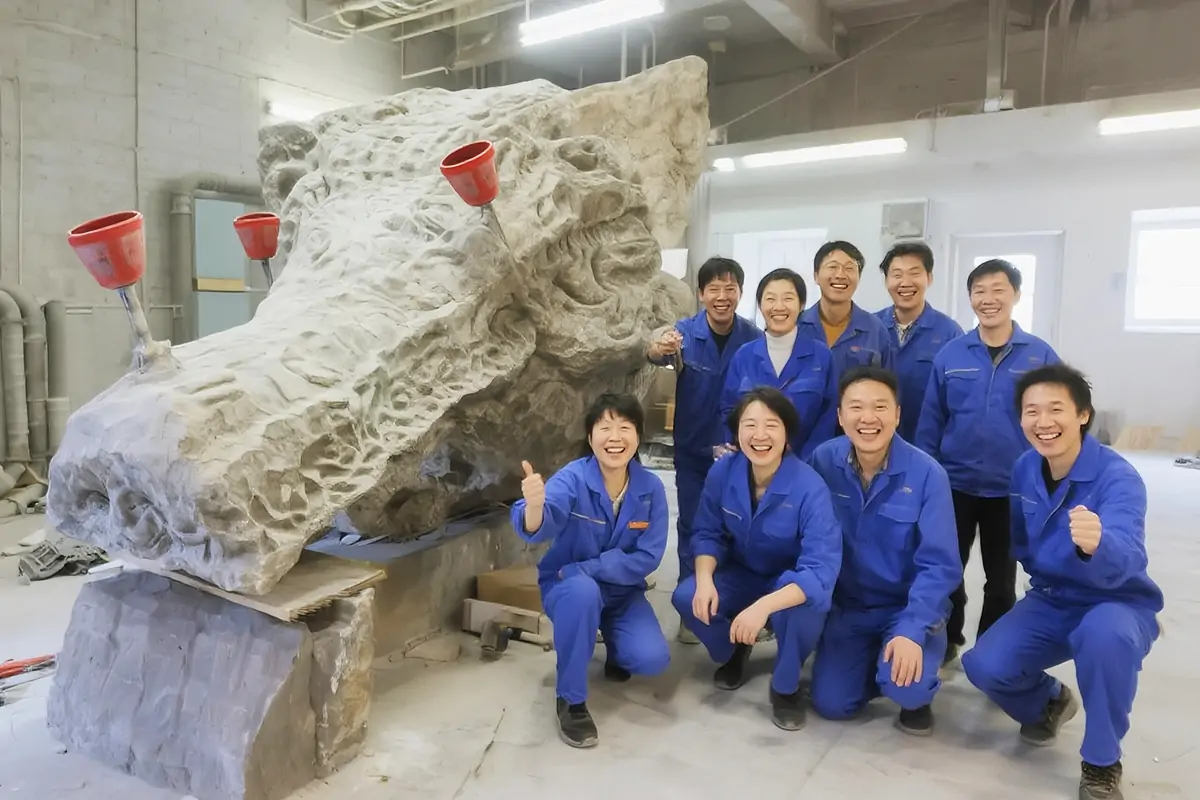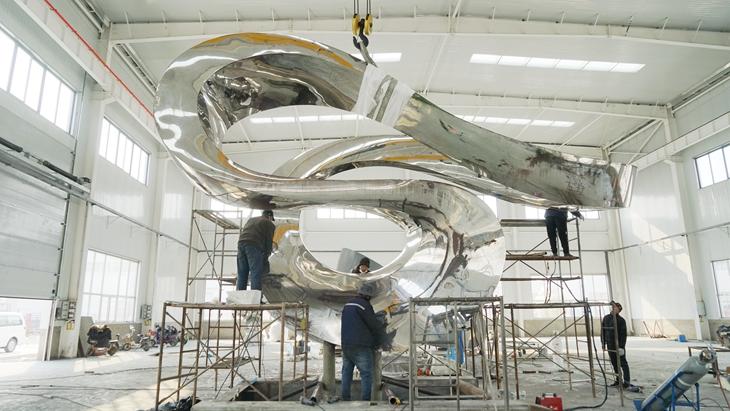
A parametric model becomes a fabricated sculpture through a fairly unglamorous sequence: the digital surface – which defines geometry, not structural behaviour or manufacturing detail – is reviewed for buildability, engineered for structural performance and fabrication method, cut into panels or sections a workshop can actually produce, then rebuilt in metal, stone or composite with tolerances tight enough to keep the original geometry intact. Miss a step here, and a beautiful render can turn into a piece that won’t stand up, won’t ship in one truck, or simply won’t weld together the way it looked on screen. That gap – between a file and a finished object – is what separates a strong concept for modern sculptures from one that actually survives contact with a factory floor.
At Pegasus, this translation work starts well before anyone picks up a grinder. More architects and computational designers now arrive with Grasshopper, Rhino or generative CAD files instead of hand sketches, and the geometry in those files is often mathematically beautiful but not yet buildable. A parametric or NURBS model defines that geometry with precision, but on its own it says nothing about structural behaviour or how the piece will be manufactured – that comes from a separate engineering and fabrication review, carried out once the geometric model is in hand. Turning it into an installed piece is engineering work first, artistic interpretation second.
Why Can’t a Digital Model Go Straight From Screen to Sculpture?
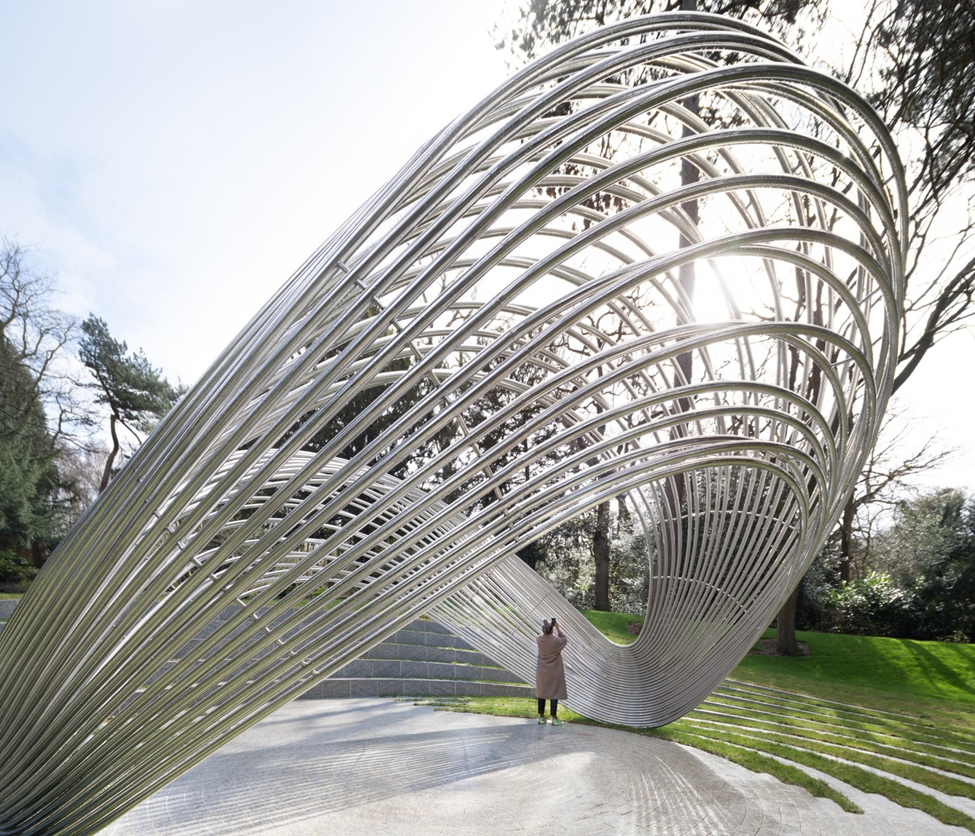
Parametric software doesn’t know anything about gravity, weld access, wall thickness or shipping crate dimensions – it just knows math. A NURBS surface can describe a continuous double-curved form with total precision, but stainless steel sheet, cast bronze and carved stone all behave very differently once that surface has to become physical. A curve that flows smoothly on a screen might need dozens of individually rolled panels, each with a slightly different radius, before it can be reproduced in steel without the surface looking faceted instead of fluid.
That’s the reason the earliest engineering step is a plain buildability review: checking where curvature continuity breaks down, flagging any point where the form exceeds the bend radius a material can safely take, and noting cantilevers or thin sections that will need internal support later. For architects working on site-specific abstract sculptures, catching these issues on paper – not after a section has already been cut – is usually the difference between a minor design tweak and an expensive redo.
How Is a Parametric Surface Broken Into Buildable Sections?
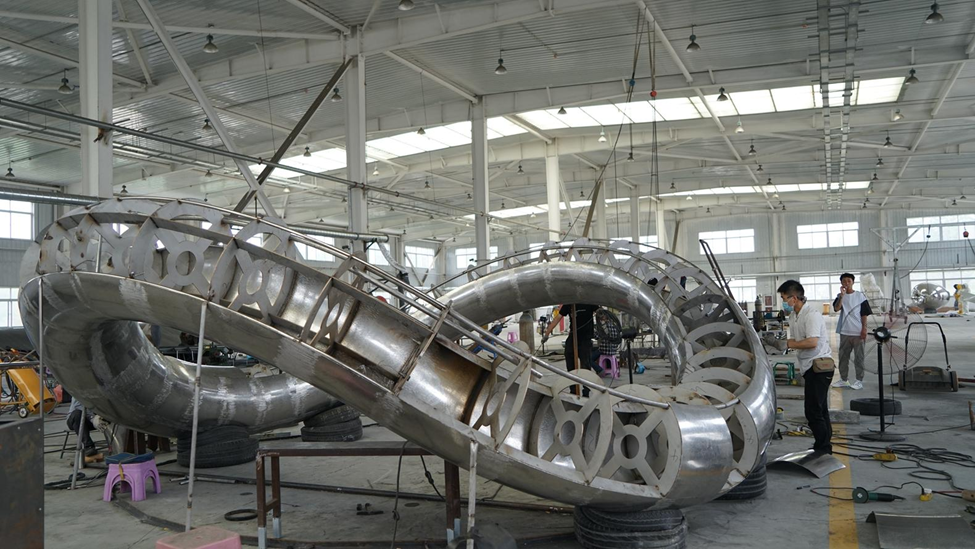
Once the geometry passes that review, it gets divided into panels or segments sized to whatever the fabricator’s rolling, casting or CNC equipment, transport limits and crane capacity can actually handle. A few things tend to drive that decision more than anything else:
- Maximum panel size the rolling, casting or CNC-milling equipment can produce accurately
- Seam placement along natural breaks in the form, so joints stay close to invisible once finished
- Load path and centre of gravity, so each section can support its own weight during welding and trial assembly
- Freight and crane limits at the destination site, which often set the real ceiling on how big any single piece can be
Every division point is also a connection that has to be engineered, not just a place where the design happened to get cut. This is really what sets serious custom metal sculpture fabrication apart from standard architectural metalwork – the joints are expected to disappear into the sculptural surface rather than read as visible seams.
A Fluid Plaza Sculpture, Worked Through Section by Section
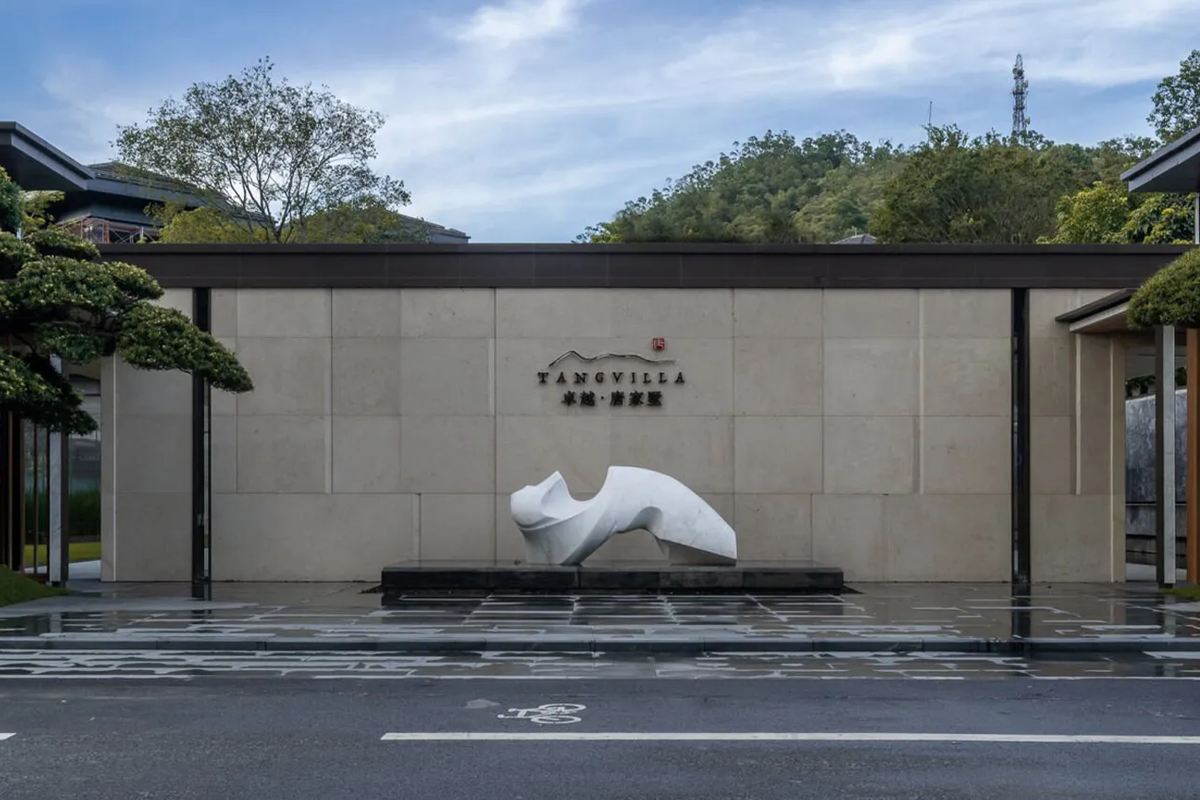
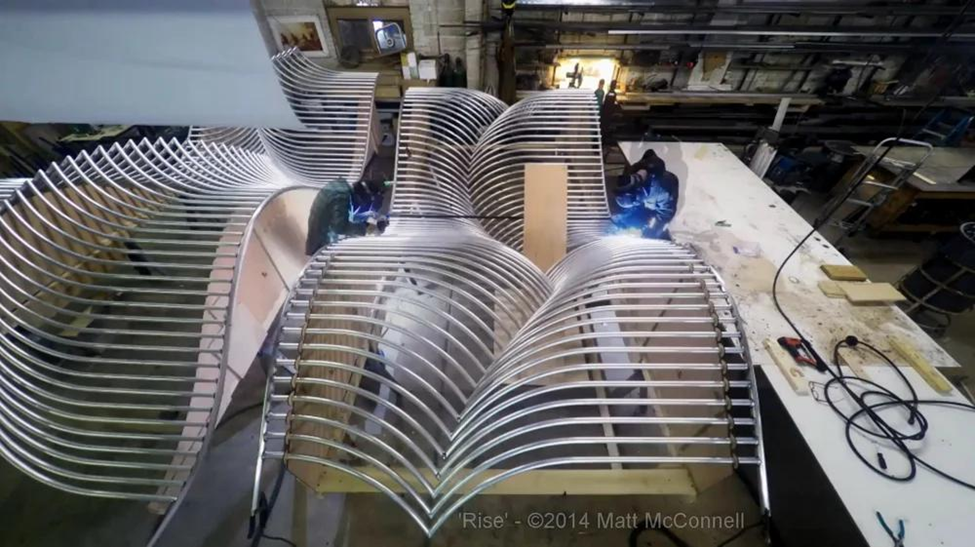
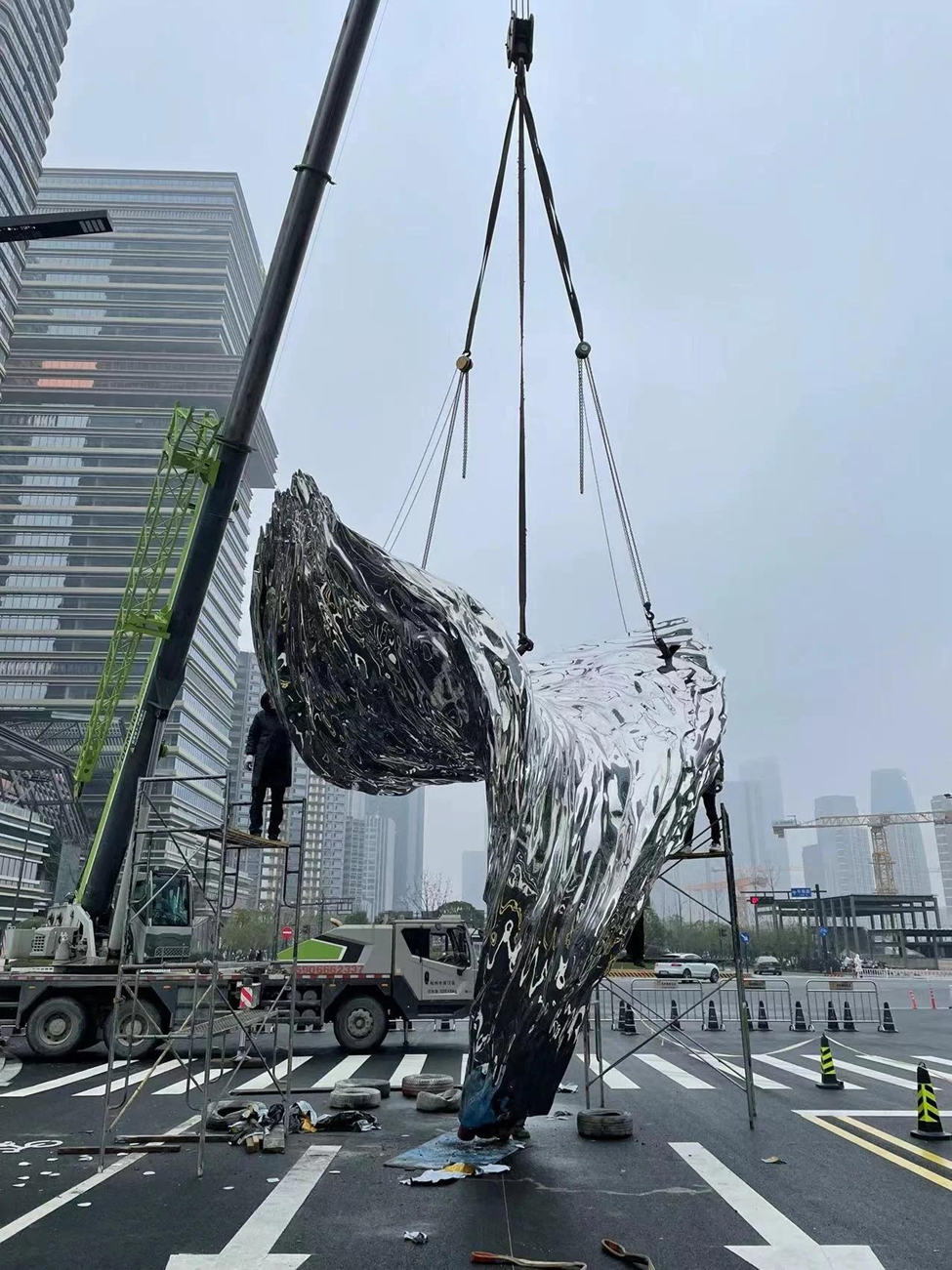
It’s easier to see how this plays out with a real scenario. Take a mirror-polished stainless steel form planned for a hotel entrance plaza – a continuous, wave-like shape with no flat surfaces anywhere. On screen, it’s a single unbroken curve. In the workshop, that same curve typically has to be built from a dozen or more rolled panels, each one slightly different, because most forming equipment can’t roll a piece that size in a single continuous pass.
During the buildability review, the engineering team typically finds two or three spots where the curvature tightens beyond what the chosen steel gauge can take without cracking or rippling. Those areas get flagged and resolved with the architect – sometimes a small radius adjustment, sometimes a gauge change – while the design is still a file and not yet metal. Left unresolved, the same problem surfaces mid-fabrication, when correcting it costs far more in time, material and rework.
This is also where sectioning strategy starts to matter for the client’s bottom line, not just the fabricator’s process. A plaza piece like this often needs to travel by container and be assembled on a live hotel site with limited crane access. Planning the section breaks around those transport and lifting constraints – rather than around whatever looked convenient in the 3D model – is what keeps the installation date on schedule instead of slipping while a section gets re-cut.
What Keeps Complex Curves Structurally Sound at Full Scale?
A digital surface carries no information about wind load, its own weight, or how a cantilevered form actually behaves once it’s three metres off the ground. Before fabrication starts, the engineering team works through internal support requirements, base connections and how loads travel through the piece under wind and its own gravity – the same structural discipline that applies to modern sculptures headed for coastal plazas, rooftop terraces or other exposed public sites.
Digital scanning and templating run throughout this stage to keep formed panels within a tight dimensional window – commonly a few millimetres across a multi-metre panel – so the finished surface reads as one continuous form instead of a set of visibly mismatched pieces stitched together.
Which Fabrication Method Suits Which Kind of Curve?
Not every material handles a parametric surface the same way, and this is often where an ambitious idea for modern sculptures either holds up at full scale or needs rethinking. The table below is a rough guide to how four common approaches tend to perform once geometry moves from screen to workshop. The relative precision each method demands is shown below; exact tolerances are set per project.
| Material / Method | Best suited to | Precision level | Assembly approach |
| Rolled & welded stainless steel | Fluid, continuous double curves | Tight – panel-to-panel consistency is critical to a seamless look | Sectional welding with ground and polished seams |
| Cast bronze | Organic detail, fine surface texture | Very tight – fine detail depends on mould accuracy | Multi-piece casting, chased and joined |
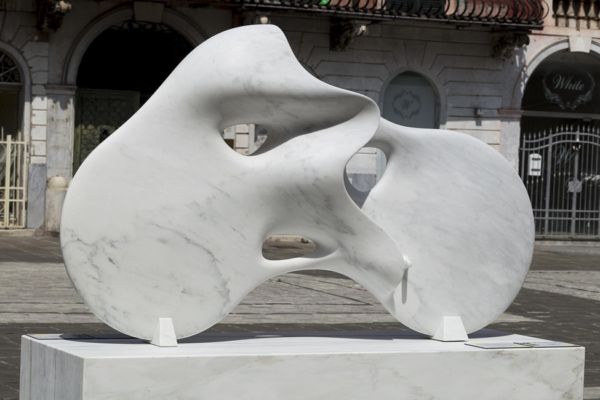
| Carved stone / marble | Geometric, faceted or solid mass forms | Moderate – larger allowance on solid mass forms | CNC-guided roughing, hand-finished |
| Sectioned FRP/composite | Very large, lightweight monumental forms | Moderate – panel bonding sets the practical limit | Modular panels bonded on structural frame |
*Precision level is relative, not a dimensional specification. Exact tolerances depend on the piece’s scale, the specific forming process used and the project’s own requirements, and are set out in the engineering review for each commission.
The right choice usually has less to do with which material looks best in a rendering, and more to do with how the specific curvature, scale and site conditions behave once someone actually has to engineer them. At Pegasus, that call gets made jointly with the design team early on, not after the concept is already locked.
How Is Accuracy Verified Between the Model and the Finished Piece?
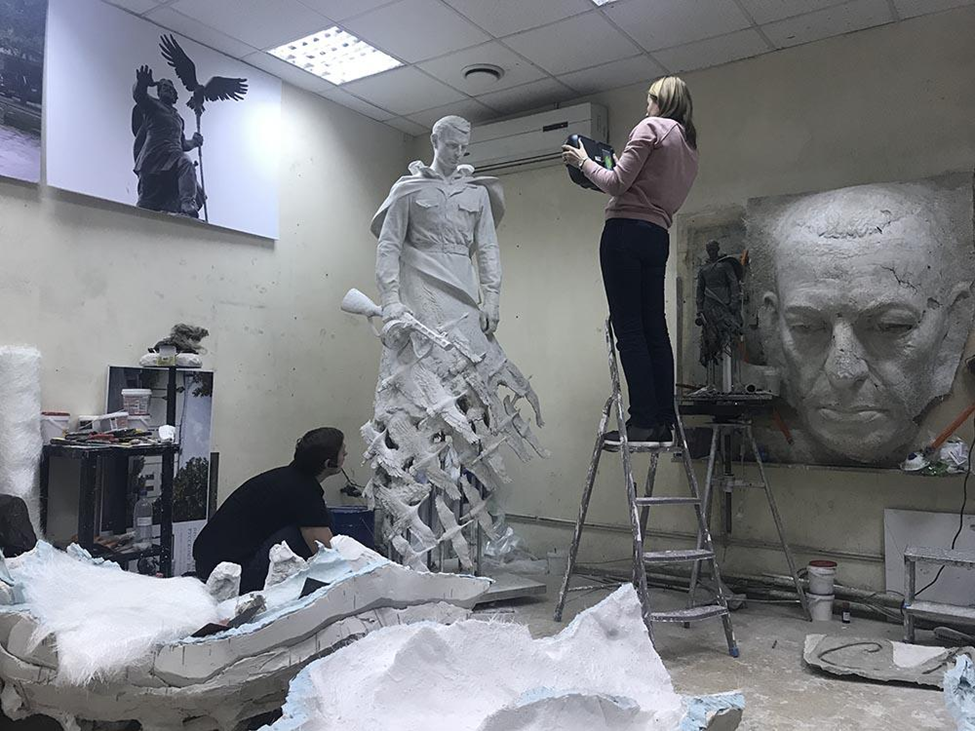
Before any section leaves the factory, the fabricated geometry gets checked against the original parametric file – not against a general sense of “does this look right.” On a technically complex commission, that verification usually covers:
- 3D scanning or physical templating of formed panels against the source model
- Trial assembly of adjacent sections to confirm seam alignment before finishing
- Surface and weld inspection under raking light, where curvature errors show up most clearly
- Sign-off against the architect’s or designer’s approved drawings before packaging begins
There’s a practical reason this step exists: small deviations add up across a large surface. A two-millimetre drift on one panel can turn into a visible misalignment several panels later if nobody catches it early – a risk that shows up far more on continuously curved modern sculptures than on flat or faceted architectural panels, where a small gap barely registers.
What Happens Once a Sectioned Sculpture Leaves the Factory?
Complex-curve pieces are almost never shipped whole. Sections get packed individually with connection points protected, then reassembled on site in the exact sequence worked out during the design phase. Lifting points, base anchoring and assembly order are planned before the piece is even manufactured, not figured out on installation day – which matters a great deal when a crane, a tight urban site and a finished plaza surface all have to line up on the same schedule.
For architects and developers weighing modern sculptures against real buildability, shipping logistics and installation risk from the outset, planning this sequence early is what keeps ambitious geometry from turning into a site problem later. It’s the same discipline whether the piece is a fluid stainless steel form or a faceted geometric composition, and it’s central to how Pegasus approaches every commission that starts life as a computational model rather than a sketch.
Frequently Asked Questions
Can any parametric or generative design be fabricated as a sculpture?
Most can, once it’s been reviewed for buildability. Extremely thin sections, unsupported cantilevers or curves tighter than a material’s minimum bend radius usually need some adjustment before fabrication – which is exactly why an early engineering review matters more than which software produced the file.
Does converting a digital model into metal change the original design intent?
Not when it’s handled correctly. Sectioning and engineering review exist to preserve the approved silhouette and proportions while making the geometry physically buildable – the adjustments happen to construction logic, not to the visual design itself.
How long does the model-to-fabrication process typically take for a complex piece?
It varies with scale and geometry, but buildability review, sectioning and engineering usually run alongside early production planning rather than in front of it, so technical complexity doesn’t automatically stretch the timeline for well-planned modern sculptures.
Does a sectioned, sculpture-scale project need different planning than smaller commissions?
The underlying custom metal sculpture fabrication methods stay much the same, but scale changes the planning: connection points, lifting sequence and freight limits all need to be engineered into the design before production starts, not worked out afterward.
Is mirror-polished stainless steel practical for very complex curved forms?
Yes, though polished surfaces make curvature and seam errors more visible than matte finishes do – one more reason dimensional accuracy during forming matters even more on reflective abstract sculptures.
Turning Ambitious Geometry Into a Reliable Installation
The gap between a parametric render and a finished installation is almost entirely engineering: a buildability review, a sectioning strategy, material-specific tolerances, and verification against the original model at every stage along the way. It’s this process – not luck – that separates striking renderings of modern sculptures from pieces that actually stand up, ship well and install cleanly. Architects and computational designers who bring these questions into the conversation early tend to end up with sculptures that match the file they approved, rather than a quietly compromised version of it.
If you’re developing a design with complex curvature or generative geometry, Pegasus’ abstract sculpture team can review buildability alongside the concept – before it turns into a fabrication problem instead of a design decision. Start the conversation with Pegasus while the geometry is still flexible enough to engineer well.