Pre Shipment Release Is the Buyer’s Final Factory Control Point
By the time a stainless steel sculpture reaches final inspection, its material, form and finish direction should already be approved. The buyer is now approaching final payment and shipment release. The question is no longer which finish to choose. It is whether Pegasus has completed, checked and documented the sculpture closely enough for the buyer to authorize packing and dispatch.
At this stage, advice alone is insufficient. The release package should show how Pegasus has reviewed the completed work and what the buyer can verify independently. Large reflective or satin sculptures can hide local waves, weld ghosting, uneven grain, unfinished returns, handling marks and contamination when evidence is incomplete. A controlled submission, issue log and written release outcome connect Pegasus’s factory review with the buyer’s final commercial decision.
How Pegasus Documents the Final Release Review
On its stainless steel sculpture manufacturing page, Pegasus states that B2B clients receive weekly 4K video updates, detailed dimensional reports and material certifications, including PMI testing for metals where applicable. The company also describes a detailed virtual factory walkthrough for remote buyers. These practices are most useful when the records are tied to the buyer’s approved drawings, finish reference and order-specific acceptance points.
For the pre-shipment review, Pegasus should assemble the relevant records into one dated submission: sculpture and section identifiers, whole-form views, a continuous walk-around video, numbered close-ups, dimensional status, material records, corrective-action evidence and packing-readiness confirmation. Buyers who need the earlier approval stages can review the custom sculpture process before defining their release requirements.
| Release evidence | What it answers | Weak evidence |
| Purchase and approval basis | The agreed finish and project requirements governing final inspection | A verbal instruction or a reference that cannot be linked to the order |
| Pegasus whole-form photo set | Whether the completed sculpture is consistently finished and free from obvious damage | Only selected close-ups from flattering angles |
| Pegasus continuous 4K walk-around video | Whether reflection, grain, weld zones or marks change as the viewpoint moves | Fast edited clips with changing exposure |
| Numbered detail images and issue map | Where an issue appeared and whether Pegasus’s rework closed it | Unlabelled photos that cannot be matched to the form |
| Final cleaning and packing record | Whether iron dust, residue and handling marks were removed before protection | A sealed crate with no visible record of the accepted surface |
Inspect Mirror Finish Through Movement Not a Single Photograph
A mirror-polished surface can appear flawless in a still photograph because the camera sees only one reflection at one angle. In person, the eye notices how reflected lines move across the sculpture. A local ripple, flat spot or transition between panels may become visible only when the viewer or light source changes position.
Ask for a slow, continuous walk-around video in stable daylight or controlled workshop lighting. Include straight reference lines in the environment where practical, because their reflection makes discontinuities easier to see. The buyer is not demanding a perfectly flat optical mirror; the aim is to confirm that reflection behavior is consistent with the approved artistic form and that no isolated fabrication zone distracts from it.
Look for Weld Ghosting at the Reflection Boundary
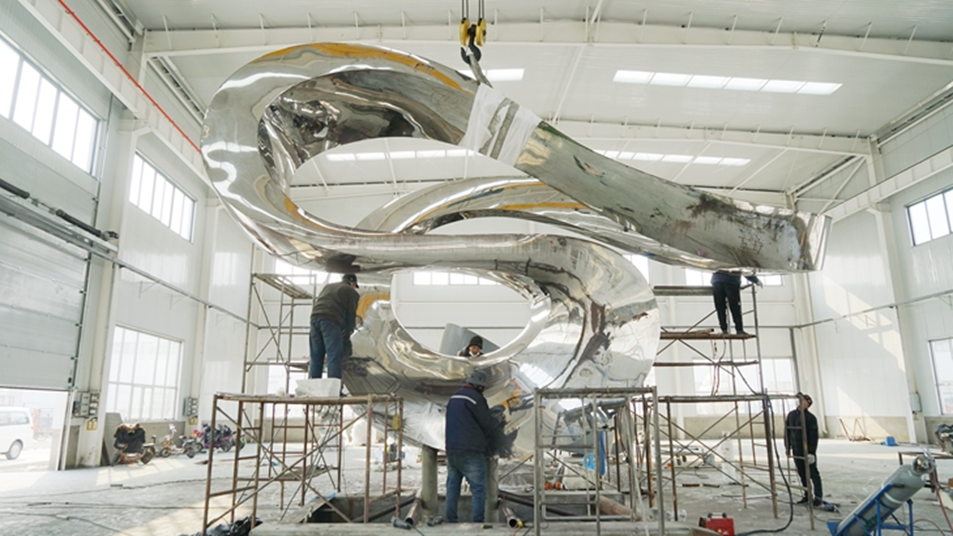
A structural weld can be sound and still remain visually legible after polishing. On a mirror surface, the buyer may see a faint line, change in curvature or different reflection around the joined area. This is often called weld ghosting. The inspection should therefore follow likely seam routes rather than looking randomly for scratches.
Request oblique-light views of major panel transitions and close-ups that show the surrounding area, not only the seam itself. The acceptance question is whether the joint disappears to the agreed visual level from the intended viewing distance. If rework is required, it should be documented at the same angle and lighting so the buyer can compare before and after evidence.
Satin and Brushed Surfaces Fail Differently
A satin finish does not rely on a sharp reflection, so inspection should focus on grain direction, overlap marks, patchiness and consistency across adjoining panels. Curved areas may need the grain to follow a deliberate path. A locally reworked zone can appear darker or brighter if the abrasive direction or sequence differs from the surrounding surface.
The buyer should view the sculpture under grazing light, where changes in grain become more visible. Confirm the direction at major curves, transitions and access panels. If the design intentionally changes direction, that boundary should be shown in the approved reference; otherwise, inconsistent grain can make a continuous form look assembled from unrelated parts.
Edges Returns and Tight Details Need Their Own Evidence
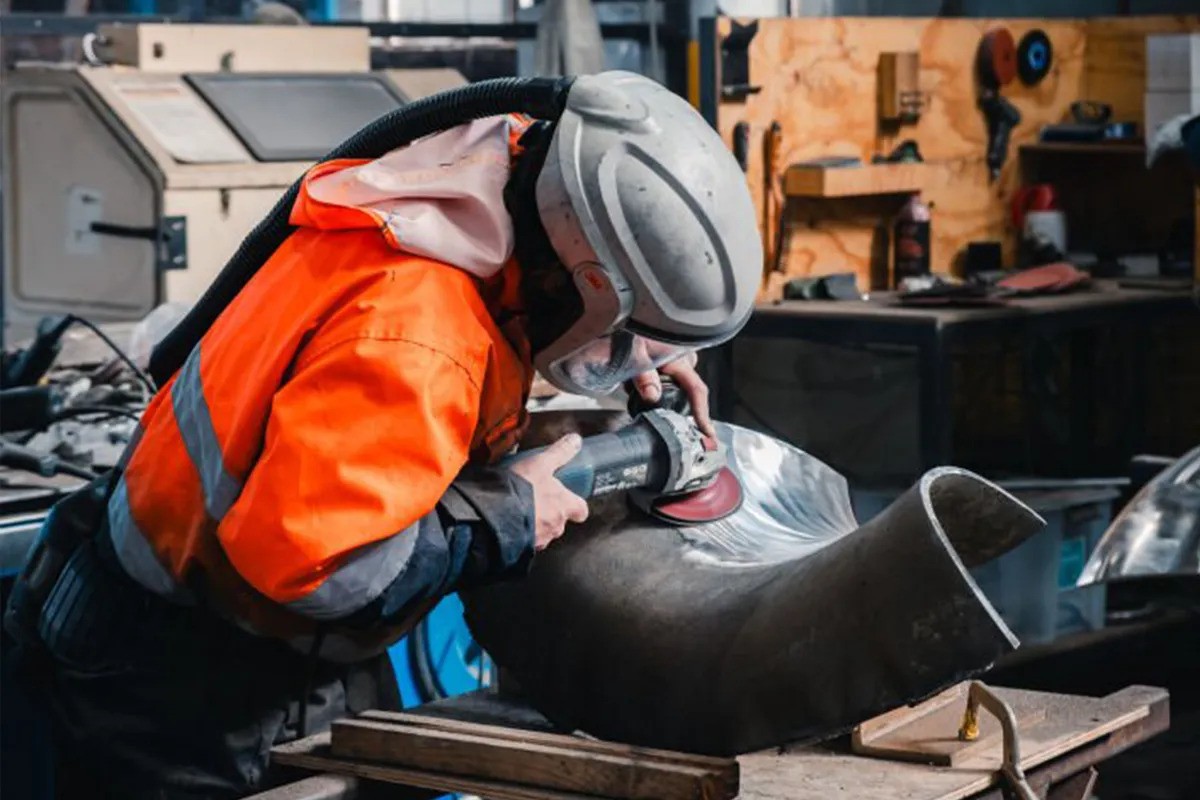
Broad visible surfaces usually receive the most attention, but outdoor stainless steel sculpture is also judged at edges, openings, recessed areas and returns. These locations can retain grinding marks, sharp burrs, heat tint or inconsistent polish. They are also common handling points during packing and installation.
Ask for systematic detail photographs of exposed edges, openings, lower returns and any area visitors may approach closely. The buyer should confirm smoothness, finish continuity and the absence of visible residue or unintended discoloration. This is a visual and touch-point review, separate from structural weld testing or site engineering.
Check Iron Dust Polishing Residue and Final Cleaning Before Wrapping
Final inspection should occur after cleaning but before film, foam or fabric hides the surface. Stainless steel can carry fingerprints, adhesive residue, polishing compound and marks from temporary supports. A less obvious risk is ferrous or iron-bearing dust created by nearby carbon-steel grinding, shared tools, steel benches or airborne workshop activity. Fine particles may lodge on the stainless surface and later appear as rust-colored spots even though the sculpture itself is stainless steel.
Pegasus should show the cleaned surface in overall and raking-light views, with special attention to lower returns, recesses, weld zones and areas that contacted fixtures. Final cleaning should remove loose metal dust, polishing residue, fingerprints and adhesive without changing the approved grain or sheen. If contamination is suspected, the corrective cleaning method should be suitable for stainless steel and recorded rather than concealed beneath protective film. After buyer acceptance, non-abrasive contact materials and residue-free tapes should be applied, followed by photographs proving that wrapping protects the accepted surface instead of creating a new defect.
Use a Three-Outcome Release Decision
A useful inspection record should end with one of three outcomes. ‘Approved for packing’ means the submitted evidence satisfies the agreed purchase and finish requirements. ‘Rework and resubmit’ identifies specific areas that Pegasus must correct and document again. ‘Conditional release’ is appropriate only when minor agreed items have a named owner, closure evidence and a deadline before the crate is sealed.
Avoid vague responses such as “looks okay” or a long message containing unnumbered comments. Mark each issue on an image or location diagram, identify the required response and close it against matching evidence. This gives both buyer and supplier a clear release point and prevents old comments from reappearing after shipment.
| Observed condition | Buyer decision | Required evidence |
| Surface matches the reference across overall and detail views | Approve for packing | Dated approval linked to the submitted photo and video set |
| Local ripple, seam trace, grain mismatch or mark affects the agreed appearance | Rework and resubmit | Location-marked correction plus before-and-after evidence under matching light |
| Minor item does not prevent packing but needs controlled closure | Conditional release | Named responsibility, closure date and proof before the crate is sealed |
| Evidence is incomplete or angles avoid critical zones | Hold release | A complete resubmission using the agreed inspection sequence |
Pegasus Project Evidence of Controlled Surface Execution
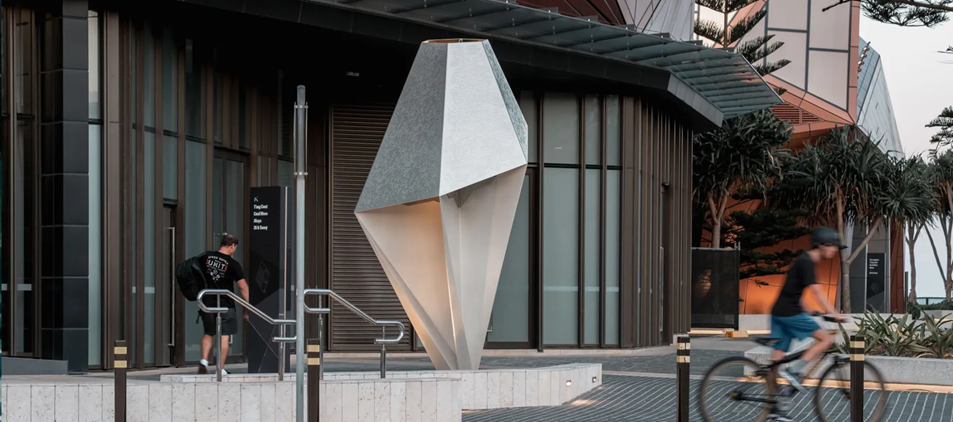
Pegasus’s published Lunar Tide project is useful evidence because the visual result depended on controlled contrast between two finish conditions. The project page states that the team carried out multiple rounds of manual leveling and surface preparation before applying the matte white and high-gloss metallic gold finishes. That sequence demonstrates why surface approval must evaluate the whole form, transitions and consistency rather than rely on one selected image.
For buyers, the manufacturing lesson is direct: a demanding surface result depends on repeated preparation and review, not on one final beauty photograph. For a stainless steel order, Pegasus should translate that discipline into inspectable evidence: complete-form views, numbered finish details, correction records and confirmation that the accepted surface was cleaned before protection. Lunar Tide supports Pegasus’s experience with controlled surface execution without being presented as proof of every stainless steel finish method.
What the Buyer Should Receive Before Shipment
The final submission should be compact enough to review properly: a release cover sheet, sculpture and section identification, whole-form photographs, one continuous walk-around video, numbered detail views, dimensional status, applicable material records, a closed-issue log, final-cleaning evidence and photographs of surface protection before the crate is closed. The purpose is to show both Pegasus’s completed QC review and the evidence supporting the buyer’s release decision.
Where the sculpture will ship in sections, each section should be identified consistently in the inspection and packing records. Visible joining zones deserve separate finish evidence, because they may be affected again during site assembly. The factory release confirms the condition at dispatch; it does not replace a receiving inspection after the crate reaches the project.
Questions Buyers Commonly Ask
Can a mirror finish be approved from photos alone?
Photos help, but a slow video under stable lighting is more reliable for revealing changing reflections, local waves and weld-zone distortion. For high-value work, live video inspection or an independent inspection may also be appropriate.
Should every weld be completely invisible?
The visual requirement depends on the approved finish, geometry and intended viewing distance. The buyer should define an observable acceptance level rather than rely on an absolute promise. Structural weld acceptance is a separate technical matter.
When should protective film be applied?
After final cleaning and buyer acceptance, unless the agreed process requires temporary protection earlier. The supplier should show the accepted surface before it is hidden and then document how contact materials protect it for transit.
Conclusion
A stainless steel sculpture should be released for shipment only when Pegasus has presented a coherent QC record and the buyer can verify the completed form, visible finish, corrected items, final cleanliness and packing readiness. Buyers can review the Pegasus project portfolio for relevant fabrication evidence, then contact the team to define inspection deliverables for a current project before the quotation and production schedule are finalized.