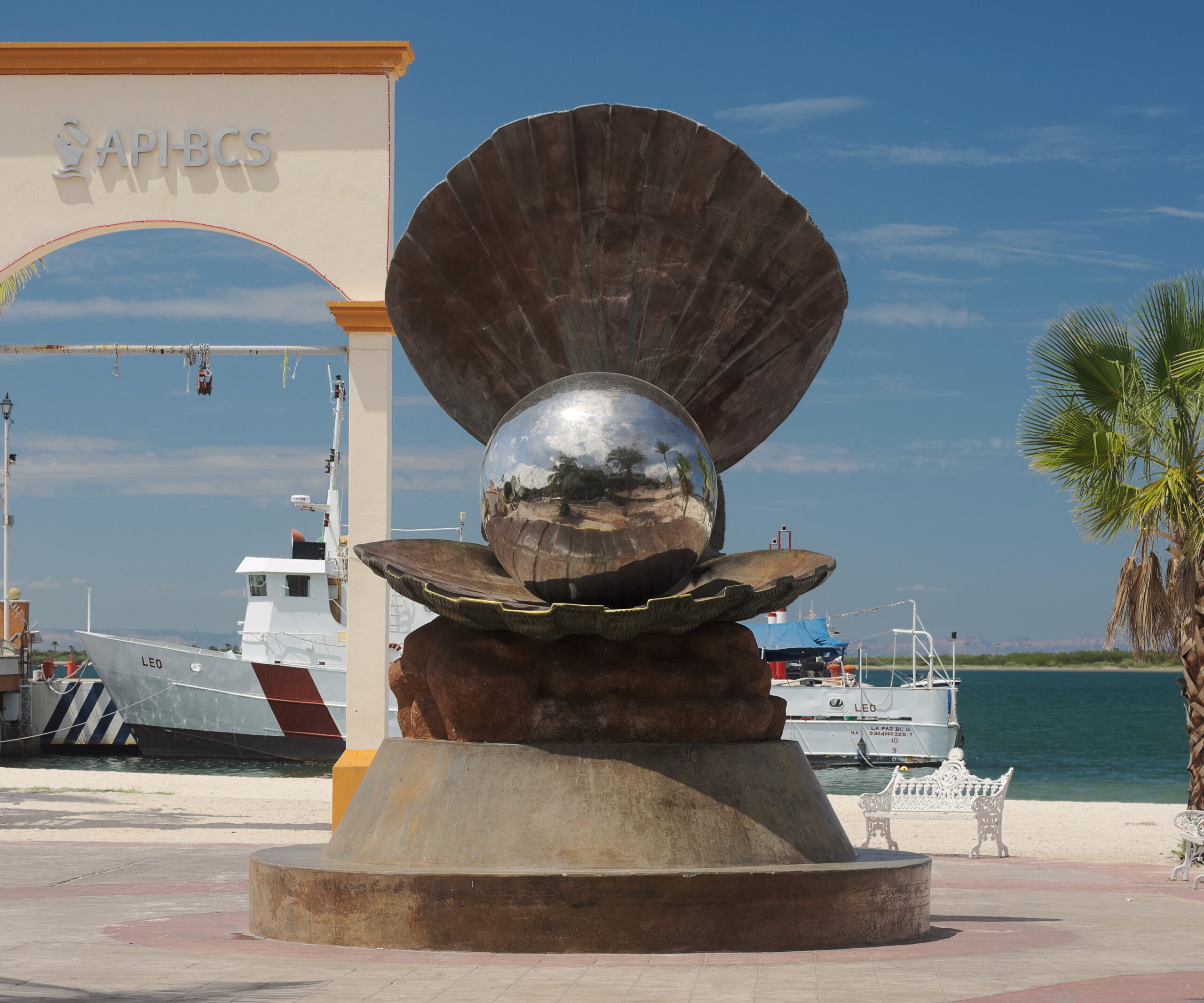
A coastal hotel can receive a flawless stainless steel sculpture and still discover a problem months after opening. Sea salt can settle on a sheltered surface. Water can linger inside a recess that looks elegant in a rendering. A polished area near the entrance may record every passing hand. During storms, a sculpture that normally sits in a calm landscaped setting may face very different conditions.
These are not variations of the same procurement problem. They are different things the finished artwork must withstand in service. For hotel owners, the key question is whether the chosen form, surface and location remain appropriate when the building is occupied, the weather changes and routine care begins.
A custom outdoor stainless steel sculpture can be developed for the intended setting, but the material name alone does not establish coastal suitability. Exposure depends on the exact site, the alloy and finish specified, the sculpture’s geometry, nearby sources of water or chemicals, and the care it receives. The following five checks focus on the finished artwork—not generic manufacturing or shipment procedures.
1. Will the surface still look intentional between cleaning visits?
The first challenge is visual rather than structural. On a mirror-polished sculpture, salt film, fingerprints and water spots can become part of what guests see. A brushed or satin surface may make some marks less obvious, but its directional texture and sheen create a different artistic effect. No finish stays spotless simply because it is stainless steel.
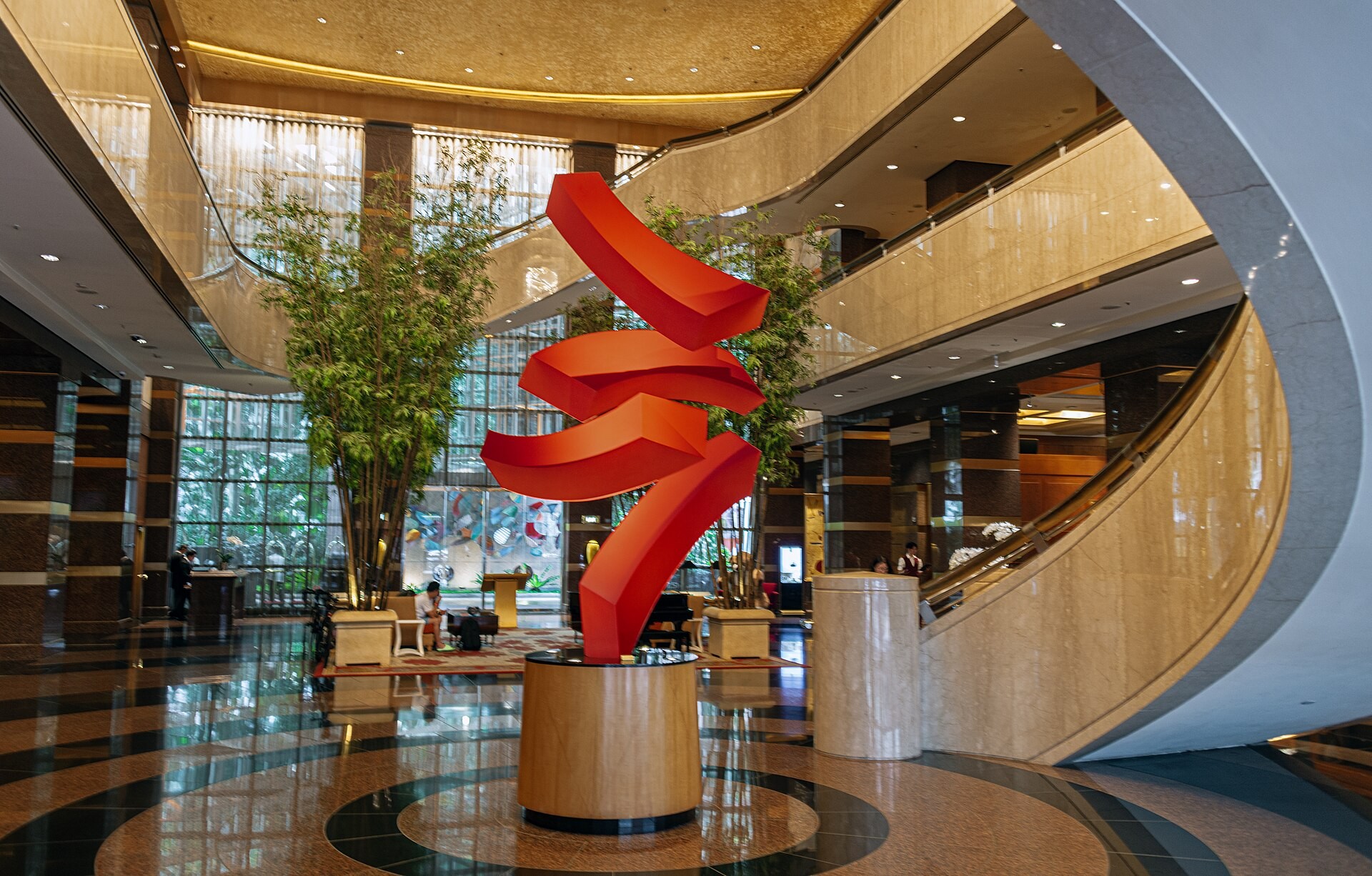
The problem is particularly visible at hotel entrances, where guests stand close to the artwork and photographs are taken against the surface. A highly reflective form may work well as a distant arrival marker but require more visible attention beside a queue or outdoor lounge.
A useful design test is to consider the same proposed finish from two distances: the main arrival viewpoint and an arm’s-length guest viewpoint. Ask what happens to its appearance after sea mist, rainfall, hand contact and routine wiping. Pegasus can discuss a project-specific finish through its custom stainless steel sculpture service, while the hotel can decide which level of visible marking is acceptable between cleaning visits.
This is an appearance decision: the goal is not to promise a maintenance-free surface, but to choose an artistic effect that the hotel can realistically sustain.

2. Can staff reach the surfaces where dirt and salt will collect?
A second, separate issue is access. A curved sculpture may appear simple from the front while hiding narrow returns, underside surfaces or high recesses. These areas may collect deposits but be difficult to reach without equipment or temporary restrictions to guest circulation.
Imagine a sculpture beside a restaurant terrace. If the only practical route to a recessed section crosses occupied tables, cleaning becomes disruptive even when the surface itself is easy to wipe. A tall sculpture with closely spaced components can create the same problem above normal reach.
Facilities teams can review the concept for likely hand-contact zones, concealed pockets and access from the surrounding paving. The design response may be to simplify an inaccessible recess, adjust the orientation or move the sculpture slightly—not to prescribe a universal cleaning technique.
Pegasus can review whether such form adjustments are compatible with the intended appearance through its customization service. The hotel’s qualified maintenance personnel should determine safe cleaning access and appropriate methods for the actual location. Unlike Section 1, this check is about whether routine care can physically be performed.

3. Will salt deposits stay on the sculpture even when rain seems to wash it?
A sculpture near the sea does not experience uniform exposure. Rain may rinse an open upper surface while an underside, a protected seam or a section beneath an overhang remains sheltered. Salt carried by wind can accumulate in those less-rinsed areas. On stainless steel, persistent chloride deposits can contribute to staining and, under unfavorable conditions, localized corrosion such as pitting or crevice attack.
This is why the phrase “stainless steel is corrosion-resistant” is not a complete coastal specification. Resistance depends on the grade and finish, the concentration of chlorides, local temperatures, wet–dry cycles and the geometry of the finished work. Even grades commonly selected for marine-adjacent use are not immune in every exposure condition.
For a hotel courtyard facing the prevailing sea breeze, the most exposed face may not be the most vulnerable area. The more important inspection point may be the protected back of a folded form where spray settles but rainfall does not reach.
The project team should give the manufacturer the sculpture’s approximate distance from the shore, likely direct spray exposure, prevailing wind direction and sheltered surfaces. Pegasus can discuss material and finish suitability for the proposed design; any site-specific corrosion specification should be confirmed by an appropriately qualified professional. The critical decision here is managing chloride exposure—not simply selecting a surface that looks clean on opening day.
4. Where will water go after rain, irrigation or pool splash?
The next challenge is water retention. Coastal sculptures are not exposed only to the ocean. Landscape sprinklers, pool splash and washdown water may repeatedly wet the same areas. Concave forms, horizontal ledges and tight joints can hold moisture longer than open, free-draining surfaces.
Trapped water matters because deposits can become concentrated as moisture evaporates. A tight contact between parts may also create a different local environment from the surrounding exposed metal. The result can be staining or corrosion concentrated at a small detail rather than across the entire sculpture.
A sculpture next to a pool deserves a separate review from one on a dry entrance lawn. Poolside splash can introduce different chemical exposure, while irrigated planting can leave repeated wetting patterns and mineral residues. Those differences should inform the site-specific material and geometry assessment.
The design review should trace what happens to water on the finished shape: where it lands, whether it drains, whether it reaches a concealed cavity, and whether adjacent materials can stain the visible surface. This does not require the hotel owner to design drains or joints. It requires the artist, manufacturer and relevant project professionals to recognize a real exposure mechanism before the form is fixed.

5. What changes when the calm hotel landscape faces a severe-weather event?
A sculpture that performs well during ordinary guest use may face a different set of demands during seasonal storms. Strong winds can place substantial loads on a broad or elevated form. Wind-driven debris may strike a polished surface. In exposed waterfront locations, storm surge or wave action may become relevant depending on the site.
This is not the same question as cleaning or corrosion. It concerns the sculpture’s physical response to exceptional conditions and the safety of the surrounding guest area. A tall open-form sculpture, a broad reflective panel and a low compact artwork will not interact with wind in the same way.
For a resort in a storm-prone coastal region, the architect and local structural professional should establish the applicable site loads, anchorage requirements and any relevant flood or impact exposure. Pegasus can coordinate the sculpture’s dimensions, configuration and project-specific fabrication information with the approved design requirements. Final structural adequacy and local installation arrangements must be assessed by the responsible qualified professionals.
A buyer should not infer storm resistance from photographs of a finished sculpture. It is a site-specific design requirement that needs competent verification.
Five different exposures — five different design questions
| What the hotel experiences | What can go wrong | What the design review must resolve |
| Everyday guest contact and sea mist | Visible film, prints or water marks | Finish appearance at actual viewing distance |
| Routine cleaning in occupied areas | Inaccessible recesses or disruptive access | Reachability of surfaces and guest-area access |
| Salt carried into sheltered areas | Persistent chloride deposits; possible localized corrosion | Actual exposure and protected geometry |
| Rain, sprinklers and pool splash | Standing moisture and concentrated residues | Water pathways, retention points and nearby chemicals |
| Coastal storms and wind-driven debris | Loads or impacts beyond everyday conditions | Site-specific structural and impact assessment |
How Pegasus fits into a coastal-hotel sculpture brief
The hotel’s design team can establish the artwork’s visual role and the site conditions. Pegasus can then evaluate a proposed custom form and finish in light of those requirements, drawing on its stainless steel sculpture manufacturing capabilities. Its role is most useful when the discussion connects the artistic form to identifiable conditions: sheltered salt deposits, cleaning access, water retention and the configuration needed for an approved structural design.
A practical first enquiry includes the intended location, distance and orientation relative to the sea, whether the sculpture is beside a pool or irrigation, the approximate dimensions, and photographs of the actual site. These details allow a more useful technical and artistic conversation than a generic request for a “marine-grade stainless sculpture.” They do not replace project-specific professional review or establish a universal maintenance interval.
Frequently Asked Questions
Can an outdoor stainless steel sculpture develop rust-colored staining near the sea?
Yes. Stainless steel can develop discoloration or localized corrosion under some coastal conditions, particularly where chloride deposits remain concentrated. The cause should be assessed rather than assuming every brown mark means the entire sculpture is failing.
Is a mirror finish unsuitable for a beachfront hotel?
Not automatically. It may be visually appropriate, but the owner should understand that fingerprints, salt film and water marks can be conspicuous. The choice is about visual expectations and the maintenance the site can support.
Why can a sheltered part of the sculpture be more vulnerable than an exposed part?
An exposed area may be rinsed by rain, while an underside or narrow recess can retain windborne salts. The precise risk depends on material, geometry and local conditions.
Does a poolside sculpture face the same exposure as one near the ocean?
Not necessarily. Pool splash, treatment chemicals and frequent washdown can create a different exposure pattern. The project team should describe both coastal and poolside conditions when seeking a material and finish recommendation.
Can Pegasus guarantee that a coastal sculpture will never stain or corrode?
A universal guarantee would not be credible. Performance depends on the site, material specification, detailing, cleaning and environmental conditions. Any project-specific commitments should be discussed directly with Pegasus and documented for the particular commission.
Discuss a coastal sculpture designed for the place it will actually occupy
A coastal hotel sculpture must do more than look impressive at installation. It should retain an appropriate appearance, allow practical care, limit avoidable moisture and salt traps, and be designed for the site’s environmental demands.
Explore Pegasus’s outdoor stainless steel sculpture capabilities and contact the Pegasus team with photographs of your coastal site, the proposed form and the main exposure conditions. The discussion can then focus on an artwork that serves the guest experience while respecting the realities of its location.