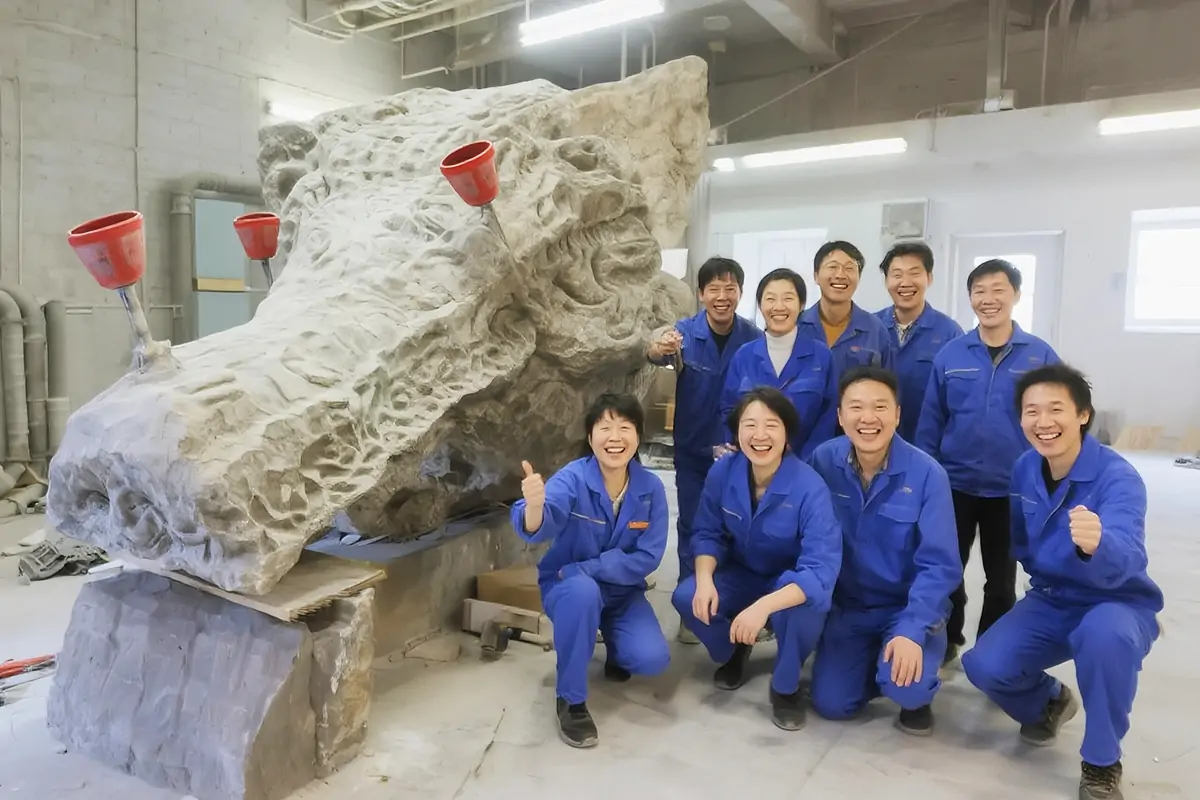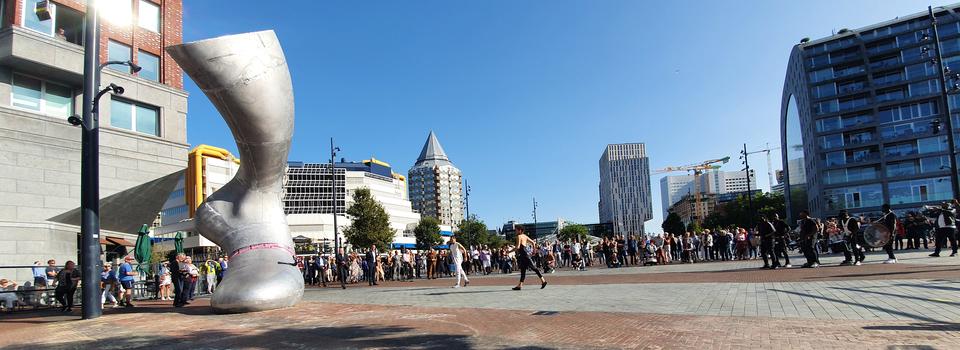
A sculpture starts doing placemaking work the moment it takes on a job a signpost or a map can’t – marking an entry, anchoring a plaza, or giving a site the one clear image visitors carry away with them. Positioned with intent, art sculptures function as spatial infrastructure: they orient movement, signal arrival, and give a development a visual identity that outlasts the opening event. Treated as pure decoration instead, that same piece becomes background competing with signage, planting, and architecture for attention.
Why Should Sculpture Sit in the Design Brief, Not Just the Landscape Budget?
Most projects still commission sculpture the way they commission lobby planting – late, decoratively, and disconnected from how people actually move through the site. That approach overlooks something urban design has understood since Kevin Lynch’s 1960 research into how people mentally map cities: distinct physical objects positioned at junctions and decision points do far more to help a stranger navigate with confidence than directional signage alone. A public art sculpture placed where paths converge doesn’t just perform well in renderings; it becomes the reference point people use for years – “meet me by the…”
At Pegasus, this distinction shapes conversations from the first design meeting rather than after the architecture is locked. Concept sketches for art sculptures are reviewed alongside the site’s circulation plan and sightlines, so the piece is doing a wayfinding job before a single finish decision is made – engineering identity into the space instead of adding it as an afterthought once the paving is down.
The cost of getting this sequence backwards shows up fast once construction starts. A footing sized after the slab has already cured means coring through finished concrete instead of casting the footing into the original pour. A piece specified after landscaping is in the ground often can’t reach its plinth by crane without lifting out finished planting or a section of hardscape – work that then has to be redone. Utility runs, drainage, and lighting conduits that would have taken a single trench if planned alongside the sculpture instead mean cutting into completed paving a second time, on a schedule that’s now competing with a general contractor closing out the job. None of this is a design failure; it’s a sequencing one – and it’s the clearest argument for treating a sculpture commission as part of a project’s civil and structural coordination from day one, rather than a line item added once the rest of the site is already built.
How Does a Sculpture Actually Help People Find Their Way?
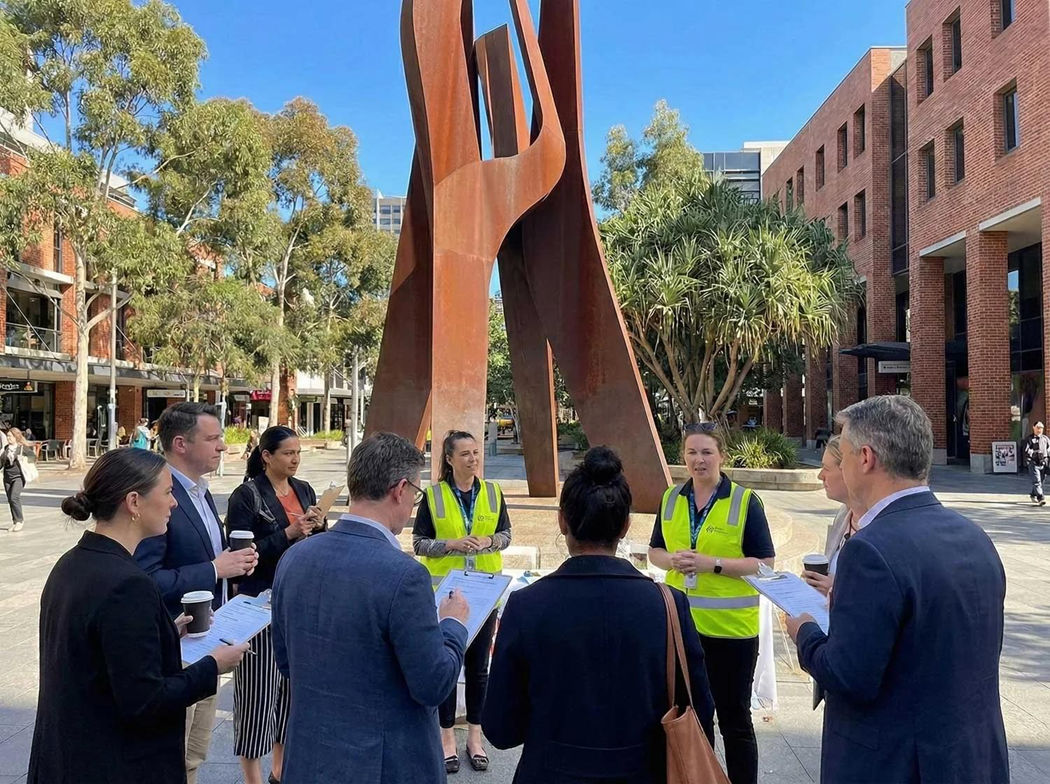
Circulation is where wayfinding value gets decided, and it comes down to a handful of repeatable placement logics rather than instinct.
- Entry markers – a piece at the gateway to a campus, hotel, or civic plaza gives arriving visitors immediate, unmissable confirmation they’ve reached the right place
- Decision-point anchors – Lynch’s research on urban legibility found landmarks positioned at path junctions do more wayfinding work than those placed mid-route, since that’s exactly where people pause to reorient
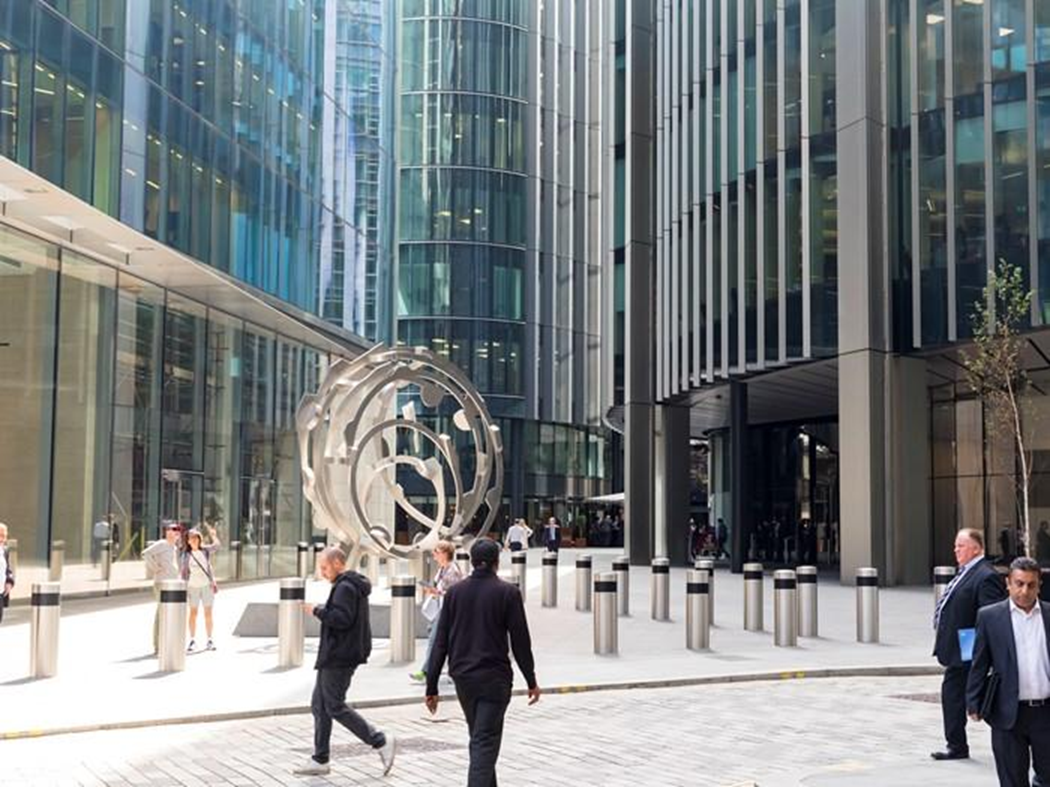
- Distance legibility – a piece meant to guide vehicles or crowds from 40-50 metres out needs a strong, simple silhouette; fine surface detail only registers at close range
- Repeat-visit memory – once someone has used a piece to navigate a site, it becomes their mental shortcut for every future visit, reducing reliance on printed or digital signage
Get this placement logic wrong, and even beautifully fabricated art sculptures end up invisible to the exact audience they were meant to orient.
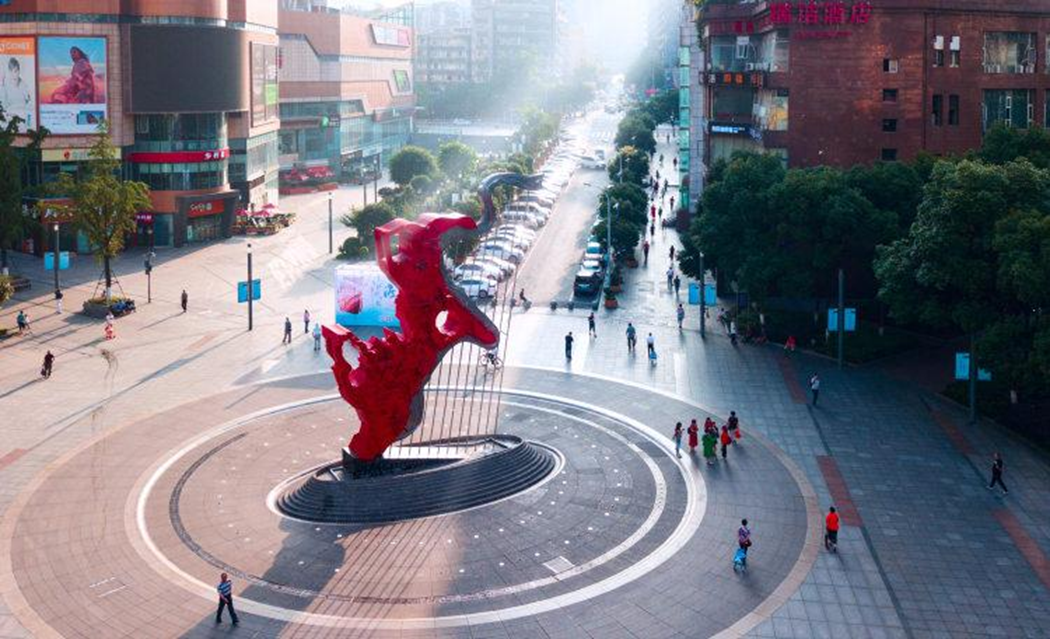
This logic holds up in real buildings, not just circulation diagrams. The Hyatt Regency San Francisco built its entire lobby around it: Charles Perry’s stainless steel sculpture Eclipse hangs at the centre of a 42,000-square-foot atrium – among the largest hotel lobbies in the world – and gives guests staying in any of the 804 rooms stacked around that open space a single fixed point to reorient by, something a directory board or a wall sign simply can’t do at that scale. Malls and mixed-use developments lean on the same principle across multiple floors: a dominant piece placed where escalators, bridges, and walkways all cross stays visible from every level, so it becomes the landmark shoppers actually navigate by rather than a map at the entrance. Industry tracking of retail atrium installations has consistently found that a signature sculpture in that position noticeably increases dwell time and foot traffic in its immediate zone compared with an unadorned corridor – a wayfinding win that turns out to be a commercial one too.
What Turns a Sculpture Into the Symbol of a Place?
Identity is a different job from wayfinding, though the two often live in the same piece. A hotel forecourt centrepiece, a corporate headquarters lobby installation, a museum plaza landmark, and a gateway feature for a mixed-use urban development – these art sculptures all succeed the same way: by giving a site one photographable, describable image that stands in for the whole development in people’s memory. Theme parks have understood this longest – a signature piece at the entrance becomes the mental shorthand for the entire visit before a guest has stepped past the gate.
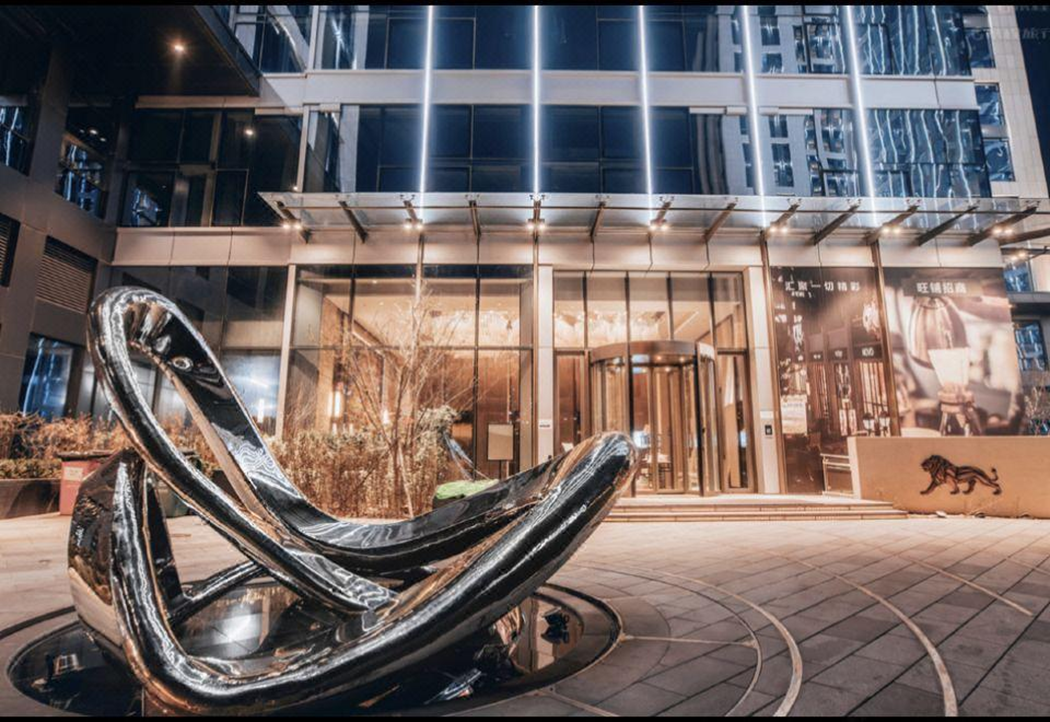
Material carries symbolic weight here as much as form does, and the read only holds if the piece keeps looking the way it was meant to. A reflective stainless steel form at a tech campus or corporate headquarters signals precision and forward motion. A cast bronze piece at a civic plaza or museum entrance signals permanence and institutional weight. FRP/fiberglass reads as bold and contemporary rather than monumental, which suits large-scale or phased placemakingprogrammes where a lighter, more affordable form still needs to carry a strong silhouette. Getting the pairing wrong – a corporate lobby specified in a material that reads as heritage rather than innovation, or a coastal gateway marker in a finish that pits and dulls within a few seasons – undercuts the brand message the piece was commissioned to carry, however well it’s engineered. This is why well-considered art statues for corporate and hospitality settings are briefed with the brand narrative and the site’s environmental profile in the room from day one, not handed to a fabricator as a pure engineering task.
The stainless steel case is worth spelling out, because the failure mode is invisible until it isn’t. Standard 304-grade stainless holds up well inland, but it lacks the molybdenum that gives steel real resistance to chlorides – so on a coastal or waterfront site, salt-laden air slowly breaks down its passive oxide layer, and the surface pits and dulls within a few seasons. 316-grade stainless adds 2-3% molybdenum to the same chromium-nickel base, which is what the marine and offshore industries specify for exactly this reason: it holds its corrosion resistance against chloride exposure that 304 can’t withstand. For a gateway marker or waterfront piece, specifying 316 (or 316L for welded assemblies, to avoid weld-seam corrosion) over 304 is a small material cost difference next to the alternative – a signature installation that visibly deteriorates within a few years of the ribbon-cutting.
| Material | Identity Read | Best-Suited Conditions | Risk If Misspecified |
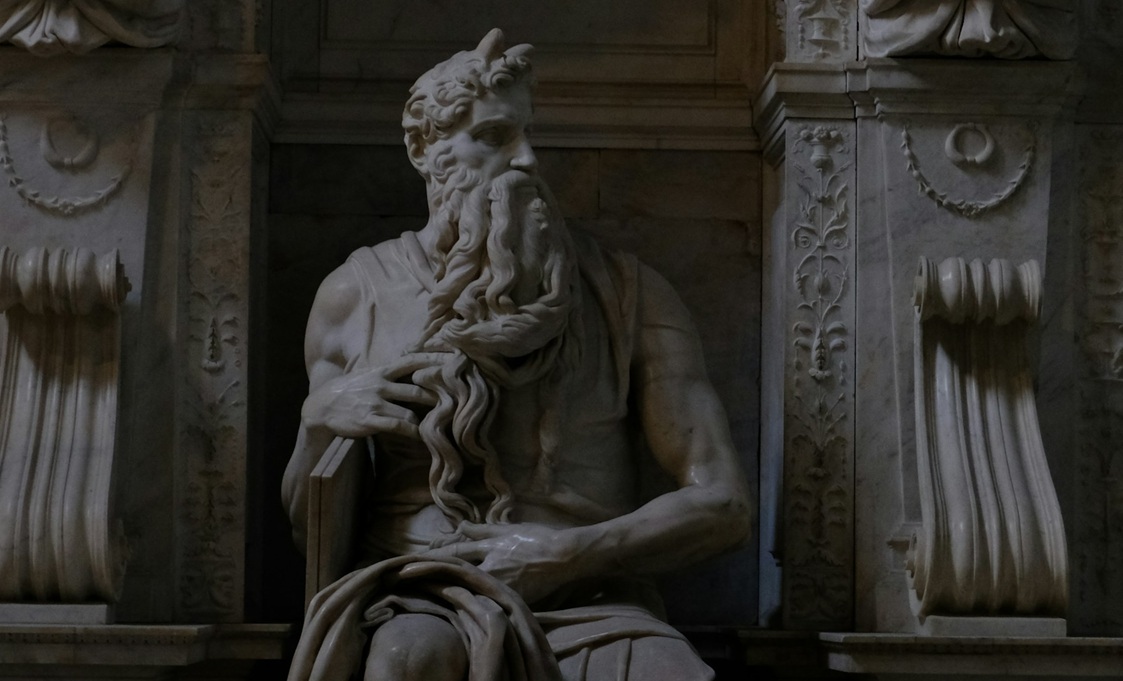
| Cast bronze | Permanence, heritage, institutional trust | Civic plazas, museums, corporate HQ seeking gravitas | Wrong alloy near salt air dulls the patina that carries the heritage read |
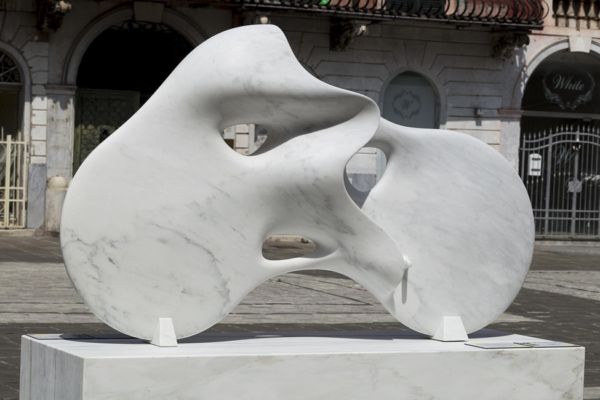
| Stainless steel | Precision, transparency, forward motion | Corporate campuses, coastal or waterfront gateways | Wrong grade for the site pits and clouds the finish, undercutting the innovation signal |
| FRP/fiberglass | Bold, contemporary, sculptural | Large-scale or phased programmes needing a strong silhouette at lower weight | Reads as less monumental; unsuited where institutional permanence is the goal |
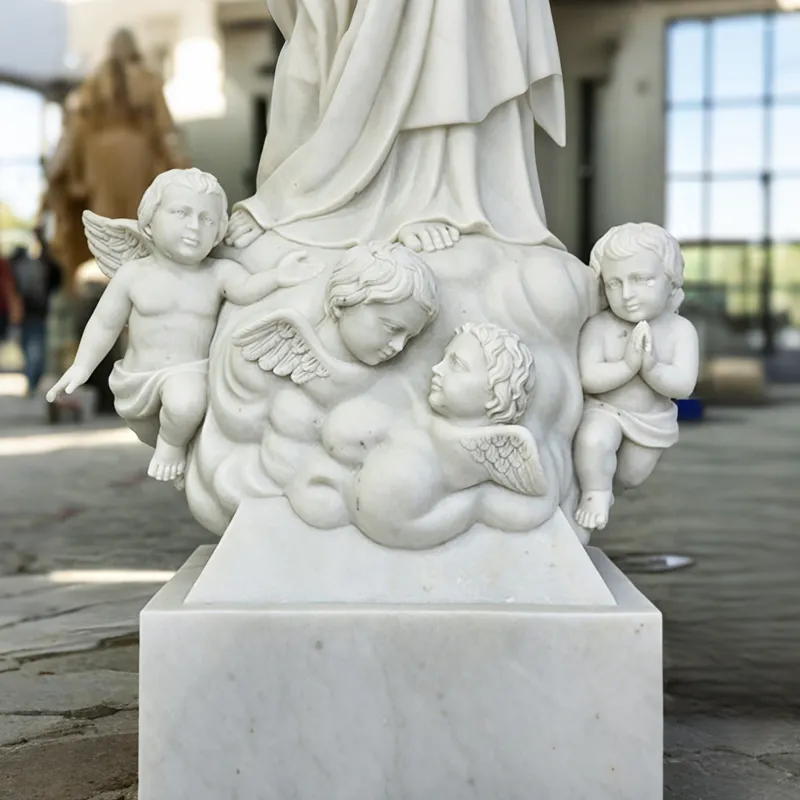
| Carved stone/marble | Timeless, classical, cultural authority | Museum plazas and courtyards, drier climates | Unsealed stone in humid climates stains or cracks, undermining the timeless read |
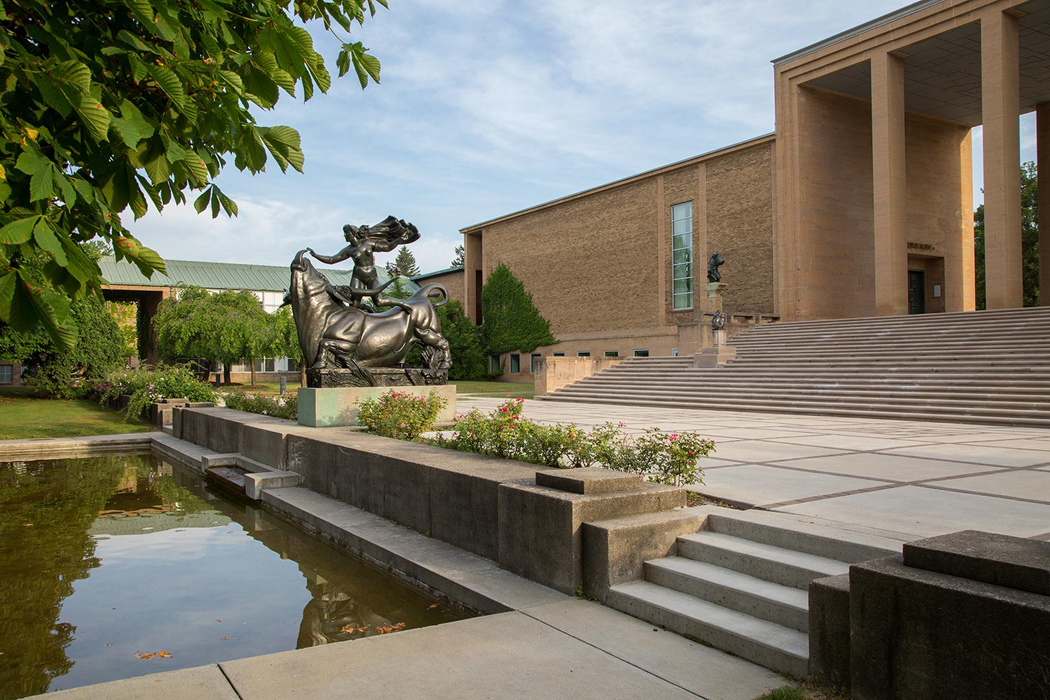
A gateway marker or lobby centrepiece that corrodes or discolours within a few years doesn’t just need repair – it undermines the exact identity signal it was commissioned to send, whether that’s on a coastal site, in a dense urban environment, or in a high-humidity climate. Matching material to site conditions is as much an identity decision as it is an engineering one.
For developers weighing several sites, a public art sculpture programme that repeats a material or design language across locations can build a recognisable identity across a portfolio, the same way a consistent architectural vocabulary does for a hotel or retail brand.
| Project Type | Primary Sculptural Job | Design Priority | Why It Matters |
| Hotel & resort forecourt | Arrival identity | Photographable silhouette, welcoming scale | Guest first impressions and social sharing extend brand reach past the physical site |
| Corporate headquarters | Brand symbolism | Finish and material matched to brand tone | A lobby or plaza piece is often a visitor’s only physical brand touchpoint before a meeting |
| Museum & cultural plaza | Wayfinding + identity | Strong form from multiple approach angles | Visitors arrive from several directions; the piece needs to orient from all of them |
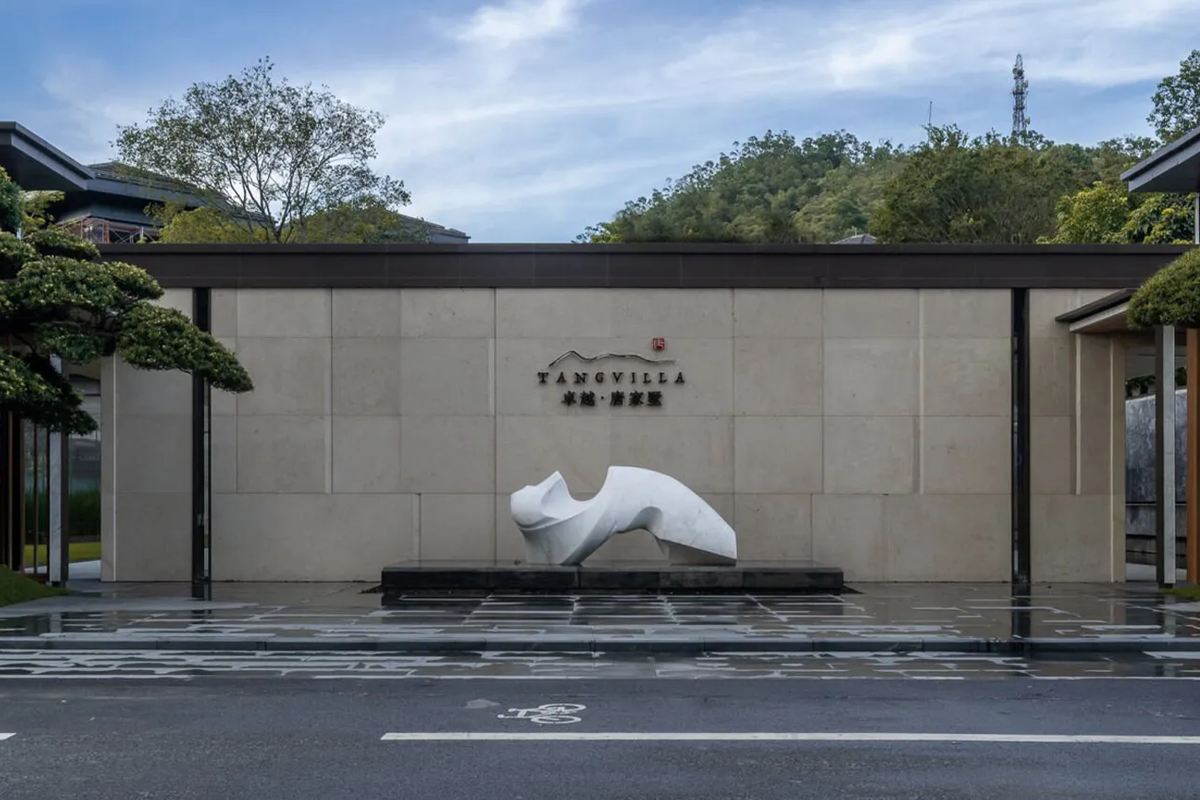
| Mixed-use urban development | Gateway marker | Scale legible at vehicle and pedestrian speed | Weak legibility from the road undercuts the development’s presence from day one |
| Theme park or experience venue | Entrance icon | Instantly recognisable, camera-friendly | The entrance piece becomes the visual shorthand guests use to describe the whole visit |
| Corporate or luxury residential campus | Node and pause-point marker | Reads well at close range and from a distance | Residents and visitors use it daily as an orientation cue, not just on first visit |
It’s worth walking through what that early involvement actually looks like once a project is underway. Picture a coastal hotel commissioning a lobby-to-forecourt piece: the circulation and sightline study happens while the landscape architect is still finalising the porte-cochere layout, so the sculpture’s footprint, footing, and lifting path are agreed before the paving contractor breaks ground. The concept sketch becomes a reviewable 3D model checked against the site’s actual wind loading and salt exposure, not a generic assumption. A full-scale prototype is signed off – confirming the silhouette reads correctly from the arrival drive at dusk, under real light, rather than in a rendering – before the workshop moves to final finishing in 316L stainless. Quality inspection, crating, and international shipping happen under that same coordinated process, and installation is supervised on-site rather than handed to a general contractor working from a drawing set alone. That’s the sequence that turns a strong concept into infrastructure that performs for decades, and it’s what the coordination below is built around.
How Should a Placemaking Sculpture Be Briefed and Engineered So It Actually Delivers?
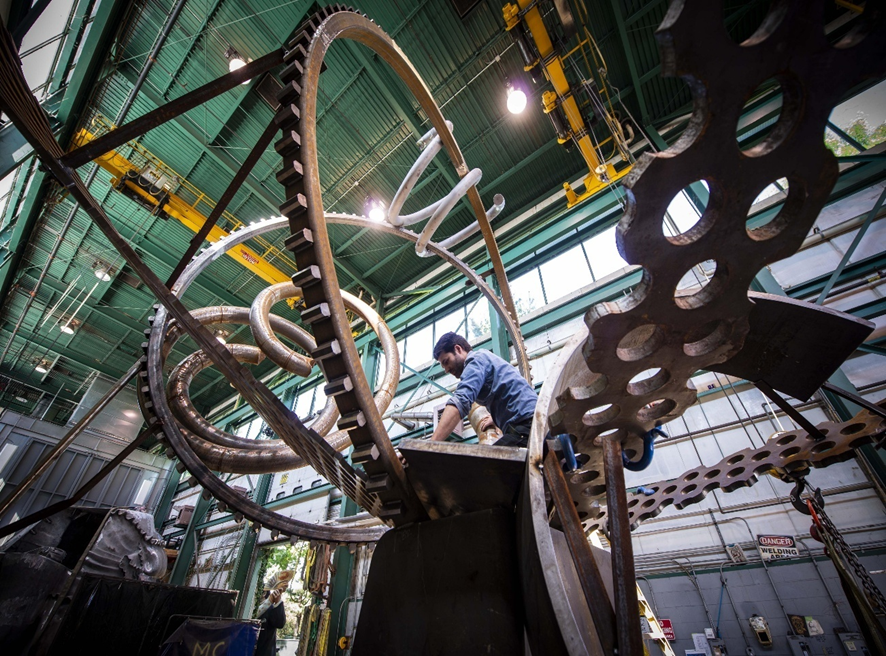
A strong concept only becomes working placemaking infrastructure once art sculptures move through coordination most design teams underestimate. At Pegasus, that coordination runs as one connected process instead of a handoff between separate vendors: CAD development and a reviewable 3D model early, structural engineering sized to the site’s actual conditions rather than a generic assumption, and material selection that answers to climate, symbolism, and the identity read at the same time. A prototype or full-scale trial assembly is reviewed and signed off before the workshop moves to final finishing, which is what prevents a piece from reading differently once it’s standing against real light and landscaping instead of a rendering.
Quality inspection, protective packaging, and international shipping are handled under the same roof, and installation is coordinated on-site rather than left to a general contractor working from a drawing set alone. For a piece meant to anchor how thousands of people read a site every week, that coordination is the difference between a landmark and an expensive miscalculation.
What Should Developers Confirm Before Commissioning a Placemaking Sculpture?
Most of the risk in a placemaking commission sits in decisions made – or skipped – before fabrication starts.
- Sightline and approach study – confirm how the piece reads from every direction people actually arrive from, not just the hero rendering angle
- Coordination with signage and lighting plans – a sculpture doing wayfinding work needs to be reflected in the wider wayfinding strategy, not compete with it
- Site-specific structural loads – wind and seismic calculations sized to the exact installation address, not a generic specification
- Crating, lifting points, and site access – confirmed early enough that an oversized piece doesn’t stall on delivery day
- Installation supervision – technical oversight on-site keeps anchoring, levelling, and finish protection to the standard the fabrication drawings specify
Skipping any one of these rarely shows up at concept stage – it shows up later as a delay, a re-fabricated component, or a piece that never quite reads the way it was designed to. Many of the same coordination principles that protect civic art statues commissioned by municipalities apply just as directly to a private commercial or hospitality site.
Placemaking art sculptures succeed or fail on details most stakeholders never see: the sightline study, the load calculation, the packaging specification. Architects and developers reviewing a potential manufacturing partner can look through the Pegasus project portfolio to see how identity-driven commissions have been engineered and delivered for hospitality, civic, and corporate sites.
Frequently Asked Questions
How early should a placemaking sculpture be briefed relative to the master plan?
During concept design, ideally alongside the circulation and signage strategy – repositioning a sculpture after paths and sightlines are fixed is far more expensive than adjusting it on paper.
Does a wayfinding sculpture need different engineering than a purely decorative piece?
Not necessarily different engineering, but a different design brief – scale, silhouette, and approach angles are calculated against how people actually move through the site, not just how the piece photographs.
Can one sculpture handle both wayfinding and brand identity at once?
Yes, and most successful placemaking commissions do exactly this – a well-positioned piece at a decision point can carry brand material and form language while still doing navigational work.
How does Pegasus support developers commissioning sculpture across multiple sites?
Through one coordinated process covering design review, engineering, fabrication, quality inspection, packaging, and installation guidance, which keeps material and design language consistent across a portfolio.
What’s the most common mistake in placemaking sculpture commissions?
Treating the sculpture as a late-stage decorative addition instead of involving it in the circulation and identity conversation from the start, which usually surfaces later as weak sightlines or a location that never reads clearly.
Making a Site Memorable, Not Just Decorated
A site becomes memorable when it gives people one clear image to hold onto and one clear point to navigate by, and well-briefed art sculptures can do both jobs at once. That only happens when placement, identity, and engineering are planned together rather than layered on at the end. If you’re weighing a placemaking commission for a hospitality, civic, or commercial development, Pegasus can review circulation plans, brand direction, and site conditions early enough to shape the outcome. Contact the Pegasus team to talk through a sculpture brief before the site plan is locked.