Resort Sculpture Decisions Begin With How Guests Use the Space
A resort sculpture does more than decorate an amenity. Guests may lean against it, walk around it in bare feet, photograph it from a cabana or encounter it while staff are resetting a courtyard for an event. A concept that works in a rendering can still fail the resort’s operating brief if those interactions are left until installation.
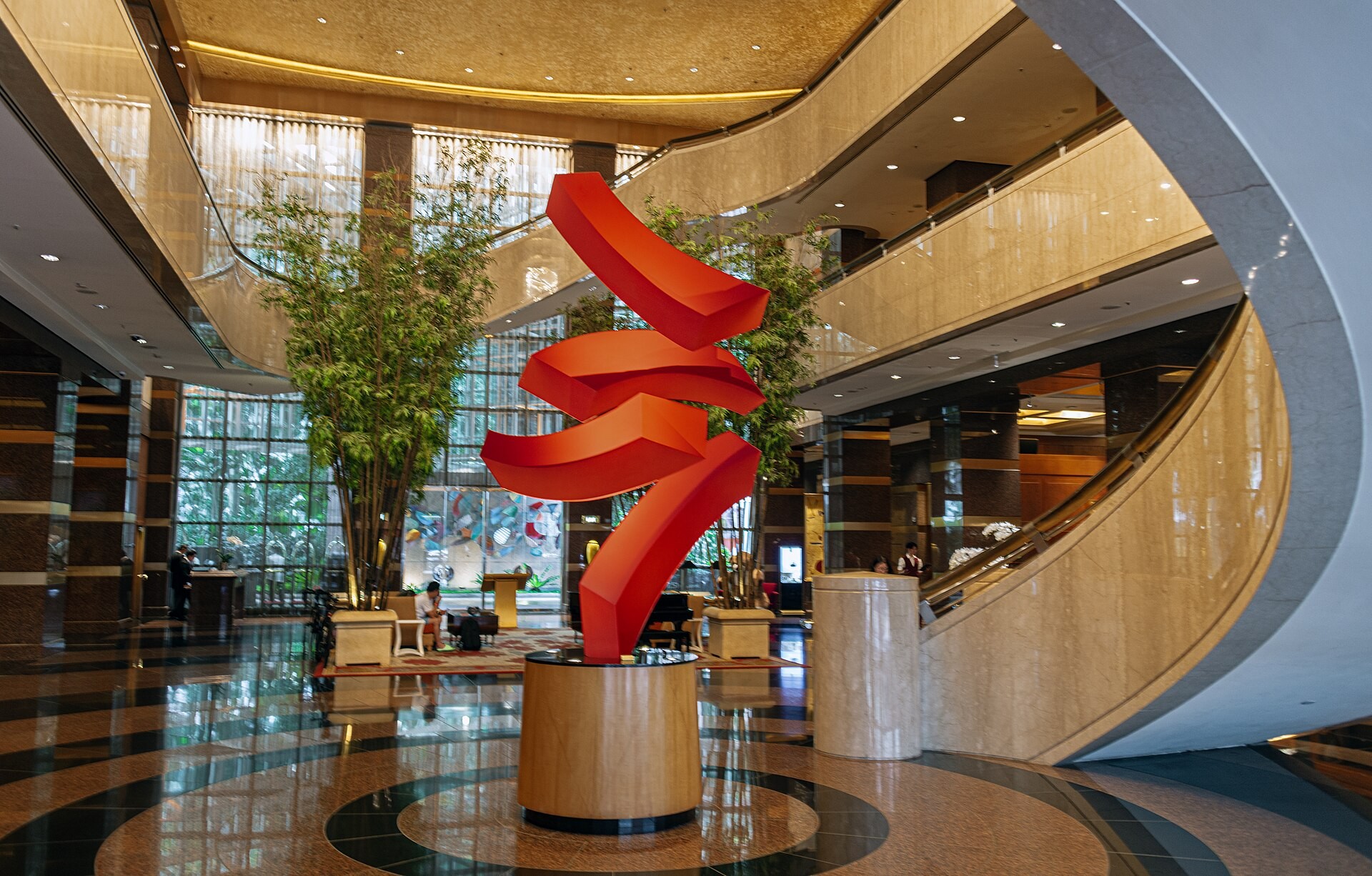
For developers and hospitality design teams commissioning outdoor sculptures, the useful question is not simply which shape to buy. It is which guest experience the artwork should create, how that experience changes across amenities and what a custom manufacturer can responsibly produce for each location. Pegasus Sculpture works across stainless steel, bronze and fiberglass/FRP, with 3D modeling, fabrication and finishing capabilities. Its garden sculpture collection provides a starting point for discussing custom work rather than choosing an off-the-shelf object.
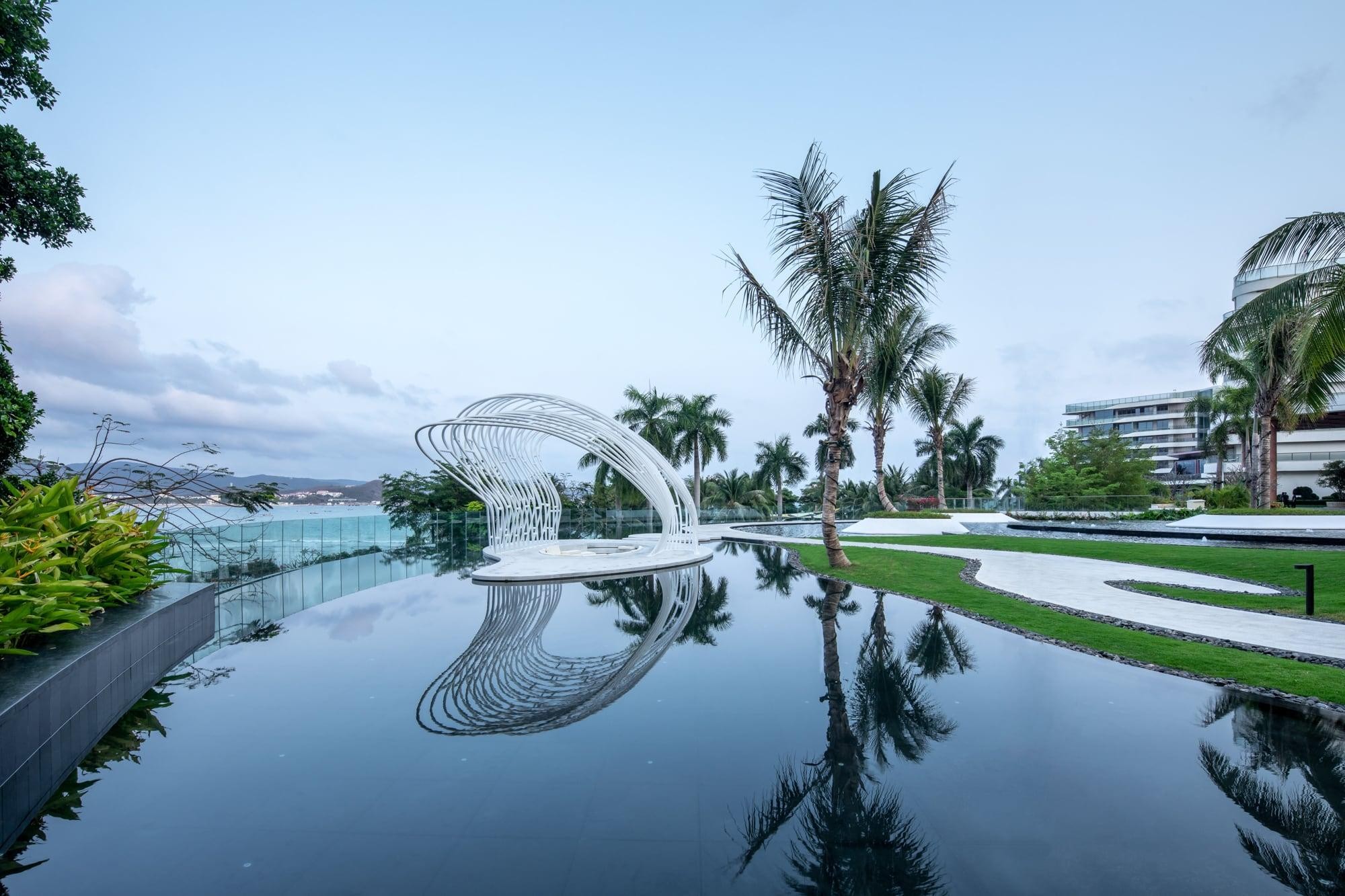
Pool Decks: Guest Contact Changes the Design Brief
A poolside landmark is viewed at close range, often by guests who are wet, barefoot or carrying towels. The buyer’s risk is commissioning a striking form that creates an awkward pinch point, exposes a touch-sensitive edge or cannot be cleaned without interrupting service. These are operating problems, not simply aesthetic preferences.
A practical starting point is to distinguish a sculpture guests are meant to approach from one designed to be viewed across planting or water. That decision changes the reach of projecting elements, the visibility of fixings and the surfaces most likely to be touched. The resort operator should supply peak-use routes and cleaning practices; its qualified professionals determine safety requirements.
Pegasus can use the approved concept and those site constraints to discuss a suitable construction method, accessible finishing details and the proposed base arrangement. For example, a complex poolside silhouette may need a concealed support arrangement that does not create exposed recesses difficult to maintain. Finish samples should be assessed for the actual poolside exposure and cleaning products; a showroom sample alone does not establish long-term suitability.

Courtyards: The Sculpture Must Leave Room for the Resort to Change
A resort courtyard may serve breakfast in the morning, private dining in the evening and a wedding the next day. Here the buyer’s challenge is not primarily close-contact exposure. It is avoiding a permanent artwork that consumes the very floor area the venue sells for events.
Before dimensions are finalized, the events team should mark furniture layouts, temporary service stations and the routes used to move equipment. A sculpture that anchors a planted edge can create identity without occupying the center of a flexible venue. If a composition contains several smaller elements, the project team must decide whether they are permanently secured or genuinely designed for controlled relocation.
For Pegasus, the manufacturing discussion then becomes specific: the number of elements, their individual sizes, finish consistency across a group and the attachment or handling provisions appropriate to the agreed use. A relocatable element is not automatically safe to move; the operator needs an agreed handling method and storage location. Those requirements should be established before a manufacturing quotation treats the group as interchangeable decorative pieces.
Rooftops: The Site Determines Whether the Concept Can Be Delivered
A rooftop commission has a different failure point: the sculpture may be feasible to fabricate yet impossible to lift into place or integrate with the roof without redesign. The decision involves the project structural engineer, roofing contractor and logistics team well before a final silhouette is approved.
The buyer should establish the available transport route, lift limitations, permissible loading and the roof assembly that must remain watertight. Rather than imposing generic dimensions, Pegasus can examine whether a proposed form needs transportable sections, how joints would affect the visible surface and which fabrication details must be coordinated with site engineering. Structural adequacy, wind actions, waterproofing and final anchorage remain subject to project-specific professional design and approval.
This early manufacturing input has a commercial consequence: it prevents the resort from approving a large visual feature whose assembly method, lifting requirements or connection interfaces were never included in the budget. It also makes alternative concepts easier to compare on realistic delivery scope—not appearance alone.
Rooftop application note — before specifying any rooftop sculpture, confirm the structural engineer’s load criteria, wind design, lifting route, roof waterproofing interfaces and safe maintenance access. The earlier artist-led rooftop photograph has been removed because it was not a hospitality-manufacturing case study.
Real Resort Manufacturing Case Study: Stainless-Steel Lotus Sculptures for a Hotel Pool in Vietnam
In a documented 2024 hotel installation in Vietnam, sculpture manufacturer YouFine produced two stainless-steel lotus forms with integrated water features for a swimming-pool setting. The manufacturer identifies 304 stainless steel, individually shaped petals and water testing before shipment as parts of the production process. Its published project record includes photographs of fabrication, testing and the installed sculptures. This is an independent manufacturing example, not a Pegasus commission.
For a resort buyer, the useful lesson is the link between the guest-facing effect and the manufacturing brief: the form, water delivery, surface finish, cleaning access and packaging all need to be resolved before installation. A project of this kind gives Pegasus a relevant basis for discussing how a custom poolside sculpture could be developed from a designer’s approved concept, while determining the material grade, fabrication details and water-system responsibilities for the actual site. No claim is made that Pegasus manufactured the Vietnam installation.

From Resort Brief to a Meaningful Manufacturing Proposal
A first enquiry does not need a completed engineering package. It should identify the amenity, the guest interaction intended, the design reference and the constraints that could affect production. For a pool deck, that may be expected contact and cleaning exposure; for a courtyard, event layouts and permanence; for a rooftop, access and preliminary engineering contacts.
Pegasus can then discuss appropriate materials and concept development, including whether stainless steel, bronze or fiberglass/FRP is a reasonable direction for the visual goal and setting. The manufacturing proposal should identify the design information still required, sample or prototype approvals, the assumed delivery scope and responsibilities that remain with the resort’s site team. That is more useful than comparing headline prices based on different assumptions.
For a material-specific starting point, see Pegasus’s stainless steel sculpture manufacturing work or custom bronze capabilities. Neither material should be selected without checking the intended finish, exposure and maintenance brief.
Frequently Asked Questions
Can one resort commission a coordinated collection in different materials?
Yes. A common form language or finish palette can connect pieces across amenities, while different materials and construction details respond to each location. The proposal should define which visual features must remain consistent and which may vary.
Can Pegasus work from a resort designer’s early concept?
Pegasus offers concept-development and 3D modeling support. An early enquiry can begin with reference images, a location plan and the intended guest experience; final geometry and engineering requirements are developed through the project approval process.
What should the resort compare when reviewing sculpture quotations?
Compare the defined manufacturing scope, finish specification, sampling provisions, packaging, transport assumptions and installation interfaces. A lower price is not necessarily comparable if those items are excluded or undefined.
Can a sculpture be planned around an opening date?
The opening date should be shared early, together with approval deadlines and site-access windows. Pegasus can discuss a project-specific production sequence once the design and scope are sufficiently defined; a universal lead time should not be assumed.
Discuss a Custom Resort Sculpture With Pegasus
Planning a poolside landmark, a courtyard composition or a rooftop feature? Share the amenity plan, visual references, approximate dimensions, project location and opening milestone. Pegasus’s manufacturing team can help identify a realistic material and production direction, the decisions needed for a quotation and the site interfaces to resolve with your consultants.
Start the conversation with Pegasus Sculpture’s project team.