A Campus Landmark Has to Work Beyond the Main Entrance
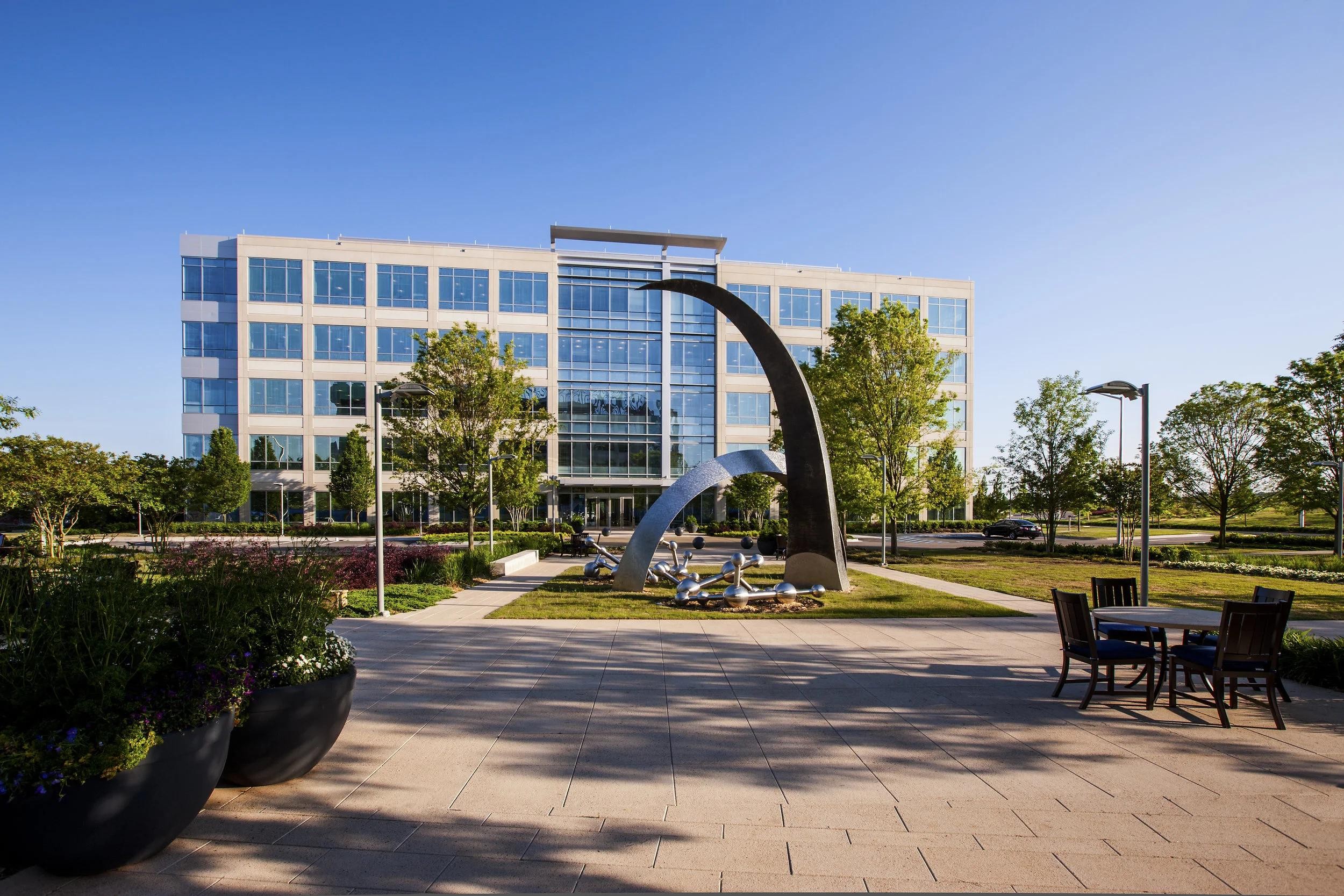
Corporate campuses are experienced in fragments. A visitor may arrive from a parking structure; employees may approach from several buildings; delivery vehicles and pedestrians follow different routes. A sculpture can become a recognizable point of reference only if its form makes sense across those everyday views.
For a developer, the buying question is not simply “How large should the sculpture be?” It is “Where will people recognize it, and what should they recognize?” A strong answer connects campus identity to one clear form, a specific location and an installation that the facilities team can manage over time.
Unlike a branded sign, an outdoor metal sculpture can give the site an identity without relying on lettering. That distinction matters when the campus has multiple tenants, changes ownership or expands into additional buildings.
Define the Recognition Moment Before Choosing a Form
Treat recognition as a visual test, not a matter of sculpture height alone. Select three real observation points: the farthest vehicle approach, the main pedestrian route and the closest public viewpoint. From the distant approach, check whether the outer silhouette is distinguishable against the façade. At walking distance, check whether gaps, curves and overlapping elements remain readable. Up close, consider whether people can appreciate the detail without stepping into a circulation route.
Ask the landscape architect for eye-level photographs from those points and place the same scaled concept silhouette into each view. Compare a simple solid outline with a more open form before committing to details. If the work disappears against a busy building, change the orientation, contrast or location rather than simply enlarging it. Recheck the views against seasonal planting and likely parked vehicles.
The decision should be documented in a small viewpoint sheet: photograph, viewing distance, proposed silhouette and the specific feature a person should recognize. Pegasus can use that agreed visual direction to discuss whether the proposed curves, openings and proportions can be translated into a manufacturable sculpture without losing its defining shape.
Plan the Installation Footprint, Access and Long-Term Care
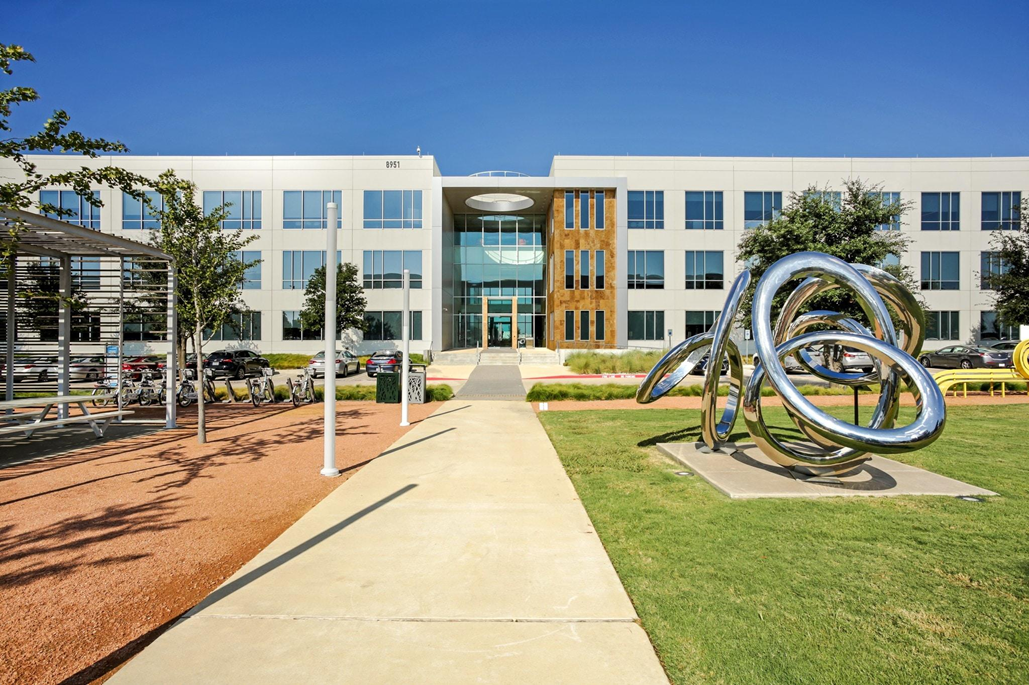
Once the visual location is selected, test whether the campus can physically accommodate the sculpture. Mark the base footprint, pedestrian clearances, planting and underground services on the site plan. Confirm who will design and approve the foundation and anchoring arrangement; those responsibilities must be agreed with the project engineer and site team rather than assumed to be included in fabrication.
Trace the actual delivery route from the campus entrance to the final position. Gate widths, turning space, paving capacity, overhead branches, canopies and occupied walkways may determine whether a large form can arrive as one piece or needs a sectional fabrication approach. Where access is restricted, Pegasus can review a proposed sculpture geometry for transportable sections and discuss joint placement so the intended outline is preserved. The installation contractor and engineer should confirm lifting, temporary closures and site safety requirements.
Maintenance must also be designed into the location. Check whether cleaning teams can safely reach every exposed surface, whether irrigation sprays the work, and whether soil, leaves or standing water collect around the base. Agree an inspection and cleaning plan with the facilities team, including how fixings and drainage will remain accessible. Pegasus can discuss fabrication details and surface treatment in relation to those site conditions; the project team should confirm the final maintenance regime for its environment.
Choose a Stainless Steel Finish for the Actual Campus Environment
Finish choice should be tested against the building, climate and maintenance access. Mirror-polished stainless steel gives strong reflections and can create a dramatic landmark, but it also reveals water spots, fingerprints and nearby visual clutter. Brushed finishes soften reflection while showing a directional grain; satin finishes give a quieter appearance; bead-blasted finishes diffuse highlights but need a cleaning method suited to their texture. Ask for representative samples and view them outdoors beside the façade at different times of day.
The site environment matters as much as appearance. Coastal salt, airborne pollution, irrigation overspray and trapped moisture can change the corrosion and cleaning requirements. Stainless steel is not maintenance-free, and a finish alone does not establish the appropriate alloy grade. For a project-specific proposal, Pegasus can review the exposure conditions, proposed steel grade, surface treatment and accessible details with the design team before a finish is finalized.
For example, a sculpture beside a glazed office façade may benefit from a satin surface that reads clearly without mirroring every window. A prominent entrance plaza may justify a polished focal point if the facilities team can manage cleaning and water marks. A textured finish should be evaluated for how dirt can be removed from recesses. The buyer should compare physical samples, appearance under real light, likely cleaning frequency and the proposed maintenance method—not select from catalogue photographs alone.
Real Manufacturing Case Study: Medtronic Customer Innovation Centre, Galway, Ireland
At Medtronic’s Customer Innovation Centre in Galway, Ireland, a striking stainless steel sculpture brings the organisation’s “rising person” corporate symbol into the architectural landscape. Measuring 2.5 metres in diameter, the sculpture was fabricated using 2205 duplex stainless steel and finished with a bead-blasted surface. The documented manufacturing process took eight weeks, resulting in a distinctive installation that reinforces the organisation’s identity through sculptural form rather than conventional signage.
The project highlights how a corporate symbol can be transformed into a three-dimensional landmark while maintaining its recognizable character. The sculpture’s proportions, material selection and surface finish work together to establish a strong visual presence at the building entrance. For corporate developers and architects, it demonstrates how custom metal sculpture can connect brand identity with the surrounding architecture.
At Pegasus Sculpture, this design-led approach is central to developing custom outdoor metal sculptures for corporate environments. Pegasus can work with clients to translate their brand concepts, architectural drawings and design references into sculptural forms, considering the intended location, scale, material and finish. Through its custom stainless steel sculpture manufacturing capabilities, Pegasus can help corporate buyers develop distinctive installations that reflect their organisation’s identity while complementing the character of the site.

Turn the Recognition Concept Into a Useful Enquiry
Send Pegasus a focused project pack: a site plan with the preferred location, three annotated viewpoint photographs, an approximate size and desired silhouette, finish references, exposure conditions, and the available delivery and lifting route. Include known foundation constraints and identify the project engineer and installation contractor. These inputs help separate the visual concept from the practical conditions that could change its manufacture.
Pegasus can use that brief to discuss custom stainless steel sculpture options, whether the geometry and proportions are suitable for fabrication, how visible joins might affect the appearance, and which finish samples merit review. If the proposed access route requires a sectional approach, that decision should be considered while the form is still being developed rather than after the artwork is complete.
Before production proceeds, the commissioning team should agree who is responsible for structural calculations, foundations, transport, lifting, site installation and subsequent maintenance. A clear division of responsibilities protects the design intent and avoids treating site coordination as an afterthought.
A Recognizable Campus Landmark Begins With a Clear Purpose
The strongest outdoor campus landmark is not necessarily the largest. It is the one people can recognize from the routes they actually use, in a location that belongs to the architecture and landscape. Define that role first, then ask Pegasus to help develop a custom proposal that fits the site and its finished installation.
Frequently Asked Questions
How early should a campus developer involve the sculpture manufacturer?
Bring the manufacturer in once the location, intended viewpoints and initial design direction are clear. Early discussion can test whether the chosen form and finish suit the project before the concept is finalized.
Can a campus landmark be recognizable without displaying the company logo?
Yes. A distinctive silhouette, carefully chosen location and consistent relationship with the architecture can create a recognizable meeting point without literal signage.
Is mirror-polished stainless steel always the best finish?
No. Mirror finishes create strong reflections but can make marks and surrounding visual clutter more noticeable. Review samples against the campus materials, exposure and maintenance plan.
What information should be included in a first RFQ?
Share a site plan, photographs from key approach routes, the proposed location, approximate size, concept references, preferred finish and project destination. These details are enough to begin a focused discussion.
| Planning a landmark sculpture for a corporate campus? Explore Pegasus’s custom stainless steel sculpture manufacturing and send your site views, approximate dimensions, preferred finish and design references through the Pegasus contact page to discuss a project-specific manufacturing brief. |