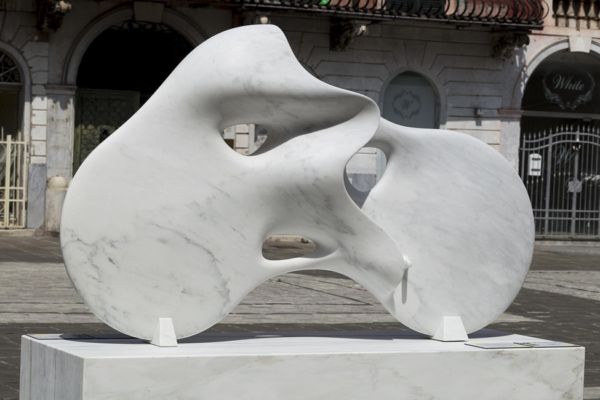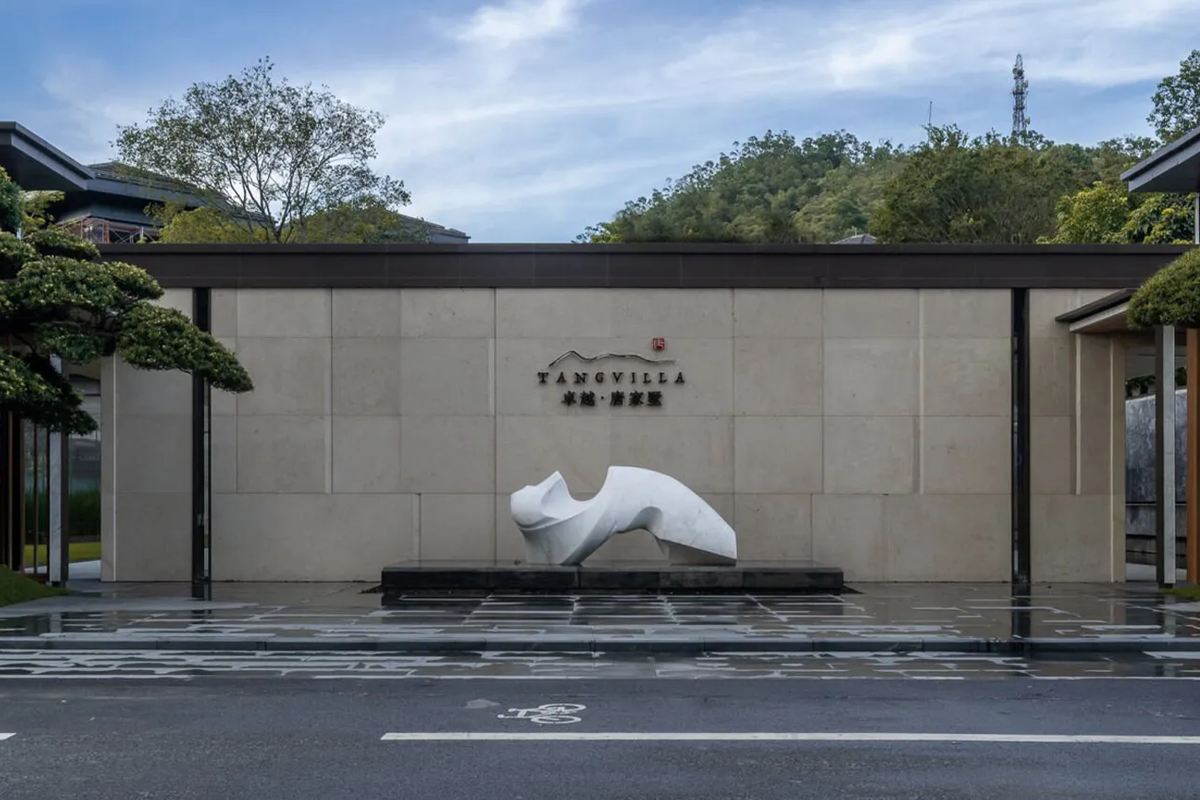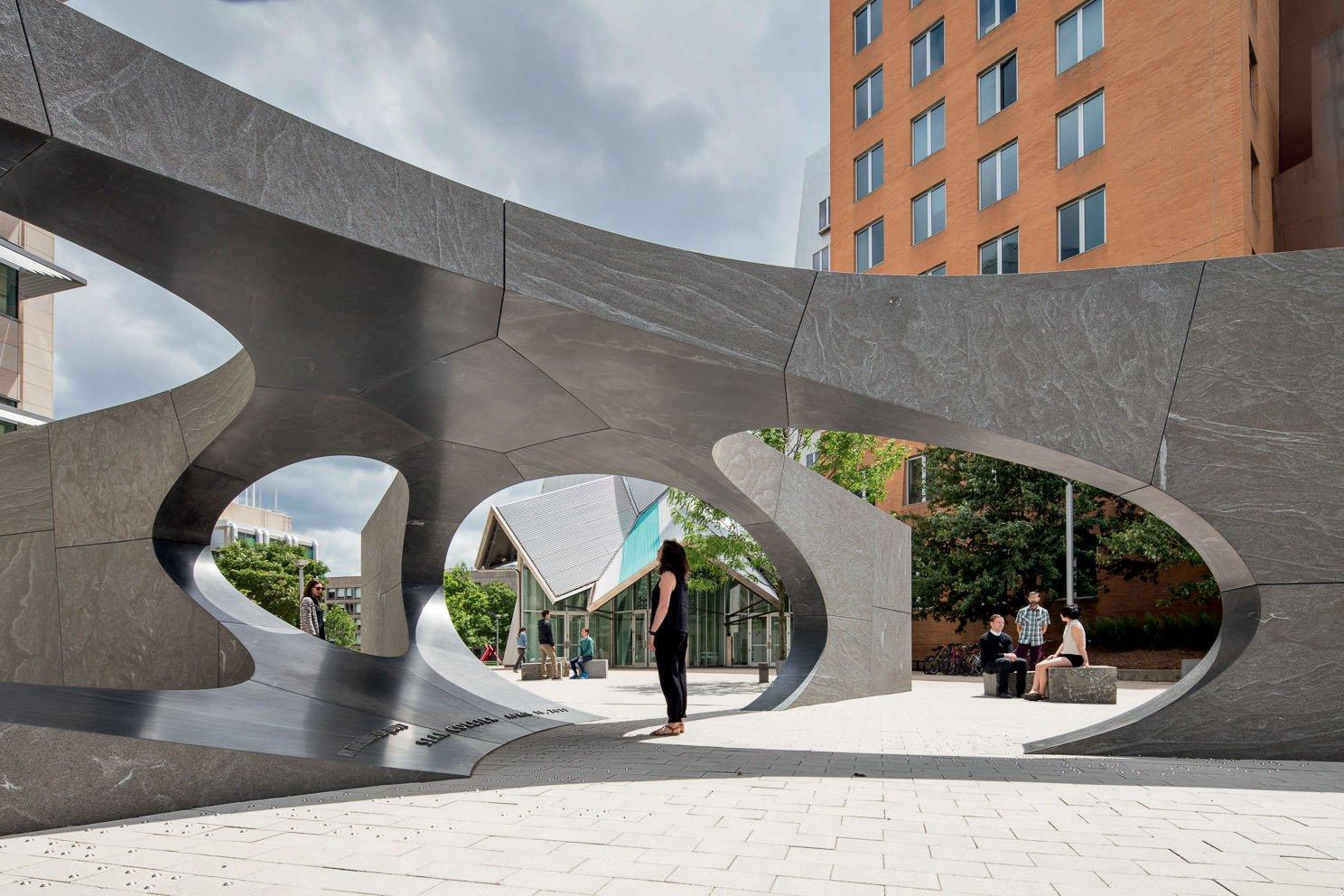
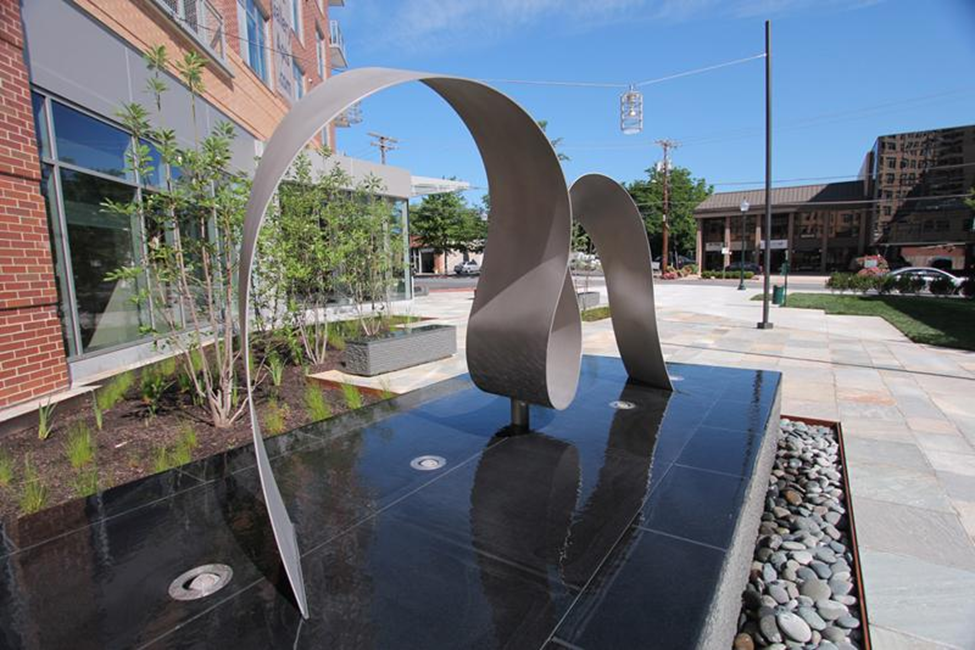
Ask any architect who has walked around a commissioned piece more than once: abstract sculptures rarely show the same face twice. As the viewing angle shifts, voids that once framed open sky can close into solid mass, and a form that reads as fluid from the entrance path can turn sharply geometric from the side. This constant transformation is what negative space is built to do – it isn’t empty background, it’s an active compositional tool that changes how the entire piece is experienced as a person moves around it.
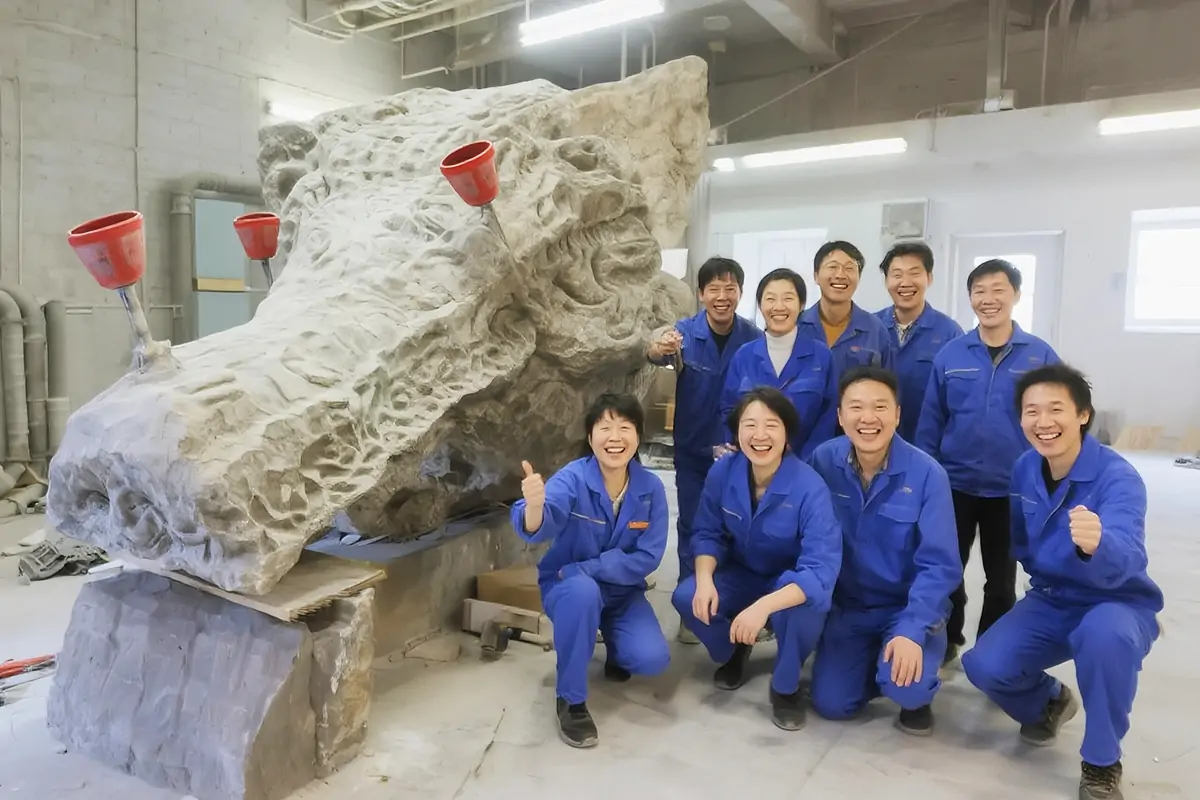
At Pegasus, this multi-angle behaviour is treated as a design requirement from day one, not something discovered after installation. During concept development, the design team builds full 3D models and tests how the voids resolve from the primary approach path, the secondary pedestrian routes, and any elevated or vehicle sightlines the site presents. Getting this right early avoids one of the more expensive surprises in commercial sculpture projects: a form that looks perfect in a rendering but reads as a flat, unbalanced silhouette once it’s actually standing in the plaza. A single hero image can sell a client on a form the site will never actually deliver – which is the real risk of approving a design off one static render instead of testing it against the site itself.
Let’s understand, why negative space behaves the way it does across viewing angles, what that means for material and engineering choices, and what architects and project owners should check before commissioning a piece that has to perform from every direction.
Basically, the stakes differ by project type. A hotel atrium sculpture is mostly seen from fixed vantage points – the check-in desk, the lobby seating, the staircase above – so its voids can be tuned to a handful of known sightlines. A museum courtyard piece or a public plaza landmark, by contrast, is approached from every direction by pedestrians, so the negative space has to hold together from angles that can’t all be predicted in advance. Corporate headquarters and mixed-use developments sit somewhere in between, usually built around one dominant arrival sequence with several secondary views from surrounding office floors.
What Is Negative Space in Abstract Sculpture?
Negative space is the volume around, through, and within a sculpture – the gaps, openings, and voids that sit alongside the solid material. In figurative work these voids are often incidental, created by the shape of a limb or a fold of drapery. In abstract sculptures, negative space is deliberate. It’s drawn, modelled, and engineered with the same intent as the solid form, because the void is doing roughly half the compositional work.
This is also why abstract pieces are harder to judge from a flat sketch than realistic sculpture. A single rendering shows one relationship between form and void; it can’t show what happens once a visitor walks past and the opening that framed the sky starts framing the building behind it instead. Pegasus addresses this at the design stage by developing full-scale 3D geometry rather than relying on static renders alone, so architects can see how the silhouette, voids, and intended viewing axes actually behave before fabrication drawings are finalised.
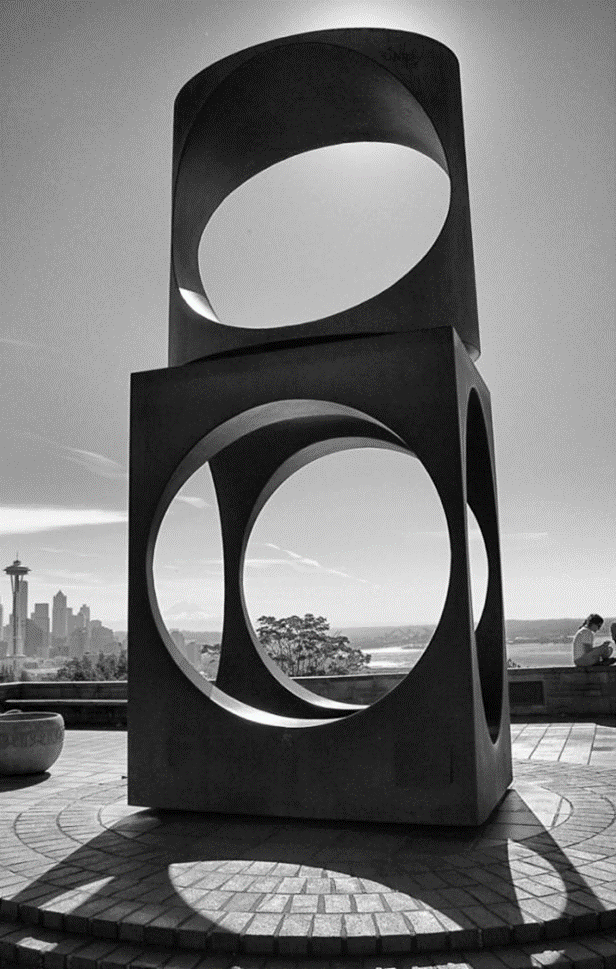
Why Does an Abstract Sculpture Look Different From Every Angle?
A handful of factors decide how dramatically a piece changes as people move around it, and most of them can be tested at the design stage rather than discovered on site once it’s too late to change anything without extra cost. Among the most influential:
- Approach angle – whether visitors arrive head-on, from the side, or diagonally across a plaza changes which voids they see first.
- Elevation – a sculpture viewed from a raised terrace or upper floor reads its top-down silhouette differently than one seen at ground level.
- Void alignment – voids that line up with a walking path can appear to “open” as a visitor approaches and “close” as they pass.
- Surface finish – mirror-polished surfaces reflect the surroundings into the negative space itself, while brushed or patinated finishes keep the void reading as a stable, consistent shape.
- Scale relative to the site – as a working guideline, pieces under roughly 8 feet tend to read as a discrete object from any angle, while installations above 15 feet start to interact with the surrounding architecture and need voids planned at a bigger, building-scale rhythm.
None of these factors work in isolation, which is why abstract sculptures designed for genuinely multi-angle sites are usually walked through at several stages of development, rather than approved from a single hero image and left to chance.
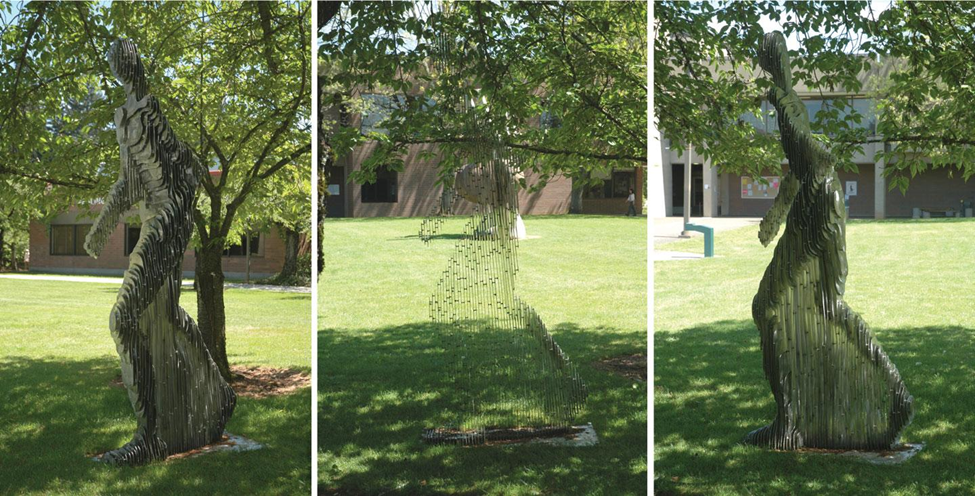
How Does Material Affect the Way Negative Space Reads?
Material decides how much the negative space in abstract sculptures changes throughout the day, not only how it changes with position. This is especially true for modern sculptures built as abstract metal sculpture installations, where a mirror-polished stainless steel surface can pull the sky, nearby buildings, or passing visitors directly into the voids, so the same opening looks noticeably different at 9am, midday, and dusk. Brushed or satin finishes behave more predictably – the void stays a quieter, more consistent shape regardless of the light, which suits sites where a calmer visual effect is preferred.
Bronze and patinated metal introduce a third option: warmer, less reflective surfaces where the void reads mainly through shadow and depth rather than reflection. For stone and mixed-material pieces, the mass of the material itself limits how open a void can practically be, since a large unsupported opening behaves very differently in carved stone than in fabricated metal. At Pegasus, material recommendations are only made once the design intent for the voids is understood – a mirror finish isn’t automatically the right answer just because it looks striking in a presentation deck.
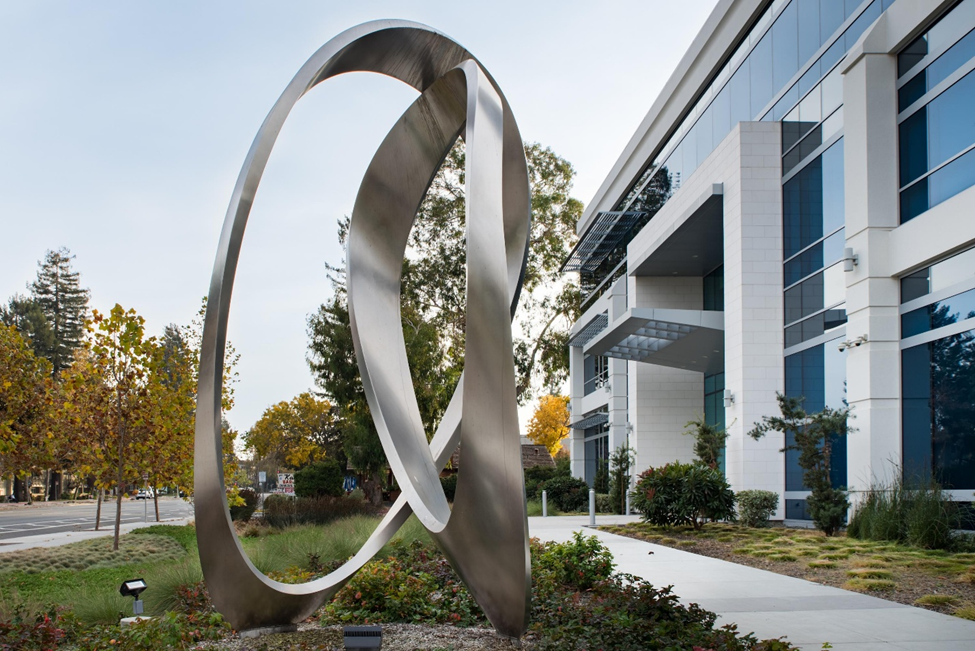
What Role Do Site and Lighting Play in Framing the Voids?
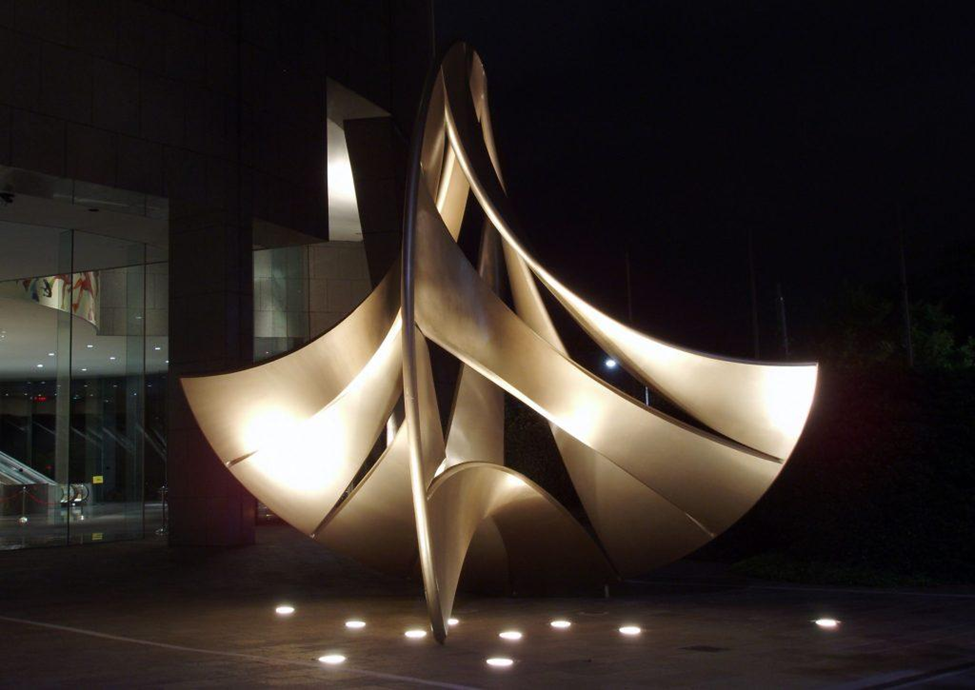
A sculpture is not separate from its surroundings – the space around it is also part of the overall design. During the day, the voids frame whatever’s behind them, whether that’s open sky, a wall, or a row of trees, so the backdrop ends up shaping the composition whether anyone planned it that way or not. At night, it comes down entirely to lighting. Hidden ground lights or well-aimed spotlights can bring out curves and openings you’d barely notice in daylight, but one badly placed fixture can flatten the whole thing or throw an ugly shadow across it.
That’s why Pegasus looks at lighting and landscaping at the same time as the engineering, instead of leaving it for whoever handles the site afterward. Sightlines, how the planting will grow in over the years, where the fixtures go – all of that gets checked against the sculpture’s shape so the voids still look right five years later, not just on opening day. Tall palms around a courtyard piece will frame it very differently after a decade than low, trimmed hedges would around a plaza sculpture, and that’s something worth planning for early rather than sorting out later as a maintenance headache.
How Is Negative Space Engineered Without Losing Structural Stability?
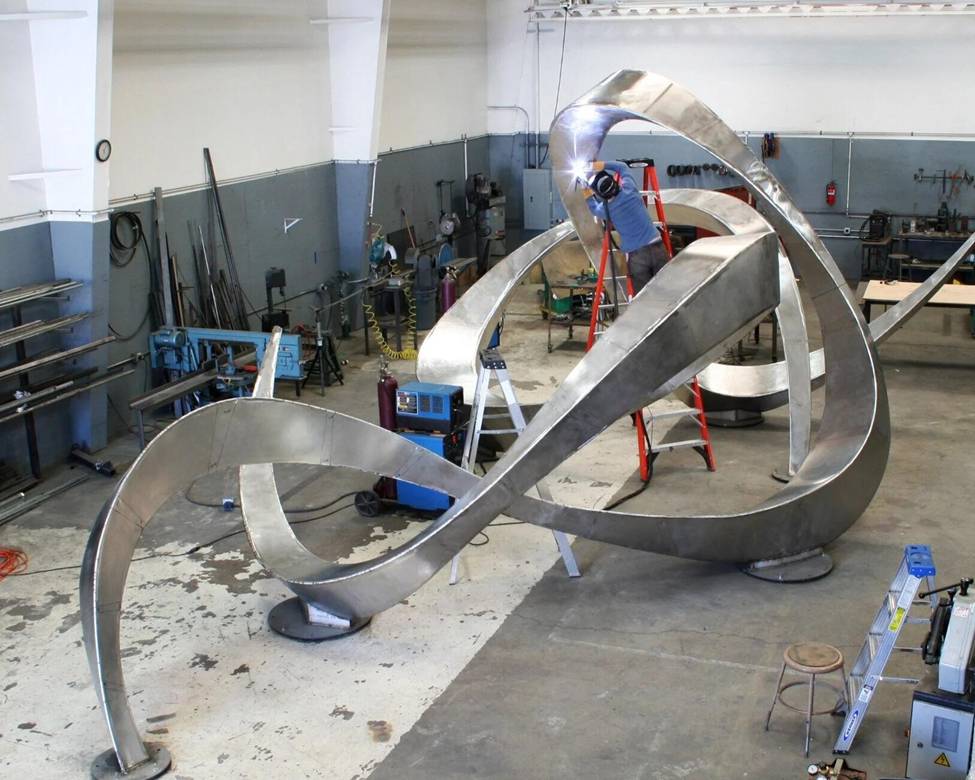
Large voids and cantilevered forms are common in ambitious abstract sculptures, and they put real structural demands on a piece. Open forms shift the centre of gravity, concentrate loads at narrower connection points, and can behave unpredictably under wind loading if the internal support isn’t planned correctly from the outset.
Pegasus’ engineering team reviews every void-heavy design for centre of gravity, base connections, internal bracing, and wind exposure before fabrication begins, then carries that plan through precision forming, welding, and seam finishing so the transitions between void and solid form read as one continuous surface rather than a series of visible joins. Every piece goes through structured quality inspection afterward – checking surface continuity, alignment, and reflection quality on polished sections – before it’s cleared for the next stage. This sequence is especially critical for large abstract metal sculpture commissions, which sit within Pegasus’ wider portfolio of modern sculptures built for corporate campuses, hotels, and public sites worldwide. It’s also what allows a dramatic open form to stay standing exactly as designed, not just in the rendering.
How Does Viewing Distance Change What People Notice?
The table below summarises how these considerations shift depending on how close a visitor actually is to the piece, which is a useful reference when deciding how much design attention each detail deserves. It’s also where the hotel-versus-plaza contrast becomes concrete: a hotel entrance sculpture mainly has to land in the mid-range and close-range rows, since it’s judged from a handful of known approach points, while a public plaza piece has to hold up in every row at once, because pedestrians will eventually view it from all of them.
| Viewing Distance | What People Notice First | Design Consideration |
| Close range (under 10 ft) | Surface finish, weld lines, and texture inside the voids | Finish quality and seam integration matter most here – critical for a hotel entrance piece people pass within arm’s reach |
| Mid-range (10–50 ft) | The overall silhouette and how the voids frame the background | Void alignment with the main approach path – the row a hotel lobby’s first-glance impact depends on most |
| Long range (50+ ft) | Overall mass and outline against the sky or building line | Scale and proportion relative to surrounding architecture – where a sprawling public plaza piece has to hold up from every direction |
| Elevated or vehicle view | The top-down silhouette and roofline interaction | Voids planned for a “plan view,” not only eye level |
Sites with multiple approach points – a hotel entrance and a garden path, for example – often need the sculpture to satisfy several rows of this table at once, which is exactly the kind of requirement that should be raised during design review rather than after fabrication.
What Should You Check Before Commissioning an Abstract Sculpture?
Choosing a manufacturing partner for a piece that has to perform from every direction involves a few extra questions beyond simple design approval – and asking them early is what protects the project from costly changes or delays later. Before committing to a commission, it’s worth confirming:
- Has the design been tested against your site’s actual approach paths and sightlines, not a generic 3D render?
- Has the engineering team reviewed centre of gravity, wind loading, and base connections for this specific void geometry?
- What finish is recommended for your lighting and climate conditions, and why?
- Will the piece be packaged and shipped as a single unit or in engineered sections, and what does that mean for on-site assembly?
- Who coordinates installation on the day, including lifting points, alignment, and final positioning?
One team at Pegasus stays on the project from the first sketch through to the final bolt going into the ground – the same people who worked out the engineering are still involved when it ships, and still involved when it’s being lifted into place. That continuity is really the point: nothing gets lost in translation between a design phase and a production phase run by different people. A look through some completed architectural sculpture projects shows what that looks like in practice, across different materials and sites.
Frequently Asked Questions
What’s the difference between positive and negative space in sculpture?
Positive space is the solid material of the piece; negative space is the void around, through, or within it. In abstract sculptures, both are designed together rather than the void being an accidental gap left over from the form.
Does negative space make a sculpture harder to install?
It can add complexity, since large voids shift the centre of gravity and change how the piece needs to be lifted and secured. Reviewing structural and installation requirements at the engineering stage, rather than after fabrication, is what keeps this manageable.
Which material shows negative space most dramatically?
Mirror-polished stainless steel tends to have the strongest effect, since it reflects the surroundings directly into the voids and changes throughout the day. Brushed metal, bronze, and stone read more consistently, with less visual movement.
How early should viewing angles be considered in a project?
Ideally during initial design development, before fabrication drawings are finalised. Testing sightlines against the real site – approach paths, elevation changes, vehicle routes – early on is what avoids costly revisions later.
Can an existing abstract design be adapted for a new site with different sightlines?
Sometimes, but it depends on how tightly the voids were tuned to the original site. A design built around one specific approach path may need genuine adjustment, not just resizing, to read correctly from a different set of angles.
Conclusion
Negative space is what makes abstract sculptures feel like they keep revealing themselves, rather than being fully understood from a single photograph. Getting there isn’t really about finding an interesting shape – it’s about testing that shape against the real site, picking a material that suits the light and climate, engineering the open sections so they hold up structurally, and planning the install so nothing shifts once it’s in the ground.
That’s the part worth pressure-testing before signing off on a design – and it’s why Pegasus is involved as a design partner testing sightlines in 3D long before fabrication starts, not a manufacturer who simply receives final drawings and builds to spec. If your site has more than one approach path, changes in elevation, or lighting that needs to do real work at night, it’s worth talking it through with the Pegasus team before the drawings are locked in – the earlier those angles get tested, the fewer surprises there are once the piece is standing.