Introduction
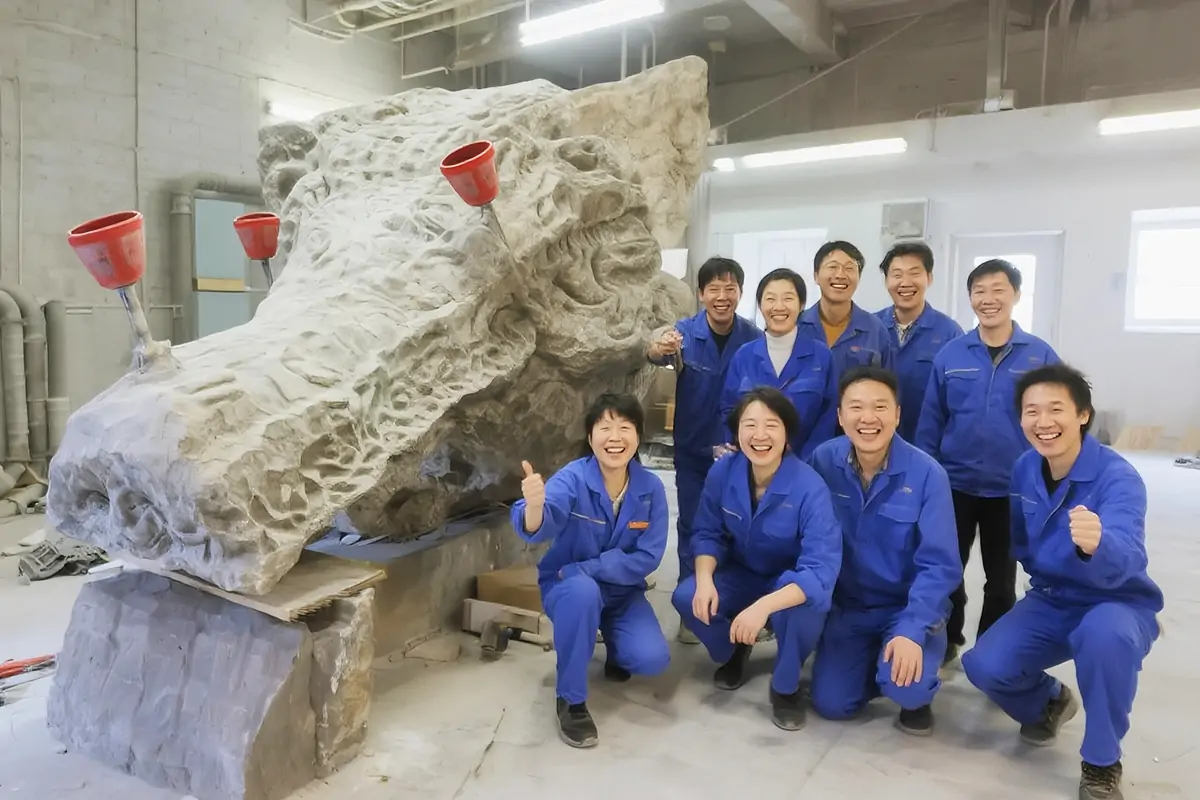
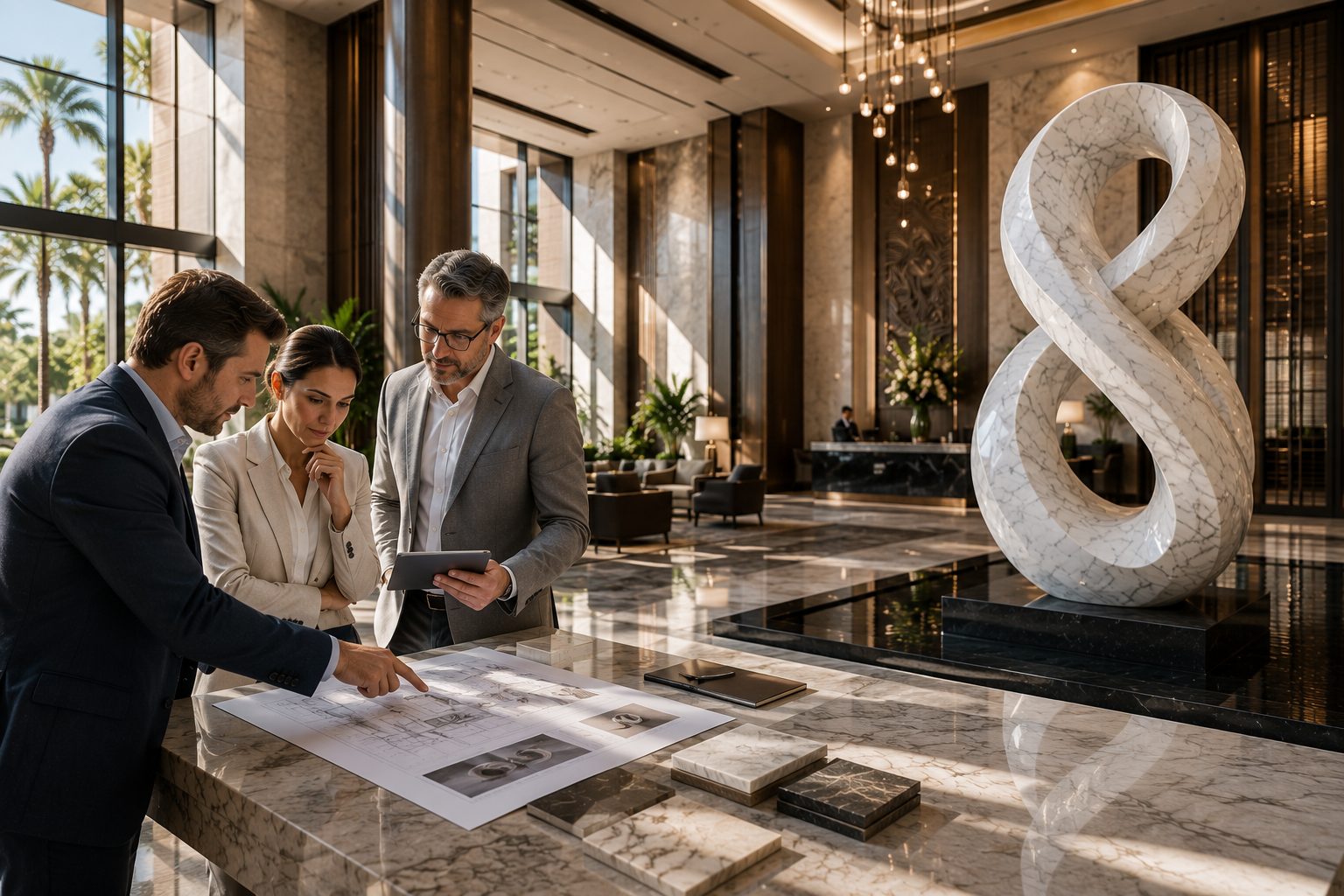
Selecting the right marble sculptures manufacturer is one of the most important decisions in a luxury development project. Whether you’re commissioning a statement sculpture for a five-star hotel, a private villa, a corporate headquarters, or a mixed-use commercial destination, the manufacturer you choose will influence far more than the final appearance of the artwork.
A custom marble sculpture represents a significant investment in craftsmanship, engineering, and long-term value. Beyond artistic design, successful projects require careful material selection, structural planning, precision fabrication, logistics coordination, and installation expertise. A manufacturer that excels in these areas can help transform a design concept into a durable architectural feature that complements the surrounding environment for decades.
For developers, architects, landscape designers, hospitality groups, and art consultants, evaluating potential suppliers goes beyond comparing portfolios or pricing. The goal is to identify a partner with the technical capability, manufacturing experience, and project management processes necessary to deliver consistent quality throughout every stage of production.
This guide explains the key factors to consider when selecting a marble statue supplier for luxury hotels, villas, and commercial developments while highlighting how experienced manufacturers contribute to successful projects from concept through installation.
Why Manufacturer Selection Matters More Than the Sculpture Design
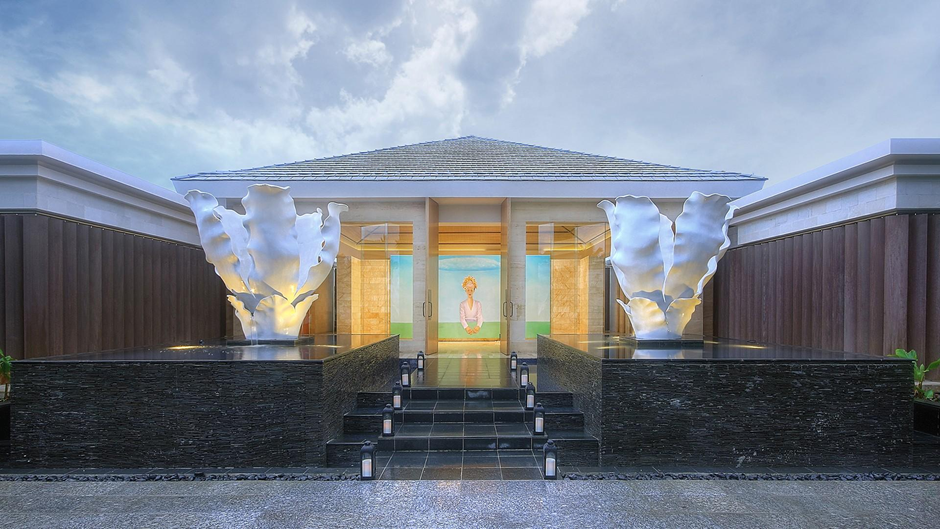
An exceptional sculpture design can only achieve its intended impact when it is supported by equally exceptional manufacturing. In many commercial projects, challenges arise not because of the artistic concept itself but because important technical considerations were overlooked during production planning.
Luxury hospitality and commercial developments often have unique architectural requirements. A sculpture may need to withstand varying climate conditions, integrate with structural foundations, accommodate transportation restrictions, or comply with local installation requirements. These factors demand collaboration between designers, engineers, production specialists, and project managers long before the first block of marble enters the workshop.
At Pegasus, project planning begins long before fabrication starts. Instead of waiting until production begins, the engineering and project management teams work closely with architects, designers, developers, and contractors to review installation conditions, foundation requirements, transportation routes, crane access, and material selection during the early planning stage.
For example, on several commercial and hospitality projects, early planning identified transportation access limitations and installation constraints before fabrication began. By incorporating these practical considerations into the manufacturing process, the team was able to refine production methods, optimize packaging strategies, and support smoother installation while minimizing the need for on-site modifications.
This collaborative approach allows Pegasus to contribute as more than a sculpture manufacturer. From design coordination and engineering reviews to fabrication, logistics planning, and installation support, the focus remains on reducing project risks while helping clients achieve a more efficient and predictable project delivery.
Buyer Tip
Before comparing quotations, ask each manufacturer how they evaluate transportation routes, lifting requirements, foundation conditions, and installation constraints before fabrication begins. A manufacturer that addresses these practical considerations during the planning stage is often better equipped to anticipate project challenges, reduce costly design changes, and support a smoother installation process.
Readers interested in understanding how modern fabrication techniques support today’s custom marble projects can also explore our guide on how a marble sculptures manufacturer brings contemporary marble sculpture to life, which explains the production journey in greater detail.
Define Your Project Requirements Before Comparing Manufacturers
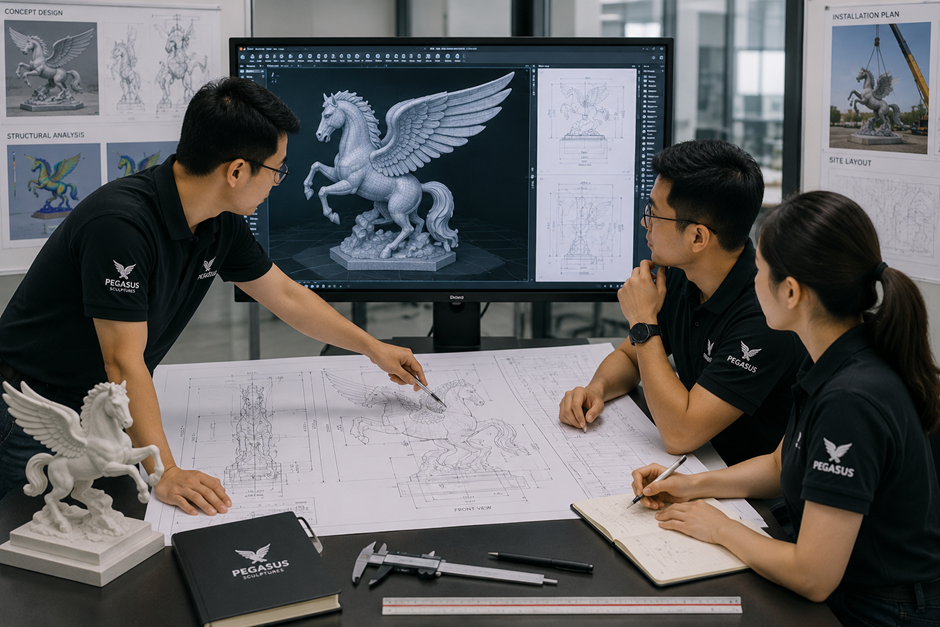
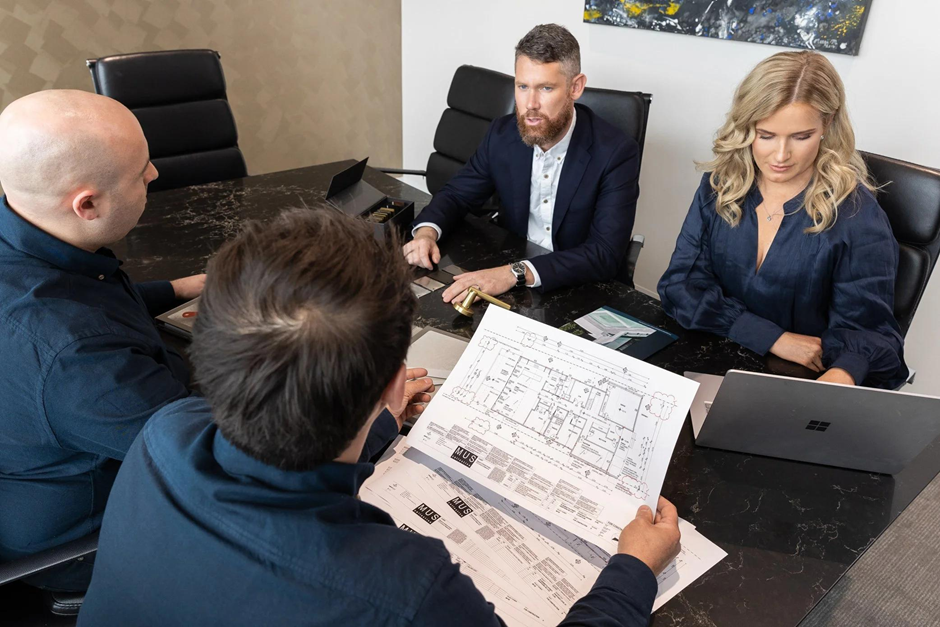
Before requesting quotations from multiple suppliers, it is important to establish clear project objectives. Manufacturers can only provide accurate recommendations when they understand the technical, aesthetic, and logistical requirements of the installation.
Preparing this information in advance also helps manufacturers identify potential engineering, production, and installation considerations early, resulting in more accurate proposals and realistic project timelines.
Key considerations include:
- Project location and environmental conditions
- Sculpture dimensions and approximate weight
- Indoor or outdoor installation
- Preferred marble type and finish
- Architectural style of the surrounding property
- Structural integration requirements
- Project timeline and installation schedule
- Transportation access at the installation site
- Budget expectations
For example, a sculpture designed for a beachfront luxury resort may require different marble characteristics and protective finishing than one installed within an enclosed hotel lobby. Likewise, a sculpture intended for a public plaza may require additional structural reinforcement and foundation planning compared to a decorative installation in a private villa courtyard.
Defining these requirements before selecting a manufacturer enables more productive discussions and allows suppliers to recommend suitable materials, engineering solutions, fabrication methods, and installation strategies based on the specific needs of the project rather than assumptions. It also helps buyers compare manufacturers based on their technical expertise and proposed solutions rather than price alone.
Evaluate the Manufacturer’s Marble Sourcing and Material Expertise
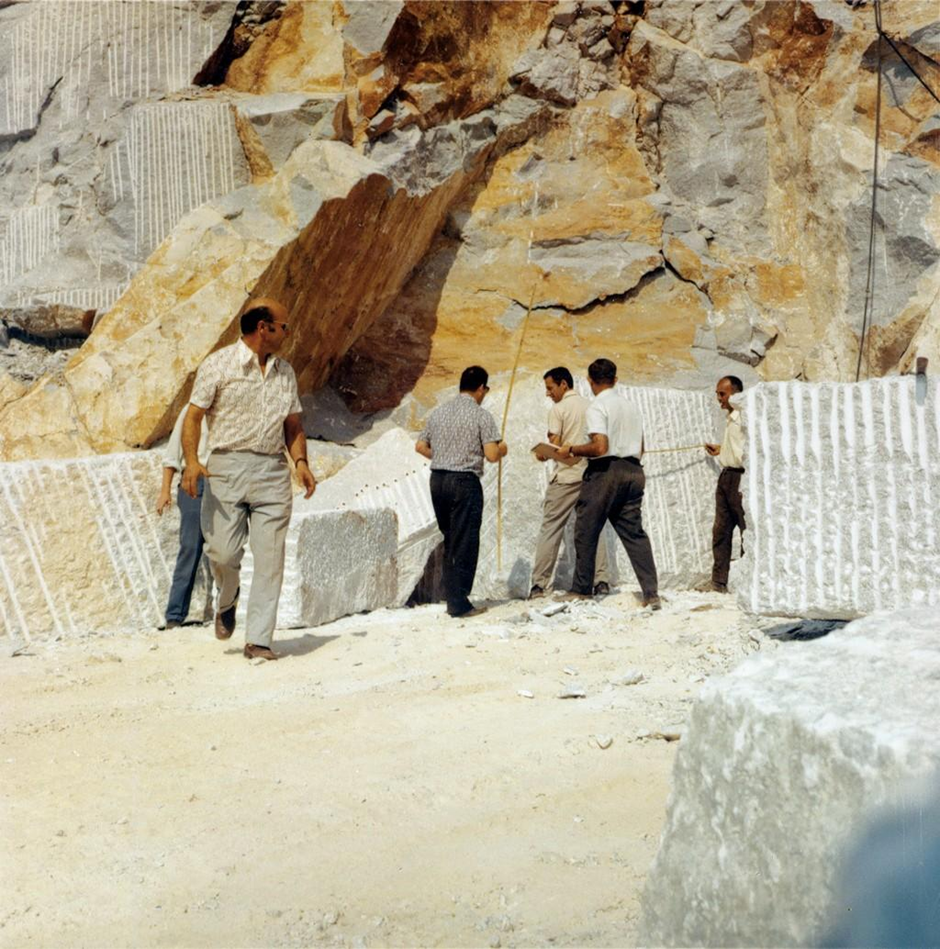
Not all marble is the same. Differences in origin, mineral composition, density, veining, color consistency, and structural integrity can significantly influence both the appearance and longevity of a sculpture.
A qualified marble sculptures manufacturer should be able to explain:
- Where the marble is sourced
- Why a particular stone is recommended for your project
- The advantages of different marble varieties
- Expected weathering characteristics
- Maintenance considerations
- Suitability for indoor versus outdoor installations
For hospitality developments, consistency is particularly important. Large installations often require multiple marble blocks that maintain uniform color and veining throughout the finished sculpture. Careful material selection during procurement helps achieve a cohesive visual result while reducing the likelihood of noticeable variations after installation.
Rather than simply offering a catalogue of available stone types, experienced manufacturers help clients balance aesthetics with long-term performance by recommending marble that suits the project’s environment, structural requirements, and design intent. Careful material evaluation before fabrication also helps improve visual consistency across large commercial installations where multiple marble blocks may be required.
Assess Engineering and Fabrication Capabilities—Not Just Artistic Skill
Many buyers naturally focus on a manufacturer’s artistic portfolio, but technical capability is equally important when evaluating suppliers for luxury developments.
Large marble sculptures involve much more than carving stone. They require engineering expertise to ensure the finished artwork can withstand transportation, lifting, environmental exposure, and long-term structural loads.
Questions worth discussing include:
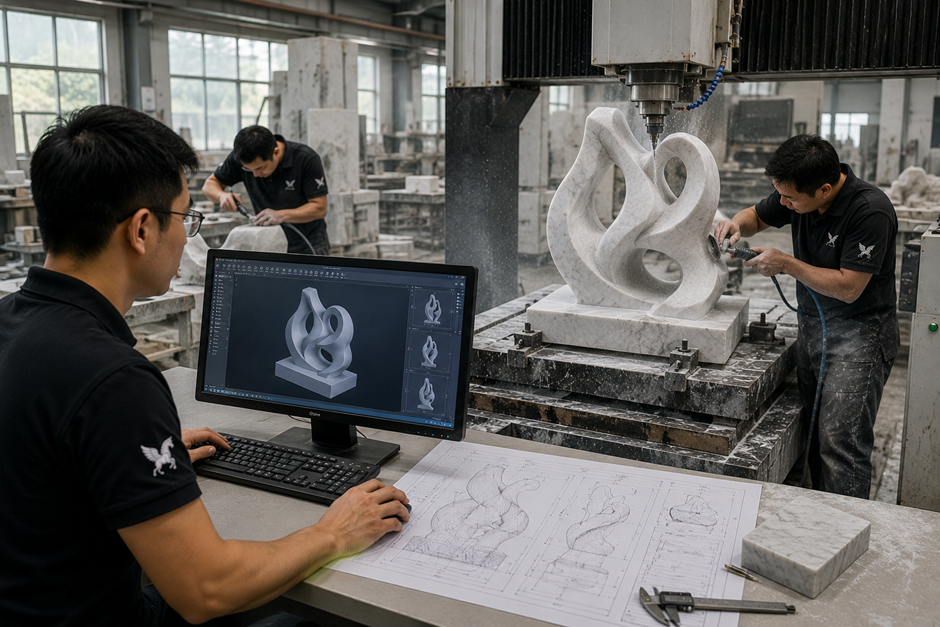
- Does the manufacturer use digital 3D modeling before production?
- Are structural engineers involved in complex projects?
- How are reinforcement systems incorporated into large sculptures?
- What fabrication technologies are used alongside traditional craftsmanship?
- How is dimensional accuracy verified throughout production?
At Pegasus, digital 3D modeling and CNC pre-shaping are combined with skilled hand finishing to improve dimensional accuracy while preserving the craftsmanship that gives each sculpture its unique character. Before fabrication begins, the engineering team reviews structural requirements, reinforcement methods, and installation considerations to help ensure the finished sculpture can be manufactured, transported, and installed efficiently. This integrated approach is particularly valuable for large hospitality, commercial, and public art projects where engineering precision and artistic quality are equally important.
The objective is not simply to create an attractive sculpture but to ensure it performs reliably throughout its service life while meeting the architectural and engineering requirements of the project.
Evaluate the Manufacturer’s Quality Control and Inspection Process
Luxury hotels, private villas, and commercial developments often commission sculptures that become permanent architectural features. Unlike decorative items that can be easily replaced, large marble sculptures require significant investment in production, transportation, and installation. For this reason, understanding a manufacturer’s quality control process is just as important as reviewing its portfolio.
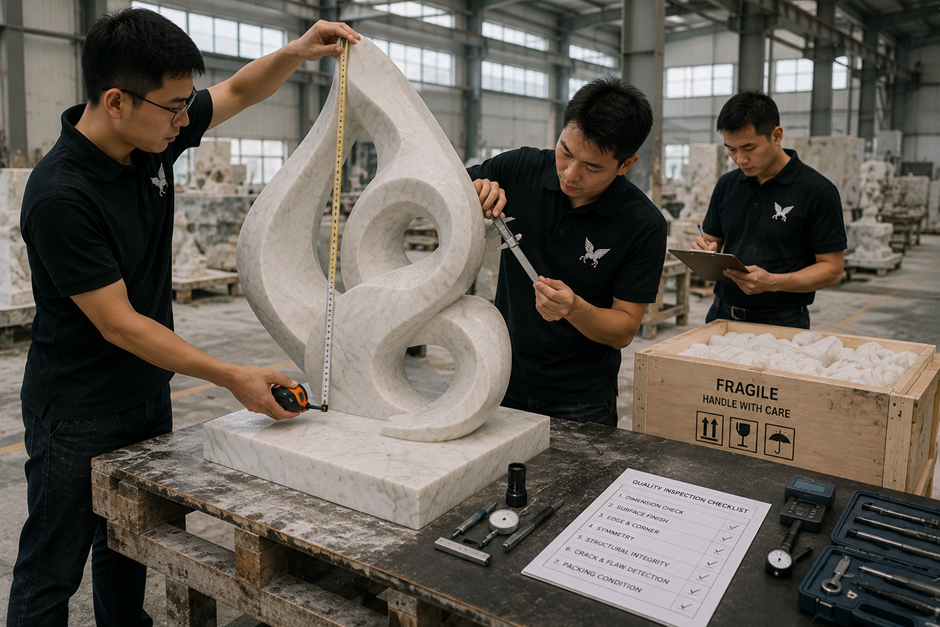
When evaluating suppliers, ask how quality is monitored throughout fabrication rather than only at the final inspection stage. At Pegasus, quality verification is performed at multiple production milestones, including material inspection, dimensional accuracy checks, carving reviews, surface finishing inspections, and final pre-shipment evaluations. This staged approach allows potential issues to be identified and resolved before production progresses to the next phase.
For larger commissions, Pegasus provides clients with production updates, progress photographs, and milestone reviews at key stages of fabrication. This collaborative review process allows architects, designers, and project stakeholders to verify important details before production moves forward, helping reduce the likelihood of unexpected revisions and ensuring the sculpture remains aligned with the approved design intent throughout manufacturing.
For complex commercial installations, it is also useful to confirm how the supplier reviews connection points, reinforcement details, and assembly sequences before shipment. These additional verification steps can improve installation efficiency while helping ensure that individual components align correctly before they arrive on site.
Rather than asking, “Do you have quality control?”, ask “Can you explain how quality is verified at each production stage, and what documentation or progress updates will be provided during fabrication?” The answer often provides a clearer understanding of the manufacturer’s processes, transparency, and commitment to delivering consistent quality.
Review Previous Projects Beyond Beautiful Photography
An impressive gallery of finished sculptures is valuable, but photographs alone rarely tell the full story of a manufacturer’s capabilities.
When evaluating a marble statue supplier, look for evidence that the company has successfully completed projects comparable to your own. Luxury hotels, resort developments, private estates, public plazas, and commercial properties each present different technical, engineering, and logistical requirements, making relevant project experience an important consideration.
Instead of focusing solely on artistic style, consider asking questions such as:
- Has the manufacturer completed projects of similar scale?
- Were the sculptures installed indoors or outdoors?
- Did the supplier coordinate with architects, engineers, and contractors?
- Were structural foundations or reinforcement systems required?
- Has the company managed international shipping and on-site installation for comparable projects?
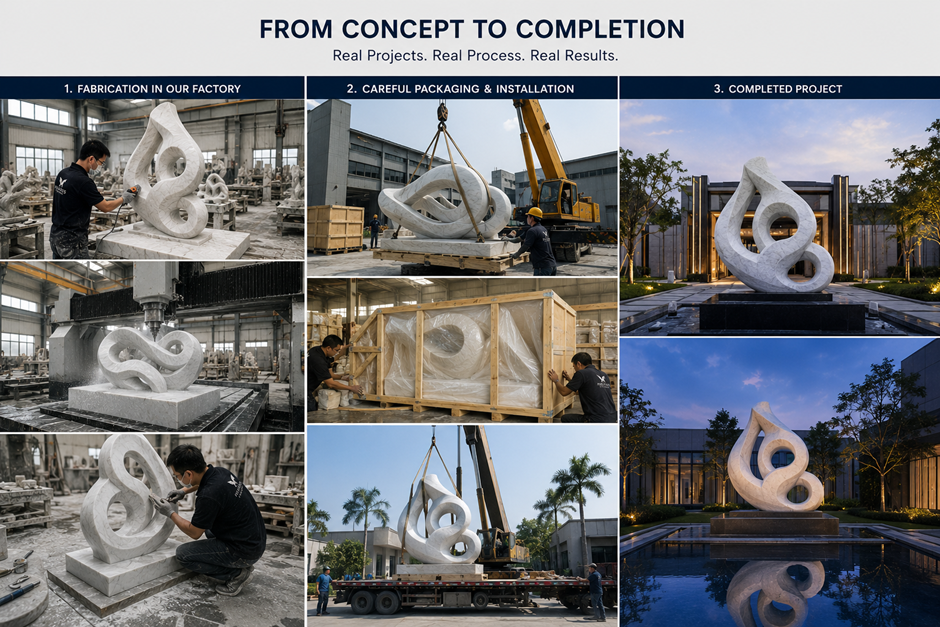
Reviewing a manufacturer’s completed marble sculpture projects can provide valuable insight into the diversity, complexity, and execution of previous commissions. However, don’t rely only on polished photographs of the finished artwork. Ask whether the manufacturer can also share production photographs, engineering drawings, quality inspection records, packaging methods, or installation images from completed projects. These materials often provide a clearer understanding of how the company manages complex projects from initial planning through final installation.
At Pegasus, commercial projects are documented throughout the manufacturing process, allowing clients to review important production milestones before delivery. Depending on the project, this may include digital design reviews, fabrication progress, quality inspections, protective packaging, and installation preparation. This level of transparency helps clients better understand how their project is progressing while supporting informed decisions throughout production.
A manufacturer with experience across different project types is often better equipped to anticipate technical challenges, coordinate with project stakeholders, and recommend practical solutions before fabrication begins. Beyond artistic craftsmanship, previous projects should demonstrate the manufacturer’s ability to manage engineering, logistics, communication, and installation as part of a complete project delivery process.
Evaluate Project Management, Communication, and International Experience
The success of a commercial sculpture project depends not only on craftsmanship but also on effective coordination throughout production.
Large developments typically involve multiple stakeholders, including architects, landscape designers, developers, engineers, contractors, and procurement teams. A manufacturer should be capable of communicating with each party while keeping production aligned with the overall construction schedule.
During supplier evaluation, ask how the company manages project communication.
For example:
- Will there be a dedicated project manager?
- How frequently are production updates provided?
- Are design approvals documented before fabrication begins?
- How are design revisions handled?
- What happens if site conditions change during production?
Clear communication helps reduce misunderstandings and supports smoother collaboration throughout the project lifecycle.
Companies with international project experience are also familiar with export documentation, customs procedures, shipping coordination, and installation scheduling. These capabilities become increasingly important when sculptures are destined for overseas luxury hotels, resorts, or commercial developments.
Learning more about a manufacturer’s experience and production capabilities can also help buyers understand how internal teams collaborate from design through final installation support.

Consider Logistics, Packaging, and Installation Support Early
One of the most common procurement mistakes is treating logistics as something to address after fabrication has been completed.
In reality, transportation planning should begin much earlier.
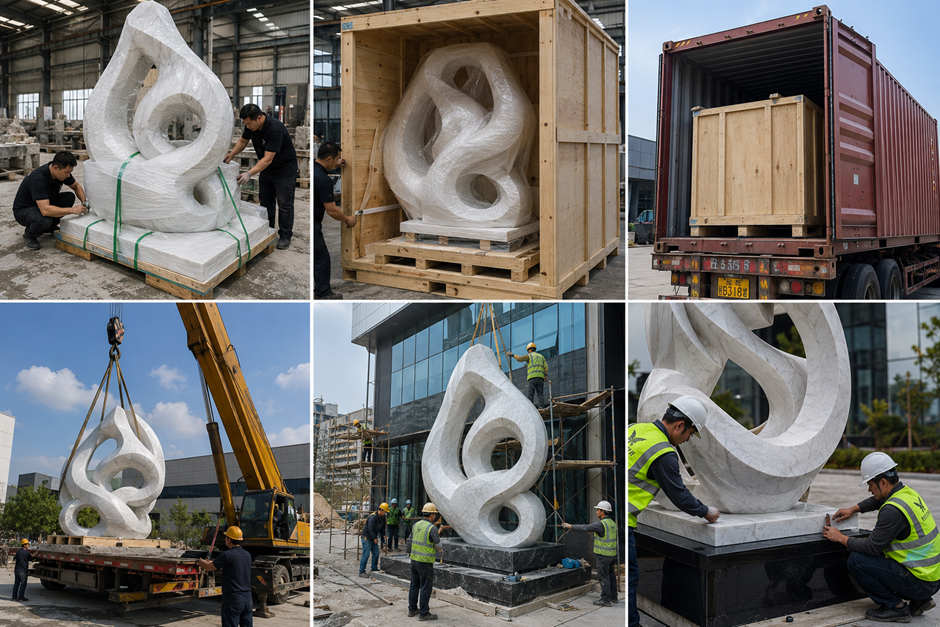
Large marble sculptures often require specialized packaging, lifting equipment, route planning, and installation coordination. Access restrictions, crane positioning, foundation preparation, and site logistics can all influence design decisions before production starts.
When comparing suppliers, ask how they approach:
- Protective packaging for international transport
- Container loading strategies
- Moisture and impact protection
- Customs documentation
- Site access planning
- Installation guidance
- Coordination with local contractors
A manufacturer that considers these practical requirements early is often able to reduce installation risks while helping the project remain on schedule.
This level of planning becomes especially valuable for luxury hotels and commercial developments operating within strict construction timelines, where delays can affect multiple contractors and project milestones.
Ask About Design Collaboration Rather Than Simple Production
The best manufacturers contribute more than fabrication capacity. They collaborate with clients to improve the overall project outcome.
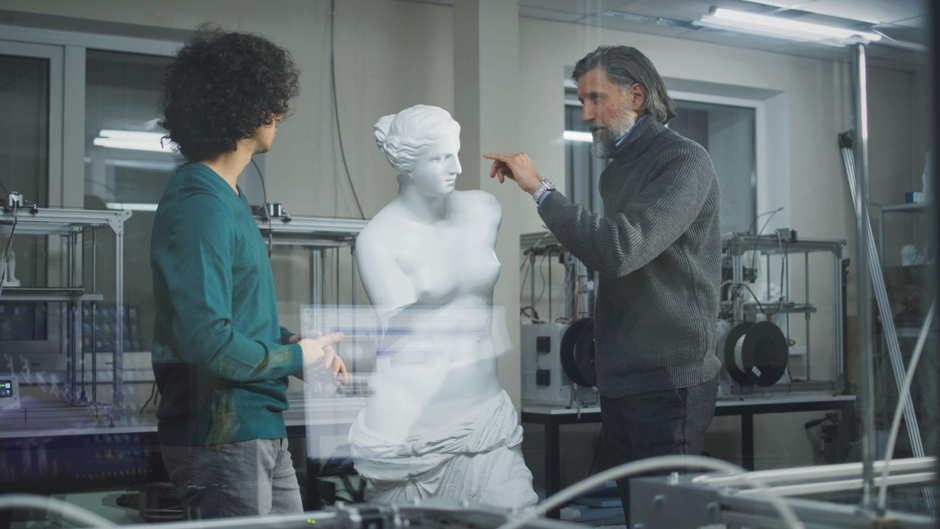
Early discussions may involve refining proportions, selecting appropriate marble varieties, reviewing structural considerations, or identifying installation challenges before production begins.
This collaborative approach is particularly valuable for contemporary marble sculpture projects that integrate closely with surrounding architecture or landscape design. Rather than simply reproducing a drawing, experienced manufacturers work alongside architects and designers to ensure the sculpture complements the intended environment while remaining practical to fabricate and install.
For buyers interested in how modern fabrication techniques support custom projects, our guide on how contemporary marble sculptures are produced provides additional insight into the planning and manufacturing process behind bespoke commissions.
A manufacturer willing to ask thoughtful questions before production often demonstrates the collaborative mindset required for successful long-term partnerships.
Real Project Example: Planning for Long-Term Success Beyond Fabrication
Selecting the right marble sculptures manufacturer is not simply about finding a company capable of carving stone. It is about choosing a manufacturing partner that understands the broader requirements of a commercial project and collaborates with stakeholders throughout the production journey.
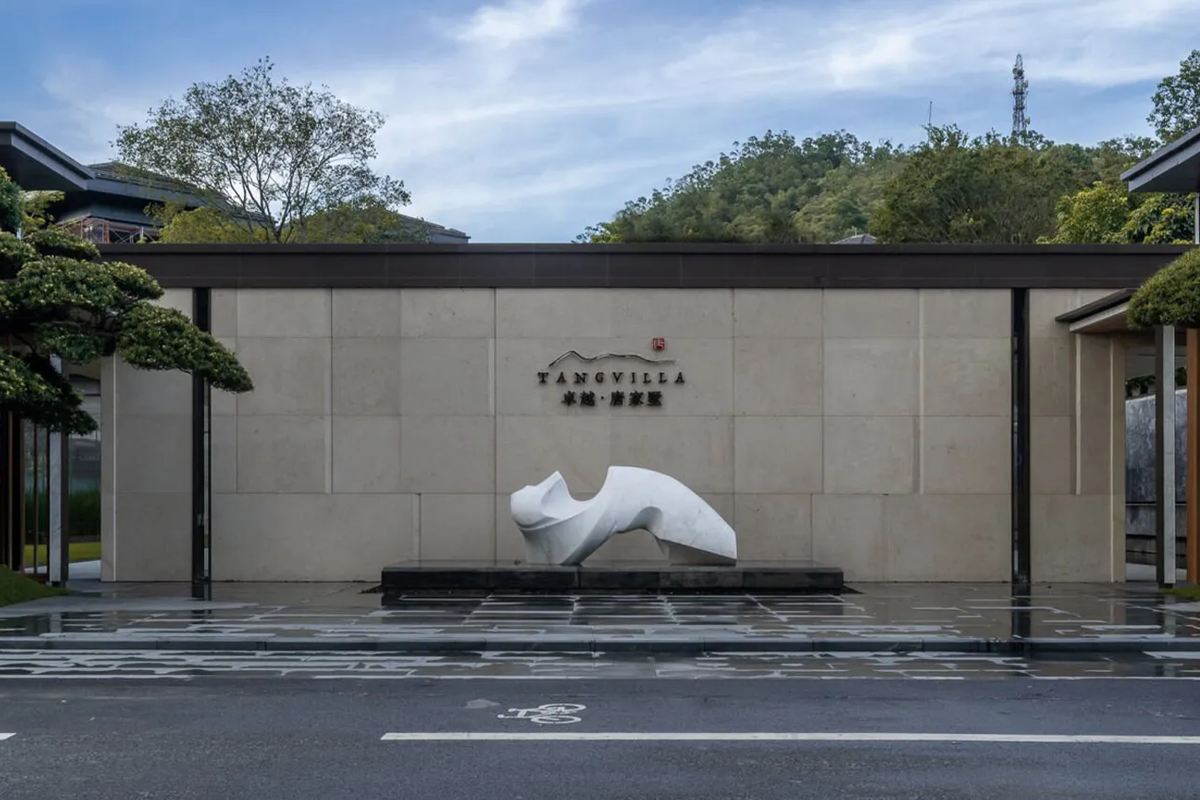
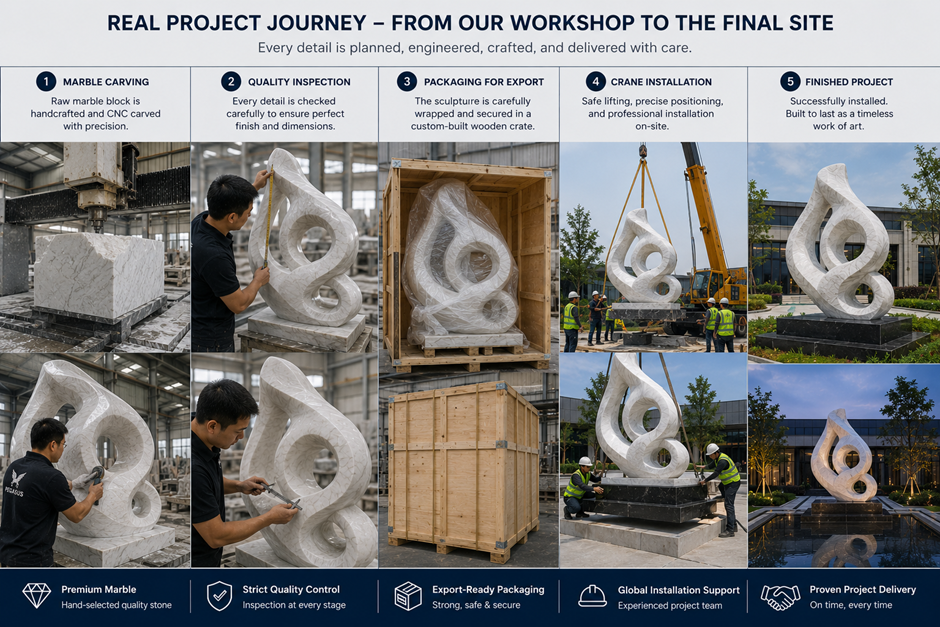
One recent Pegasus project involved producing a custom marble sculpture for a luxury commercial development where architectural integration, structural engineering, transportation logistics, and installation planning all required careful coordination before fabrication began.
Before production began, Pegasus worked with the client to review installation conditions, transportation access, and structural considerations so that manufacturing decisions reflected the realities of the final installation environment.
Following design approval, the project progressed through digital modeling, material selection, CNC pre-shaping, skilled hand finishing, multiple quality inspections, protective packaging, and coordinated delivery planning. Throughout the process, the production team worked closely with the client to ensure the sculpture aligned with the project’s architectural vision while remaining practical to transport and install.
This early coordination helped the project move more smoothly from manufacturing to final installation while reducing the likelihood of unexpected adjustments during on-site installation.
Although every custom commission presents unique challenges, this collaborative approach demonstrates how experienced manufacturers contribute far beyond the production workshop, helping architects, developers, and project teams manage risk throughout the lifecycle of a sculpture project.
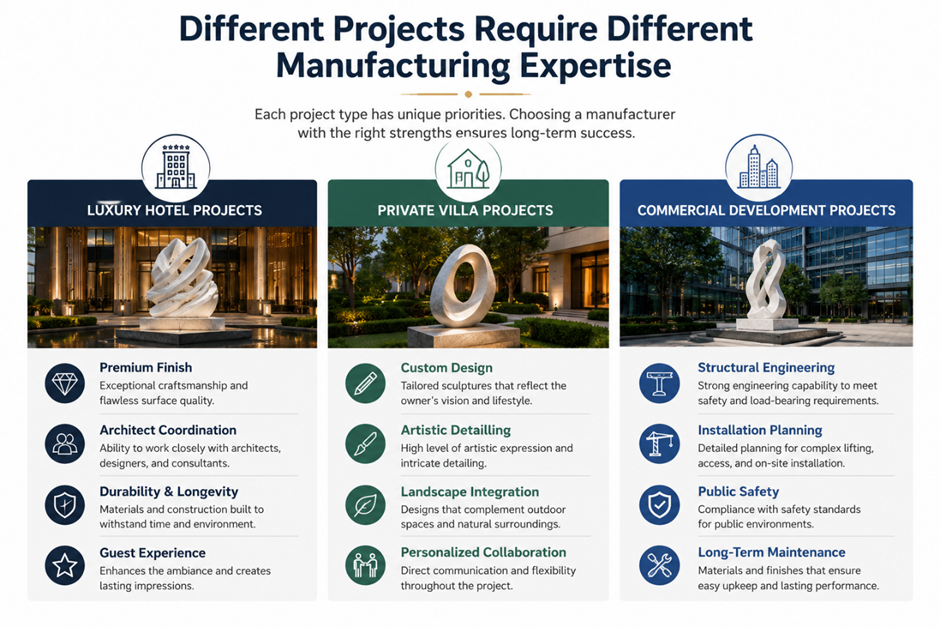
Do Different Projects Require Different Manufacturing Expertise?
Although the supplier evaluation process is similar across most projects, the priorities often vary depending on the type of development.
| Project Type | Supplier Priorities |
| Luxury Hotels | Consistent craftsmanship, premium finishes, durability, coordination with architects and interior designers. |
| Private Villas | Design customization, artistic detailing, landscape integration, personalized collaboration. |
| Commercial Spaces | Structural engineering, public safety, installation planning, long-term maintenance, logistics coordination. |
Understanding these differences helps buyers evaluate suppliers based on the specific needs of their project rather than relying on price or portfolio alone.
Buyers should also discuss these project-specific requirements during the early consultation stage so the manufacturer can recommend suitable materials, engineering solutions, and production methods before fabrication begins.
A Practical Supplier Evaluation Checklist
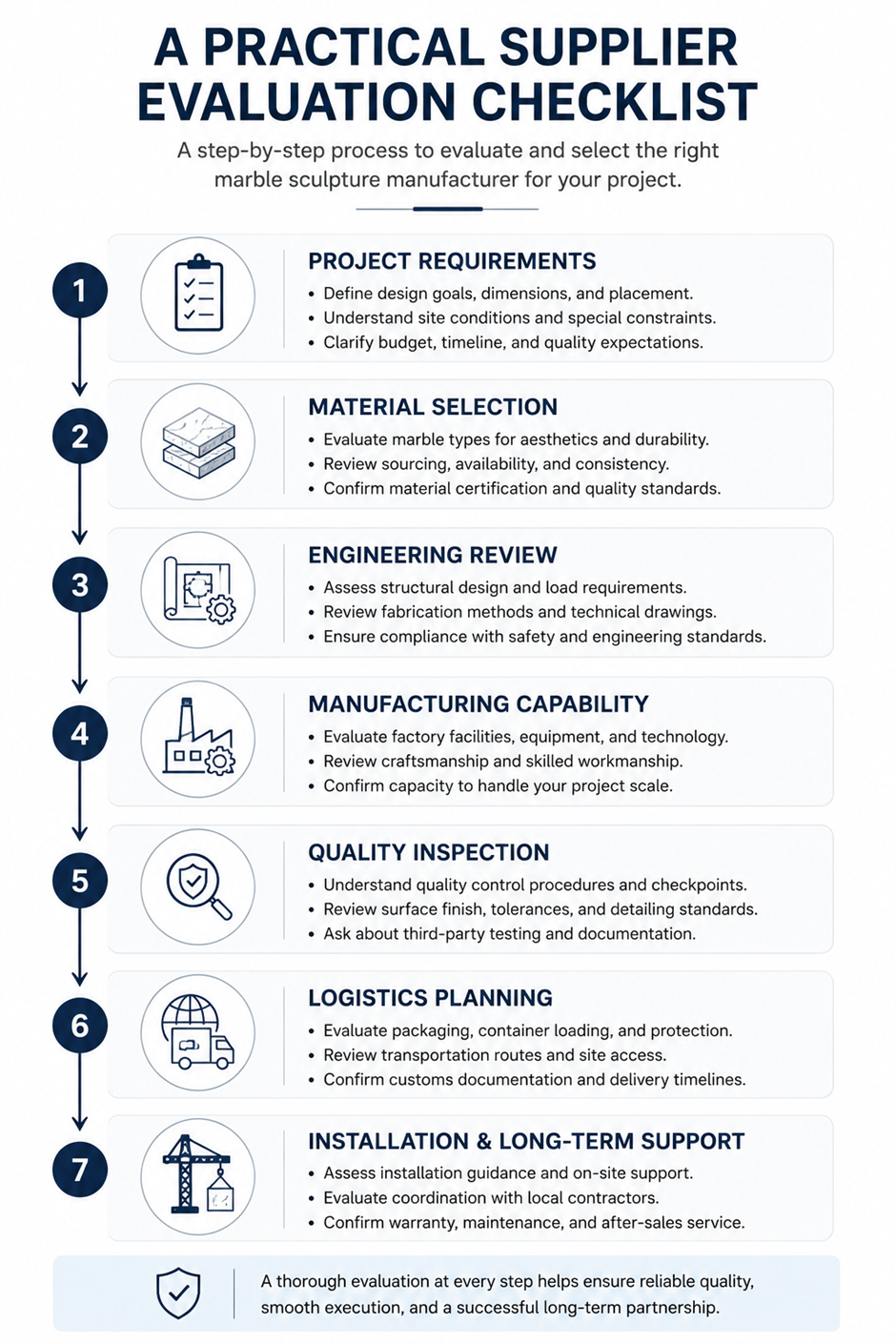
Comparing quotations alone rarely identifies the best manufacturing partner. Before making a final decision, consider evaluating each supplier against the following criteria.
| Evaluation Area | What to Look For |
| Project Experience | Luxury hotels, villas, commercial developments, public spaces |
| Marble Expertise | Material sourcing, stone selection, finish recommendations |
| Engineering Capability | Structural planning, reinforcement, digital modeling |
| Manufacturing Process | CNC precision combined with skilled hand craftsmanship |
| Quality Control | Documented inspections throughout production |
| Communication | Dedicated project management and regular progress updates |
| Logistics | Export packaging, international shipping, installation planning |
| Portfolio | Completed projects similar in scale and complexity |
| Collaboration | Ability to work with architects, designers, and contractors |
| Long-Term Support | Guidance during installation and post-delivery assistance |
Rather than selecting the lowest quotation, many commercial buyers prioritize overall project reliability. A manufacturer capable of anticipating technical challenges and supporting the project from planning through installation often delivers greater long-term value than one competing primarily on price.
Why Long-Term Partnerships Often Deliver Better Results
Many hospitality groups, developers, and architectural firms prefer to establish ongoing relationships with trusted manufacturers instead of sourcing a new supplier for every project.
As manufacturers become familiar with a client’s design preferences, quality expectations, approval processes, and project standards, collaboration typically becomes more efficient. Lessons learned from previous installations can be applied to future commissions, improving coordination while reducing unnecessary revisions.
This continuity is particularly valuable for organizations developing multiple hotels, residential communities, commercial campuses, or public spaces where maintaining a consistent design language is important.
Rather than functioning as a one-time vendor, an experienced manufacturer becomes a long-term project partner capable of supporting future developments as design ambitions evolve.
Conclusion
Choosing the right marble sculptures manufacturer requires more than comparing prices or reviewing attractive portfolios. Successful luxury projects depend on selecting a manufacturing partner with the technical expertise, production capability, communication processes, and project management experience needed to deliver consistent results from concept through installation.
Whether your project involves a boutique hotel, a private villa, or a large commercial development, evaluating suppliers based on material expertise, engineering capability, quality assurance, logistics planning, and collaborative communication helps reduce project risks while improving long-term outcomes.
For buyers exploring custom marble sculpture solutions, reviewing a manufacturer’s custom marble sculpture capabilities and previous project experience can provide valuable insight into their capabilities before beginning the design and procurement process.
If you’re planning a custom marble sculpture for a hospitality, residential, or commercial project, contact our sculpture specialists to discuss your requirements and explore the most suitable manufacturing approach for your development.
Frequently Asked Questions
How do I choose the right marble sculptures manufacturer?
Look beyond pricing and evaluate the manufacturer’s experience, marble sourcing, engineering capability, quality control process, project portfolio, communication practices, and installation support. A supplier with proven experience in projects similar to yours is generally better positioned to manage complex commercial commissions.
What should I ask a marble statue supplier before placing an order?
Ask about previous projects, marble sourcing, production methods, structural reinforcement, quality inspections, packaging, shipping, installation coordination, and project management. These discussions provide valuable insight into how the supplier approaches complex custom projects.
Why is project management important for custom marble sculptures?
Large sculpture projects often involve architects, engineers, contractors, designers, and developers. Effective project management helps coordinate approvals, production schedules, logistics, and installation planning, reducing the likelihood of delays or unexpected modifications.
Are contemporary marble sculptures suitable for outdoor commercial spaces?
Yes, when designed appropriately and manufactured using suitable marble with proper engineering and finishing techniques, contemporary marble sculpture can perform successfully in hotels, commercial plazas, resorts, and landscaped public environments. Material selection and environmental conditions should always be considered during the planning stage.
Should I choose a local supplier or an international manufacturer?
The best choice depends on the project’s requirements rather than geography alone. Many experienced international manufacturers have established processes for export packaging, customs documentation, and installation coordination, enabling them to successfully deliver projects worldwide.
How early should a manufacturer be involved in the project?
Ideally, manufacturers should be involved during the early design and planning stages. Early collaboration allows potential structural, material, transportation, and installation considerations to be addressed before fabrication begins, helping improve coordination throughout the project.