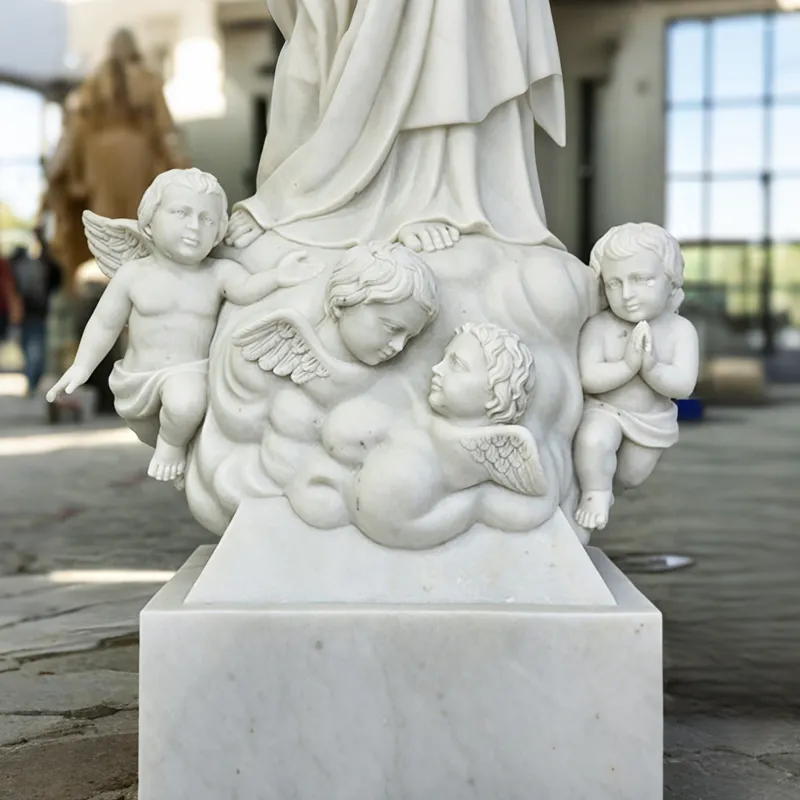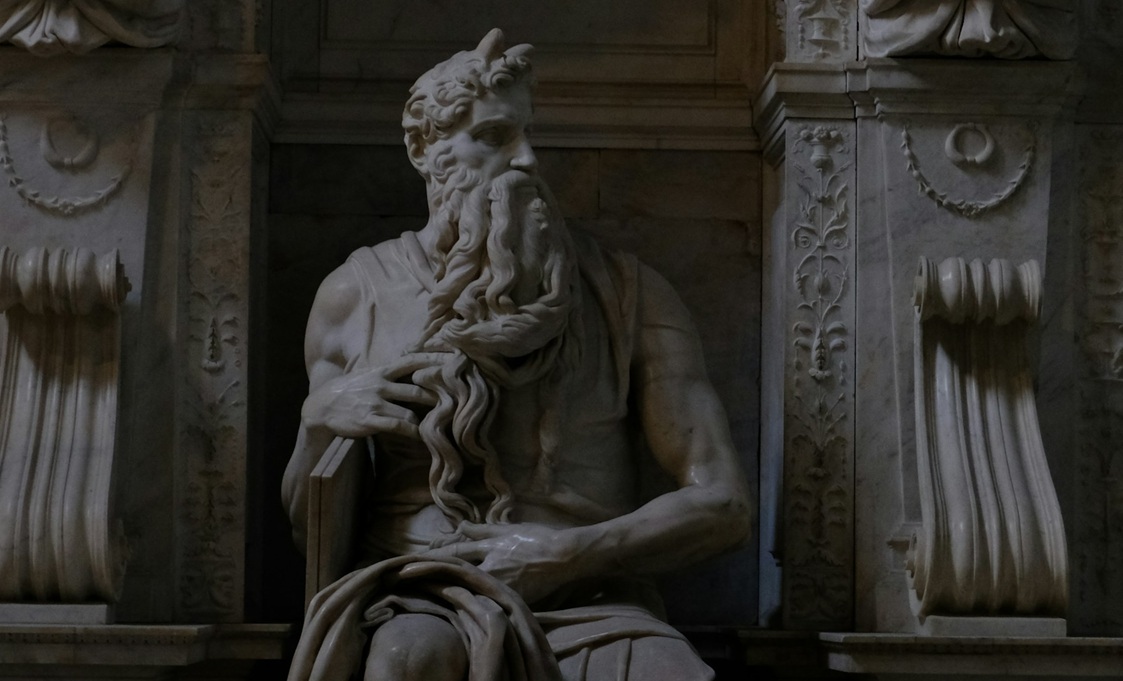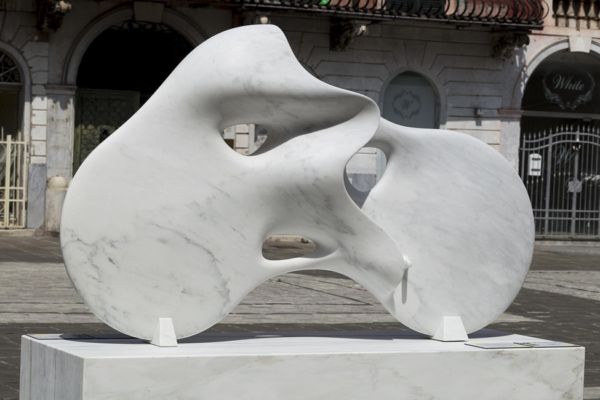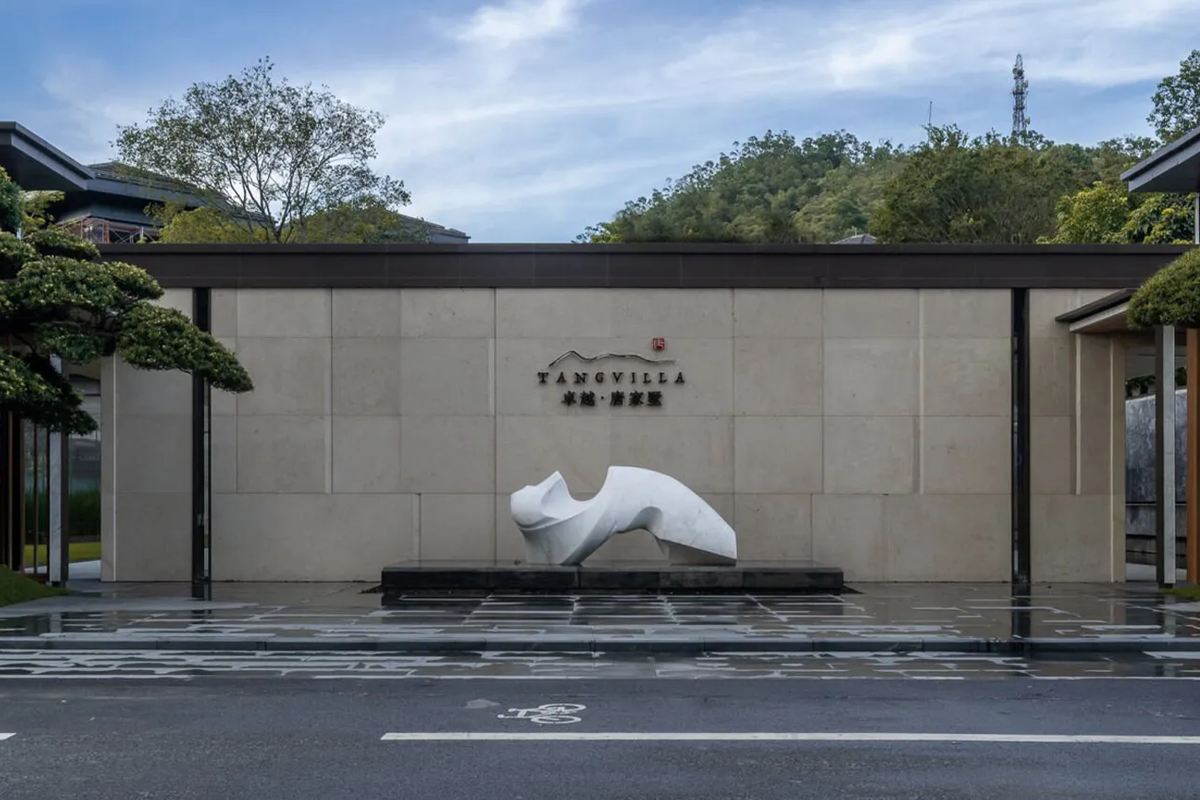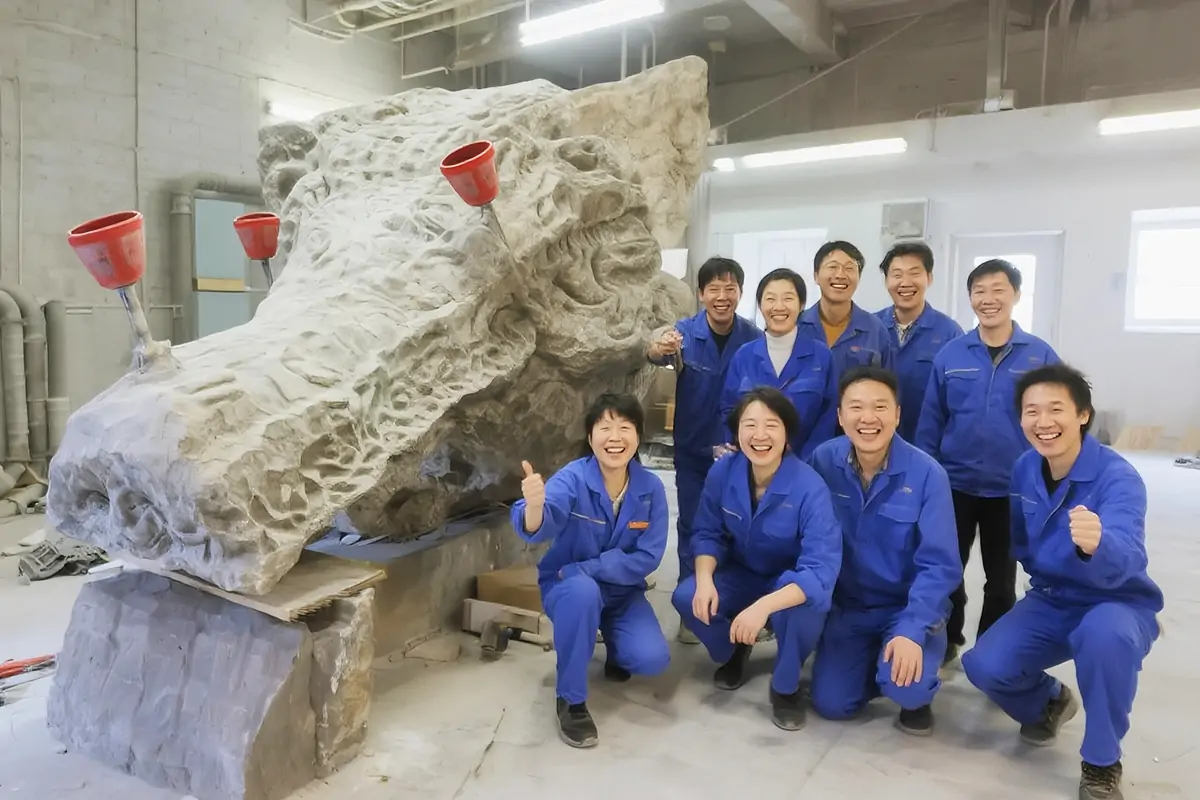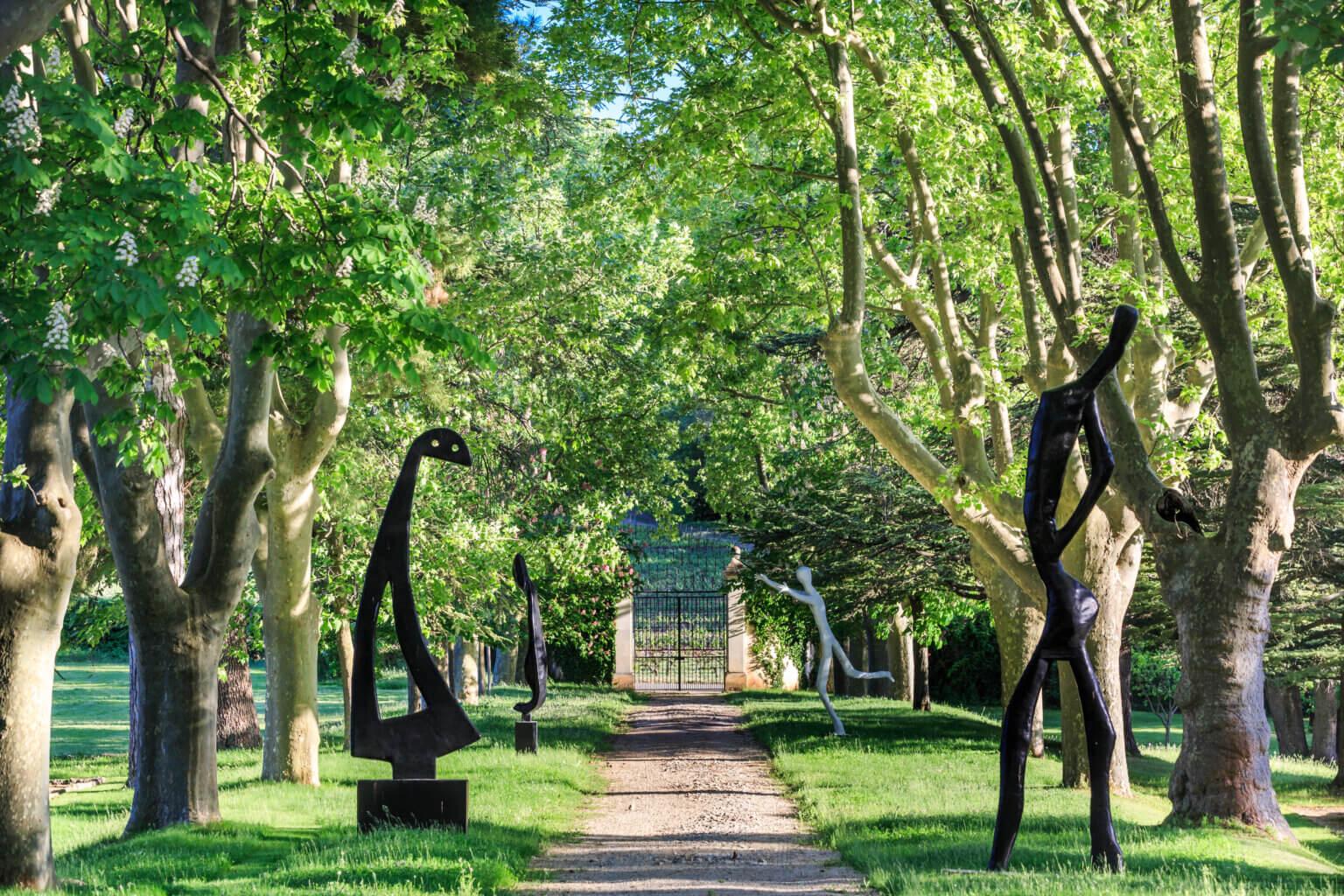
A master planned garden treats garden sculptures as one layer of the same masterplan that governs grading, irrigation, hardscape, and planting – not a decorative addition bolted on once those drawings are finished. The strongest results come from choosing focal points before beds are dug, sightlines are set, and paving is laid, so the artwork, the planting, and the circulation mature together as parts of one design system. Pegasus works this way by default: sculpture placement, material specification, and installation sequencing are folded into the same masterplanning conversation as the landscape architect’s grading and planting drawings, not run as a separate procurement track after the hardscape is locked. Get the sequencing wrong, and even a beautifully cast piece ends up fighting the landscape instead of completing it.
Why Should Sculpture Placement Be Decided Before Planting Begins?
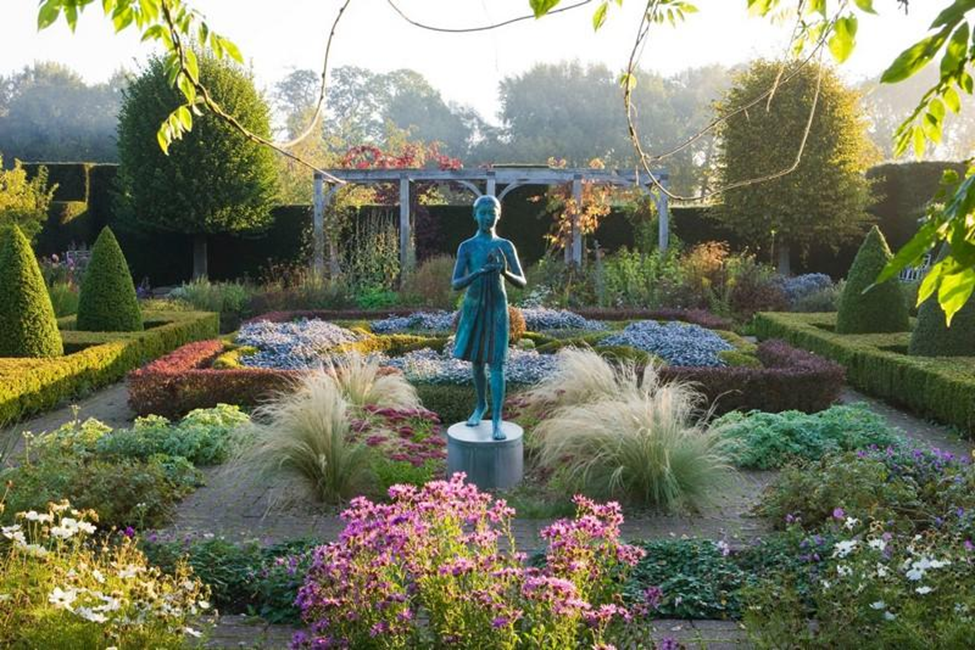
Most planning mistakes trace back to one decision: choosing the plant palette first and hoping a sculpture will slot in later. Mature trees, hedging, and perennial borders take years to fill out, and a piece positioned against today’s open sightline can be swallowed by foliage within three growing seasons – and by the time the screening is obvious, correcting it means relocating a set foundation, not just replanting around it. Landscape architects working on resort grounds, estate gardens, and civic plazas get better long-term results with garden sculptures by mapping mature canopy height, foliage density, and eventual root spread before a plinth location is confirmed.
At Pegasus, this is where design conversations start. Before any concept drawing is finalised, the team reviews the planting masterplan alongside sightlines and irrigation zones so the eventual sculpture sits in a space that will still read clearly once the border has matured – engineering placement logic into a landscape that keeps changing for a decade after installation.
How Do Pathways and Circulation Shape Sculpture Focal Points?
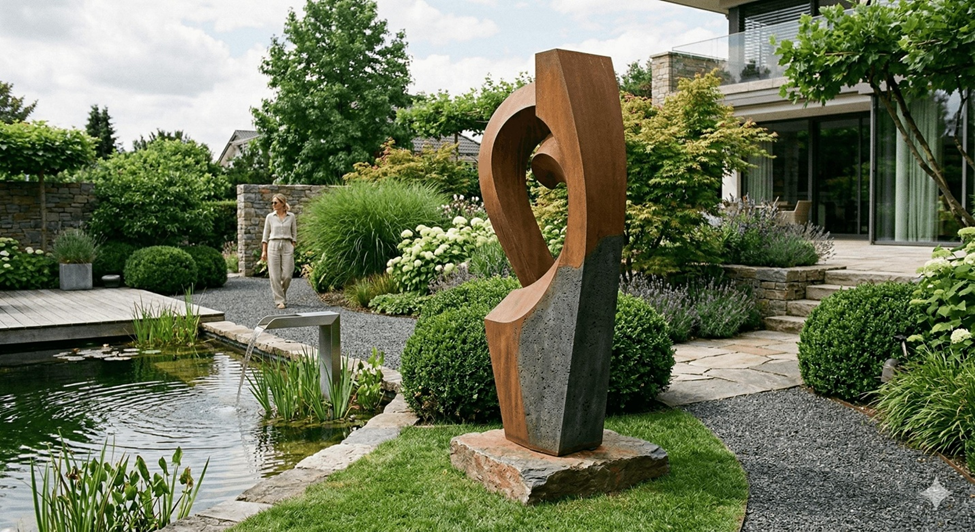
Circulation decides how a visitor actually encounters a piece, and that encounter should be designed deliberately rather than left to chance.
- Approach angle– a piece seen head-on from a straight path reads differently than one revealed gradually around a curve
- Pause points– junctions, seating nodes, and terrace edges are natural locations for a focal sculpture because visitors already slow down there
- Sightline distance– a courtyard piece needs close-range detail; a plaza centrepiece needs a strong silhouette from 30 metres or more
- Multiple viewpoints–outdoor sculptures are rarely seen from one angle, so proportion and finish must hold up from the path, the terrace, and any elevated viewpoint
A sculpture designed for close viewing loses its impact when circulation pushes visitors 20 metres away – and by then the foundation is already in the ground.
How Does Visual Hierarchy Keep Multiple Focal Points From Competing?
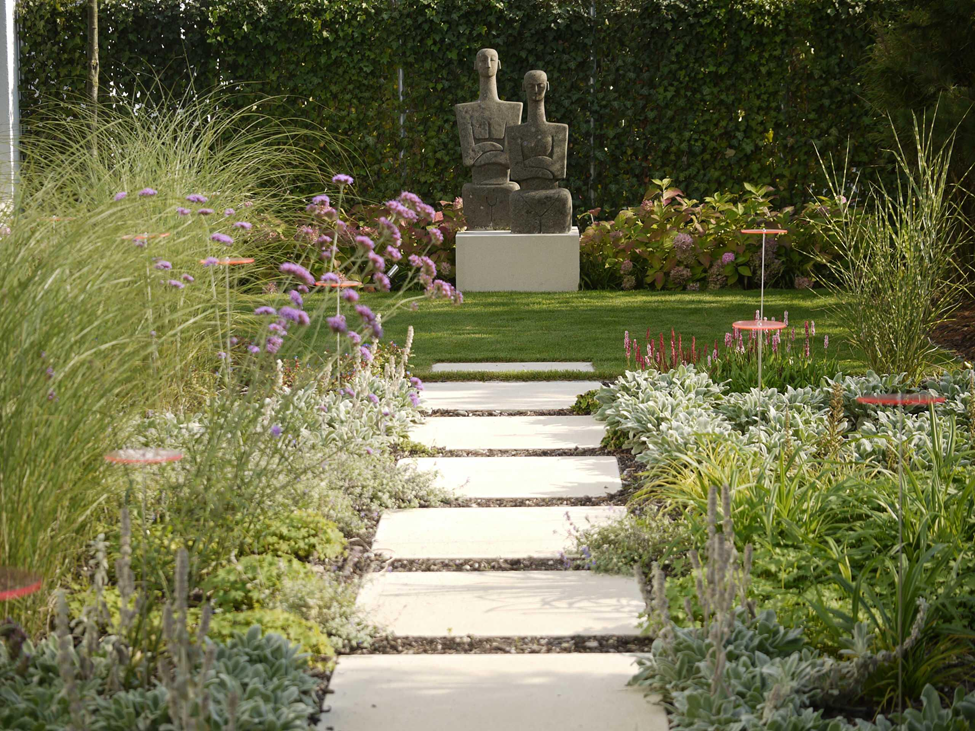
A masterplan rarely calls for a single sculpture. Resorts, corporate campuses, and estate gardens usually place several pieces across a site, and without a deliberate hierarchy, they compete rather than guide. One piece needs to read as the primary focal point – larger in scale, positioned on the main sightline, and finished to hold attention from the greatest viewing distance on the site. Secondary pieces should be scaled down, sited off the main axis, or reserved for closer-range encounters at a courtyard or path junction, so a visitor’s eye is led from entry to the hero piece rather than pulled in several directions at once.
Getting this wrong is common on phased developments, where sculptures are commissioned in separate stages by different teams: a striking piece added in phase two can accidentally out-compete the phase-one centrepiece if scale and material weight aren’t planned against each other from the start. At Pegasus, multi-piece commissions are reviewed against the full site plan rather than approved sculpture by sculpture, so a garden’s visual hierarchy holds up as more work is added over time.
How Do Garden Sculptures Perform Through Seasonal Change?
A garden is never static, and a piece chosen only for how the space looks in spring can feel stranded once the planting dies back in winter.
- Spring and summer– dense foliage frames a sculpture but also hides low-profile work almost entirely
- Autumn– falling leaves shift ground-level sightlines and can expose a piece previously screened, changing its visual weight within weeks
- Winter– bare structure puts sculptural form and finish under the most scrutiny, which is exactly when a well-proportioned bronze or metal piece earns its place as a genuine year-round focal point
A design that only works against full summer planting is an incomplete masterplan.
Bronze, Stone or Metal – Which Material Suits a Long-Term Garden Masterplan?
Material choice affects patina development, maintenance load, and how a piece ages against changing foliage colour, so it deserves the same scrutiny as placement – and the right answer depends on where the sculpture actually sits, not just how it looks in a rendering. Because material grade and placement interact – a coastal courtyard chosen as a focal point also dictates the alloy that can survive there – this decision belongs in the same masterplanning pass as siting and circulation, not a separate specification step tackled after the location is already fixed.
| Site Condition | Main Risk to Manage | Recommended Specification | Why It Matters |
| Coastal or waterfront gardens | Chloride pitting corrosion from salt air | 316L marine-grade stainless steel, or a waxed bronze alloy | Standard 304 stainless can show visible corrosion within a few seasons near salt spray; 316L’s added molybdenum resists chloride pitting for decades |
| Dense urban courtyards and plazas | Airborne pollutants and acidic rainfall | Bronze with a maintained patina, or sealed stone | Pollution can disrupt even patina formation and dull stone finishes faster than in cleaner air, so a slightly tighter maintenance schedule should be budgeted in |
| High-humidity or freeze-thaw climates | Moisture absorption, staining, cracking | Denser stone grade, or a sealed/low-porosity finish | Porous stone that absorbs moisture is prone to internal staining, efflorescence, and freeze-thaw cracking over cold winters |
| Covered courtyards and semi-enclosed atriums | Trapped condensation at the base plate | Independent drainage path in the anchoring detail | Reduced airflow lets moisture sit against the base longer than on a fully open site, accelerating localised corrosion |
| Phased or large-scale developments with weight/budget limits | Crane access, transport cost, multi-piece budget | FRP/fiberglass with a UV-stable gelcoat | A large-scale FRP piece can be a fraction of the fabrication cost and weight of an equivalent cast bronze or welded stainless form |
Grade matters as much as material family. Standard 304 stainless steel lacks the molybdenum content that gives 316L its resistance to chloride pitting, so a piece specified in 304 for a coastal resort can show visible corrosion within a few years, while the same form in 316L is built for decades of salt-air exposure. This is the kind of substitution risk a buyer often only discovers after installation, once a supplier has quietly downgraded the specification to protect margin.
FRP/fiberglass earns its place in a serious masterplan too, particularly where budget or transport weight is the constraint. A large-scale FRP piece can be a fraction of the fabrication cost and weight of an equivalent cast bronze or welded stainless form, which matters on sites with limited crane access or where several sculptures are needed across a phased development. The trade-off is a shorter service life and a UV-stable gelcoat or automotive-grade finish that needs recoating on a five-to-eight-year cycle to avoid chalking – a maintenance line item that should be budgeted into the project from day one rather than discovered later.
Well-cast bronze garden statues remain the reference point for permanence in masterplan work: with the right alloy and a maintained patina, outdoor bronze has been documented lasting well beyond a century – the exact horizon most landscape architects plan against. At Pegasus, material selection is an engineering decision, not a purely aesthetic one: alloy grade, wall thickness, and finish are matched to the site’s climate and budget before casting begins, using the same bronze fabrication expertise applied across the wider garden sculptures portfolio.

How Do Coastal, Urban and High-Humidity Sites Change the Material Decision?
The same design can need three different specifications depending on where it sits, and getting this wrong is one of the most expensive mistakes to correct after installation.
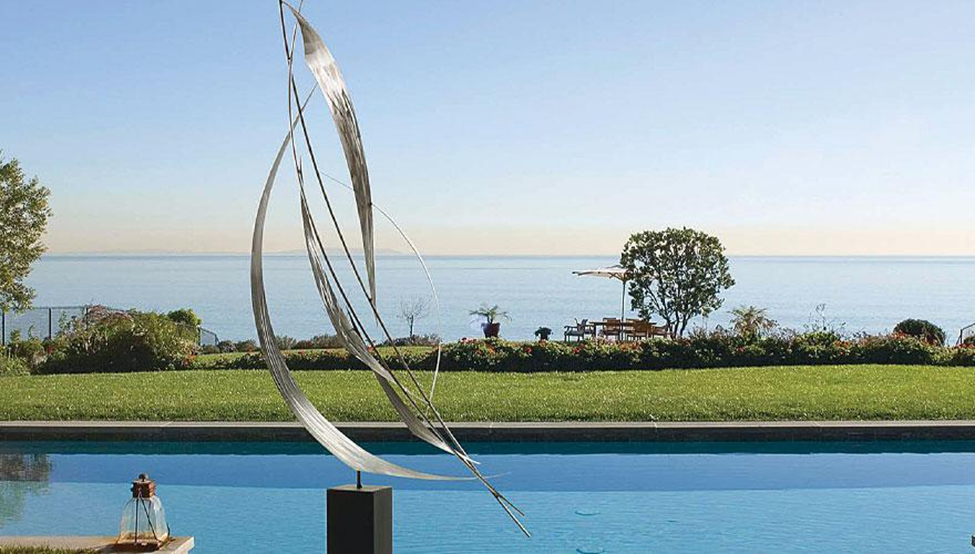
- Coastal and waterfront sites– salt-laden air accelerates pitting corrosion in standard 304 stainless within a few seasons; 316L or a properly waxed bronze alloy is the safer specification, and drainage detailing should prevent standing saltwater from concentrating around welds and joints
- Dense urban environments– airborne pollutants and acidic rainfall can disrupt bronze patina formation and dull stone finishes faster than in cleaner air, so a slightly heavier or more frequent maintenance schedule should be built into the facilities plan from the outset
- High-humidity climates– porous stone absorbs moisture, which can lead to internal staining, efflorescence, and freeze-thaw cracking in climates with cold winters; a denser stone grade or a sealed finish reduces this risk
- Indoor-to-outdoor transition zones (covered courtyards, semi-enclosed atriums) – condensation and reduced airflow can trap moisture against a base plate longer than in fully open sites, so anchoring details need a drainage path independent of the surrounding paving
At Pegasus, these environmental factors are reviewed against the specific installation address before a material grade is confirmed, rather than applying a single default specification across every regional project.
What Should Landscape Architects Confirm Before Commissioning Garden Sculptures?
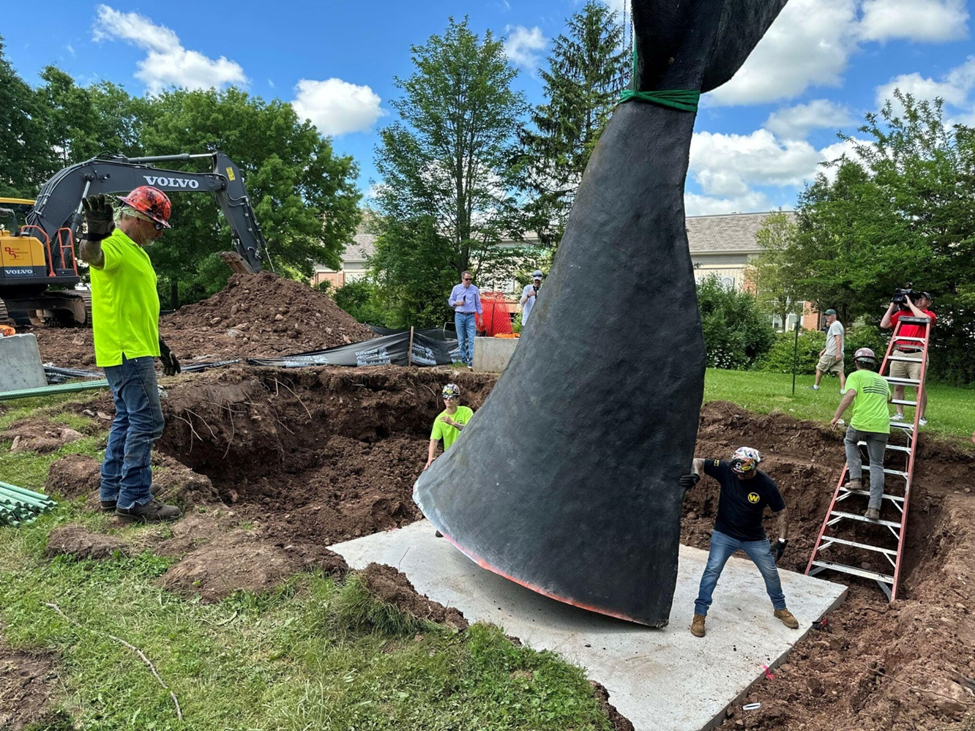
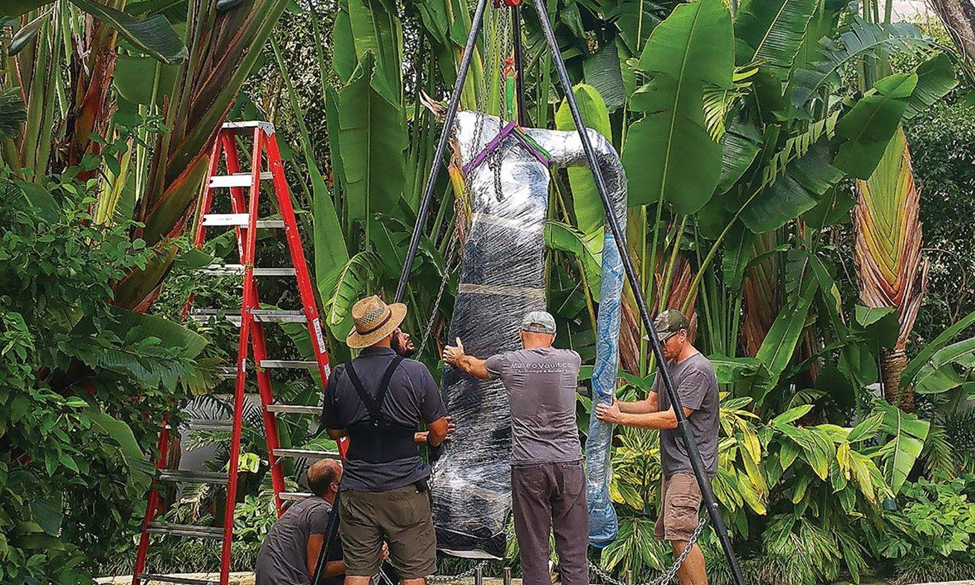
A masterplan is only as strong as the coordination behind it, and most risk sits in the handoff between design intent and physical delivery. Before fabrication starts, confirm structural anchoring against the finished planting and paving plan, wind and seismic load calculations sized to the site’s actual exposure category rather than a generic assumption, and a finish specification matched to the local climate. Foundation and anchor-bolt layouts should be locked to the fabrication drawings before concrete is poured – a discrepancy of even a few millimetres between an as-built foundation and a cast base plate can mean re-drilling on site or, in the worst case, a delayed installation while a new plate is fabricated. It’s equally worth confirming crating dimensions, lifting points, and site access, since these affect whether an oversized garden sculptures installation reaches its plinth without last-minute compromise.
Buyers should also ask how much routine maintenance the specification actually requires and what it will cost over a ten-year horizon: a bronze piece needing a wax reseal every 12-24 months carries a very different long-term facilities budget than an FRP piece needing a full recoat every five to eight years, even though the upfront fabrication cost runs in the opposite direction. Comparing only the initial quotation, without this lifecycle view, is one of the most common sources of budget surprise on landscape projects.
This is where an integrated manufacturing partner earns its value. At Pegasus, engineering review, casting or fabrication, quality inspection, protective packaging, international shipping, and installation coordination are managed as one connected workflow rather than handed between separate vendors – which is what prevents the two most common late-stage failures: a foundation poured before final dimensions were locked, and a finish that reacts differently once installed against live planting. Architects planning a multi-season commission can review completed work through the Pegasus project portfolio before finalising a brief.
Frequently Asked Questions
How far in advance should a garden sculpture be commissioned relative to planting?
Ideally during the same design phase, since foundation location, sightlines, and root spread all interact and are far cheaper to adjust on paper than after installation.
Do outdoor sculptures need different engineering for garden sites than for plazas?
Yes – softer ground, irrigation lines, and root systems affect foundation design, so garden sites typically need bespoke anchoring rather than a standard plaza footing.
Which material needs the least seasonal maintenance in a planted garden?
Bronze and 316L stainless steel generally need the least intervention – a wax reseal every 12–24 months is typical for bronze. Stone needs periodic sealing, and FRP/fiberglass needs a UV-protective recoat roughly every five to eight years despite its much lower upfront cost.
Is FRP/fiberglass a realistic option for a serious landscape project, or only for temporary displays?
It’s a legitimate specification for permanent work, particularly on large-scale forms or multi-piece commissions where weight and fabrication cost matter, provided the gelcoat or finish is rated for outdoor UV exposure and the recoat cycle is budgeted into long-term maintenance.
How does Pegasus support landscape architects working across multiple sites?
Through one coordinated process covering design review, engineering, fabrication, quality control, packaging, and installation guidance, keeping specifications consistent across a phased masterplan.
Bringing the Masterplan Together
Garden sculpture masterplanning works best when placement, planting, and pathways are designed as one connected system rather than three separate decisions made at different stages. A focal point chosen with mature canopy height, seasonal change, and circulation already factored in will still feel intentional five, ten, or fifty years later – the standard most landscape architects and estate developers are actually planning against.
For estates and resorts weighing permanence above all else, well-cast bronze garden statues remain the benchmark, since a maintained patina can outlast several generations of planting redesign. If you’re mapping focal points for an upcoming landscape project, Pegasus can review site conditions, planting plans, and material options early enough to shape the outcome. Contact the Pegasus team to discuss a garden sculptures masterplan before the first bed is dug.