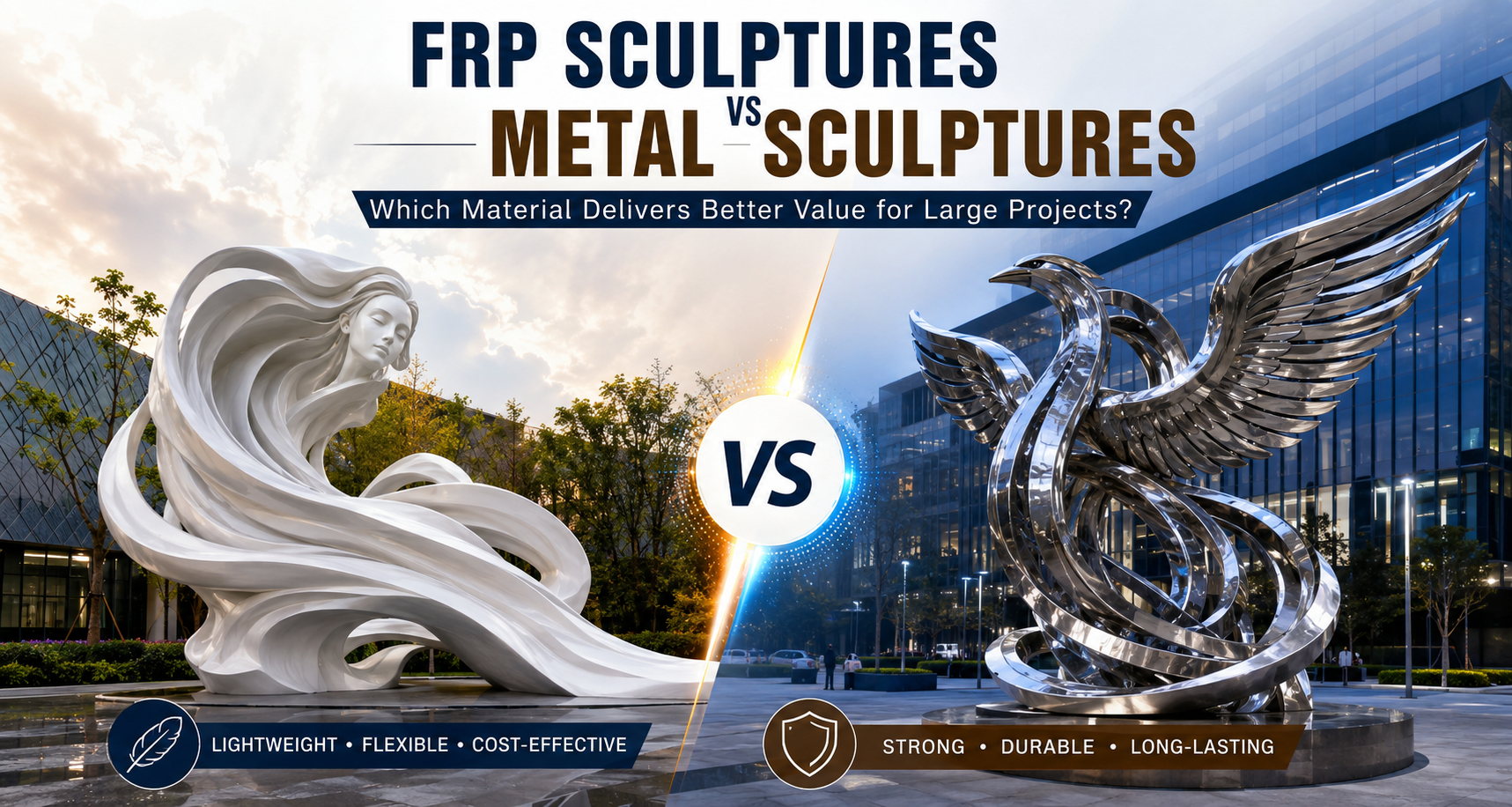
When planning a large sculpture for a public space, luxury hotel, commercial development, theme park, or corporate headquarters, one of the earliest decisions is choosing the right material. While both FRP sculptures and metal sculptures are widely used in commercial projects, each offers different advantages depending on the project’s design requirements, structural needs, budget, installation conditions, and long-term maintenance expectations.
For architects, developers, procurement teams, and project managers, selecting a material is not simply about appearance. The choice directly affects manufacturing complexity, transportation, installation methods, project timelines, lifecycle costs, and overall return on investment.
At Pegasus, material selection begins with understanding the project’s technical and commercial requirements rather than recommending a single material for every application. Engineering teams evaluate factors such as sculpture size, installation environment, structural loading, design complexity, maintenance expectations, and budget before recommending whether fiberglass or metal will provide the best long-term value.
This guide compares fiberglass sculptures and metal sculptures from a commercial project perspective, helping buyers understand where each material performs best and how experienced fiberglass sculpture manufacturers evaluate material selection before production begins.
Why Material Selection Should Be Made Before Design Is Finalised
Many buyers begin by approving a sculpture concept before deciding which material will be used. In practice, experienced manufacturers often recommend selecting the material much earlier because it influences engineering, fabrication methods, production schedules, transportation planning, installation requirements, and long-term maintenance.
A design that performs exceptionally well in fiberglass may become unnecessarily expensive in metal, while a sculpture requiring high structural strength or premium architectural finishes may benefit from stainless steel or bronze rather than FRP. Understanding these differences during the planning stage helps avoid costly redesigns later in the project.
At Pegasus, engineering and production teams review each concept before manufacturing begins. Factors such as structural requirements, environmental exposure, installation conditions, expected service life, and client budget are evaluated together so the recommended material supports both the artistic vision and the commercial objectives of the project.
For large commercial developments, selecting the right material at the beginning often reduces manufacturing risks while improving project coordination across engineering, production, logistics, and installation teams.
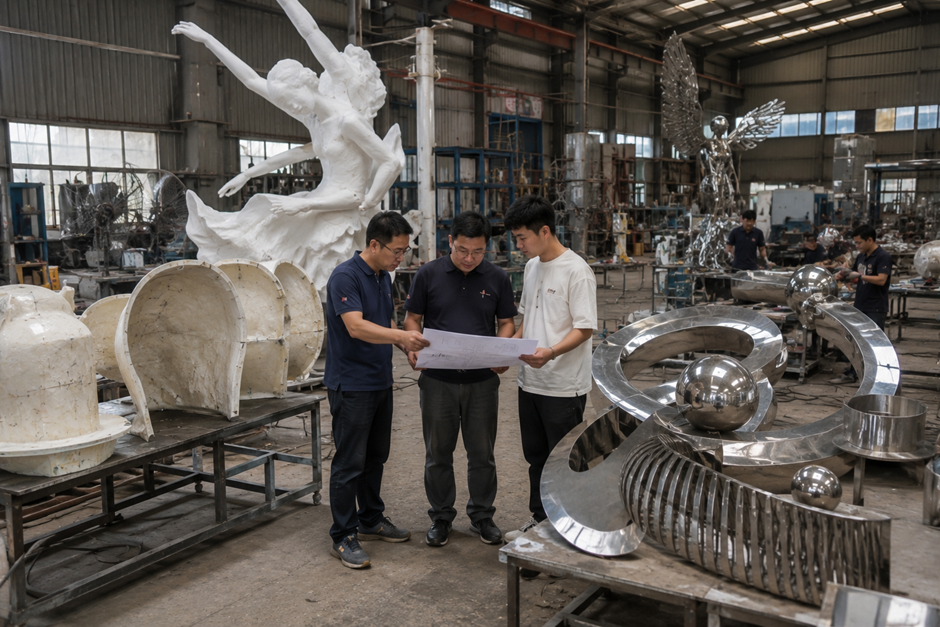
Comparing FRP and Metal from a Commercial Project Perspective
Rather than asking which material is “better,” commercial buyers should ask which material delivers the greatest value for the specific project.
| Evaluation Factor | FRP Sculptures | Metal Sculptures |
| Initial manufacturing cost | Generally lower for large decorative projects | Higher due to material and fabrication requirements |
| Weight | Lightweight and easier to transport | Heavier, often requiring specialist lifting equipment |
| Design flexibility | Excellent for complex organic shapes | Better suited to structural and architectural forms |
| Installation | Faster and simpler for many projects | More engineering and lifting coordination required |
| Structural strength | Suitable for many commercial applications | Preferred for high-load and permanent structural installations |
| Maintenance | Generally low with proper coatings | Depends on material type and surface finish |
This comparison should be viewed as a starting point rather than a final decision. Material selection should always consider engineering requirements, project environment, lifecycle expectations, and manufacturing feasibility rather than cost alone.
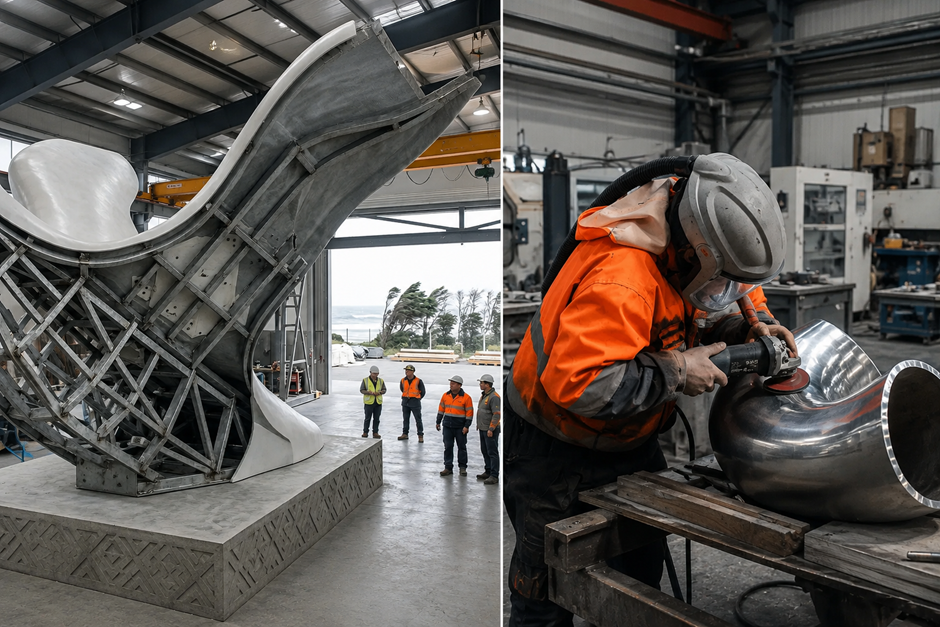
How Manufacturing Processes Differ Between FRP and Metal Sculptures
From a buyer’s perspective, FRP and metal sculptures may appear similar once installed. However, the manufacturing processes behind these materials are fundamentally different, and those differences directly influence production time, engineering requirements, project costs, and long-term performance.
Understanding how each material is manufactured helps commercial buyers evaluate quotations more accurately while selecting a material that aligns with the project’s technical and financial objectives.
FRP (Fiberglass) Manufacturing
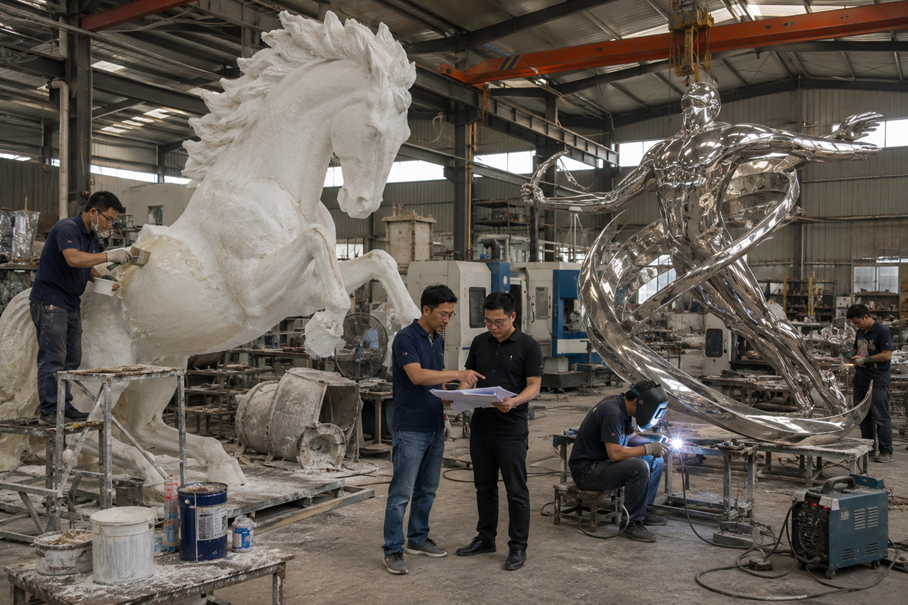
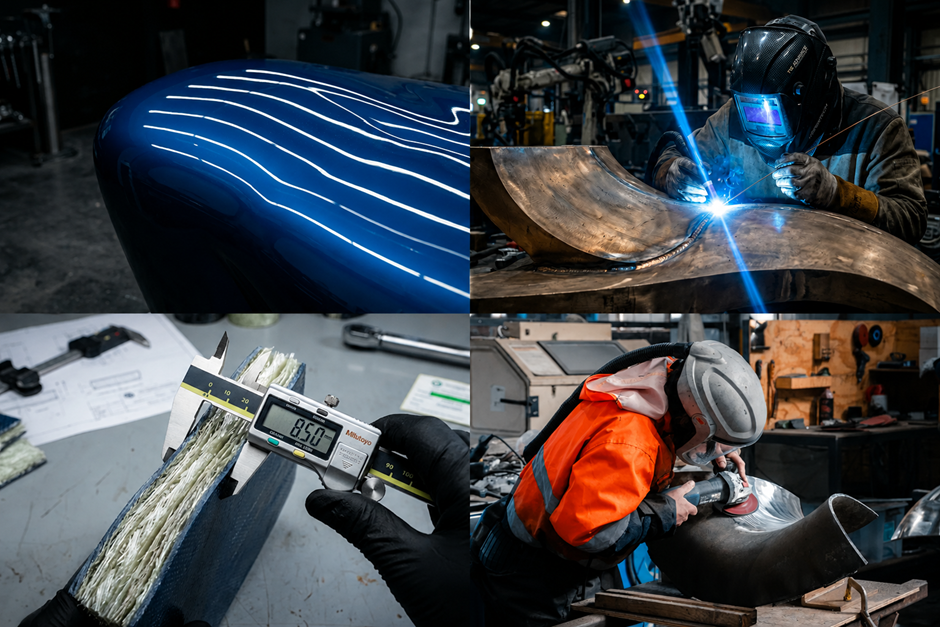
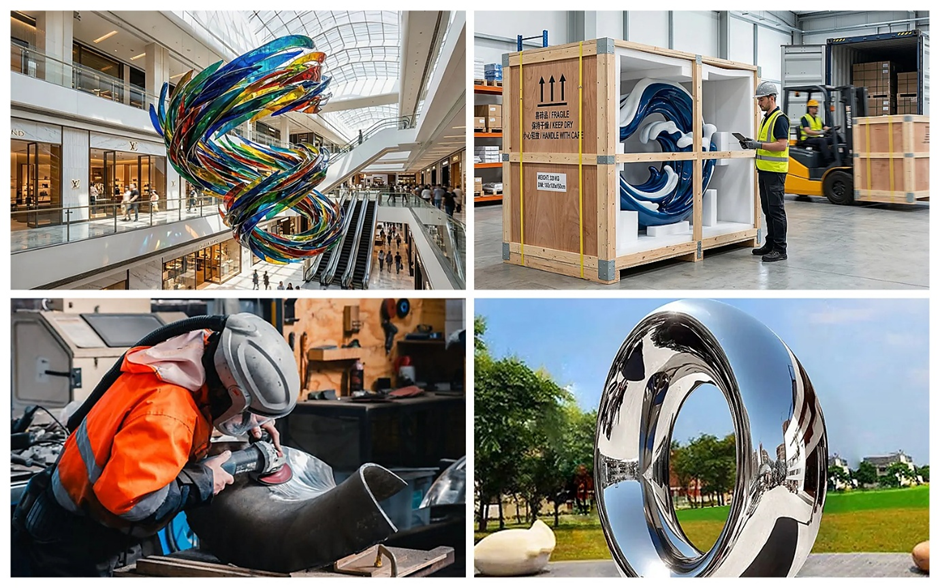
Large FRP sculptures are typically manufactured using mould-based production methods. Once the design and engineering have been approved, moulds are created to capture the sculpture’s form and proportions. Layers of fiberglass reinforcement are then combined with resin to build the sculpture’s structural body.
After curing, craftsmen trim, reinforce, sand, and finish each component before applying primers, specialised coatings, and protective paint systems suitable for the intended environment. Depending on the sculpture’s size, internal steel reinforcement may also be incorporated to improve stability during transportation and installation.
At Pegasus, every stage of FRP production is coordinated between engineering, mould fabrication, lamination, surface finishing, and quality inspection teams. Reviewing structural reinforcement and surface quality before production progresses helps maintain dimensional accuracy while reducing unnecessary rework later in the manufacturing process.
Metal Sculpture Manufacturing
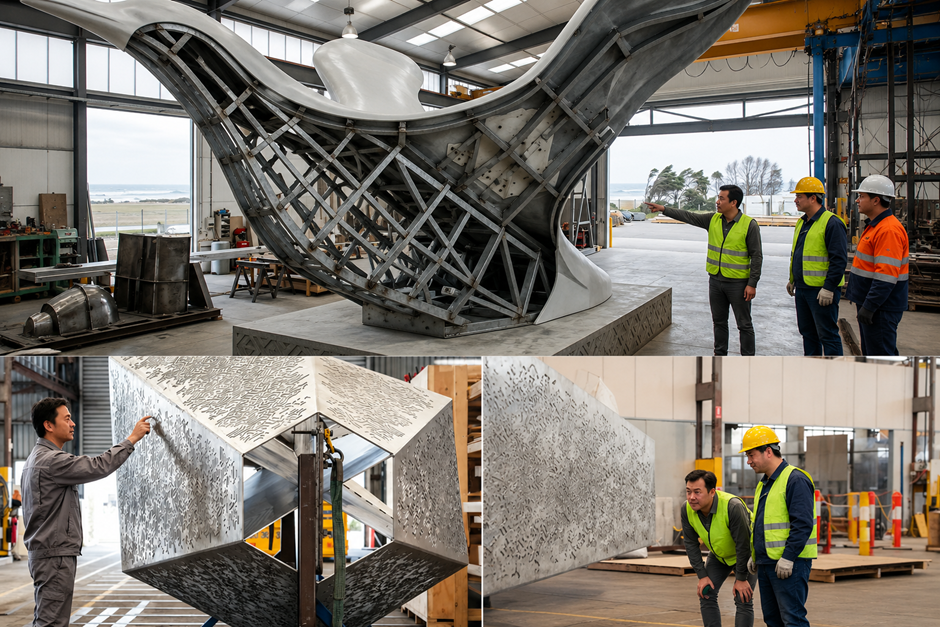
Metal sculptures follow a significantly different production workflow. Rather than using mould-based lamination, manufacturing involves engineering reviews, material preparation, precision cutting, forming, welding, structural assembly, grinding, polishing, and final surface finishing.
For stainless steel and bronze sculptures, production often requires multiple fabrication stages before the sculpture reaches its final appearance. Weld integrity, structural alignment, and surface consistency are reviewed throughout manufacturing to ensure the finished sculpture satisfies both engineering requirements and aesthetic expectations.
At Pegasus, engineering teams collaborate closely with fabrication specialists before production begins. Material selection, structural support, lifting requirements, transportation planning, and installation methods are evaluated together so manufacturing decisions support the entire commercial project rather than only the fabrication stage.
Cost Comparison: Looking Beyond Initial Manufacturing Price
One of the most common mistakes commercial buyers make is comparing only the initial manufacturing quotation without considering the total project cost.
Although fiberglass sculptures often have a lower manufacturing cost than large metal sculptures, the most economical material depends entirely on the project’s purpose, installation environment, expected lifespan, maintenance requirements, and structural demands.
For example:
- A lightweight decorative sculpture for a shopping centre may achieve excellent value using FRP because transportation, installation, and manufacturing costs remain relatively low.
- A permanent landmark sculpture exposed to heavy public interaction or challenging environmental conditions may justify the higher investment associated with stainless steel or bronze due to their structural performance and longevity.
Rather than recommending one material for every project, Pegasus evaluates each commercial installation individually. Engineering teams review environmental exposure, expected visitor interaction, maintenance expectations, structural loading, transportation logistics, and lifecycle costs before recommending the material that delivers the best overall project value.
This project-first approach helps clients avoid selecting a material based solely on its purchase price while ensuring the finished sculpture meets both commercial objectives and long-term operational requirements.
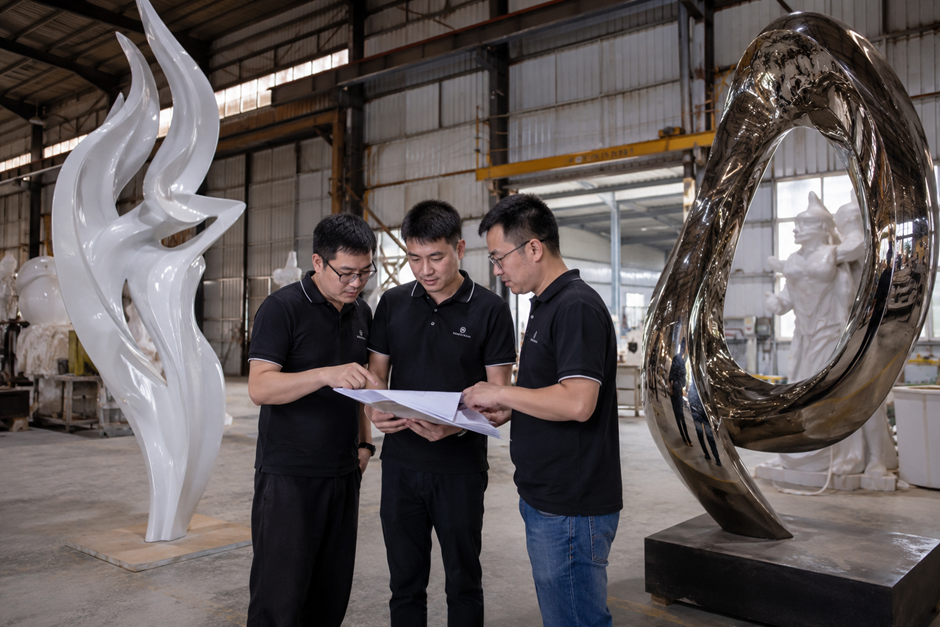
Manufacturing Challenges Buyers Should Understand
Every material presents different production challenges, and understanding these differences allows buyers to make more informed procurement decisions.
For FRP projects, manufacturers must carefully manage mould accuracy, resin curing, reinforcement placement, and surface finishing to achieve consistent quality across large components.
Metal sculptures introduce different technical considerations, including fabrication tolerances, welding accuracy, structural alignment, surface finishing consistency, lifting strategies, and transportation planning for heavy assemblies.
At Pegasus, engineering reviews are completed before production begins so manufacturing challenges can be identified early rather than during fabrication. This allows production teams to coordinate engineering, manufacturing, logistics, and installation planning as a single workflow, reducing project risks while improving overall production efficiency.
For commercial buyers managing complex developments, this integrated manufacturing approach often provides greater long-term value than comparing materials based solely on price or appearance.
Which Material Performs Better Over the Long Term?
Choosing between FRP sculptures and metal sculptures should not be based solely on manufacturing cost or appearance. Commercial buyers should also consider how the sculpture will perform over the next 10, 20, or even 30 years.
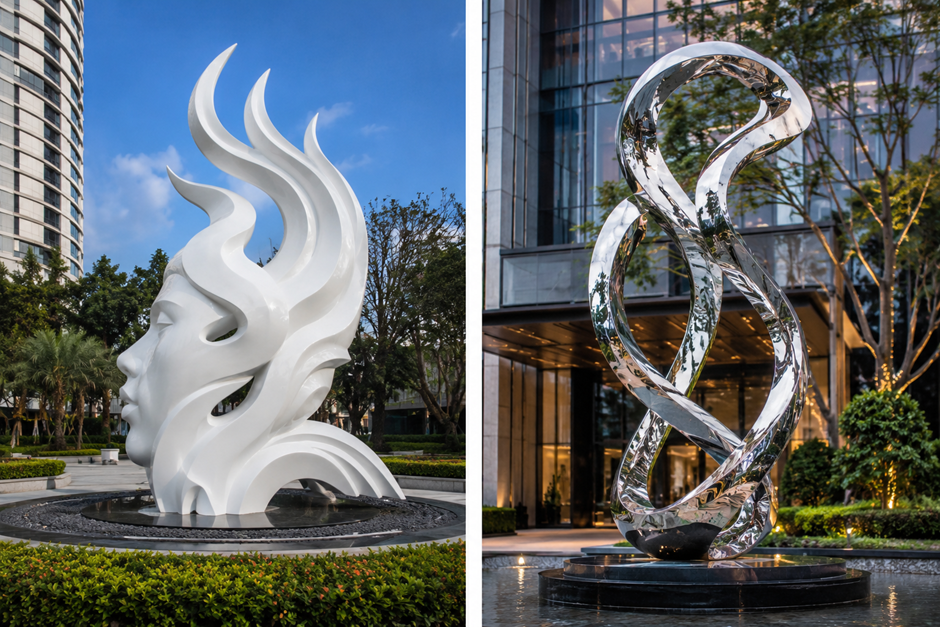
For projects where weight reduction, design flexibility, and faster installation are priorities, FRP often delivers excellent long-term value. With proper structural reinforcement and high-quality protective coatings, fiberglass sculptures can perform reliably in a wide range of outdoor and indoor commercial environments while requiring relatively low maintenance.
Metal sculptures, particularly stainless steel and bronze, are often selected for landmark installations where structural strength, premium finishes, and exceptional durability are critical. Although the initial investment is generally higher, these materials can provide outstanding long-term performance for public art, luxury developments, and civic projects.
Rather than recommending one material as universally better, Pegasus helps clients determine which solution best supports the project’s commercial objectives. Based on our experience delivering sculptures for hotels, public spaces, mixed-use developments, and architectural projects, FRP is typically recommended where lightweight construction, complex artistic forms, and efficient installation provide the greatest value. Metal sculptures are generally the preferred choice for landmark features, premium architectural statements, and projects where long-term structural performance and durability are the highest priorities. Every recommendation is based on the project’s engineering, environmental, and operational requirements rather than a one-size-fits-all approach.
Real Project Example: Choosing the Right Material for the Project
A commercial developer planned to install a series of large decorative sculptures across a mixed-use retail and entertainment development. During the early planning stage, the client initially proposed producing every sculpture in metal because of its premium appearance.
Before manufacturing began, Pegasus carried out engineering reviews, installation assessments, transportation planning, and lifecycle evaluations for each sculpture location. The production team identified that several decorative sculptures positioned throughout landscaped pedestrian areas could achieve the same visual impact using FRP while significantly reducing manufacturing costs, transportation weight, and installation complexity.
For the landmark entrance sculpture, however, Pegasus recommended stainless steel due to its structural requirements, long-term durability, and prominent architectural position. By selecting different materials based on each sculpture’s functional requirements rather than applying a single solution across the project, the client achieved a better balance between project budget, manufacturing efficiency, and long-term performance.
The value of this project extended beyond material selection. Early engineering decisions reduced unnecessary production costs, simplified installation planning, and ensured every sculpture was manufactured using the material best suited to its intended environment.
Making the Right Decision for Your Project
There is no single material that is right for every commercial sculpture project.
The best decision depends on balancing:
- Engineering requirements
- Design complexity
- Installation conditions
- Long-term maintenance
- Expected service life
- Environmental exposure
- Transportation requirements
- Available project budget
An experienced manufacturer should do more than explain the differences between materials. They should help clients understand which material is most appropriate for the project’s objectives, budget, installation environment, expected lifespan, and long-term maintenance requirements before production begins.
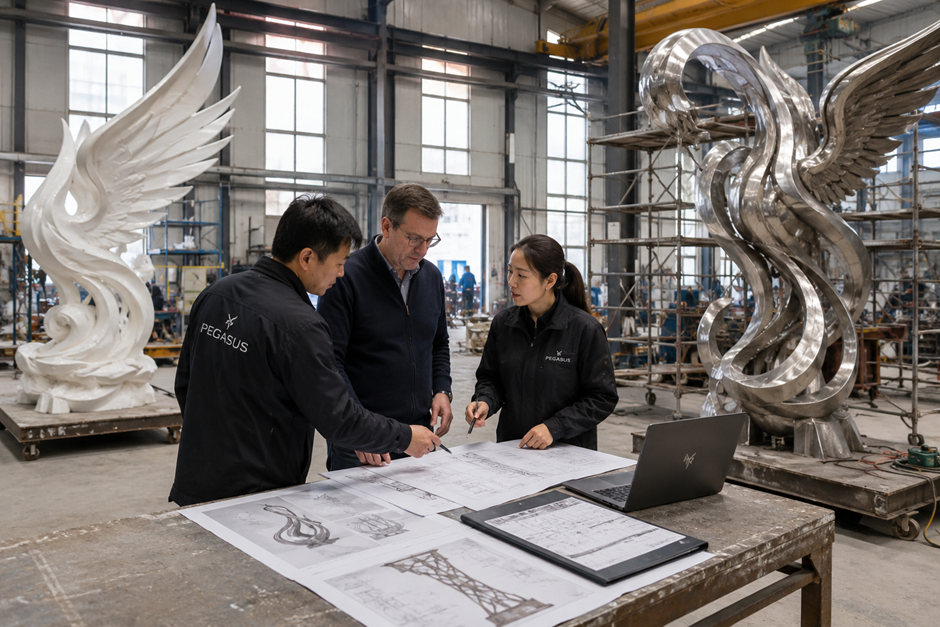
At Pegasus, these recommendations come from hands-on experience delivering commercial sculpture projects rather than comparing materials in theory. Our engineering, manufacturing, and project management teams assess each project’s technical, structural, and commercial requirements before recommending the material best suited to its long-term success. This collaborative process helps clients make confident decisions while reducing production risks and supporting the overall project objectives.
For commercial developments, hospitality projects, public art installations, and architectural features, selecting the right material during the planning stage often delivers greater value than trying to optimise costs after manufacturing has already begun.
Conclusion
Comparing FRP sculptures and metal sculptures is not about identifying a universally better material—it’s about selecting the right solution for the right project. The most successful commercial developments begin by understanding how engineering requirements, installation conditions, lifecycle performance, and project objectives influence material selection. Based on Pegasus’s experience delivering commercial sculpture projects, both FRP and metal can deliver outstanding long-term value when matched to the correct application. Rather than recommending one material for every project, Pegasus helps clients evaluate the technical, commercial, and operational requirements of each installation before making a recommendation. This project-first approach enables commercial buyers to make confident decisions while reducing manufacturing, transportation, and installation risks and supporting long-term project success.
Frequently Asked Questions
Is FRP always more affordable than metal sculptures?
Not necessarily. FRP generally has a lower manufacturing cost, but the most cost-effective material depends on the sculpture’s size, structural requirements, installation conditions, and expected service life.
When is FRP a better choice for commercial projects?
FRP is often well suited for projects that require lightweight construction, complex artistic forms, faster installation, and cost-effective production while maintaining excellent visual quality.
When should metal sculptures be considered instead of FRP?
Metal sculptures are often preferred for landmark installations, projects requiring higher structural performance, premium architectural finishes, or environments where exceptional long-term durability is essential.
How should buyers compare material options?
Rather than comparing price alone, buyers should evaluate engineering requirements, manufacturing methods, transportation, installation planning, maintenance expectations, and lifecycle value before selecting a material.
Why is engineering important before selecting the material?
Engineering helps determine whether FRP or metal is better suited to the sculpture’s structural requirements, installation conditions, transportation strategy, and long-term performance before manufacturing begins.