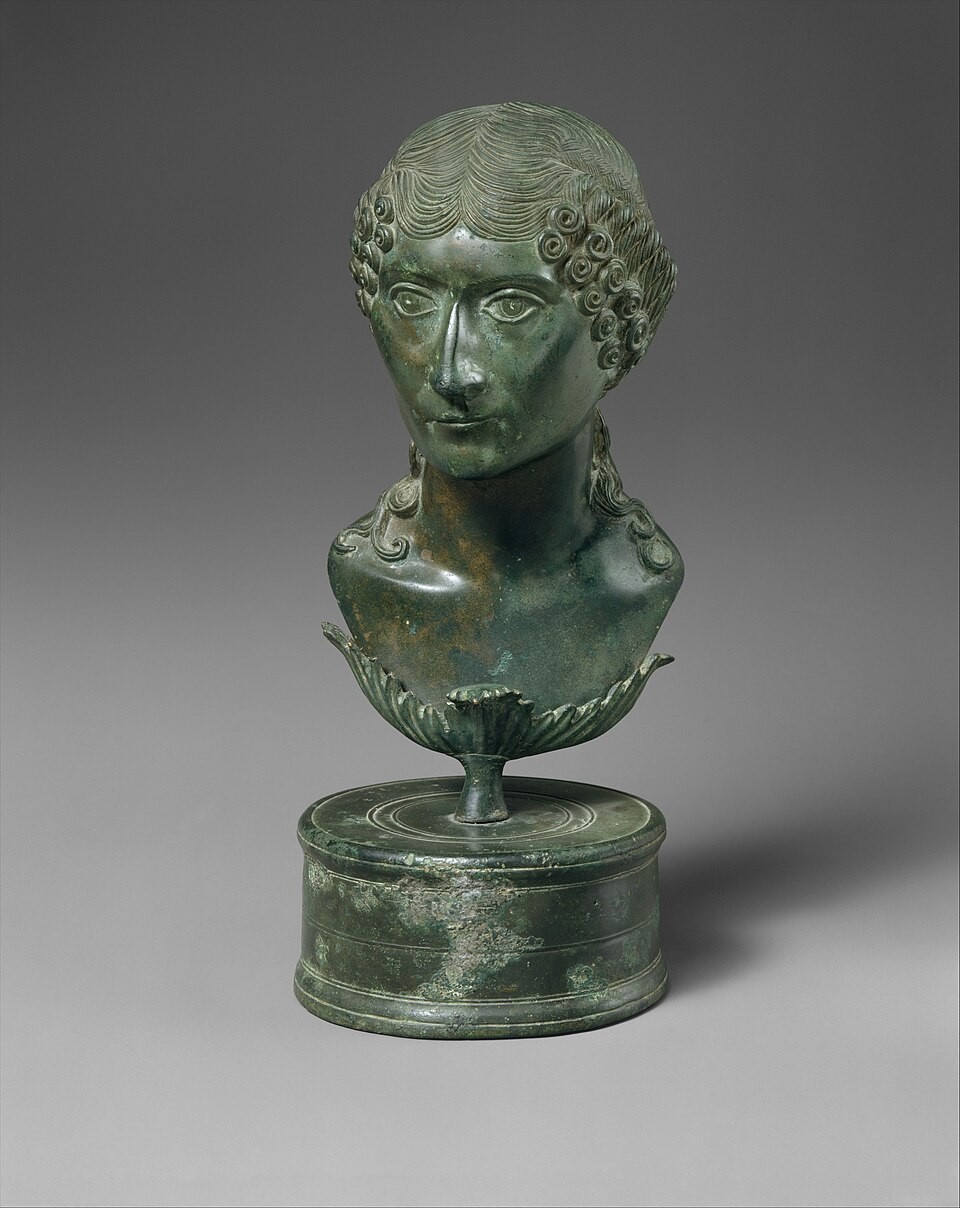
When a bronze portrait looks impressive—but not quite like the person
Imagine a university unveiling a bronze statue of a much-loved former principal. The pose is dignified, the bronze has a beautiful depth of color, and the monument looks entirely at home in the courtyard. Yet the people who knew her hesitate. The face is familiar, but the expression is not. Something in the eyes and mouth has turned a warm, approachable person into a distant figure.
That is the challenge with custom bronze statues created to honor a particular person. A convincing portrait is not simply an accurate collection of measurements. It has to preserve the character people remember, even when the sculptor is working from incomplete photographs and the final artwork is far larger than the original model.
A photograph captures a moment; a statue has to represent a person
A portrait commission may begin with a formal photograph, a few family snapshots and an image taken decades earlier. They can all show the same individual while telling different stories. A formal portrait may flatten the expression; a candid photograph may capture the familiar tilt of the head but obscure the profile. An older image may offer a useful side view while depicting a different stage of life.
The first artistic decision is therefore which version of the person the monument should preserve. A founder commemorated for a lifetime of public service might be represented in later life, while a memorial to a young performer might draw on photographs from a defining period. Combining features indiscriminately from several decades can create an oddly unconvincing portrait, even when each individual detail comes from a genuine source.
A frontal photograph can reveal the spacing of the eyes but hide the depth of the nose; a three-quarter view explains the cheek and jaw; a profile reveals the relationship between forehead, lips and chin. Short video clips may show how the subject naturally held their head or reacted to others. The value is not simply having more images. It is knowing what each image can—and cannot—tell the sculptor, especially when the photographs were taken at different ages.
Pegasus’s bronze sculpture manufacturing service accepts artist maquettes, reference drawings and digital models as starting points for custom work. For a portrait, the commission should establish whether Pegasus is being asked to develop the likeness or to cast an already approved sculptural model. That distinction protects the artistic intent and gives everyone a clearer basis for judging the result.
Expression is often where recognition is won or lost
A recognizable face depends on relationships between features rather than isolated details. The line of the upper eyelid, the set of the mouth and the slight lift of the brows can change a person’s apparent temperament. A face may be anatomically plausible and still feel too stern, too youthful or simply unlike the subject.

People familiar with the subject often notice an expression that a sculptor cannot infer from a formal portrait alone. Their observations are most helpful when tied to a visible feature: a softer brow, a less compressed mouth or a gaze that seems more direct. These are small artistic differences with a large emotional effect. The portrait should feel recognizable even before the material and finish make it impressive.
The useful moment for that conversation is while the portrait remains a clay or digital model. Changes to the gaze, cheeks or mouth are part of sculptural interpretation, not cosmetic adjustments to be left until the bronze is finished. Pegasus describes digital modeling, prototypes and project-stage review as part of its custom production capabilities. These can support discussion of the proposed likeness, although the scope and number of artistic revisions need to be agreed for the individual commission.
For a memorial or institutional portrait, it helps to identify whose knowledge of the subject carries weight: family members, close colleagues or custodians of the relevant archive. Their perspective is particularly valuable for expression, while the artist remains responsible for interpreting that evidence in three dimensions. The aim is not to average every opinion into an anonymous face.
A monument changes how the face is seen
A head that reads beautifully at studio height can feel different when the completed statue stands above visitors. From below, the angle of the chin and the direction of the gaze change. From across a square, delicate facial detail may disappear while the overall head position remains visible. A monument can preserve the geometry of a model without preserving its emotional effect at the intended viewing distance.
Consider two settings. A bronze bust inside a library may be examined from less than a metre away; its eyelids, lips and hair texture are part of the encounter. A full-length statue on a campus lawn may first be seen from the main path. There, the inclination of the head and the relationship between face and body do more of the work.
Pegasus describes digital-model development, custom-scale fabrication and 1:1 pre-assembly for monumental bronze work. Those capabilities can help an architect or artist consider the relationship between the model and the proposed final scale. They do not, by themselves, guarantee that a face will read correctly from a low viewing angle. For a high-plinth portrait, the useful test is a view of the head and overall silhouette from the actual approach, not another studio close-up.
This is where portrait scale differs from ordinary enlargement: visitors encounter the statue as a figure in space, not as a photograph of a head. The direction of the gaze and the tilt of the shoulders can change the emotional impression long before a visitor is close enough to study facial texture.
Bronze craftsmanship has to preserve the sculptor’s decisions
The final bronze must carry an already convincing portrait into a different material. That requires care at the edges of eyelids, the corners of the mouth and the transitions between cheek, nose and brow. These are not decorative extras: they determine whether the intended expression remains readable after casting and finishing.
Pegasus identifies lost-wax casting as a method for reproducing detailed sculptural surfaces. On larger works, separate bronze sections may be joined and then refined by hand chasing. This is where a manufacturer’s experience becomes visible: a chased seam should not interrupt the contours of the face, and finishing should not flatten the small transitions that make the portrait distinctive. Pegasus also describes precision TIG joining and matching surface textures for sectional bronze work. The appropriate locations of joints and the extent of surface refinement depend on the particular model.
Patination is a separate artistic choice. Pegasus describes thermal chemical finishes ranging from rich brown tones to green patinas and states that physical bronze patina sample plates can be reviewed. On a portrait, the sample should be considered for how it reveals the forehead, eyes and mouth—not merely whether its color matches a reference photograph. Strong highlights or dark recesses can make the same sculpted face appear different under changing light.
An informative production comparison uses matching viewpoints of the approved model and finished bronze, especially around the eyes and mouth. It helps distinguish a problem with the original portrait from a change introduced during fabrication. The article is not suggesting that Pegasus guarantees a particular portrait-approval protocol; the exact review evidence and responsibilities should be agreed for the commission.
The person’s character extends beyond the face
A full-figure statue communicates through posture, gesture and clothing as much as facial likeness. An educator remembered for speaking with students at eye level might be poorly represented by a stiff, ceremonial pose. A musician’s familiar way of holding an instrument may be more revealing than a decorative accessory. A founder’s characteristic coat or working gesture can carry genuine meaning when supported by photographs or testimony.
The strongest details are selective. A hand position that recalls the person’s habits may add more authenticity than several symbolic objects. Conversely, inventing medals, books or tools simply to make a statue appear important risks telling a story that is not true.
Pegasus’s custom bronze service accepts an artist’s maquette, 3D model or reference drawings, with scale, surface texture and finish developed for the individual work. This gives a sculptor room to preserve a meaningful hand position or clothing detail rather than forcing a memorial into a standard pose. For example, the bend of a musician’s wrist or the relaxed stance of an educator can be carried through the model into bronze, provided those details are established in the approved artwork. The manufacturer’s value lies in translating that particular form, not inventing the subject’s biography.
A real portrait commission shows the value of personal knowledge
For the bronze portrait of James C. Flood at San Francisco’s historic Flood Building, sculptor Richard Becker worked with archival images and family consultations to develop the subject’s likeness and quiet composure. The family’s knowledge added a dimension that photographs alone could not provide: an understanding of how the person should feel to those who remembered him.

The project, documented by Richard Becker, was an independent commission, not work by Pegasus. It is a portrait bust rather than a full-figure monument, but it illustrates a central lesson: the most meaningful likeness is not always the one with the greatest number of copied photographic details. It is the one in which artistic interpretation and trustworthy personal references come together.
What makes a portrait commission worth discussing in detail
For a portrait enquiry, a short set of materials can make the discussion much more productive: the chosen life period, two or three clear photographs from different angles, a note about the expression or gesture that matters most, the intended size and a photograph of the setting. If a portrait artist has already made a maquette, that model is the central reference. Without one, the scope of artistic modeling needs to be discussed rather than assumed.
The most valuable early discussion is about artistic responsibility. If an independent sculptor has already produced an approved clay maquette, Pegasus can discuss its translation into bronze through the foundry’s custom fabrication process. If the project begins with photographs alone, the commissioner should first establish how portrait modeling will be handled, what review material will be available and who will approve the likeness. These details are project-specific rather than universal promises.
There is a meaningful distinction between an approved portrait and a finished bronze. The first establishes whether the person has been represented convincingly; the second shows whether the manufacturer has preserved that work in metal. For a tall outdoor figure, the public viewpoint adds a third artistic test. Keeping those judgments distinct makes the final result easier to evaluate without turning the commission into paperwork.
Frequently asked questions
What if the photographs show the subject at very different ages?
Choose a clearly defined period of life before sculpting begins. Mixing an older face with a much younger hairstyle or posture can create an image that feels unfamiliar, even if every feature is based on a genuine photograph.
What is the difference between a portrait bust and a full-figure statue?
A bust concentrates attention on the face, head and shoulders. A full-figure statue also relies on posture, gesture, clothing and the relationship between the person and the surrounding space. Both require careful likeness work, but the visual priorities differ.
How can a family help without directing every sculptural detail?
Family members or close colleagues can explain characteristic expressions, habits and personal details that photographs may miss. The sculptor should interpret that knowledge as a coherent three-dimensional portrait rather than treating every comment as a separate design instruction.
Why can the same portrait look different under different lighting?
Bronze patina and directional light change how shadows define the eyelids, lips and cheek planes. A finish viewed only under studio spotlights may appear different in a library, plaza or shaded courtyard.
Does Pegasus accept an artist’s existing portrait model?
Yes. Pegasus says its bronze service can begin from an artist’s maquette, digital 3D model or approved drawings. The team can discuss how that source is translated into casting and finishing, while any additional portrait modeling should be confirmed as part of the project scope.
Create a bronze portrait that remains recognizable
The lasting value of a portrait monument lies in more than its material or size. It is in the moment someone approaches the statue and recognizes not only the face, but something of the person behind it.
Explore Pegasus’s custom bronze statues or contact the Pegasus team with your photographs, proposed dimensions and artistic references. The team can discuss the appropriate bronze fabrication, model inputs and finishing options, while clarifying how the likeness will be developed and reviewed for your commission.