The same sculpture can feel quiet, dramatic or restless—before its shape changes
An interior designer can approve a sculptural form and still be surprised by the finished room. The stone itself may change the outcome: pale marble can disappear against light finishes, a dark polished surface can reflect windows and luminaires, and strong veining can compete with the carved form. Before committing to a block, the buyer should judge the proposed stone against the actual room palette, lighting and intended viewing position—not against a catalog photograph alone.
For marble sculptures in hotel receptions, residential lobbies, galleries or executive interiors, the decision is both spatial and material. Establish the intended role—quiet architectural continuity, a strong focal point or expressive mineral pattern—then request evidence from the actual candidate block. A small polished sample shows a finish, but it cannot reveal the full distribution of veins, color variation or usable carving volume.
White and pale marble: a calm form can still have a strong presence
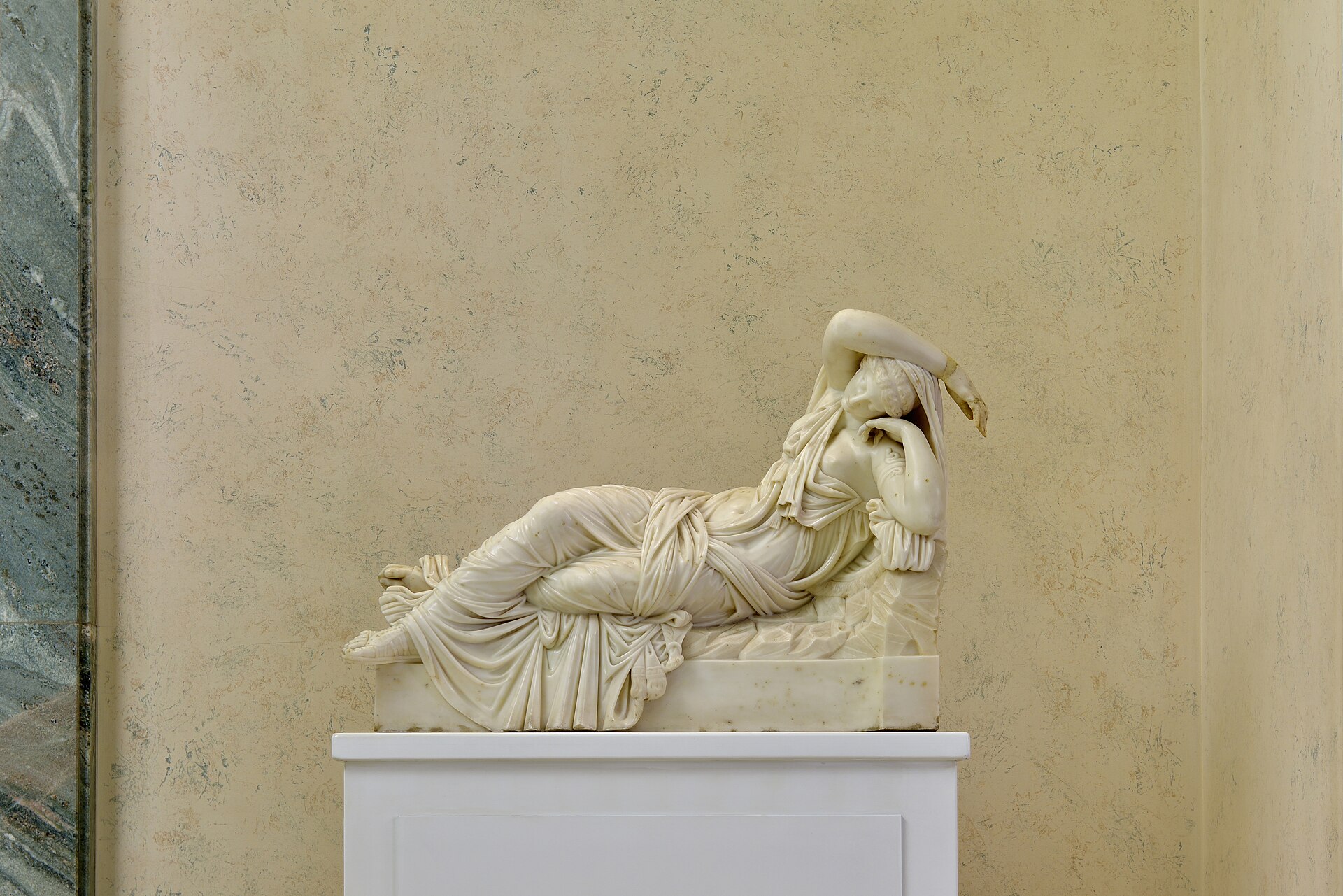
Pale marble can create a continuous, calm composition when it echoes light plaster, limestone or timber. But its undertone matters: a cool white may look stark beside warm travertine, while cream-toned stone may appear yellow under some artificial lighting. A pale sculpture against a pale wall may depend on side lighting and shadow for definition; against a dark wall, the same form becomes a focal point. The buyer should compare actual stone samples with the room’s wall and floor finishes under both daylight and specified artificial lighting.
For a pale-marble commission, ask for photographs of the proposed block with a neutral color reference and a clearly identified viewing face. Inspect whether grey wisps, warmer zones or localized markings will appear in the figure’s most visible areas. Before carving, agree whether those variations are acceptable and whether the sculptor can orient the form to keep the principal visible surfaces within the intended color range. A selected block cannot promise a uniformly white sculpture once new surfaces are exposed.
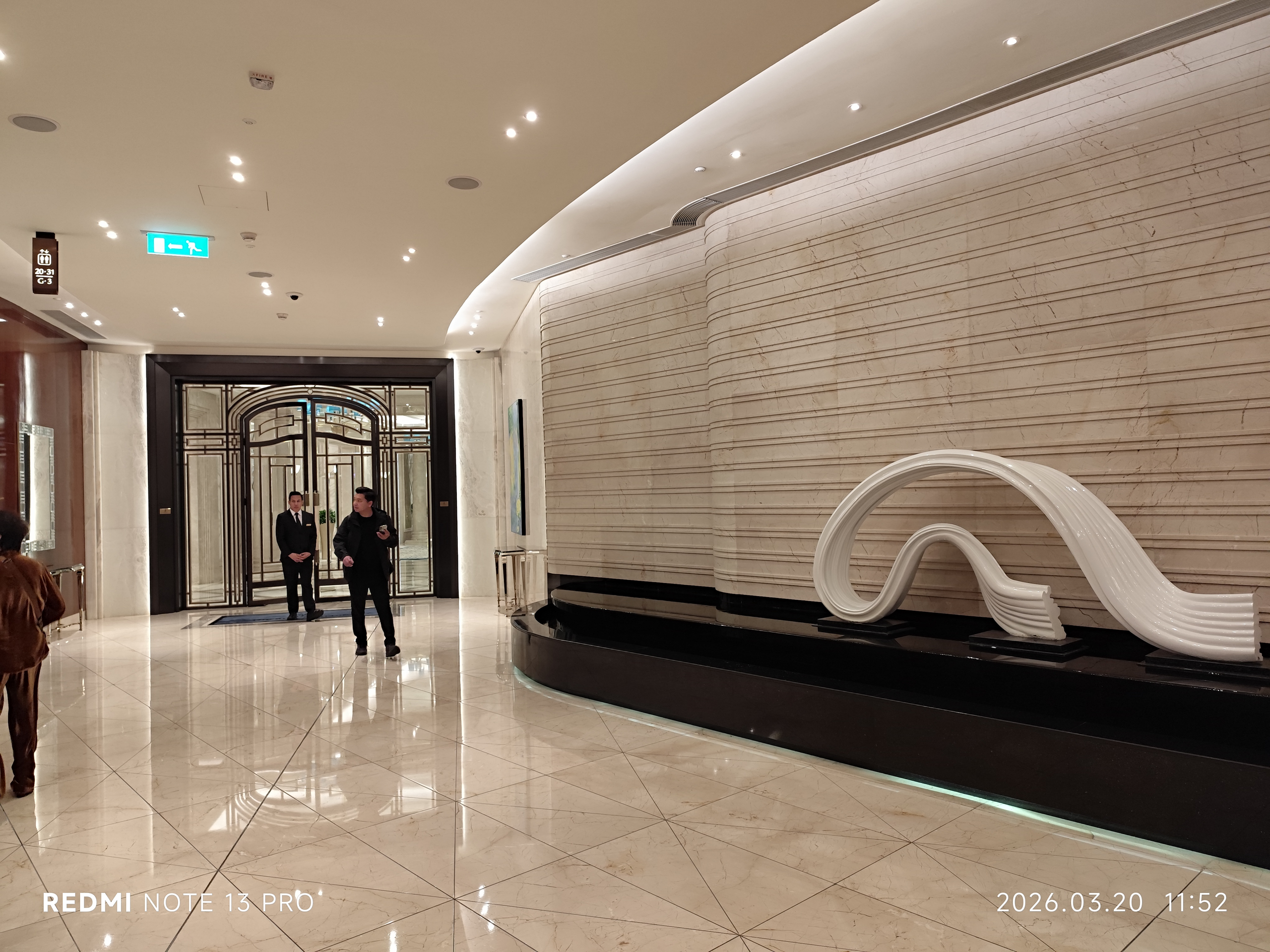
Dark marble: visual weight without adding physical size
Dark marble can establish a strong focal point without increasing the sculpture’s dimensions, particularly against light walls or floors. But “dark” is not one appearance: black, charcoal and deep brown stones may have different undertones, veins and surface responses. A highly polished piece can read as a series of reflected windows rather than a coherent carved form. In a dim executive lounge, a matte or honed treatment may reveal mass more consistently, while a controlled highlight can help define a polished piece.
Before selecting a dark block, request photographs of all accessible faces under even light and close-ups of any pale seams, patches or contrasting veins. Compare a finish sample under the actual lighting plan and assess whether the proposed form relies on subtle carved details that might disappear in shadow. The buyer should distinguish an intended uniform dark appearance from a stone whose natural markings will become prominent when cut.
The approval decision is not simply “black versus white.” Record the target undertone, acceptable veining contrast, chosen finish, and the position of the main viewing surfaces. Where a proposed block has conspicuous markings, ask the manufacturer to show the intended carving orientation before the stone is committed to production.

Expressive veining: decide whether the pattern should lead or support
Distinctive veining can make the stone an active part of the artwork, but it can also compete with the form. A diagonal band may reinforce a rising abstract composition; the same band crossing a portrait face or a narrow carved gesture may distract from the subject. The buyer should decide which faces of the sculpture will carry the main visual message and whether strong markings are desirable there.
A small stone sample cannot reliably predict where veins will appear in a large carving. Ask for photographs of the identified block from several sides, its approximate dimensions and a proposed orientation of the sculptural form within it. The team can then mark preferred visible faces and high-risk areas—such as a face, a hand, a broad uninterrupted plane or a deep opening—and ask the manufacturer which vein positions are visible and which remain uncertain until material is removed.
The acceptance criteria should be written before carving: for example, broad contrasting veins may be acceptable across an abstract base but not across the defining facial area of a figurative sculpture. This is a visual brief, not a guarantee of exact geology. Where the block cannot support the intended appearance, the buyer should reconsider the orientation, design or material rather than assume polishing will solve the mismatch.

The room changes the stone: three practical visual tests
Before selecting the final visual direction, the interior team can use three tests that answer different questions.
| Test | What to compare | What it reveals |
| Background contrast | Stone sample against actual wall and floor finishes | Whether the sculpture separates from or merges with the room |
| Light response | Same sample under the room’s planned daylight and artificial light | Whether polish, shadows and dark areas alter its perceived depth |
| Pattern hierarchy | Full-scale form reference beside photos of the proposed block | Whether veining supports the carved shape or competes with it |
These tests do not require a complete redesign. They prevent a common commercial disappointment: approving a beautiful piece of stone in isolation and discovering that its character changes once it sits among the hotel’s, office’s or residence’s actual finishes.
What Pegasus can verify—and what natural marble will never guarantee
| Buyer checkpoint | Evidence to request | Decision before carving |
| Candidate block identity | Stone identifier, available size and photos of accessible faces | Is the offered block suitable for the intended sculpture volume? |
| Color and undertone | Representative photos and physical finish sample beside room palette | Which color variations are acceptable in the main visible areas? |
| Veining and orientation | Marked-up block photos plus proposed sculpture orientation | Where are strong veins acceptable or undesirable? |
| Carving feasibility | Manufacturer review of openings, projections and available material | Can the approved form be carved from this particular block? |
| Intermediate approval | Agreed rough-carving photographs from key viewing positions | What change or escalation is required if new patterns emerge? |
Pegasus describes marble sourcing, CNC-assisted pre-shaping, hand carving and several finishing options. These stages are relevant because buyers need evidence of the specific stone proposed for their project, not just a generic material sample. Project-specific block identification, images and approval checkpoints should be agreed with Pegasus rather than assumed to be automatic.
Before carving, request a block review pack: an identifier for the candidate stone; approximate usable dimensions; photographs of each accessible face under consistent light; close-ups of strong veins, color changes and visible discontinuities; and a diagram or model showing the proposed sculpture orientation within the block. The design lead should sign off on acceptable color range, prominent markings and the intended front or principal viewing face. Surface photographs do not reveal every internal vein or flaw, so approval should expressly acknowledge that uncertainty.
During rough shaping, newly exposed stone may reveal unexpected bands or color transitions. For projects where appearance is critical, agree an intermediate visual checkpoint before fine hand carving, using photographs of the emerging form from the approved viewing angles. The decision at that stage is whether the natural pattern still supports the brief and whether any permissible orientation or detailing adjustments remain possible. Polished, honed and textured samples can then be reviewed under representative interior lighting; a finish sample cannot change the block’s underlying mineral pattern.
The manufacturer can help evaluate available stone, carving feasibility and surface finish, but no natural marble block offers an exact repeat of a reference photograph. The commercial goal is a documented, acceptable range of appearance—not an impossible guarantee that every vein will fall at a specified location.
When matching several sculptures, consistency should mean intention—not identical geology
A developer furnishing several interiors can define a visual family using a shared color range, finish and level of pattern contrast. This gives purchasing teams a consistent specification while allowing different spaces to have their own sculptural compositions.
The buyer can document which differences are acceptable before reviewing samples: for instance, variation in fine grey threads may be acceptable, while a dominant high-contrast band may not be. This turns an aesthetic preference into a decision that can be reviewed consistently.
Frequently asked questions
How should the stone color be described in an interior design brief?
Specify a target color family, whether warm or cool undertones are acceptable, and the level of contrast permitted in visible markings. Include photographs of the room finishes so the description has a real visual reference.
Which photographs help a buyer assess the proposed marble before carving?
Request the proposed block’s identifier, approximate dimensions, photographs of accessible faces with a size and color reference, and close-ups of strong markings. Ask how the carving will be oriented within that block and whether an intermediate rough-carving review can be agreed. Such records reduce uncertainty but cannot disclose every internal feature before carving.
What if the preferred marble color is unavailable in the required sculpture size?
Ask whether a suitable block is available for the intended dimensions before committing to that exact color. If it is not, compare alternative natural-stone appearances against the approved interior palette rather than assuming a small sample represents available large blocks.
Who should sign off on the final stone appearance when several parties are involved?
Agree in advance which person has final visual approval—for example, the lead interior designer acting for the owner—and who must be consulted. Keep the chosen sample or block reference with the decision so a late change in stakeholders does not restart the visual selection.
Choose the stone character before committing to the finished look
Explore Pegasus’s custom marble sculptures to see its natural-stone capabilities and available carving directions. If you are deciding between pale, dark or prominently veined stone for a statement interior, share the intended room palette and visual priorities.
For a project-specific material and finish discussion, contact Pegasus Sculpture.