The expensive mistake is choosing a statue before defining its purpose
A hotel team may agree that the lobby needs a marble sculpture and still disagree about what it should accomplish. A historic figure can give the space a sense of continuity. A contemporary figure can make it feel personal. An abstract work can contribute visual energy without representing anyone. These are different artistic decisions, not interchangeable versions of luxury. The available marble statues should therefore be assessed for artistic purpose before a specific piece is selected.
The real buyer problem is selecting a work that looks persuasive in a proposal but feels unrelated to the finished property. Use the same four criteria for each direction: its intended role, the interior where it belongs, the main selection risk and the evidence required before fabrication. The table provides that side-by-side decision; the sections that follow explain the artistic reasoning.
Buyer comparison: three marble sculpture directions
| Style | Intended role | Best-fitting interiors | Main selection risk | Confirm before fabrication |
| Classical | Connect the property to a credible historical or cultural narrative | Restored landmark hotels; heritage-led lobbies; classically proportioned reception halls | Generic or inaccurate symbolism that makes the hotel feel staged | Documented subject and period; cultural review where appropriate; approved pose, drapery and model |
| Contemporary figurative | Create an approachable human presence without a ceremonial monument | Boutique lounges; intimate reception areas; residential-style hospitality interiors | Pose or expression unintentionally reads as heroic, sentimental or a specific portrait | Intended emotional tone; degree of facial detail; pose and gesture in a site-view model |
| Abstract | Establish a distinctive form without prescribing a person or narrative | Modern atriums; international hotel lobbies; spa or wellness interiors when form is calm | Shape feels too restless or too weak for the room; impractical thin elements | Scale and silhouette in context; feasible openings/projections in selected marble; finish sample |
Classical marble: when the property can tell a credible historical story

Classical marble statues suit hotels that have a reason to evoke a particular period or cultural tradition: a restored landmark, a former civic building, or a property whose architecture deliberately references classical proportion. Carved drapery, figurative posture and portrait detail can reinforce that story without additional explanation.
The risk is decorative history without a subject. An anonymous mythological figure can make a new hotel look theatrical rather than established. A more convincing commission might draw on a documented person, local tradition or visual motif connected to the property. That choice creates a subject the hotel can explain, rather than a generic symbol of prestige.
Before fabrication, the buyer should confirm the historical or cultural source with the appropriate curator or local adviser, approve the figure and period references, and review a model of the chosen pose and drapery. This is a content-accuracy approval as well as a carving brief; the manufacturer should not be asked to invent historical authenticity.
Contemporary figures: when the space needs a human presence, not a monument

Contemporary figuration retains the possibility of recognizing a body, pose or gesture without adopting the language of a historical monument. It is particularly useful in a boutique hotel whose interiors feel residential, intimate or conversational.
For example, a simplified seated figure beside a lounge area can suggest reflection rather than ceremony. The crucial decision is how much human detail remains. If the face and gesture are highly descriptive, guests may read the work as a portrait of someone specific. If they are reduced, the work becomes more open to personal interpretation.
Before fabrication, the hotel designer should approve the emotional character of the pose and the degree of facial specificity using a model viewed in the proposed lounge or lobby setting. This avoids an unintended portrait-like or ceremonial impression. The carving brief should identify which gesture and body contours must remain recognizable after shaping and hand finishing.
Abstract marble: when a literal subject would narrow the experience

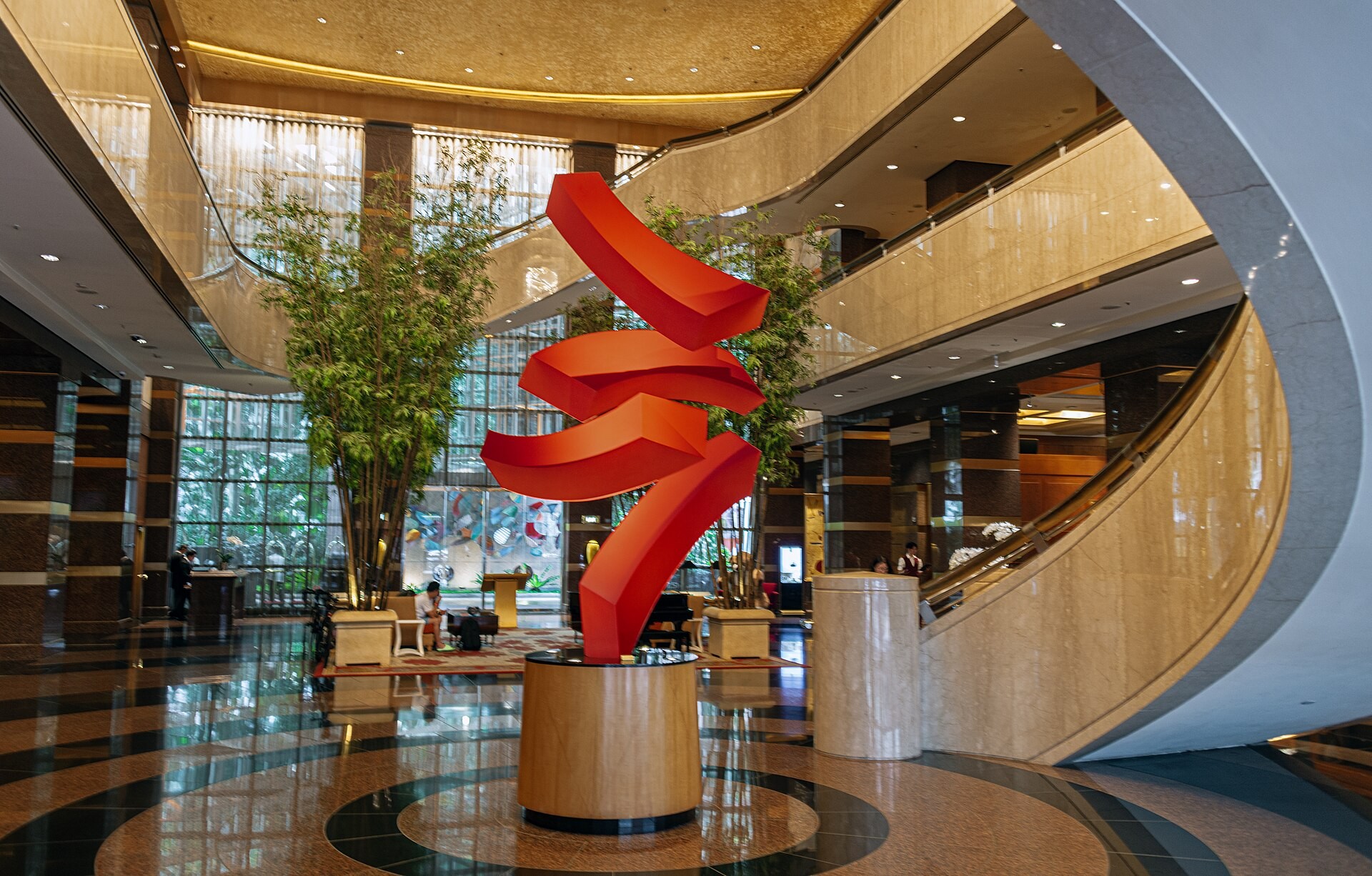
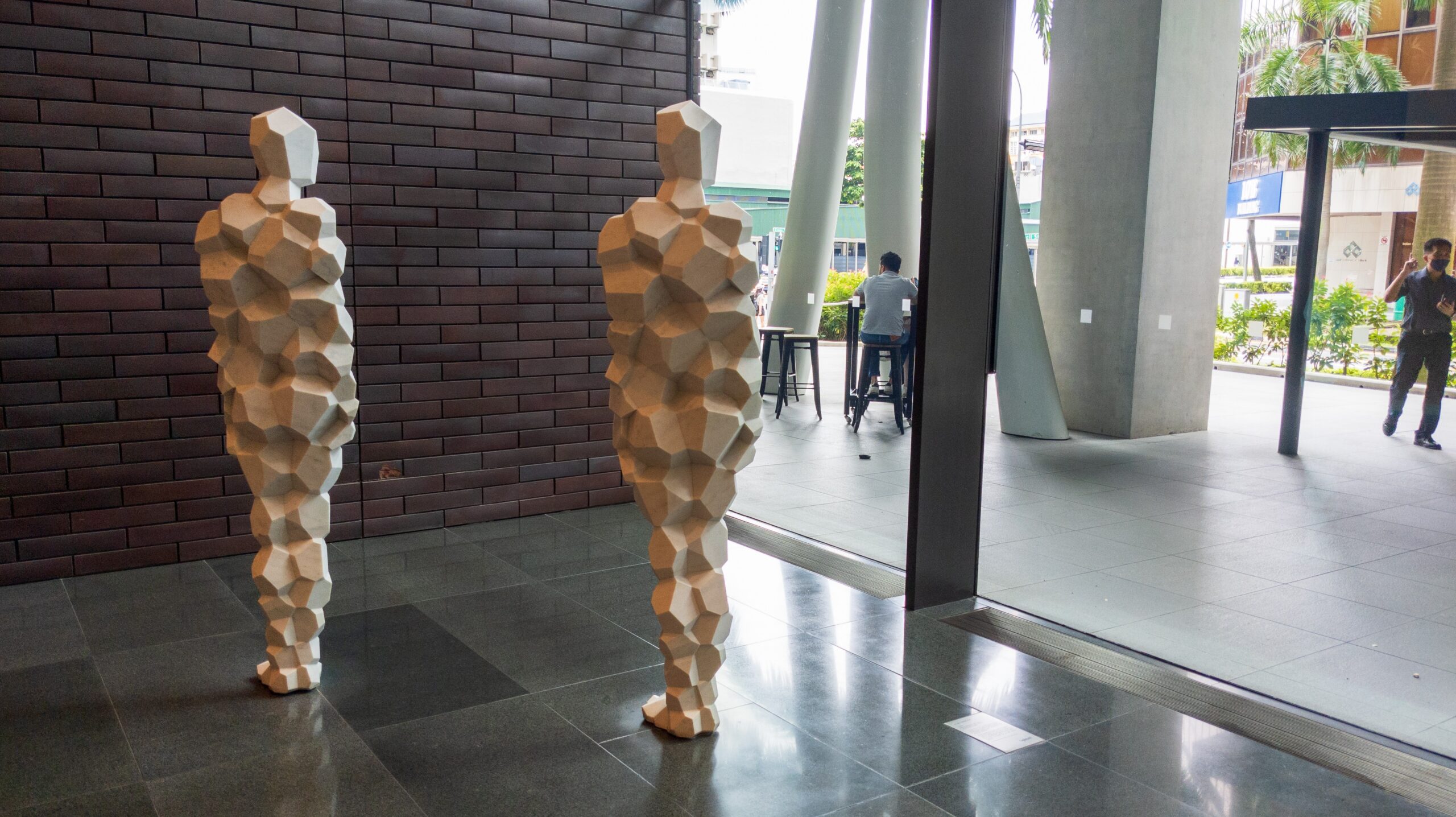
Abstract sculpture can give an international hotel a recognizable artistic presence without asking guests to identify a historical person, religious figure or cultural narrative. Its meaning comes through mass, openings, rhythm and proportion.
The design risk is misjudging the energy of the form. A sharply angled composition may feel restless in a wellness setting; a soft closed volume may lack enough presence in a dramatic, high-ceilinged space. Unlike the figurative options, the central question is not who or what the sculpture depicts, but whether its silhouette produces the intended visual tension or calm.
Before fabrication, the design team should approve a model against the room’s proportions, including any openings, narrow connections and the intended stone finish. Pegasus can then review whether those features are feasible in the selected marble block; a visual approval alone is not a material-feasibility approval.
Who makes the final decision when the hotel team disagrees?
The developer may want a recognizable signature piece for the property; the designer may prefer a work that supports the architecture; the operator may worry about guest circulation and the daily use of the space. These concerns should not be treated as three votes on taste.
Give each stakeholder a separate decision. The owner defines whether the artwork is meant to be a property landmark or part of a quieter guest experience. The designer determines whether the chosen artistic language works with the architecture. The operator identifies practical conflicts with how guests occupy the room. If those decisions are unresolved, asking everyone to approve the same image will only hide the disagreement.
The output should be a short shared artistic brief: what the work must communicate, what it must not communicate, and where it belongs. This is a decision tool for hospitality teams, not a general sculpture-manufacturing approval process.
A hotel group needs consistency without repeating the same statue
A multi-property hotel brand faces a different question from a single luxury hotel. Its visual identity may need to be recognizable across several locations, but an identical marble figure in every lobby can erase the qualities that make each property distinct.
One approach is to retain a common artistic principle rather than a repeated object. A group could commission a family of abstract forms with related proportions, or contemporary figures that share a restrained approach to gesture while responding to each building. This creates a recognizable collection without turning the properties into copies of one another.
For the buyer, this distinction matters before procurement: are they purchasing one signature artwork or developing an artistic language that can evolve across locations? The answer affects the scope of the creative brief and the kinds of references a manufacturer should be asked to show.
Where Pegasus contributes: translating the chosen design into natural marble
Pegasus describes custom marble sculpture capabilities including stone sourcing, CNC-assisted pre-shaping, artisan hand carving and surface finishing. These are useful after the artistic intention is established because a reference image is not the same thing as a feasible natural-stone sculpture.
The first contribution is material feasibility. Narrow unsupported projections, thin bridges and deep openings may be visually convincing in a rendering but unsuitable for a proposed block of marble. Pegasus can assess a form against stone-carving constraints and identify which elements may need to change. The important buyer question is whether a proposed adjustment preserves the original design intent.
The second is the transition from initial shaping to finished expression. CNC-assisted work can establish broad geometry, while hand carving and finishing refine the visible surfaces. For a hotel buyer, the evidence should be close-up photographs of actual completed marble work—not only equipment photographs or a claim that a machine can carve complex forms.
The third is natural material variation. Marble blocks differ in their appearance, and a polished reference photograph does not guarantee that another block will look identical. Pegasus describes stone sourcing and finishing capabilities; a responsible proposal should identify which aspects of the visual result can be controlled and which depend on the selected stone.
Finally, Pegasus lists export preparation among its services. That is relevant to hotel procurement, but it is not proof of a completed hotel project. Only photographs and project descriptions whose origin has been verified should be used to demonstrate Pegasus hospitality experience.
Questions hotel buyers ask
Can a hotel commission a new design rather than select an existing statue?
Yes. A custom concept can begin with a specific artistic purpose. Before it is presented as a deliverable marble work, its geometry and intended appearance need to be evaluated against the material.
How can we tell whether a white sculpture is genuine carved marble?
Ask the supplier to identify the actual material and provide photographs of the finished object. Marble-effect fiberglass or resin can resemble stone in an image, but it is not the same material.
What evidence should a hotel request from a marble manufacturer?
Look for identifiable completed works, detail photographs, a clear description of what the manufacturer produced and a realistic explanation of any limitations relevant to the proposed form. A third-party inspiration photograph should never be presented as the manufacturer’s own project.
Can an artwork be presented as a Pegasus project if the reference photo comes from another artist?
No. Third-party images may illustrate a style only when properly attributed and licensed. Pegasus project claims should be supported by its own verifiable production or completed-work evidence.
Discuss your hotel’s marble sculpture direction with Pegasus
Explore the Pegasus marble sculpture collection to see the company’s stated material and carving capabilities.
To discuss a classical, contemporary or abstract concept for your property, contact Pegasus Sculpture with the hotel’s design direction and the intended role of the artwork.