Start with the commissioning decision
Before commissioning an outdoor bronze sculpture, a museum or cultural venue should define one primary job for it: announce the entrance, interpret a collection, commemorate a subject, or reward exploration along a garden route. Those purposes lead to different placements and approval evidence. A prominent entrance work may need to read clearly beside the building; a collection-related work may instead be judged on the accuracy of a particular object or gesture.
Bronze can carry substantial forms and carefully modeled surfaces, but those qualities do not determine the brief. The venue should identify its primary audience, the location available, the interpretation it wants visitors to take away, and the person authorized to approve the artistic concept. This gives the appointed artist and manufacturer a decision framework rather than a list of visual preferences.
For example, a heritage museum considering a bronze craftsperson could approve the historically documented tool and working action as essential, while allowing flexibility in decorative clothing folds. A contemporary art venue might instead make the artist’s negative spaces and surface treatment non-negotiable. Both projects use bronze, but their acceptance criteria are different.
1. Choose the sculpture’s job before approving its location
An entrance landmark, a quiet garden discovery and an outdoor interpretation piece should not share the same approval test. For an entrance landmark, the venue can review a site-view mock-up from the principal arrival path and decide whether the composition remains identifiable against the building. For a discovery piece, it can review where the work first appears along the route and whether that location is compatible with planting and access.
Consider a local history museum choosing between a standing bronze guide and a seated craftsperson. The standing figure may establish an arrival marker; the seated figure may better support a close interpretation of the craft. The buyer should decide which outcome is required, then ask the artist to justify the pose and proposed position against that brief. Neither pose is automatically superior.
Before signing off, the museum team can record three items: the approved site position, the principal approach used for reviewing the composition, and the feature that must communicate the work’s purpose. These are project-specific design decisions, not a universal claim that silhouette always matters most.
Pegasus manufactures custom bronze works from client-supplied concepts, reference drawings and sculptural models. That allows the intended pose and overall form to be developed for a specific site rather than forcing the venue to select a catalogue figure. Its bronze sculpture service is relevant where the artistic concept is defined by a cultural institution or its appointed artist.
2. Approve the composition against the actual visitor route
A presentation rendering from one flattering angle is insufficient for a sculpture encountered from several directions. The commissioning team can request views from the entrance, the main path and the planned stopping position. For a group of figures, those views should show whether one body conceals another or whether the key action remains intelligible.
At this stage the buyer must choose between competing outcomes. If an interpretive group needs to show cooperation, the spacing between figures may matter more than making the whole group compact. If the work is intended as a solitary marker, the dominant pose may take priority. The venue should record that trade-off in the approved model instead of asking the foundry to resolve it during fabrication.
For a hypothetical commission showing local craftspeople, the curator might approve the documented tools, the artist the relationship between the figures, and the architect the location and circulation interface. The project should identify one consolidated design approver so that contradictory comments do not reach the manufacturer as separate instructions.
A practical approval package consists of the chosen site views, an annotated model showing the critical action or relationship, and a written list of permitted versus approval-required changes. This converts observations about visitors into instructions the artist and manufacturer can actually use.
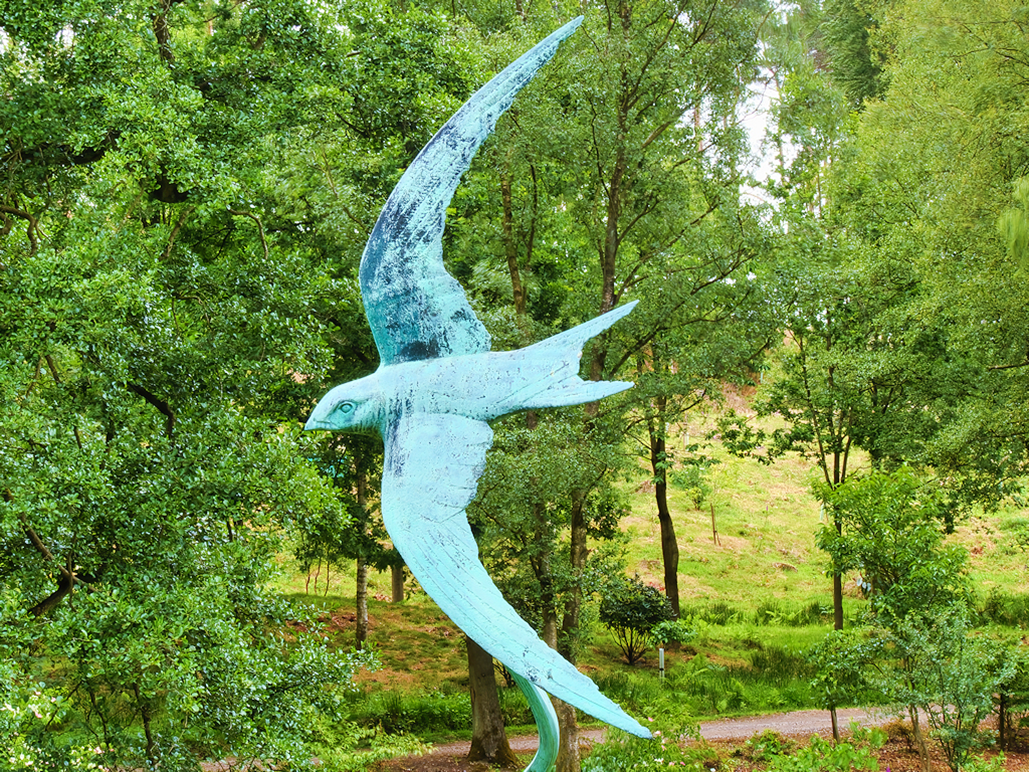
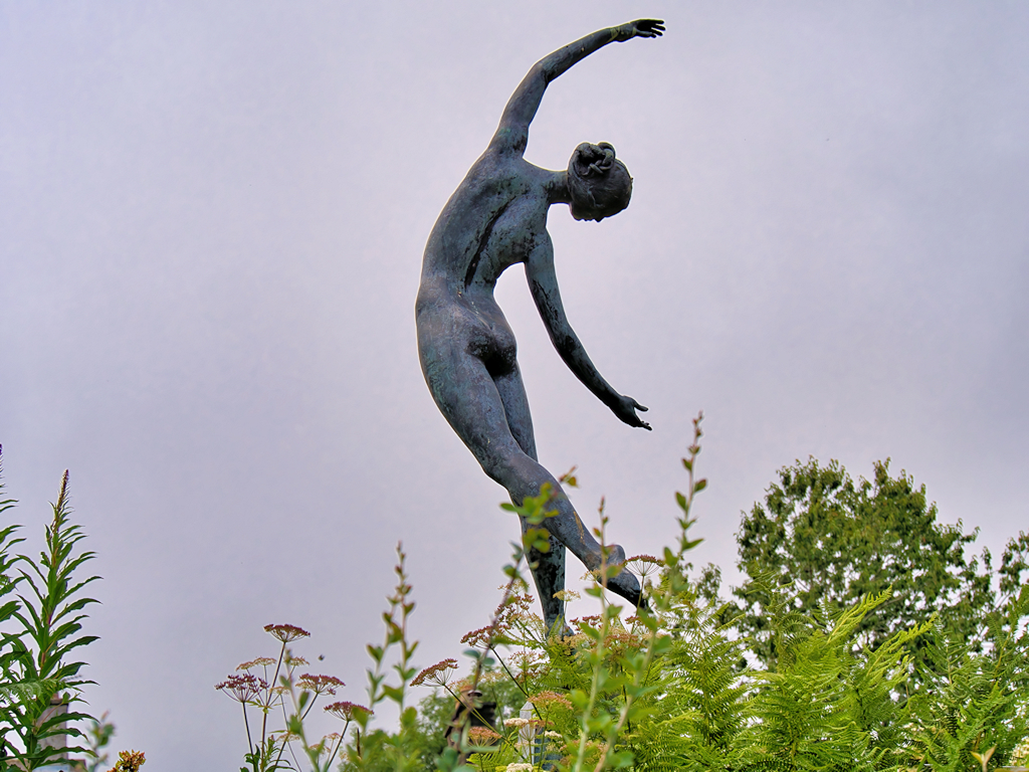
The Swift by Hamish Mackie and Juliet – Study of a Dancer by Tom Merrifield, documented at the Himalayan Garden and Sculpture Park, illustrate two different artistic approaches to works encountered along a garden route. They are independent examples, not Pegasus commissions, and do not establish a universal viewing formula.
3. Identify the details that carry the commission’s meaning
The venue should distinguish design-defining details from secondary texture before casting begins. In a heritage figure, the shape of a historically documented tool may be essential; in a dancer, the alignment of the hands and body may carry the artist’s intent. Small details matter when they communicate the subject, not merely because they are visible at close range.
An annotated maquette can mark the precise edges, gestures, object relationships and modeled transitions that must be retained. The buyer should ask the artist or curator to approve those priorities, with the manufacturer confirming which details need particular attention during mold preparation, casting and finishing.
Pegasus describes lost-wax bronze casting and hand chasing among its manufacturing methods. For a detail-sensitive commission, the relevant question is how the approved wax or model surface is transferred into the casting, which areas need review after the metal is poured, and how post-casting chasing will retain rather than erase the intended contours.
For example, the contour of a tool held between two hands may require checking on the approved model, again on the cast components, and after joining and surface refinement. The commissioner can request matching-angle progress photographs of that feature at agreed milestones. These are recommended project-specific checks, not an assertion that Pegasus automatically supplies the same inspection record on every commission.
4. Decide how the work shares space with other venue activities
A cultural venue should decide whether the sculpture will support guided teaching, individual contemplation or simply passage through the grounds. Those uses lead to different site requirements and are not resolved by artistic detail alone.
For a museum expecting school groups, the architect and operator can identify a gathering area beside—not across—the main accessible path. A contemplative courtyard work may instead need a quieter viewing position and seating at a suitable distance. The commissioning decision is whether those uses can coexist at the proposed site; if not, the location or brief should change.
The institution should also decide what belongs on the artwork and what belongs in supporting interpretation. An historically specific object may need sculptural accuracy, while dates and explanatory context can be carried by a nearby label. This prevents a commission from being overloaded with symbols simply to avoid interpretive signage.
The venue and its design professionals remain responsible for public circulation, access and site operations. Pegasus can fabricate the approved bronze form and coordinate the agreed interfaces; it should not be described as independently approving the venue’s visitor-management plan.
5. Protect approved visual details through casting and post-processing
The manufacturer handoff should distinguish three review moments. Before casting, compare the approved model and production master or wax for the agreed critical features. After casting, review the relevant bronze sections for loss of contour, distortion or defects in those areas. After welding, chasing and patination, compare the assembled result with the same approved reference views.
For a multi-figure scene, a join through a defining hand position or a chased transition that softens the contact between an object and a hand could change the narrative. For a highly textured artwork, excessive surface refinement could remove intentional modeling marks. The buyer should identify those risks in advance and agree which changes require the artist’s approval.
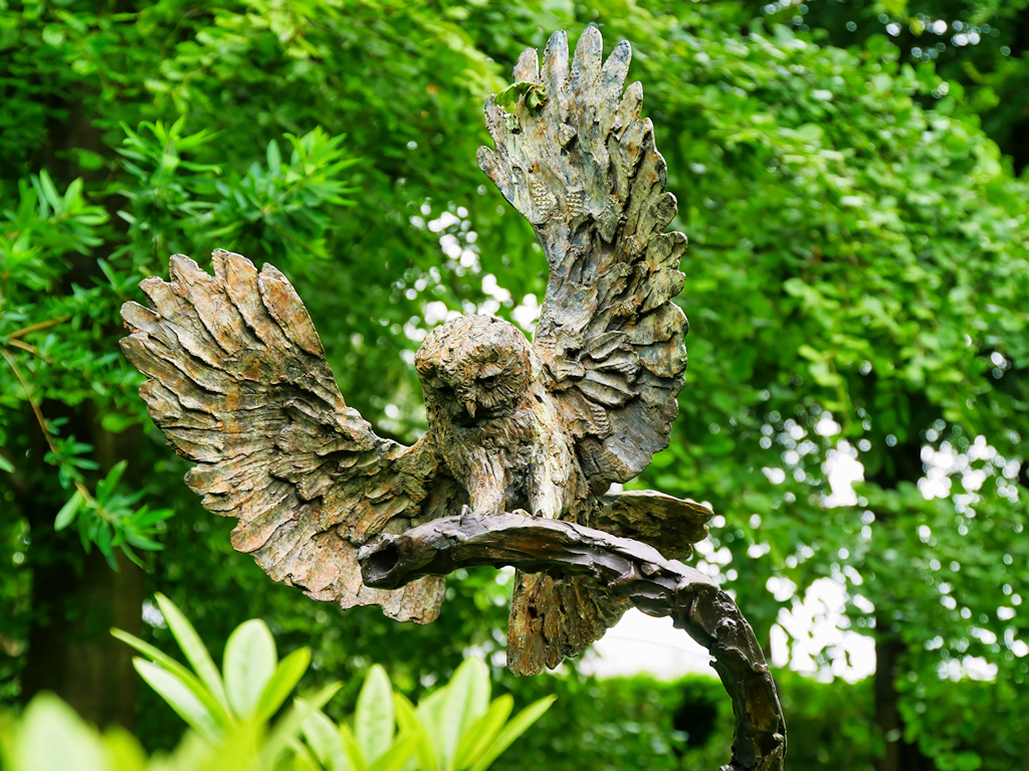
Pegasus offers bronze casting, sectional joining, hand finishing and custom patination. A commission-specific review can therefore request close photographs of designated features before and after joining, plus an agreed patina sample viewed under representative light. Structural, foundation and installation approvals remain separate responsibilities; visual approval does not replace them.
What the commissioning brief should hand to Pegasus
A useful enquiry identifies the sculpture’s primary purpose, the venue’s intended audience, the approved site and approximate scale, the appointed artistic decision-maker, and the design-defining features. Include site photographs and an annotated model or maquette where available. State whether the work is an entrance marker, a garden discovery or an interpretive commission, since those choices affect which details are most important.
If an artist’s model is already approved, the manufacturer’s task is to translate that approved work into bronze and agree the fabrication review stages. If artistic development is still required, the parties should define who develops the model, who approves it, and which changes can be made without further authorization.
Pegasus also presents a project portfolio that can help prospective clients discuss material and scale.
Frequently asked questions
Is outdoor bronze sculpture suitable for a museum or cultural-center entrance?
Yes, if the institution first establishes what the entrance work must communicate and verifies the proposed position with its design team. The commission should record a primary site-view approval and any features essential to the institution’s purpose.
Which project details should be formally protected during fabrication?
Identify the gestures, object shapes, figure relationships or intentional surface marks that carry the meaning of the artwork. Mark them on the approved model and agree when they will be checked during casting, assembly and finishing.
Does a cultural-venue sculpture have to depict a historical figure?
No. Figurative, symbolic and abstract works can all be appropriate. The choice depends on whether the venue wants to commemorate a person, interpret a collection, express a community identity or present contemporary art.
Can Pegasus work from an artist’s existing model?
Pegasus states that it accepts maquettes and digital models for custom bronze fabrication. The commission should define whether the model is already approved or whether further sculptural development is included.
What if the sculpture must serve both school groups and individual visitors?
The operator should approve a gathering position for groups without obstructing access, while the artist and curator establish how the work will be interpreted. These are separate site and artistic approvals, not a reason to make every sculpture equally prominent from every direction.
Commission the right work—and protect it in bronze
An effective cultural-venue commission begins with a clear purpose and a named artistic approver. The resulting model should identify what must survive casting and finishing, while the venue confirms where the work belongs and how visitors can use the surrounding space. That is more actionable than repeating that sculptures look different from near and far.
Explore Pegasus’s custom outdoor bronze sculpture capabilities or contact the team with your concept, site photographs and intended scale to discuss a bronze commission suited to your venue.