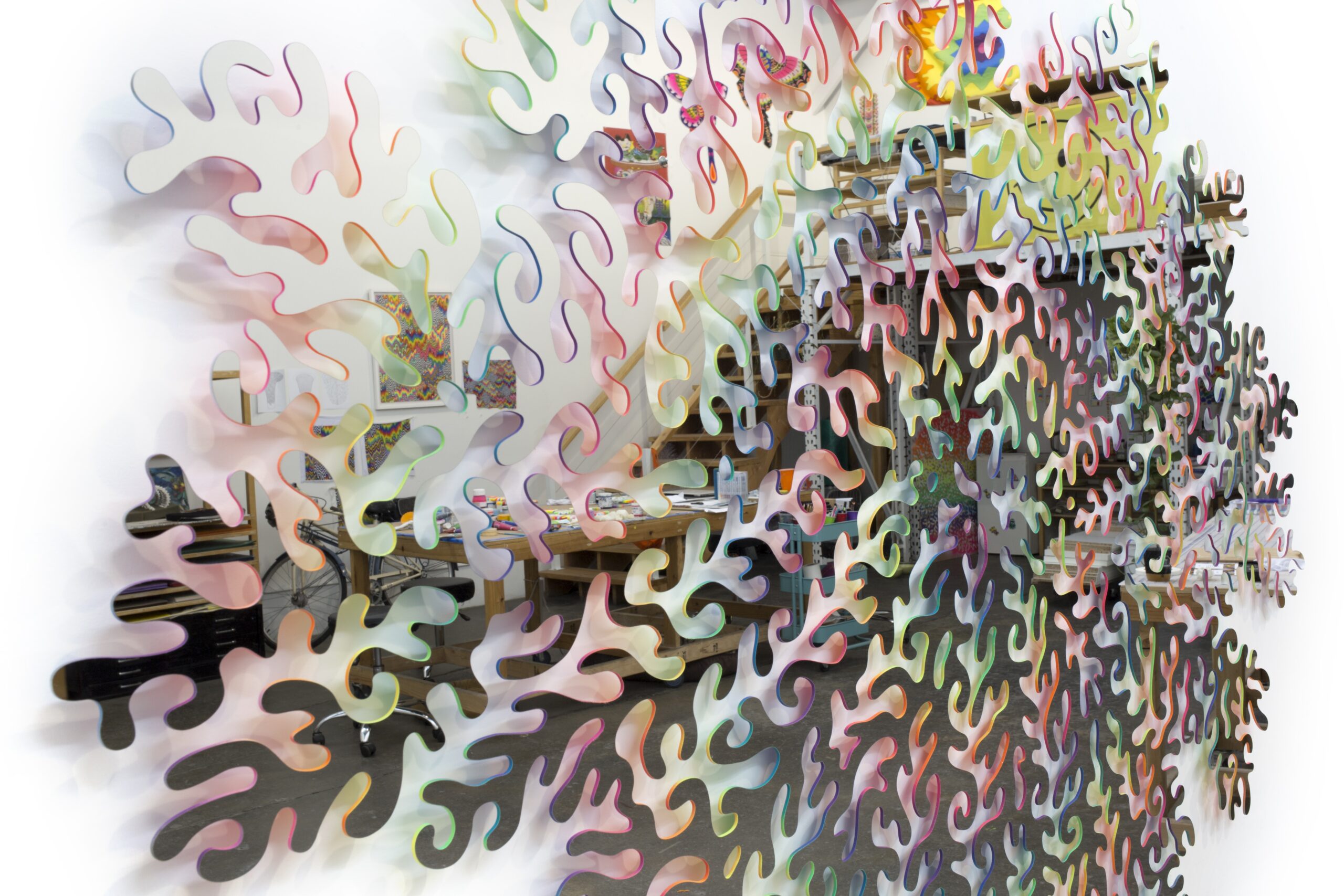
A sculptural finish is rarely judged under the same light in which it will eventually be seen. A mirror-polished form that looks crisp in a workshop may reflect ceiling grilles in a hotel lobby. A brushed surface that appears understated in daylight can reveal directional grain beneath a narrow spotlight. A colored stainless-steel panel can shift noticeably when warm lighting replaces the cool white light used to approve its sample.
For architects and interior project teams commissioning a stainless steel sculpture, the buying decision is therefore not simply “mirror, brushed or colored?” It is which surface will deliver the intended appearance at the actual viewing distance, under the specified lighting, without creating avoidable fabrication or maintenance problems. Pegasus can contribute most effectively when the finish, geometry and lighting brief are reviewed together—before the final production finish is approved.
1. Mirror polish: when reflections are part of the design—and when they become the distraction
A mirror finish is useful when the artwork is meant to interact with a lobby’s architecture. Curved metal can gather reflections of glazing, visitors and light into a changing composition. The same quality creates a procurement risk: an attractive studio rendering may conceal what the sculpture will actually reflect. Bright exit signs, linear ceiling fixtures, digital displays and dark service doors can all become prominent elements on the surface.
Consider a curved sculpture beside a glazed headquarters entrance. From the main approach it may reflect daylight and feel open; from the reception desk it may reproduce a row of downlights as a series of bright dots. The buyer needs both viewpoints, because the sculpture is experienced from both. A finish decision based on a single hero image cannot answer that question.
Pegasus’s manufacturing contribution is to evaluate whether the chosen geometry can be formed, joined and polished while preserving a continuous-looking reflection. Panel breaks, weld locations, forming marks and polishing transitions are especially visible on reflective curves. A practical review should compare the proposed panelization with the sightlines that matter most, then identify which seams need extra finishing attention. A representative curved sample is more informative than a flat mirror-polish coupon.
For a custom mirror-finish commission, the stainless steel sculpture fabrication overview provides a relevant starting point for discussing form, finish and production constraints.
Buyer decision: agree which reflections are intentional from the entrance and reception desk. Request a curved, representative polished sample and identify visible weld zones before the surface standard is approved.
2. Brushed and satin surfaces: control glare without losing the shape
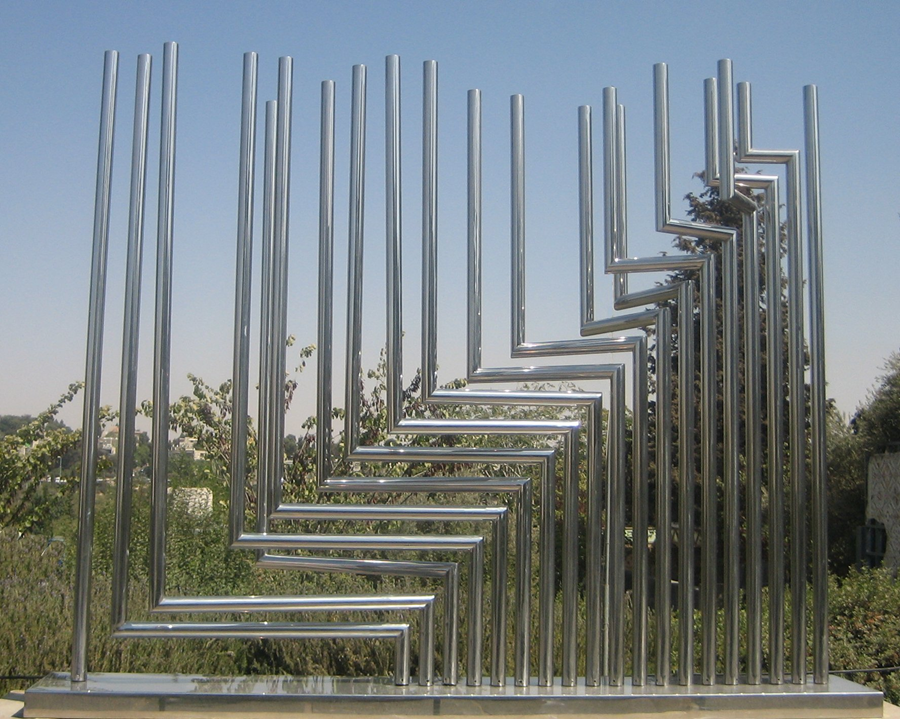
Brushed and satin finishes offer a different response to architectural light. Instead of producing recognizable reflections, they diffuse them and allow the overall silhouette to remain more consistent. That can make them suitable for boardrooms, hospitality corridors or executive waiting areas where the sculpture should hold attention without competing with signage and lighting.
However, “brushed” is not a complete manufacturing specification. The direction and consistency of the grain affect how light travels across a surface. On a vertical ribbon, a continuous grain can reinforce the form; a grain that changes abruptly across joined panels can make a smooth shape look assembled from unrelated pieces. A narrow beam grazing the surface may exaggerate scratches, grain variation or local polishing repairs that are less apparent under broad ambient light.
For Pegasus, the relevant work is finish planning as well as metal forming: establish a consistent grain direction, assess whether the grain can be maintained through curves and joins, and agree on how visible welded areas will be blended. Where a large form requires multiple panels, the fabrication sequence should allow access for finishing rather than leaving the most prominent joint difficult to reach.
Buyer decision: nominate the grain direction on drawings, including curved transitions and edges. Evaluate the sample with light travelling across—not only along—the grain to reveal inconsistent finishing.
3. Colored stainless steel: approve the color under the light that will actually be installed

Colored stainless-steel finishes can create a warmer, darker or more expressive sculpture without using a conventional painted appearance. Depending on the specified finish system, the result may be produced by processes such as PVD coating or other surface treatments. These are not interchangeable specifications: color range, reflectivity, scratch response, batch consistency and repair options depend on the selected process and supplier.
A champagne or bronze-toned surface may appear warm under a 2700 K hospitality scheme but comparatively neutral beneath a cooler office light. Strongly directional light can also emphasize color variation across curved faces. A small sample viewed on a desk may therefore be a poor predictor of a tall sculpture surrounded by several lamp types.
When the finish is still being developed from an architectural concept, Pegasus’s custom sculpture development service is the appropriate route for discussing shape, sample requirements and feasibility.
The manufacturing question is whether the selected coloring system can be applied consistently to the proposed geometry, including curves, joints and concealed returns. The team should confirm the coating or coloring supplier, substrate preparation, batch consistency and repair limitations before a final finish is promised. Pegasus can discuss how the design will be fabricated and coordinate the finish specification for quotation; the availability of any particular coloring process must be confirmed for the project.
Buyer decision: approve the specified finish system on a shaped sample under the actual warm and cool fixture types. Record the accepted color range and whether future local repairs would remain visible.
4. Lighting geometry: how fixture placement changes the sculpture’s silhouette
A narrow-beam spotlight can isolate a sculptural edge while leaving its recessed face dark. A continuous LED strip may trace a curved profile but also expose tiny interruptions where fabricated sections meet. Broad diffuse lighting produces softer transitions and often makes the overall volume easier to read. These are spatial effects, not simply differences between surface finishes.
Two sculptures with the same finish can behave differently under identical fixtures. Convex forms redistribute highlights, concave areas hold shadow, and twists change the reflected direction along their length. The design team should compare the intended focal view with side approaches, rather than relying on one hero rendering.
For coordination, the architect and lighting designer should provide the 3D model, mounting height, principal sightlines, fixture locations and beam angles. Pegasus can use that package to assess where fabricated joints, curvature changes and mounting interfaces might affect the intended appearance. The lighting designer remains responsible for luminaire selection and photometric performance; the engineer and installer remain responsible for project-specific structural and site approvals.
5. Fabrication tolerances: what the lighting reveals after the sculpture is assembled
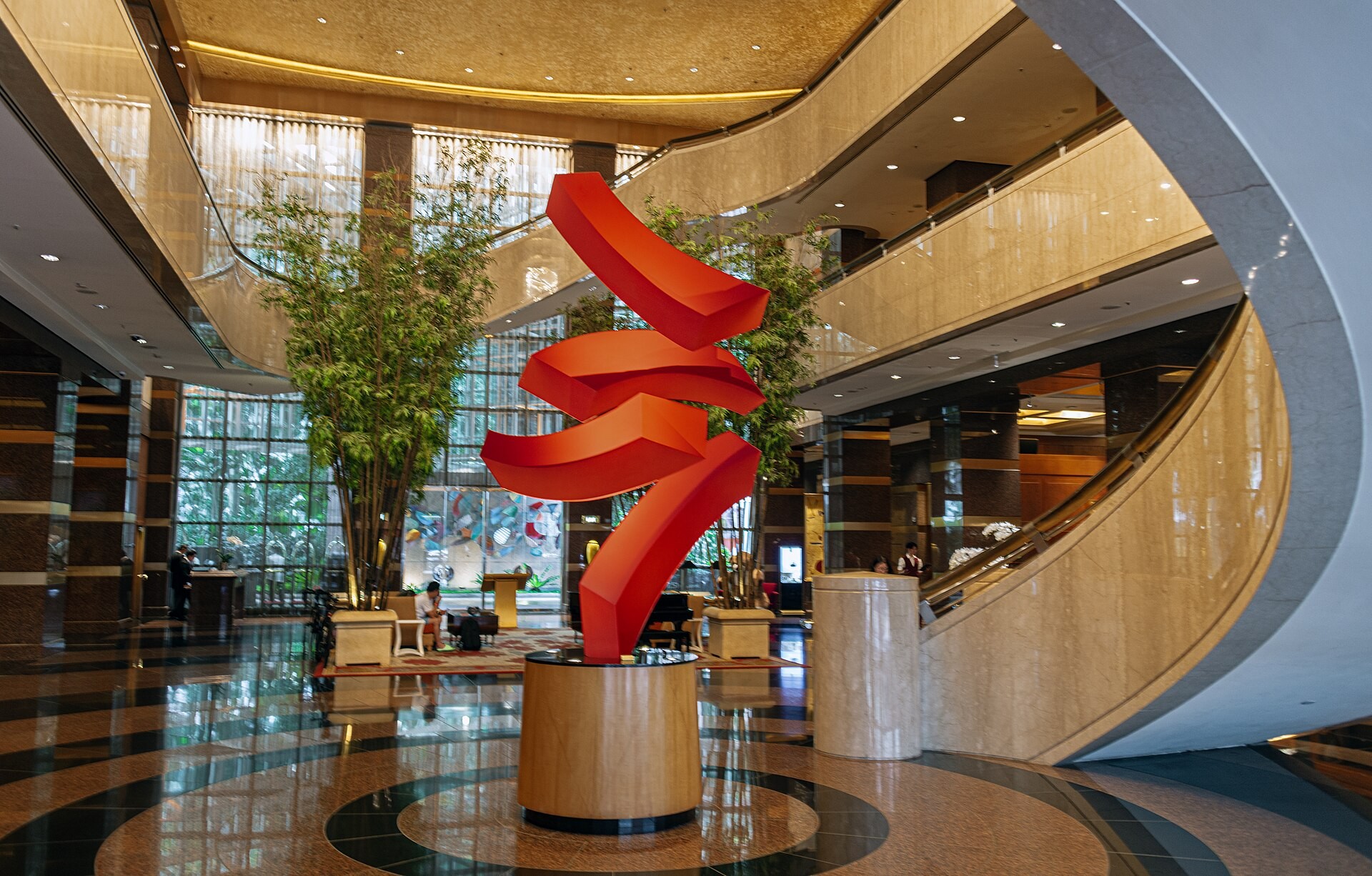
A project gallery can help communicate overall scale and fabrication character, but individual photographs should not be used as proof of a particular finish process or lighting outcome. Pegasus’s completed sculpture projects offer visual references for discussing proportion and surface expectations.
Architectural lighting often makes small manufacturing differences look larger. Grazing light can reveal waviness in a polished panel; a repeated linear reflection can expose a subtle change in curvature at a weld. On brushed steel, a repaired seam may catch the light at a different angle. On colored finishes, neighboring panels may look inconsistent if their surface preparation or treatment differs.
Pegasus’s manufacturing review can address where panels meet, how curves are formed, which welds remain accessible for finishing, and whether the intended surface can be inspected after assembly. The practical output is a fabrication and finish proposal that identifies visible joints and representative sample requirements—not a promise of an invisible seam under every light.
A meaningful acceptance standard specifies inspection distance, viewing angles and agreed illumination conditions. Without these, a small variation may be accepted in a workshop and disputed after installation. The project team should document acceptable surface variation before fabrication starts.
6. Three interior briefs, three different finish decisions
Corporate headquarters reception. The client wants a clean, contemporary form beside glass and stone. Mirror polish may reinforce the architecture, but the team should first test reflections of signage, ceiling lights and the reception desk. If those elements dominate, a softer satin finish may protect the intended silhouette. Pegasus’s task is to develop the approved shape and a credible panel-and-finish approach, not simply quote a mirror finish by default.
Boutique hotel lobby. The interior relies on warm timber, bronze accents and low-level lighting. A colored stainless-steel sculpture may be a good fit, but the sample must be assessed under the installed warm-white scheme. The buyer should ask Pegasus to confirm the proposed color process and its suitability for the geometry before treating the rendering as a fixed production promise.
Gallery-style office corridor. Narrow-beam spotlights create dramatic highlights along a long wall. A brushed sculpture can keep the composition legible, but directional grain and grazing-light inspection become crucial. The manufacturer should review where panel joints sit relative to the spotlight pattern and demonstrate the intended finish on a sample with comparable curvature.
What to approve before production
Concept approval: establish the sculpture’s purpose, target dimensions, arrival sightlines and the specific visual effect the buyer wants to preserve.
Finish approval: agree the actual surface system and a shaped sample; document grain direction, color tolerance or reflection expectations as applicable.
Fabrication approval: review panel divisions, visible joints, finish access and any transport-related segmentation before production drawings are released.
Site approval: coordinate mounting, safe access, light locations and final inspection conditions with the project architect, lighting designer, engineer and installer.
How Pegasus supports the specification-to-manufacturing process
Pegasus’s role begins with translating a visual brief into a manufacturable proposal. For an interior stainless-steel commission, the buyer can provide dimensions, concept sketches or a 3D model, site photographs, expected viewing distance and finish references. Those inputs help the manufacturing team identify early conflicts between the desired appearance and the shape, panel arrangement or finishing access.
During pre-production discussions, Pegasus can assess forming and assembly approaches, propose where samples or mock-ups would reduce uncertainty, and clarify which finish requirements must be confirmed with specialist suppliers. For a project with complex lighting, the architect and lighting designer should review the proposed appearance while Pegasus focuses on fabrication feasibility and finish execution. Any final engineering, installation or specialty-coating scope should be agreed explicitly rather than assumed.
Explore Pegasus’s stainless steel sculptures for the broader manufacturing offering. If your team is comparing an early concept with a finished architectural scheme, share the drawings, site photographs and lighting brief through the custom sculpture enquiry page so the finish and fabrication discussion can begin with the real project conditions.
Frequently asked questions
Is mirror polish always the best choice for a luxury interior?
No. It can create a striking architectural relationship, but it can also reflect unwanted fixtures, signage and visual clutter. Review the sculpture from its real viewing positions before choosing the finish.
Can a brushed stainless-steel sculpture still look premium?
Yes. A carefully controlled grain and consistent satin finish can produce a refined appearance, particularly in spaces where glare control and silhouette matter more than reflection.
Why does colored stainless steel look different in photographs?
Camera settings, surrounding reflections and the light source affect perceived color. The specified coloring process and an approved physical sample under representative light are more reliable than a screen image.
What information does Pegasus need for an accurate discussion?
Share dimensions, drawings or sketches, installation location, material preference, desired finish, key viewing angles, lighting conditions and any access constraints. This helps define what can be evaluated before quotation and fabrication.