A Headquarters Sculpture Has to Earn Its Place
A headquarters can have an impressive reception desk, carefully selected stone and expensive furniture yet still feel anonymous. The sculpture brief often begins with an imprecise request—“something modern.” For a procurement team, that is a risky starting point: two artworks can look equally convincing in a rendering but demand very different manufacturing processes, surface standards and budgets.
The useful way to evaluate modern sculptures is to choose the experience the piece must create in its particular space, then ask a manufacturer to show how that experience will survive fabrication. A quiet executive suite, a reception with important sightlines and a tall atrium are not variations of the same problem. This article uses the broad term “modern sculptures” to attract relevant discovery searches, but its commercial focus is custom commissions for offices and headquarters; the abstract-sculptures collection is the broader product hub, not an office-specific landing page.
1. Quiet Monolith: A Calm Executive Room Exposes Every Surface Defect
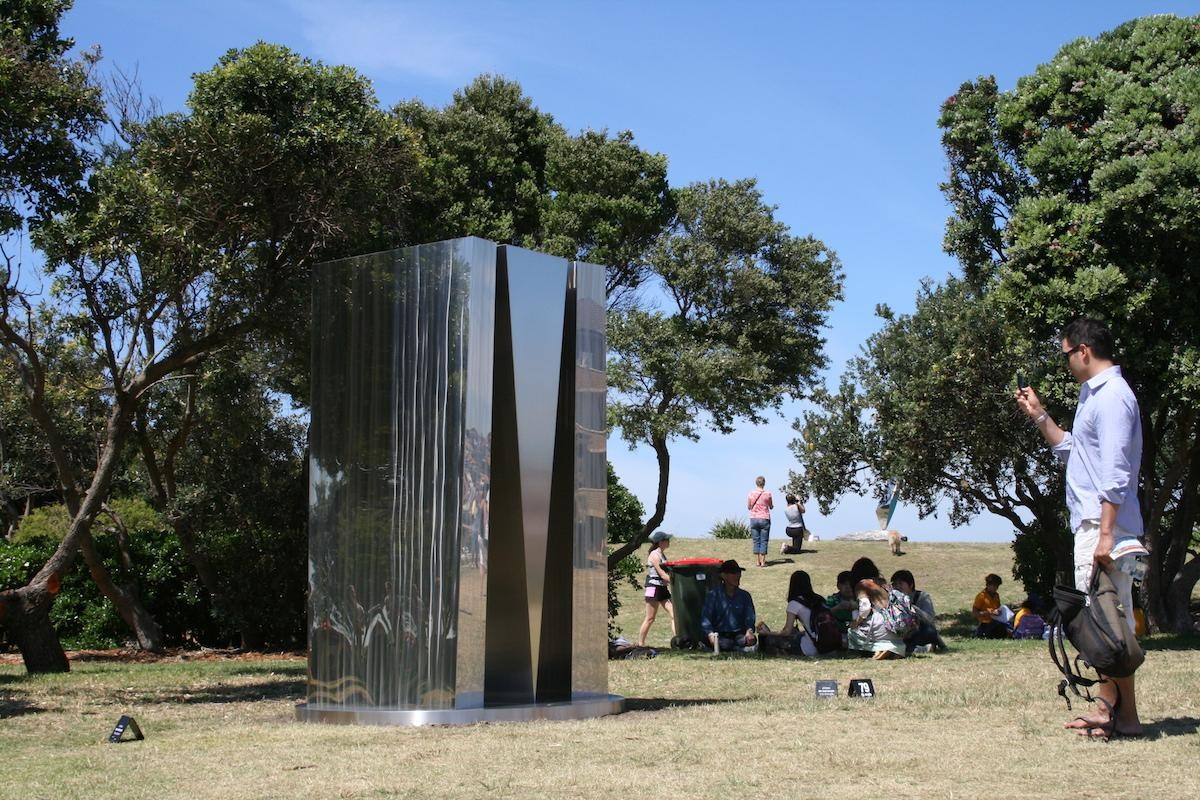
A private reception or boardroom may need a single restrained sculptural form rather than another object full of visual detail. A monolith with broad planes and a precise edge can achieve that restraint. But simplicity makes workmanship more visible: a slight ripple in a polished panel, an uneven corner or a poorly resolved base can become the feature visitors notice first.
For a hollow stainless-steel piece, Pegasus can assess whether the proposed form is better produced with shaped sheet panels and an internal frame or whether a different material and process would preserve the intended mass more convincingly. Panel size, forming sequence and weld positions matter because heat input can distort broad surfaces. Finishing may require controlled grinding and polishing across joined areas; an uninterrupted reflective surface is not achieved merely by specifying “mirror finish.”
Before the buyer approves the direction, request a dimensioned elevation, an edge-and-base detail and a representative finish sample or fabrication mock-up if the commission warrants one. The important question is whether the factory can show how it will maintain a clean plane and crisp silhouette at the actual size. This is a finish-quality decision, not a discussion about corporate branding.
2. Open Loop: Preserve a Clear View Without Making the Curve Look Heavy
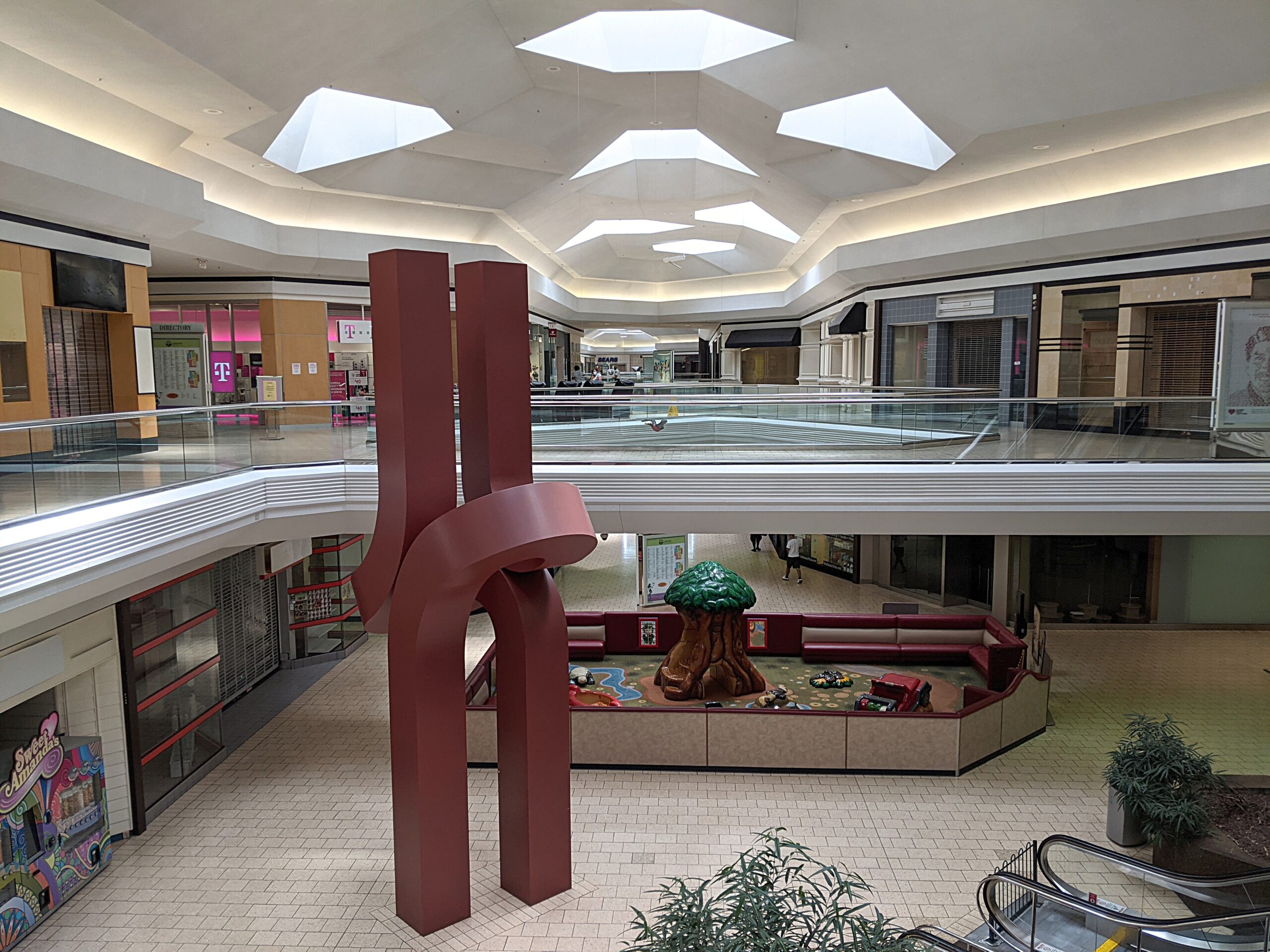
An open loop is difficult because the visible gap depends on more than its front-view outline. A ribbon that looks thin in a concept drawing must acquire a physical cross-section large enough for fabrication and support. Tight return radii can cause forming limits, panel springback or visible faceting; meanwhile, a hidden frame or base connection can intrude into the void. For a corporate reception, that intrusion matters because the opening may frame the desk, entrance or a sightline through the lobby.
Pegasus can review the 3D centreline together with the full ribbon width, depth, bend radii and support path. For a fabricated stainless-steel loop, the team can assess whether rolling, shaped segments or separately formed skins are appropriate, and where welds can be placed without flattening the curve. A continuous-looking loop may require a concealed internal spine and carefully located joints. The project engineer must confirm the structural solution; the manufacturer should demonstrate how it affects the visible opening.
Before approval, ask for dimensioned front and oblique views, a section through the tightest bend, a proposed joint map and an opening-clearance check at the intended viewing positions. If the frame, bend radius or weld access requires a change, compare the revised geometry with the original model. The key acceptance criterion is that the loop remains visually open and balanced after its real construction depth is accounted for.

3. Layered Composition: Make Independently Fabricated Parts Read as One Work
A headquarters may prefer a composition of offset planes, interlocking rings or overlapping elements. Its value comes from the precise relationship between components. If one panel rotates slightly during assembly or a spacer changes the depth, the intended rhythm can disappear even when every individual part is well made.
Pegasus can use 3D modeling and fabrication planning to establish controlled distances, connection locations and an assembly sequence. Separate parts require allowances for manufacturing variation; fixing everything rigidly without a sensible adjustment strategy can create alignment problems. Depending on the material, the team may propose concealed brackets, indexed connection points or a trial fit before final finishing. These are production options to evaluate, not evidence that every Pegasus project uses the same method.
The buyer should request a numbered component drawing with the critical gaps and overlap dimensions identified. If a trial assembly is included in the contract, ask for photographs from the agreed main viewpoints, not only close-ups of the joints. This section is about geometric coordination between multiple pieces—not the single continuous curve addressed above.
4. Tactile Form: Make Warmth and Texture Repeatable in Real Materials
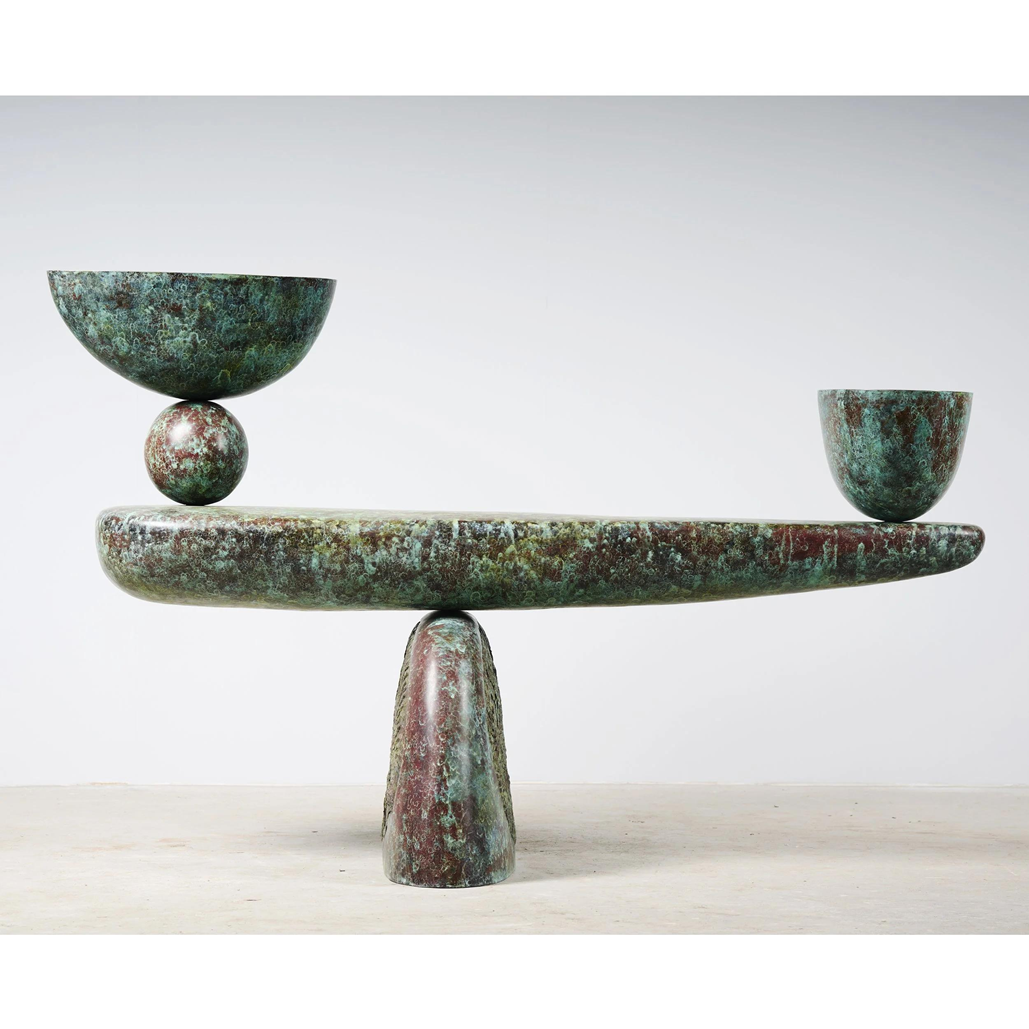
Warmth and texture introduce a different production challenge: two pieces can share the same approved colour reference but look inconsistent because of casting texture, grinding marks, patina chemistry or lighting. A bronze form may carry hand-modeled relief and a layered patina, while a stainless-steel form may rely on controlled brushing, polishing or a specified coating. These are different material systems, and their finishes should not be treated as interchangeable.
For bronze, Pegasus describes lost-wax casting, hand finishing and custom patination. The manufacturer can assess where cast sections meet, how chasing will blend those joins and whether patina will read consistently across separately finished pieces. For stainless steel, weld blending, polishing direction and surface waviness influence whether adjacent panels reflect light uniformly. A highly reflective finish may make a small variation more noticeable than a textured one; a patinated finish may legitimately have variation that needs an agreed acceptance range.
Request physical samples on curved or textured surfaces, not only flat colour chips. Approve a reference for colour, sheen, relief depth and acceptable variation under lighting comparable to the headquarters interior. If the sculpture will be made in multiple sections, agree how joints and repairs will be finished and what the factory will photograph or inspect before dispatch. This is a material-consistency decision, separate from the loop’s geometric challenge.
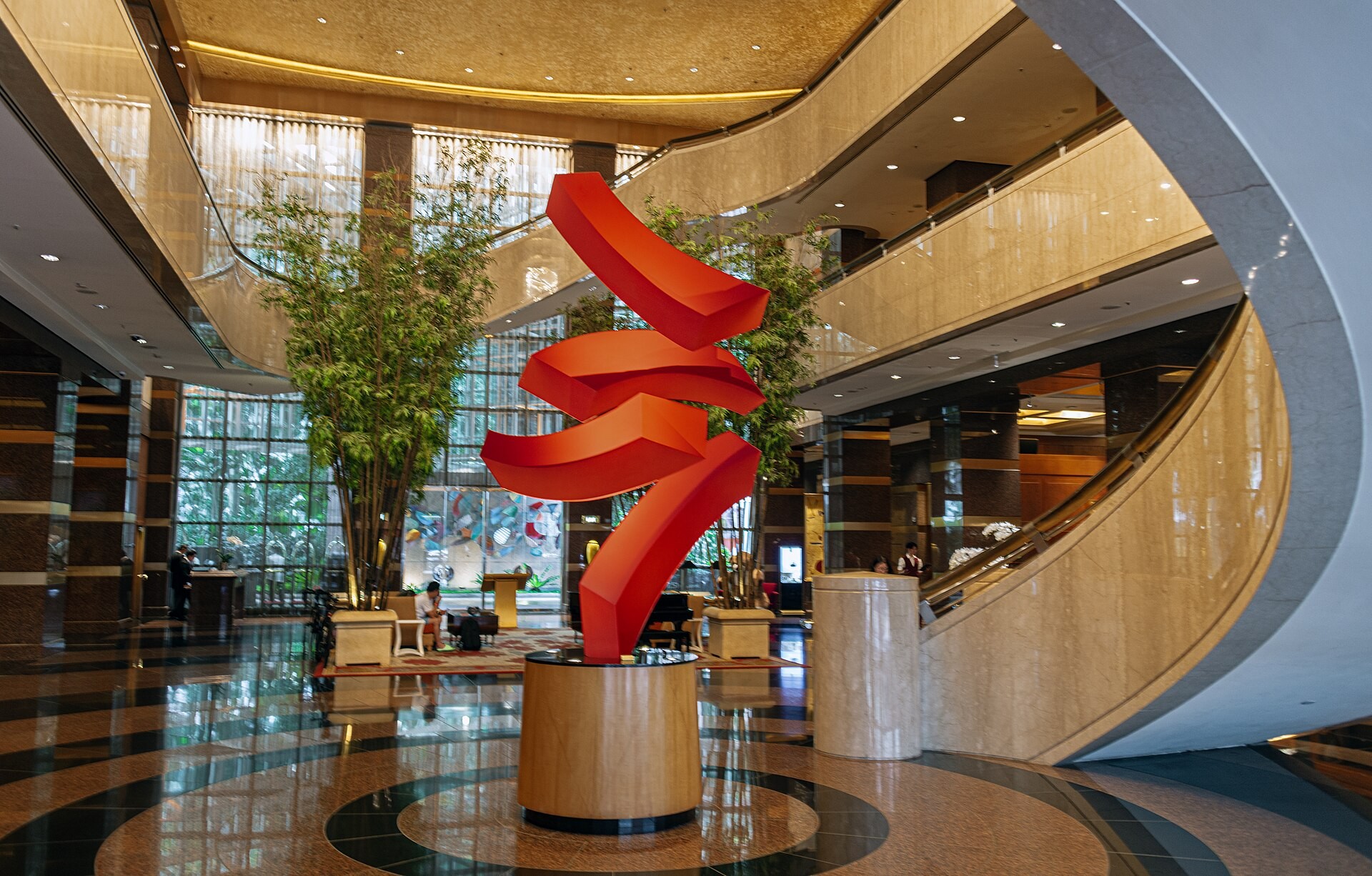
5. Vertical Gesture: Keep a Tall Atrium Sculpture Slender at Full Scale
A tall atrium sculpture is not simply a small object enlarged in software. At full scale, the visual relationship between its height, width, taper and negative spaces can change from the ground floor to upper-level viewpoints. A slender gesture may need thicker internal support, wider joints or transportable modules. If those requirements are handled after the concept is approved, the final sculpture can become noticeably heavier than the architect intended.
Pegasus publishes digital modeling, internal framing and sectional fabrication capabilities. For a proposed atrium commission, the team can compare the artist’s intended silhouette with a full-height fabrication model showing skin thickness, support zones, module breaks and connection clearances. Scaling affects more than strength: small changes in a transition or taper become conspicuous over several metres, and alignment errors between modules can interrupt a continuous rising line. Structural and site approvals remain the responsibility of the appointed qualified professionals.
Ask for a dimensioned full-height elevation, a scaled human-reference view, ground-floor and mezzanine viewpoints, and a proposed module/interface drawing. Where a thicker support zone or shipping joint changes the profile, require an explicit visual sign-off before production. If a trial fit is included, photographs from the agreed viewing positions should verify the overall proportions as well as individual connections. The acceptance criterion is preservation of the approved full-scale gesture, not merely successful assembly.
Compare the Five Directions Before Requesting a Price
| Direction | Buyer’s defining requirement | Manufacturing evidence worth requesting |
| Quiet monolith | Clean, uninterrupted surfaces | Panel/edge method and representative finish detail |
| Open loop | A readable opening from reception | 3D cross-section and bend/support review |
| Layered composition | Exact spacing between components | Dimensioned component layout and trial-fit scope |
| Tactile form | Warm, convincing surface up close | Curved/textured material and finish sample |
| Vertical gesture | Slender profile across multiple levels | Full-height model with support-related changes shown |
What Pegasus Manufacturing Experience Can Contribute
A supplier should do more than say a concept is possible. Pegasus’s published capabilities span digital modeling, CNC-assisted development, metal fabrication, bronze casting, finishing and modular production. Their value to a headquarters buyer is the ability to discuss form and process together: where a curve may need to be divided, how a finish will behave over a welded transition, whether separate elements can be assembled to the approved geometry, and what should be sampled before full production. The exact workflow and deliverables must be agreed for each commission.
There is a useful example in Pegasus’s own published account of a mixed-use-development metal sculpture. Pegasus reports that its team reviewed the internal framework and changed the sectional fabrication and transport strategy while preserving the approved appearance. That is evidence of the kind of manufacturing trade-off a buyer should discuss early, although the account does not establish that the work was for a headquarters or that it used any of the five forms above. It also does not provide independently verified cost savings.
The underlying manufacturer-reported example is described in Pegasus’s custom metal sculpture fabrication article. Its transferable lesson is precise: ask what must change inside or between the sculpture’s components, and insist that any visible consequence be reviewed before fabrication.

What to Include in a Headquarters Sculpture Enquiry
Start with the room or atrium photographs, a dimensioned location or approximate size envelope, one preferred direction from the five above and the visual quality that cannot be compromised. Add the decision stage and budget range if available. A manufacturer can then identify whether the next useful deliverable is a model review, a material comparison, a finish sample or a component assembly study. This is more useful than requesting a final fixed price from a mood board alone.
Pegasus’s customization service provides a starting point for discussing design inputs and production feasibility. Ask for a proposal that names the specific design checks and samples included, rather than assuming every commission has the same scope.
Frequently Asked Questions
Can we keep a sculpture visually lightweight without using thin, fragile sections?
Often the appearance can be preserved by changing the internal support strategy or cross-section, but the result depends on scale and material. Request an updated model that shows the external profile and any proposed support-related changes.
Why can a simple stainless-steel sculpture cost more to finish than a detailed one?
Broad smooth planes and seamless-looking transitions expose ripples, weld marks and inconsistent reflections. The price may reflect forming accuracy, weld finishing and surface inspection rather than the number of decorative details.
Can Pegasus compare bronze and stainless steel for the same concept?
Pegasus offers both stainless-steel sculpture fabrication and bronze casting. A meaningful comparison should cover form, texture, finish, component construction and the visible effects of changing materials, not simply compare material prices.
What evidence should we request before approving a custom headquarters sculpture?
Ask for evidence that addresses the principal risk of your selected direction: a surface sample for a monolith, a dimensioned opening for a loop, a component layout for layered work, a patina sample for a tactile piece or a full-height profile for an atrium sculpture. Request relevant production photographs or documented examples where available; do not assume a catalogue image proves a specific process.
Discuss Modern Sculptures for Your Headquarters
If you are comparing modern sculptures for an executive suite, reception or headquarters atrium, send Pegasus the site context and the visual effect you need to preserve. The team can discuss appropriate manufacturing methods, potential form adjustments and the review materials required for a realistic production proposal.
Share your project details through the Pegasus contact page to begin the discussion.