Start With the Commercial Job, Not the Sculpture Catalogue
A hotel lobby, an exterior plaza, a corporate campus and a mixed-use development can all request a “modern sculpture,” but the commercial job is different in each setting. The hotel may want a memorable arrival moment. The plaza may need a landmark that can hold its own against architecture and public movement. A corporate campus may want identity without turning the artwork into signage. A mixed-use development may need one sculpture to make sense to residents, workers, shoppers and visitors.
That difference should shape the first manufacturer conversation. Pegasus works across stainless steel, bronze, marble, fiberglass and resin, so the project does not need to be forced into one material before the role of the sculpture is understood. The useful first step is to define the application, desired visual character, approximate scale and surrounding material palette; Pegasus can then narrow the discussion to credible material and finish directions for the proposal.
Four Applications, Four Manufacturer Responses
| Application | Commercial objective | Useful first inputs | Pegasus manufacturer response |
| Hotel lobby / arrival | Create a memorable arrival moment that belongs to the interior. | Lobby image/render, ceiling height, approximate footprint, palette, desired mood. | Pegasus can compare material and finish directions against the interior character, then shape the proposal around the intended scale, surface character and level of visual impact. |
| Exterior plaza | Create a landmark with a clear relationship to the architecture. | Plaza image/render, facade materials, approximate scale, desired prominence, project location. | Pegasus can respond with outdoor-suitable material/finish directions and a fabrication approach appropriate to the intended scale, while keeping the article at application level rather than turning it into site engineering. |
| Corporate campus | Create identity and a recognisable place-marker without oversized branding. | Campus images, audience, brand cues, preferred abstraction level, location options. | Pegasus can translate the desired character into a small number of sculpture directions and material/finish routes that feel connected to the workplace rather than generic corporate art. |
| Mixed-use development | Create a shared destination object for several user groups. | Masterplan extract, placement zone, user mix, day/night character, surrounding materials. | Pegasus can compare directions that remain commercially appropriate across several audiences and help narrow material, finish and scale before detailed design begins. |
Hotel Lobby: Shape the Arrival Experience
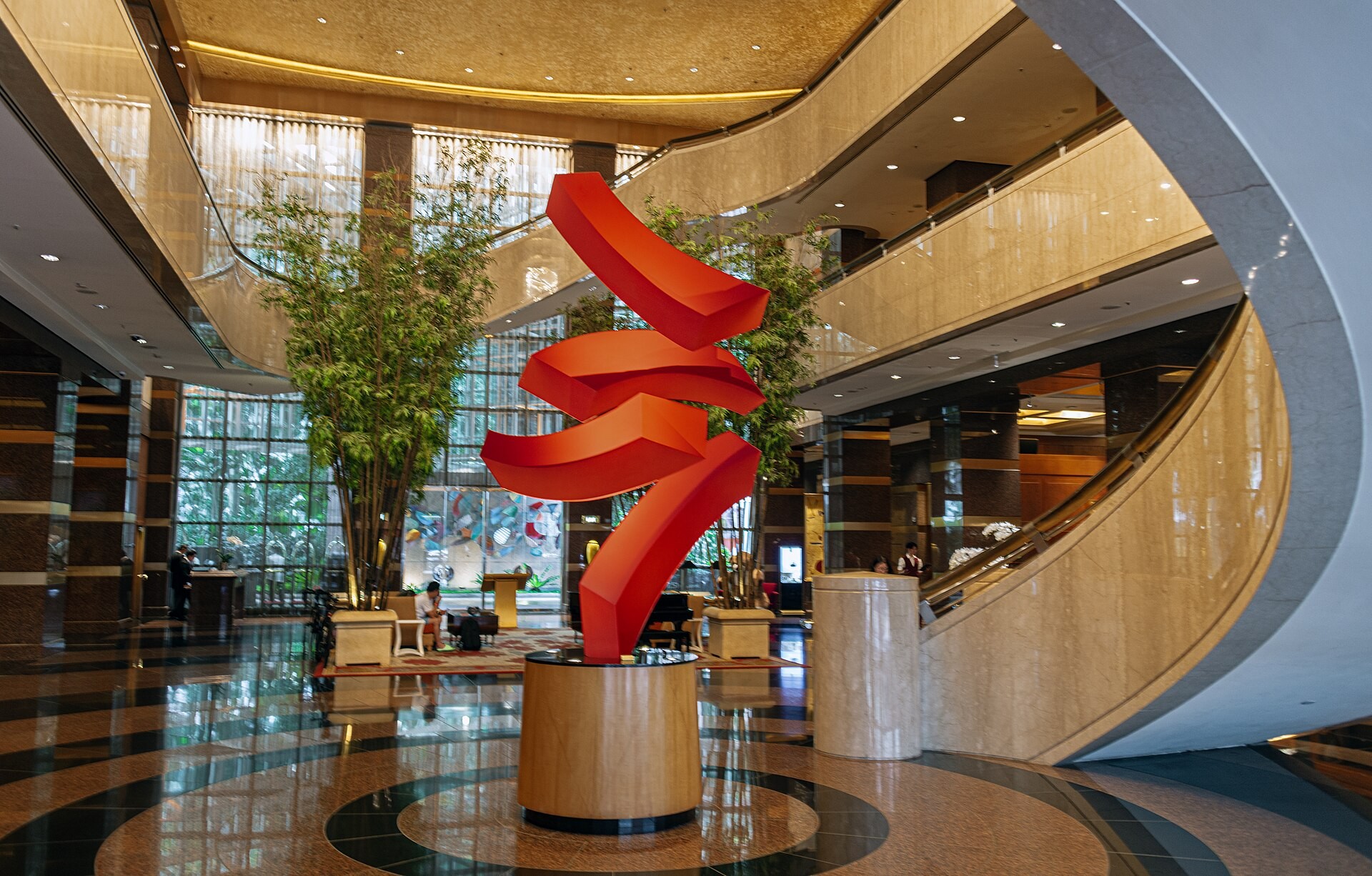
A hotel sculpture shares the frame with reception desks, stone or timber finishes, furniture, lighting and guest circulation. The question is therefore not simply which object looks luxurious. The stronger question is what the property wants guests to feel when the lobby opens up: calm, energy, exclusivity, warmth, precision or a memorable photo moment.
A highly reflective metal surface can reinforce a crisp contemporary interior, while a quieter satin metal, bronze patina or stone direction may sit more naturally where the room already contains strong lighting, pattern or texture. Scale also needs to feel intentional at normal guest distance; an object that works in a catalogue image may feel visually weak or unnecessarily dominant once placed beside furniture and architecture.
Pegasus manufacturer response
At this stage Pegasus does not need a completed engineering package. With the lobby image or render, approximate footprint, ceiling height, palette and desired visual character, the manufacturer can compare suitable material and finish routes and discuss which direction is realistic for the intended scale. This keeps the conversation commercial: the buyer sees not only what may look appropriate, but how Pegasus can turn that interior brief into a manufacturable proposal.
For related material and design options, explore Pegasus’s Bronze Sculpture, Marble Sculpture and Abstract Sculptures pages.
Exterior Plaza: Choose a Landmark Direction
An exterior plaza places the sculpture against a much larger visual field: facade, paving, sky, planting, vehicles and public movement. The application decision is whether the sculpture should echo the architecture, interrupt it with a stronger contrast, or act as an independent landmark.
Material and finish should follow that role. Mirror-polished stainless steel can create a deliberate dialogue with glass architecture, while satin metal, colour, bronze or stone may produce a clearer silhouette where the background is already visually active.
Pegasus manufacturer response
Pegasus can use the plaza image or render, facade materials, target scale and desired prominence to narrow the proposal to material and finish directions that make sense for permanent outdoor display. Once a direction is selected, detailed site engineering can be handled in the appropriate project stage; this article deliberately stays focused on choosing the commercial sculpture direction.
For exterior commercial applications, see Pegasus’s Stainless Steel Sculpture and Garden Sculpture capabilities.
Corporate Campus: Build Identity Without Turning Art Into Signage
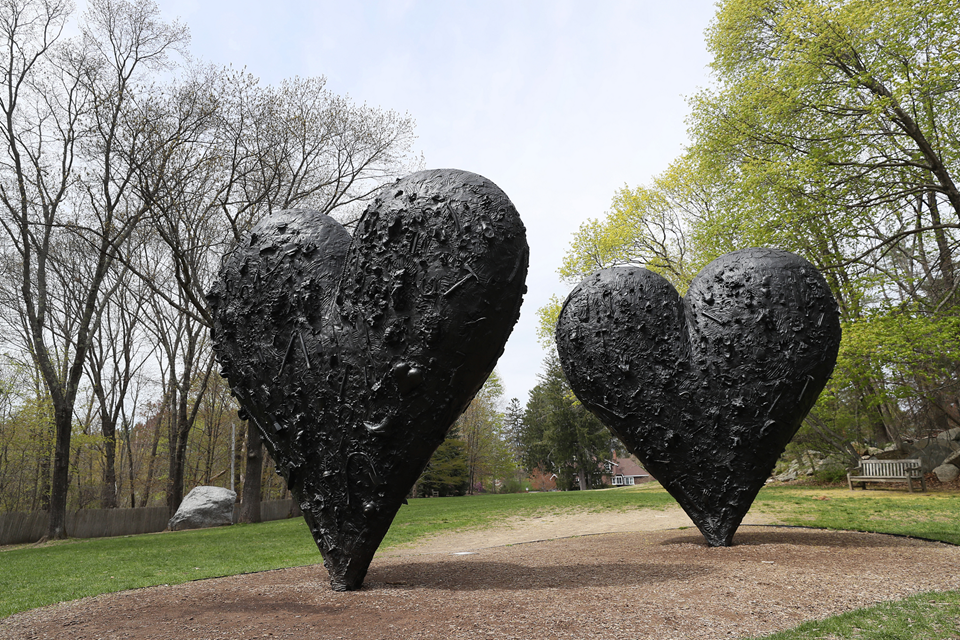
Corporate briefs often begin with words rather than forms: innovation, collaboration, precision, sustainability, movement or growth. Those ideas are useful when they guide the visual direction, but the sculpture should not become a literal three-dimensional slogan.
A campus commission can become a meeting point and a recognisable marker for employees and visitors. A technology-led workplace may respond to a precise metal language; a campus organised around landscape and natural materials may call for a warmer bronze or stone direction. The application should come from the character of the place, not from a generic idea of ‘corporate art’.
Pegasus manufacturer response
Pegasus can work from the architecture, audience, brand cues and reference images to translate an abstract corporate idea into a limited set of practical visual directions. That may mean comparing material character, surface treatment and approximate scale before the buyer invests time in a fully developed concept. The manufacturer’s value here is not to dictate the brand message, but to turn the intended character into options that can actually move forward as sculpture.
For non-figurative directions and completed-work context, review Pegasus’s Abstract Sculptures and Project Portfolio.
Mixed-Use Development: Select for More Than One Audience
Mixed-use developments are different because there is no single user journey. A resident may pass the sculpture every morning, an office worker may use it as a meeting point, retail visitors may see it from the main approach, and occasional visitors may encounter it as part of the public realm.
The first application decision is therefore the role of the work: entrance marker, central landmark, quieter courtyard piece, or a visual connector between different parts of the development. That role can then guide whether the project needs a more energetic reflective surface, a quieter finish, a warmer bronze direction, a stone-led presence or another contemporary route.
Pegasus manufacturer response
With the masterplan extract, placement zone, user mix, surrounding materials and desired day/night character, Pegasus can compare directions that are credible for several audiences rather than optimised for only one viewpoint or one user group. The outcome at this stage should be a clearer material/finish/scale direction for the proposal — not an engineering tutorial.
For landscape-led applications, continue to Pegasus’s Garden Sculpture page, or review the Project Portfolio for completed-work context.
What to Send Pegasus at the Application-Selection Stage
The first submission can stay simple. The purpose is to give Pegasus enough commercial and visual context to recommend a credible direction before detailed design begins.
| Send | Why it matters to the proposal |
| One wide site or interior image | Shows the sculpture in relation to the property rather than as an isolated object. |
| Approximate scale range | Prevents concepts that are visually wrong for the room, plaza or campus. |
| Primary audience | Clarifies whether the work is for guests, employees, residents, public visitors or several groups. |
| Desired visual character | Words such as quiet, bold, reflective, tactile, warm, minimal or colourful are more useful than a generic request for ‘modern’. |
| Surrounding material palette | Helps Pegasus compare finish and material directions against the architecture. |
| Two or three reference images | Shows the level of abstraction and visual energy the buyer responds to without asking for a copy. |
Why Pegasus Fits This Decision Stage
Pegasus works across Stainless Steel Sculpture, Bronze Sculpture, Marble Sculpture, fiberglass and resin. That multi-material position matters at application-selection stage because the brief does not have to be forced into one material before the commercial purpose of the sculpture is understood. Pegasus can first interpret the setting, audience, desired character and approximate scale, then narrow the conversation to credible material and finish routes for the next proposal stage.
Next step: Send Pegasus the location image/render, approximate scale, audience, desired visual character, surrounding materials and reference images. The project team can then discuss the most appropriate sculpture direction before detailed design development.
Frequently Asked Questions
Are modern sculptures only suitable for minimalist architecture?
No. A contemporary sculpture can work with stone, timber, historic fabric, glass or decorative interiors when its scale, material character and finish respond to that setting.
Which material is best for a modern commercial sculpture?
There is no universal best material. Stainless steel can support precise or reflective contemporary forms; bronze can bring warmth and depth; marble can create a quieter architectural presence; fiberglass or resin can support other visual directions. The application and intended effect should lead the first comparison.
Should a hotel and a corporate campus use the same selection criteria?
No. A hotel usually prioritises guest arrival and interior atmosphere, while a corporate campus may prioritise identity, recognition and relationship to workplace architecture. The same sculpture direction can perform very differently in those settings.