The Site Should Change the Manufacturing Plan
A resort arrival court, civic plaza, landscaped estate and rooftop terrace can all need an outdoor sculpture, but the factory should not manufacture the same object four times and simply change the delivery address. Salt exposure, public contact, irrigation, wind, structural limits and lifting access can change the material grade, internal structure, section strategy, surface treatment, factory assembly sequence and packing plan.
That is where a custom sculpture manufacturer adds value. The buyer defines the site conditions with the architect and engineers; Pegasus translates those conditions into a buildable sculpture package. The result is not just a form that suits the site visually, but a manufacturing plan that anticipates how the sculpture will be fabricated, protected, transported and assembled.
For projects still defining the brief, Pegasus’s sculpture specification guide explains which site, structural, material and budget inputs should be established before concept development.
Four Commercial Sites, Four Manufacturing Responses
| Site | Main project condition | What changes at Pegasus | Buyer decision supported |
| Coastal / island resort | Salt air, humidity, irrigation, guest proximity and restricted installation windows. | For stainless-steel work, Pegasus publishes 316L as its coastal/industrial material direction; alloy specification can be locked, site exposure considered during engineering, and packing/installation planned around resort access. | A proposal based on the real environment rather than a generic ‘outdoor’ specification. |
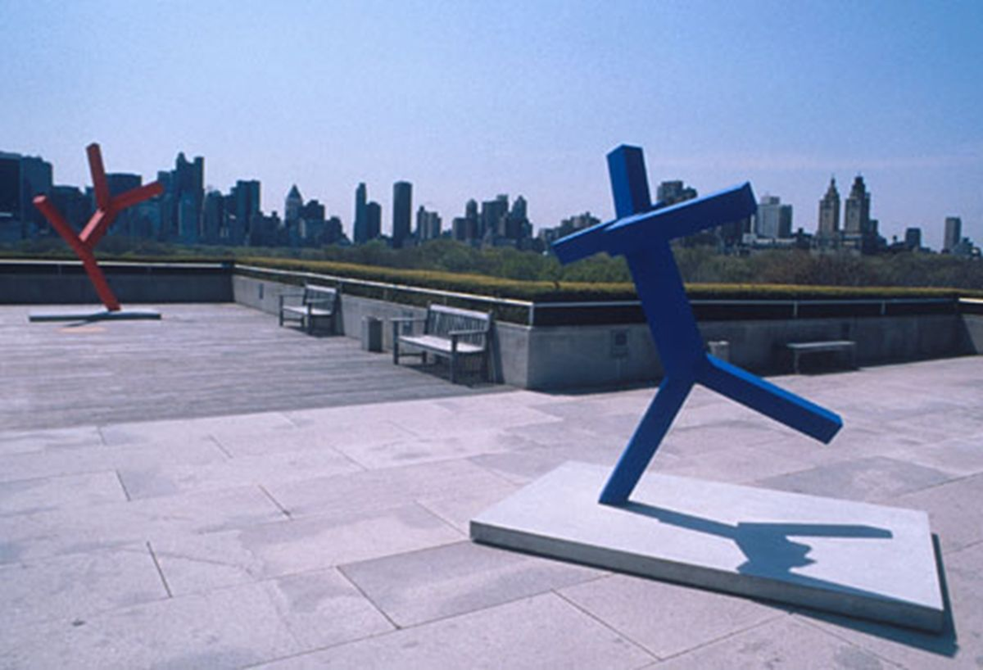
| Civic / commercial plaza | High public contact, multiple sightlines, event use and permanent exposure. | Geometry, structural framing, surface finish, base interface and installation sequence can be coordinated around public use and the approved site engineering. | A landmark that can be fabricated and installed without treating the plaza as an empty plinth. |
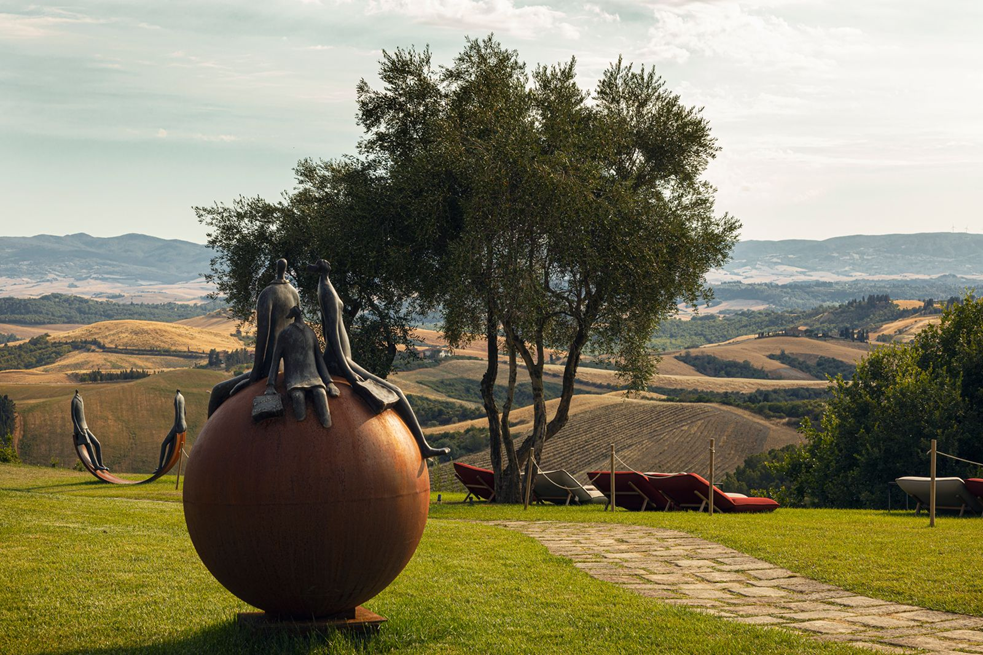
| Estate / designed garden | Irrigation, drainage, planting growth, maintenance access and desired aging character. | Material and finish can be selected around the landscape; Pegasus can coordinate stainless steel, bronze, marble, FRP or mixed-material production with project-specific surface treatment and packing. | A finish and material direction aligned with how the landscape will actually expose the work. |
| Rooftop / terrace | Building load limits, wind, lift dimensions, temporary loading and restricted assembly space. | Engineering review can inform internal framing, transportable section sizes, lifting strategy, modular fabrication, trial assembly and installation drawings before shipment. | A sculpture designed to reach and assemble at the roof instead of being redesigned after fabrication. |
Island and Coastal Resorts: Change the Material Before Corrosion Becomes a Site Problem
For a coastal resort, “outdoor stainless steel” is not a complete material specification. Pegasus publishes 304 stainless steel for typical inland outdoor work and 316L for projects close to coastal or industrial environments. The difference matters because chloride-rich conditions increase the risk of pitting corrosion. For a buyer, this means the environmental condition should be identified before the alloy is locked, not after the sculpture has been polished.
Pegasus also states that alloy grade, panel thickness and surface finish can be locked in writing and that material verification documentation can be used to confirm the specified grade. This gives a coastal buyer a practical manufacturing control: the corrosion strategy begins with the actual alloy entering production, not with a generic promise that the sculpture is weather resistant.
Buyers comparing alloy and fabrication requirements can also review Pegasus’s stainless steel sculpture manufacturing capability before the material specification is finalized.
What changes in production for a coastal brief
- Material specification: use the project environment to determine whether 316L stainless steel is required instead of treating 304 and 316L as interchangeable.
- Structural engineering: design the internal armature and connections against the site-specific wind and installation conditions supplied by the project team.
- Surface route: select and approve the required polished, brushed, painted or other project finish before production so the workshop can build the finishing sequence around the exposure and visual brief.
- Material verification: where specified, connect the alloy requirement to the material records/inspection scope rather than relying only on appearance.
Packing and installation: plan protective packing and the installation issue around the resort’s delivery route, operating hours and local lifting restrictions.
What about protective coatings?
The answer depends on the material and the approved finish. Pegasus’s stainless-steel guidance emphasizes corrosion resistance through the specified alloy itself, particularly 316L for coastal conditions, rather than presenting a generic paint coating as the primary protection for polished stainless steel. Other materials use different preservation systems: Pegasus’s bronze capability, for example, describes patina protection with waxes/sealants, while its marble capability describes penetrating sealants for outdoor stone. The useful buyer question is therefore not simply “Is there a protective coating?” but “What material-specific protection is included for this site and finish?”
Where bronze is the preferred material, Pegasus’s custom bronze sculpture page details patina, wax/sealant protection, reinforcement, packaging and installation considerations.
Rooftop Projects: Design the Sculpture Around the Route to the Roof
A rooftop project can fail commercially even when the sculpture itself is structurally sound. The finished piece may exceed lift dimensions, create an impractical temporary load, require more assembly area than the terrace provides or reach site before the lifting sequence has been resolved.
Pegasus’s published engineering process includes review of structural requirements, transportation constraints and installation planning before fabrication. Its manufacturing workflow also includes trial assembly, while its company capability describes modular fabrication and specialised packaging for large international projects. Those capabilities are particularly relevant to a rooftop commission because section strategy is not just a shipping decision—it can determine whether the sculpture can physically reach its final position.
For a broader view of sectioning, engineering and logistics cost decisions, see Pegasus’s custom metal sculpture fabrication guide.
How Pegasus can translate rooftop constraints into factory decisions
- Section splitting: establish transportable modules around lift dimensions, access routes and the available rooftop assembly zone.
- Internal framing: coordinate the sculpture structure with the site wind/load criteria supplied or confirmed by the project structural engineer.
- Connection planning: develop repeatable interfaces so sections fabricated separately can be aligned during assembly.
- Factory trial assembly: check the relationship of fabricated sections before surface completion and shipment, reducing avoidable fit-up work on the roof.
- Lifting strategy review: define lifting points and handling logic as part of engineering and installation planning. Any project-specific proof/load test should be stated separately if the contract requires it rather than assumed as a universal step.
- Numbering and packing: keep sectional identities consistent through fabrication, crating and installation information so the site team can match the physical pieces to the correct assembly sequence.
Plazas: Manufacture for Public Contact and a Fixed Site Interface
A commercial plaza creates a different manufacturing problem. The sculpture may be approached from all sides, touched at reachable zones and installed within a site that must continue to support pedestrian circulation, events, security and maintenance access.
Once those conditions are known, Pegasus can use them to develop the sculpture geometry, internal support, base interface, finish route and installation sequence. For stainless-steel work, the workshop process can move from engineering confirmation through precision cutting, forming, welding, trial assembly, surface finishing and staged inspection. The point is not to add factory steps for their own sake; it is to make sure the manufactured object corresponds to the way the plaza will actually use it.
Commercial buyers can compare this process with Pegasus’s wider custom sculpture manufacturing and engineering capability for multi-material production and modular global logistics.
If the project requires a highly reflective surface, for example, the finish has to be considered alongside viewing distance, public contact and surrounding architecture. If the piece is sectional, the joint strategy and assembly sequence need to be resolved before the plaza installation window begins.
For large metal projects, see Pegasus custom metal sculpture fabrication for the relationship between engineering, trial assembly, finishing, logistics and installation planning.
Gardens and Estates: Build for Water, Landscape Change and the Desired Aging Character
Garden projects are less constrained by crowds than plazas, but the environment is rarely passive. Irrigation can repeatedly wet the base, planting can alter airflow and visibility, soil or mulch can remain close to lower surfaces, and maintenance equipment can change how the sculpture is approached.
Pegasus’s multi-material capability matters here because the manufacturing response does not have to begin with one default material. Stainless steel, bronze, marble, FRP and mixed-material directions can be reviewed against the desired appearance, exposure and maintenance expectation. The protection method should then follow the material: alloy selection for stainless steel, patina/wax or specified sealant systems for bronze, penetrating sealants for outdoor marble, or the project-specific coating system for fabricated composite work.
For stone-led landscape projects, Pegasus’s marble sculpture manufacturing page explains outdoor sealing, reinforcement and heavy-stone installation considerations.
This gives the buyer a more useful decision than simply choosing a sculpture from a garden catalogue: the site condition becomes part of the material and finish specification before the piece reaches production.
Related outdoor applications and material options can be explored on the garden and outdoor sculpture page.
From Site Constraint to Factory Action
The earlier version of this guide treated site information mainly as something the buyer should collect. For an actual custom sculpture project, the more useful question is what that information changes once it reaches the manufacturer. The table below can be used during the first commercial review.
| Buyer provides | Pegasus can respond with | Decision to lock before production |
| Coastal / chloride exposure | Appropriate stainless-steel grade direction, material verification scope, finish route and environmental engineering review. | Alloy, finish, relevant material records and maintenance/protection basis. |
| Wind and structural criteria | Site-specific structural review, internal armature/interface development and installation coordination. | Design load basis and sculpture-side interface. |
| Lift / access dimensions | Module sizes, section strategy, handling logic and packing dimensions. | Maximum shipment/module size and assembly location. |
| Restricted rooftop assembly area | Factory trial assembly, numbered sections and a controlled site assembly sequence. | Which work is completed in factory versus on the roof. |
| Public contact / multiple sightlines | Surface/detail decisions and fabrication/finish review around reachable areas and all-sided viewing. | Acceptance views, finish reference and interface details. |
| Irrigation / landscape exposure | Material and surface-treatment direction suited to the chosen material and desired aging character. | Material, finish/protection system and maintenance expectation. |
What the Buyer Should Send Pegasus First
The original six-file checklist has been streamlined into one commercial submission. A buyer does not need a finished engineering package to start the conversation. For an initial manufacturer review, send one site plan or marked render showing the sculpture zone and access route, current site images, target scale, the environmental condition, available structural/base information, and the known delivery or lifting restriction.
That is enough for Pegasus to identify which manufacturing decisions can begin immediately and which inputs still need confirmation from the architect, structural engineer, landscape architect or installer. It also keeps the first enquiry focused on a custom commercial project rather than becoming a generic site-condition checklist.
Buyers who are ready to compare real fabrication work can continue to the Pegasus project portfolio or review practical procurement questions in the custom sculpture FAQ.
Frequently Asked Questions
Why would Pegasus use 316L stainless steel for a coastal outdoor sculpture?
Pegasus publishes 316L as its material direction for projects close to coastal or industrial environments because chloride-rich exposure increases pitting-corrosion risk. The alloy requirement should be confirmed for the actual site and written into the project specification before material is purchased.
How does a rooftop site change the way a sculpture is manufactured?
The lift route, allowable loads, wind criteria and rooftop assembly space can change the internal framing, module size, connection strategy, trial-assembly plan and packing sequence. Pegasus can review these constraints before fabrication so the finished sculpture is not larger or heavier than the installation route can accommodate.
Does Pegasus trial-assemble large custom sculptures before shipment?
Pegasus’s published metal fabrication workflow includes trial assembly as part of production, and its company capability describes modular fabrication for mega-scale sculpture. The exact trial-assembly and inspection scope should still be identified in the project quotation for the specific sculpture.
Does every coastal sculpture need a protective coating?
No single coating rule applies to every material. For stainless steel, Pegasus emphasizes correct alloy selection such as 316L for coastal conditions. Bronze, marble and composite sculptures use different patina, sealant or coating systems. The protection strategy should follow the selected material, finish and exposure.
What should a commercial buyer send before requesting a custom outdoor sculpture proposal?
Send the marked sculpture location, site photographs or renders, approximate scale, environmental exposure, available structural/base information, access or lifting restrictions and the intended material/finish direction if known. Pegasus can then identify the manufacturing decisions and technical confirmations required next.