Choose the Stainless Steel Finish as Part of the Landscape
A stainless steel garden sculpture can look convincing in a workshop and still feel wrong after installation. The issue is often the relationship between the surface and the site. A mirror finish can multiply sky, planting and architecture, while a brushed or satin finish can hold the form more clearly against a visually active background. The right decision depends on what the buyer needs visitors to see from the main approach.
For hotel grounds, private estates and commercial landscapes, buyers need more than the phrase ‘polished stainless steel.’ They need to decide what the sculpture should do from the principal approach, how close visitors will come, whether it will be touched, what irrigation or water features sit nearby, and how the surface should appear in midday sun and evening lighting. Those decisions create a finish brief that a stainless steel sculpture manufacturer can sample, fabricate and verify.
Choose the Visual Role Before Choosing the Finish
Start with the sculpture’s landscape role. A distant arrival landmark needs a silhouette and finish that remain readable against architecture and planting. A courtyard piece is judged from shorter distances and may be seen from guest-room windows as well as at ground level. A work beside a pool or reflecting basin interacts with moving highlights, while a piece on a garden path may be approached closely and touched.
This distinction prevents a common purchasing error: selecting mirror-polished stainless steel as an isolated style preference. The same reflective surface behaves differently beside dark evergreen planting, pale paving, glass façades or open lawn. The finish should be approved as part of the complete visual field, not from a small sample viewed only on a meeting-room table.
| Landscape condition | Strong starting option | What the buyer should test |
| Open hotel lawn or arrival court | Mirror or satin stainless steel | Whether reflection strengthens the form from the main approach or dissolves it into sky and glazing |
| Plant-rich courtyard | Brushed or satin stainless steel | Whether the silhouette stays clear against textured foliage at short and medium distance |
| Pool edge or water feature | Mirror or controlled-sheen stainless steel | Glare, water spotting and how moving reflections affect the intended geometry |
| High-contact guest area | Brushed or satin stainless steel | Fingerprint visibility, cleaning access and the appearance of directional grain after routine care |
| Sculpture with focal and supporting surfaces | Defined mirror and satin finish zones | Whether the junction reads as an intentional hierarchy and can be reproduced across adjoining panels |
Mirror Stainless Steel Can Enlarge the Landscape or Lose the Form
Mirror-polished stainless steel is often selected because it reflects clouds, trees, water and architecture. In an open landscape, this can make a large object feel lighter and more responsive to changing weather. The same reflectivity can also weaken the outline if the sculpture is viewed against visually complex planting or a glazed building.
Buyers should identify the primary view before approving a full mirror finish. Ask for visualisations or a representative panel photographed from the intended approach under direct sun, overcast light and evening illumination. The decision is not simply whether the sample is reflective enough; it is whether the completed form will remain understandable when the reflected scene becomes part of its surface.
Brushed and Satin Finishes Protect Visual Legibility
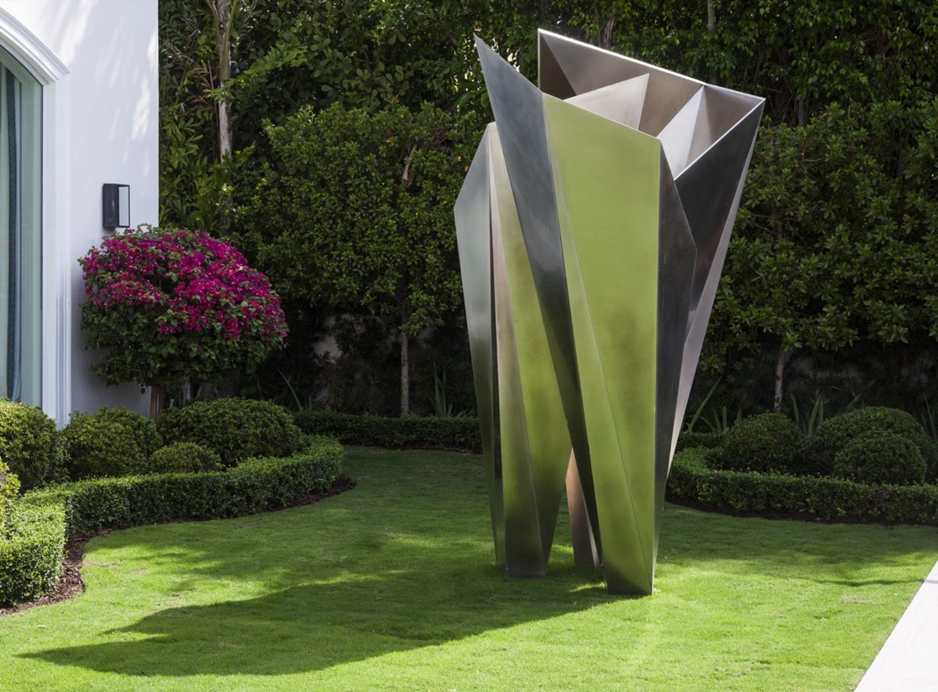
A brushed or satin stainless steel surface scatters light rather than producing a sharp reflection. It can be a better fit where the surrounding landscape already contains strong visual movement, where guests pass close to the sculpture, or where the design depends on a clear continuous outline. Directional grain can also reinforce the movement of a curved form, but only if the grain direction is controlled across adjoining panels.
The finish approval should show more than one small coupon. For a curved or welded sculpture, buyers should review a sample large enough to reveal grain direction, joint blending and the difference between flat and formed areas. They should also define the acceptable level of sheen in descriptive and visual terms so that “satin” is not left to interpretation by different people.
Use Mixed Stainless Steel Finishes Only with a Clear Visual Hierarchy
A sculpture can combine mirror and satin areas to separate a focal surface from supporting geometry. This can strengthen the design, but only when the transition is intentional. Unplanned changes in sheen across adjoining panels can look like inconsistent polishing rather than a deliberate composition.
The buyer should mark each finish zone on the approved drawing and review a representative junction where two surface treatments meet. For curved work, the sample should show how polishing direction and reflection continue across the transition. This gives production a visible boundary to follow and gives the buyer a practical acceptance reference.
Cleaning Access Should Influence the Finish Choice
Mirror stainless steel can be effective in an arrival court or open lawn, but surfaces close to paths can show fingerprints, irrigation spots and wiping marks. Brushed or satin stainless steel may be more forgiving in touch-accessible areas, although its directional grain still needs a consistent cleaning method.
Before approving the finish, the buyer should confirm who will clean the sculpture, how easily the grounds team can reach it and whether irrigation water will strike the visible surface. The objective is not to create a maintenance manual inside the quotation. It is to avoid choosing a finish whose everyday appearance cannot be sustained in the actual landscape.
Viewing Distance Changes What Finish Quality Means
At long distance, silhouette, tonal contrast and large transitions dominate. At close range, visitors notice surface direction, waviness, fingerprints, weld blending and the way edges meet. A hotel sculpture may need to work at both scales: first from the arrival drive and later from a terrace or pedestrian route.
The approval sequence should reproduce those two experiences. Review the digital composition from the principal landscape views, then inspect a physical finish sample at close range. For reflective work, a larger formed mock-up is more informative than a flat coupon because it shows how the surface bends reflections. For brushed work, inspect the grain under grazing light. This turns “premium finish” into observable criteria.
Visitor Contact Should Influence Surface Choice
Landscapes are occupied spaces. Children may reach a low sculpture, guests may lean against a piece beside a terrace, and grounds teams may work around it with equipment. A highly reflective surface in a high-contact zone can show fingerprints and cleaning marks quickly. A delicate color effect may be difficult to repair after repeated contact.
Before approving the finish, classify the location as distant-view, close-view or touch-accessible. This simple distinction helps the buyer decide whether visual perfection, tactile comfort or practical repairability deserves priority. It also allows the supplier to prepare the right sample and state any surface limitations before production.
Pegasus Portfolio Evidence for Reflective Outdoor Stainless Steel

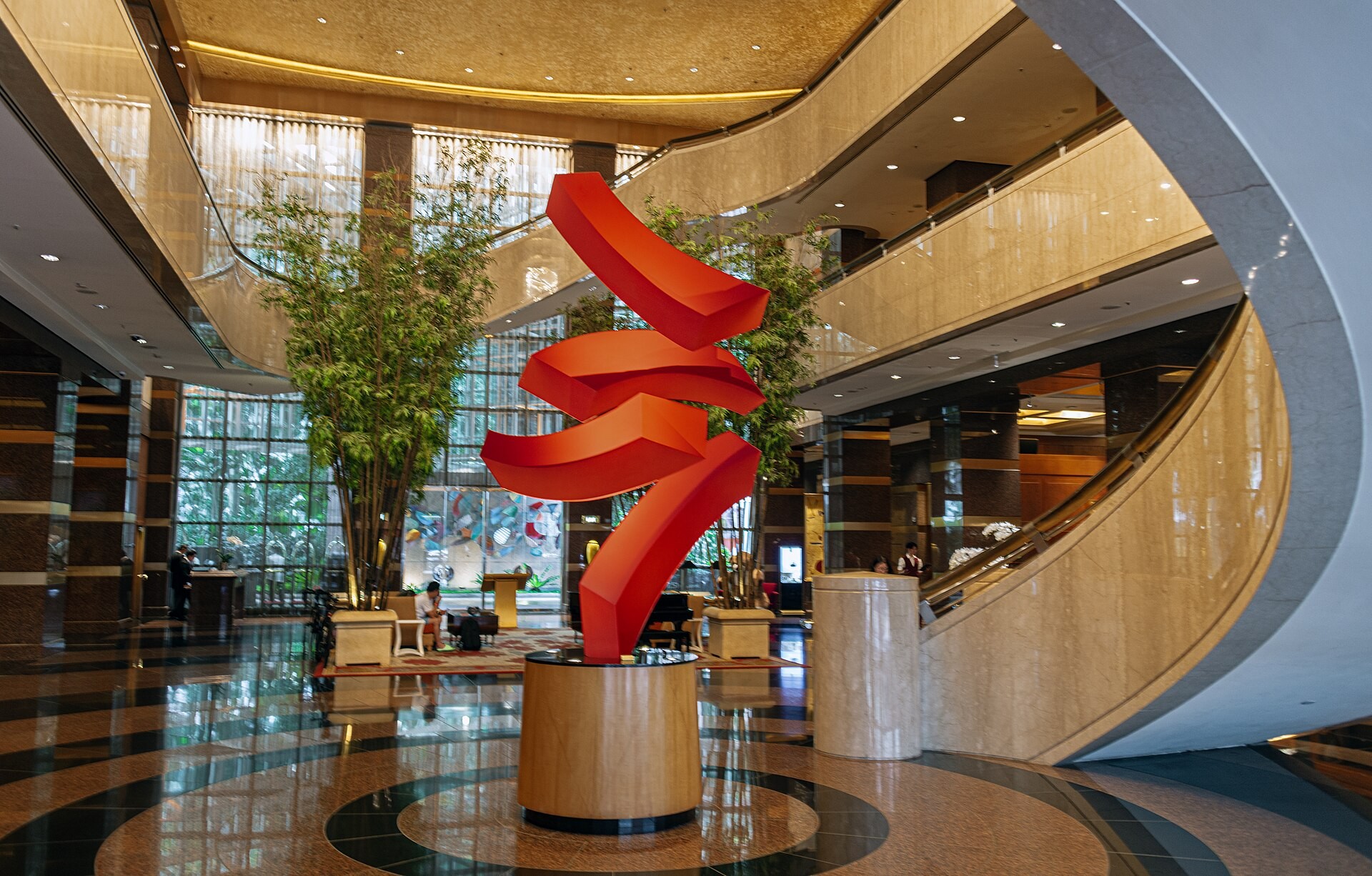
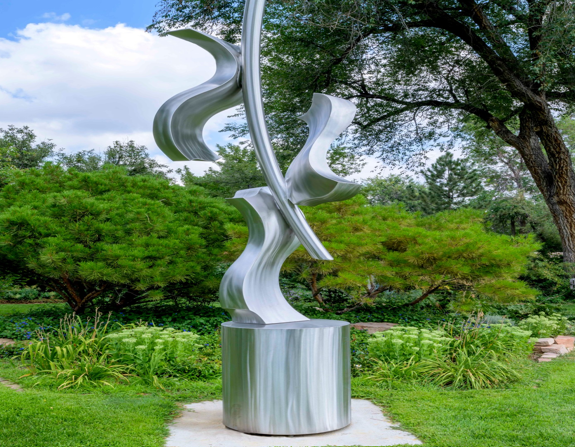
Pegasus’s stainless steel portfolio shows an outdoor sculpture built around large continuous curves and a highly reflective surface. This is directly relevant to the buyer’s finish decision because reflection exposes waviness, discontinuity and uneven polishing more readily than a low-sheen surface. The visible result demonstrates Pegasus’s experience with the type of formed and polished stainless steel surface discussed in this article.
For a new garden commission, the useful question is how Pegasus will transfer the approved finish from a sample to the full curved form. Buyers should request a representative formed sample where geometry warrants it, close-up evidence of joint blending and a wider view showing reflection continuity. The portfolio image establishes relevant manufacturing experience; the acceptance criteria still need to be defined for the buyer’s own site.
Approve a Finish Reference That Production Can Follow
A buyer should not approve a stainless steel garden sculpture with a phrase such as ‘high polish’ or ‘matte silver.’ The approval package should identify the steel grade specified for the project, representative surface sample, reflectivity or sheen, grain direction where relevant and the viewing conditions used for acceptance. If the form is highly curved or relies on continuous reflections, include a formed mock-up or a defined inspection method.
Pegasus presents mirror and brushed stainless steel directions on its commercial page. These capabilities establish the available manufacturing route, but they do not make one finish correct for every landscape. The buyer and Pegasus should agree the project-specific reference, sample size, finish zones and approval record before the full visible surface is completed.
| Approval item | Buyer decision | Evidence to retain |
| Landscape view | Where the sculpture must read clearly | Approved render or marked site photograph from the principal approach |
| Material and finish | Selected metal, surface direction and sheen | Physical sample identified to the quotation and approval date |
| Curved-surface behavior | Acceptable reflection distortion or grain continuity | Formed sample or representative mock-up where the geometry warrants it |
| Color or patina | Acceptable range rather than an undefined color name | Signed color, coating or patina reference under agreed lighting |
| Visitor interface | Expected touch exposure and repair priority | Written note covering close-view acceptance and local repair approach |
What to Send When Requesting a Stainless Steel Garden Sculpture Quotation
A useful enquiry should include the site type, intended visual role, approximate dimensions, principal viewing points, photographs or landscape drawings, distance from paths and water, expected visitor contact, preferred stainless steel finish, destination and target date. The supplier can then distinguish what is already fixed from what still requires visualisation, sample development or a formed mock-up.
For Pegasus, connect the enquiry to both the landscape context and the stainless steel page. This keeps the discussion focused on the actual purchasing decision: not simply ‘Can you make this form?’ but ‘Should this site use mirror, brushed or satin stainless steel, and what evidence will confirm the result?’
Questions Buyers Commonly Ask
Is mirror stainless steel always the premium option?
No. It is visually powerful when reflection supports the design, but brushed or satin stainless steel may preserve form more clearly in dense planting or high-contact areas. Premium selection means appropriate performance for the site, not maximum reflectivity.
Can mirror stainless steel be used beside a pool or water feature?
Yes, but the buyer should review glare, moving reflections, water spotting and the relationship with pool lighting from the principal viewing points. A site visualisation and representative reflective sample are more useful than selecting mirror finish from a catalogue image.
How should a buyer compare two finish samples?
Compare them under the lighting and viewing distance relevant to the site. Record the accepted sheen, grain, color or patina range and, for reflective curved work, review a formed sample rather than relying only on flat coupons.
Conclusion
The right stainless steel garden sculpture finish is selected by matching reflection, visual clarity, viewing distance, visitor contact and cleaning access to the actual landscape. Mirror, brushed and satin surfaces create different experiences even when the underlying sculpture form is unchanged. When those decisions are made early, Pegasus receives a usable manufacturing brief and the buyer can judge the completed surface against agreed evidence rather than broad adjectives.