Will this piece still look right in fifteen years, sitting through coastal storms, freeze-thaw winters, or a decade of foot traffic in a public plaza? That’s the question architects, developers and procurement teams actually need answered before they commission an outdoor bronze sculpture – not “is bronze a good material,” but “how will bronze behave on this site.”
The honest answer is: it depends on where the piece lives. A bronze figure sheltered under a hotel atrium canopy ages very differently from one standing in salt spray on a coastal boardwalk, or one exposed to de-icing salts and freeze-thaw cycles in a northern civic plaza. Understanding that difference – and designing for it – is what separates a sculpture that develops a rich, stable surface for decades from one that develops streaking, pitting or structural problems within a few years.
This isn’t a buying guide or a comparison of bronze against other materials. It’s a closer look at how an exterior bronze sculpture actually performs once it’s installed: what happens to the alloy and its surface over time, which environmental factors matter most and what a manufacturer needs to get right for the piece to hold up on a real, exposed site.
How Bronze Alloy Choice Affects Outdoor Performance
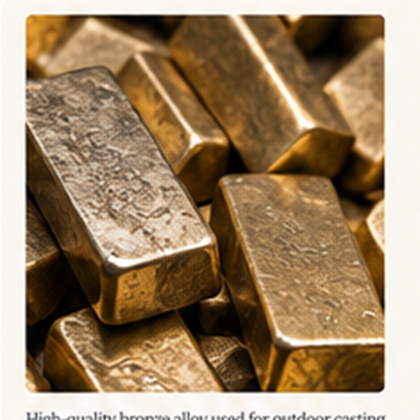
Bronze used for fine-art and monumental casting is not a single fixed material – it’s a family of copper-based alloys, typically blended with tin, and in many contemporary art foundries, with silicon rather than the older leaded tin-bronze formulations. Silicon bronze alloys are widely favored for large-scale exterior casting because they weld cleanly, resist cracking during patination and fabrication, and hold up well against atmospheric corrosion compared with older bronze and brass formulations. The alloy choice affects how the piece will age outdoors – which is why alloy selection has to be treated as a site-specific decision, not an afterthought once the design is finalized.
For an outdoor bronze sculpture, buyers should confirm the alloy, intended patina, protective finish and maintenance requirements together. Those choices determine how the surface is likely to age once it is exposed to rain, salts, pollutants and seasonal temperature changes.
How Patina Actually Evolves Outdoors

A common misunderstanding among first-time commercial buyers is that patina is a paint-like finish applied once and left alone. In reality, patina is a controlled chemical reaction – the alloy’s surface layer reacting with heat, chemical patination solutions, and then, once installed, with the atmosphere itself. What a foundry applies before shipping is the starting point, not the finished state.
Once an outdoor bronze statue is installed, its surface keeps reacting with its environment for as long as it stands. In drier, sheltered locations, that evolution is gradual – the applied patina layer slowly deepens and mellows. In humid, industrial, or coastal environments, atmospheric moisture and airborne chlorides or sulfur compounds accelerate the process, sometimes producing uneven streaking, chalky bloom, or – in the most severe, poorly maintained coastal cases – active pitting corrosion, occasionally referred to in conservation circles as “bronze disease,” where chloride contamination becomes self-perpetuating if left untreated.
What Actually Threatens Bronze Sculpture Outdoors
Buyers evaluating a manufacturer for an exterior commission are usually really asking one thing: has this fabricator actually thought through how a piece will hold up on our specific site? The factors that matter most for bronze sculpture outdoors include:
- Moisture and standing water – rainwater pooling on horizontal surfaces or trapped inside a hollow casting accelerates surface degradation and, in cold climates, contributes to freeze-thaw stress at joints and seams.
- UV and thermal cycling – direct sun exposure and daily heat-cool cycles stress protective coatings and can accelerate their breakdown over time, particularly on south- or west-facing surfaces.
- Salt air and chlorides – coastal and near-coastal sites introduce airborne chlorides that react more aggressively with the copper-alloy surface than inland atmospheric conditions.
- Urban pollutants and acid rain – sulfur compounds from vehicle and industrial emissions can alter patina tone and accelerate surface wear in dense urban settings.
Freeze-thaw cycling – in climates with regular sub-zero temperatures, trapped moisture that expands and contracts can stress joints, welds, and internal support structures over repeated seasons.
How Outdoor Conditions Affect Bronze Surfaces
Because “outdoor” covers a very wide range of real conditions, it helps to think in terms of exposure categories rather than treating every exterior installation identically. The table below outlines how site type generally shapes the priorities for an outdoor bronze sculpture commission.
| Site Type | Primary Risk Factors | Bronze Surface & Maintenance Priorities |
| Coastal / near-shore | Airborne chlorides, salt spray, high humidity | Alloy and patina selected for chloride exposure; robust protective finish; closer surface inspection and maintenance. |
| Dense urban / civic plaza | Acid rain, vehicle emissions, foot traffic, vandalism exposure | Finish chosen for pollutant exposure; monitor staining and deposits; plan periodic cleaning and surface inspection. |
| Hospitality / covered exterior | Partial shelter, irrigation overspray, landscaping chemicals | Protective finish compatible with irrigation and landscaping chemicals; monitor splash zones and visible patina changes. |
| Open garden / parkland | Full sun and rain exposure, seasonal freeze-thaw in colder regions | Weathering-compatible patina and protective finish; seasonal inspection and routine surface care. |
This exposure check is most useful before the patina and final protective finish are approved. It gives the buyer and fabricator a shared basis for deciding how the bronze should be finished, documented and maintained once it is outdoors.
Protective Coatings: The First Line of Defense
For outdoor bronze, the protective finish is a maintenance layer rather than a permanent shield. Microcrystalline or comparable conservation wax is commonly used over the completed patina to slow moisture and pollutant contact with the metal. In more aggressive environments, the appropriate finish system should be confirmed for the project rather than assumed from a generic outdoor specification.
For buyers, the useful question is not simply whether a sculpture is ‘coated,’ but what finish was applied, how it should be inspected, and what future re-waxing or conservation work will be needed to preserve the intended patina.
Maintenance Planning: Practical, without Any Guesswork
A useful maintenance plan should tell the owner what to look for and what records to keep. For an outdoor bronze sculpture, the practical priorities are:
- Inspect the patina for unusual streaking, powdery deposits, local discoloration or areas where the protective finish is wearing unevenly.
- Keep a record of the approved patina sample, alloy/material specification and protective finish so future conservation work can match the original appearance.
- Check the sculpture after unusually severe weather or heavy salt exposure, and arrange re-waxing or specialist conservation when the protective surface is visibly declining.
- Use a qualified conservator or the original fabricator for corrective treatment rather than aggressive household cleaners, abrasives or unapproved chemicals.
What Buyers Should Confirm Before Approving an Outdoor Bronze Sculpture
Before approving production, ask the manufacturer to document the bronze alloy, approved patina sample, protective finish, intended maintenance method and any project-specific exposure considerations. These are the details a facilities or conservation team will need years later when the sculpture requires inspection or surface care. Keeping them in the handover file makes future maintenance more consistent and avoids guesswork about how the original finish was produced.
Real-World Reference: Outdoor Bronze in a Civic Plaza
Reference project: Frankie Muse Freeman bronze sculpture, Kiener Plaza, St. Louis, Missouri. The public artwork is a six-foot bronze figure installed on a bronze base in an open civic-plaza setting, with the Gateway Arch and Old Courthouse visible nearby.
Why it is relevant here: An exposed civic-plaza bronze has to retain a consistent surface appearance while dealing with rainfall, seasonal temperature changes, urban pollution and regular public visibility. For buyers, that makes the alloy/patina record, protective finish and maintenance documentation more important than broad claims that bronze is simply “weather resistant.”
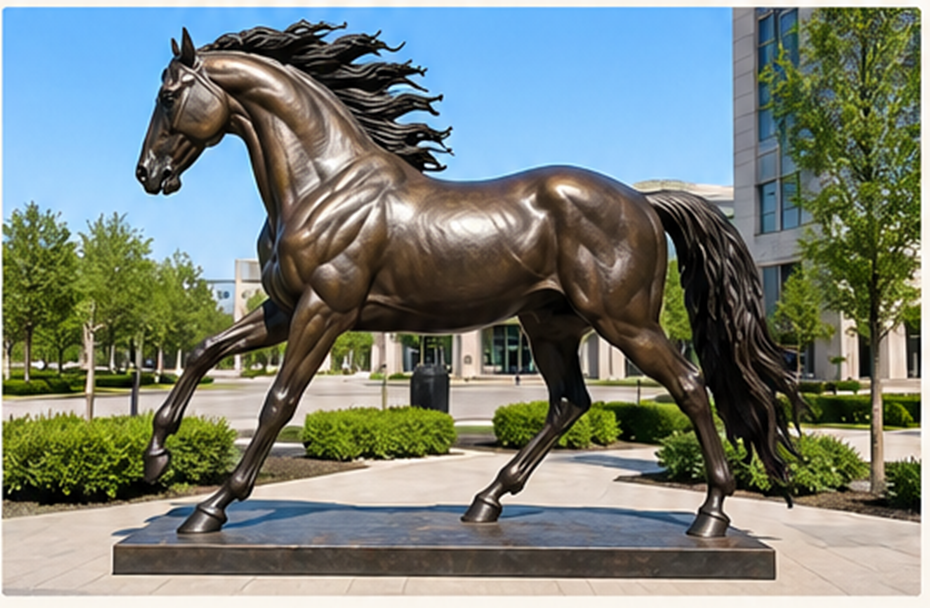
For a Pegasus commission in a comparable setting, the project file should confirm the approved patina reference, protective finish and future maintenance guidance before handover. This keeps the article focused on outdoor bronze performance and gives procurement teams a practical example without repeating the installation-engineering discussion covered in Blog 5.
Frequently Asked Questions
Is bronze a good choice for a coastal or waterfront sculpture installation?
Yes, with the right alloy and protective coating system specified for that exposure. Coastal sites introduce airborne chlorides that require more attentive coating selection and inspection than an inland or sheltered site would.
How is outdoor bronze different from bronze used for interior pieces?
Exterior bronze faces sustained moisture, airborne salts and pollutants, temperature cycling and direct weather exposure. That makes alloy choice, patina specification, protective finish and maintenance documentation more important than they are for a sheltered interior piece.
Does patina on outdoor bronze change color over time?
Yes. Patina continues reacting with its environment after installation, so the surface tone can shift gradually, especially in humid, coastal or industrial settings, unless it’s protected and maintained.
Who should handle ongoing maintenance for a large outdoor bronze sculpture?
Ideally the original fabricator or a qualified conservator familiar with the piece’s specific alloy, patina and coating specification, working from a documented maintenance record.
What information should a buyer keep for future bronze maintenance?
Keep the approved patina reference, bronze/alloy specification, protective-finish details and any maintenance guidance supplied with the project. These records give a conservator or facilities team a reliable baseline when the sculpture needs future inspection, re-waxing or surface treatment.
Talk to our team about your site, design, and fabrication requirements, and let’s plan a sculpture built to perform outdoors for years to come.