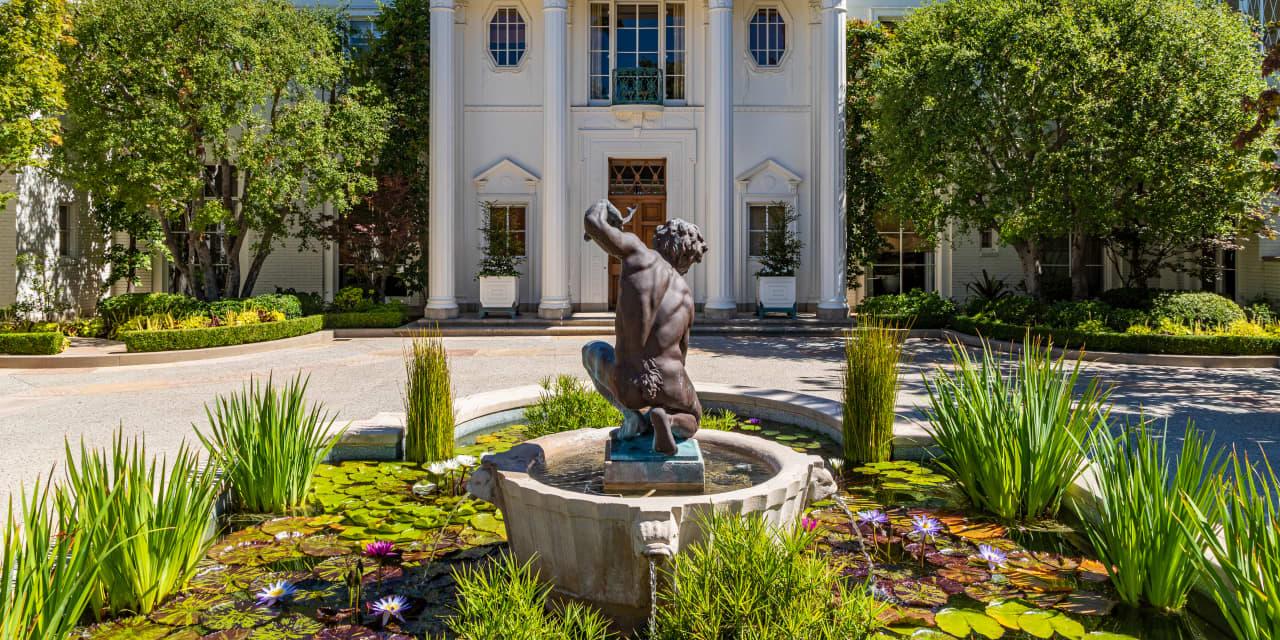
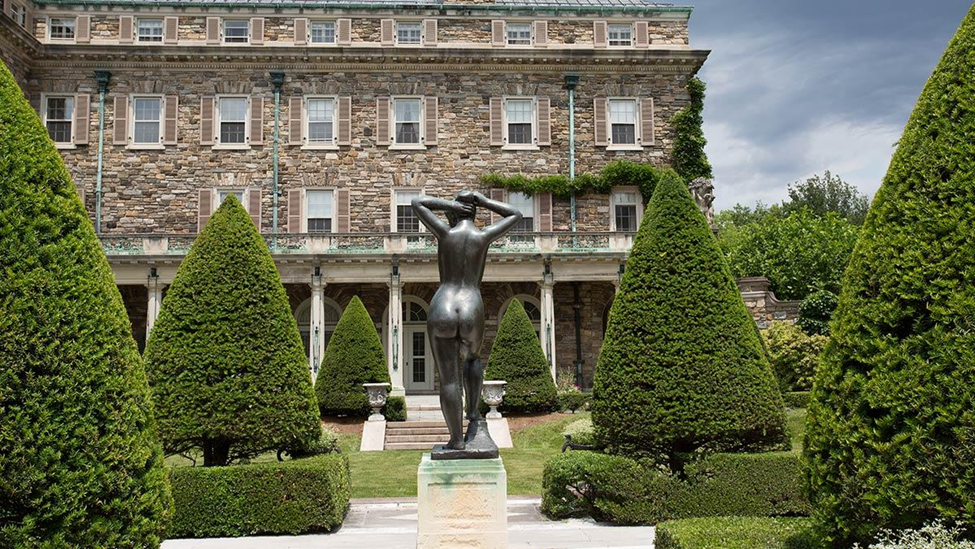
In a formal landscape, bronze garden statues typically read best when scaled to the sightline they sit within, not just to the pedestal beneath them – sized against the nearest hedge line, wall, or architectural feature rather than judged on its own. Miss that relationship, or get the finish or axis wrong, and even a beautifully cast figure ends up looking lost on the lawn or crowded against clipped hedging. Get it right, and the garden reads as though it was composed around the piece in the first place.
Why does that matter beyond aesthetics? A formal garden is fixed, expensive infrastructure – hedges take years to mature, and stonework and irrigation go in early. A statue ordered at the wrong scale can’t simply be swapped out once the planting has grown in around it. That’s why scale, patina, and placement get worked through before a final design is signed off, not after. At Pegasus, every commission opens with a design and engineering review rather than a catalogue browse, since a statue suited to a private courtyard rarely suits a five-acre estate lawn, and the reverse holds just as true.
Why Does Bronze Still Anchor Formal Garden Design?
Formal landscapes run on symmetry and long, deliberate sightlines – clipped parterres, axial lawns, colonnades of trees. Within that structure, garden sculptures need a material that holds a crisp silhouette from a distance and still rewards a closer look. Bronze manages both because the alloy’s density holds fine surface detail – drapery folds, muscle definition, feathering on an animal figure – in a way that resin and cast stone tend to blur as they weather over a decade or two outdoors.
Weight is the part buyers underestimate. A formal statue is almost always viewed from across grass or gravel, at a distance where a lightweight or hollow-feeling piece reads as temporary against heavy stonework and mature planting – even if nobody in the garden could say exactly why. Mass is doing quiet work here: a solid outdoor bronze sculpture physically matches the permanence of the hardscape around it, so the eye reads it as part of the architecture rather than something dropped onto the lawn afterward. That’s why bronze garden statues remain the default recommendation for entrance courts and parterre centerpieces rather than a passing design trend.
A Formal Estate Example: What “Under the Vault” Shows About Scale
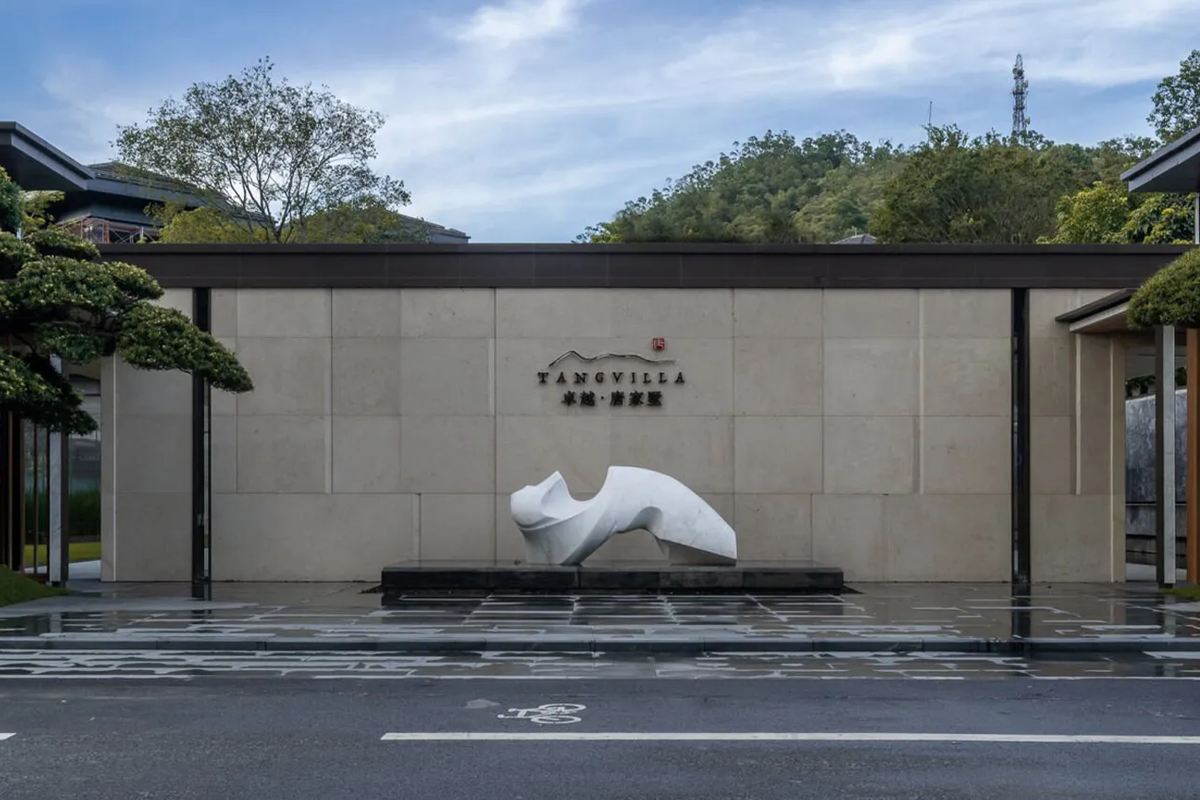
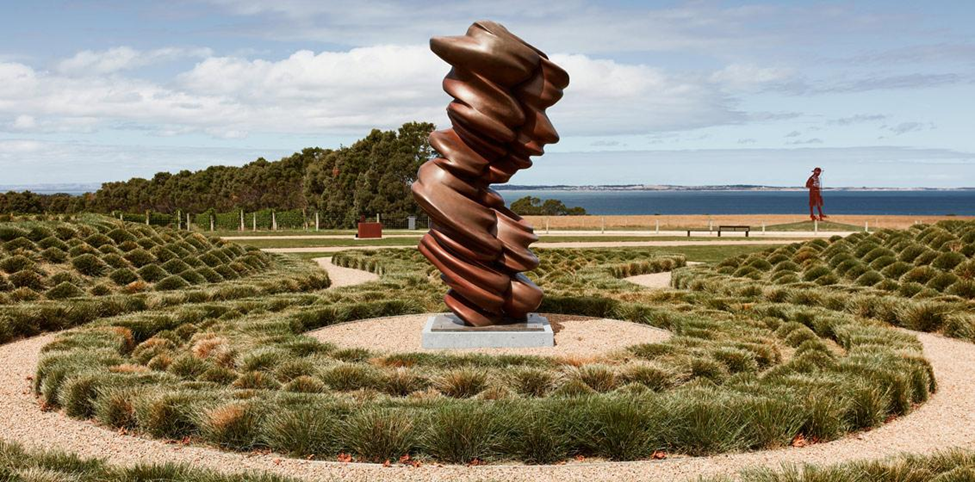
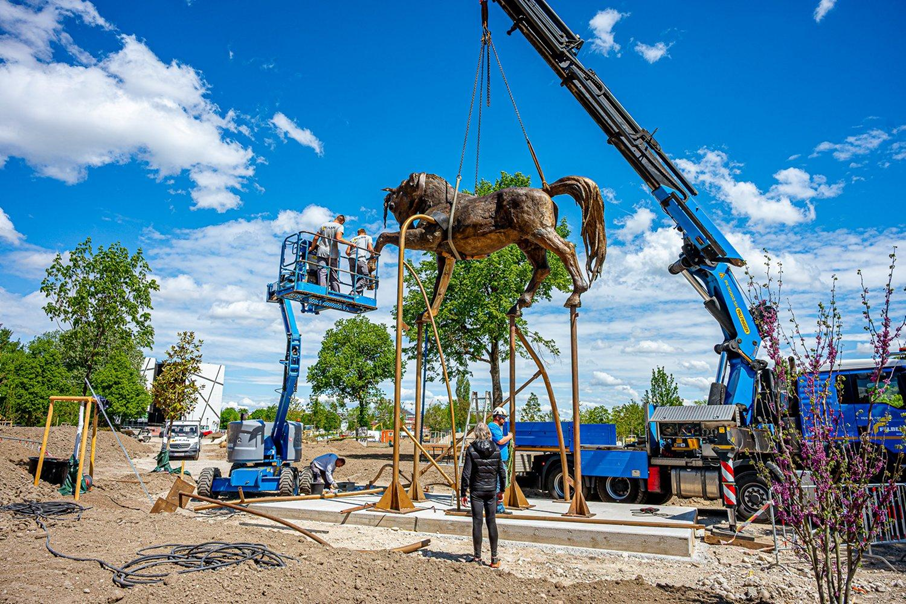
One useful way to see these decisions play out is a monumental cast bronze commission Pegasus produced for Palmer Coolum Resort in Queensland, Australia, titled Under the Vault. The brief called for a piece substantial enough to anchor a resort-scale outdoor setting without competing with the surrounding architecture or landscaping – the same scale problem a smaller estate faces, just at a larger footprint.
The lesson that transfers to a smaller garden project isn’t the size – it’s the sequence: scale was confirmed against the real site and sightlines before casting began, not adjusted afterward. The same sequence applies, at any scale, to bronze garden statues destined for an estate lawn or hotel courtyard.
How Big Should the Statue Be for a Formal Setting?
Scale is where commissions most often go wrong, and almost always for the same reason: the design gets approved from a rendering or a photo on a screen, with nothing next to it to judge size against, rather than checked on the actual site.
- Measure against the tallest fixed feature nearby – hedge, wall, or gate pier – not the open lawn, which has no scale of its own. As a starting point, aim for roughly half to two-thirds of that feature’s height, then adjust for the real viewing distance.
- On an axial lawn viewed from 40–60 feet, life-size or slightly larger figures hold their presence; smaller pieces shrink into the planting and lose the focal point they were bought for.
- In a courtyard viewed from 10–15 feet, a more modest scale reads as intentional; oversizing here looks like a mistake as often as undersizing does.
- Treat the pedestal as its own decision. Raising a piece even a foot shifts the mood from approachable to formal and distant, and that matters as much as the statue’s own height.
Pegasus works through CAD modelling and, on larger commissions, a scaled site mock-up before fabrication starts – because catching a scale error on a drawing costs nothing, while catching it after casting and shipping costs months and a second commission.
What Happens to the Patina Over Time, and Why?
Patina is often mistaken for a flaw. Left untreated, bronze reacts with oxygen and moisture in the air to form a stable oxide layer, and that layer is protection, not decay. It’s the same chemistry that has kept outdoor bronze monuments intact for centuries: the oxide skin shields the metal underneath from further corrosion rather than eating into it. The colour shift that follows – bright cast bronze moving through warm browns toward soft green or grey-blue – happens on a fairly predictable timeline, though climate and the original finish both affect how fast it moves.
| Approximate Timeframe | Typical Surface Appearance | Maintenance Implication |
| Year 1 | Warm gold-brown, factory finish visible | Light wax coating; minimal care |
| Years 2–5 | Deepening brown, early oxidation tones | Annual inspection and re-waxing |
| Years 5–15 | Soft verdigris or grey-brown developing | Periodic professional cleaning near coasts |
| Years 15+ | Stable, settled patina | Occasional restoration rather than routine care |
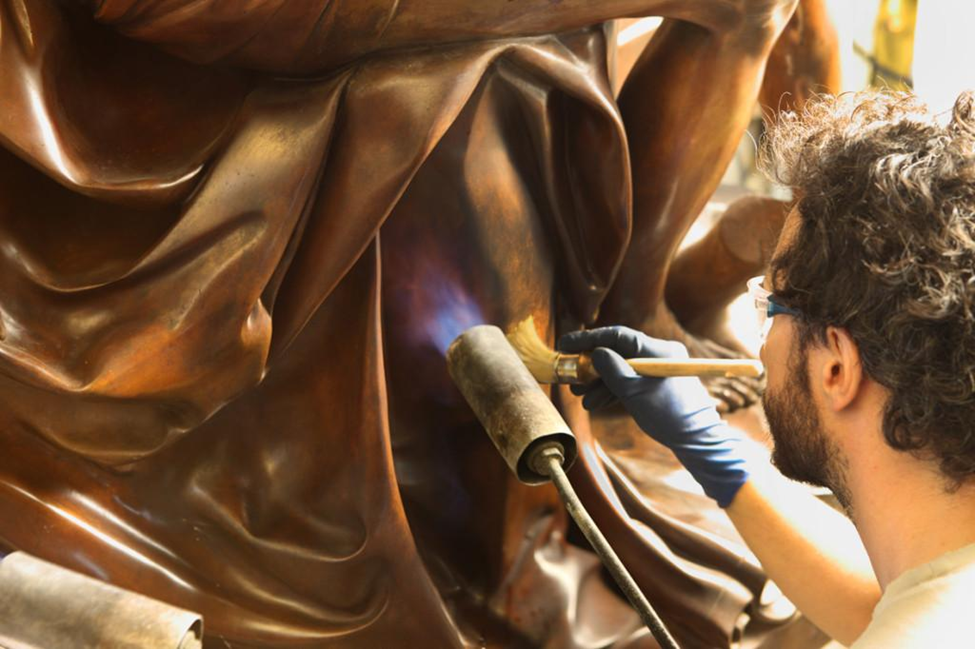
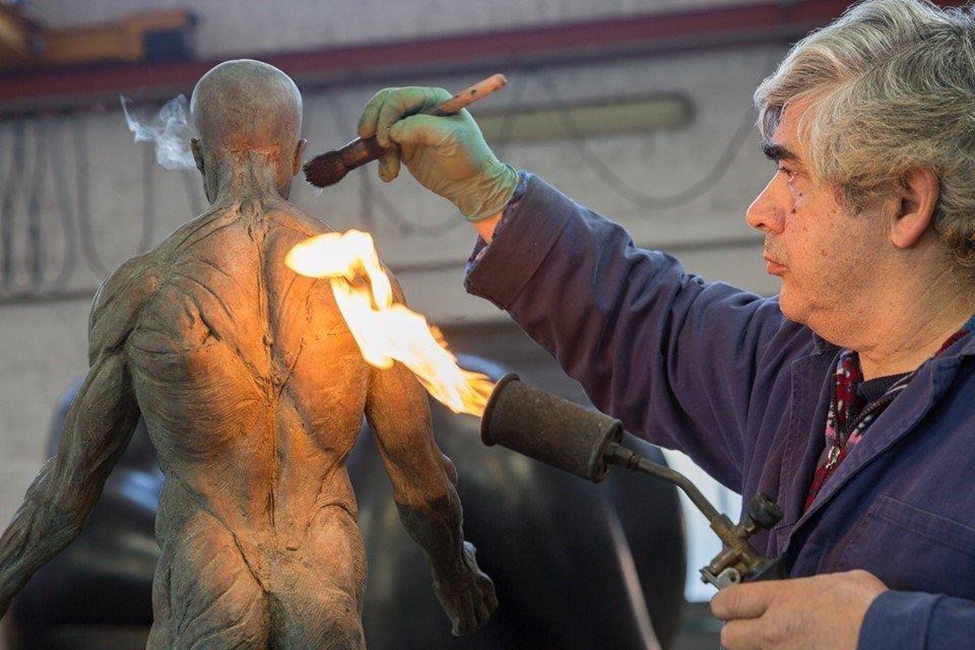
The risk with leaving patina entirely to nature is unevenness – rain runs differently across a complex form, so some areas darken faster than others, and a client can end up with a blotchy result they didn’t choose and can’t easily correct. That’s why Pegasus applies chemically induced patinas during production instead of waiting on weather: an estate can approve a chocolate brown, classical verdigris, or darker statuary tone on a sample before the bronze garden statues ever leave the workshop, rather than finding out what the piece looks like three years after installation.
Where Should the Sculpture Sit Within a Formal Axis?
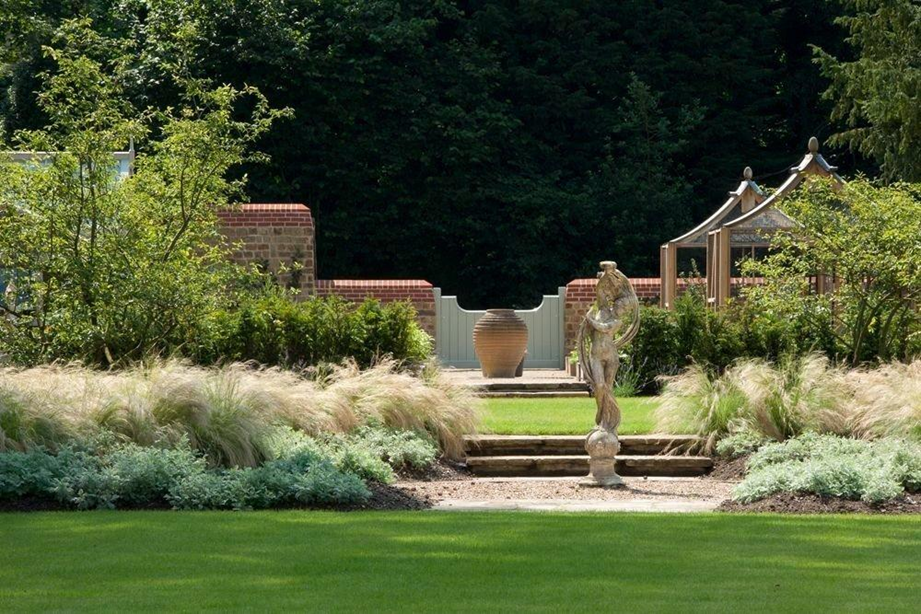
Placement decides more of the final effect than the sculpture itself, largely because a formal garden is built around sightlines that already exist – a statue either completes one of them or fights it.
- Position on an existing sightline – the centre of a parterre, the end of an allée, the line out from a set of French doors – rather than leftover space at the edge of a lawn.
- Leave genuine negative space around the piece. In a symmetrical garden, crowding a statue with planting reads as accidental rather than composed, even when the planting itself is beautiful.
- Consider the view from inside the house as well as from the garden, since a formal statue is often first seen through a window before anyone walks outside to it.
- Confirm the statue’s size, exact location, foundation, drainage, paving, and surrounding landscaping together, before any of it goes into the ground. This is the step most projects skip, and it’s the expensive one to get wrong: once the footing is poured, the paving is laid, or the beds around the statue are planted, a change to the piece’s dimensions or position rarely stays contained. It tends to mean breaking up finished hardscape, rerouting drainage or irrigation, or relocating planting that has already rooted in – rework that costs far more than the time it takes to confirm these details up front.
Pegasus reviews footing, drainage, paving, and delivery access as part of the design process itself, so garden sculptures arrive to a site that’s already prepared for them rather than one improvised after the crate lands.
How Long Does Cast Bronze Actually Last Outdoors?
Buyers evaluating a long-term landscape investment reasonably want a number, not just reassurance. Cast bronze, properly fabricated and installed, commonly performs outdoors for 100 to 500 years or more – a range consistent with historical bronze monuments that have survived centuries of weather with only periodic waxing and inspection. That durability comes down to alloy quality, wall thickness, and casting precision, none of which a buyer can judge from a photograph or a showroom sample – which is why manufacturing transparency ends up mattering as much as the design itself.
This is the point where bronze garden statues built for estate or commercial use part ways from decorative pieces sold on appearance alone. At Pegasus, every casting goes through material certification, internal armature engineering for structural loading, and a documented quality inspection before packaging, so the alloy composition and wall thickness behind the finish are verified rather than assumed. Weak internal engineering – not the bronze itself – is the most common cause of premature failure in outdoor statuary, and the problem usually stays invisible until years after installation, by which point it’s a repair rather than a warranty claim.
What Should Be Confirmed Before Commissioning?
A few questions at the planning stage keep the delivered piece from surprising anyone – in finish, in transit, or on installation day.
Has the patina been sampled and approved in writing before full production, rather than left as a surprise on delivery? Is packaging built around the piece’s actual finish and geometry rather than a standard crate, given that bronze scratches and dents in transit like any other metal? And once the piece reaches the site, is there clear installation guidance – anchoring details, a technical contact, someone to call if conditions on site don’t quite match the drawings?
Pegasus manages each of these stages internally: CAD development, casting, finishing, quality inspection, custom crating, and installation coordination sit with one team rather than being split across subcontractors who each answer for their own piece of the job and nothing more. That matters practically, not just organizationally – when something needs adjusting between casting and installation, there’s a single point of accountability rather than a chain of vendors pointing at each other.
How Long Does Cast Bronze Actually Last Outdoors?
Buyers evaluating a long-term landscape investment reasonably want a number, not just reassurance. Cast bronze, properly fabricated and installed, commonly performs outdoors for 100 to 500 years or more – a range consistent with historical bronze monuments that have survived centuries of weather with only periodic waxing and inspection. That durability comes down to alloy quality, wall thickness, and casting precision, none of which a buyer can judge from a photograph or a showroom sample – which is why manufacturing transparency ends up mattering as much as the design itself.
This is the point where bronze garden statues built for estate or commercial use part ways from decorative pieces sold on appearance alone. At Pegasus, every casting goes through material certification, internal armature engineering for structural loading, and a documented quality inspection before packaging, so the alloy composition and wall thickness behind the finish are verified rather than assumed. Weak internal engineering – not the bronze itself – is the most common cause of premature failure in outdoor statuary, and the problem usually stays invisible until years after installation, by which point it’s a repair rather than a warranty claim.
What Should Be Confirmed Before Commissioning?
A few questions at the planning stage keep the delivered piece from surprising anyone – in finish, in transit, or on installation day.
Has the patina been sampled and approved in writing before full production, rather than left as a surprise on delivery? Is packaging built around the piece’s actual finish and geometry rather than a standard crate, given that bronze scratches and dents in transit like any other metal? And once the piece reaches the site, is there clear installation guidance – anchoring details, a technical contact, someone to call if conditions on site don’t quite match the drawings?
Pegasus manages each of these stages internally: CAD development, casting, finishing, quality inspection, custom crating, and installation coordination sit with one team rather than being split across subcontractors who each answer for their own piece of the job and nothing more. That matters practically, not just organisationally – when something needs adjusting between casting and installation, there’s a single point of accountability rather than a chain of vendors pointing at each other.
Frequently Asked Questions
How tall should bronze garden statues be for a formal lawn?
Use the nearest fixed feature – hedge, wall, or gate pier – as the reference point, aim for roughly half to two-thirds of its height, and check that against the real viewing distance rather than a rendering.
Does bronze need sealing to stop the patina from changing?
A conservation wax slows further oxidation and is typically reapplied annually, but it doesn’t stop the process outright. Most estates let the patina settle naturally once the desired tone is reached, rather than trying to freeze it permanently.
Can an outdoor bronze sculpture sit near a fountain or pool?
Yes, with attention to drainage and chlorine or salt exposure, plus a slightly more frequent maintenance schedule, since standing moisture and pool chemicals both speed up surface change compared with a dry lawn setting.
How long does a custom commission typically take?
Timelines vary with size and complexity, but design review, casting, patination, and finishing for a large formal piece commonly span several months before shipping and installation even begin.
Is bronze suitable for coastal or high-salinity gardens?
Yes – bronze performs well in coastal settings, provided a higher-grade alloy is specified up front and the maintenance schedule is a little more attentive than an inland installation would need.
Bringing It Together
Scale, patina, and placement aren’t really three separate decisions – they’re one decision looked at from different angles. A statue sized to its sightline, finished to a patina the client actually chose rather than left to chance, and set on an axis the garden was already leading toward, tends to look inevitable rather than added on. Skip any one of the three, and the other two can’t fully compensate.
For landscape architects and estate teams specifying bronze garden statues for a formal project, Pegasus carries a project from design through installation as one connected process, the way it did on the Palmer Coolum Resort commission. To talk through scale, finish, and site conditions for an upcoming project, contact the Pegasus team before the landscape design is finalised – it’s a much cheaper conversation to have early than after the hedges are in.