An arrival sculpture works best when it’s planned alongside the building, not tacked on after everything’s built. The ceiling height, the view from the drop-off point, the path guests actually walk to check-in – all of that shapes where the piece goes and how it’s lit. Get it right, and it’s the thing guests remember. Get it wrong, and even a gorgeous piece just feels out of place. That’s why more hotel teams are bringing art sculptures into the design conversation early, instead of choosing one later like a piece of furniture.
Pegasus builds custom architectural sculptures in bronze, stainless steel, marble, resin and FRP, and the same issue shows up on almost every hotel project: a great-looking concept that nobody actually checked against the lighting plan, the floor’s structural load, or where guests will be walking. Getting art, architecture, lighting and guest movement sorted together early on is really what decides whether a sculpture just looks good in a rendering or actually holds up on opening day.
Why Does the First Impression at the Entrance Matter So Much?
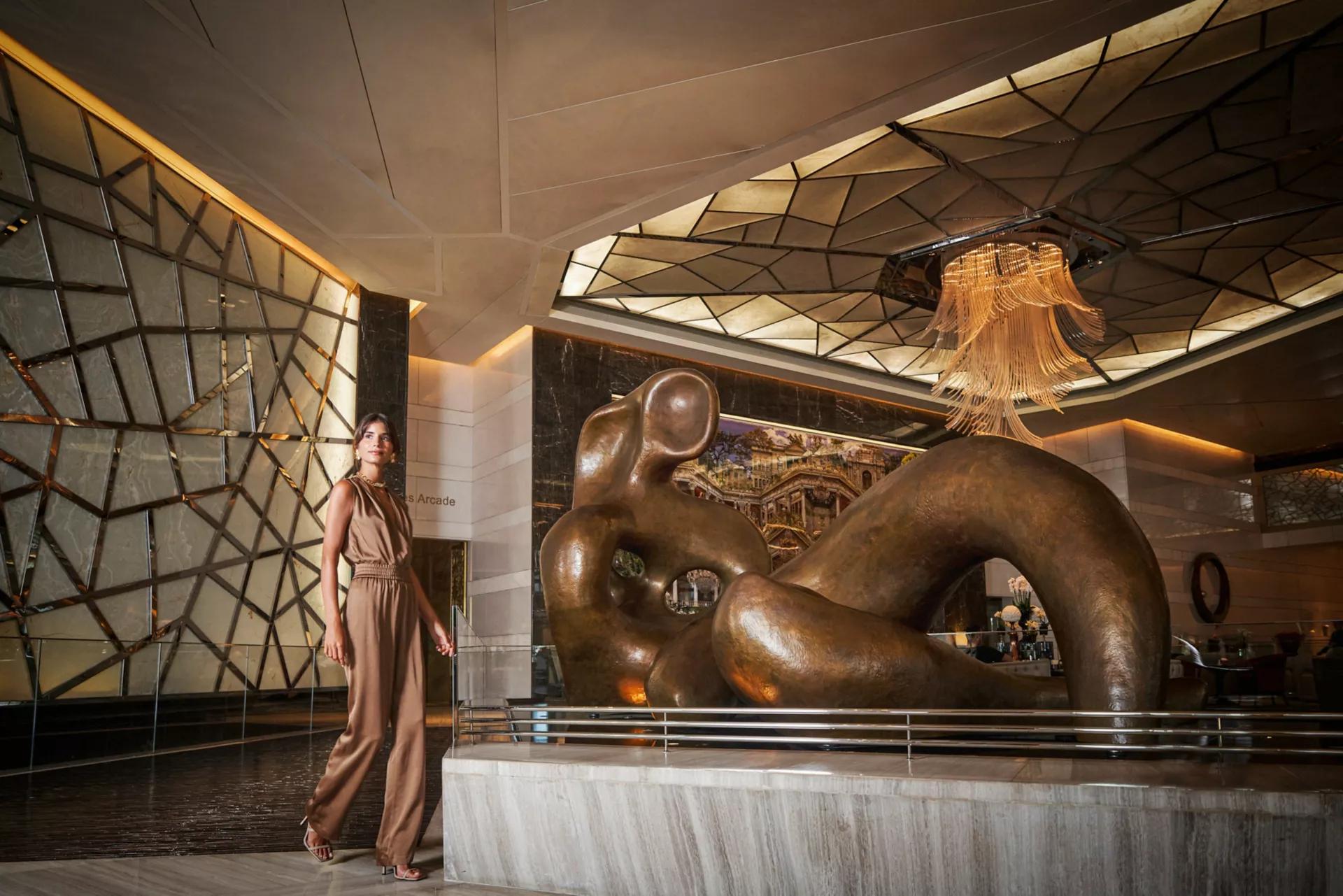
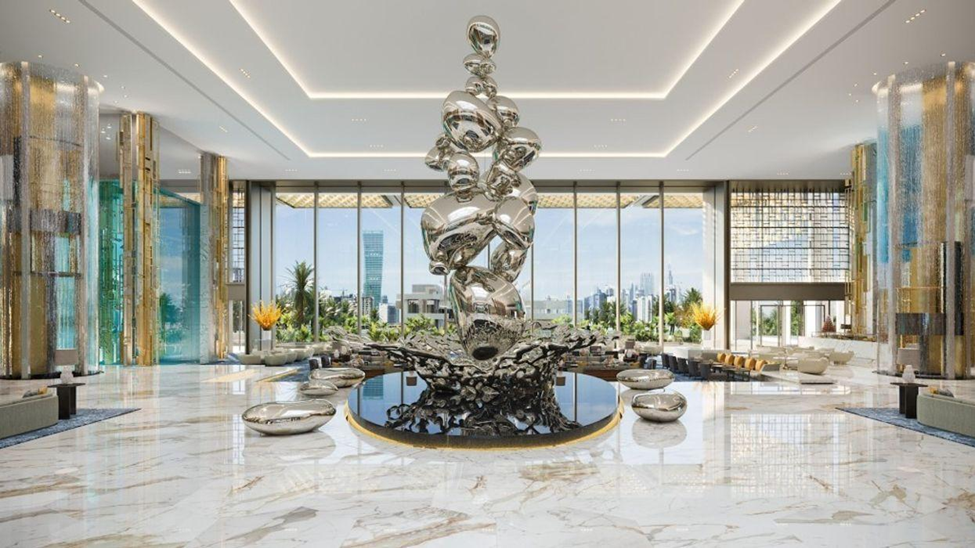
Guests size up a property within a few steps of walking in, long before anyone reaches the front desk. The single biggest factor in getting that first impression right is one most people don’t think about until they’re standing in the space: ceiling height. A double-height lobby with generous volume can carry a piece tall enough to anchor the whole room, while a more intimate, lower-ceilinged entrance needs something scaled back so it reads as a considered accent rather than a piece straining against the walls around it. Go smaller than the room calls for and it reads like an afterthought; go bigger and it can swallow the entrance it was meant to define. Because guests only get that first glance, more hospitality developers are now treating art sculptures at the entrance less like decoration and more like a branding decision – one where material, finish and height all have to earn their place in that short window.
How Should Sculpture, Architecture and Lighting Work Together?
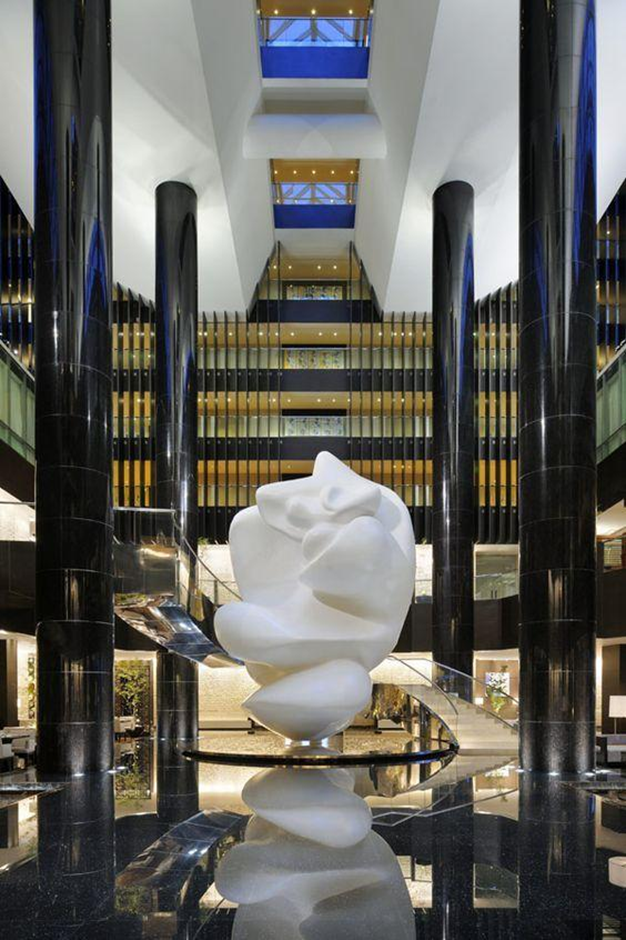
Deciding where an art sculptures commission stands in relation to lighting and architecture is a planning exercise, not a finishing touch. Architects, lighting designers and the sculpture’s manufacturer typically agree on a shared set of decisions before fabrication begins:
- Sightline placement: the sculpture sits on the primary axis a guest sees when stepping out of a vehicle or through a revolving door, not off to one side competing with signage or seating.
- Vertical proportion: height and base width are set against the room’s actual ceiling volume, not a generic size from a catalogue.
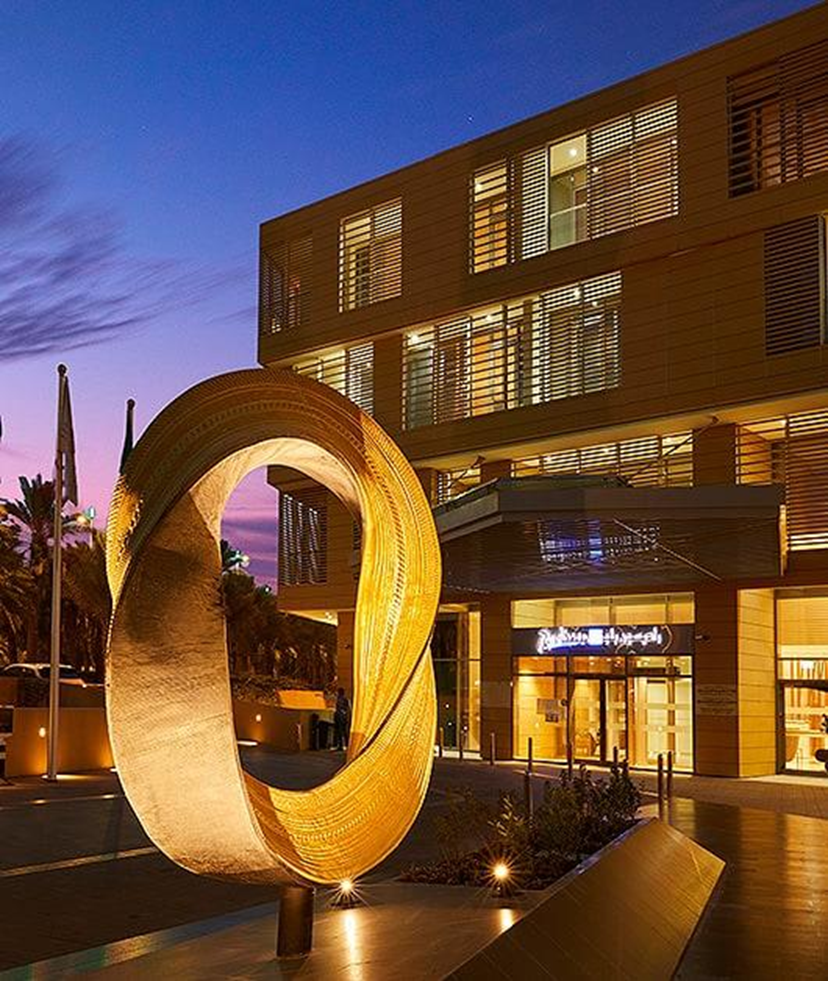
- Layered lighting: uplighting from the base, a soft wash across the surface, and a focused accent from above so the piece reads clearly at dusk, at night and under daylight, without glare on polished surfaces.
- Material reflectivity: mirror-finished stainless steel behaves differently under lobby lighting than patinated bronze or honed marble, so finish and lighting are worked out in the same conversation, not decided one after the other – a fixture plan built around the wrong finish either washes the piece out or throws glare guests notice immediately.
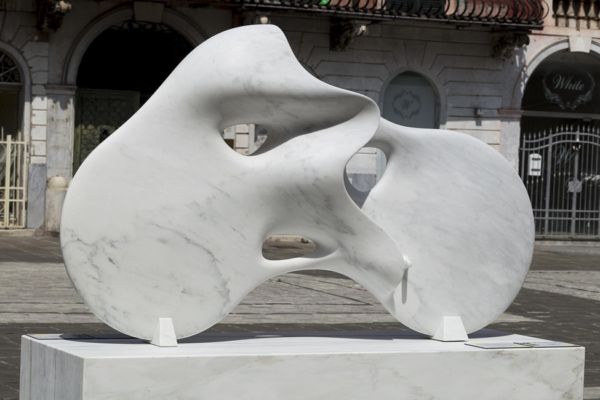
Many of today’s most photographed hotel entrances lean on modern sculptures in polished metal precisely because that reflectivity multiplies the effect of good lighting, turning one fixture into a much larger visual statement.
How Does Guest Movement Shape Where the Sculpture Goes?
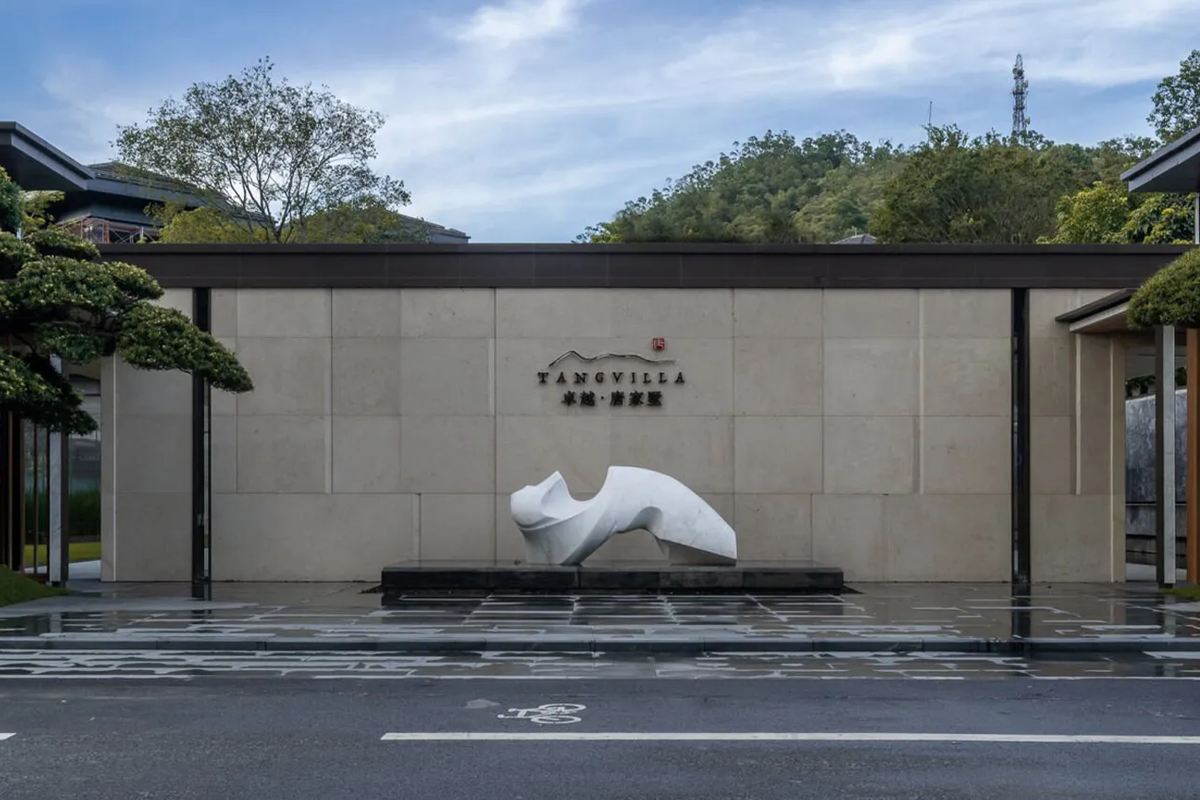
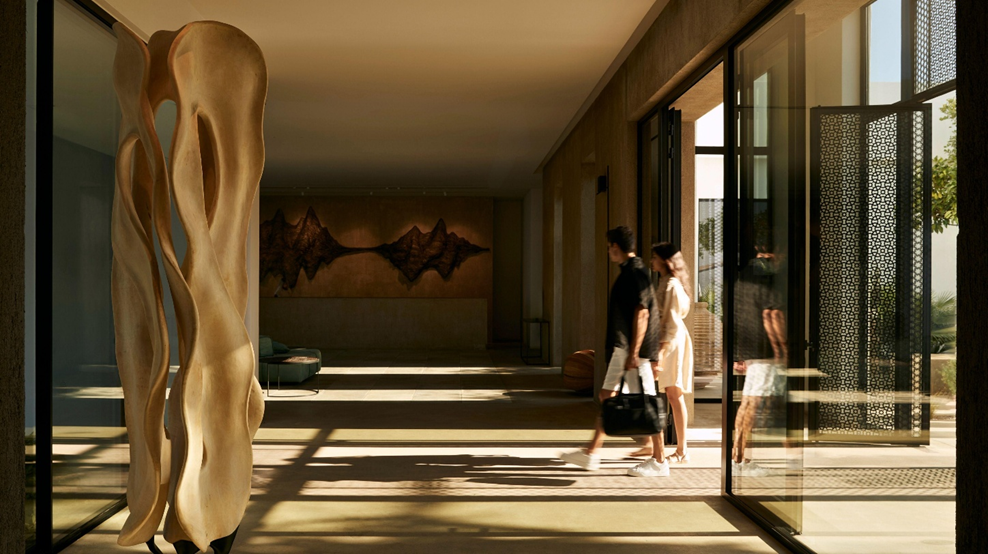
An arrival sculpture doesn’t get the space to itself. Picture a typical check-in rush: a valet waving a car toward the drop-off, a bellhop wheeling a luggage cart in from the curb, a family pausing mid-lobby to figure out where the front desk is – all of it happening in the same few metres the sculpture occupies. So where it goes is as much about traffic flow as it is about art. Put it right in that path, and it gets clipped by a passing cart, boxed in by a check-in queue, or blocked from view exactly when the lobby is busiest. What tends to work better is setting the piece just off the main flow, clear of the drop-off sightline and the luggage route – near enough to be the thing people stop and photograph, clear enough that nobody has to detour around it. It’s the same balancing act you’d see with a public art sculpture in a public square, just condensed into a much smaller, busier space.
Which Materials Hold Up Best in High-Traffic Entrances?
Material choice affects the durability of art sculptures placed at a busy entrance, and how the piece performs under constant handling, cleaning and, for outdoor entrances, weather exposure, particularly for modern sculptures finished in mirror or brushed metal.
| Material | Best For | Maintenance |
| Bronze | Warm, heritage-toned entrances; figurative or classical forms | Low; patina develops and stabilises over time |
| Stainless steel | Reflective, contemporary arrival statements | Periodic cleaning to maintain mirror or brushed finish |
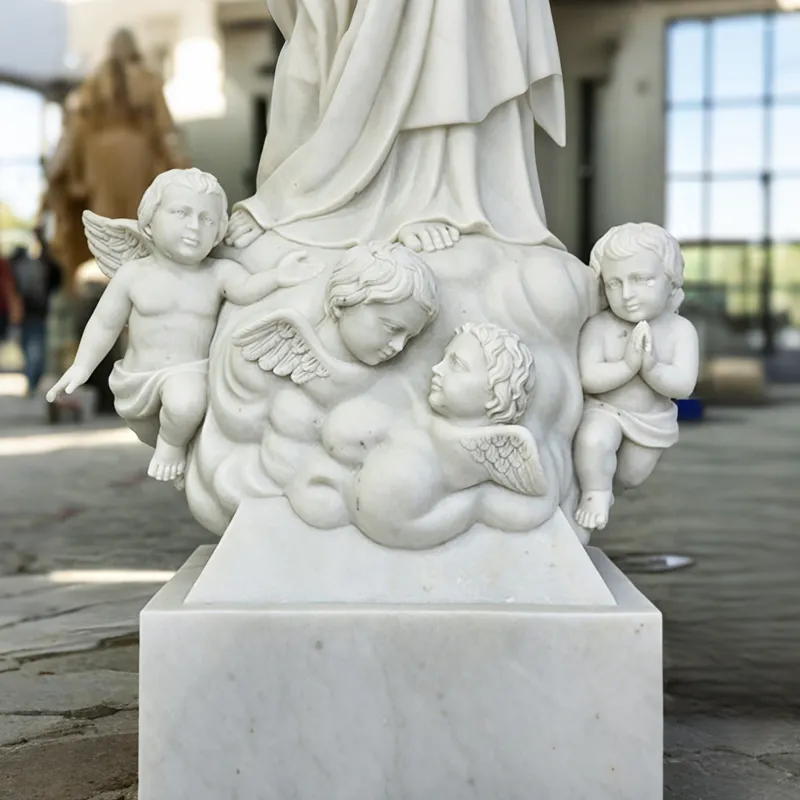
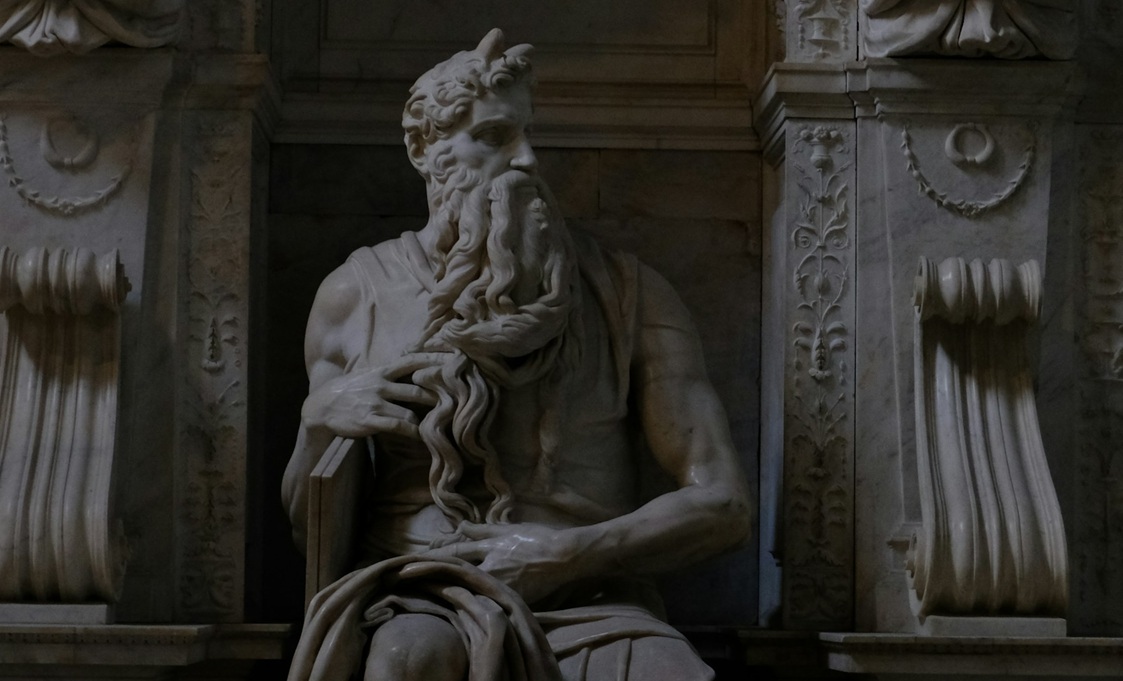
| Marble | Interior lobbies seeking natural, tactile luxury | Sealing and occasional polishing |
| FRP / resin | Large-scale forms with lighter structural loading | Repainting or refinishing over the piece’s lifecycle |
At Pegasus, this decision is made alongside the architect during the concept stage rather than after a design is approved, because switching materials later changes the sculpture’s weight, and weight is what determines the floor loading the base and the slab beneath it need to carry. A solid bronze or marble piece asks a very different question of the structural engineer than a lighter FRP form of the same silhouette – which is exactly why material, structural loading and lighting get worked out together rather than one after the other.
How Does Pegasus Manage an Arrival Sculpture From Concept to Installation?
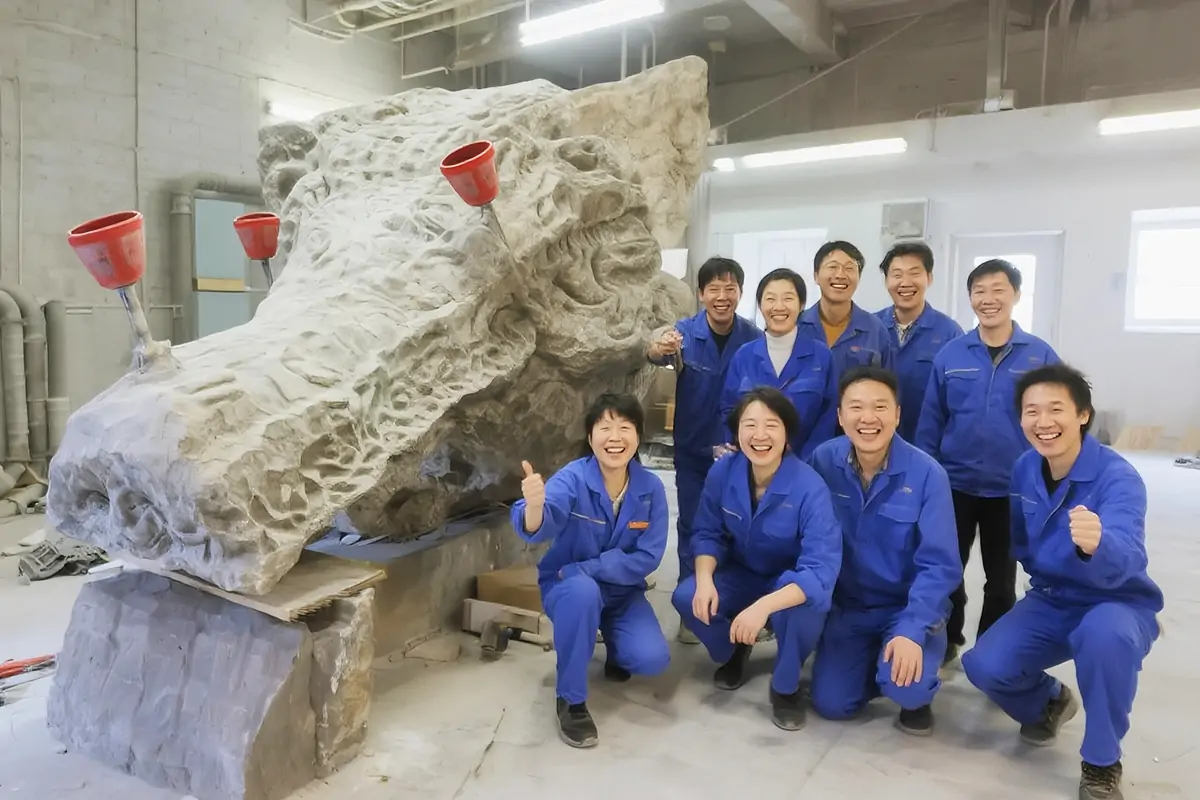
Pegasus treats a commission for art sculptures as one coordinated project rather than a manufacturing order that starts once a design file arrives. Design development refines sketches, maquettes or reference imagery into a concept that answers to the hotel’s floor plan and lighting intent. Engineering review resolves centre of gravity, base connections and floor loading for the chosen material, ahead of material-specific production such as bronze casting and chasing, stainless-steel forming and welding, marble carving, or FRP moulding. Every piece then passes through quality inspection, where dimensions, surface finish and structural connections are checked against the approved design before packing.
Packaging for an arrival sculpture is rarely simple crating. Reflective and hand-finished surfaces need protection that will not mark the piece in transit, and modular works are labelled so on-site assembly follows a clear sequence. Shipping and installation coordination close the loop, with Pegasus supporting lifting, base connection and alignment so the piece lands exactly on the sightline the design intended. This full-arc involvement, visible across Pegasus’ art sculptures work for hotels, museums and corporate developments, is what lets a design concept survive the journey from render to reception hall intact.
Hospitality projects that treat the sculpture, lighting design and interior architecture as one connected brief consistently produce a stronger, more coherent arrival. Developers exploring a public art sculpture commission for a new build or renovation can review completed projects to see how this coordination plays out in built spaces.
Frequently Asked Questions
How early should an arrival sculpture be planned during a hotel’s design phase?
Bring it in around the same time as the lighting and interior brief – ideally well before construction wraps up. Waiting too long usually means squeezing the sculpture into a space it was never designed for, or retrofitting the lighting around it after the fact.
Can lighting be adjusted around a custom sculpture, or does the sculpture have to be designed around fixed lighting?
It can go either way, but the two decisions shouldn’t happen in isolation. If the lighting’s already locked in, the sculpture’s finish and angle get chosen to work with it. If lighting is still open, it can be built around the piece from the start.
What size sculpture suits a boutique hotel versus a large resort lobby?
A boutique property with a lower ceiling usually calls for something smaller and more intimate. A resort with a double- or triple-height lobby can carry something taller and more commanding. Either way, the room’s actual proportions should drive the size – not a one-size-fits-all rule.
Does Pegasus support international hotel projects, including shipping and on-site installation?
Yes. Pegasus manages export packing and worldwide delivery, with installation coordination for lifting, base connection and final placement so the arrival experience matches the original design intent.
Can an existing hotel add an arrival sculpture without a full renovation?
Yes, though the same coordination applies. Scale, lighting and placement still need to be checked against the existing ceiling height, sightlines and guest flow rather than dropped into an open space by default.