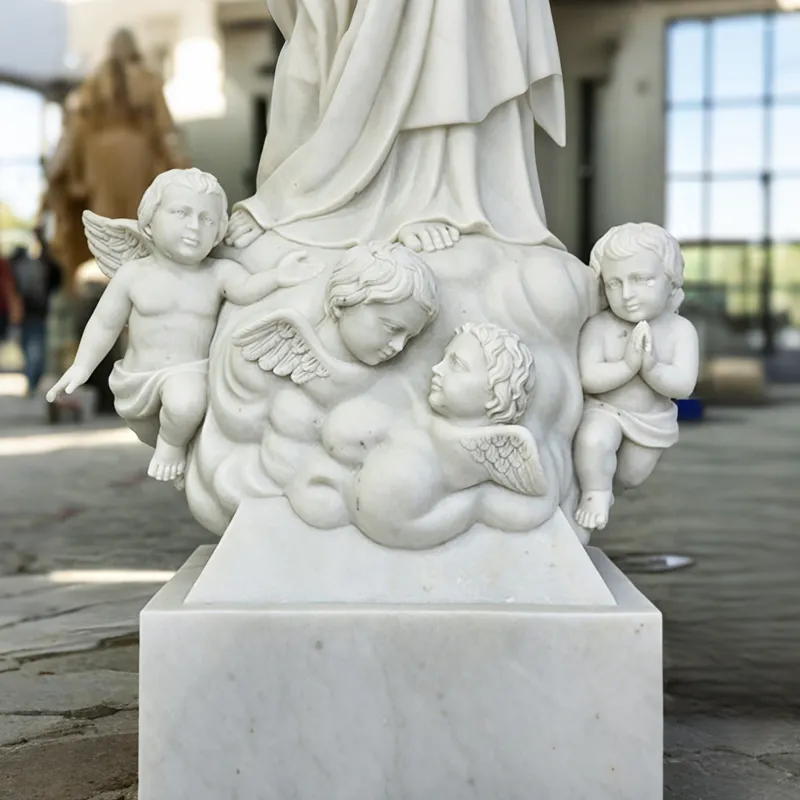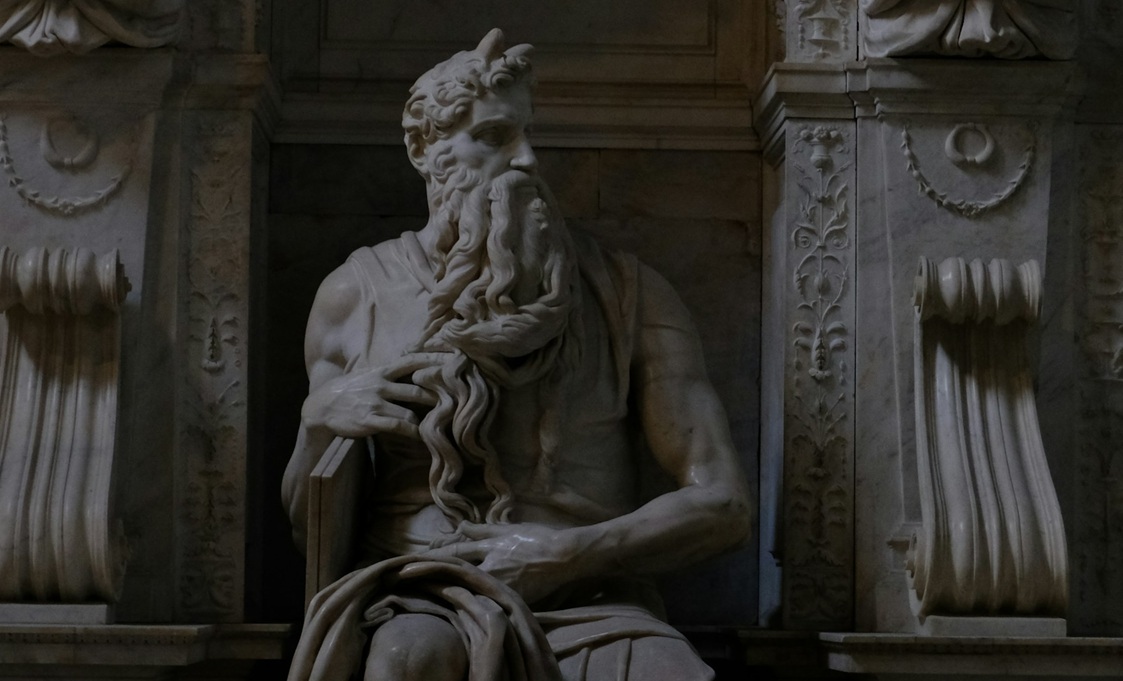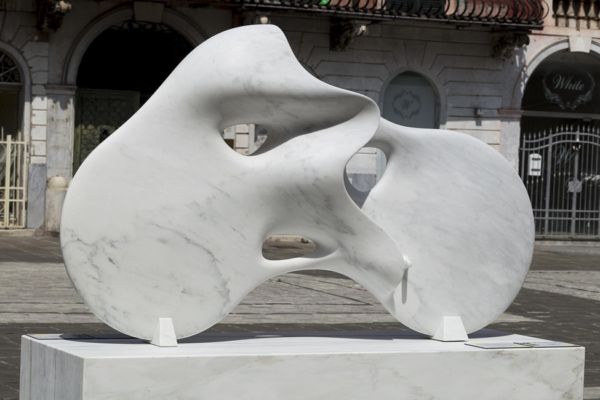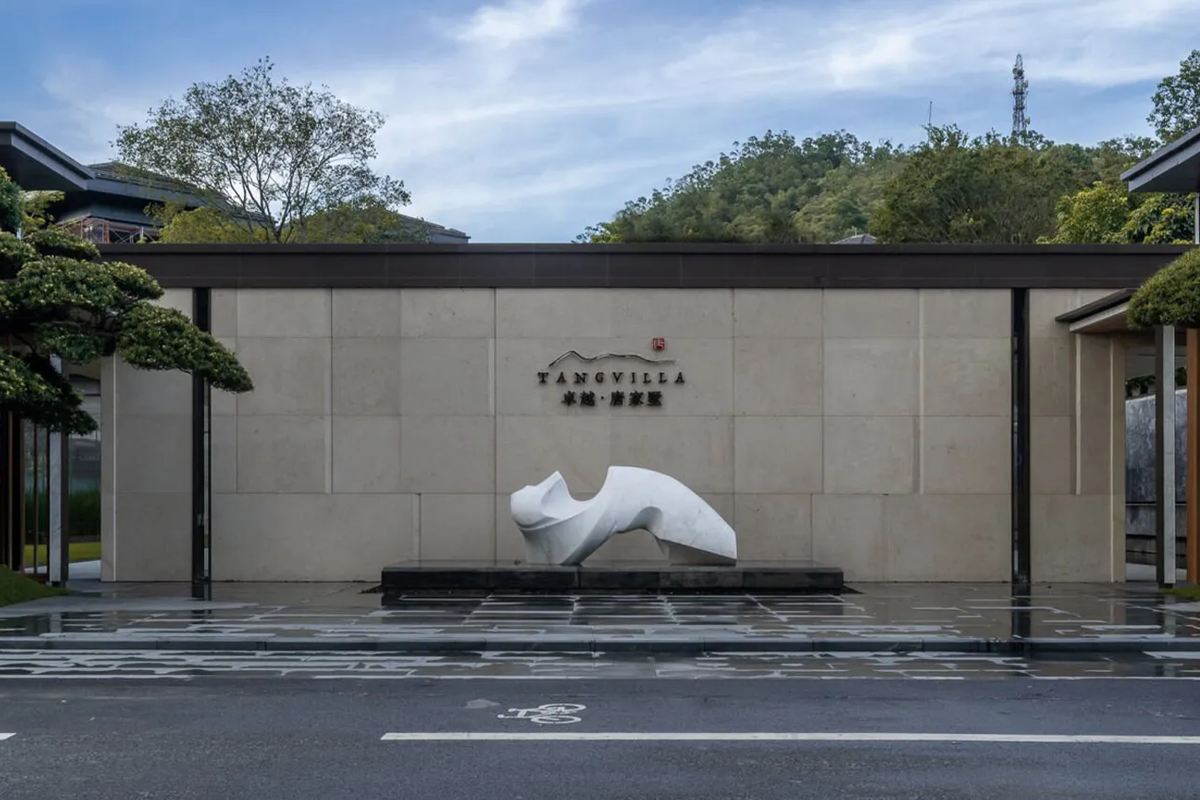
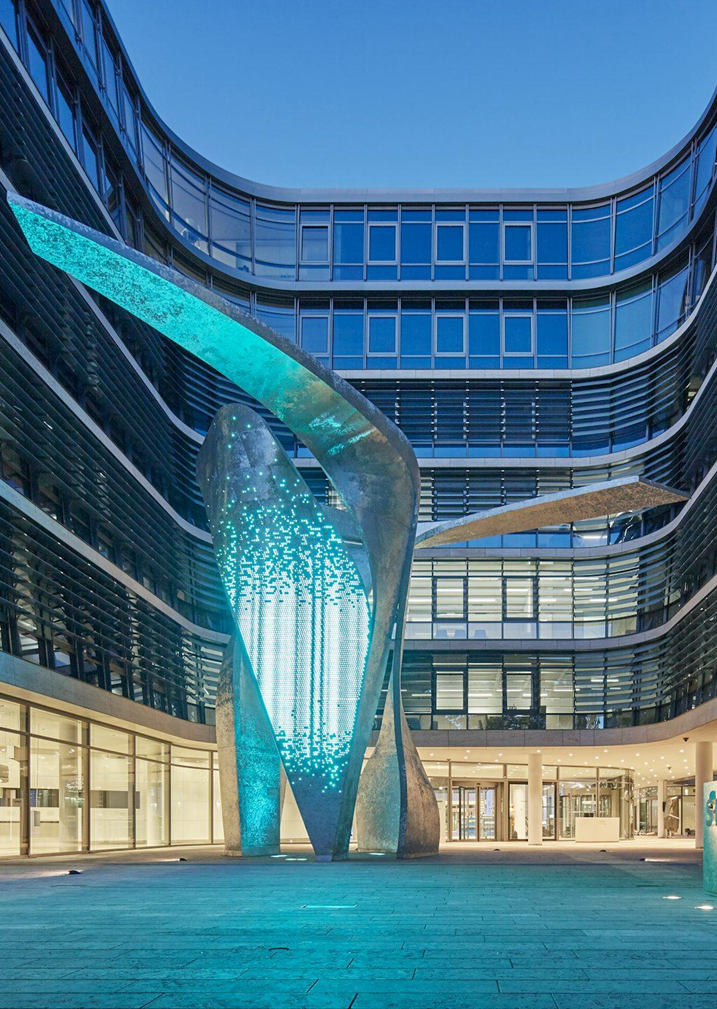
Abstract sculptures give a development a physical language of its own – turning a brand’s story, ambition, and design direction into a form that architecture and signage alone cannot fully express. Rather than depicting a literal scene, an abstract piece uses proportion, material, and negative space to communicate what a project stands for, often before a visitor reads a single word about it. Positioned at an entrance, plaza, or lobby, it becomes the signature moment a brand is remembered by.
Why Do Developers Choose Abstract Sculpture Over a Literal Statue?
Ask most developers why they skipped the literal statue and the answer usually comes down to one thing: it says too little, too specifically. A figure tells one story and stops there. A hotel guest, a corporate visitor, and someone who lives in the neighbourhood will all read an abstract piece a bit differently – yet somehow it still points back to the same idea underneath. That’s not a coincidence, and it’s not really about art for art’s sake either. A development’s audience shifts by the week, sometimes by the hour, and a brand landmark has to hold up for whoever happens to be walking past it, not just the client who signed off on the brief.
There’s also a practical reason. Literal statuary tends to date quickly – the style, the clothing, the pose all anchor it to a particular era. Well-proportioned abstract sculptures, on the other hand, are built around form, light, and material relationships that don’t go out of fashion the same way. For a development meant to represent a brand for decades, not just its opening year, that longevity is worth the extra design effort.
What Story Should the Sculpture Actually Tell?
Before a single sketch is approved, the more useful question isn’t “what should it look like” – it’s “what is this development trying to say.” Every commercial project carries some version of a development story: an origin, a material heritage, a design ambition, a relationship to its site. Commission art sculptures without reference to that story and the result is usually an attractive but generic object; develop the same piece around it, and visitors start to specifically associate it with the brand.
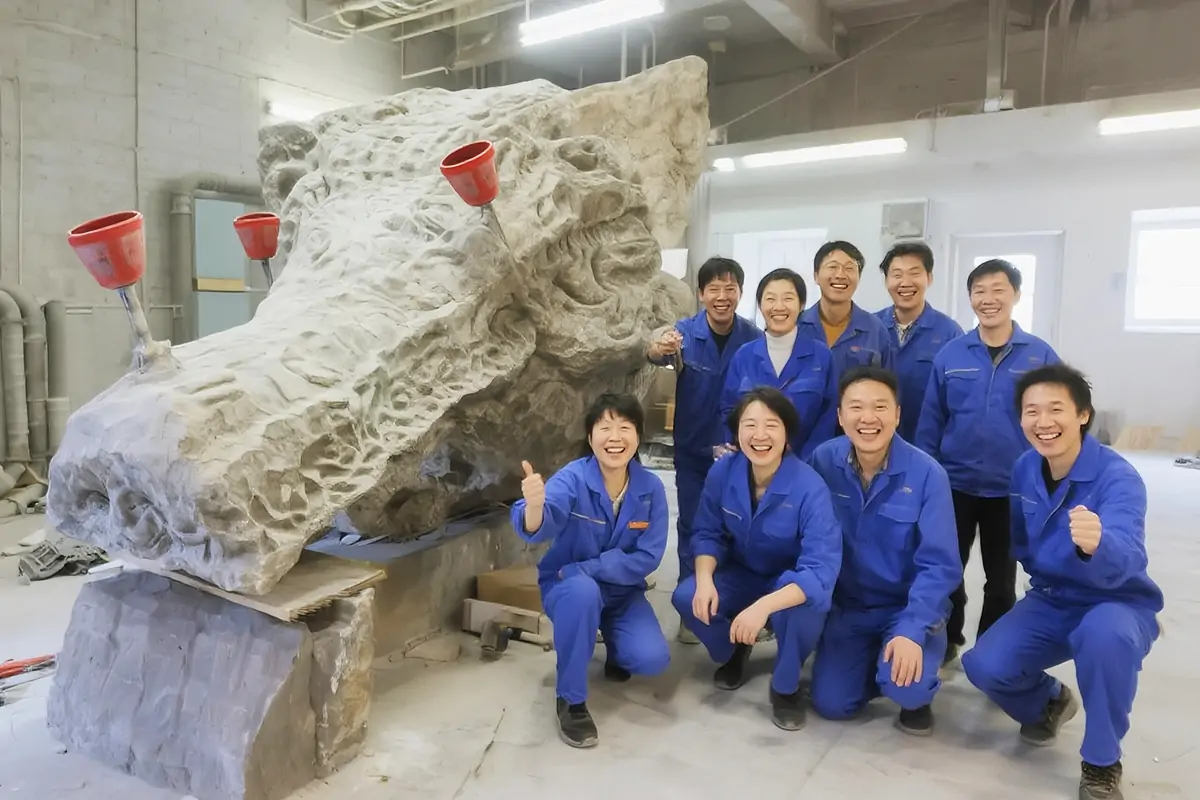
Pegasus, which works with architects, developers, and hospitality groups on custom sculpture commissions, has built nearly two decades of manufacturing history and now operates from a 10,000 m² foundry – background that matters here, because translating a brand narrative into a structurally sound, full-scale sculpture takes more than a strong concept sketch. It takes engineering discipline behind the artistic decision.
How Is a Development’s Identity Translated Into Sculptural Form?
Turning a brand narrative into a finished piece follows a fairly consistent sequence, even though the finished abstract sculptures themselves rarely look alike. In practice, four stages tend to shape the outcome:
- Brand narrative review – origin story, positioning, and design intent are discussed directly with the architect or developer before any concept work begins
- Site and audience mapping – approach routes, viewing distances, and the typical visitor profile are studied so the form reads correctly from every angle
- Concept translation – narrative themes are converted into shape, scale, surface, and material language rather than literal symbols
- Structural feasibility review – the concept is checked against engineering, transport, and installation constraints before the design is locked
Skipping any one of these steps is usually where projects run into trouble later – a striking concept that can’t actually be engineered at full scale, or a design that reads well on paper but disappears once it’s surrounded by real architecture.
What Does the Step-by-Step Process Actually Look Like?
The four stages above describe the logic of the process; in practice, they break down into discrete, sign-off-able steps – which matters for anyone trying to schedule this against a construction programme rather than just understand it conceptually:
- Narrative distillation – the brand story is reduced to two or three core ideas (a founding material, a gesture, a relationship to the site) that the sculpture actually needs to carry, rather than everything in the brief
- Sketch and mood exploration – several form directions are worked up as 2D studies against those core ideas, so the developer is choosing between distinct interpretations rather than approving a single guess
- Digital 3D modelling – the chosen direction is built as a 3D model, which is what allows scale, proportion, and sightlines to be tested against the actual site rather than an artist’s impression
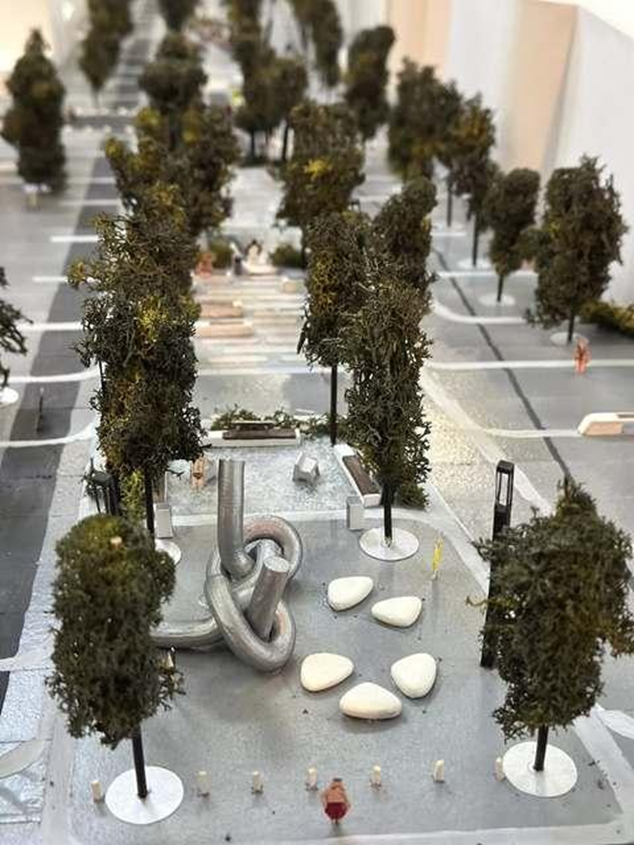
- Scaled maquette – a small physical model is produced so the developer and architect can review form and finish in the hand before committing to full-scale engineering
- Engineering and material lock – structural, transport, and installation constraints (covered below) are checked against the approved form, and any resulting adjustments are made before fabrication starts, not after
- Full-scale fabrication and finishing – the piece is built and finished in stages, with sign-off checkpoints, so the developer sees progress rather than a single reveal at the end
Which Sculptural Style Suits Which Brand Personality?
Modern sculptures built around clean geometry read very differently to visitors than fluid, organic forms – and each direction tends to fit a different kind of project. The table below is a starting point, not a formula; most developments end up blending two of these directions once the site and budget are factored in.
| Brand Personality | Sculptural Language | Typical Material & Finish | Best Setting |
| Innovative / technology-led | Geometric, angular composition | Brushed or mirror-polished stainless steel | Corporate HQ plaza or entrance |
| Warm / hospitality-led | Fluid, organic curves | Bronze or patinated metal | Hotel entrance, resort garden |
| Heritage / cultural | Forms referencing local material or craft | Stone or mixed material | Museum, cultural precinct |
| Bold / landmark-seeking | Monumental open form | Mirror-polished stainless steel | Public plaza, waterfront |
How Does Material and Finish Reinforce Brand Positioning?
Material choice is where brand strategy and engineering meet, and it’s often underestimated during early planning. A mirror-polished surface reflects the surrounding architecture, sky, and passing visitors, which tends to suit brands positioning themselves as premium, contemporary, or forward-looking – the reflection itself becomes part of the message. A brushed or satin finish is quieter; it reads as restrained and considered, which suits corporate or institutional identities that want presence without spectacle.
Bronze and patinated finishes carry a different weight entirely. They age visibly and develop character over years, which works well for developments built around heritage, craftsmanship, or a long-term relationship with a place. Abstract sculptures finished this way tend to feel less like a marketing object and more like a permanent part of the site’s identity – which, for many hospitality and cultural clients, is exactly the point.
Beyond the Look: Fabrication, Shipping, Maintenance, and Installation
A finish that reinforces brand positioning still has to survive being built, moved, and lived with for decades. Four practical factors sit alongside the aesthetic decision, and they can rule a material in or out just as decisively as how it looks.
Fabrication – complex curved geometry in stainless steel takes longer and costs more to weld and polish seamlessly than the same form in a material that hides joints more easily, like patinated bronze. Monumental pieces are almost always fabricated in sections, so the design has to account for where those seams fall and how they’ll be finished invisibly on site.
Shipping – weight and overall dimensions decide whether a piece travels as standard freight or needs oversized transport permits, and whether it can be shipped whole or must be engineered to bolt together in sections on site. This is usually settled during the engineering review, well before fabrication begins, so the sculpture doesn’t get finished and then discover it can’t leave the foundry in one piece.
Maintenance – mirror-polished stainless steel looks striking but shows fingerprints, water spotting, and scratches, and typically needs a periodic repolishing programme to stay on-brand. Bronze and patinated finishes are lower-maintenance by design, since the ageing that develops over time is part of the intended look rather than a defect to correct. Coastal or high-humidity sites add salt exposure and corrosion resistance to this calculation regardless of which material is chosen.On-site installation – heavier materials and larger single-piece castings demand more crane capacity and a more involved rigging plan, which can constrain material choice on tight urban sites with limited access. A lighter, sectional design can sometimes achieve a similar visual weight with a far simpler installation, which is worth weighing against the material’s aesthetic appeal early rather than after it’s specified.
Where Should a Signature Sculpture Be Placed Within a Development?
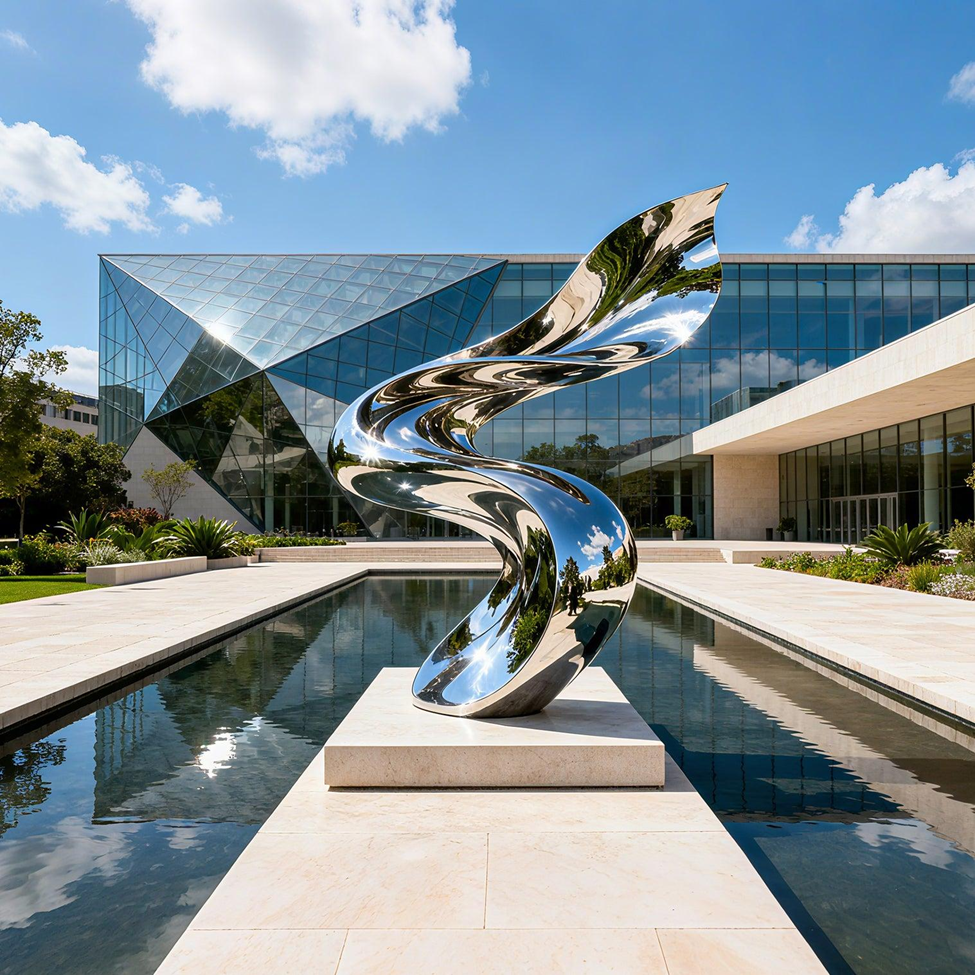
Placement decides how much of this brand work actually gets seen. An entrance sculpture is experienced by every visitor, which makes it the highest-impact – and highest-risk – location; it needs to work from a moving vehicle, a walking approach, and a static photograph all at once. Many hospitality groups treat entrance art sculptures as the first brand touchpoint a guest experiences, well before check-in.
Plaza and courtyard placements allow for closer, slower engagement and often support a more detailed or layered piece, since visitors have time to walk around it. Interior placements – lobbies, atriums – trade scale for control, since lighting, sightlines, and viewing distance can all be fixed at the design stage rather than left to weather and daylight.
How Do Viewing Distance, Angle, and Foot Traffic Affect Scale?
A sculpture that reads beautifully in a render can still fail on site if its scale wasn’t tested against how people will actually encounter it. Three factors do most of the work here.
Viewing distance sets the level of detail a piece can actually carry. A sculpture seen from a drop-off lane or across a plaza needs a bold, simple silhouette that reads instantly – fine surface texture or intricate negative space is wasted at that range. The same detail becomes an asset once viewing distance drops to a few metres, which is why lobby and courtyard pieces can be more intricate than an entrance landmark of similar size.
Approach angle determines whether a piece needs to work in the round or from a dominant elevation. A sculpture approached mainly from a single driveway or corridor can be designed with one strong “hero” profile; a piece in an open plaza that’s circled on foot has to hold up from every angle, which usually means a more sculptural, less flat-sided form and a higher fabrication and finishing cost.
Foot traffic speed shapes how long a piece actually has to make its impression. Vehicle drop-offs and fast-moving plazas give a visitor a second or two – scale and silhouette have to do the job unaided. Slower, pedestrian-only spaces (courtyards, lobbies, hotel gardens) give people time to walk around and linger, which is where material texture, reflection, and finer proportion changes start to matter more than overall scale.
This is why the site and audience mapping stage happens before concept design rather than after – scale decisions made without it tend to get revisited late, once a full-size mockup or the finished piece is actually standing on site.
When Should the Sculpture Be Brought Into the Project?
The single biggest driver of a smooth installation isn’t the design – it’s timing. A sculpture brought into the conversation once the plaza is paved and the crane has left site is already fighting the project, not working with it.
In practice, the sculpture should enter the conversation at schematic design or early design development – the same stage the architect is setting out hardscape, structural grid, and landscape zones. Brought in this early, it can be coordinated directly with the site team rather than fitted around decisions that have already been poured in concrete:
- Foundation embeds – a sculpture’s base plate, anchor bolts, or embedded steel need to be sized against the approved engineering design and cast into the slab or footing during structural works. Retrofitting an anchor into finished hardscape is possible but adds cost and risk that early coordination avoids entirely
- Crane access and lay-down area – a monumental piece usually arrives in sections and needs a crane path, a swing radius, and a temporary lay-down area that has to be reserved in the site logistics plan before surrounding construction, fencing, or landscaping closes those routes off
- Installation sequencing – most sculptures are placed after major structural and hardscape work but before final landscaping and fine finishes, so the surrounding surfaces aren’t damaged by rigging and the piece isn’t boxed in by planting or furniture that arrived first
Getting this sequencing right depends on the sculpture team and the site’s structural engineer working from the same drawings early, rather than reconciling two independent designs once both are already committed.
How Does Pegasus Turn a Brand Brief Into an Engineered Sculpture?
Once a concept is approved, the work shifts from creative direction to production discipline. Pegasus manages this as one connected process rather than handing a design off between separate vendors, which is where most abstract sculptures commissions lose consistency between the approved concept and the finished piece:
- Design & concept development – the brand narrative is translated into 3D geometry alongside the architect or developer
- Engineering review – structural loading, internal support, wind exposure, and site conditions are assessed before fabrication starts
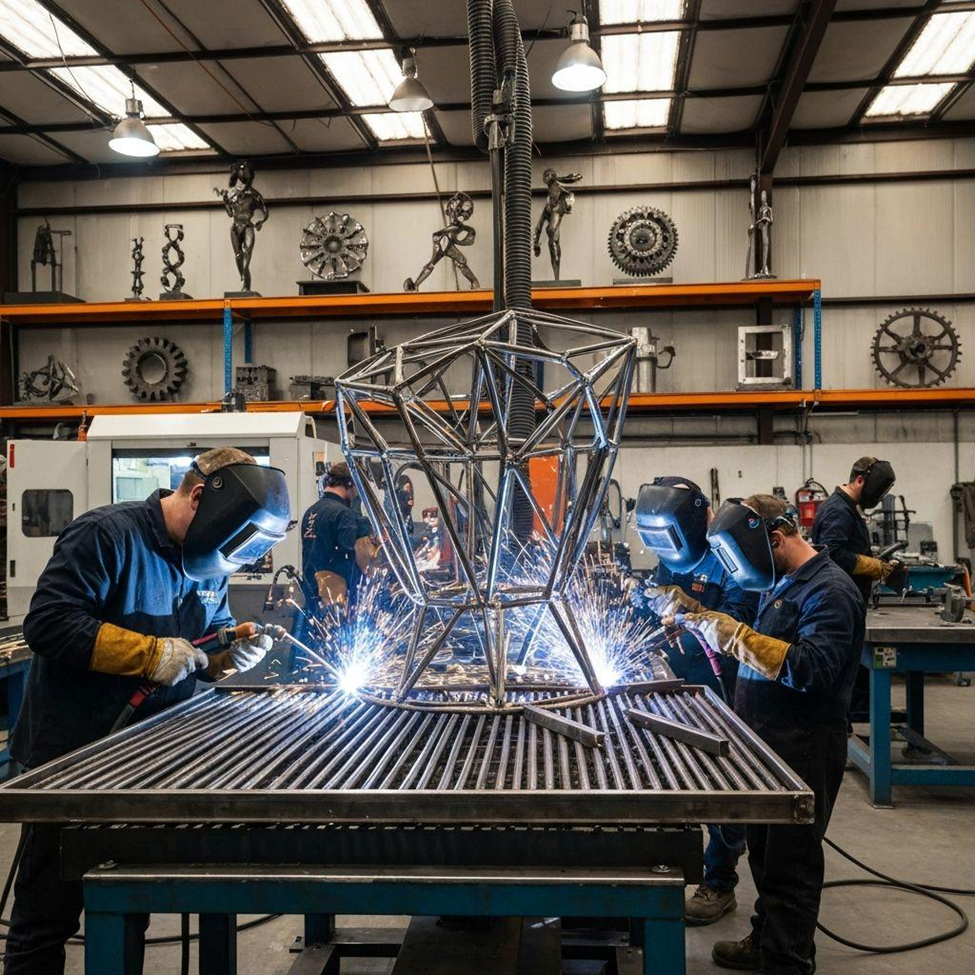
- Manufacturing & finishing – precision fabrication, welding, and surface treatment are carried out within Pegasus’ own foundry
- Quality control – dimensional accuracy and finish consistency are inspected before the piece leaves production
- Packaging & shipping – export-grade crating and logistics are coordinated for international delivery
- Installation support – lifting, alignment, and on-site coordination are managed with the local project team
Keeping all of these stages under one roof is what allows a brand concept approved months earlier to arrive on site looking exactly as intended, rather than reinterpreted by whichever contractor handled the final leg.
Frequently Asked Questions
How long does a custom abstract sculpture take to design and manufacture?
Timelines vary with scale and material, but most commissions move through concept development, engineering review, fabrication, and finishing over several months. Complex abstract sculptures involving monumental scale or sectional assembly generally need longer lead times, which is why design approval should start well before the surrounding construction reaches completion.
Can an abstract sculpture be developed from an existing logo or brand mark?
Yes. A logo or brand symbol can inform the underlying geometry without being reproduced literally – the goal is usually to abstract the mark into proportion, curve, or silhouette rather than build a three-dimensional copy of it.
Does an abstract sculpture need structural engineering approval before installation?
For anything beyond a small interior piece, yes. Wind loading, foundation connections, and internal support all need to be reviewed and, in most jurisdictions, documented before a large outdoor piece can be installed.
What’s the difference between abstract sculptures and modern sculptures in this context?
The terms overlap but aren’t identical. Modern sculptures generally refer to a contemporary design period or aesthetic, while abstract describes a non-representational approach to form – a piece can be modern without being abstract, or abstract while drawing on a more traditional material like bronze or stone.
Can Pegasus manage international shipping and on-site installation?
Yes. Export packing, modular transport planning, and installation coordination are handled as part of the same project, which is typically the more efficient path for developments outside Pegasus’ home market.
How early should the sculpture be involved in the construction programme?
Ideally at schematic design or early design development, alongside the architect and structural engineer. This is when foundation embeds, crane access, and installation sequencing can still be planned into the site logistics rather than negotiated around finished work.