If you’re the one who has to answer for the maintenance line on next year’s budget, here’s the direct answer: lifecycle planning for outdoor sculptures means costing out inspection, cleaning, and eventual refinishing across the piece’s entire service life, at the time you commission it, not after the invoice for the first repair lands on your desk. Do that up front and a sculpture behaves like any other capital asset on your property – a known cost, on a known schedule. Skip it, and you’re the person explaining to your finance director why an “art expense” just tripled.
That’s what really matters to buyers. The material decision, the engineering, and the paperwork a manufacturer hands you at delivery are what decide whether you’re managing a predictable asset five years from now or fielding a surprise. The Pegasus team has sat across the table from facility directors mid-way through exactly that conversation – usually after a piece from a previous supplier started showing problems nobody had documentation for. It’s a fixable situation, but it’s a lot cheaper to fix before the sculpture ships than after. Ask for the engineering drawings, the material certificates, and the inspection plan before you sign, and the same discipline should carry through for outdoor sculptures whether you’re placing one at a hotel entrance, a corporate campus, or a public plaza.
What Should a Buyer’s Lifecycle Plan Actually Cover?
A lifecycle plan for outdoor sculptures is more than a cleaning checklist someone hands you after installation. It’s the paper trail that lets your facilities team, your insurer, or a completely different contractor five years from now understand exactly what was built, how it was finished, and what it will need going forward. As a buyer, you should be asking for:
- Engineering drawings and structural load calculations
- Material grade certification (304 versus 316 stainless steel, the specific bronze alloy used, or the resin/gelcoat system specified for an FRP piece)
- Baseline condition photography and quality control reports from the factory floor
- An inspection interval matched to your site’s exposure, not a generic default
- A cleaning and refinishing schedule appropriate to the material
- A maintenance budget mapped across the sculpture’s expected service life
If a manufacturer can’t hand you most of this at delivery, that’s worth noticing. You’re the one who’ll be stuck reconstructing specifications from memory the day something needs repair.
How Often Should Outdoor Sculptures Be Inspected?
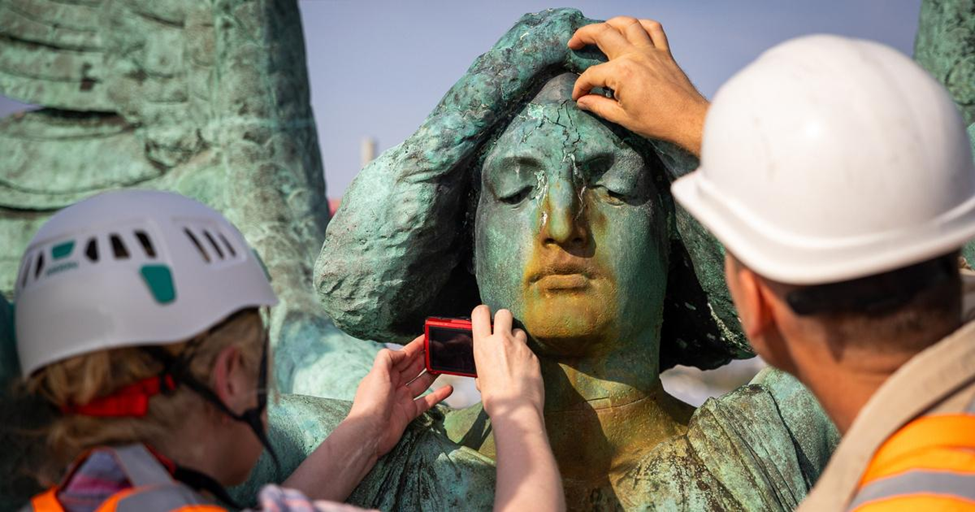
Set the interval by material and site exposure, not convenience. For a rough benchmark, an independent review of sculpture durability puts outdoor lifespan at roughly 100 to 500-plus years for a well-cast outdoor bronze sculpture, 100-plus years for stainless steel, and 20 to 40 years before major refinishing for a fiberglass (FRP) piece, assuming the right grade or resin system was chosen for the environment. Those numbers assume someone is actually inspecting the piece – not just hoping it holds up.
A workable schedule for most commercial sites is an annual walk-through, a check after any severe storm, and a structural review by an engineer every three to five years for anything monumental. At Pegasus, we build that cadence into the handover package: anchor points, foundation interfaces, and drainage details get documented during installation, so whoever inspects the piece later – your own team or someone you hire independently – is working from a known baseline instead of guesswork.

What Does Routine Cleaning Actually Involve?
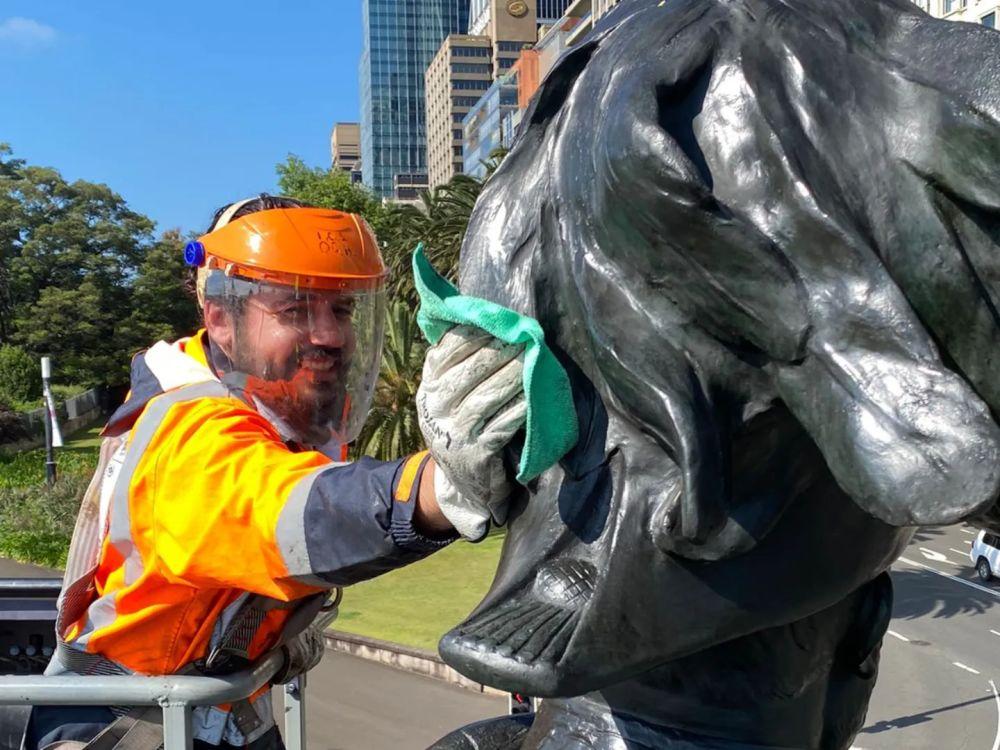
The cleaning method matters as much as the schedule, and using the wrong one on the wrong finish is probably the single most common cause of damage buyers see:
- Bronze: rinse with low-mineral water every few weeks if the piece is exposed, clean with a neutral-pH (6–8) detergent solution once or twice a year so the patina layer isn’t disturbed, dry completely to prevent water-spotting, and reapply a microcrystalline protective wax coating annually to maintain the barrier. That routine holds for almost any outdoor bronze sculpture. Skip the acidic or abrasive cleaners – they strip the protective patina, and once it’s gone, it doesn’t come back on its own.
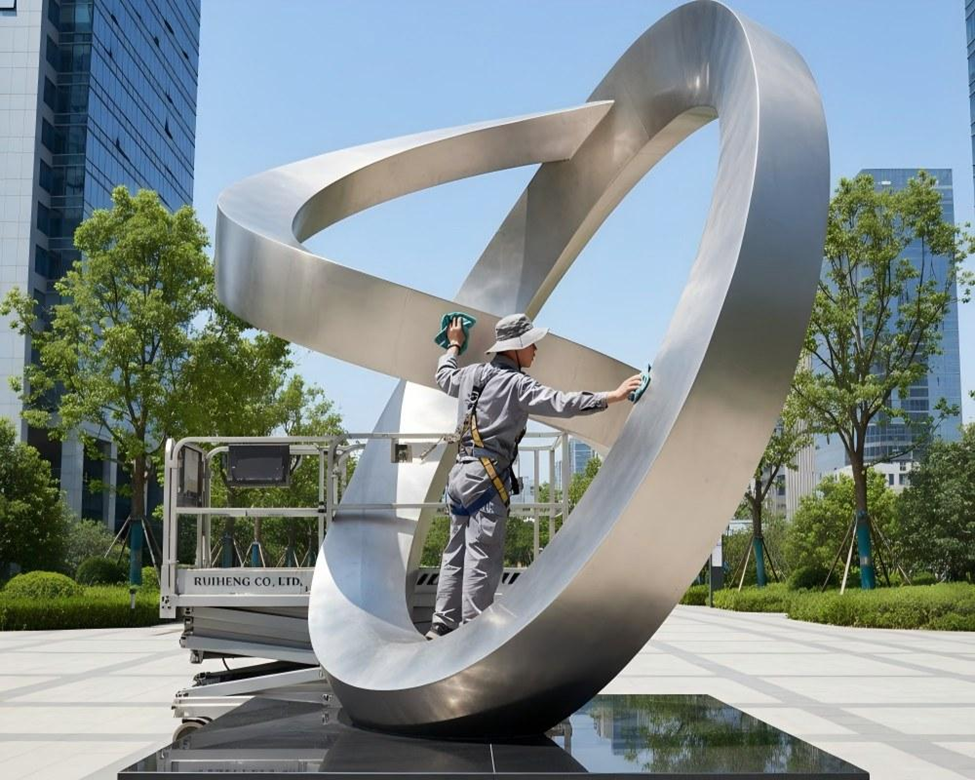
- Stainless steel: dust and rinse it regularly with fresh water to prevent chloride deposition and surface pitting, avoid steel wool, carbon-steel brushes, or abrasive pads that can embed ferrous particles and trigger contamination corrosion, and schedule periodic mechanical repolishing or repassivation if the finish is mirror-grade. A stainless steel sculpture sitting near the coast will need rinsing far more often than the same piece set inland.
- Fiberglass (FRP): wash with a neutral-pH detergent solution and a soft cloth or sponge before surface grime has a chance to degrade the gelcoat, keep solvent-based cleaners and abrasive pads away from it since they dull or craze the resin surface, and schedule a gelcoat condition check with UV-protective clear-coat recoating every 5–8 years. FRP’s dominant failure mode outdoors is UV-driven gelcoat chalking and fading rather than corrosion, so the maintenance logic fiberglass runs differently from bronze or stainless steel.
If this gets wrong, you probably won’t destroy the sculpture outright. What happens instead is quieter – surface wear accelerates, and the refinishing bill arrives a decade earlier than it should have.

Why Does Documentation Actually Matter to a Buyer?
For buyers of outdoor sculptures, it’s tempting to treat drawings and inspection reports as paperwork that just comes with the project. In practice, each document is doing a specific job for you. Sample and finish approvals confirm the material before full production starts, so you’re not paying for a costly correction after the fact. Quality control reports establish exactly what left the factory, which is what you’ll want on hand if a warranty question or an insurance claim ever comes up. Installation files – anchor specs, foundation drawings, lifting points – mean any contractor you bring in later, even one with no connection to the original manufacturer, can service the piece without starting from zero.
That’s the argument for asking for it and keeping it on file, rather than treating it as optional. We provide this package as standard across design, engineering, manufacturing, quality control, packaging, and shipping – so buyers have a complete record from day one instead of trying to reconstruct one after something’s already gone wrong.
What Does Long-Term Ownership Cost Look Like?
For most buyers weighing outdoor sculptures, cost comes down to material, site conditions, and how closely the maintenance schedule actually gets followed. The table below is a reasonable starting point for a stainless steel sculpture compared with a bronze commission and a fiberglass (FRP) piece, the three materials most commercial and architectural buyers end up choosing between.
| Material | Typical Outdoor Lifespan | Inspection Frequency | Environment Considerations | Routine Cleaning | Major Refinishing |
| Bronze | 100–500+ years | Annual, plus post-storm | Coastal: more frequent rinsing and wax renewal for salt exposure. Urban/industrial: faster patina staining from airborne pollutants, wash more often. Sheltered or indoor-adjacent: intervals can extend. | Rinse every few weeks; wash and wax 1–2x/year | Re-patina roughly every 10–20 years |
| Stainless Steel (304/316) | 100+ years | Annual | Coastal/high-humidity: specify 316 or 316L and rinse more frequently to prevent chloride pitting. Urban: moderate rinsing for pollutant deposits. Indoor/covered: polishing intervals can extend. | Dust and rinse 2–4x/year | Repolish or repassivate as needed; generally lower frequency |
| Fiberglass (FRP) | 20–40 years before major refinishing | Annual, plus gelcoat/UV condition check every 2–3 years | High-UV and coastal: gelcoat chalks and fades faster, needs UV-stabilized topcoat. Indoor or shaded outdoor: gelcoat life extends considerably. Not prone to chloride corrosion, but more UV-sensitive than metals. | Wash with neutral-pH detergent and soft cloth 2–4x/year; avoid solvents and abrasives | Gelcoat/UV clear-coat recoat every 5–8 years |
These numbers assume competent fabrication, a material grade matched to the site, and an environment-appropriate specification – a 316L stainless piece on a coastal boardwalk and the same alloy in a dry inland plaza age very differently. Cut corners on any of these, and even a well-chosen material drifts toward the low end of its range.
As a planning benchmark, routine annual inspection and cleaning for a mid-size commercial piece typically runs 1–3% of the original commission value per year, depending on material and site exposure. Major refinishing – re-patination for bronze, repolishing or repassivation for stainless steel, gelcoat recoating for FRP – typically costs 8–15% of the original commission value for bronze, 5–10% for stainless steel, and 10–20% for FRP once UV and impact damage are factored in. Skip the inspection and cleaning schedule, and a piece doesn’t just wear out faster – it tends to land at the low end of its lifespan range and the high end of its refinishing cost, because problems get caught late instead of early.
How Does Installation Quality Affect What You’ll Pay Later?
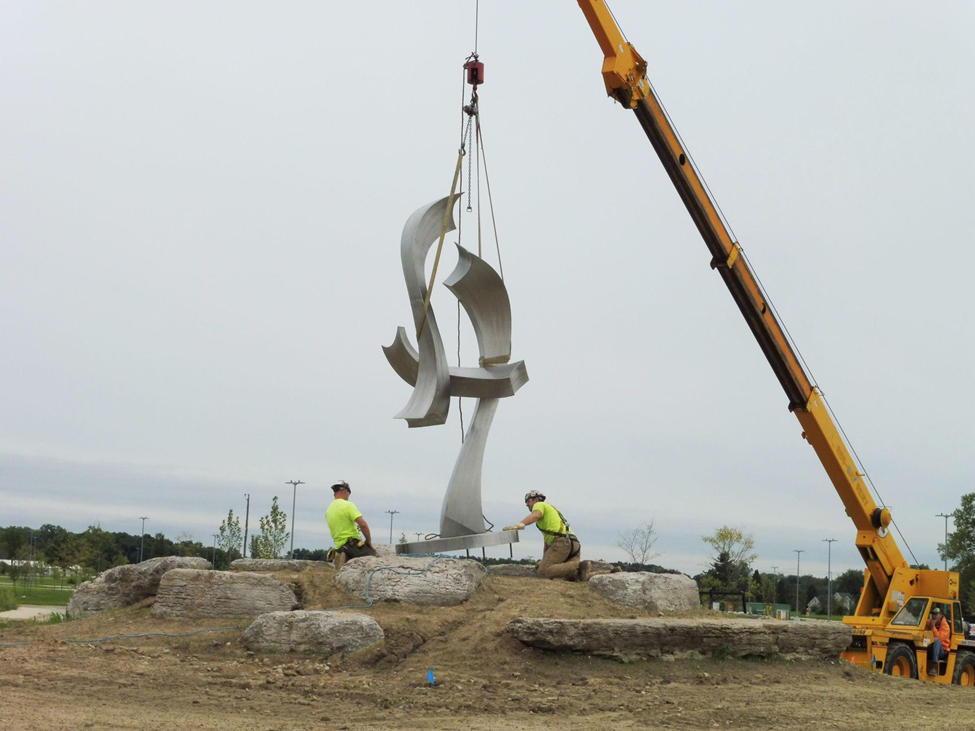
Good fabrication only gets a buyer so far. Installation is where that quality either holds or quietly starts leaking away. Anchor points, foundation interfaces, and drainage decide how much moisture and stress the base of any of these outdoor sculptures absorbs over the years, and a poorly executed installation is one of the more common reasons a maintenance budget runs higher than the manufacturer originally quoted. At Pegasus, we review these details during engineering, before a piece ever leaves the factory, and we stay involved through the installation itself – technical drawings, lifting guidance, on-site coordination – so the maintenance plan you’re handed actually reflects how your sculpture was built and set in place, not a generic estimate pulled off a template.
Frequently Asked Questions
1. How much should a buyer expect to spend maintaining an outdoor sculpture each year?
It depends on size, material, and site exposure, but as a planning benchmark, routine annual cleaning and inspection for a single commercial-scale piece typically runs 1–3% of the original commission value per year. The bigger expense shows up later: major refinishing every 10–20 years for bronze or stainless steel, or every 5–8 years for FRP, typically costs 5–20% of the original commission value depending on material.
2. Do stainless steel sculptures need less maintenance than bronze?
Generally, yes – stainless steel calls for less frequent surface treatment. That said, buyers near the coast still need to rinse it regularly to keep chlorides from building up, regardless of material.
3. How often should a professional inspect an outdoor sculpture?
An annual visual check is the floor for most commercial sites. For anything large or monumental, add a structural review by an engineer every three to five years.
4. What documents should a buyer request before commissioning a sculpture?
Engineering drawings, material certifications, quality control reports, and installation specifications – all of it, handed over as part of delivery, not requested after something has already gone wrong.
5. Can a buyer actually reduce lifecycle costs through material choice alone?
Yes, to a meaningful degree. Specifying the right grade for the site – 316L stainless steel for a coastal installation, for instance – cuts down how often and how expensively the piece needs attention over its lifetime.
Conclusion
For a buyer, the real value of a lifecycle plan is that it turns an unpredictable line item into a manageable one. Treat inspection schedules, cleaning routines, and documentation as part of the original commission rather than something to figure out later, and you’ll know roughly what your outdoor sculptures will cost to own for decades, not just what they cost to install. If you’re planning a commission and want those ownership costs mapped out before you commit to anything, contact the Pegasus team and we’ll walk through engineering, material specification, and a maintenance plan built around your actual site.