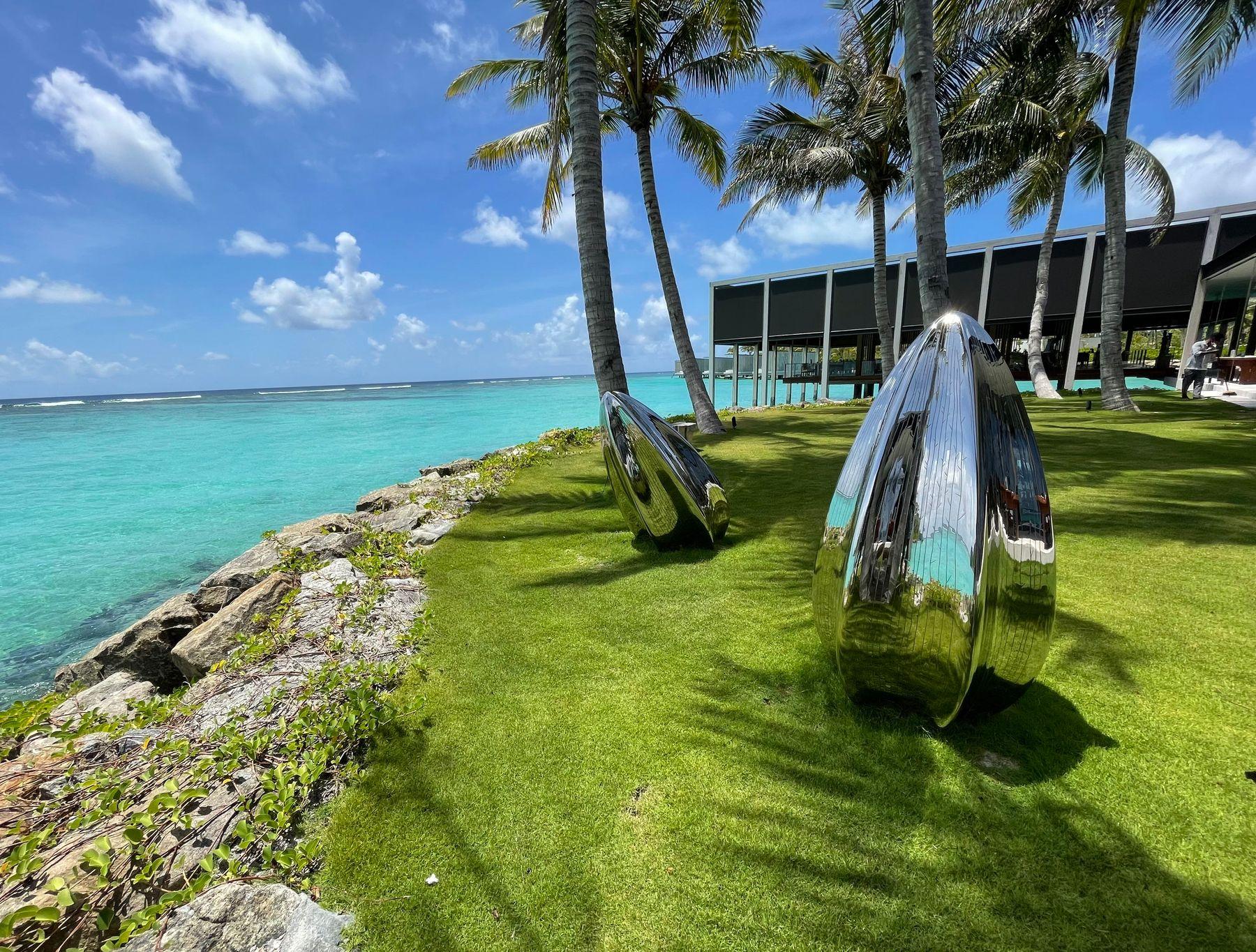
On a commercial or architectural site, a sculpture isn’t just art – it’s part of the building itself, and needs to be planned that way from the start. On a coastal site specifically, an outdoor stainless steel sculpture has another job on top of that: it has to function as engineered infrastructure that can take daily chloride exposure for decades without breaking down. Grade is where that starts. For most coastal installations, 316 or 316L stainless steel is the realistic baseline, and in direct splash zones, a duplex grade tends to hold up even better – largely thanks to molybdenum content, which slows down the pitting and crevice corrosion that standard 304 alloys suffer from in salty air. Get the grade, finish, and maintenance plan right at the start, and a coastal piece can keep its appearance for decades. Get it wrong, and you’re looking at years, not decades.
Salt air is one of the toughest environments a fabricator has to design for – not a minor nuisance to work around. Wind off the ocean carries chlorides that settle on exposed surfaces, and once humidity gets involved, they start breaking down the thin chromium oxide layer that normally keeps stainless steel from rusting. Further inland, that layer has time to rebuild itself between exposures. Right on the coast, it doesn’t get the chance – which is why a piece that holds up fine forty miles from shore can start pitting and staining within a couple of seasons on a beachfront site, if the specification wasn’t right to begin with.
At Pegasus, coastal commissions begin with a conversation about exposure, not aesthetics. Before any concept sketch is finalised, the team reviews how close the site sits to open water, whether it falls within a direct salt-spray zone, and what the prevailing wind carries across the installation – an assessment that shapes grade, finish, and fabrication detail long before welding begins. On a commercial site, that means material selection, structural coordination for anchoring and mounting, and installation support are planned alongside the design itself, not added on once the piece is finished. This is the difference between a general sculpture supplier and a manufacturer built for coastal specification work: the engineering brief comes first, and the aesthetic follows it, not the other way around.
Which Stainless Steel Grade Holds Up Best for an Architectural Sculpture Near the Ocean?
Grade selection is the single decision that affects a coastal piece more than any other. The differences are measurable using the Pitting Resistance Equivalent Number (PREN), a standard industry metric for how well an alloy resists chloride attack – 304 typically scores around 18 to 20, while 316L reaches 24 to 26, and duplex grades such as 2205 climb to 35 or higher.
- 304 stainless steel – acceptable for inland or sheltered courtyards, but not recommended within reach of salt spray
- 316 stainless steel – the common “marine grade” choice, with molybdenum added specifically to resist chloride pitting
- 316L stainless steel – the low-carbon version of 316, preferred wherever the design involves heavy welding, since it resists corrosion around the weld line
- Duplex 2205 – reserved for direct splash zones, piers, and installations that sit within a few hundred metres of breaking surf
For most resort entrances, boardwalks, and waterfront plazas, 316L strikes the right balance between cost and long-term performance. Pegasus specifies duplex only where the site data genuinely calls for it, since over-specifying adds cost without a proportional benefit to a sculpture stainless steel buyer working to a fixed capital budget. For a developer, that balance translates directly into lower lifecycle cost: 316L typically avoids the premature pitting repairs and refinishing work that undermine cheaper alloys within the first five to ten years, without paying for duplex-level resistance the site doesn’t need.
How Does Surface Finish Influence Corrosion Resistance in Salt Air?
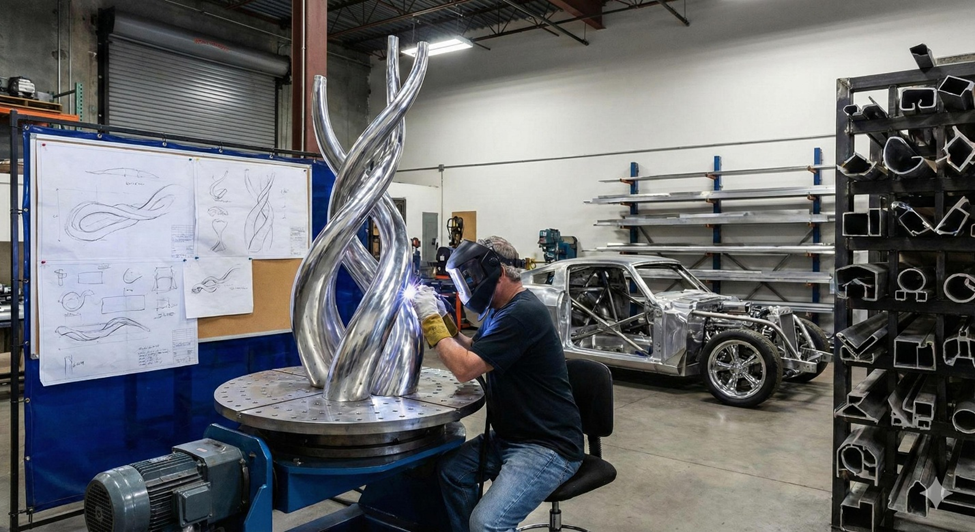
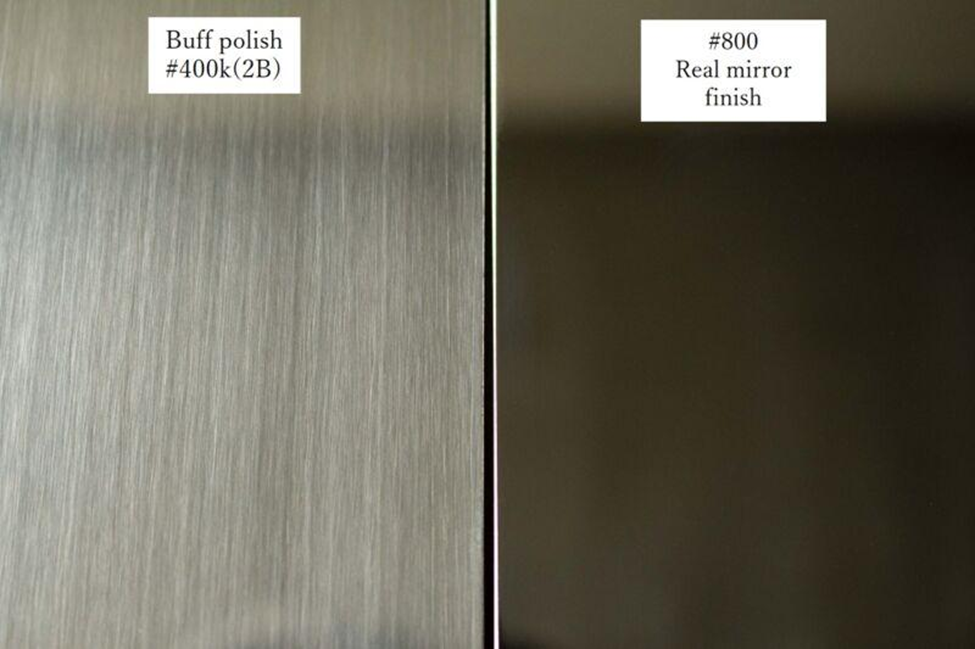
Grade is only half the equation – finish determines how quickly chlorides find a foothold. A highly polished mirror surface has fewer microscopic irregularities for salt crystals to lodge in, which is one reason polished finishes often outperform coarse brushed textures in direct coastal exposure, even though brushed finishes are frequently chosen for their understated look. Passivation – a chemical treatment that strips embedded iron particles left behind during fabrication and restores the protective oxide layer – is standard practice on every Pegasus piece before it leaves the workshop. Electropolishing takes this further, smoothing the surface at a microscopic level and measurably improving pitting resistance in salt-spray testing.
Design detailing matters just as much as finish. Horizontal ledges collect standing water and concentrated chlorides, while sharp internal crevices trap moisture that never fully dries. Pegasus’ engineering team reviews every coastal design for water-shedding geometry, rounded joints, and drainage paths before fabrication starts – a risk that is far cheaper to design out than to repair after installation.
What Surface Protection Methods Extend a Coastal Sculpture’s Service Life?
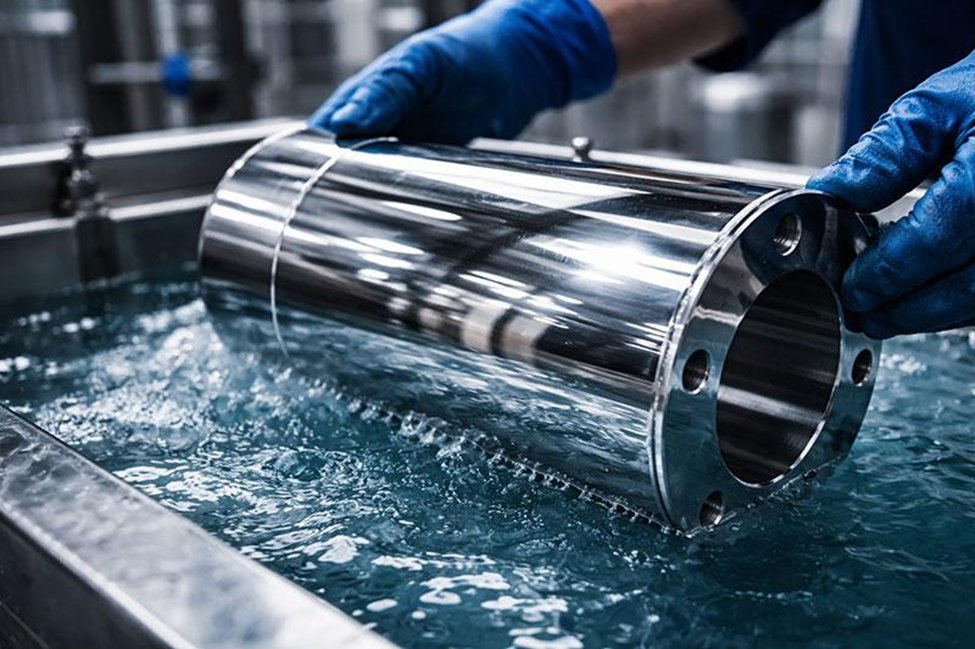
Beyond grade and geometry, several additional measures meaningfully extend the service life of an outdoor stainless steel sculpture in aggressive marine air:
- Mechanical or chemical passivation to remove surface contamination after welding and forming
- Electropolishing for pieces that will sit within the most exposed splash zones
- Clear protective coatings on select projects where the client wants an additional buffer layer
- Isolating dissimilar metals at fixings and anchor points to prevent galvanic corrosion
- Concealed drainage channels engineered into the base and any horizontal surfaces
Pegasus applies these selectively based on the site assessment rather than defaulting to every option on every job, since unnecessary treatments add cost without adding meaningful protection.
How Should Maintenance Be Planned for a Commercial Coastal Installation?
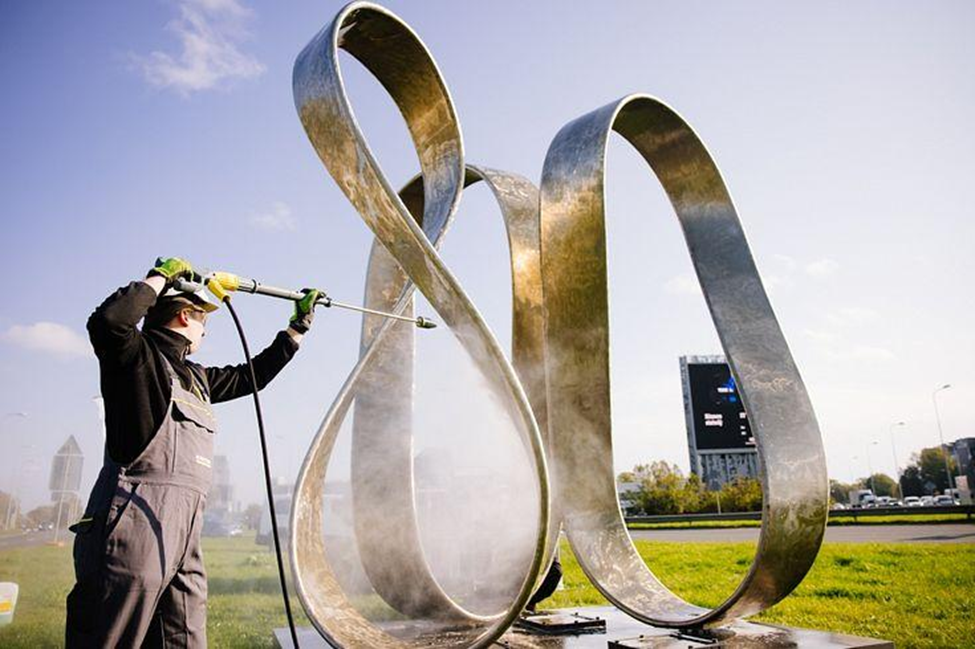
Even the correct grade and finish will not eliminate maintenance entirely – stainless steel is stain-less, not stain-proof. A realistic maintenance plan, agreed before installation rather than after the first signs of tea-staining appear, keeps a coastal piece looking as intended for its full design life.
| Exposure level | Recommended cleaning frequency | Typical method |
| Direct splash zone | Every 2–4 weeks | Fresh-water rinse, mild detergent wash |
| Coastal, set back from surf | Monthly | Fresh-water rinse, soft cloth |
| Coastal, sheltered courtyard | Quarterly | Visual inspection, spot cleaning |
| After named storms | Within 48 hours | Fresh-water rinse to remove salt deposition |
Pegasus provides a written maintenance schedule with every coastal commission, tailored to the specific site and finish, along with contact support for developers and facilities teams who want an inspection carried out by the original fabricator rather than a general contractor.
Why Coastal Sculpture Projects Need a Manufacturer, Not Just a Sculptor
For a commercial or architectural site, a sculpture is not an isolated artwork – it is an integrated part of the built environment, and a coastal one has to be coordinated with structural anchoring, wind load, landscape drainage, and a multi-decade service life from the earliest design stage. That is why Pegasus’ role on a coastal commission extends well beyond casting and welding. Material selection, structural coordination for anchoring and mounting, passivation and finishing, quality inspection, and moisture-controlled export packaging all sit within the same team, alongside the maintenance planning outlined above.
In practice, this means the developer doesn’t have to separately manage a foundry, a finishing shop, and a shipping provider – Pegasus handles it as one process. Shipping is often where good specification work gets undone: without moisture-controlled crating and corrosion-inhibiting wrap, a correctly specified piece can still pick up surface staining before it even reaches site, especially if it’s packed the way an inland order would be. That’s really the difference. Most suppliers can match the fabrication quality; what’s harder to match is treating coastal exposure as part of the brief from day one, instead of something dealt with after the piece has already left the workshop.
How to Choose the Right Coastal Sculpture Solution for Your Project
Selecting a coastal stainless steel solution starts with a small number of site variables, not a design preference. The more of these a developer, architect, or landscape consultant can bring to the first conversation with a commercial sculpture manufacturer, the faster grade, finish, and budget can be confirmed.
What to prepare before requesting a specification:
- Distance from open water and whether the site sits within a direct salt-spray zone
- Prevailing wind direction and typical exposure hours
- Local climate data – humidity, rainfall, and freeze-thaw cycles if relevant
- Foundation or mounting surface type (concrete plinth, structural steel frame, paved plaza)
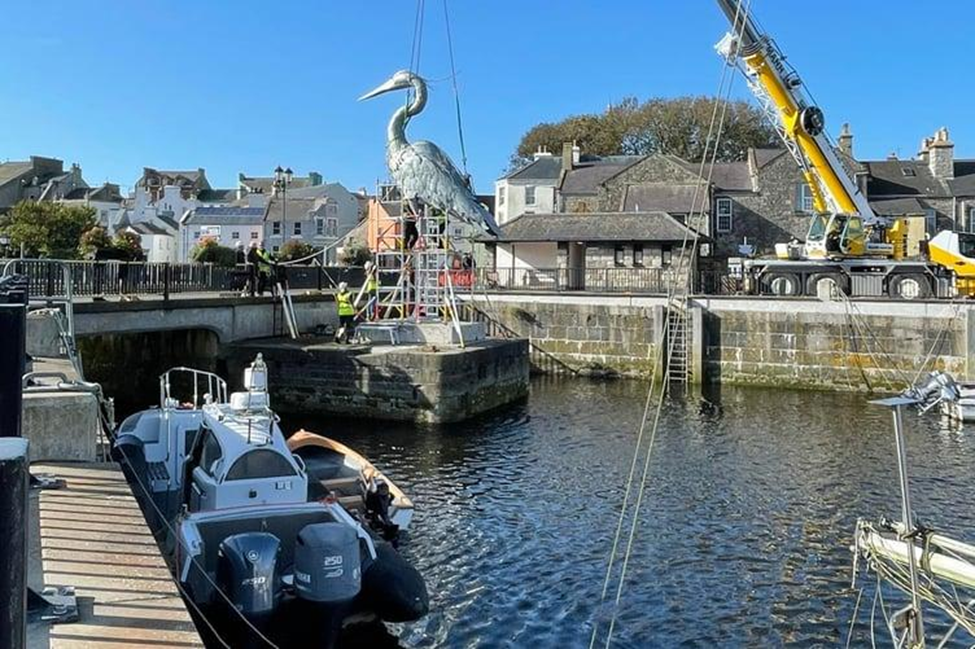
- Target installation date and site-access constraints, such as crane access or transport route width
- Budget range, since this determines whether 316L or duplex is the realistic starting point
- Design lifespan target, for example a 15-year versus a 30-year service life
These inputs shape the three decisions that most affect long-term performance: material grade, surface finish, and drainage geometry. Get all three right at the specification stage and a coastal piece’s maintenance costs stay predictable for decades. Get one wrong, and the same piece can need early refinishing or, in severe cases, partial replacement well before its design life is up – an expense that is almost always higher than the cost difference between 316L and duplex at the outset. This is the core of custom stainless steel sculpture specification for coastal sites: the decisions that are cheapest to get right are made before fabrication starts, not after.
From Fabrication to Site: Structural, Packaging, and Installation Support
Specifying the right material is only part of a coastal project. For architects and developers evaluating a commercial sculpture manufacturer, the harder question is often who manages everything between an approved design and a finished installation:
- Structural engineering – anchor design and wind-load calculations specific to the site, coordinated directly with the project’s structural engineer of record
- Installation – crane access review, foundation and plinth coordination, on-site assembly for multi-part pieces, and scheduling aligned with the general contractor
- Packaging and transport – moisture-controlled crating, corrosion-inhibiting wrap, and custom crating for oversized or irregular geometries, with export documentation handled for international shipments
- Handover – final inspection, a sign-off walkthrough with the project team, and delivery of the written maintenance schedule
Pegasus manages sculpture project management end to end rather than handing a finished piece to a separate installation contractor. For an outdoor sculpture procurement process with multiple vendors already in play – architect, structural engineer, general contractor, landscape team — having one manufacturer accountable for fabrication, packaging, and installation support removes a coordination risk that otherwise falls back on the developer.
Frequently Asked Questions
Is 304 stainless steel ever acceptable for a coastal sculpture?
Only in sheltered locations set well back from direct salt spray. For anything within reach of ocean air, 316 or 316L is the safer specification.
How often does a coastal outdoor stainless steel sculpture need professional servicing?
Most pieces benefit from a professional inspection once a year, in addition to the routine fresh-water rinsing outlined in the maintenance schedule.
Does a mirror-polished finish need more maintenance than a brushed finish near the coast?
Not necessarily – polished surfaces often resist chloride pitting better, though fingerprints and light marks may be more visible day to day.
Can an existing sculpture be upgraded with better corrosion protection?
In some cases, yes. Electropolishing or a protective coating can be applied to an existing piece, though grade cannot be changed after fabrication.
How does Pegasus decide between 316L and duplex stainless steel for a project?
The decision is based on the site assessment – distance from open water, prevailing wind exposure, and splash-zone data – rather than a fixed rule applied to every coastal commission.
What’s the difference between commissioning a coastal sculpture from a general studio and a specialist manufacturer like Pegasus?
A general studio typically treats coastal exposure as a finishing choice, applied after the design is already set. A specification-led manufacturer treats it as the starting brief – grade, geometry, and drainage are engineered around the site’s exposure data before fabrication begins, with material selection, structural coordination, and installation support managed as one connected process rather than separate hand-offs.
What’s different about planning a sculpture for a commercial or architectural site compared to a standalone artwork?
A standalone artwork is usually selected and placed independently of the surrounding structure. A commercial or architectural sculpture has to be planned as part of the site itself – coordinated with structural anchoring, wind load, drainage, and the same design lifespan as the building around it – which is why material selection and installation planning start at the site-assessment stage rather than after the design is finished.
Conclusion
Specifying a coastal sculpture is a materials-engineering decision as much as a design one. For a commercial or architectural project, a sculpture is not just an artwork – it is an integrated part of the built environment, and it has to perform structurally and visually for decades, not just look right on installation day. Grade, finish, geometry, and a realistic maintenance plan all work together to determine whether a piece still looks intentional after ten years of salt air or becomes a maintenance liability within two. Pegasus works through each of these factors – material selection, structural coordination, passivation, protective detailing, packaging, and long-term maintenance planning – as one connected process, which is what distinguishes a specialist manufacturer from a general sculpture supplier.
If you are planning a resort, boardwalk, or waterfront development and want an outdoor stainless steel sculpture specified around your site’s actual exposure conditions, contact the Pegasus team to review the project before fabrication begins.