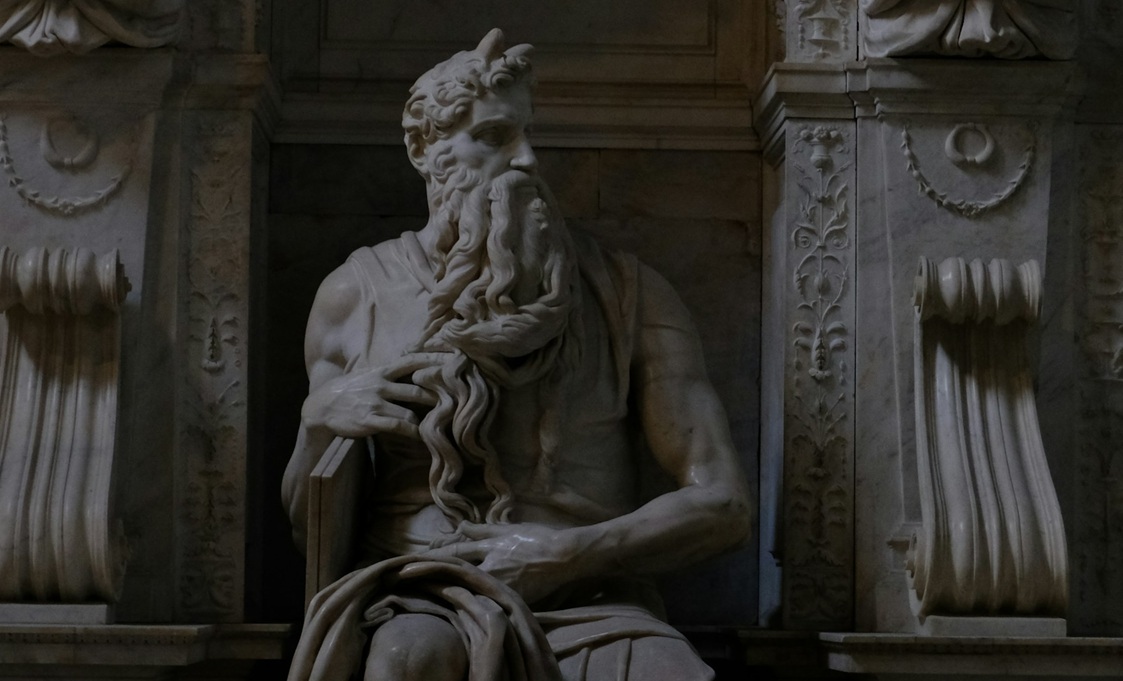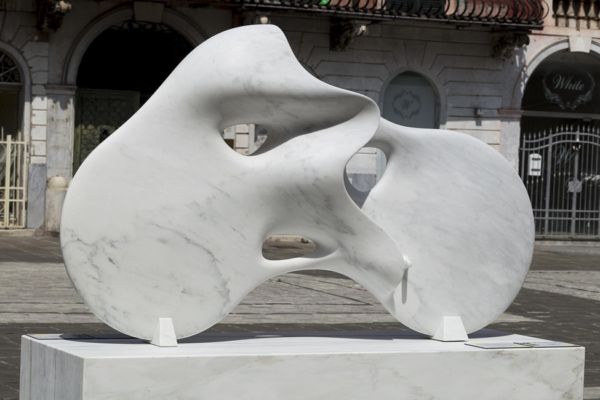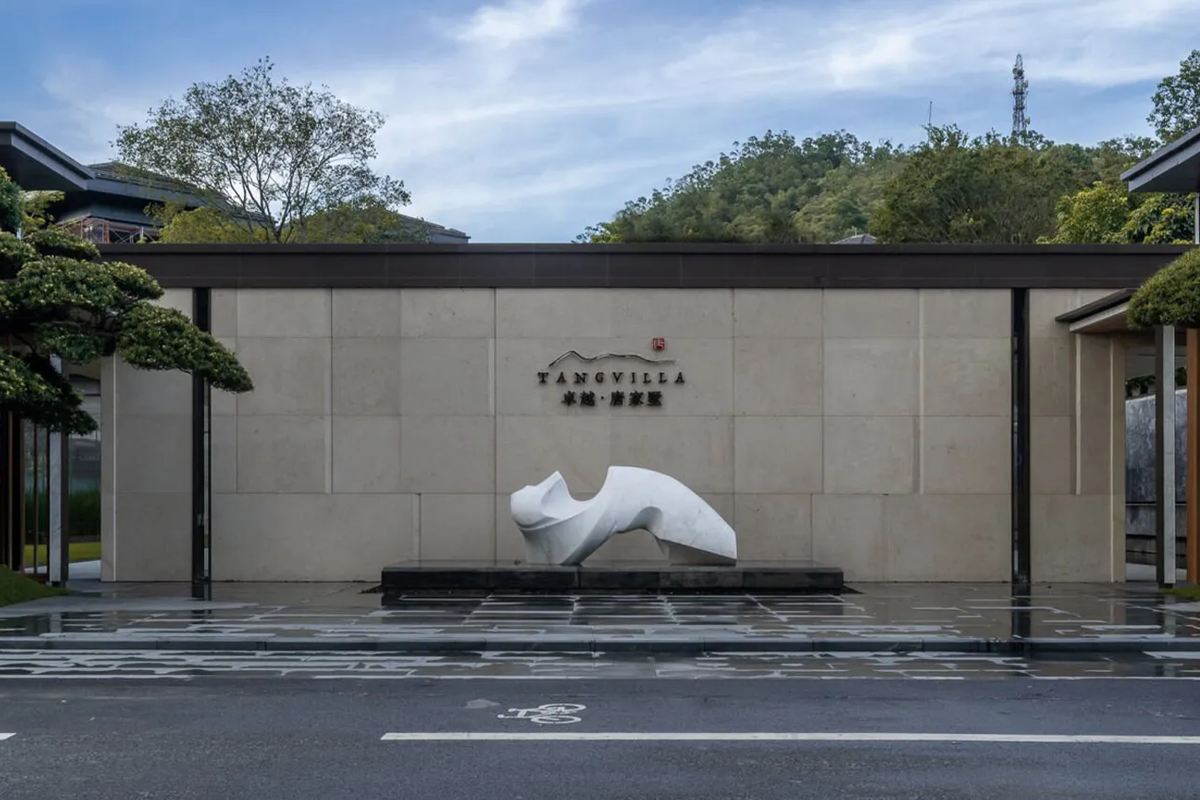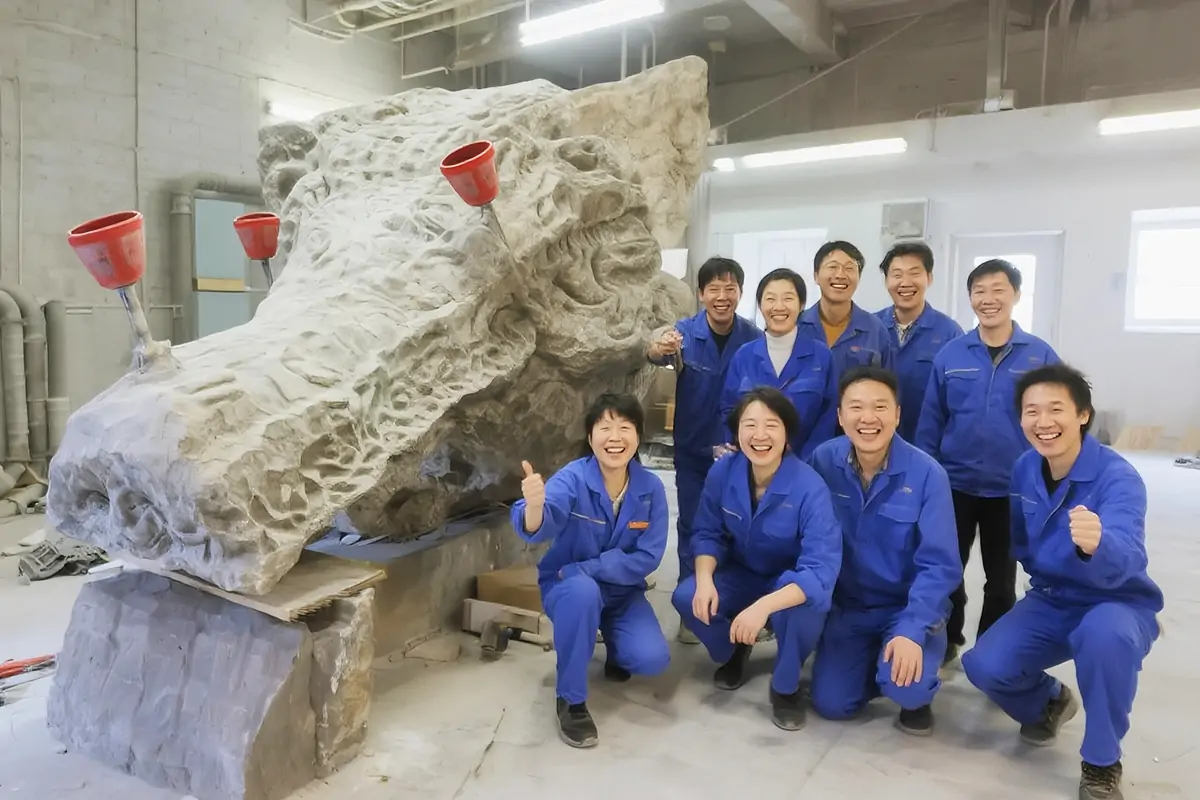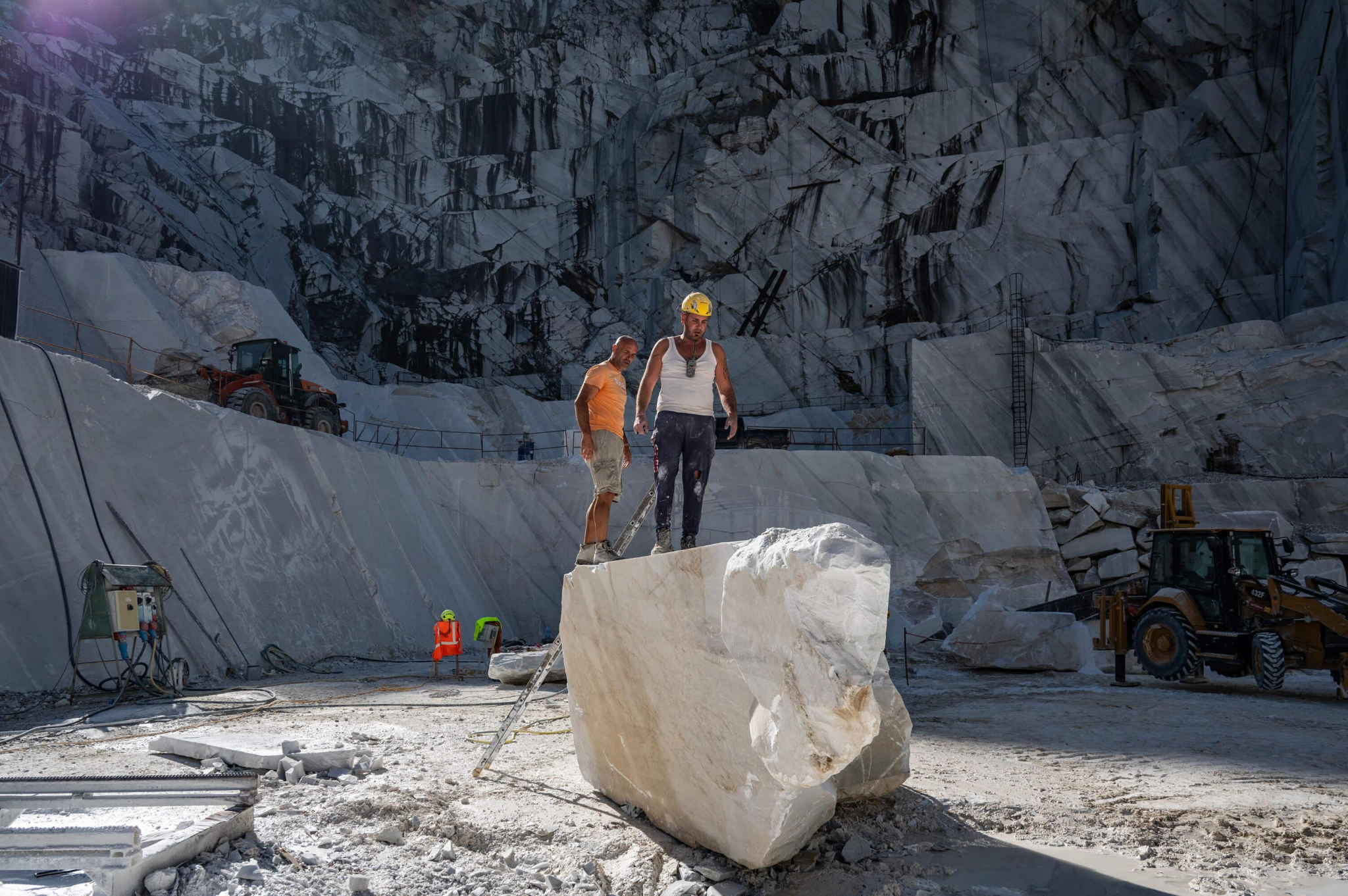
A block is ready to become a large-scale sculpture only after it clears three checks: no internal fractures hiding beneath the surface, veining that runs with the design’s stress lines rather than against them, and enough mass to carry hidden structural reinforcement. Skip any one of these, and even a beautifully carved piece can develop cracks within years – long before the marble statues it produced were ever expected to show wear.
For architects, developers, and procurement teams commissioning stone at scale, this is where risk actually enters a project – not at the design table, but inside a block that hasn’t yet been cut. It’s also where the difference between a general supplier and a technical partner becomes clear. A reseller works with whatever stock a third-party workshop already has on hand; a partner like Pegasus controls quarry sourcing, block inspection, and structural engineering as one continuous process – working through those decisions with the architect’s team rather than handing over a finished purchase – and treats block selection as an engineering decision rather than a purchasing formality. That control starts before design, engineering review, or fabrication schedules are even finalised, because a compromised block dictates every stage that follows it – which is exactly the kind of accountability a commercial or architectural sculpture commission demands and a standalone studio piece does not.
Pegasus applies this discipline as a fixed sequence on every commercial commission: quarry-side acoustic and optical inspection, a design review against the block’s actual grain and veining, and a structural sign-off before any cutting begins. With over 20 years in stone and metal fabrication, a 250-plus-person in-house team that includes structural and 3D engineers, and roughly 5,000 carved stone and marble pieces produced yearly for clients across the US, EU, UAE and UK, this sequence runs on every project regardless of scale. The sections below set out how each stage works in practice, and what it should look like whenever marble is being specified for a large or public-facing installation.
Why the Raw Block Decides More Than the Design in Architectural Sculpture
Marble is graded before it ever reaches a design brief. Quarries and specialist suppliers separate blocks by density, colour consistency, and freedom from internal flaws – and only the top grade is suitable for museum-quality or large civic commissions. Lower-grade material may look acceptable in a showroom slab but behaves unpredictably once a sculptor starts removing mass around thin sections, undercuts, or extended limbs.
This matters more than most buyers expect. Independent research on sculpture longevity puts outdoor marble at roughly fifty to two hundred years, depending heavily on climate, pollution exposure and how the stone was fabricated, while the same material can last for centuries indoors. That range isn’t fixed by the marble type alone; it’s set largely by whether the original block was sound and whether the finished marble sculptures were engineered with that lifespan in mind from the start.
This is also where the distinction between an artwork studio and a true technical partner matters most. A general supplier reselling finished pieces from third-party workshops has little visibility into how a given block was graded, tested, or reinforced before it left the quarry. A partner that inspects and engineers its own blocks in-house, working through grading and reinforcement decisions with the architect rather than presenting them after the fact, can trace every commercial marble sculpture back to a documented decision – the level of accountability large-scale architectural commissions require, and something a standalone studio commission rarely needs to demonstrate.
How Do You Detect Hidden Cracks Inside a Marble Block?
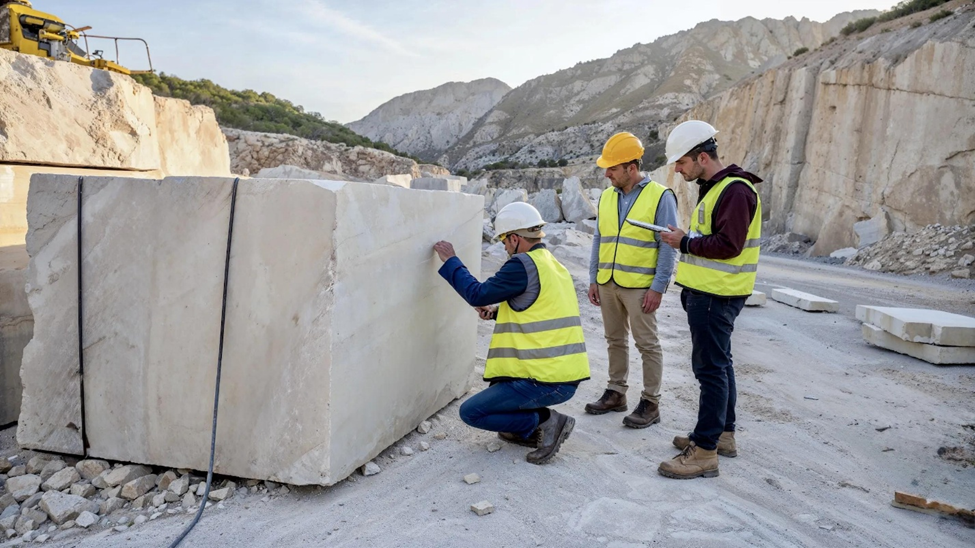
Surface inspection alone cannot reveal what’s happening inside a two-tonne block, which is why Pegasus runs every candidate block through a fixed inspection sequence before it’s approved for a commercial commission:
- Acoustic tap testing – Pegasus’ quality team listens for a clear, resonant tone that indicates a dense, solid interior; a dull or hollow sound gets the block set aside for further checks.
- Optical and UV flaw scanning – run in-house to expose fine internal fissures and mineral inclusions before a block is confirmed for cutting.
- High-resolution quarry photography and video – every approved block is documented face-by-face, so clients can review veining and colour before it’s committed to their project.
- Trial cuts or core samples on oversized blocks – reserved for the largest commissions, confirming consistency runs through the block’s core, not just its outer face.
A block that fails any stage of this sequence is graded down and redirected to smaller-format work, or rejected outright for anything load-bearing or freestanding.
From the inspection floor: In one recent commission, acoustic tap testing flagged a dull response in a section of block earmarked for a raised, load-bearing arm. Rather than proceeding, Pegasus’ team set the block aside and sourced a replacement before design work continued -avoiding a structural risk that surface inspection alone would have missed.
Veining: Where Beauty and Structural Risk Meet
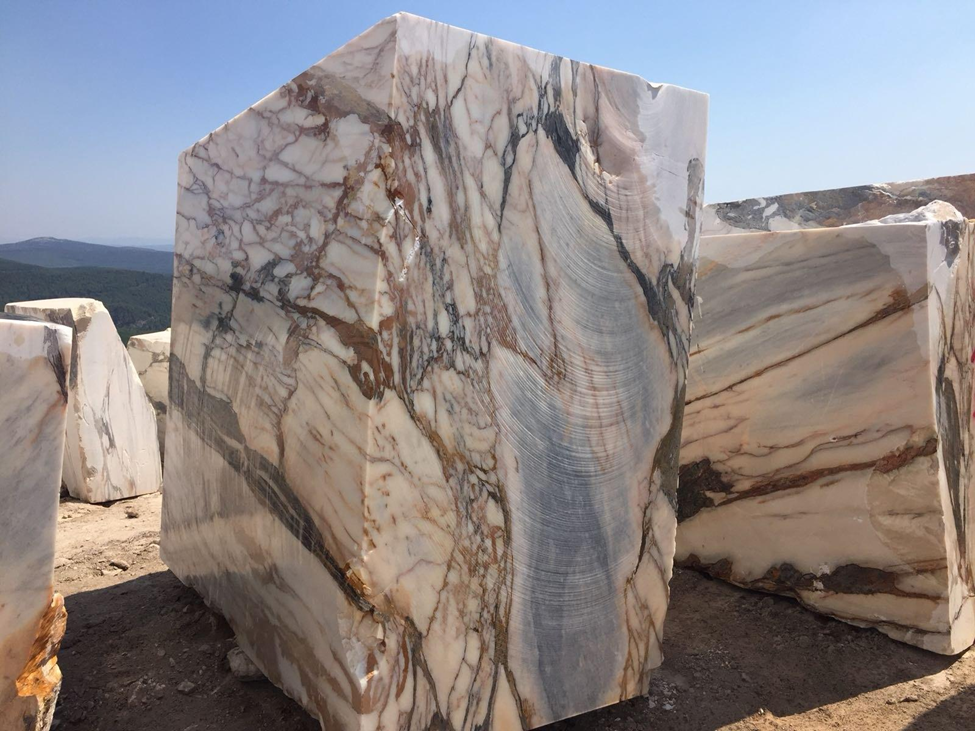
Veining is what gives marble its character, but it is also a structural signal. Veins mark where the stone’s crystalline layers meet, and those seams are naturally weaker than the surrounding calcite. A bold vein running across a sculpture’s base is rarely a problem; the same vein crossing a raised arm, an extended wing, or a slender ankle is a different story – it becomes the exact point where stress concentrates first.
This is one of the reasons Pegasus’ engineers never finalise a genuinely custom marble sculpture design purely from a digital render. Before production begins, the design is checked against the actual block – its grain direction, vein placement and density – because the same pose can be structurally sound in one block and fragile in another.
What Veining Patterns Are Safe for Large or Slender Marble Statues?
When Pegasus’ engineers assess a block against a proposed design, they apply a consistent set of checks:
- Veins running parallel to the sculpture’s main load path are generally approved without changes.
- Veins crossing narrow or projecting elements at right angles are flagged for a design adjustment or internal reinforcement before carving starts.
- A cluster of fine, closely spaced veins is treated as more stable than a single bold vein running through a load-bearing section.
- Any vein zone flagged as high-risk is tap-tested individually before the block is signed off, not assessed on colour and pattern alone.
Marble Grade and What It’s Actually Suited For
Grading is where inspection and veining checks come together in one decision. The table below shows how Pegasus classifies a block once that review is complete, and what each grade is realistically suited for on a commercial project.
| Grade | Density & Internal Clarity | Typical Veining | Suited For | Structural Risk |
| Grade A (Statuary) | Very high density, minimal internal flaws | Fine, sparse, evenly distributed | Large civic monuments, museum pieces, slender or dynamically posed figures | Low |
| Grade B (Architectural) | Good density, occasional minor inclusions | Moderate, generally stable | Standard commercial installations, plazas, garden pieces | Low to moderate |
| Grade C (Standard) | Variable density, more frequent flaws | Bold or irregular, sometimes crossing load paths | Small-scale or indoor decorative work only | High for anything large or freestanding |
| Reject Grade | Detectable internal cracks or voids | Unpredictable | Not used for sculpture – redirected to non-structural stock | Not applicable |
Structural Planning Before the First Chisel Mark
Once a block passes inspection, Pegasus’ engineering team begins structural work before any carving does. For large or dynamically posed pieces, this typically includes 3D structural modelling to calculate the centre of gravity, stress-mapping to identify where wind or seismic load will concentrate, and a decision on internal reinforcement – usually a hidden 316L marine-grade stainless steel armature running through the stone’s core at the points identified as highest risk.
This is the stage that separates a decorative piece from an installation engineered to last decades outdoors. At Pegasus, this planning happens as part of the same workflow as design and material selection, not as a separate step added after a problem appears. Structural calculations, anchoring details, and foundation requirements are worked out alongside the custom marble sculpture design itself, so architects and contractors receive dimensions and load data they can act on directly rather than assumptions to verify later.

What Manufacturer-Level Control Looks Like on Commercial Sculpture Projects
Raw-block quality is only the first link in a longer chain, and each stage after it either protects that quality or undermines it. This is the coordination that separates a manufacturer from a supplier acting as a middleman between an architect and a third-party workshop:
- Design and Engineering – the approved block’s grain, veining and density inform the final pose and wall thickness before modelling is locked in.
- Manufacturing – 7-axis CNC pre-shaping establishes dimensional accuracy, with master carvers finishing detail by hand so proportions and texture stay true to the design.
- Quality Control – completed pieces undergo dry-lay inspection and levelling checks, confirming fit and finish before anything leaves the factory floor.
- Packaging – shock-absorbent crating, soft internal supports and moisture control protect vein lines and polished surfaces during transit.
- Shipping and Installation – foundation details, anchor positions and lifting guidance are shared with local contractors in advance, so the block’s structural planning carries through to the finished site.
Installation planning starts well before the block is finalised, not after production wraps. Pegasus reviews crane access, on-site lifting points, and foundation interface details alongside the structural engineering stage, so the rigging plan and the block’s internal reinforcement are worked out together – not resolved separately once the piece has already shipped.
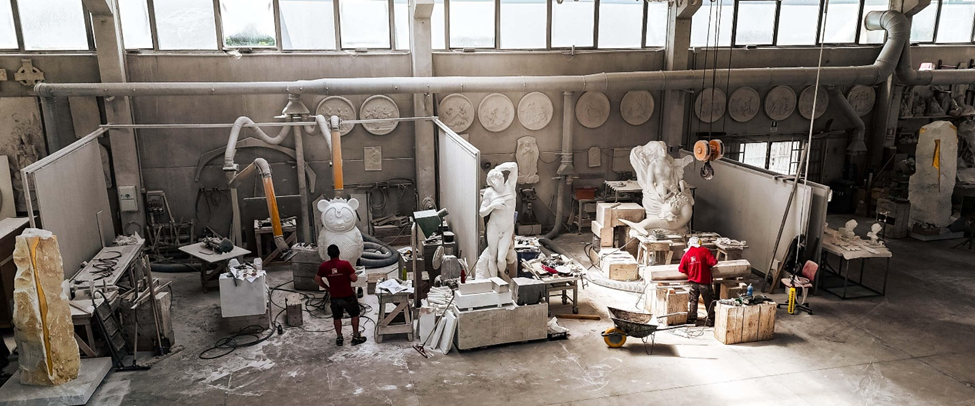
Buyers evaluating a supplier for a large commission can see this approach reflected across Pegasus’ completed installations of marble sculptures, spanning hotel lobbies, memorial commissions, commercial interiors and large private gardens, where block selection, reinforcement and installation are documented as one connected process rather than separate vendors handing off a project along the way.
What to Ask Before You Approve a Block for Production
If you’re specifying stone for a commercial or architectural commission, these are the questions worth putting to any supplier before a block is signed off — Pegasus included:
- Who performs the acoustic and optical inspection — is it done in-house, or outsourced to a third party you can’t verify?
- Can the supplier provide face-by-face photography or video of the specific block before it’s cut, not just stock catalogue images?
- Is the design checked against the actual block’s grain and veining, or only against a digital render?
- What internal reinforcement is specified, and is it engineered to your piece’s height, weight and installation site — or a generic default?
- Can the supplier share structural engineering documentation and delivery photographs from previous commissions of comparable scale?
A supplier who can answer all five without hesitation is treating block selection as engineering. One who can’t is asking you to take it on faith.
Frequently Asked Questions
1. How long can a well-selected marble block last outdoors?
With a sound block, correct internal reinforcement, and Pegasus’ penetrating sealant applied at finishing, outdoor marble typically performs well for fifty to two hundred years or more depending on climate and pollution exposure, while indoor placement can extend that lifespan to centuries. Block quality at the selection stage is one of the biggest factors in reaching the upper end of that range- which is why it’s worth asking a supplier for their inspection and sealing process specifically, rather than taking lifespan claims at face value.
2. Can hidden cracks be detected without cutting into the block?
Yes. Pegasus uses acoustic tap testing and optical or UV flaw scanning to reveal internal fractures and voids without damaging the block, and any block that doesn’t pass this sequence is rejected before it’s approved for a commission.
3. Does visible veining always weaken a sculpture?
Not necessarily. Veins running with a design’s load path rarely cause issues. Pegasus’ engineers flag risk only when a vein crosses a thin or projecting element at an angle, reviewing vein direction against the specific pose rather than judging on appearance alone.
4. What grade of marble should a commercial project specify?
Large-scale or public-facing marble statues should be carved only from top-grade, quarry-inspected blocks. Pegasus rejects any B- or C-grade material with known internal flaws outright, since lower grades increase the likelihood of cracking during carving or after installation.
5. How is structural reinforcement added without changing the sculpture’s appearance?
Pegasus builds reinforcement from precision-bored, marine-grade stainless steel rods or armatures inserted through the stone’s core at points identified during structural modelling, so the support stays completely hidden within the finished form.
In short,
The success of a large marble commission is usually decided long before carving starts – in the block itself. Hidden cracks, poorly placed veining and skipped structural planning don’t just risk the finished piece; they risk the budget, the timeline, and the installation’s lifespan. This is precisely why commercial and architectural sculpture projects call for a technical partner rather than a general supplier: someone who inspects, engineers, fabricates and documents that process from quarry to site as one accountable operation, working alongside the architect at each stage instead of handing a project between disconnected vendors.
If you’re specifying stone for an upcoming commission, contact the Pegasus team with your project’s scale, timeline and site conditions – we’ll review your design against real block options and structural requirements, and share documentation and reference projects from work of comparable scale before production is scheduled.