What Is Included in a Sculpture Project Documentation Package?
A complete sculpture documentation package includes four core components: engineering and shop drawings, material or finish samples for approval, quality control inspection records, and installation files with foundation and anchoring details. Any serious sculpture manufacturer should hand over all four before a piece ever leaves the workshop, because together they’re what turn a one-off art commission into a properly managed construction deliverable. If you’re an architect, developer, or procurement lead sourcing a monumental piece, this paperwork trail is arguably as important as the sculpture itself – it’s what your structural engineer, your site contractor, and your insurer will actually ask to see. Each piece of that package also earns its place by lowering risk at a specific stage of the project: drawings reduce risk at design approval, samples reduce risk before production commits, QC records reduce risk during fabrication, and installation files reduce risk on site.
Most people researching a commission focus on the art. That’s understandable. But once a project moves past the concept stage, the conversation shifts to submittals, RFIs, and sign-offs – the same language used on any building project. A manufacturer that treats documentation as an afterthought usually treats engineering the same way, so this is worth understanding before you sign a contract.
Why Do Shop Drawings Matter Before Fabrication Begins?
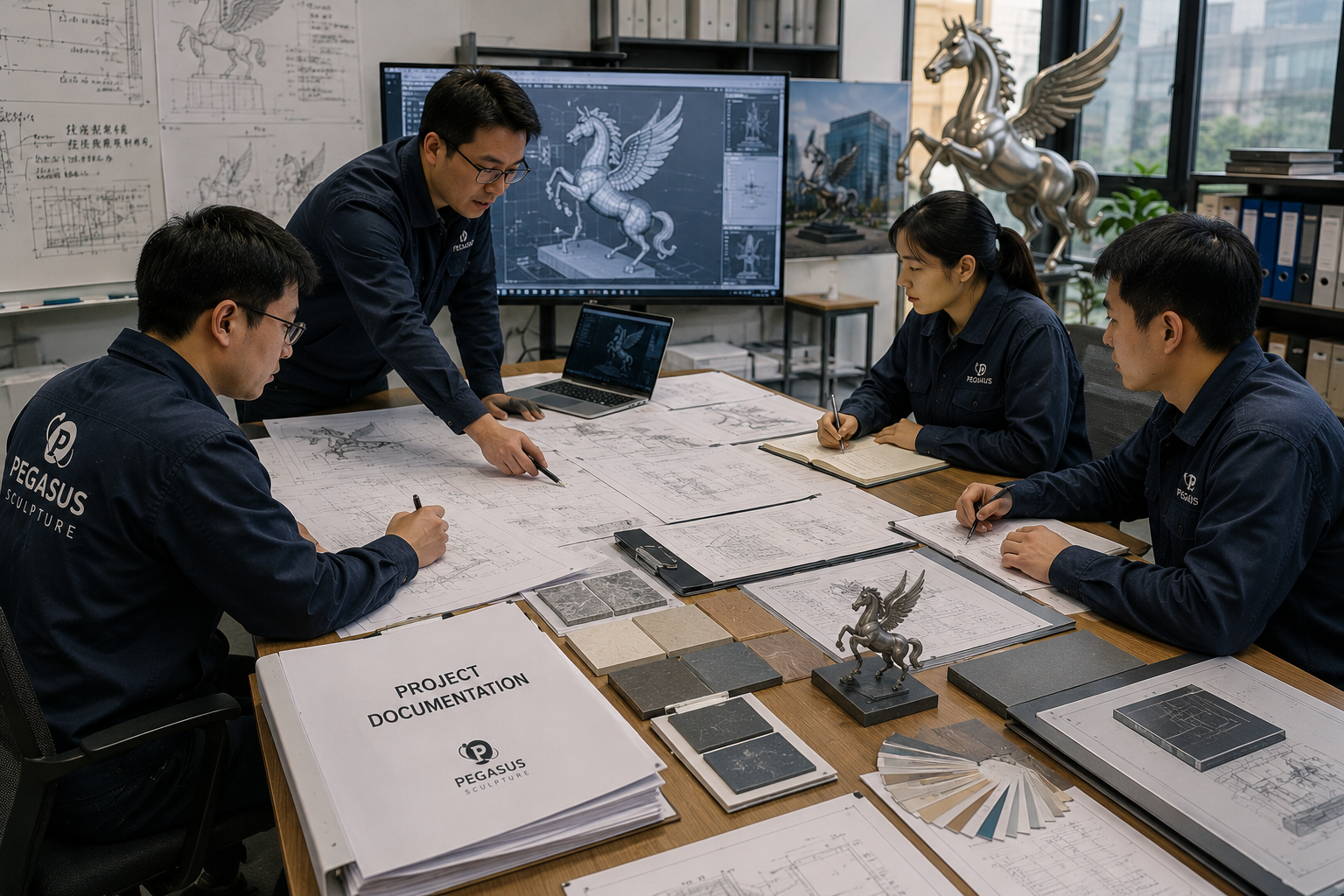
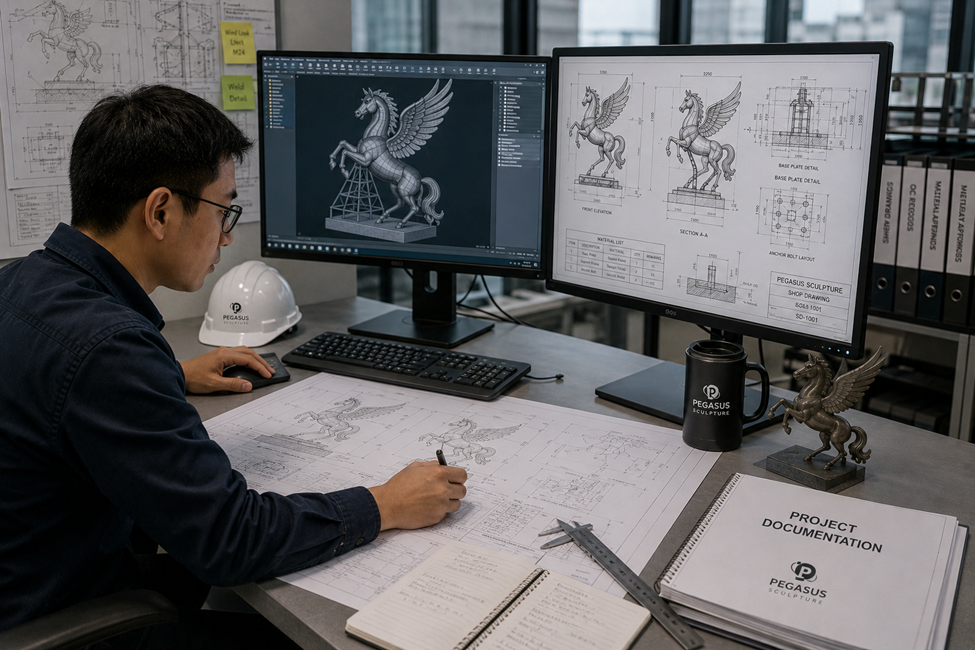
Shop drawings are the technical translation of a design concept into buildable instructions – dimensions, material gauges, internal armature layout, weld points, and load paths. For architects and contractors, these drawings are what gets stamped, reviewed, and filed with the rest of the project’s construction documents. A custom sculpture intended for outdoor public space, for instance, needs wind and seismic load calculations built into the internal steel armature long before any fabrication starts, and those calculations belong in the drawing set, not in someone’s head.
At Pegasus, this stage starts with a 3D “digital twin” and precise CAD drawings, built to catch technical challenges before heavy fabrication ever begins. That engineering and drafting work sits alongside the broader custom fabrication capabilities – CNC milling, mold-making, and AR-assisted welding – the workshop uses to turn a design into a buildable piece. The idea is simple: solve problems on screen, not on the shop floor, and definitely not after a piece has shipped. Procurement teams who request drawing packages upfront tend to avoid the change-order headaches that come from surprises discovered mid-production.
This is really a risk-reduction step for the design approval stage. Catching a load path conflict or a dimension error on a CAD file costs nothing more than a revision; catching the same issue after fabrication has started can mean re-cutting steel, rebuilding an armature, or missing a project deadline entirely.
Sample Approvals to Expect From a Sculpture Manufacturer
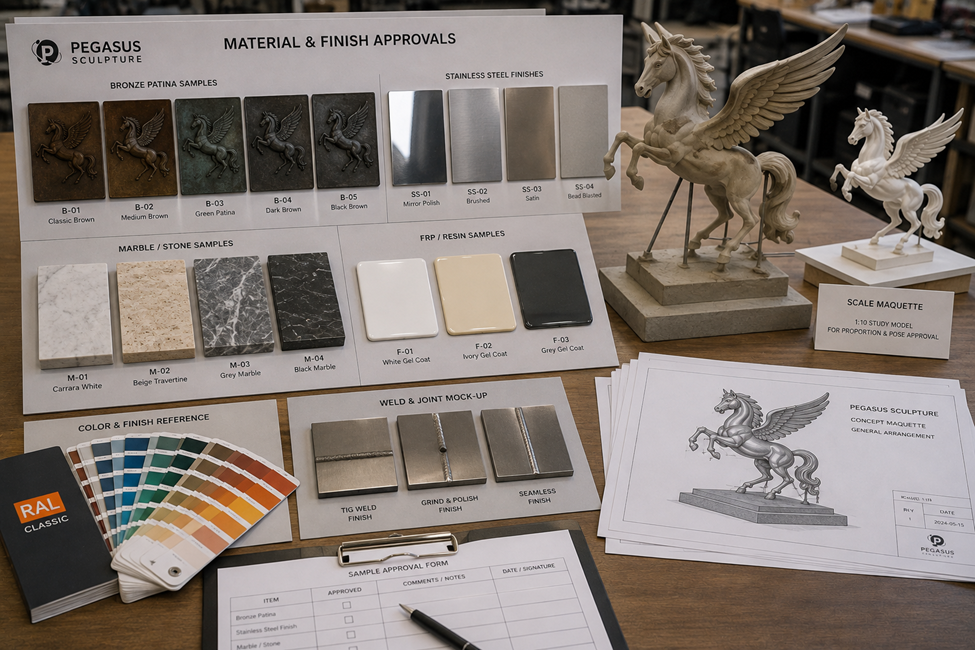
Before committing to full-scale production, a professional workshop should submit physical or digital samples for sign-off. This protects the buyer from finish mismatches that are expensive – sometimes impossible – to correct once a monumental piece is cast or laid up.
Typical sample submittals include:
- Material samples – bronze patina swatches, stainless steel finish panels (mirror, brushed, or bead-blasted), marble slab sections, or FRP gel-coat chips
- Color and texture proofs – for painted resin or coated metal pieces, matched against a Pantone or RAL reference
- Scaled maquettes – small-scale 3D prints or clay models that confirm proportion and pose before CNC milling begins on the full-size piece
- Weld and joint mock-ups – for large stainless steel sculpture or bronze assemblies, showing how seams will be finished and hidden
Sample approval matters because it’s the last checkpoint before a production run that’s difficult or impossible to undo. Signing off on a patina swatch, a finish panel, or a scaled maquette lets a client confirm material and finish decisions while changes are still cheap – rather than discovering a mismatch across a monumental piece that’s already been cast or laid up. Catching a finish issue at the sample stage might mean requesting a new swatch; catching it after full-scale production can mean re-casting a piece entirely, which is the difference between a minor delay and a major budget and schedule setback.
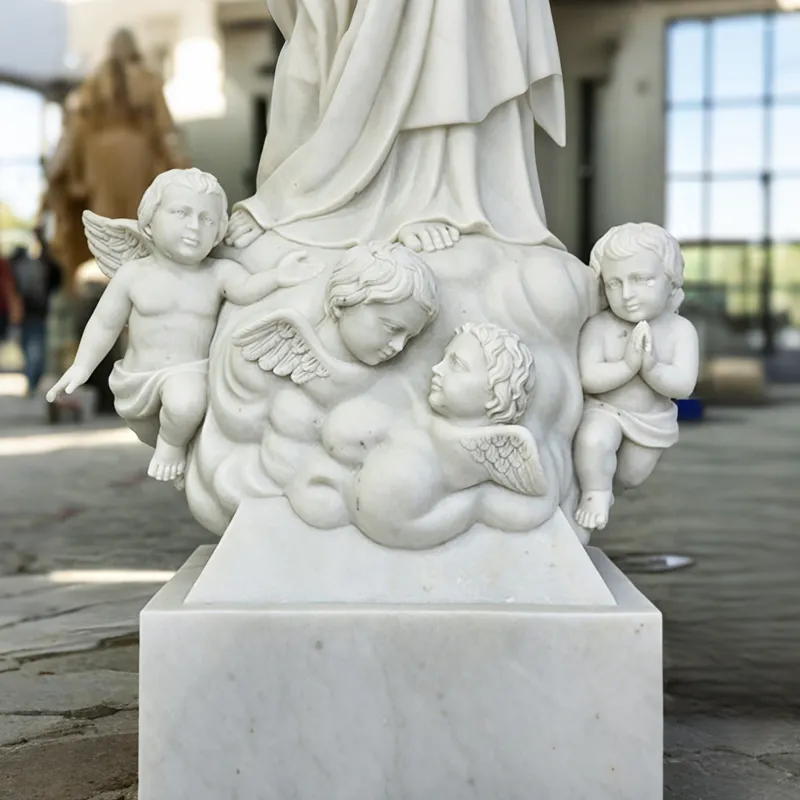
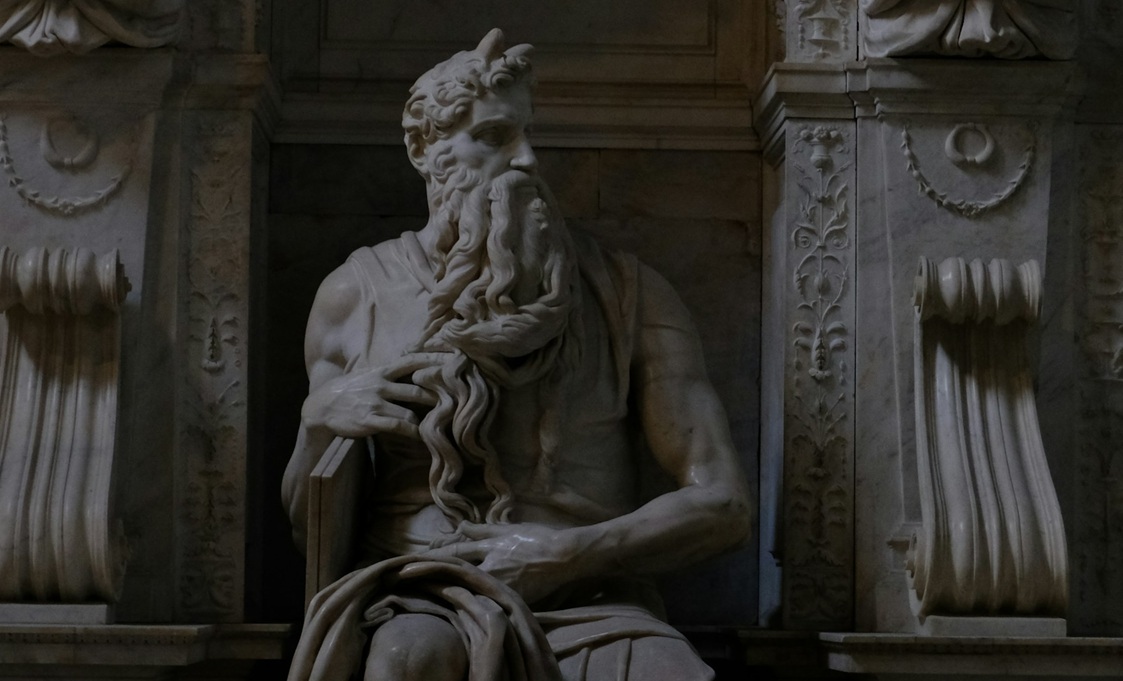
Reviewing samples from an established sculpture manufacturer also gives buyers a chance to compare material options side by side – something worth doing across categories like bronze, marble, and fiberglass, since each behaves differently outdoors and carries a different maintenance profile.
How Do Quality Control Records Protect Your Investment?
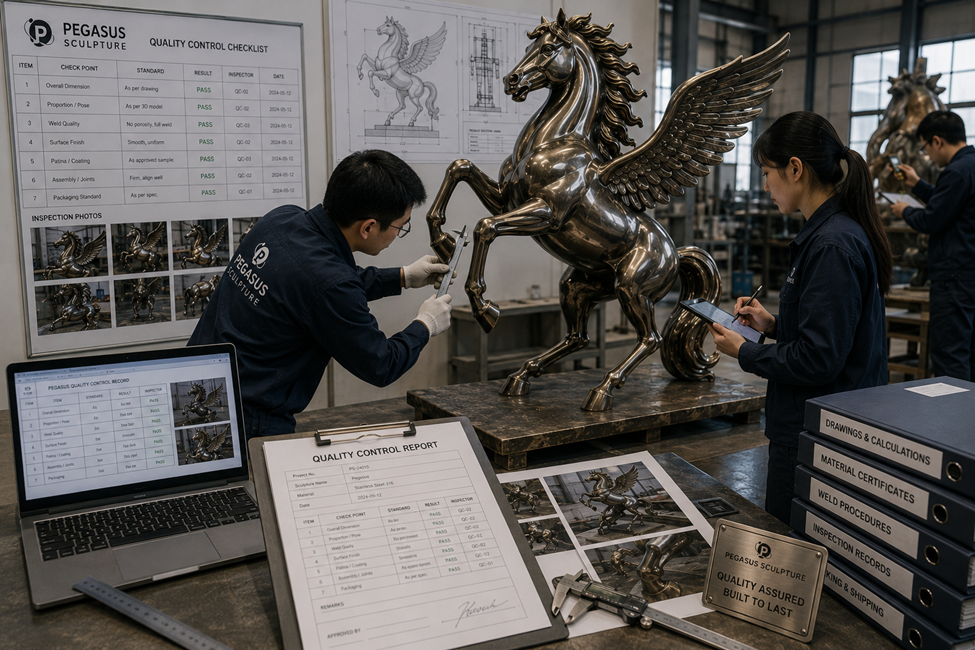
Quality control records are the evidence that a piece was actually built the way the drawings said it would be. For metal sculptures, this typically means PMI (positive material identification) testing to confirm alloy grade, dimensional inspection reports comparing the finished piece against tolerances, and weld inspection logs. For composite and resin work, records usually cover resin cure times, layer counts, and structural reinforcement placement.
These records matter because they turn quality control from a matter of trust into a matter of evidence. If a weld, an alloy grade, or a dimensional tolerance is ever questioned by a structural engineer, a site inspector, or an insurer, PMI reports and inspection logs are what confirm the piece was built to spec – rather than leaving the answer to a visual inspection after the fact.
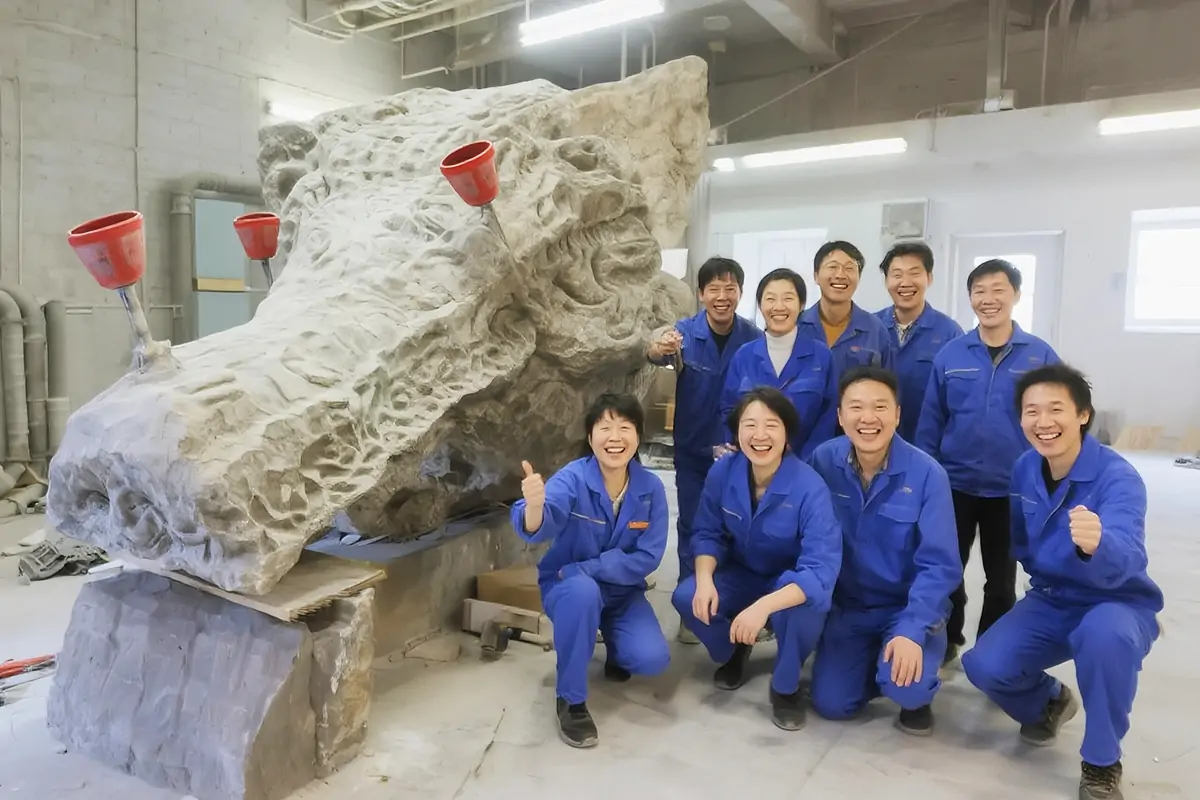
A transparent workshop documents this at every stage rather than producing a single certificate at the end. On Pegasus’s own production floor – a 10,000 m² facility staffed by more than 250 people – weekly visual progress reports move from the shop floor to the client throughout fabrication, followed by a formal Factory Acceptance Test that requires client sign-off before anything is crated. That FAT record, along with dimensional and material certifications, becomes part of the documentation package procurement teams file alongside their other project submittals. It’s a workflow you can see reflected across the completed work in the project gallery.
Installation Files Needed for On-Site Assembly
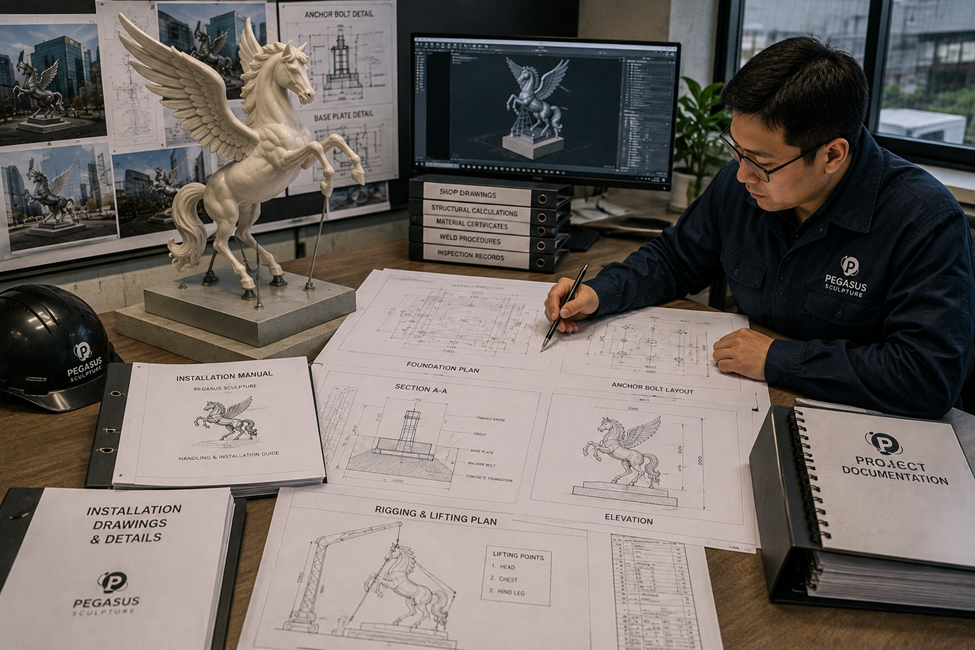
Installation files are the instructions your local contractor will actually use on-site, and they need to work even if nobody from the manufacturer is standing next to them. A good package includes:
- Foundation drawings with load specifications for the concrete base or existing structure
- Anchor bolt layouts showing exact spacing and embedment depth
- Rigging and lift plans for pieces too large or heavy to move by hand
- Modular assembly sequence for sculptures shipped in sections
- Touch-up and finish repair guidance for any surface marks from transit
These files matter because installation is where design and engineering decisions meet the realities of a specific site – soil conditions, crew experience, access constraints. A clear rigging plan or anchor layout prevents costly on-site improvisation and delay, and in the worst case, it’s what stands between a properly anchored piece and a safety issue after handover. It’s also why manufacturers who stand behind their documentation are often willing to send a supervisor on-site: paper instructions and hands-on support work best together, not as substitutes for each other.
Large-scale work is almost always engineered for modular disassembly and packed into custom steel-framed, waterproof crates for exactly this reason – a monumental piece that arrives on-site has to go back together correctly the first time. For bigger commissions, it’s common for a statue factory to dispatch a technical supervisor to guide the local installation crew directly, rather than relying on paper instructions alone.
How Documentation Follows Your Commission From Inquiry to Handover
A sculpture commission isn’t one transaction – it’s a sequence of decisions, and documentation is what carries each decision safely into the next stage. Here’s how the two move together:
During design, the client approves concept and scale, backed by CAD drawings and digital twins. During engineering, structural calculations and material specifications lock in the commission’s technical scope before tooling starts. Manufacturing brings weekly progress photography and video updates, so the client can track the commission without visiting the floor. Quality control adds PMI testing, dimensional checks, and the formal FAT record – the client’s formal sign-off before the piece is ever crated. Packaging documentation logs crate specifications and protective measures. Shipping generates freight and customs paperwork tied to the agreed Incoterms. And installation closes the loop with foundation drawings, anchor layouts, and on-site supervision notes, handing the finished commission fully back to the client.
This staged approach is what separates a genuine sculpture company running an accountable process from a workshop that simply ships a crate and wishes you luck. You can see the range of materials this applies to – from resin figures to large-format metal work – across the current product catalog.
Why Should Procurement Teams Request Full Documentation Upfront?
Because retrofitting paperwork after a dispute is far harder than requesting it before a contract is signed. Procurement and legal teams reviewing a sculpture commission should ask for a sample documentation package as part of the RFP process, not after production starts. It’s a reasonable request, and any manufacturer confident in its own process should be able to produce one without hesitation – Pegasus addresses many of these process questions directly in its FAQ for exactly this reason.
Commissioning a sculpture, supporting it through installation, and controlling its quality aren’t three separate concerns – they’re three moments in the same process, and documentation is the thread that connects them. Viewed this way, documentation isn’t project paperwork sitting off to the side – it’s the mechanism that carries risk reduction through every stage of a commission, from the first CAD drawing to the last anchor bolt, and it’s a fair basis for comparing manufacturers before a contract is ever signed.
Request Your Documentation Package
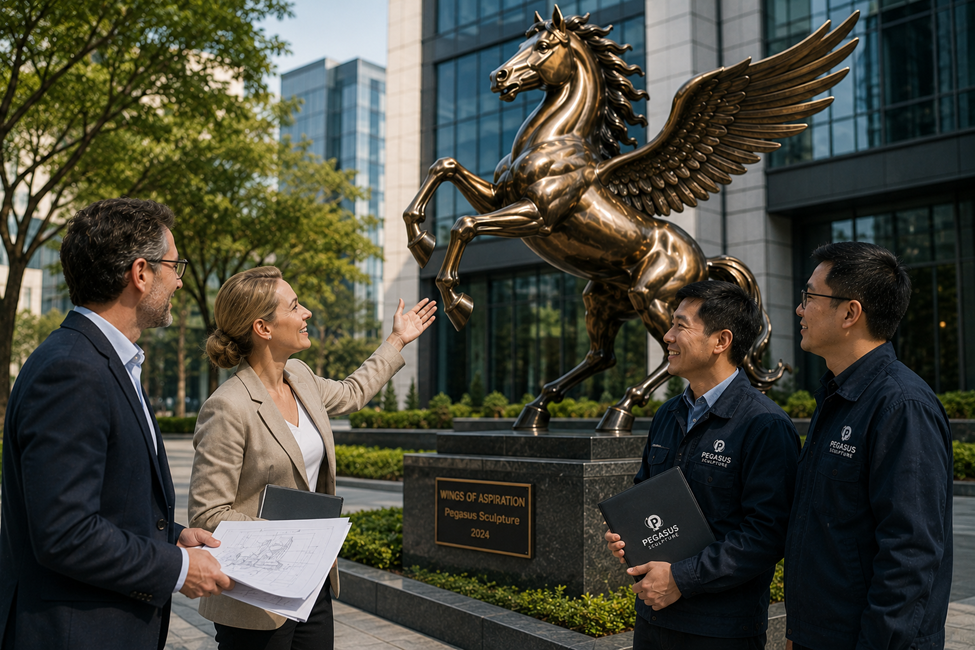
If you’re evaluating manufacturers for an upcoming public art, hospitality, or commercial sculpture project, ask to see a sample drawing set, QC report, and installation file before you commit. It’s the fastest way to tell a well-run workshop from one that’s improvising. Reach out to Pegasus with your project brief, and the team can walk you through exactly what documentation your commission will include, stage by stage.