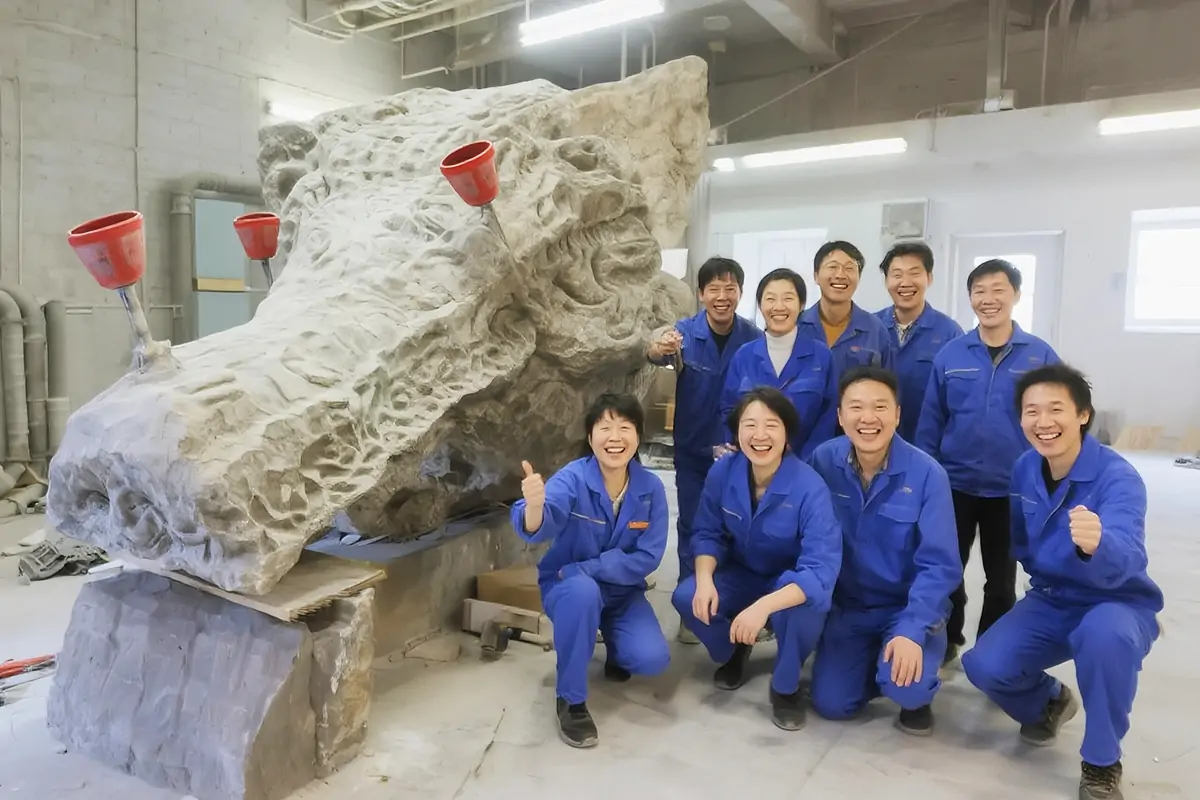
Luxury properties are increasingly using large-scale outdoor sculptures as permanent architectural features rather than decorative additions. Whether positioned at the entrance of a five-star hotel, integrated into a private villa landscape, placed within a commercial plaza, or designed as the centrepiece of a luxury residential development, a well-planned outdoor stainless steel sculpture does much more than enhance visual appeal. It helps define the character of the space, creates memorable visitor experiences, and often becomes an iconic element of the property itself.
However, specifying a sculpture for a luxury development involves far more than selecting an attractive design. Architects, developers, and landscape designers must consider structural engineering, material selection, environmental exposure, lighting integration, installation logistics, long-term maintenance, and the overall relationship between the sculpture and the surrounding architecture. Decisions made during the early planning stages can significantly influence both the appearance of the finished installation and the success of the project over many years.
At Pegasus, these projects begin long before fabrication starts. Every commission is approached as a collaborative architectural process involving design consultation, engineering review, production planning, precision fabrication, finishing, quality control, and installation coordination. By working closely with architects, developers, and project teams from the outset, Pegasus helps ensure that each stainless steel sculpture is not only visually striking but also engineered to perform reliably within its intended environment.
This guide explores the key planning, design, and manufacturing considerations that influence successful outdoor stainless steel sculpture projects for luxury properties, helping buyers make informed decisions before selecting their manufacturing partner.
Why Outdoor Stainless Steel Sculptures Continue to Define Luxury Architecture
Modern luxury developments are expected to deliver experiences rather than simply provide functional spaces. Hotels aim to create memorable arrival moments, luxury residences seek distinctive identity, commercial developments compete through architectural landmarks, and public spaces increasingly incorporate artwork that encourages interaction and social engagement. Within these environments, stainless steel sculpture has become one of the most versatile materials for creating contemporary outdoor installations.
Unlike many traditional materials, stainless steel offers a combination of structural strength, corrosion resistance, refined aesthetics, and exceptional fabrication flexibility. Sculptures can be highly polished to reflect surrounding architecture and natural landscapes, finished with elegant brushed textures that complement minimalist designs, or fabricated into complex geometric and organic forms that would be difficult to achieve using other materials.
Its performance also makes it particularly suitable for demanding outdoor environments. When properly engineered and manufactured, stainless steel sculptures can withstand changing weather conditions, temperature fluctuations, UV exposure, and moisture while maintaining their appearance with relatively low maintenance. This makes them an attractive long-term investment for architects and developers seeking installations that continue to enhance the property’s value for decades.
However, selecting stainless steel simply because it is durable is rarely enough. Every luxury project has its own architectural language, environmental conditions, visitor expectations, and operational requirements. A sculpture that works beautifully within a coastal resort may not be appropriate for a corporate headquarters or a private residential estate. Material grade, finish, proportions, engineering, lighting, and placement all contribute to how successfully the sculpture integrates into its surroundings.
At Pegasus, material selection is closely linked to engineering and fabrication planning. Before recommending a stainless steel grade or finish, the team reviews environmental exposure, structural requirements, welding complexity, expected visitor interaction, maintenance expectations, and the surrounding architectural materials. This process helps determine not only which finish will achieve the desired visual effect but also which material specification can be manufactured efficiently and continue performing reliably throughout the sculpture’s service life.
Start with the Architectural Vision, Not the Sculpture
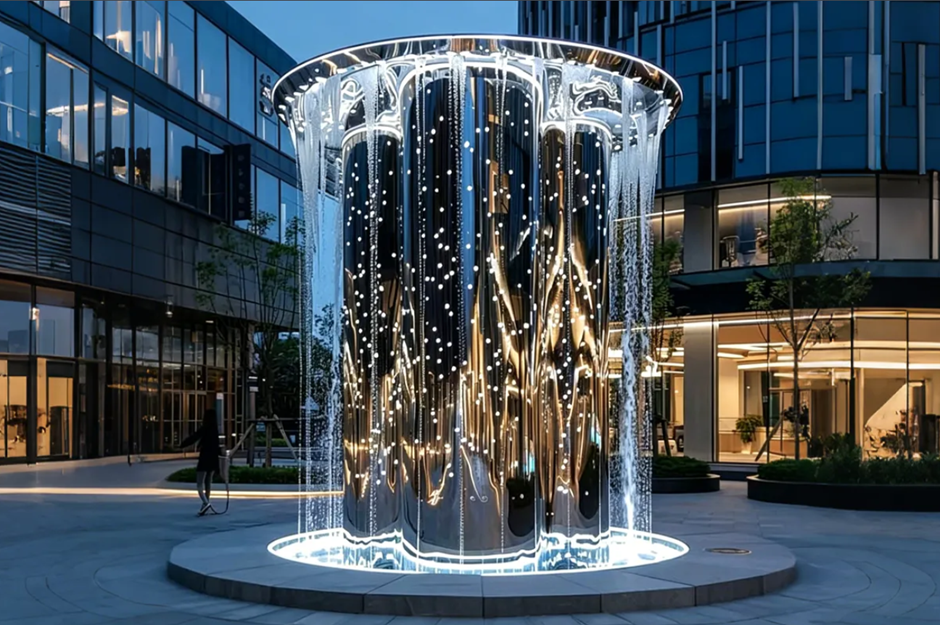
One of the most common mistakes in luxury developments is treating the sculpture as the final decorative element rather than an integral part of the architectural concept. In reality, the most successful outdoor stainless steel sculpture installations are planned during the early design phase, allowing the artwork to complement the building, landscape, circulation, and visitor experience instead of competing with them.
Before a design is selected, architects and developers should first define the purpose the sculpture will serve within the project. Some installations are designed to create a dramatic arrival statement at the main entrance, while others become quiet focal points within landscaped gardens, rooftop terraces, hotel courtyards, or waterfront spaces. The intended purpose influences everything from the sculpture’s size and proportions to its finish, orientation, and engineering requirements.
The surrounding environment also plays a significant role. Natural light changes throughout the day, nearby buildings create reflections and shadows, surrounding vegetation evolves over time, and pedestrian movement determines how visitors experience the artwork. A sculpture viewed from a moving vehicle creates a completely different impression than one experienced at walking pace through a luxury garden or public plaza. Understanding these factors early helps ensure the final installation feels intentional rather than simply occupying an available space.
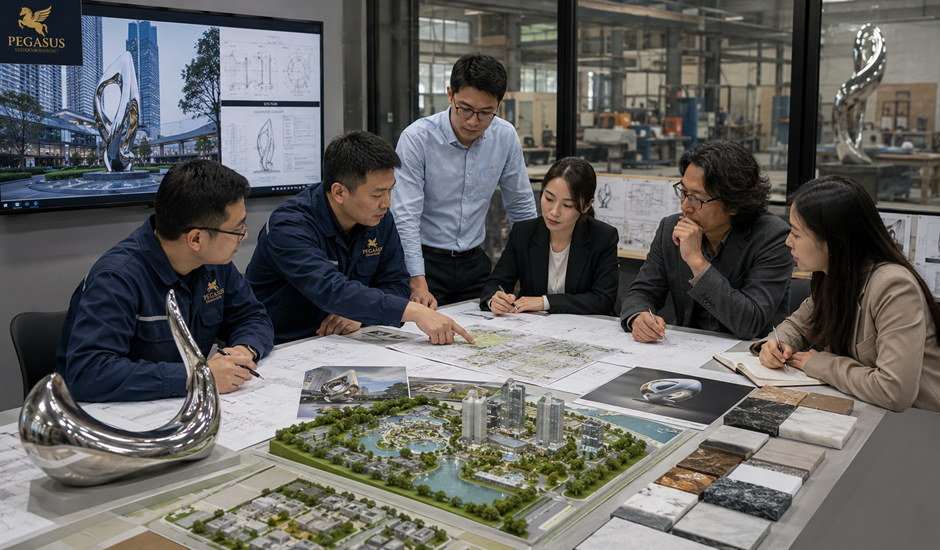
At Pegasus, the planning stage extends beyond design discussions into technical project coordination. Before fabrication begins, the engineering team reviews architectural drawings, site dimensions, structural loading requirements, underground services, installation access, and surrounding landscape features together with the architect. This allows potential fabrication or installation challenges to be identified early, ensuring the sculpture integrates naturally with the development while remaining practical to manufacture, transport, and install without unexpected design revisions.
For large commercial and hospitality developments, this early collaboration also reduces the likelihood of costly design revisions later in the project. Structural requirements, installation access, maintenance planning, and visual integration can all be considered before fabrication begins, allowing the project to progress more efficiently while protecting both the construction schedule and overall investment.
Choosing the Right Scale, Form, and Visual Impact
A luxury sculpture should never be selected based solely on appearance. Its scale, proportions, and visual presence must be carefully balanced with the surrounding architecture to create harmony rather than overpower the space. A sculpture that appears perfectly proportioned in a digital rendering may feel overwhelming once installed, while one that is too small can lose its impact within an expansive landscape.
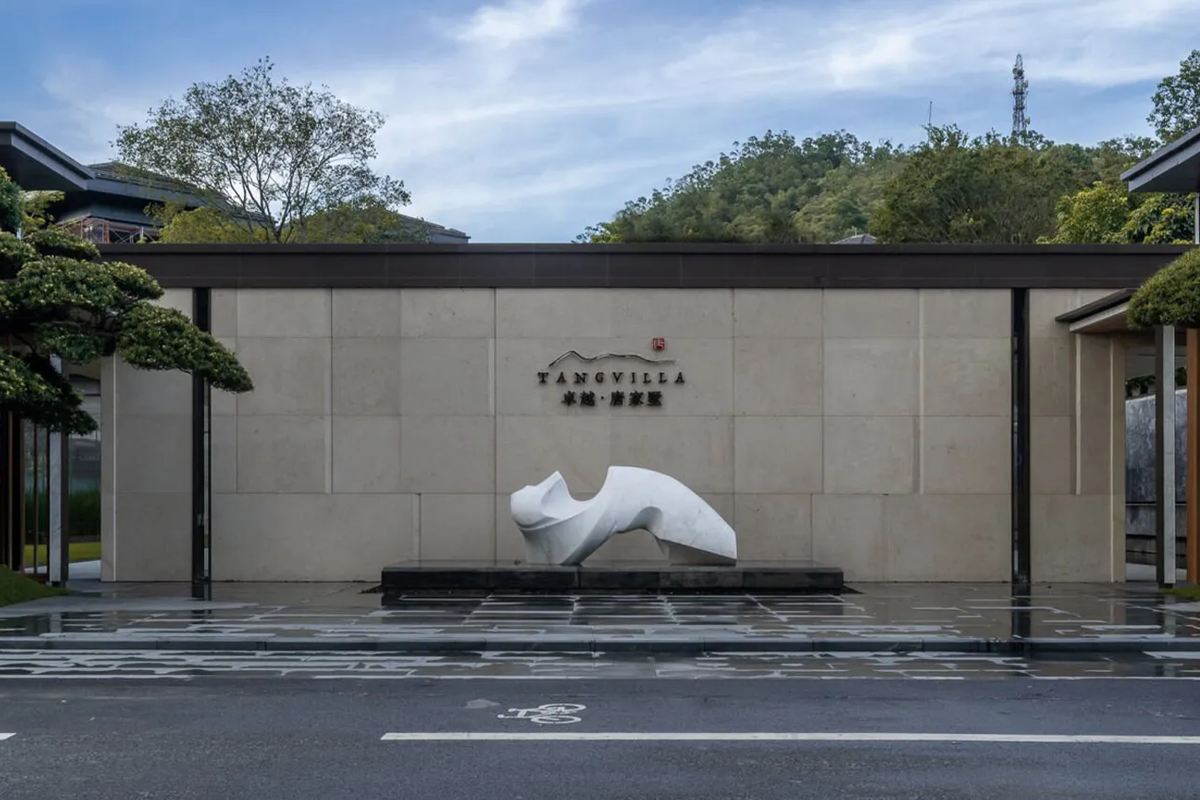
Scale should always relate to the environment in which the sculpture will be experienced. Grand hotel entrances, corporate headquarters, and mixed-use commercial developments often require larger installations capable of creating a strong first impression from a distance. Private villas, boutique hotels, and landscaped residential gardens, on the other hand, generally benefit from sculptures that encourage closer interaction and complement the surrounding environment without dominating it.
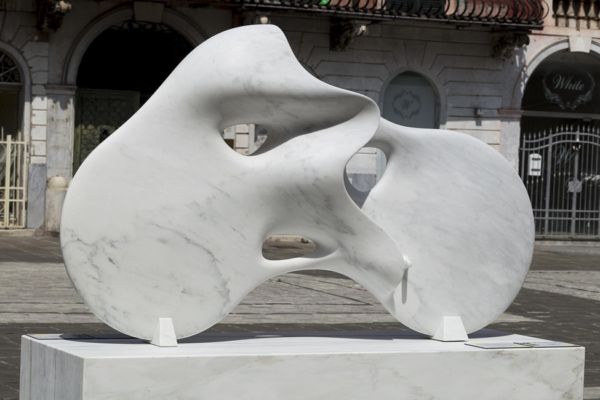
The form of the sculpture is equally important. Contemporary luxury architecture often favours clean geometric compositions, fluid abstract forms, or elegant reflective surfaces that respond to changing daylight. Organic shapes may blend naturally into landscaped gardens, while bold architectural designs can reinforce the modern character of commercial buildings. The goal is to create visual continuity between the sculpture and the property’s architectural identity.
Viewing angles should also influence the design process. Unlike indoor artwork, outdoor sculptures are experienced from multiple perspectives. Visitors may approach from pedestrian walkways, building entrances, elevated terraces, surrounding roads, or landscaped pathways. Every angle contributes to the overall experience, making three-dimensional design and proportion critical to the success of the installation.
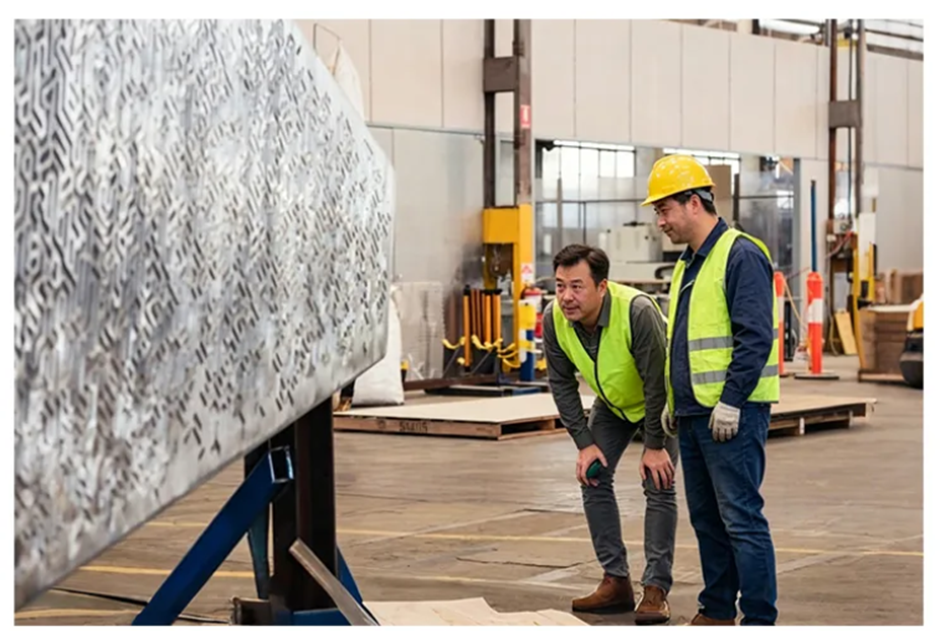
At Pegasus, design reviews continue through both the engineering and fabrication planning stages. The engineering team verifies structural calculations, internal support systems, panel segmentation, welding access, lifting points, and transportation requirements before fabrication drawings are approved. Where necessary, design refinements are discussed with the architect early in the process, allowing complex sculptures to retain their original appearance while remaining practical to fabricate, transport internationally, assemble, and maintain over the long term.
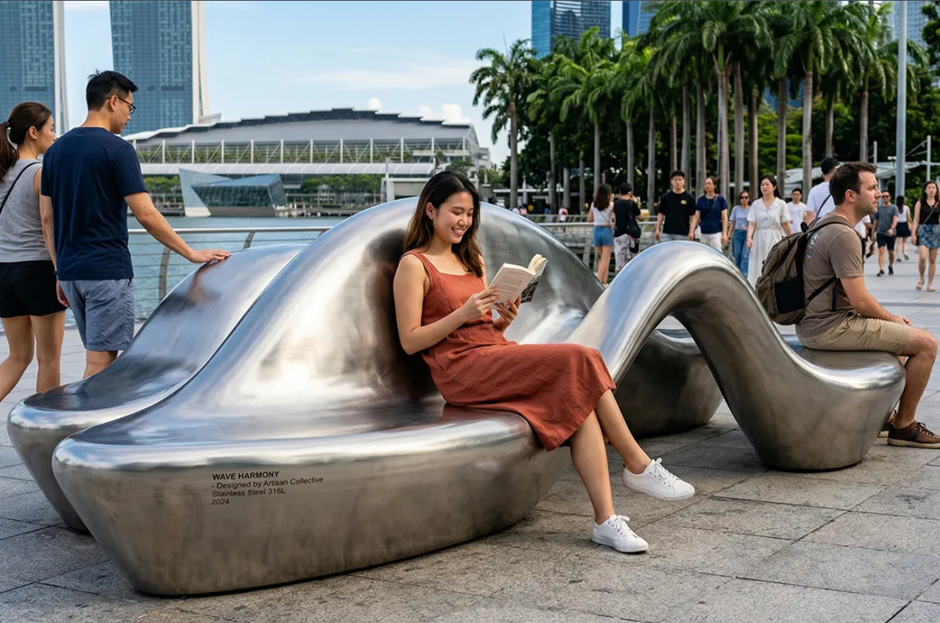
Selecting the Right Stainless Steel Grade and Finish for Luxury Environments
Choosing the right material for an outdoor stainless steel sculpture is about far more than achieving the desired appearance. For luxury developments, the selected stainless steel grade and surface finish influence long-term durability, maintenance requirements, environmental performance, and how seamlessly the sculpture complements the surrounding architecture. Making these decisions during the planning stage allows architects and developers to create installations that remain visually impressive while performing reliably for decades.
The installation environment should always guide material selection. Sculptures located in coastal resorts, waterfront residences, or humid climates are exposed to salt, moisture, and airborne contaminants that require greater corrosion resistance than sculptures installed in inland commercial developments or private residential landscapes. Likewise, projects in busy public spaces may experience frequent visitor interaction, making durability and ease of maintenance just as important as visual appeal. Understanding these environmental conditions before fabrication begins helps ensure the sculpture performs as beautifully as it looks.
Surface finish is equally important because it shapes how the sculpture interacts with natural light, surrounding architecture, and landscape design. Mirror-polished finishes create striking reflections that visually connect the sculpture with nearby buildings, water features, and open spaces, making them a popular choice for luxury hotels and landmark commercial developments. Brushed and satin finishes provide a more understated elegance, complementing contemporary architecture while reducing the visibility of fingerprints and everyday surface marks. For projects seeking a distinctive visual identity, coloured titanium-coated finishes can also be considered to enhance the architectural character of the development.
However, appearance should never be the only factor influencing material selection. Architects and developers should also evaluate how each finish will perform over time, the level of maintenance it will require, and how it will respond to changing weather conditions, daylight, and visitor interaction. A finish that looks spectacular in a design presentation should continue to deliver the same visual impact years after installation with practical maintenance requirements.
At Pegasus, these decisions are made as part of the wider architectural planning process rather than as isolated manufacturing choices. Before recommending a material specification, the team evaluates the project’s location, environmental exposure, design intent, maintenance expectations, and long-term operational goals. This collaborative approach allows every sculpture to achieve the right balance between aesthetics, structural performance, and durability. Many of these principles can be seen throughout Pegasus’ custom stainless steel sculpture portfolio, where each project is developed to complement its architectural setting while meeting the practical demands of long-term outdoor installation.
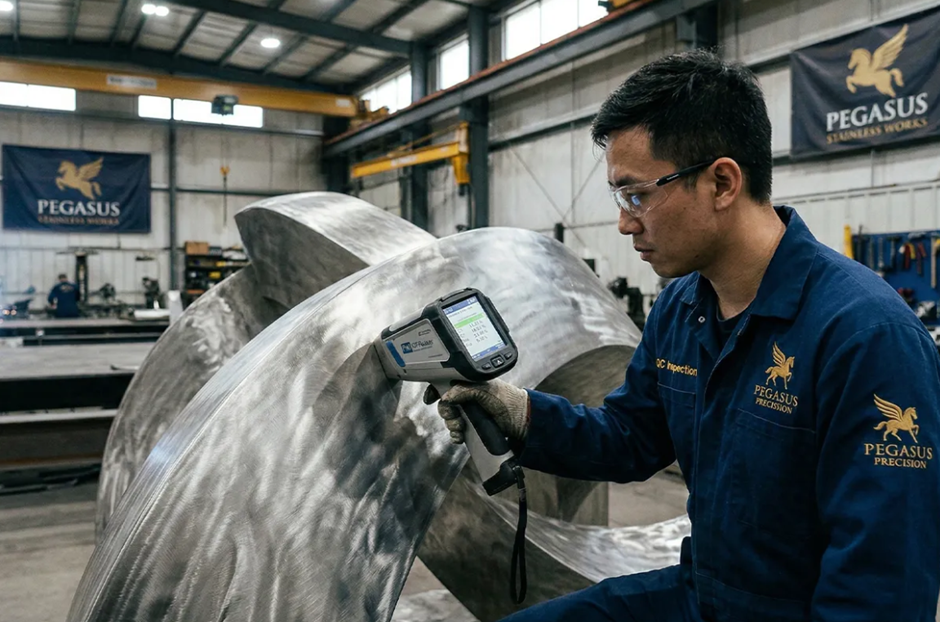
Integrating the Sculpture with Lighting, Landscaping, and Water Features
An outdoor stainless steel sculpture should not be planned as an isolated object. In luxury developments, its impact depends heavily on how it interacts with architectural lighting, surrounding vegetation, paving materials, water elements, and the wider landscape composition. When these features are considered together from the beginning, the sculpture becomes part of the property’s visual identity rather than simply an artwork placed within it.
Natural light has a major influence on how stainless steel is experienced throughout the day. A mirror-polished surface can reflect the sky, nearby buildings, trees, and passing visitors, causing the appearance of the sculpture to change continuously. Brushed or satin surfaces respond more subtly, producing softer highlights that may suit private villas, landscaped courtyards, and hospitality settings where a restrained visual effect is preferred.
Artificial lighting creates a second architectural experience after sunset. Carefully positioned ground lights, concealed fixtures, and directional spotlights can reveal curves, textures, negative spaces, and internal openings that may not be immediately visible during the day. Lighting should therefore be reviewed alongside the sculpture design, not added only after installation. Poorly positioned fixtures may create harsh reflections, unwanted glare, or heavy shadows that reduce the intended visual impact.
Landscape design is equally important. The height and density of surrounding plants, seasonal changes in vegetation, nearby pathways, and visitor circulation all influence how the sculpture is approached and viewed. A large abstract form positioned within an open entrance plaza requires a different composition from a smaller sculpture placed among trees, ornamental grasses, or private garden features. Architects and landscape designers should consider how the installation will appear both immediately after completion and several years later as the planting matures.
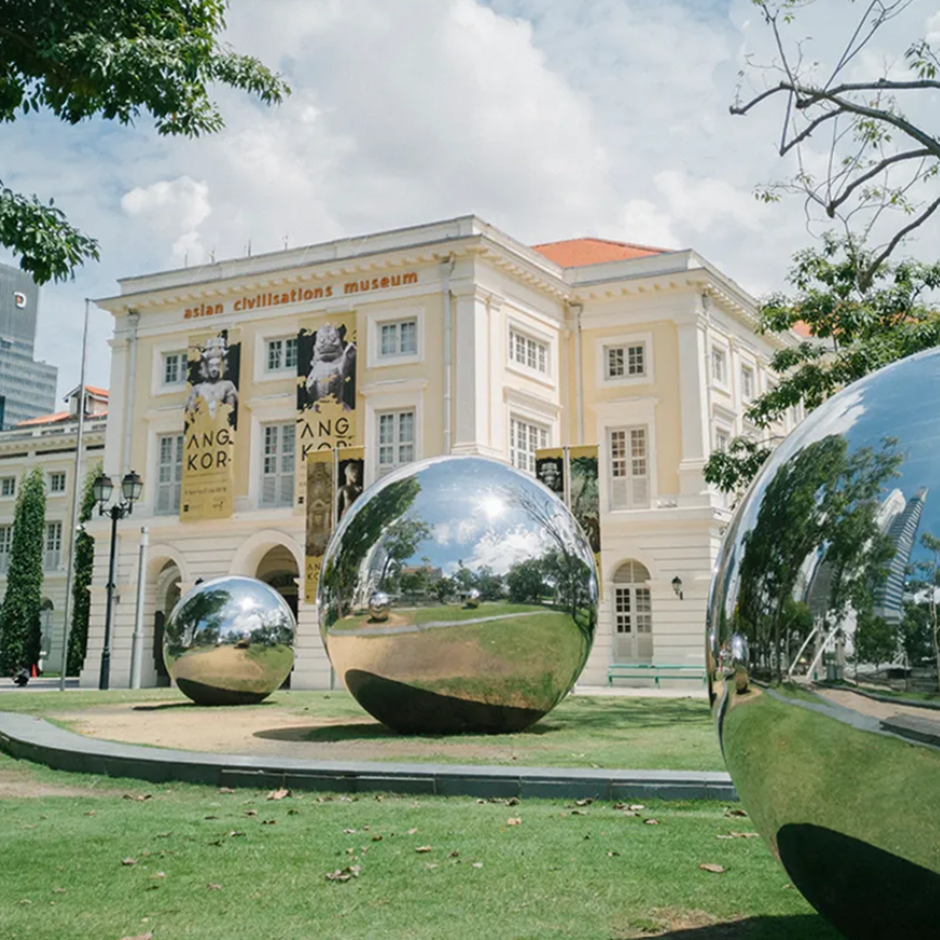
Water can further enhance the reflective qualities of stainless steel. Sculptures placed beside pools, fountains, reflecting ponds, or resort water features can create layered reflections and movement that strengthen the sense of luxury. However, proximity to water also affects material selection, drainage planning, surface maintenance, electrical coordination, and the design of the supporting foundation.
At Pegasus, these environmental relationships are reviewed during the early design-development stage. The team considers the sculpture’s orientation, surrounding materials, planned lighting, landscape composition, water exposure, and expected viewing angles before the design is finalised. This integrated approach can be seen across Pegasus’ completed sculpture projects, where each installation is developed to respond to its specific architectural and landscape setting.
By coordinating the sculpture with the wider property design, architects and developers can create an installation that delivers a strong visual experience during both the day and night while remaining practical to maintain over the long term.
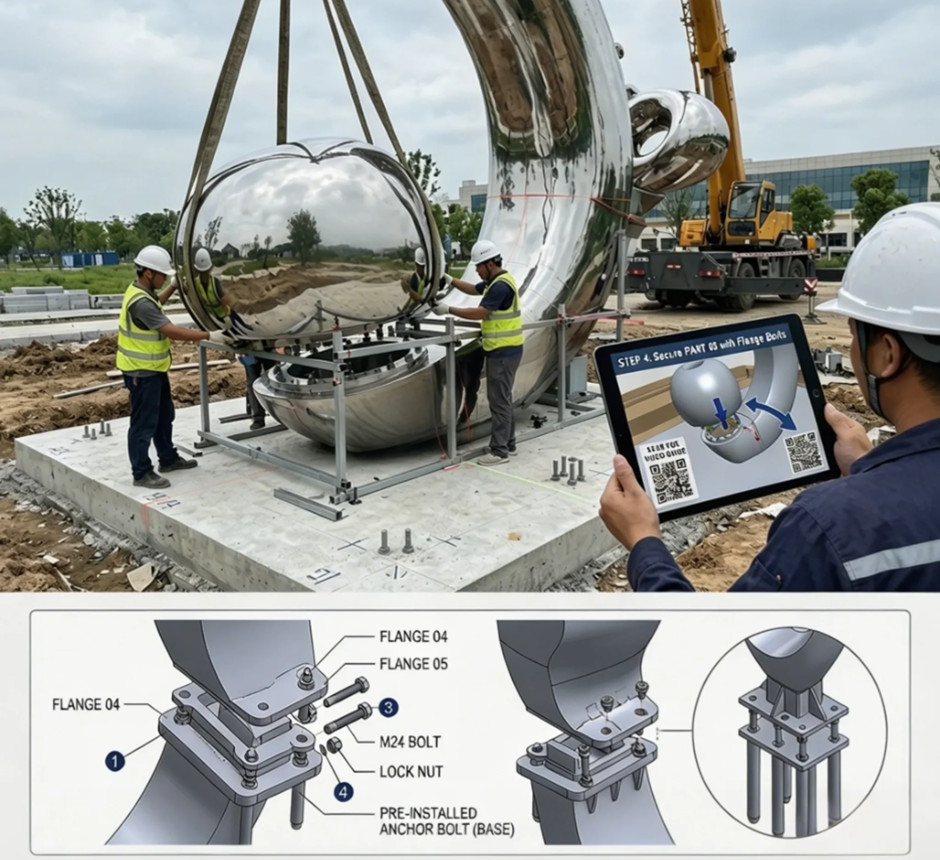
Planning Transportation and Installation Before Construction Is Complete
Installation planning should begin well before an outdoor sculpture enters production. Large architectural artworks often require specialist packaging, oversized transportation, crane lifting, foundation preparation, and precise coordination with the construction schedule. When these requirements are considered too late, even a successfully manufactured sculpture can face avoidable delays, additional costs, or site-access difficulties.
The first consideration is how the finished sculpture will travel from the manufacturing facility to the project site. Its dimensions, weight, geometry, and surface finish influence whether it can be transported in one piece or must be divided into carefully engineered sections. Sectional production may simplify shipping, but the connection points must be designed so that the final installation retains the seamless appearance expected in a luxury environment.
Packaging must also protect both the structure and the surface finish. Mirror-polished stainless steel is especially sensitive to scratching and impact during handling, while complex projecting elements may require customised internal supports. Protective films, soft contact materials, reinforced crates, moisture control, and clear lifting instructions all contribute to reducing risk during international transportation.
Site access should be reviewed at the same time. Project teams need to determine whether delivery vehicles can reach the installation area, whether crane access is available, and whether surrounding structures, landscaping, overhead services, or narrow entrances may affect lifting operations. For rooftop terraces, enclosed courtyards, and completed hotel environments, the installation sequence may require even more detailed coordination.
Foundation readiness is another critical factor. Anchor positions, bolt patterns, embedded plates, drainage routes, electrical conduits, and finished surface levels must correspond precisely with the sculpture’s engineering drawings. If the foundation is poured before the sculpture details are confirmed, even small discrepancies can create significant installation complications.
At Pegasus, logistics and installation requirements are reviewed while the sculpture is still being engineered. The team evaluates transportation limits, lifting points, sectional assembly, packaging strategy, foundation interfaces, and site conditions before fabrication begins. This allows practical installation requirements to influence the design without compromising the artistic vision.
For complex architectural commissions, Pegasus can provide technical drawings, foundation information, lifting guidance, assembly instructions, and coordination support for the local installation team. Buyers planning a large or logistically challenging commission can contact the Pegasus team during the early project stage so that delivery and installation requirements are addressed before they affect the construction schedule.
Pegasus’ wider stainless steel sculpture capabilities also allow the design, engineering, fabrication, finishing, packaging, and installation-planning stages to be managed as one connected process. This reduces communication gaps and helps architects, developers, and contractors prepare the site accurately before the sculpture arrives.
Early installation planning protects more than the delivery date. It helps preserve the finish, minimise on-site work, reduce lifting risks, and ensure the completed sculpture is positioned exactly as the architect intended.
Why Early Collaboration Delivers Better Long-Term Results
One of the defining characteristics of successful luxury sculpture projects is not simply the quality of the finished artwork, but how early the sculpture becomes part of the overall project planning. When architects, developers, and manufacturers begin collaborating during the design stage, potential challenges can be identified before they affect budgets, construction schedules, or installation. This proactive approach allows the sculpture to evolve alongside the architecture rather than being adapted to fit decisions that have already been made.
Early collaboration gives project teams the opportunity to evaluate important considerations that are often overlooked during later stages of development. Structural loading, foundation coordination, material selection, transportation logistics, maintenance planning, lighting integration, and site accessibility all influence the final outcome. Addressing these factors before production begins not only reduces project risks but also creates greater design flexibility without compromising engineering requirements.
For architects, this means greater confidence that the sculpture will complement the surrounding architecture exactly as intended. For developers, it reduces the likelihood of unexpected construction delays or costly modifications once the project reaches the installation phase. It also provides contractors with the technical information they need to prepare foundations, lifting arrangements, and supporting infrastructure well before the sculpture arrives on site.
At Pegasus, collaboration begins with understanding the client’s vision rather than discussing manufacturing alone. The team works closely with architects, landscape designers, consultants, and developers to review design concepts, project objectives, environmental conditions, and construction timelines before engineering commences. This integrated planning process is one of the reasons why many clients choose Pegasus for complex architectural sculpture projects that require both creative flexibility and technical precision.
Rather than treating fabrication as an isolated production activity, Pegasus manages design development, engineering review, material recommendations, production planning, quality control, and installation preparation as connected stages of a single workflow. Clients can also learn more about this collaborative approach through the Pegasus team and company expertise, where engineering, craftsmanship, and project management come together to deliver large-scale sculptures for luxury developments around the world.
The earlier this collaboration begins, the greater the opportunity to create an installation that is not only visually impressive but also practical to manufacture, transport, install, and maintain throughout its lifetime.
From Concept to Installation: The Pegasus Project Journey
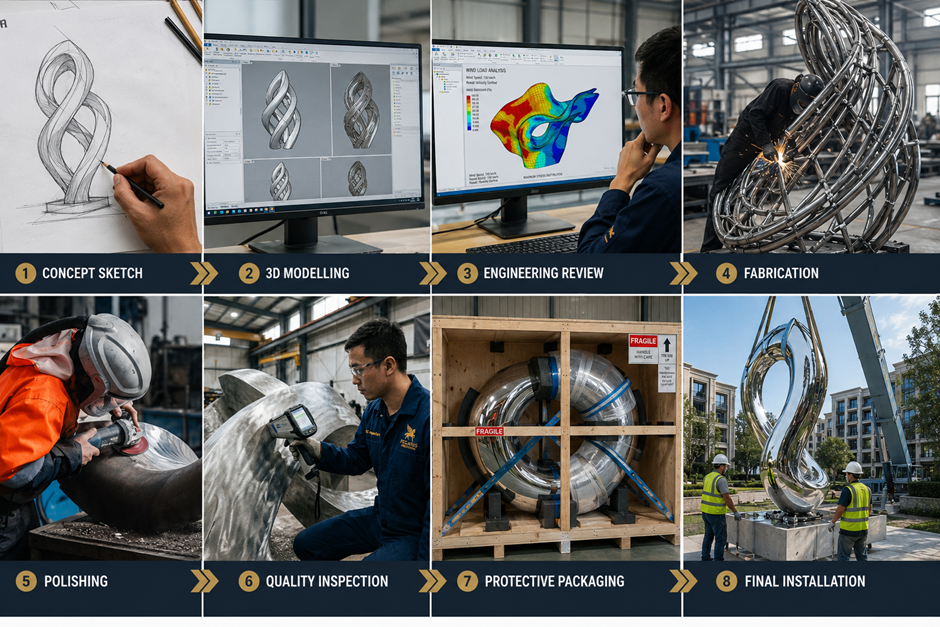
Every outdoor sculpture follows its own creative path, but the most successful projects share one common characteristic—they are managed through a structured process that balances artistic vision with engineering precision. For luxury developments, this structured approach provides confidence that every stage of the project has been carefully coordinated before the sculpture reaches the site.
The journey typically begins with understanding the client’s vision, architectural style, project objectives, and intended installation environment. Rather than immediately moving into production, Pegasus first evaluates how the sculpture will interact with the surrounding architecture, landscape, lighting, and visitor experience. These early discussions help establish both the creative direction and the technical requirements of the project.
Once the concept has been refined, the project moves into design development and engineering review. Dimensions, structural requirements, material specifications, surface finishes, and installation methods are carefully assessed to ensure the sculpture is both visually striking and technically achievable. During this stage, architects and developers have the opportunity to review design proposals before fabrication begins, reducing the likelihood of significant changes later in the project.
Production planning then focuses on transforming the approved design into a precisely manufactured sculpture. Material preparation, fabrication, welding, surface finishing, polishing, and quality inspections are completed according to the agreed specifications while maintaining close communication with the client throughout the process. Every stage is monitored to ensure consistency between the approved design and the finished artwork.
Before delivery, the sculpture undergoes comprehensive quality inspection followed by customised packaging designed to protect both the structure and the finished surface during transportation. Logistics, lifting requirements, installation sequencing, and site coordination are reviewed in advance so that the transition from manufacturing to installation is carefully managed.
This integrated workflow forms the foundation of Pegasus’ stainless steel sculpture manufacturing process, allowing architects and developers to work with a single experienced partner from concept through installation. Clients who wish to discuss a bespoke project or begin planning an architectural sculpture can also contact the Pegasus team to explore design possibilities, technical requirements, and project timelines at an early stage.
By combining creative collaboration with engineering discipline and project management, Pegasus helps transform architectural concepts into landmark sculptures that continue to define luxury spaces long after construction is complete.
Questions Every Architect and Developer Should Ask Before Commissioning an Outdoor Stainless Steel Sculpture
Selecting a manufacturing partner for a luxury sculpture project involves far more than comparing quotations or reviewing design concepts. The right questions asked during the planning stage can help identify potential risks, improve project coordination, and ensure the finished sculpture performs exactly as intended. Before approving any commission, architects and developers should consider the following questions.
1. Is the Sculpture Designed Specifically for the Project?
Every luxury property has its own architectural identity, landscape design, and visitor experience. Confirm that the sculpture is being developed specifically for your project rather than adapted from an existing design. A bespoke approach generally delivers stronger architectural integration and a more distinctive final result.
2. Has the Installation Environment Been Properly Evaluated?
Environmental conditions influence every stage of the project. Coastal developments, commercial plazas, rooftop terraces, luxury gardens, and hospitality environments all present different engineering and maintenance requirements. During project planning, Pegasus evaluates these site conditions before recommending the most appropriate design and material specification, ensuring the sculpture is suited to its long-term environment.
3. Are Engineering and Structural Requirements Included from the Beginning?
Large outdoor sculptures should never rely solely on artistic design. Ask whether structural calculations, foundation requirements, anchoring systems, wind loading, and installation methods have been reviewed before fabrication begins. Addressing these details early significantly reduces construction risks later in the project.
4. Has the Material and Finish Been Selected for Long-Term Performance?
The selected finish should complement the surrounding architecture while remaining practical to maintain. Mirror-polished, brushed, satin, and coloured finishes each perform differently depending on climate, visitor interaction, and environmental exposure. Choosing the right specification during planning helps preserve the sculpture’s appearance for many years.
5. How Will the Sculpture Be Transported and Installed?
Transportation should be considered before production begins, particularly for large architectural installations. Discuss packaging methods, lifting requirements, sectional assembly (if required), crane access, and foundation readiness to ensure installation can proceed without unnecessary delays.
6. Can the Manufacturer Demonstrate Similar Projects?
Experience matters when delivering complex architectural commissions. Reviewing completed international sculpture projects provides valuable insight into a manufacturer’s ability to manage projects of similar scale, complexity, and design ambition.
7. How Will Communication Be Managed Throughout the Project?
Successful projects rely on consistent communication between architects, developers, consultants, contractors, and the manufacturing team. Understanding how design approvals, engineering reviews, production updates, and installation planning will be coordinated helps maintain project momentum and reduces the risk of misunderstandings.
8. Does the Manufacturer Offer End-to-End Project Support?
Working with a single experienced partner often simplifies project management. Pegasus supports clients from design consultation and engineering through fabrication, quality control, packaging, logistics, and installation planning. This integrated approach, reflected across its stainless steel sculpture manufacturing expertise, helps ensure continuity throughout every stage of the project.
9. What Level of Customisation Is Available?
Luxury developments rarely require standard solutions. Ask whether the sculpture can be customised in terms of dimensions, finish, colour, lighting integration, structural design, and installation requirements to complement the property’s architectural vision rather than forcing the project to adapt to an existing product.
10. Is Technical Support Available Before Construction Begins?
Many installation challenges can be avoided when technical discussions begin early. Architects and developers are encouraged to contact the Pegasus team during the planning stage to review design concepts, engineering considerations, and project timelines before fabrication is scheduled. Early collaboration often leads to smoother construction, more efficient installation, and better long-term project outcomes.
Conclusion
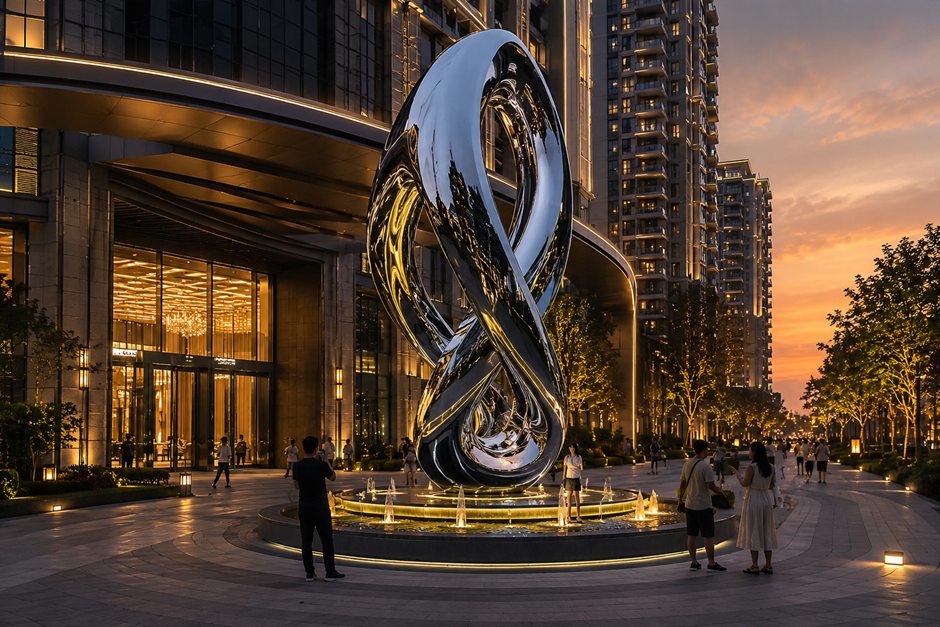
A luxury outdoor sculpture is far more than a decorative feature—it becomes a permanent part of the property’s architectural identity. From the earliest design discussions through engineering, material selection, fabrication, installation, and long-term performance, every decision influences how successfully the artwork integrates with its surroundings and how it will be experienced for decades to come.
By considering site conditions, architectural context, engineering requirements, lighting, landscaping, logistics, and maintenance from the beginning, architects and developers can avoid costly revisions while creating installations that deliver lasting visual and commercial value.
At Pegasus, every project is approached as a collaborative architectural partnership rather than simply a manufacturing assignment. By combining creative design support, engineering expertise, precision craftsmanship, and comprehensive project management, Pegasus helps transform ambitious concepts into exceptional outdoor sculptures that enhance luxury hotels, residential developments, commercial spaces, and public environments worldwide. Whether planning a landmark entrance feature or a bespoke landscape installation, the Pegasus team works closely with clients to ensure every sculpture is designed, engineered, and delivered with the quality and attention to detail that luxury projects demand.
If you’re planning a bespoke outdoor stainless steel sculpture for an upcoming architectural development, contact Pegasus to discuss your vision and explore how the project can be developed from concept to installation with confidence.