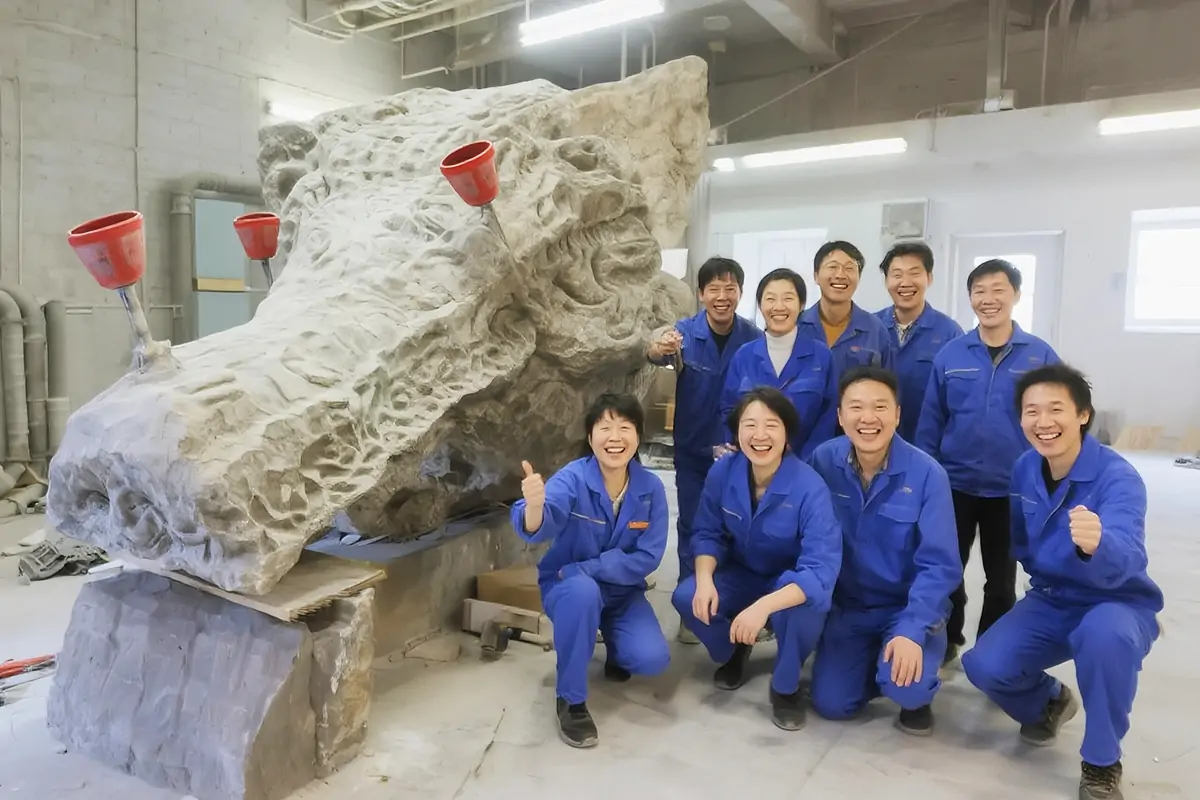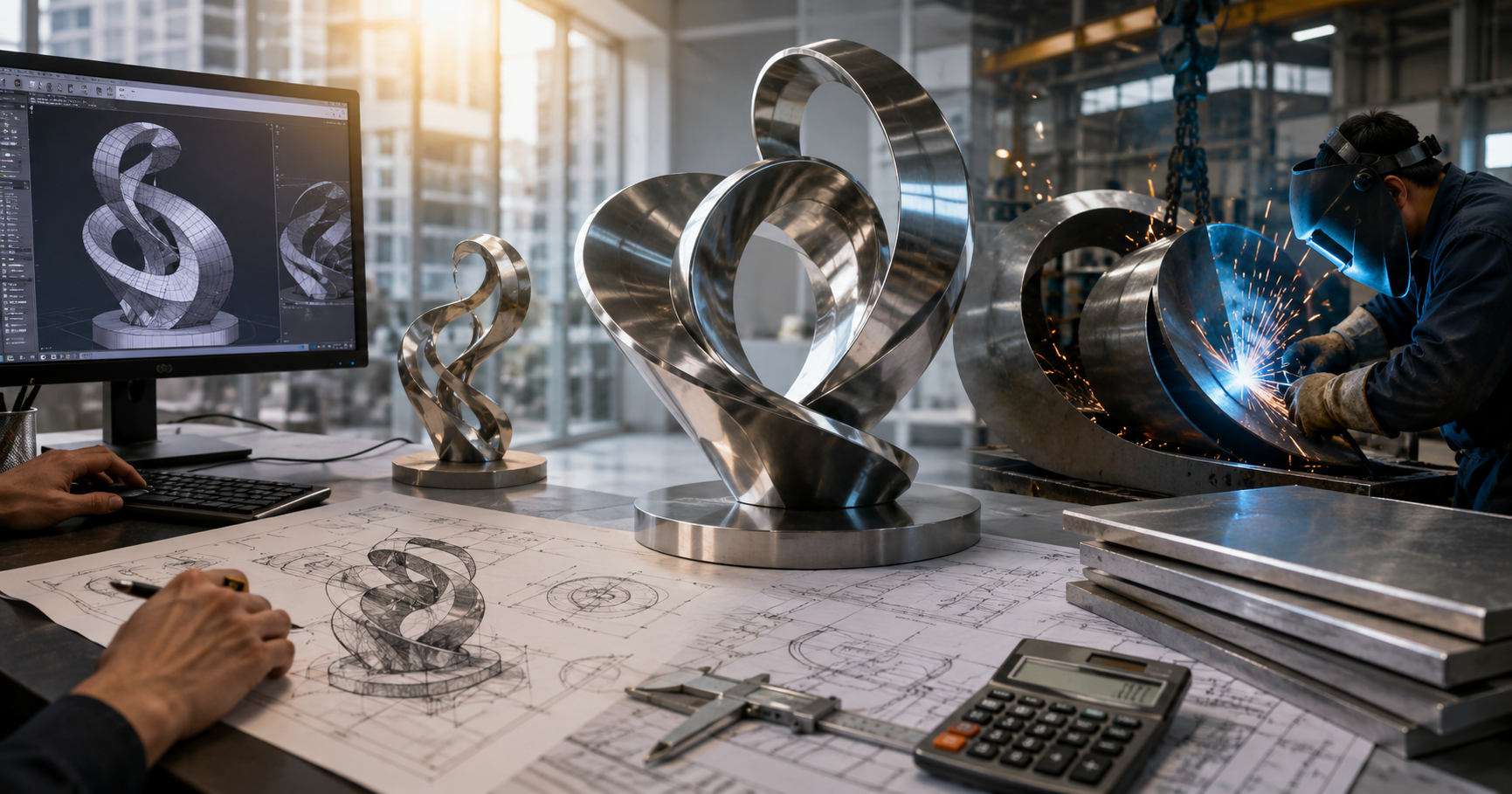
Budget planning is often one of the earliest and most important stages of any custom sculpture project. Whether the installation is intended for a luxury hotel, commercial development, public plaza, resort, or corporate headquarters, understanding what influences the overall project cost helps buyers make informed procurement decisions long before fabrication begins.
One of the most common misconceptions is that the cost of a custom sculpture is determined primarily by its size or material. In reality, pricing reflects a combination of design complexity, engineering requirements, fabrication methods, material selection, surface finishing, logistics, installation planning, and project coordination. Two sculptures with similar dimensions may require significantly different levels of technical expertise, production time, and installation resources, resulting in noticeably different quotations.
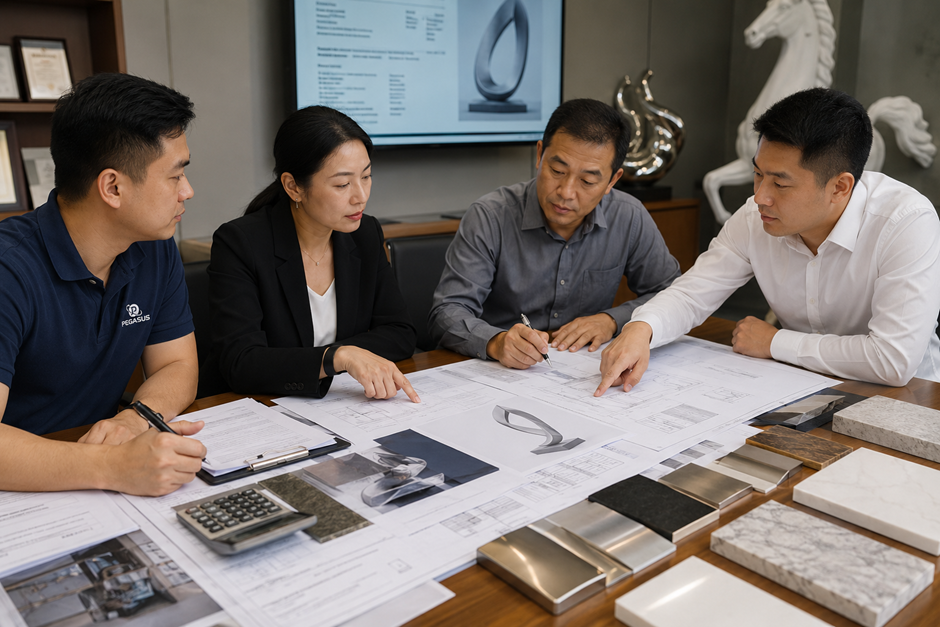
For architects, developers, procurement managers, and commercial buyers, understanding these cost drivers makes it easier to evaluate quotations objectively rather than comparing prices alone. A well-prepared quotation should explain not only the final project cost, but also the technical and commercial factors that contribute to it. This guide explains how custom metal sculpture fabrication projects are typically costed, what commercial buyers should evaluate before approving a quotation, and why understanding the production process can help reduce project risks while supporting better procurement decisions.
Why Sculpture Quotations Can Vary More Than Buyers Expect
One of the first questions buyers ask is why two manufacturers sometimes submit very different quotations for what appears to be the same sculpture. While the visual concept may look similar, the underlying design, engineering, production methods, and project requirements often vary considerably between suppliers.
Some quotations include only basic fabrication, while others incorporate engineering analysis, structural calculations, mock-up approvals, quality inspections, export packaging, logistics coordination, and installation planning. These differences may not be immediately visible when comparing prices, but they often influence the overall project outcome.
Rather than selecting the lowest quotation, experienced procurement teams evaluate what has been included within the proposed scope of work. Understanding these differences helps buyers compare proposals more accurately while reducing the likelihood of unexpected costs later in the project.
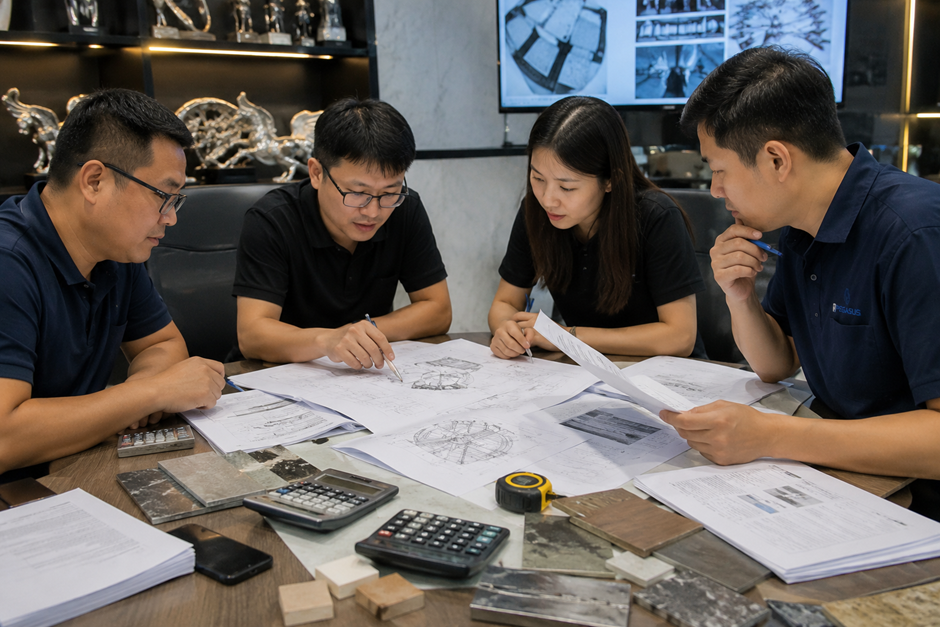
Understanding What Contributes to the Overall Project Cost
Every custom sculpture project is unique, and no single pricing model applies to every installation. Instead of viewing the quotation as one overall figure, commercial buyers benefit from understanding the individual elements that influence production costs.
The table below provides a practical overview of the primary factors that typically affect the cost of custom metal sculpture fabrication.
| Cost Factor | Why It Influences Cost | Procurement Consideration |
| Design Complexity | Intricate shapes require additional modelling, fabrication, and finishing time | Confirm whether complex details are necessary for the project objectives |
| Engineering Requirements | Structural calculations, internal reinforcement, and installation planning increase engineering effort | Verify which engineering deliverables are included within the quotation |
| Material Selection | Different metals vary in cost, fabrication methods, maintenance, and durability | Select materials based on project environment rather than price alone |
| Surface Finish | Mirror polishing, textured finishes, or specialised coatings require different production processes | Review finish samples before approving fabrication |
| Fabrication Process | Larger or more complex sculptures generally require additional production hours | Understand how production stages influence the overall schedule |
| Logistics & Installation | Transportation, export packaging, cranes, foundations, and site access affect the final project budget | Confirm whether these costs are included or quoted separately |
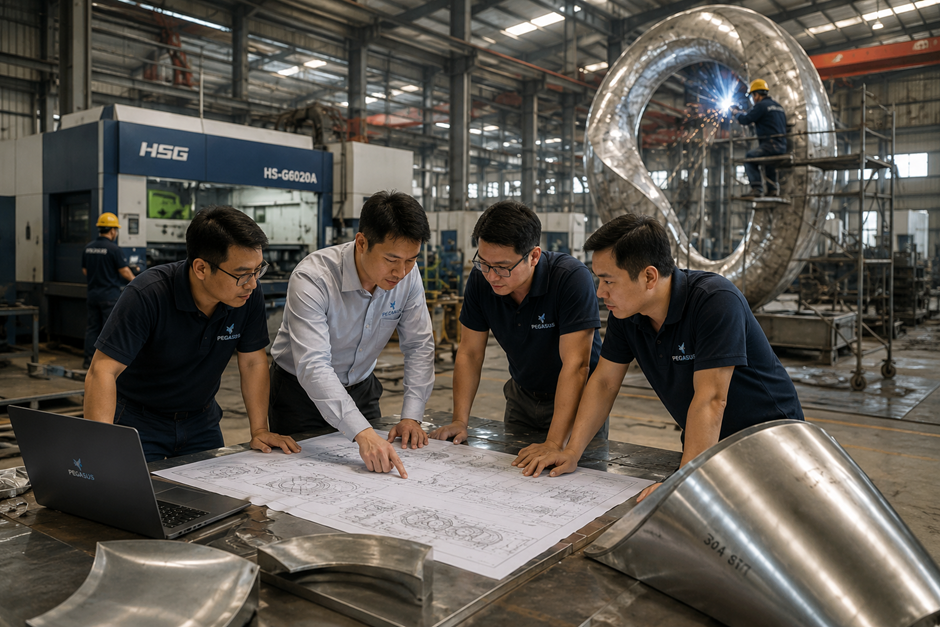
Design Complexity Often Determines More Than Appearance
The visual design of a sculpture is one of the earliest decisions in any project, but it also has a significant influence on engineering, fabrication, finishing, transportation, and installation costs.
Curved surfaces, intricate geometries, integrated lighting, multiple fabricated sections, and highly polished finishes often require additional production time compared with simpler forms. Likewise, sculptures designed for outdoor environments may require hidden structural reinforcement, specialised anchoring systems, or segmented fabrication to accommodate transportation and installation requirements.
Rather than asking whether a design is expensive, commercial buyers should consider how each design decision influences the overall production process. During procurement, discussing these factors with the sculpture manufacturer helps establish realistic expectations regarding budget, production schedules, and long-term maintenance before fabrication begins.
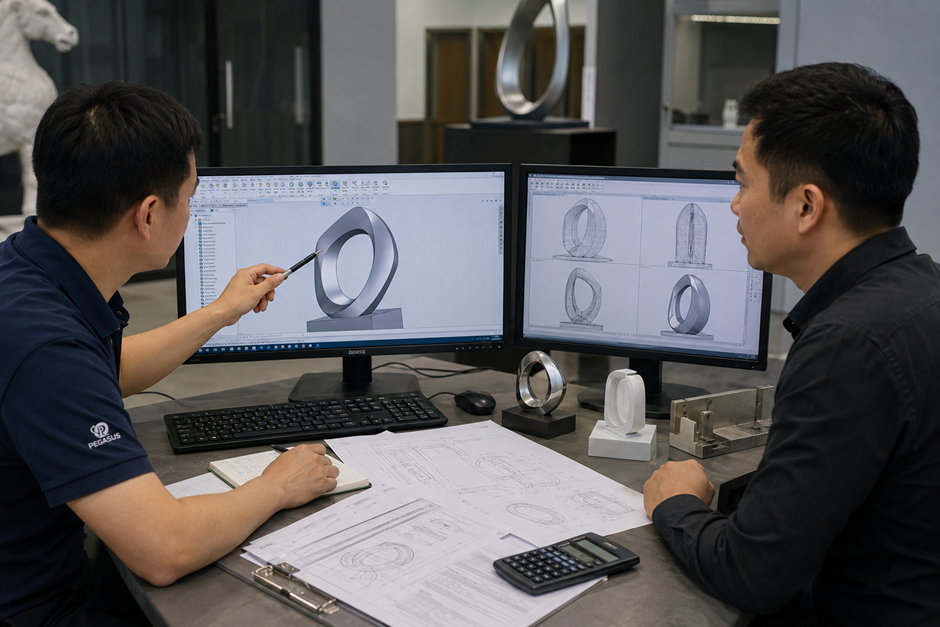
Engineering Is an Investment, Not Just an Additional Cost
One of the most misunderstood aspects of custom metal sculpture fabrication is the role of engineering in the overall project budget. Some buyers view engineering as an additional expense, while experienced commercial procurement teams recognise it as an investment that helps reduce technical risks throughout fabrication and installation.
For outdoor sculptures, engineering extends well beyond producing fabrication drawings. It may involve analysing structural loads, determining internal reinforcement, designing connection details, planning lifting points, evaluating transportation constraints, and ensuring the sculpture can be installed safely within the project’s environmental conditions.
The level of engineering required depends on the sculpture’s size, location, complexity, and installation method. A sculpture installed inside a hotel lobby, for example, may require a very different engineering approach than one positioned in a coastal public plaza or a high-rise commercial development exposed to wind loads.
When reviewing quotations, buyers should compare not only the engineering cost but also what engineering services are actually included. At Pegasus, engineering reviews begin before fabrication to evaluate structural requirements, fabrication feasibility, transportation constraints, and installation planning. This early technical review helps identify potential challenges before production starts, reducing the likelihood of design revisions, installation delays, and unexpected costs later in the project.
Rather than simply asking “Is engineering included?”, procurement teams should ask:
- What engineering documents will be provided?
- Are structural calculations included?
- Has the lifting strategy been reviewed?
- Will installation drawings be supplied?
- Have transportation limitations been considered during engineering?
The answers to these questions often explain why two quotations differ significantly despite appearing similar on paper.
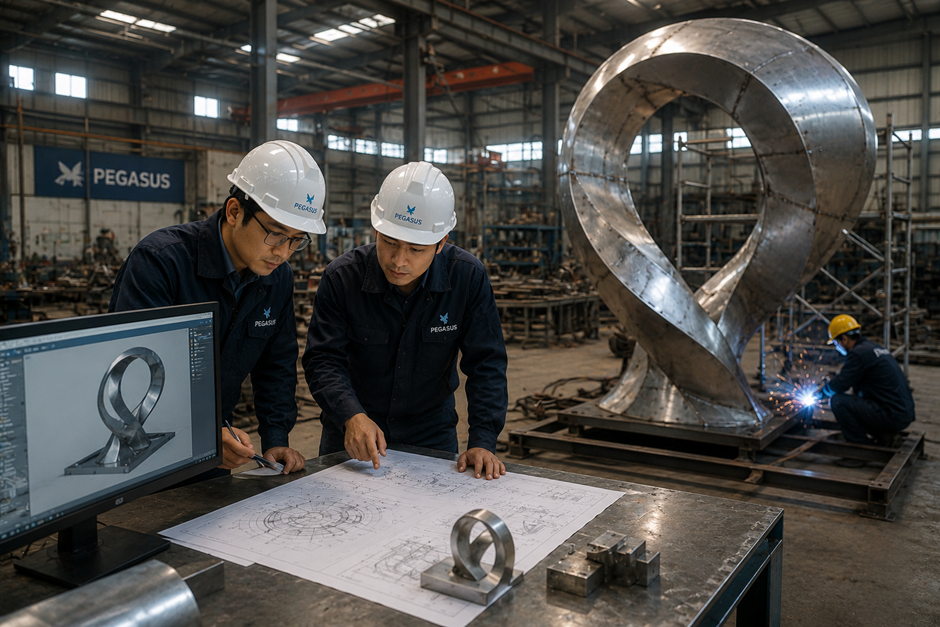
Material Selection Influences Both Budget and Long-Term Value
Material selection is another major factor that influences project cost, but the lowest material cost does not always represent the best long-term investment. Different materials vary in fabrication requirements, durability, maintenance expectations, installation methods, and environmental performance.
For example, commercial projects may prioritise different materials depending on their intended application. A luxury hotel entrance, public art installation, themed attraction, or interior corporate feature may each require different considerations when balancing appearance, maintenance, lifespan, and budget.
Rather than selecting materials solely on initial cost, experienced buyers evaluate the total value each material provides throughout the project’s lifecycle.
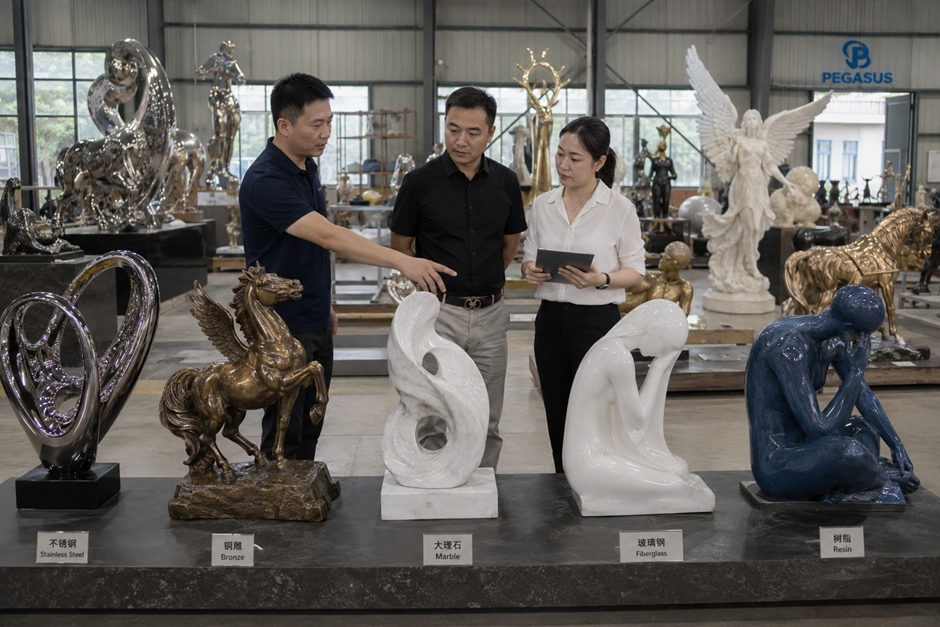
The table below illustrates how material selection can influence procurement decisions.
| Material | Typical Procurement Consideration |
| Stainless Steel | Durability, corrosion resistance, contemporary appearance, low maintenance |
| Bronze | Traditional aesthetics, long service life, heritage or civic projects |
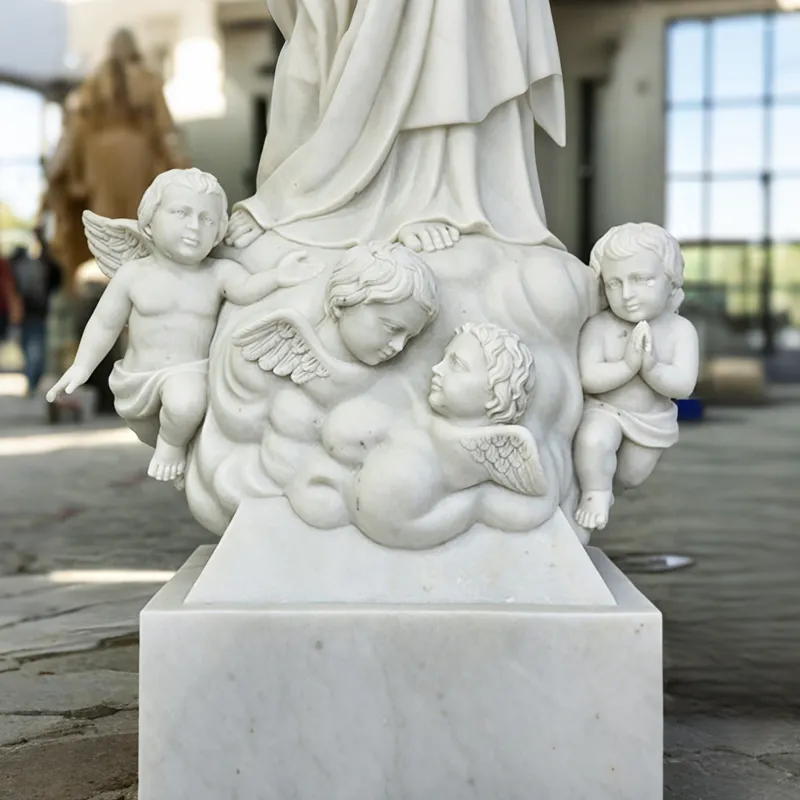
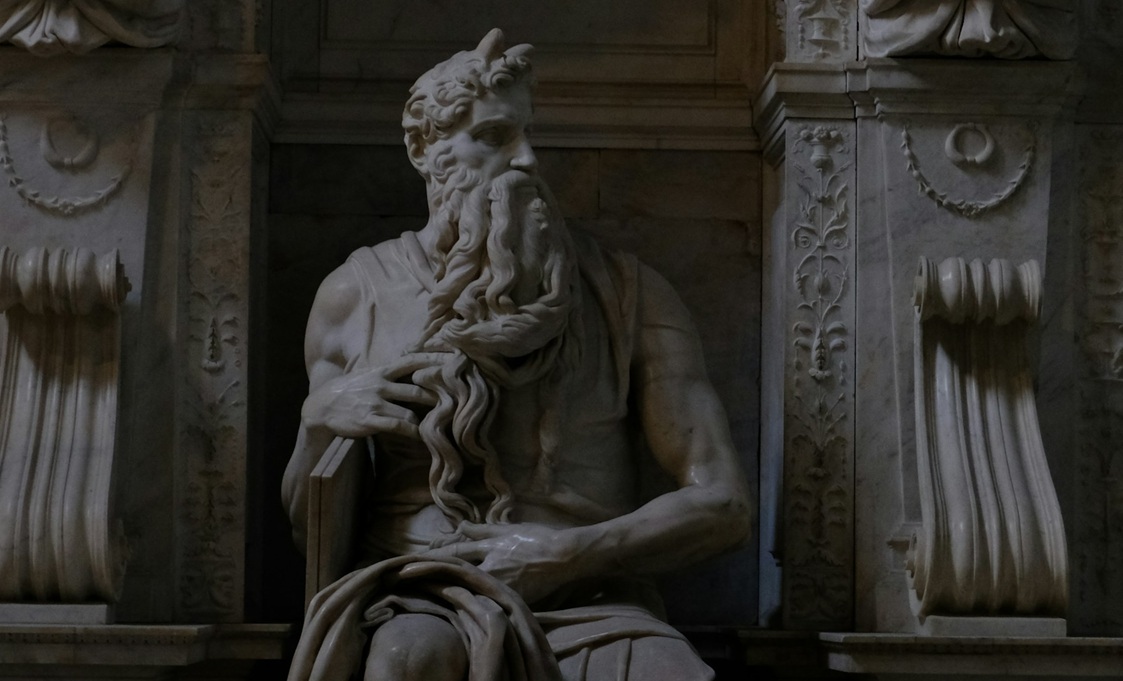
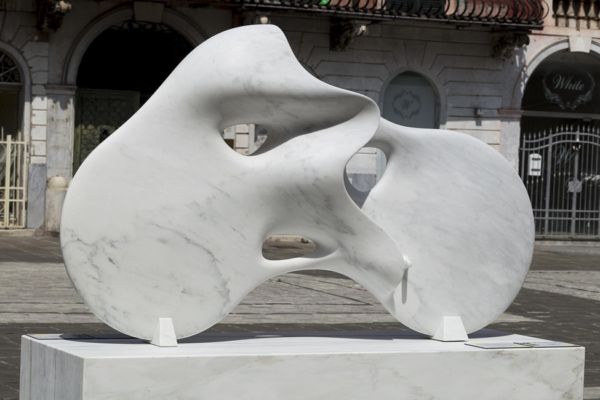
| Marble | Premium architectural environments and luxury interiors |
| Fiberglass | Lightweight construction, complex shapes, large decorative installations |
| Resin | Decorative applications requiring detailed finishes and cost efficiency |
The most appropriate material is not always the least expensive one. Instead, buyers should evaluate which material best supports the project’s functional requirements, environmental conditions, maintenance expectations, and long-term commercial objectives.
Production Efficiency Can Influence Procurement Costs
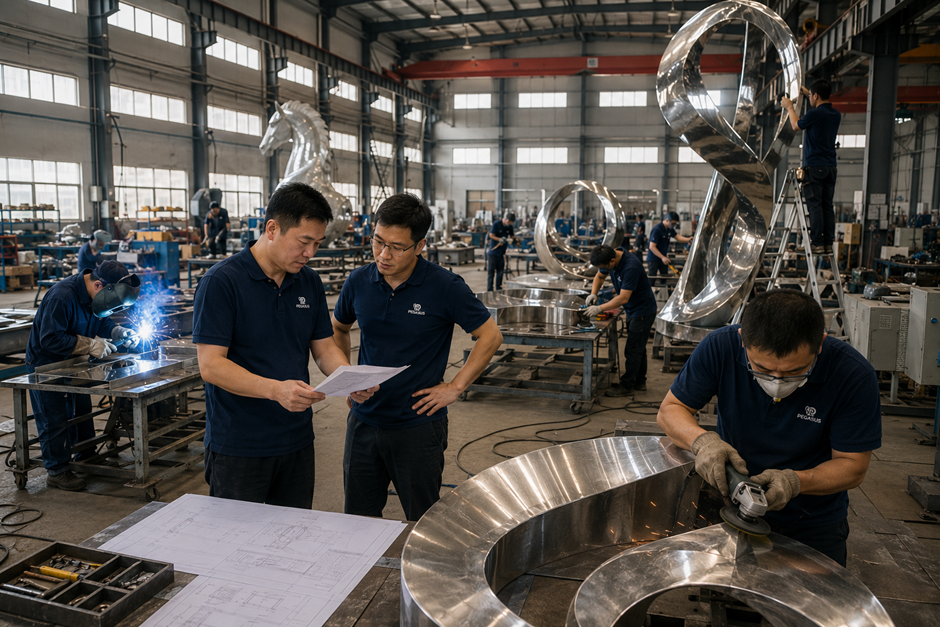
The fabrication process itself also contributes significantly to the overall quotation. While buyers often focus on the finished sculpture, production efficiency determines how effectively materials, labour, equipment, and project timelines are managed throughout fabrication.
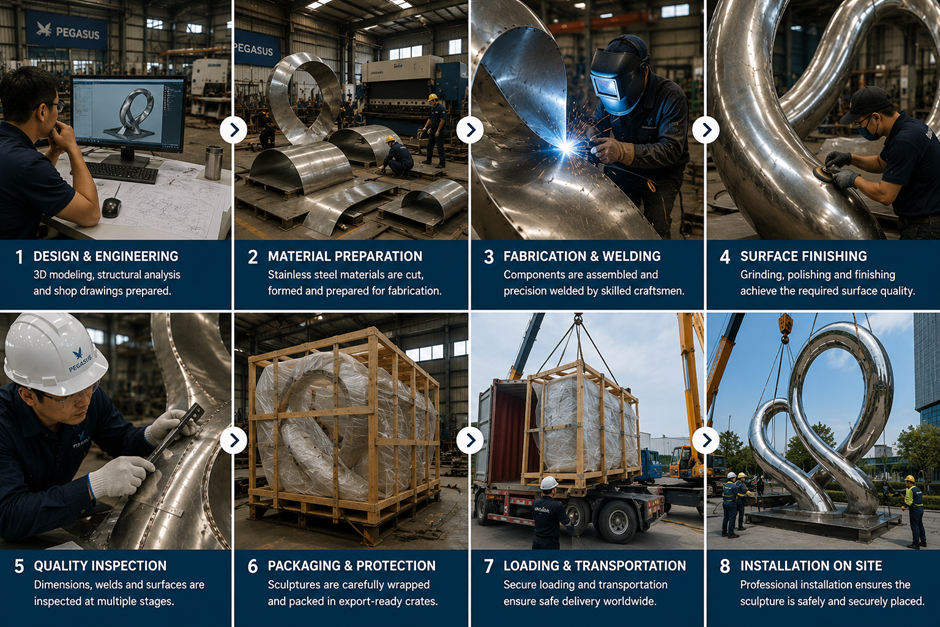
A well-organised production workflow reduces unnecessary rework, improves coordination between departments, and helps maintain consistent quality throughout manufacturing. At Pegasus, production begins with engineering confirmation before moving into material preparation, precision cutting, forming, welding, trial assembly, surface finishing, and staged quality inspections. Each department works closely with engineering and project management teams so that technical approvals, manufacturing progress, and client communication remain aligned throughout the project lifecycle. This structured production workflow helps minimise unnecessary rework, improves manufacturing efficiency, and reduces the risk of delays that could ultimately affect the final quotation.
Experienced buyers therefore benefit from understanding how a statue factory plans production before approving a project. Rather than simply asking how long fabrication will take, they should explore how the manufacturer manages each stage of production.
Useful procurement questions include:
- How is production scheduled across different departments?
- What approval stages occur before fabrication progresses?
- How are design changes managed once production begins?
- How are quality inspections integrated into the manufacturing schedule?
- What contingency planning exists if modifications become necessary?
These discussions often provide valuable insight into how efficiently a manufacturer manages commercial projects, particularly those involving multiple stakeholders and fixed construction deadlines.
Procurement Tip: Compare Scope Before Comparing Price
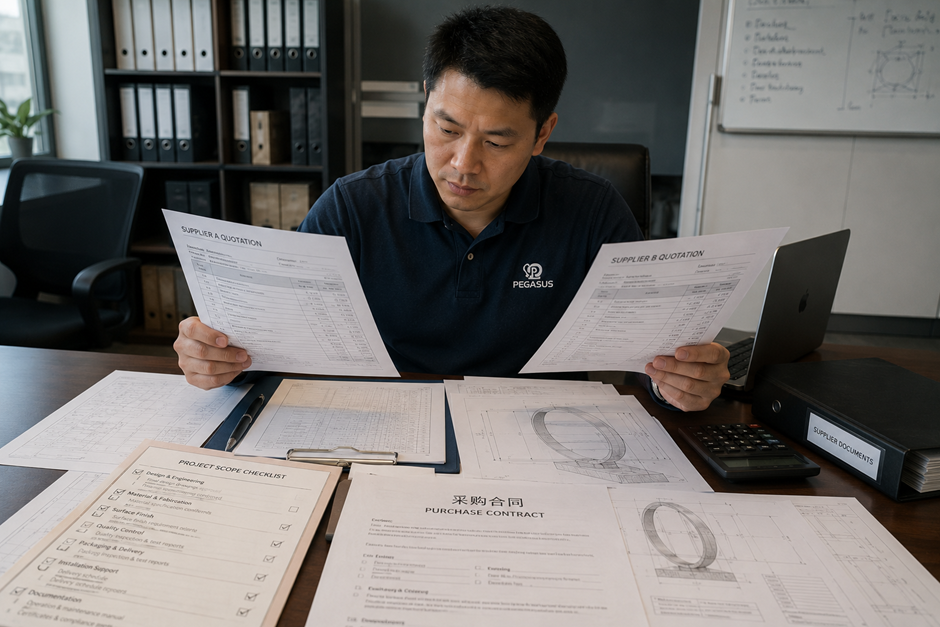
One of the most common procurement mistakes is comparing final quotation values without first confirming that every supplier has priced the same scope of work.
For example, one quotation may include engineering, quality inspections, export packaging, installation planning, and project management, while another may cover fabrication only. Although the second quotation appears less expensive initially, additional services may later increase the total project cost.
Before making a procurement decision, buyers should verify that each quotation clearly identifies:
- Engineering deliverables
- Material specifications
- Surface finish
- Fabrication scope
- Quality inspections
- Packaging requirements
- Shipping responsibilities
- Installation support
- Project management responsibilities
Only after confirming that each proposal includes a comparable scope should buyers begin evaluating price differences.
This approach provides a more accurate basis for procurement decisions while reducing the likelihood of unexpected costs after production has already begun.
Quality Control and Project Management Help Protect the Budget
While design, engineering, and material selection are highly visible cost factors, project management and quality control often have an equally significant impact on the final project cost. These activities may not always appear as separate line items within a quotation, but they influence production efficiency, communication, approval timelines, and the likelihood of costly rework.
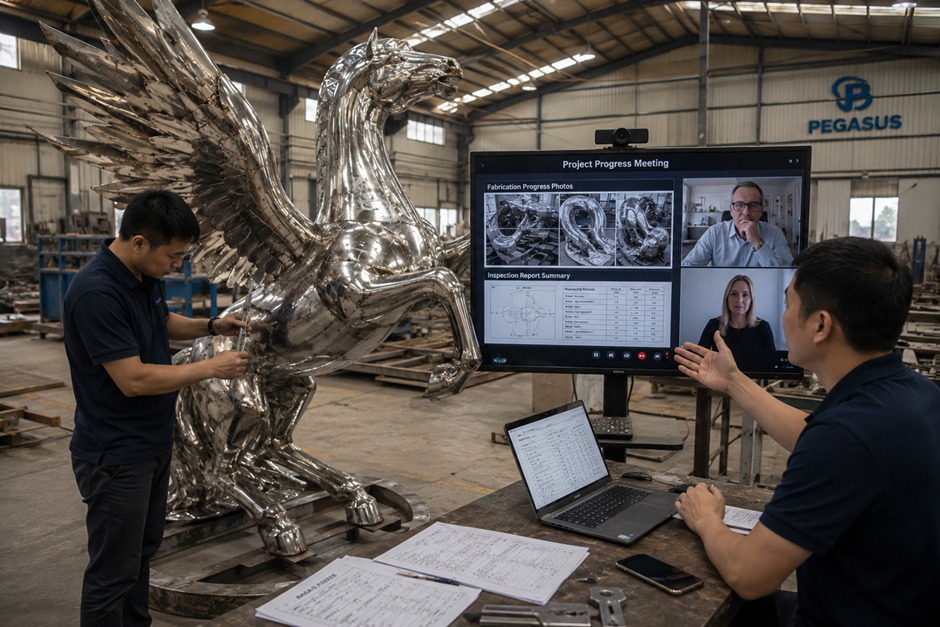
For commercial projects, quality assurance should extend throughout the production process rather than being treated as a final inspection before shipment. At Pegasus, quality control is integrated into multiple manufacturing stages, including dimensional verification, weld inspection, trial assembly, surface finishing evaluation, and final pre-shipment checks. Reviewing structural components, welding quality, surface finishes, and assembly before each production stage progresses allows potential issues to be identified and corrected before they become expensive to resolve.
Similarly, effective project management ensures that architects, developers, contractors, and procurement teams receive timely progress updates, approval requests, and technical documentation throughout fabrication. At Pegasus, this collaborative approach includes scheduled progress reporting, approval checkpoints, and ongoing coordination between technical teams and clients, helping projects remain aligned with construction schedules while reducing uncertainty throughout productions.
Rather than viewing project management as an administrative function, experienced buyers recognise that structured communication often protects both project budgets and delivery timelines.
Commercial buyers may wish to confirm:
- How frequently are progress updates provided?
- Will fabrication photographs be shared during production?
- How are client approvals managed throughout the project?
- What documentation accompanies final inspection?
- How are unexpected design revisions communicated?
The answers to these questions often reveal how effectively a manufacturer manages complex commercial projects beyond the fabrication itself.
Real Project Example: Managing Production Costs Through Early Planning
One recent Pegasus commercial project involved the fabrication of a custom metal sculpture for a mixed-use development where budget planning, engineering coordination, and installation scheduling needed to align with a broader construction programme. During the initial budgeting stage, several manufacturers submitted quotations that appeared similar at first glance, yet each proposal included a different level of engineering, fabrication support, logistics planning, and project management.
Rather than selecting the lowest quotation, the client reviewed the scope of work in greater detail. During technical discussions, the manufacturing team identified opportunities to optimise the sculpture’s internal framework and transportation strategy without changing the approved design or visual appearance.
By incorporating these engineering adjustments before fabrication began, the sculpture could be manufactured in transportable sections, reducing oversized freight requirements while simplifying on-site installation. The revised approach also minimised crane time during installation and reduced the risk of unexpected site modifications.
Throughout production, Pegasus coordinated material preparation, precision fabrication, welding, trial assembly, surface finishing, staged quality inspections, and client approval checkpoints before progressing to each manufacturing phase. This structured workflow reduced unnecessary rework, maintained consistent production quality, and kept the sculpture aligned with the overall construction programme while supporting a smoother installation on site.
The value of this project extended beyond achieving the agreed budget. Early engineering decisions improved production efficiency, coordinated logistics reduced installation complexity, and consistent communication helped protect the developer’s construction schedule. For commercial buyers, this illustrates why the most competitive quotation is not always the lowest initial price, but the proposal that delivers the strongest balance between cost, quality, risk management, and long-term project success.
Looking Beyond the Initial Quotation
Selecting a sculpture manufacturer should not be based solely on the total project cost. A quotation represents a combination of technical planning, engineering capability, fabrication expertise, factory production capacity, project management, logistics coordination, and installation support. Buyers should also consider whether a manufacturer operates its own production facility, maintains dedicated fabrication and quality control teams, and has the capability to manage complex commercial projects from engineering through final installation. Understanding how these capabilities contribute to the overall project allows buyers to compare proposals more accurately while reducing procurement risks.
For organisations investing in public art, hospitality developments, commercial landscapes, or corporate environments, evaluating the complete scope of work often leads to better long-term value than focusing exclusively on the lowest quotation.
Buyers who are preparing to evaluate potential manufacturing partners after reviewing project costs may also find How to Evaluate a Sculpture Manufacturer Before Ordering Large Outdoor Sculptures for Commercial Projects useful, as it explains the practical factors involved in supplier selection once project requirements and budgets have been established.
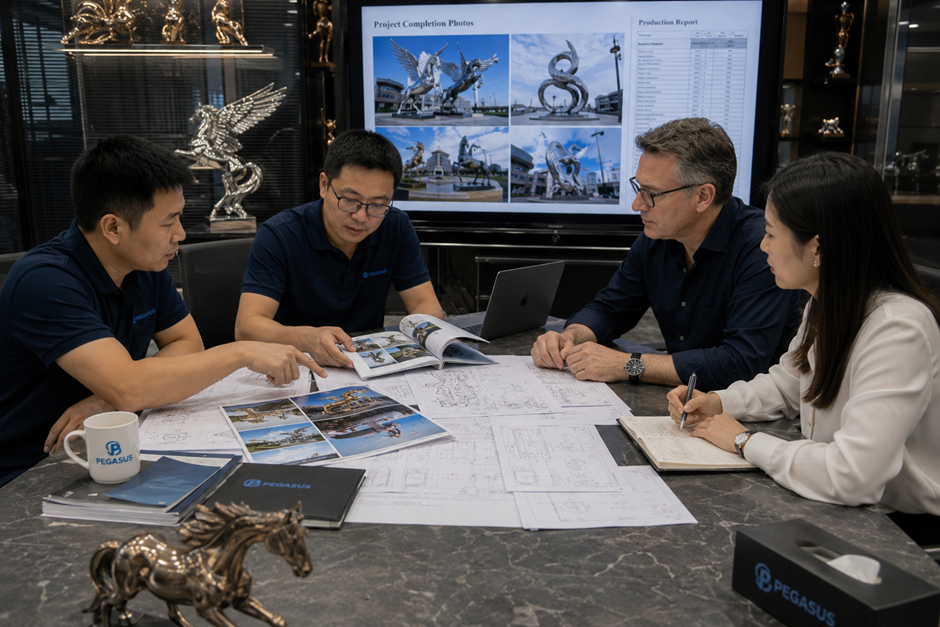
Likewise, reviewing completed commercial sculpture projects provides valuable insight into how different projects progress from concept approval through fabrication and final installation.
Conclusion
Understanding the cost of custom metal sculpture fabrication involves much more than comparing quotations. Every project reflects a combination of design complexity, engineering requirements, material selection, fabrication methods, quality assurance, logistics planning, and project management.
For commercial buyers, recognising how these factors influence the overall budget leads to more informed procurement decisions and reduces the likelihood of unexpected costs during production or installation.
Rather than asking which quotation is the lowest, experienced procurement teams evaluate which proposal provides the most appropriate balance between technical capability, commercial value, project coordination, and long-term performance.
By approaching quotations with this broader perspective, organisations can select manufacturing partners with greater confidence while supporting successful project delivery from concept through installation.
Frequently Asked Questions
Why can quotations for similar custom metal sculptures vary significantly?
Although sculptures may appear similar, quotations often differ because manufacturers include different levels of engineering, fabrication, quality control, project management, logistics, and installation support within their proposed scope of work.
Which factors have the greatest influence on custom metal sculpture fabrication costs?
Design complexity, engineering requirements, material selection, fabrication methods, surface finishing, transportation, installation planning, and project management all contribute to the overall project cost.
Should buyers always choose the lowest quotation?
Not necessarily. Commercial buyers should compare the complete scope of work, engineering deliverables, quality assurance procedures, logistics planning, and project management before making procurement decisions.
How can buyers compare quotations fairly?
Ensure each supplier has priced the same project scope, material specifications, engineering services, finishing requirements, packaging, logistics, and installation support before comparing costs.
When should a sculpture manufacturer become involved in budget planning?
Ideally during the early design and planning stages. Early collaboration allows engineering, material selection, fabrication methods, and logistics strategies to be optimised before quotations are finalised.