What Changes When an Attraction Needs More Than One Sculpture
Buying one display sculpture is mainly a design and fabrication decision. Ordering a group of characters for a theme park, museum trail, family entertainment venue or multi-location campaign adds a different set of commercial risks. The buyer must know whether every unit will arrive on time, fit its assigned location and remain recognizably part of the same visitor experience.
This is where the choice of fiberglass sculpture manufacturer becomes important. An attractive portfolio shows creative ability, but a multi-unit order also depends on mold planning, production capacity, finish consistency, packing, destination schedules and the supplier’s ability to reproduce a damaged or additional unit later.
The purchasing brief should therefore describe the rollout, not just the sculpture. Unit quantities, site locations, opening dates, permitted design differences, visitor contact and installation responsibilities give the manufacturer enough context to propose a workable production and delivery plan.
Begin With the Rollout Plan
Before requesting a final quotation, establish how the sculptures will be used. A row of identical characters outside one attraction is different from a public art trail with individual finishes, and both are different from a mascot program delivered to several venues. The rollout model determines how the manufacturer should organize molds, artwork, inspections, packing and replacement records.
- Quantity and destinations: list the total number of units, delivery addresses and any phased openings.
- Common and variable features: identify what stays consistent and what may change by character, artist or location.
- Visitor interaction: explain whether guests will walk around, touch, sit beside or photograph the sculptures.
- Site responsibility: confirm who supplies bases, fixings, lifting equipment and final touch-up.
- Programme constraints: share approval dates, shipping windows, access restrictions and the required opening date.
These details allow suppliers to quote against the same commercial scope. They also expose schedule or site risks before production begins, when the buyer still has time to change quantities, phasing or responsibilities.
Define What Must Stay Consistent
Consistency does not always mean identical artwork. For a recognized character, the silhouette, expression, proportions and key brand features may need to remain fixed, while colors, accessories or surface graphics can vary. For a series of decorative forms, the buyer may care more about overall size, base connections and a shared finish standard.
Mark the features that visitors will notice first and describe acceptable variation in plain language. The manufacturer can then recommend which elements should come from a common mold, which can be changed during assembly and which require separate artwork or hand finishing. This keeps creative freedom from becoming a production ambiguity.
Match the Manufacturer to the Order
A supplier that can make one complex sculpture may not automatically be the right choice for a time-sensitive batch. Buyers should compare relevant production experience, available workshop capacity, mold strategy, finishing resources, packing capability and coordination across several destinations. The aim is to understand how the proposed order will move through the factory, not simply how impressive earlier work appears in photographs.
| Buyer Decision | What to Clarify | Why It Matters |
| Shared design | Silhouette, expression, scale, logo features and base interface | Protects recognition across the attraction |
| Planned variation | Poses, accessories, colorways or location-specific graphics | Allows variety without confusing production |
| Unique treatment | Artist artwork, names, sponsor elements or local storytelling | Keeps individual units distinctive within clear boundaries |
Project Insight From a Multi Sculpture Attraction
Coraline’s Curious Cat Trail shows how a recognizable form can support a varied public attraction. In 2024, the Portland trail presented 31 six-foot cat sculptures celebrating the fifteenth anniversary of LAIKA’s Coraline. Individual artists created different surface designs while the character form and the identity of the trail remained consistent.
The project was organized by LAIKA, Wild in Art and local partners, and the sculptures were later auctioned in support of OHSU Doernbecher Children’s Hospital. For attraction buyers, the useful lesson is not a technical approval system. It is the value of deciding early which features create recognition and where controlled creativity can make each location worth discovering.
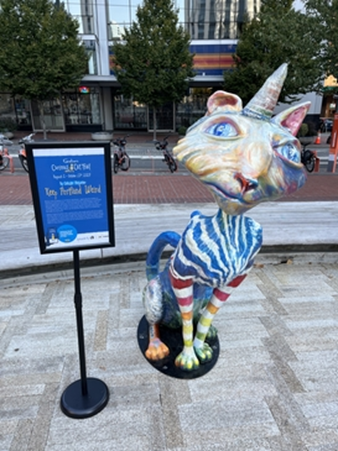
Another sculpture from Coraline’s Curious Cat Trail shows the same recognizable character carrying an individual artist-applied finish. Artwork: Celeste Potgieter. Photograph: Another Believer, CC BY-SA 4.0, via Wikimedia Commons.
Independent project reference included to illustrate consistent form with intentional visual variation; not represented as a Pegasus commission.
Ask How the Production Run Will Be Organized
For a multi-unit order, production planning affects both consistency and delivery. The buyer should understand how many molds will be used, whether units will move through the factory together or in groups, and how the supplier will prevent late changes from affecting pieces already completed.
- Mold plan: how many production molds are required for the quantity and deadline?
- First completed unit: when can the buyer review one full-size piece before the remaining run advances?
- Batch sequence: will destinations receive complete sets, or will units ship in the order they finish?
- Finish resources: can the workshop maintain the required colors and artwork across parallel production?
- Change control: how will an approved design change affect completed units, cost and delivery dates?
Technical measurements can support this process when the project needs them, but they should serve a clear purchasing requirement. For example, color or gloss readings may be useful for a closely controlled brand finish. They are not a substitute for reviewing the complete sculpture under representative lighting and from normal visitor distance.
Use the First Completed Unit to Protect the Rollout
The first completed unit gives the buyer a practical opportunity to confirm appearance, base coordination, accessories, packing method and installation information before the full order is dispersed. It should be reviewed as a finished attraction asset rather than treated as another abstract approval stage.
- Check the character or form from the visitor’s main viewing angles.
- Confirm the finished dimensions and connection points against the assigned site.
- Review color, sheen, graphics and any areas likely to receive frequent contact.
- Test identification, packing labels and accessory lists using the actual delivery workflow.
Coordinate Packing Delivery and Site Readiness
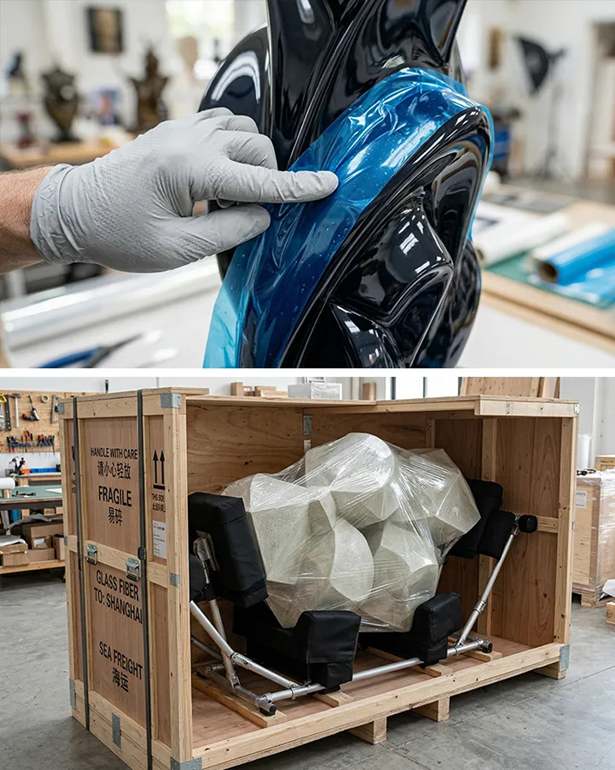
A successful factory inspection does not guarantee a smooth opening. Crate sizes, unloading access, lifting points, storage space and installation windows should be coordinated before dispatch. For multi-location programs, each sculpture, crate and accessory set needs a clear destination so site teams do not receive the wrong components.
Buyers should also decide who is responsible for unpacking, assembly, anchoring, surface touch-up and final acceptance. When these responsibilities are confirmed in advance, the quotation is easier to compare and last-minute site work is less likely to delay the attraction.
Evidence That Helps Buyers Compare Suppliers
| Supplier Evidence | What the Buyer Can Learn |
| Comparable project examples | Whether the supplier has handled similar quantity, scale, finish complexity or visitor use. |
| Proposed mold and production plan | How the factory intends to meet the quantity and opening schedule. |
| First-unit review plan | When the buyer can assess a complete sculpture before the wider run advances. |
| Unit and destination schedule | How sculptures, crates, accessories and locations will remain correctly matched. |
| Packing and delivery method | Whether the proposed logistics reflect access, handling and surface-protection needs. |
| Site responsibility schedule | Who handles unloading, assembly, anchoring, touch-up and final acceptance. |
| Repair and replacement records | Whether the supplier can support an installed asset after opening. |
Look Beyond the Portfolio
A relevant portfolio remains useful, especially when it shows comparable scale, quantity, visitor use or finish complexity. The next step is to ask how those projects were managed. A capable supplier should be able to explain its mold plan, production sequence, inspection approach, packing method and response when a unit needs repair or replacement.
The quality of the answer matters more than process terminology. Buyers need clear responsibilities, realistic dates and evidence connected to the proposed order. The supplier should explain what will be delivered, when the buyer must make a decision and how a later change could affect cost, consistency or the opening date.
Questions to Ask Before Awarding the Order
- How many similar units has the factory produced within a comparable deadline?
- What mold and staffing plan is proposed for this quantity?
- Which design features must stay consistent, and where can variation be accommodated?
- When will the first completed unit be available for review?
- How will each unit, crate, accessory set and destination be identified?
- Who manages unloading, assembly, anchoring and final site touch-up?
- What information will be retained if a unit requires repair or replacement?
Frequently Asked Questions
How early should a buyer contact a fiberglass sculpture manufacturer?
Contact potential suppliers once the quantity, approximate dimensions, destinations and opening date are known. Early involvement helps the manufacturer assess mold requirements, workshop capacity, delivery phasing and site constraints before the schedule becomes fixed.
Do all sculptures in an attraction need to look identical?
No. Some programs need exact duplicates, while others use a common form with different poses, accessories or artwork. The buyer should identify the features that create recognition and define where variation is intentional.
What affects the price of a multi-unit fiberglass order?
Key factors include sculpture size and complexity, the number of molds, total quantity, artwork variation, finish system, packing, shipping destinations, installation support and delivery schedule. A complete rollout brief produces a more comparable quotation than a design image alone.
How can a buyer reduce delays across several locations?
Confirm destination data, access conditions, base details and installation responsibilities early. Use a shared unit schedule so the factory, freight team and site contacts work from the same quantity and delivery sequence.
What should be retained for future repairs or replacements?
Keep the unit ID, destination, approved appearance references, mold or model identification, hardware details, packing photographs and suitable repair information. These records help a later order match the correct installed sculpture.
From Creative Concept to a Reliable Attraction Rollout
The strongest multi-unit fiberglass programs are planned around the visitor experience and the rollout realities at the same time. Buyers gain more value when the manufacturer can protect recognizable design features, organize production around the deadline, deliver the correct pieces to each location and support the attraction after opening.
Pegasus Sculpture develops custom fiberglass sculptures for themed attractions, entertainment venues and branded environments. Share the artwork, quantity, dimensions, destinations, visitor use and opening schedule to discuss a production and delivery plan for the complete rollout.