There’s a specific moment in the commissioning process that separates experienced buyers from first-timers. It’s when you realize that the concept rendering on your screen and the physical installation in your plaza are separated by a set of engineering decisions that most suppliers don’t discuss openly and that a significant number of stainless steel sculptures underperform not because the design was flawed but because those decisions were made carelessly.
We’ve fabricated custom stainless steel sculptures for civic authorities, luxury developers, hotel groups, and corporate campuses across more than 25 countries. What follows isn’t a product catalog. It’s a frank account of what the process actually involves, the material science, the engineering challenges, and the finishing decisions, so you can evaluate any stainless steel sculpture factory on something more concrete than portfolio photos.
Why Stainless Steel Dominates Monumental Outdoor Sculpture
Bronze has history. Weathering steel has mood. But for large-scale outdoor sculpture, the kind that’s expected to perform for decades without significant intervention, sculpture stainless steel has become the default material for serious installations, and the reasons are structural as much as aesthetic.
Corrosion resistance without surface compromise.
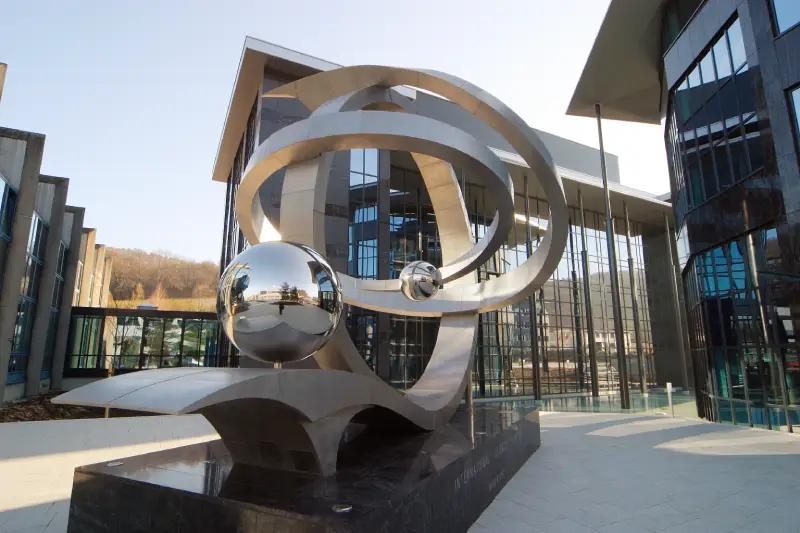
The resistance to corrosion of stainless steel is due to its chromium concentration (by definition at least 10.5% chromium, more in the alloys used for sculpting), which forms a passive oxide layer that heals itself and preserves the steel without the need for coatings. That’s a big plus in exposed conditions where surface treatments might fracture, peel, or fade. The protection is not by paint but by metallurgy on an 8K mirror-polished stainless steel surface.
Structural capacity and enormous size.
Unlike more traditionally solid materials like bronze or marble, stainless steel can support dynamic, cantilevered, or gravity-defying forms, the kind of shapes that the sculpture is formed from. The brief’s demand for architecturally complex sculptures has led to the category’s prevalence in public plazas and commercial landmark installations.
Light interaction.
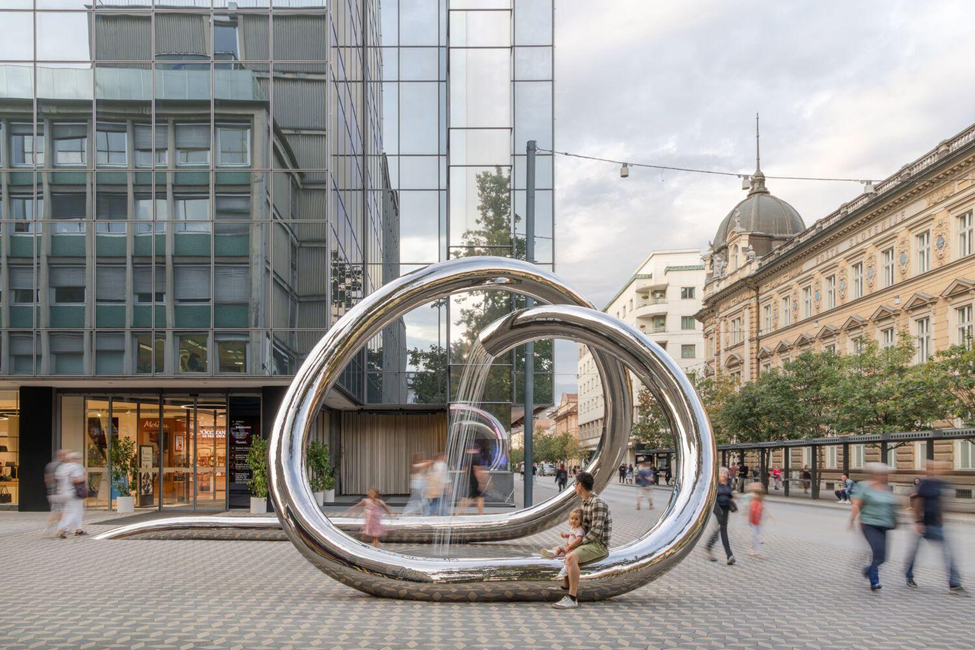
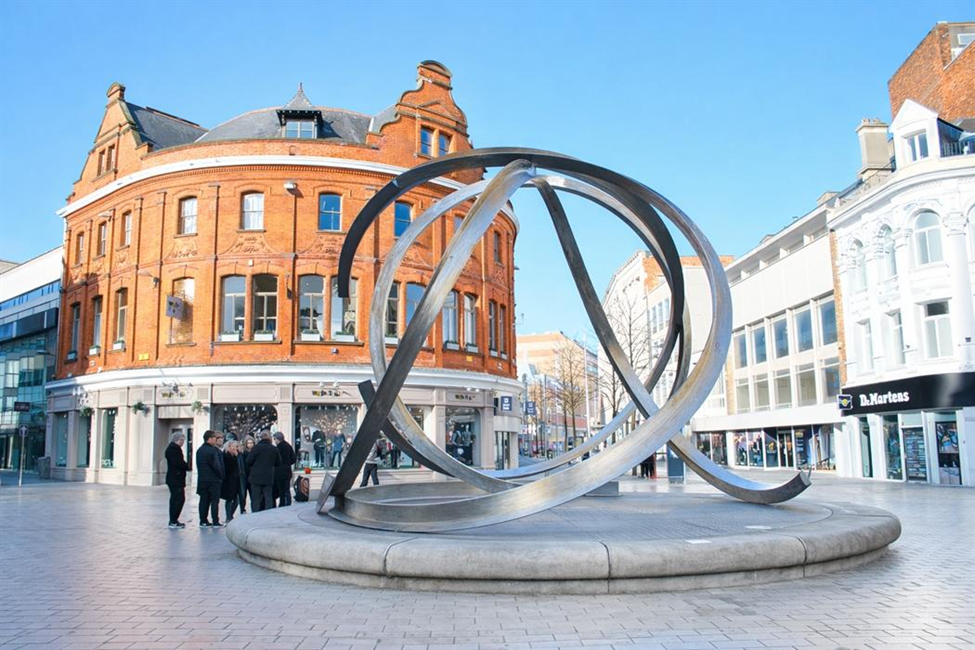
Mirror-finish stainless steel is unusual compared to other sculptural materials in that it never appears the same in two instances. It’s not static in its environment, sucking everything around it in, compressing skylines, bending light, and shifting with every change of weather and time of day. This is precisely why pictures fail to capture its true essence and why developers and urban planners are consistently urged to experience it firsthand. The constant changeability is not a limitation. And that’s the point.
The honest caveat: Properly matching the alloy, production technique, and finishing process to the installation environment is essential for realizing the benefits of stainless steel. When they’re not, you get pitting in coastal areas, visible weld scars in direct sunlight, and surface “orange peel” deformities that no amount of polishing will fix.
The 6-Stage Fabrication Workflow: What Actually Happens Between Brief and Delivery
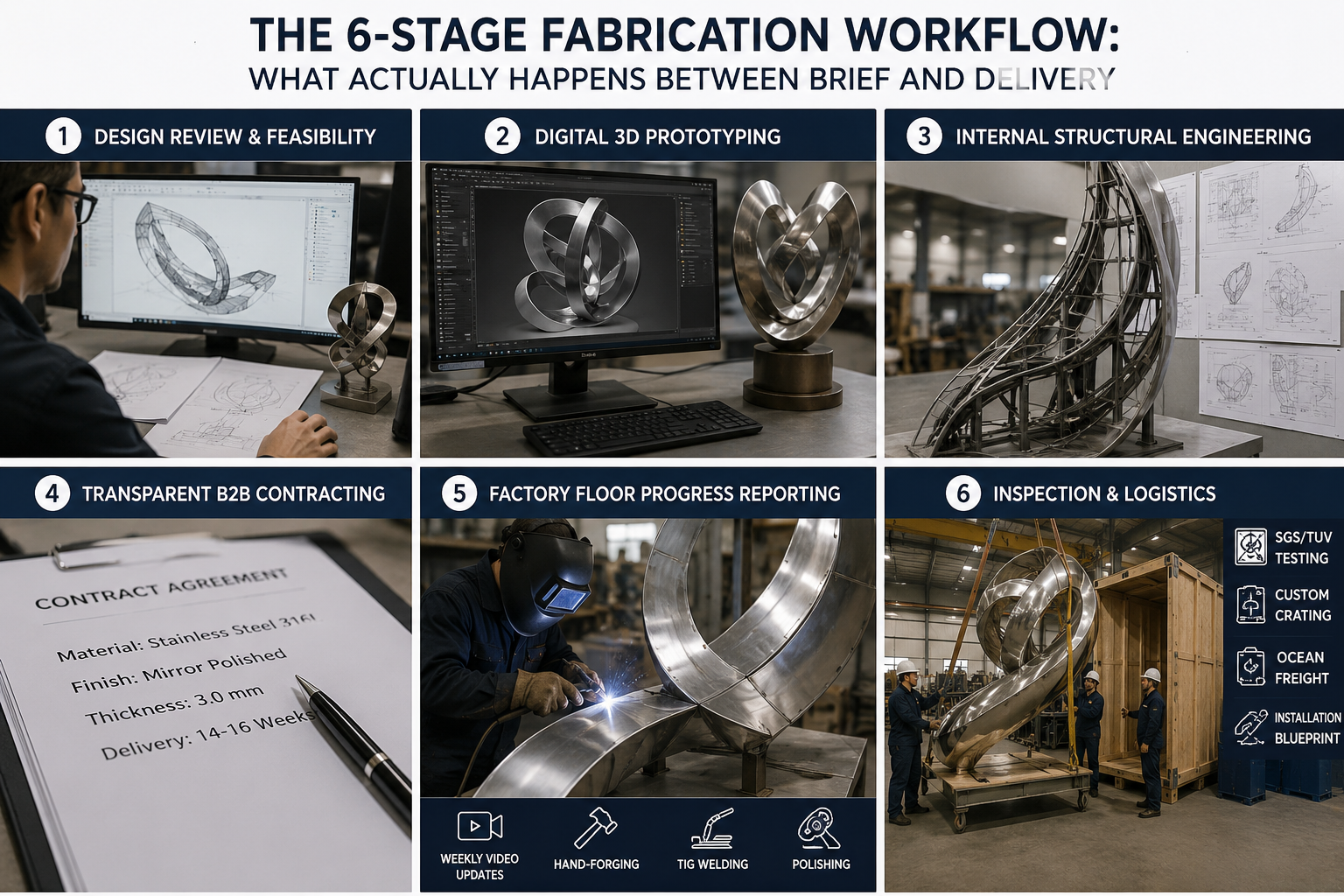
Understanding the production sequence is the most reliable way to evaluate whether a manufacturer is serious. Here’s what the process looks like at a properly equipped stainless steel sculpture factory:
● Design Review & Feasibility.
CAD files, sketches, or reference images are assessed for structural feasibility and material efficiency. For monumental work, the design review is where you identify whether the concept as drawn is achievable as specified or whether engineering constraints require design adjustments before anything is committed to steel.
● Digital 3D Prototyping.
Rhino and ZBrush modeling provide an exact digital twin, a 1:1 copy of the completed product that can be evaluated, altered, and approved before manufacture starts. This stage eliminates the category of errors that only become visible when steel is already cut.
● Internal Structural Engineering.
Wind and seismic load calculations for the specific installation site. Internal armature design follows the site conditions, not a generic template.
● Transparent B2B Contracting.
Alloy grade (authentic 316L or 304 as specified), panel thickness, surface finish, and delivery timelines locked in writing. No material substitutions after contract.
● Factory Floor Progress Reporting.
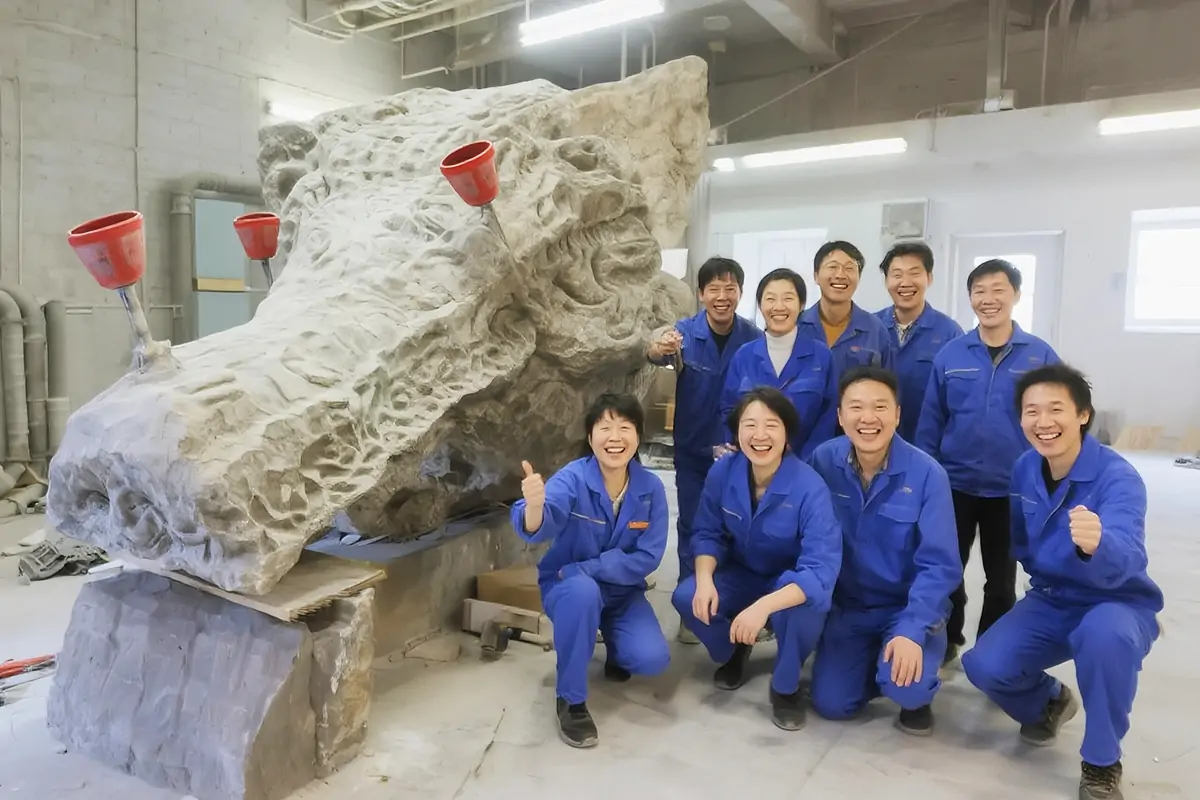
Weekly video updates from the workshop floor, hand-forging stages, TIG welding, and polishing so you’re tracking production reality, not delivery estimates.
● Inspection & Logistics.
Third-party SGS/TUV testing is welcomed. Completed pieces are secured in custom steel-frame crates engineered for the specific sculpture geometry and ocean freight transit. A complete installation blueprint package, including foundation load drawings, travels with every shipment.
What to Ask Before You Commit to a Manufacturer
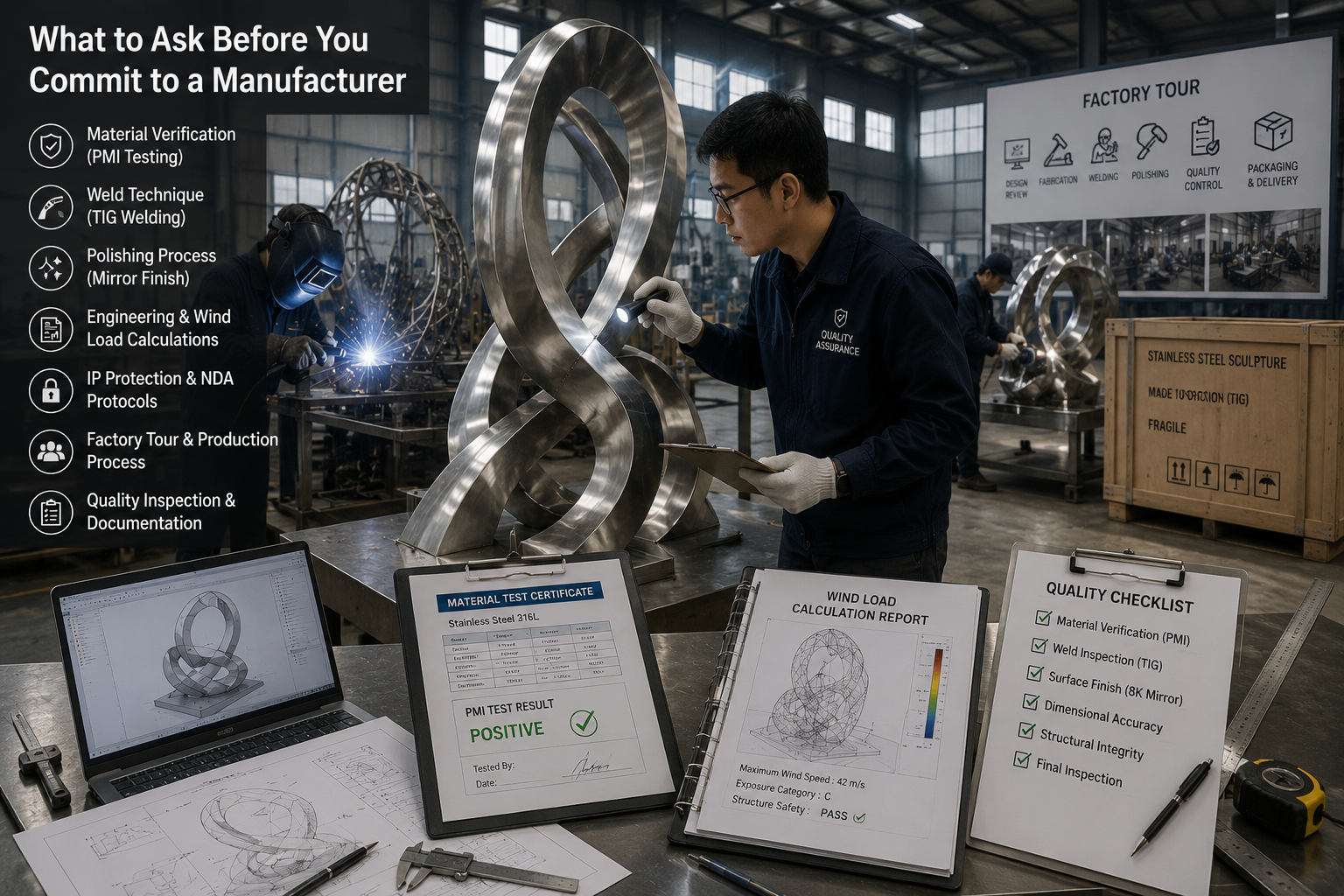
Evaluating stainless steel sculpture manufacturers from a distance is genuinely difficult. The portfolio looks similar across suppliers at different quality levels. Here’s what separates credible fabricators from the rest.
- Request PMI test documentation. Ask for positive results from the material identification test and a material test certificate for the specific alloy grade you’ve specified. If a factory can’t produce the material, you cannot verify that you are receiving 316L instead of 201, which is a significant risk for any permanent outdoor installation.
- Ask specifically about weld technique. Full-penetration TIG welding is the correct specification for structurally sound, visually seamless joints in sculptural work. If the answer is ambiguous or defaults to spot welding, that’s relevant information about the finished surface quality you’ll receive.
- Ask about the polishing process for mirror finishes. An 8K mirror finish on complex curves requires a multi-stage abrasive protocol, and the quality of hand-forming before polishing begins is equally important. Ask how many stages their polishing process involves and how they handle surface preparation on curved panels.
- Please provide the wind load calculations and structural drawings. Any factory that handles significant outdoor sculpture should be able to provide site-specific structural engineering, not generic wind resistance claims. Ask what the calculation basis is and whether third-party verification is available.
- Ask about IP and production protocols. 3D design files, mold tooling (where applicable), and production overruns are IP assets. Confirm what NDAs and file security protocols are in place before transferring design files.
- Request a live factory tour. Video walk-throughs of the actual production floor, hand-forging, TIG welding, polishing, and QC tell you more about manufacturing capability than any catalog. Any serious factory should be willing to show you.
At PEGASUS, we offer live video factory tours as a standard part of the B2B evaluation process. You see the actual workshop floor, the fabrication process, and the QC stages in real time.
Working with PEGASUS on Custom Stainless Steel Sculpture
PEGASUS is a vertically integrated stainless steel sculpture manufacturer located in Jiangyan District, Taizhou, Jiangsu, China. We manage the whole fabrication process from initial design review and 3D digital prototype through structural engineering, hand forging, TIG welding, surface finishing, QC, and overseas shipping with factory-direct pricing and no intermediate markup.
Our standard material specification for outdoor work is 304 alloy for inland installations and 316L for any project within proximity of coastal or industrial environments. PMI testing is performed on every incoming raw material batch, and we provide MTC documentation as standard. We welcome third-party SGS/TUV inspection at any stage of production.
A recent project of this process in action: for artist Sarah Chen’s Lunar Tide collection along the Qiantang Riverfront in Hangzhou, our team performed multiple rounds of manual putty leveling and precision spray-coating to meet her exacting standards for light and shadow reflection, resulting in a matte white and high-gloss metallic gold finish across three large-scale metal pieces.
Our stainless steel capability covers figurative and anatomical work, abstract and geometric sculpture, hollow and LED-integrated pieces, sculptural water features, kinetic balance installations, and large-format 3D signage. We also produce work in bronze, fiberglass/FRP, resin, and marble, and we’ll tell you honestly if one of those materials better serves your brief.
Every project comes with a 3-year structural warranty, a complete installation blueprint package, and ongoing engineering support during installation.
Frequently Asked Questions
What is the difference between 304 and 316L outdoor stainless steel sculpture?
304 is the industry standard for outdoor public art in typical inland areas and delivers dependable long-term corrosion resistance in urban and suburban climates. 316L has added molybdenum to withstand pitting corrosion in chloride-rich conditions, including coastal locations, places with high road salt use, and industrial areas. You don’t see a visual difference. You will notice a performance difference when 316L is used in an incorrect environment. We need 316L for coastal projects, whatever the customers want, since the expense of fixing pitting corrosion on a permanent installation is far more than the modest alloy premium.
The internal armature is also stainless steel?
Yes. All interior structural parts are made of 304 stainless steel or heavy-duty hot-dip galvanized steel. This is precisely to avoid galvanic corrosion. Using carbon steel inside generates a dissimilar-metal contact point that may corrode from the inside out, a failure mode that isn’t observable until it’s progressed. All of our outdoor sculpture armatures are hot-dip galvanized for further corrosion protection for the inside structure.
How do you handle wind load engineering for large outdoor pieces?
Our engineering team calculates exact wind and seismic loads based on your installation site’s conditions before designing the internal armature. Our structural protocol is designed to achieve wind load resistance up to Level 12. We provide structural stability calculations for each significant outdoor installation, and we welcome third-party structural verification. Foundation load-bearing drawings and embedded iron frame specifications are delivered before the sculpture arrives on site.
What is your minimum order quantity for custom stainless steel sculpture?
Sculpture Stainless steel is typically one-off or very low volume, a single commissioned piece or a small series. Unlike resin or fiberglass, there’s no mold investment that requires volume to amortize. Each project is individually quoted based on design complexity, dimensions, alloy specification, and finish. Contact us with your concept and site conditions for a project-specific assessment.
How do you ship oversized stainless steel sculptures internationally?
Large-format pieces are designed with modular assembly from the outset, with components clearly numbered for correct sequencing. We use custom steel-frame crating engineered to the specific geometry of each piece, with internal EPE foam and bubble wrap protection for polished surfaces. Installation blueprint packages travel with every shipment, so your local contractor has the documentation they need. For landmark installations, we offer remote engineering guidance during installation or, for major projects, on-site technical supervision.
Ready to Commission Your Installation?
Stainless steel sculpture done right is a multi-decade asset, the kind of installation that defines a space and holds its quality without significant intervention. Done poorly, it’s an expensive problem that shows up in years two and three, not at handover.
If you have a project in concept, a brief, a site, and a scale, talk to our engineering team. We’ll provide you with a straight assessment of what the specification should be for your environment, what the fabrication will involve, and what a realistic timeline looks like. No slides, no pitch, just the specifics of your project.
View our stainless steel product range →