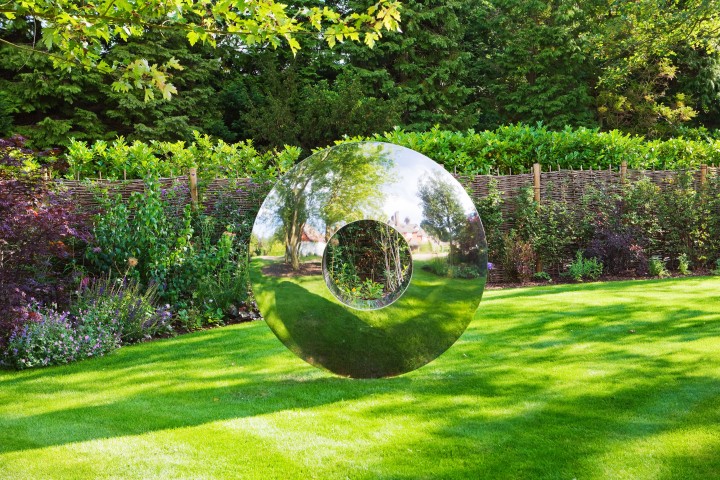
Walk through the redeveloped waterfront in Singapore or the plaza outside any major hotel in Dubai, and you’ll notice something the project brief probably never mentioned explicitly: the sculpture is doing climate work. Not metaphorically. The surface finish on that outdoor stainless steel sculpture is actively interacting with solar radiation.
Whether the spec team thought about that or not, the choice they made is affecting how people experience the space on a 38-degree afternoon. This is the missing conversation in most commissioning processes, and we’ve been having it with architects and urban planners for a long time.
Why Finish Specification Starts With the Site, Not the Catalog
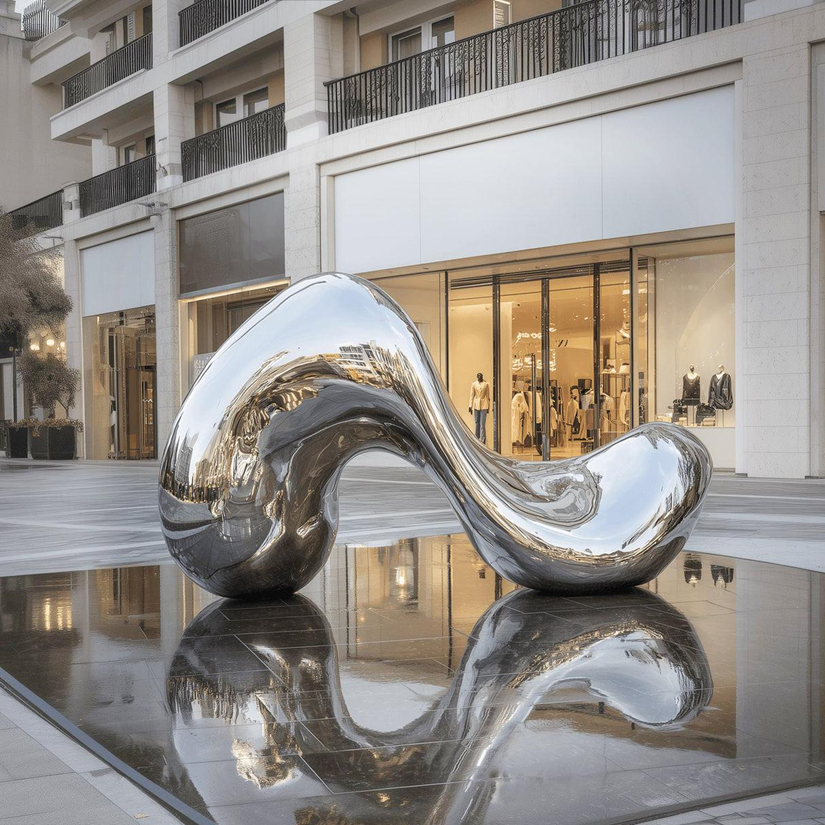
The instinct on most luxury commissions is to lead with aesthetics; mirror polish reads premium, brushed reads contemporary, and the conversation moves on. What this approach overlooks is that these categories involve more than just visual aspects. They’re thermal ones.
A mirror-polished stainless steel sculpture of Grit 800+ has a surface roughness below Ra 0.05 μm. At that degree of polish, the surface is more like a precision optical instrument than a material. Instead of converting sunlight to heat, it reflects it, which in a south-facing city plaza can mean reflecting more than 60% of direct sunlight away from the area.
For any project where surrounding hardscaping, glass facades, and low-albedo paving are already compounding urban heat island effects, that’s not a finishing detail, it’s part of the environmental performance brief.
Matte brushed finishes work differently, and understanding the difference matters. Our directional satin process runs at a controlled 180-grit pass, producing a diffuse surface that scatters rather than redirects light. The tradeoff is thermal: brushed sculpture stainless steel absorbs more radiant heat and releases it more slowly.
In a shaded courtyard, a north-facing garden installation, or an interior-adjacent atrium space, that’s entirely appropriate. In an open plaza in Abu Dhabi or Chennai, it’s a specification that will make the space measurably less comfortable for the people standing near it. The practical takeaway is that finish selection for any serious outdoor stainless steel sculpture commission should begin with a solar orientation study and a site thermal profile, not a mood board.
What the Alloy Choice Decides Before the Finish Does
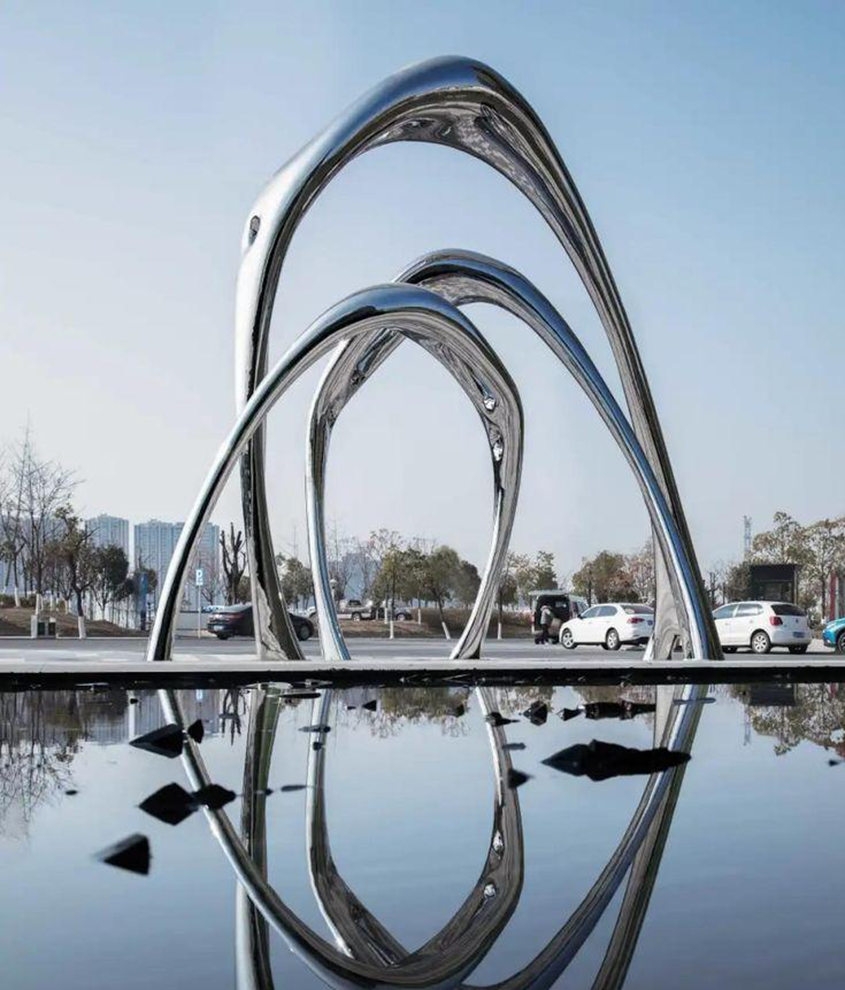
Surface treatment determines how a stainless steel sculpture interacts with solar energy. Alloy grade determines whether it’s still doing that in fifteen years.
For places near the coast, in humid resort areas, or within two kilometers of saltwater, 316L marine-grade is the only suitable choice. The molybdenum in 316L helps prevent chloride-induced pitting, which is when a shiny surface becomes dull and spotted within a few years of being installed.
We provide PMI material testing and a formal Material Test Certificate on every commission because alloy substitution is a known risk in large-scale procurement, and it’s a risk that surfaces long after the project has closed.
Scale, Permanence, and What Cities Are Actually Asking For
The better municipal and commercial briefs we receive now read less like art commissions and more like infrastructure procurement documents. Specifiers want to know the alloy grade, the wind load rating, the maintenance schedule, and the logistics plan and they want answers before the contract is signed, not after.
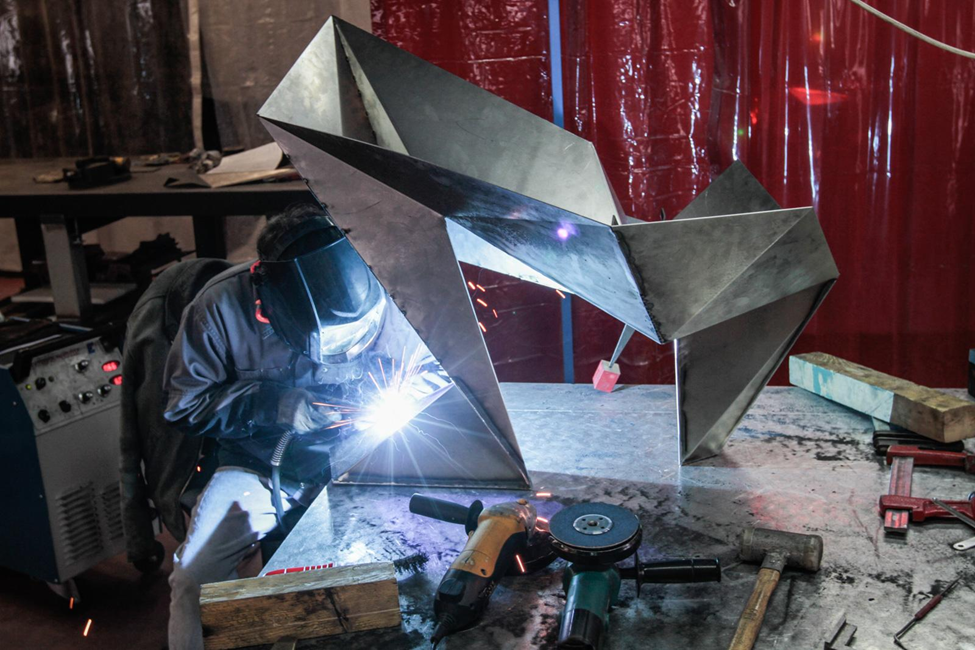
We’re built for exactly that kind of client. As a direct stainless steel sculpture manufacturer, Pegasus works with SS304 and marine-grade 316L, selected based on your site conditions and confirmed through PMI material testing on every raw material batch. Our structural team calculates wind and seismic loads specific to your location and designs the internal armature accordingly, hot-dip galvanised steel, engineered for 20+ years of outdoor performance.
From the first design feasibility review through to our reinforced export packaging and on-site installation support, the process is built to hold up under B2B scrutiny. Because a landmark piece that fails structurally, or arrives damaged, or rusts from the inside out, isn’t just a quality problem, it’s a procurement liability nobody wants.
Final Thoughts
As stainless steel sculpture manufacturers, the projects we’re proudest of are the ones where the finish decision was made for a reason where someone understood that what the surface does physically is inseparable from what the sculpture does architecturally. That’s the standard worth holding.
If you’re at the stage where material and finish specifications are still open, that’s the right time to talk. Share your site conditions and project brief with our team, and we’ll come back with a finish and alloy recommendation grounded in the actual thermal and structural demands of your installation.