Understanding the Categories, Materials, Styles, and Applications of Modern Fiberglass Sculptures
In recent years, Industrial Design and contemporary Sculpture have increasingly merged within commercial spaces, public art projects, luxury interiors, and IP-based installations. Among all modern sculpture materials, fiberglass reinforced plastic (FRP) has become one of the most widely used and commercially valuable solutions.
From giant shopping mall installations to luxury hotel decor, fiberglass sculptures are now deeply integrated into branding, architecture, entertainment, and spatial design.
However, many people still misunderstand fiberglass sculptures as merely “cartoon statues” or “mall decorations.” In reality, the fiberglass sculpture industry contains a highly specialized and detailed classification system involving materials, fabrication methods, artistic styles, and application scenarios.
This article provides a professional and SEO-friendly overview of the major types of fiberglass sculptures, their classifications, manufacturing techniques, and industry trends.
What Is a Fiberglass Sculpture?
A fiberglass sculpture, also known as an FRP sculpture (Fiber Reinforced Plastic Sculpture), is a composite sculpture made from:
- Resin as the base matrix
- Glass fiber reinforcement
- Internal steel structures for support
- Automotive-grade surface finishing
Compared to traditional materials such as bronze, stone, or wood, fiberglass offers several advantages:
| Feature | Fiberglass Sculpture | Bronze Sculpture | Stone Sculpture |
|---|---|---|---|
| Weight | Lightweight | Heavy | Very Heavy |
| Customization | Excellent | Moderate | Limited |
| Production Speed | Fast | Slow | Slow |
| Surface Finish | Highly Versatile | Metallic Only | Natural Texture |
| Cost Efficiency | High | Low | Medium |
| Mass Production | Easy | Difficult | Difficult |
Main Types of Fiberglass Sculptures
Fiberglass sculptures can be classified into several major categories based on their application, artistic style, manufacturing process, and surface finishing techniques. Each category serves different commercial, artistic, and architectural purposes.
Understanding these classifications is important for designers, developers, collectors, and businesses looking to commission custom fiberglass sculptures for commercial or decorative use.
Commercial Decorative Fiberglass Sculptures
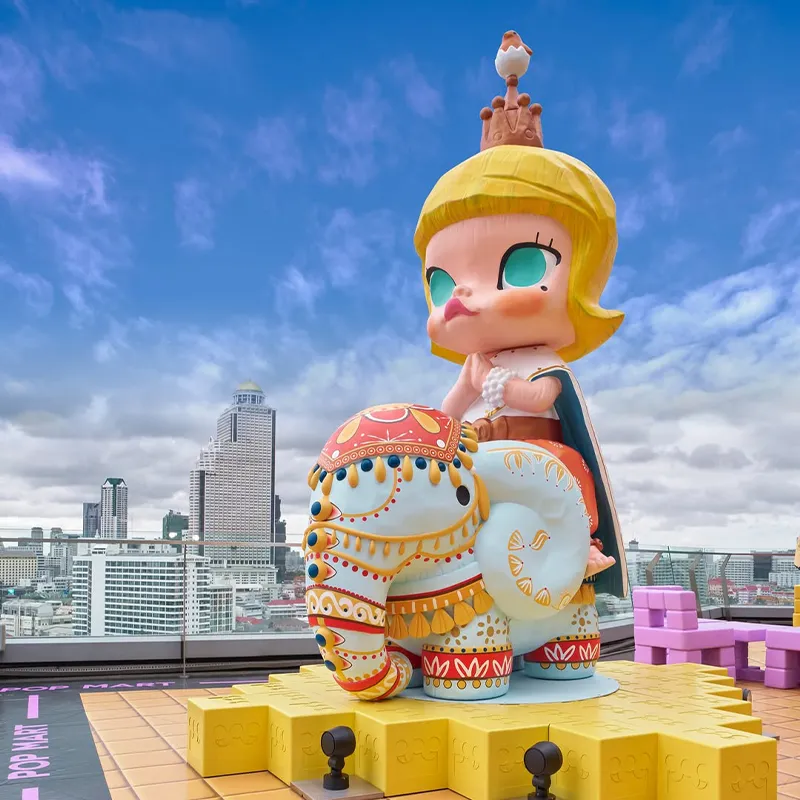
Commercial decorative fiberglass sculptures are among the most common types seen in modern retail environments. These sculptures are primarily designed for shopping malls, luxury retail stores, brand pop-up events, exhibition halls, and experiential commercial spaces.
Unlike traditional sculptures that focus purely on artistic value, commercial fiberglass sculptures are created with marketing and visual engagement in mind. Their primary goal is to attract customer attention, enhance brand identity, and create memorable visual experiences that encourage social media sharing.
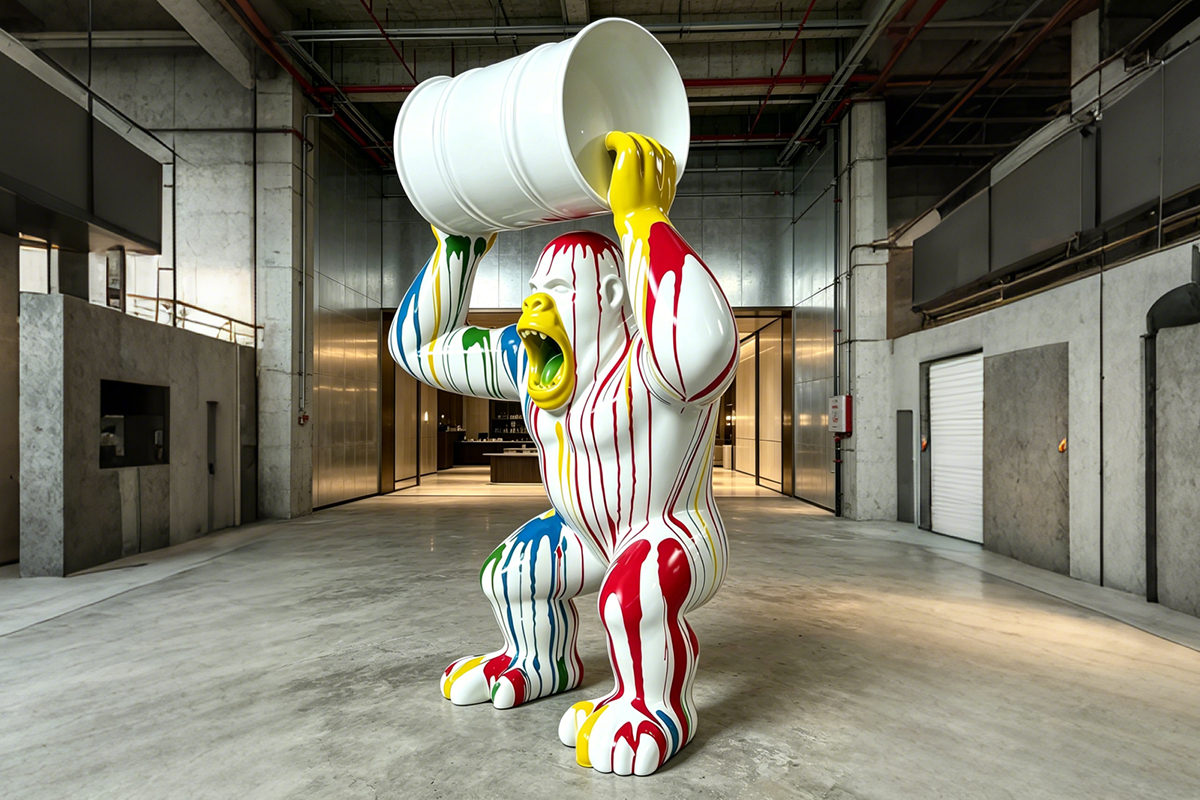
Large-scale glossy fiberglass sculptures are especially popular in high-traffic commercial spaces because they combine vibrant colors, reflective surfaces, and oversized forms that naturally become photo-taking hotspots.
Common examples include giant mascot sculptures, cartoon character statues, branded IP installations, and artistic display props used in retail campaigns and themed exhibitions.
Because fiberglass is lightweight yet structurally strong, it allows designers to create massive decorative installations without the excessive weight and cost associated with bronze or stone sculptures.
Public Art and Urban Landscape Fiberglass Sculptures
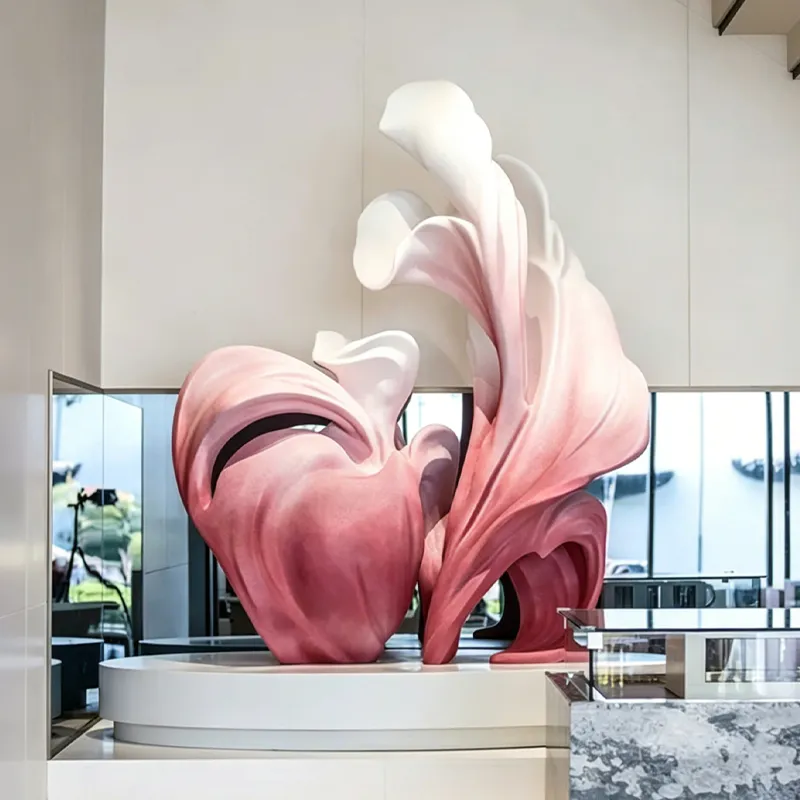
Public art fiberglass sculptures play a major role in modern urban beautification and architectural landscape design. These sculptures are commonly installed in public squares, parks, tourist attractions, municipal projects, and cultural landmarks.
Compared with commercial decorative sculptures, urban landscape sculptures prioritize durability, environmental resistance, and cultural symbolism. They are often designed to withstand long-term outdoor exposure while integrating harmoniously with surrounding architecture and public spaces.
Outdoor fiberglass sculptures typically include galvanized steel internal structures, UV-resistant automotive paint systems, anti-corrosion coatings, and engineered reinforcement for wind resistance.
One of the key advantages of fiberglass in public art projects is its ability to achieve large-scale artistic forms while maintaining manageable transportation and installation costs.
As cities increasingly invest in cultural tourism and public space development, fiberglass landscape sculptures continue to grow in popularity worldwide.
IP Character Fiberglass Sculptures
IP character fiberglass sculptures have become one of the fastest-growing sectors in the modern sculpture industry. Driven by the rise of anime culture, designer toys, gaming communities, and collectible art markets, these sculptures are now widely used in commercial exhibitions, shopping centers, and promotional events.
These sculptures are typically based on anime characters, video game figures, brand mascots, original art toys, or entertainment-related intellectual properties.
The most critical aspect of IP sculpture production is restoration accuracy. Professional fiberglass sculpture manufacturers must carefully reproduce facial proportions, body structures, paint colors, and surface details to ensure the final product matches the original character design.
In recent years, oversized fiberglass collectible statues have become highly effective tools for attracting consumer attention and increasing social media exposure during exhibitions and brand campaigns.