Custom Abstract Sculptures for Architectural & Public Spaces
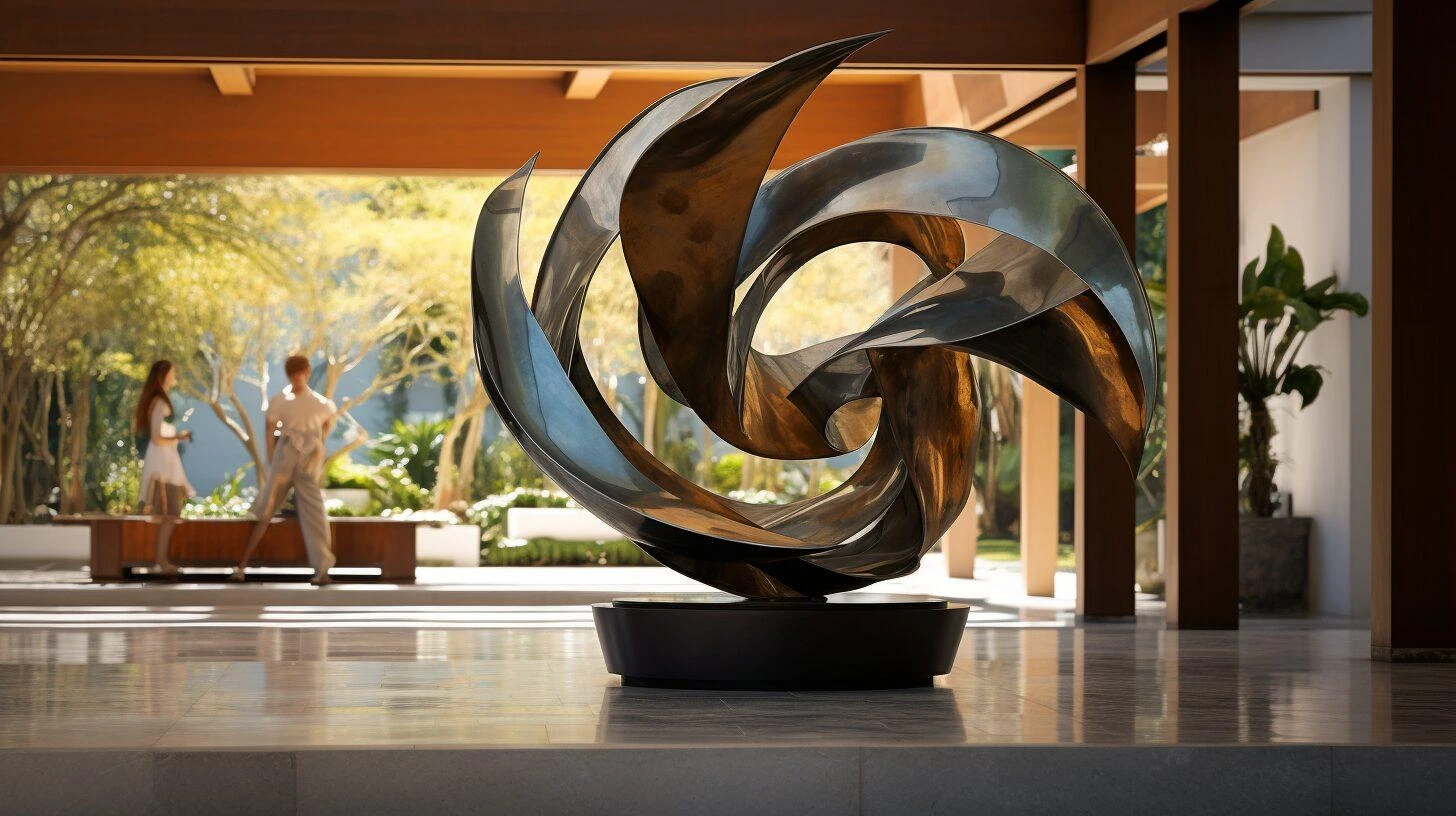
Pegasus creates custom abstract sculptures defined by form, proportion, negative space, movement and surface. For architects, developers, hospitality groups and public-art teams, each commission is developed so complex geometry can be translated accurately from concept into a full-scale sculpture while retaining its intended visual balance from every important viewing angle. From fluid stainless-steel forms and geometric compositions to bronze, stone and mixed-material installations, Pegasus supports 3D development, structural coordination, precision fabrication, welding, surface refinement, trial assembly, quality inspection, export packing and installation planning.
Why Abstract Sculptures Require Geometry-Specific Development
Abstract sculpture depends on relationships between solid form, void, curve, edge, proportion and surface. A concept that appears balanced in a small model or rendering can change significantly at architectural scale. Curves must remain continuous, openings must retain their intended proportions, structural support must stay visually discreet, and reflective surfaces must not reveal uncontrolled distortion or fabrication seams.
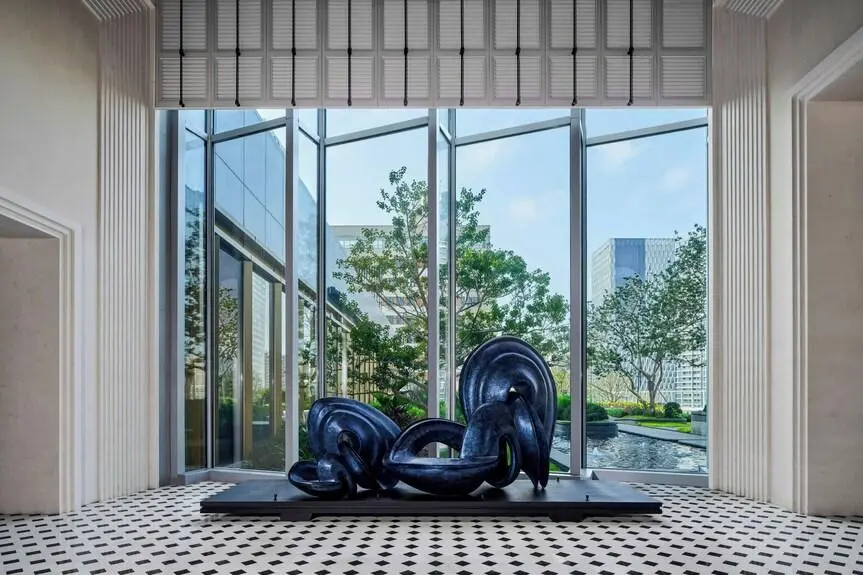
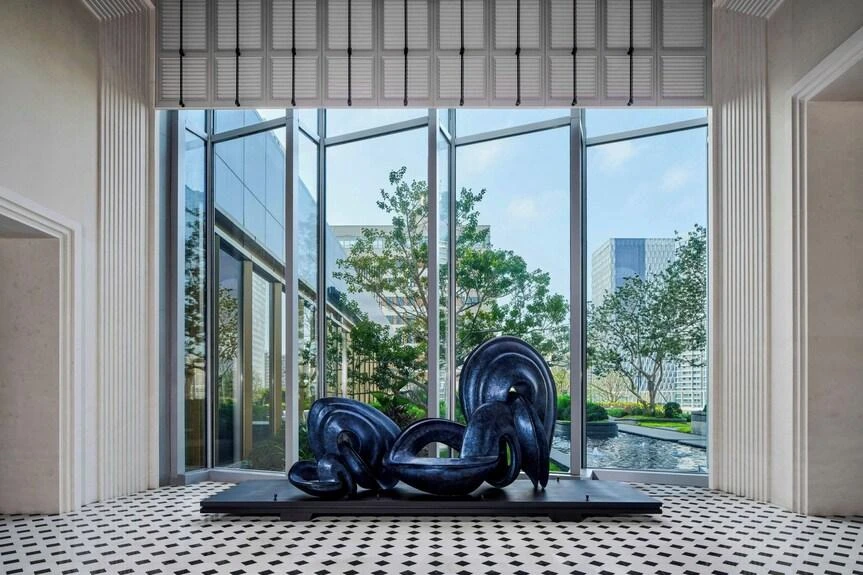
Curves, Voids & Negative Space: Openings, arches, flowing profiles and visual gaps are treated as part of the sculpture itself. Their proportion and alignment must remain controlled as the work is enlarged.
Multi-Angle Geometry: Abstract works are often read from several directions. Silhouette, balance and surface transitions are reviewed from the key approach and circulation viewpoints rather than from one front elevation.
Surface & Reflection Behaviour: Mirror, brushed, satin, patinated, stone and textured surfaces change how mass and geometry are perceived. Reflection can amplify even small inconsistencies in forming or polishing.
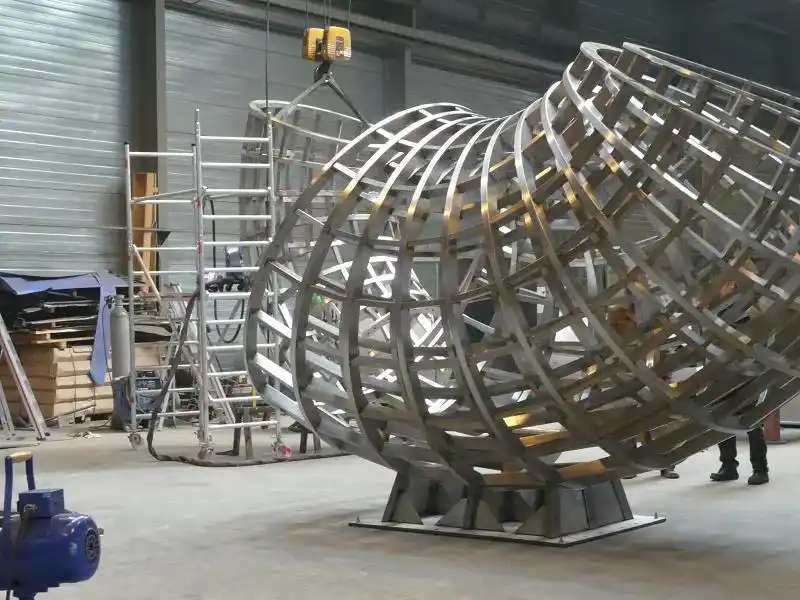
Fabrication Logic Within the Form: Complex curves, cantilevers and open geometries require internal support, controlled sectioning and connection planning that preserve the intended visual continuity.
By Abstract Form & Visual Language
Fluid & Organic Forms
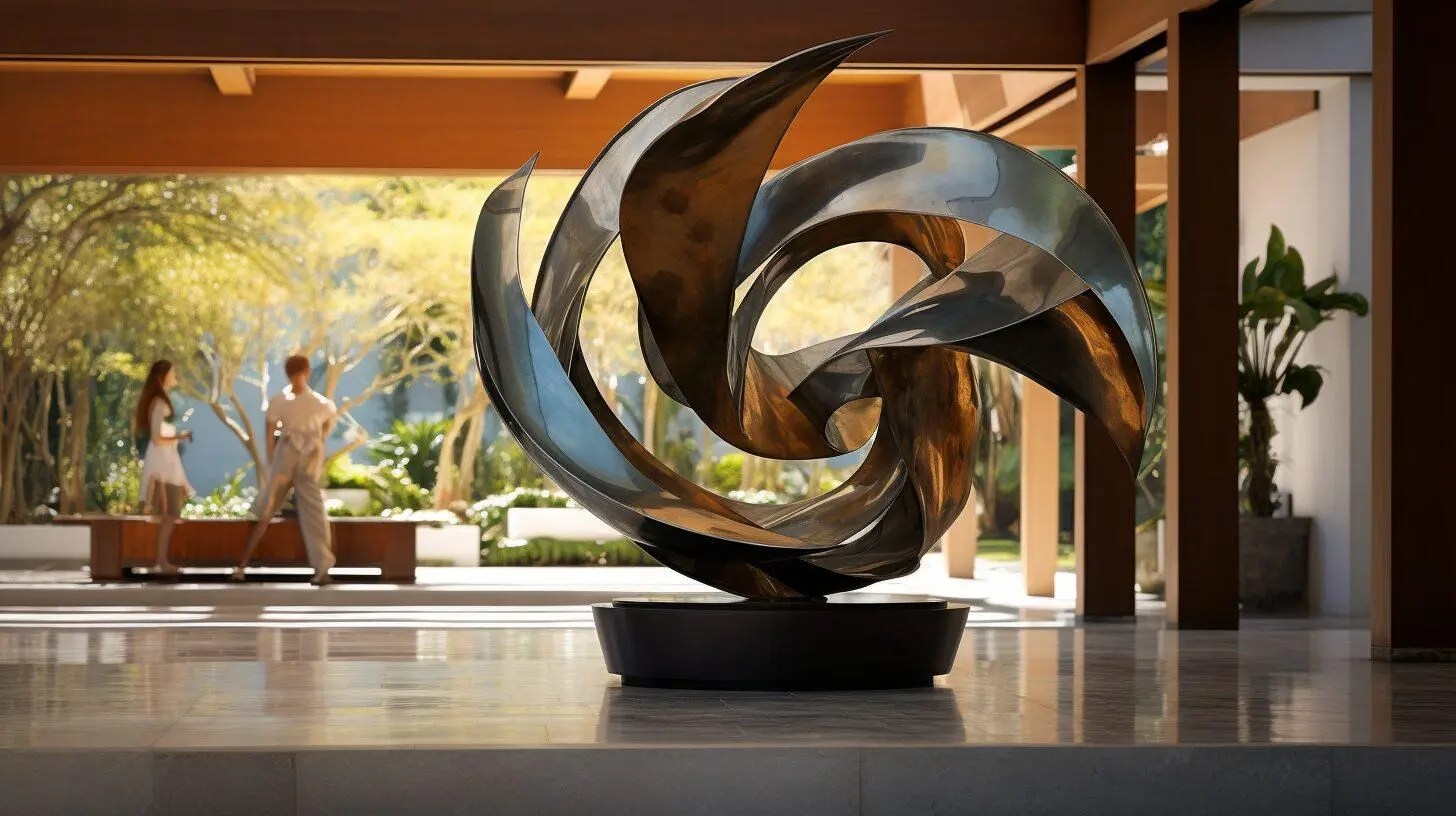
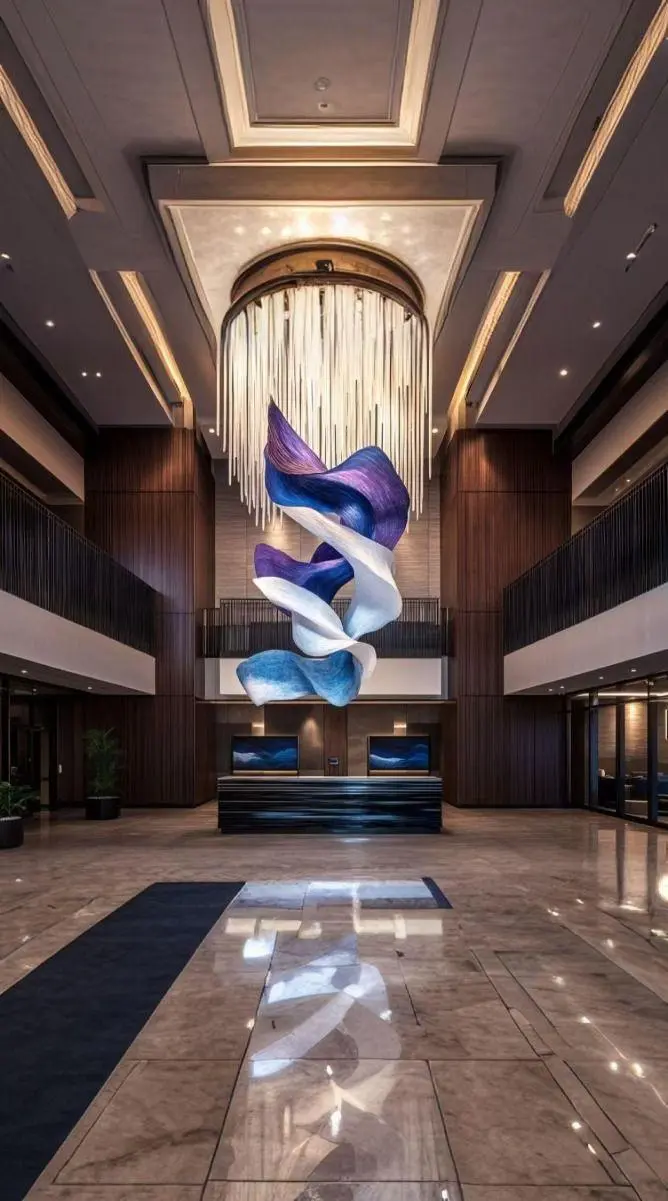
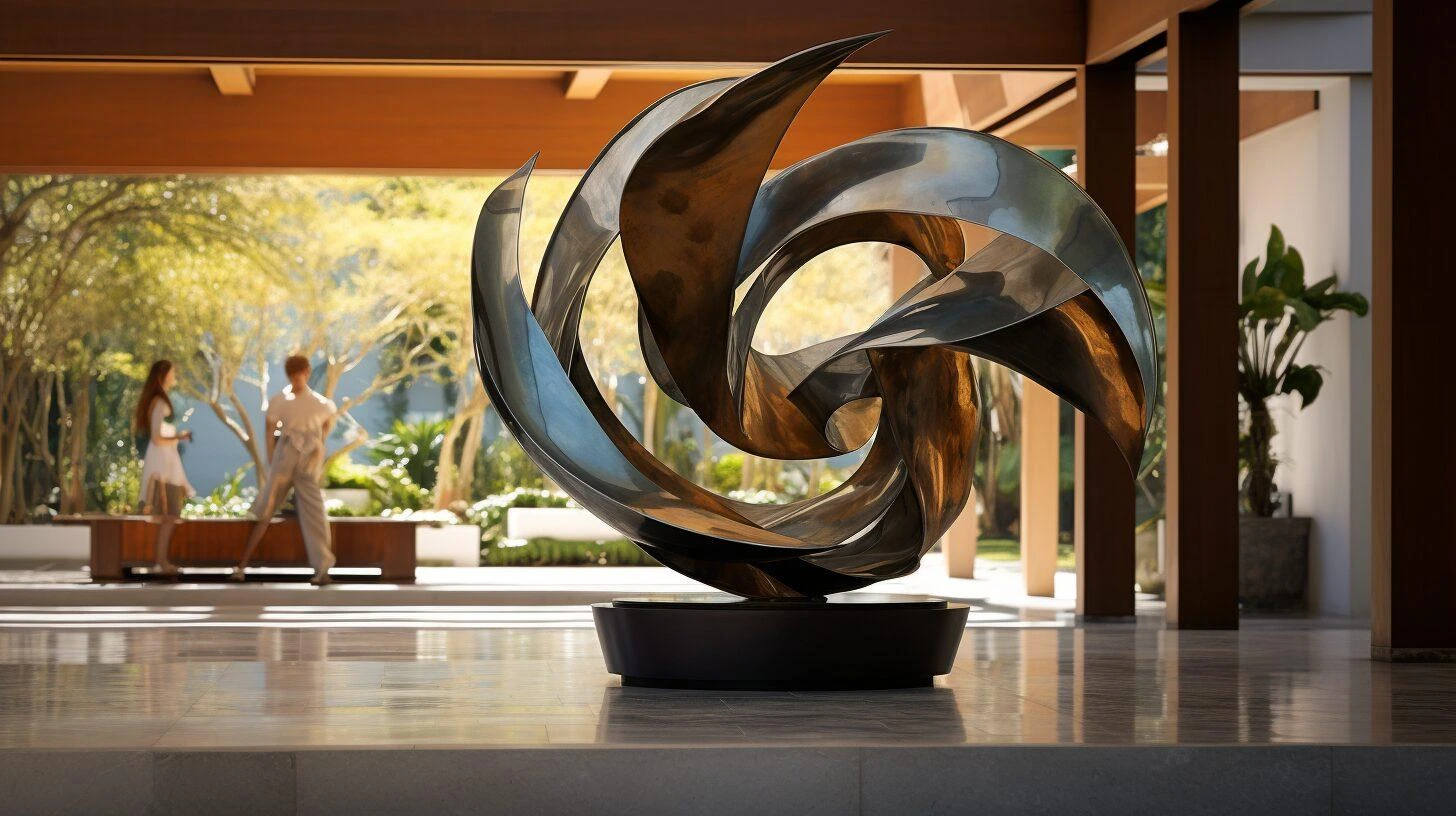
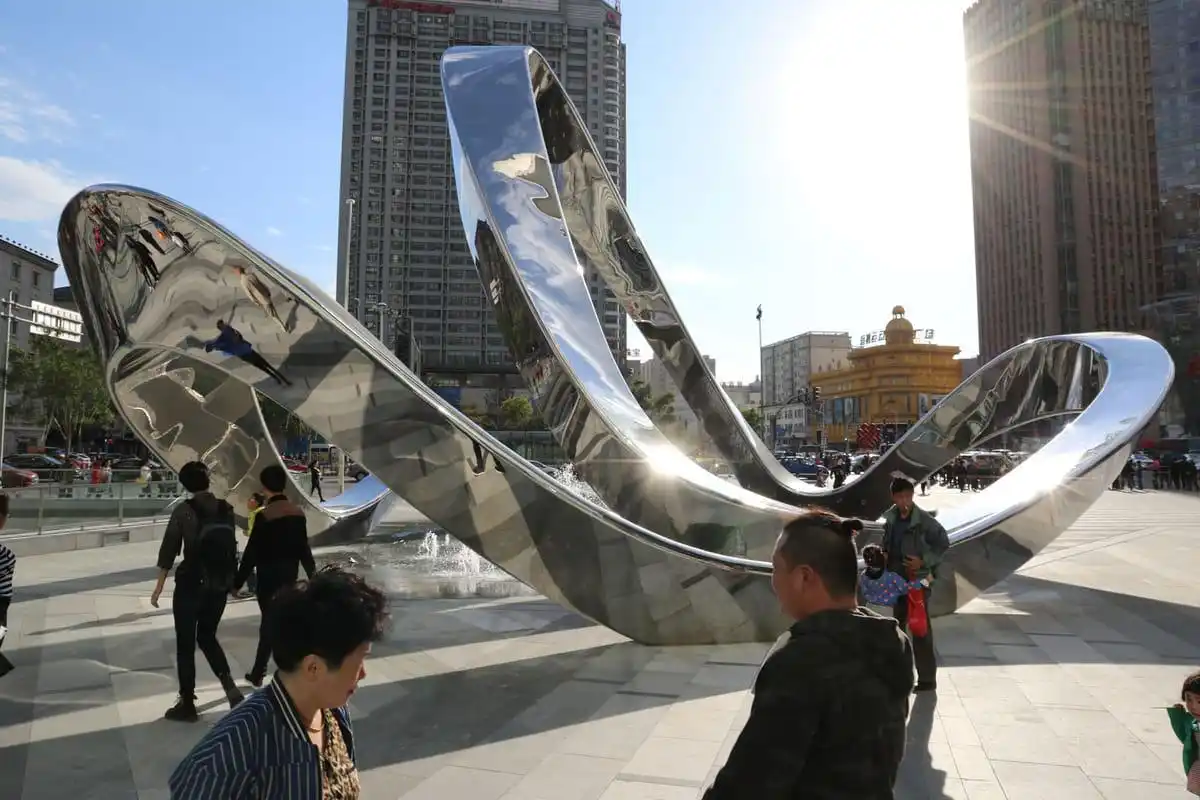
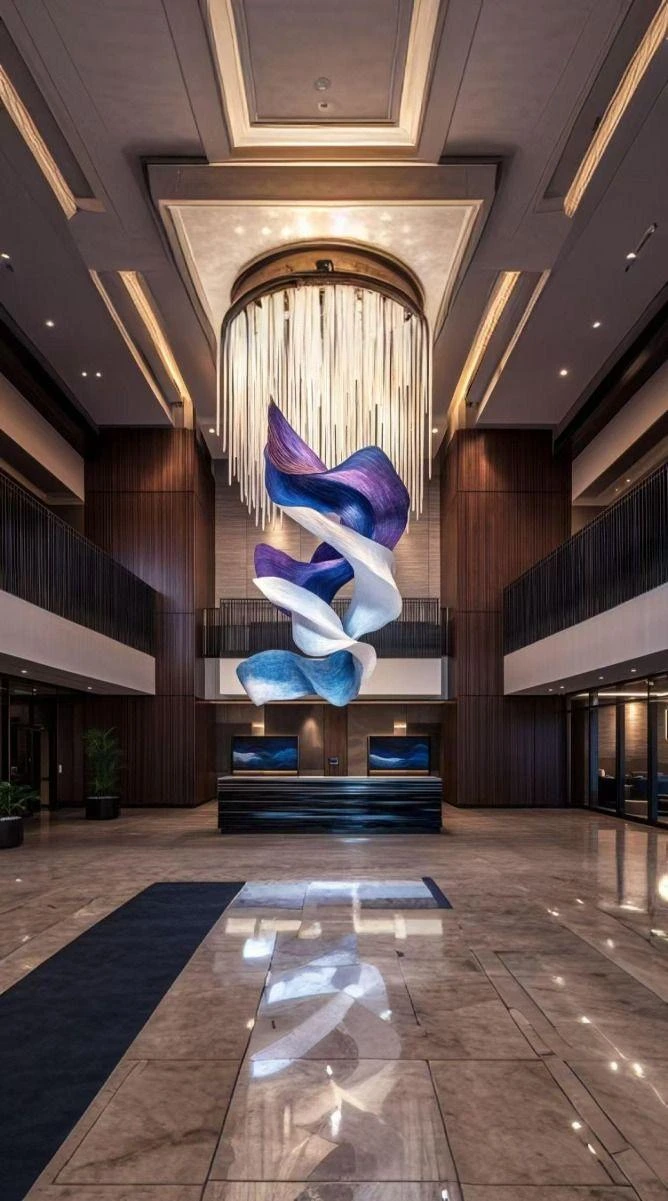
Continuous curves and flowing surfaces that suggest movement, water, wind or organic growth. Their success depends on smooth geometry, controlled transitions and consistent surface flow.
Geometric & Minimalist Forms
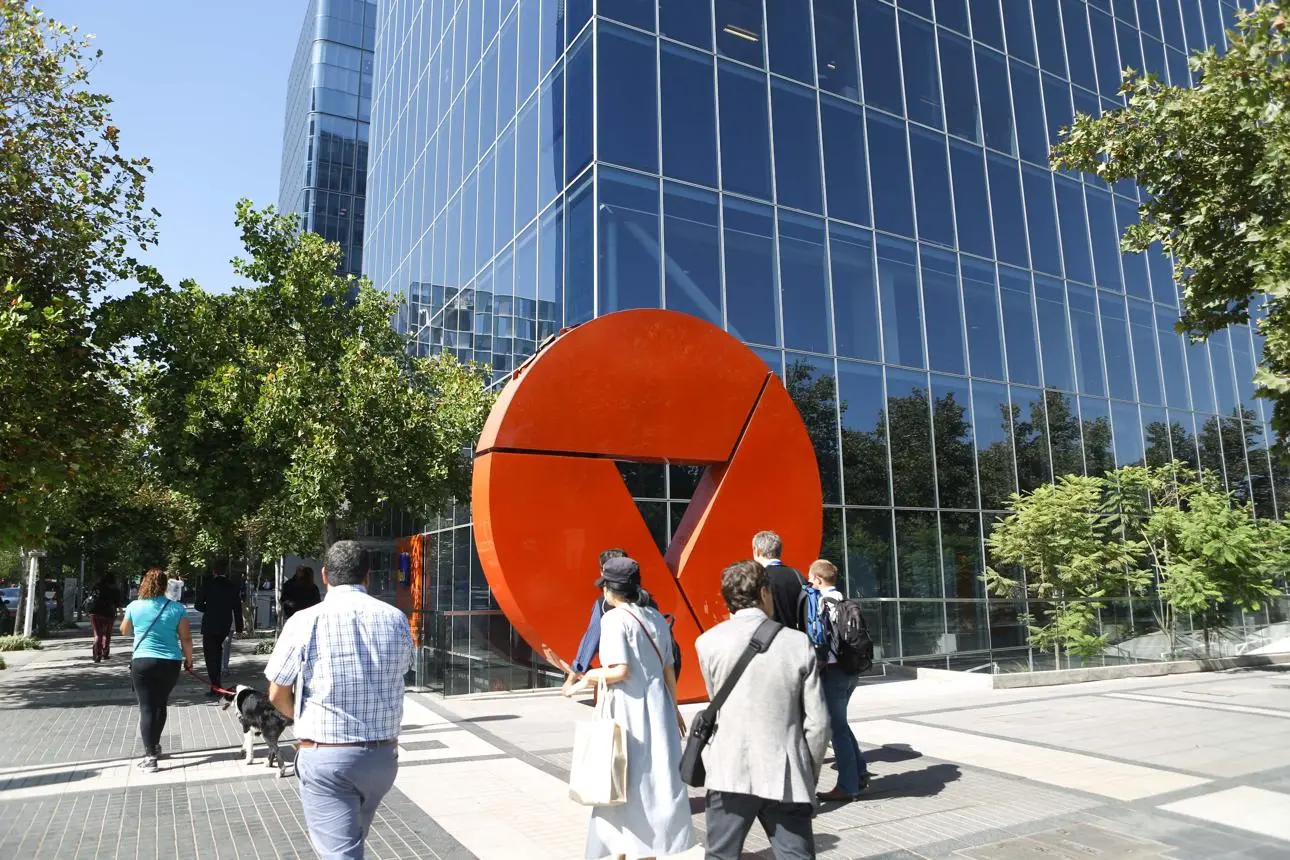
Planes, circles, rings, intersecting volumes and restrained compositions where dimensional accuracy, edge alignment and proportion create the visual impact.
Kinetic & Movement-Inspired Forms
Abstract works that suggest or incorporate movement through balance, changing orientation, wind response or shifting relationships between elements.
Open-Form & Spatial Sculptures
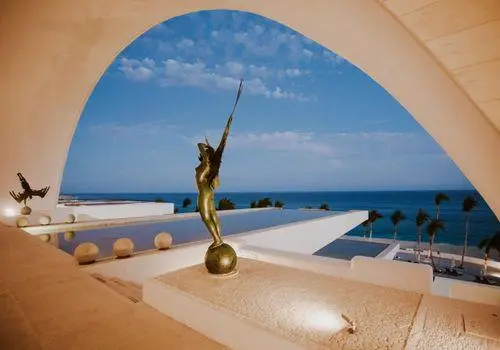
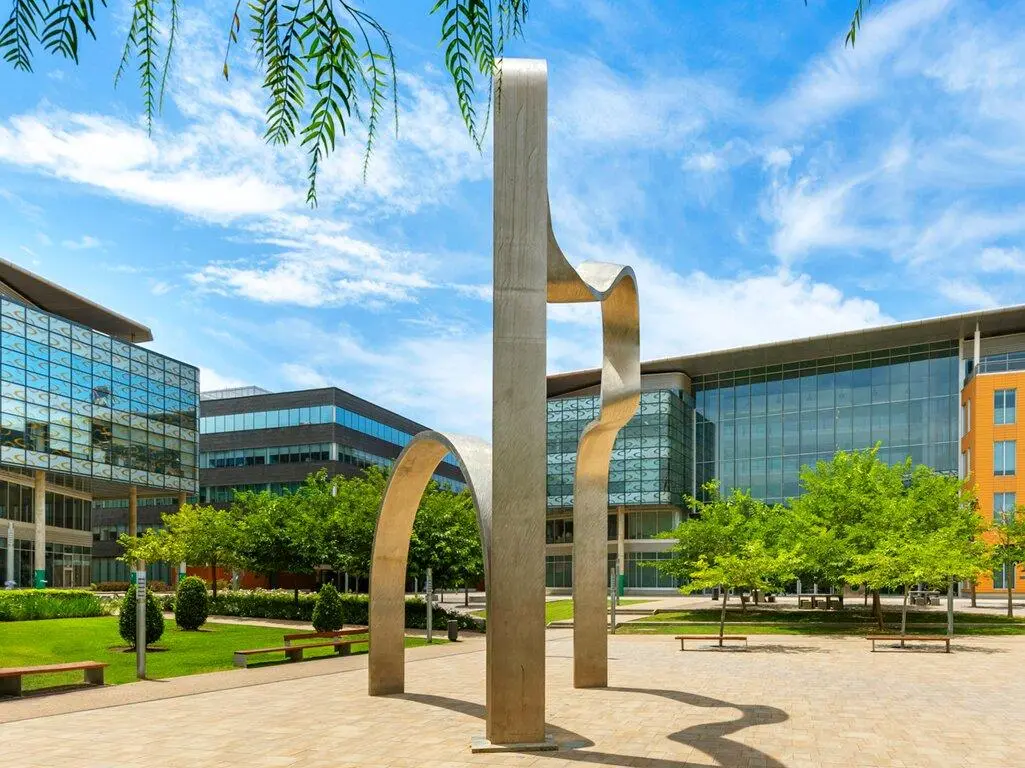
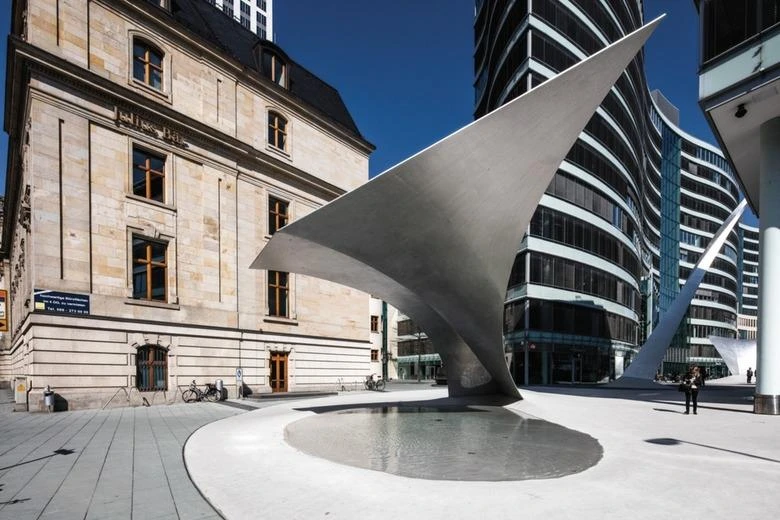
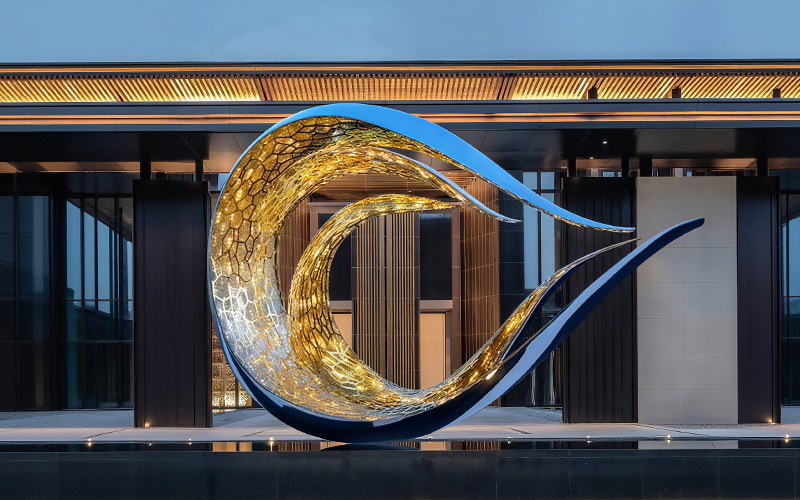
Forms built around openings, arches, frames and voids, allowing architecture, landscape and people to remain visible through the artwork. The negative space must be controlled as carefully as the solid material.
By Architectural Application
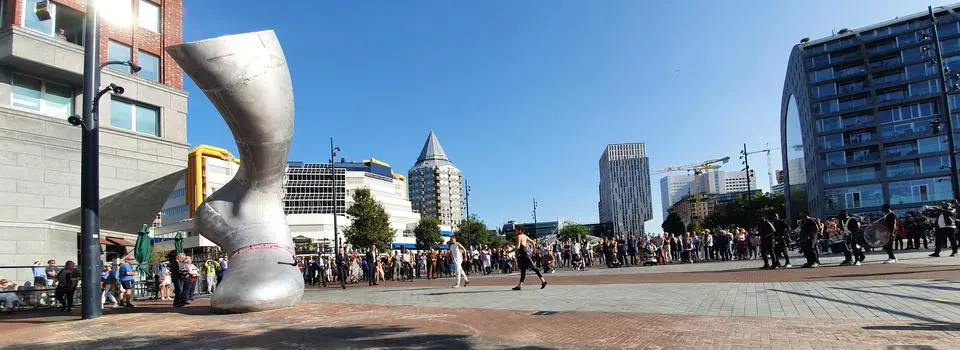
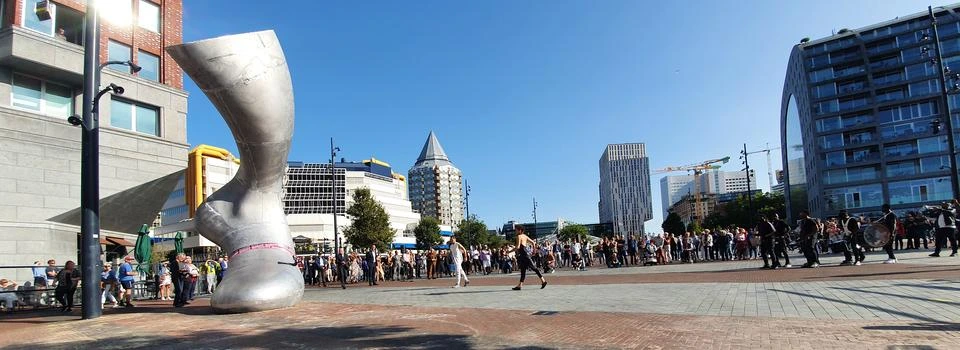
Civic Plazas & Public Landmarks
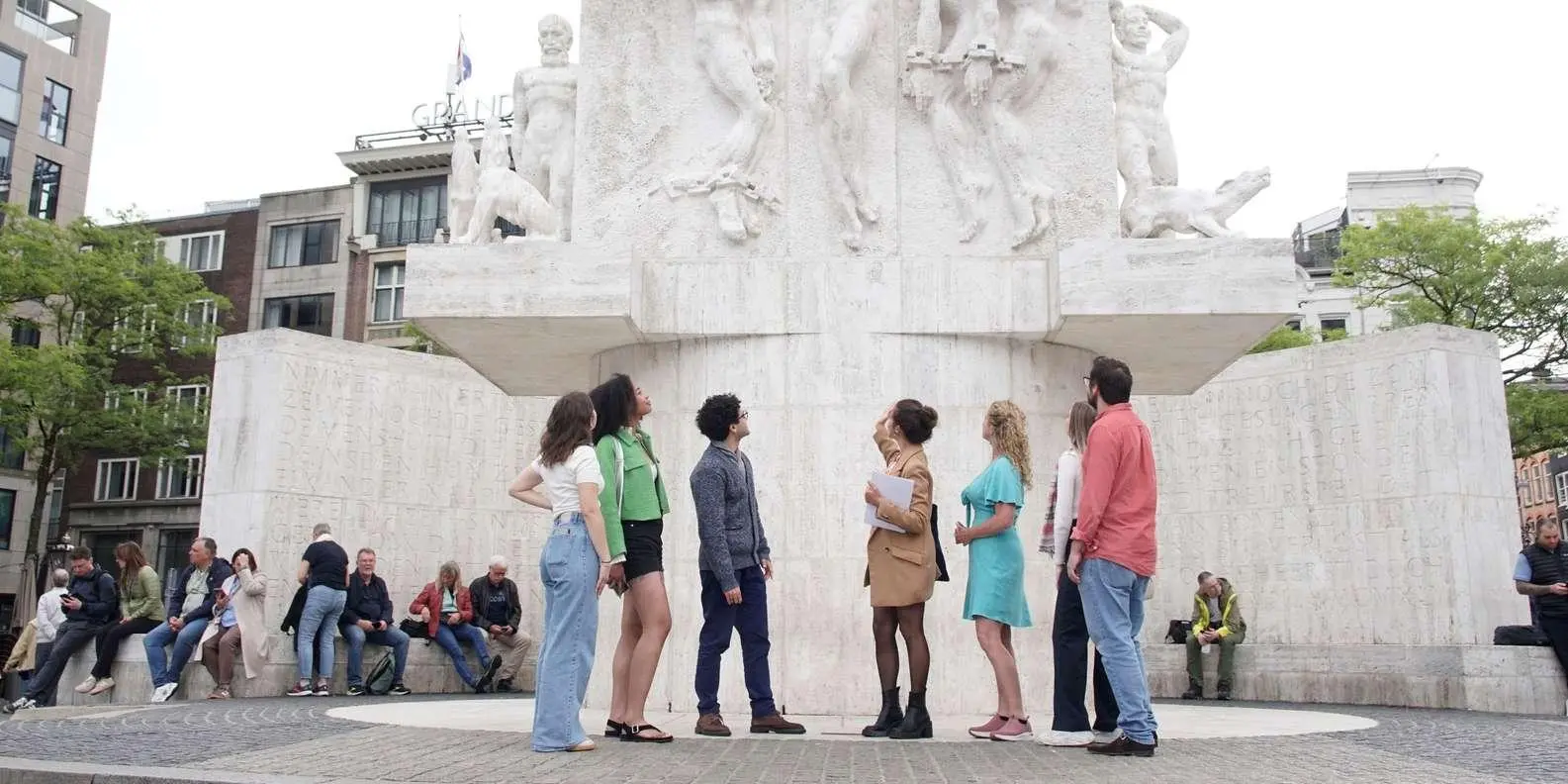
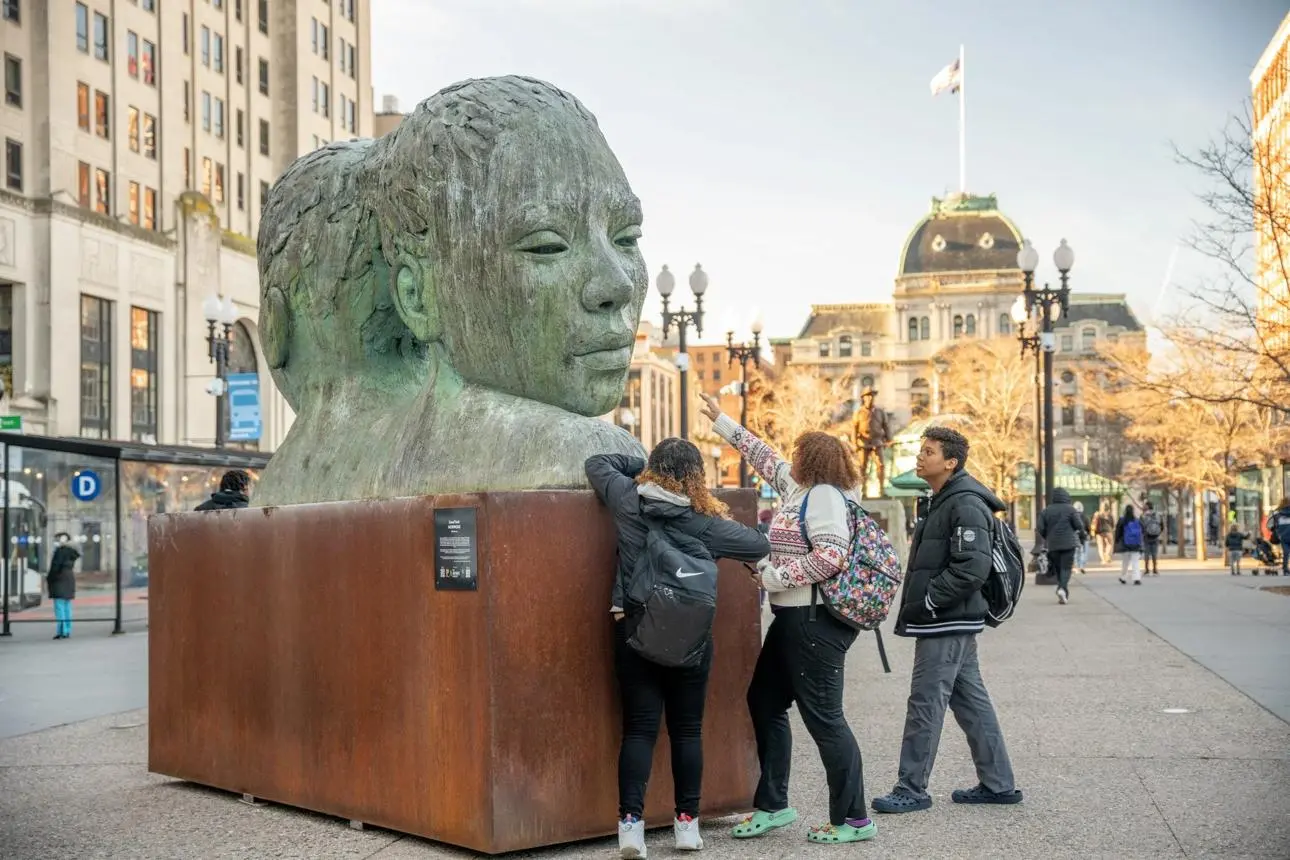
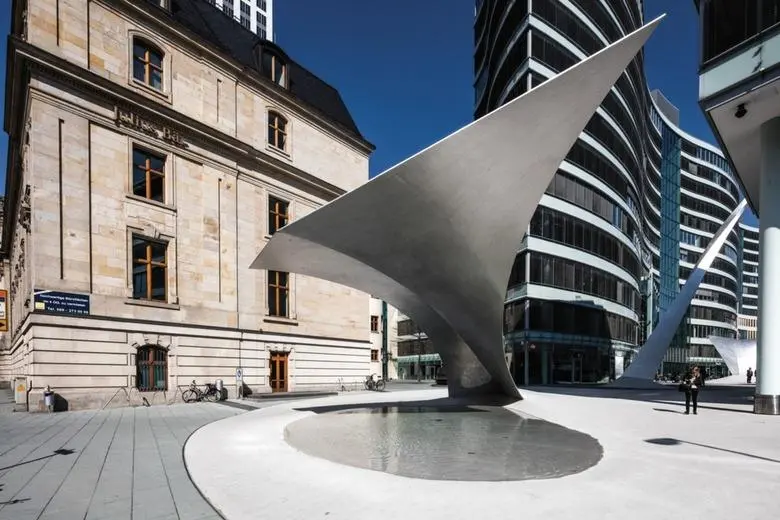
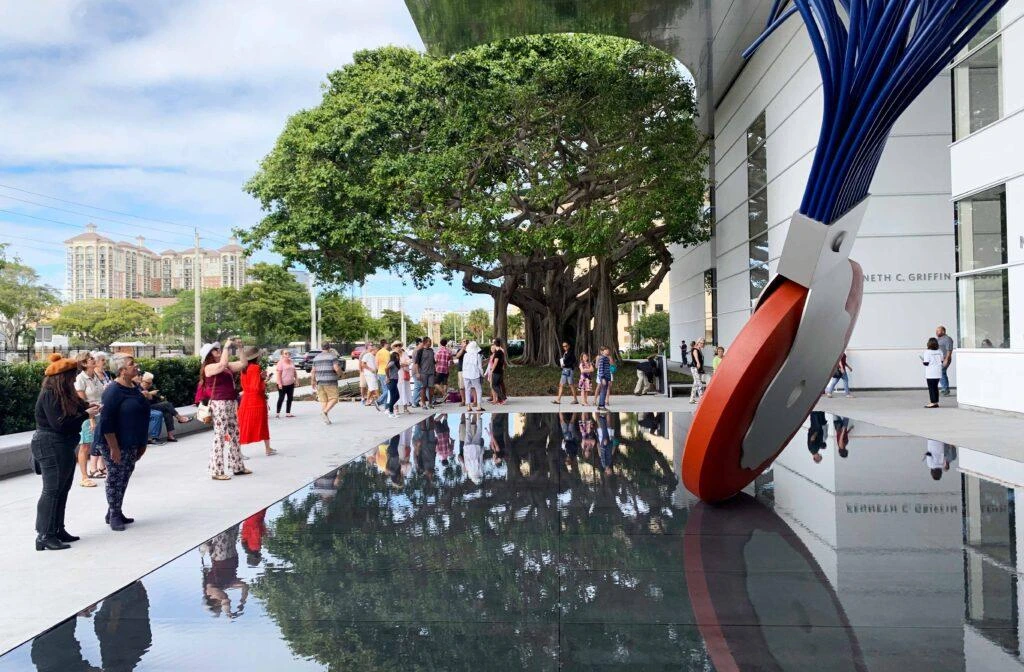
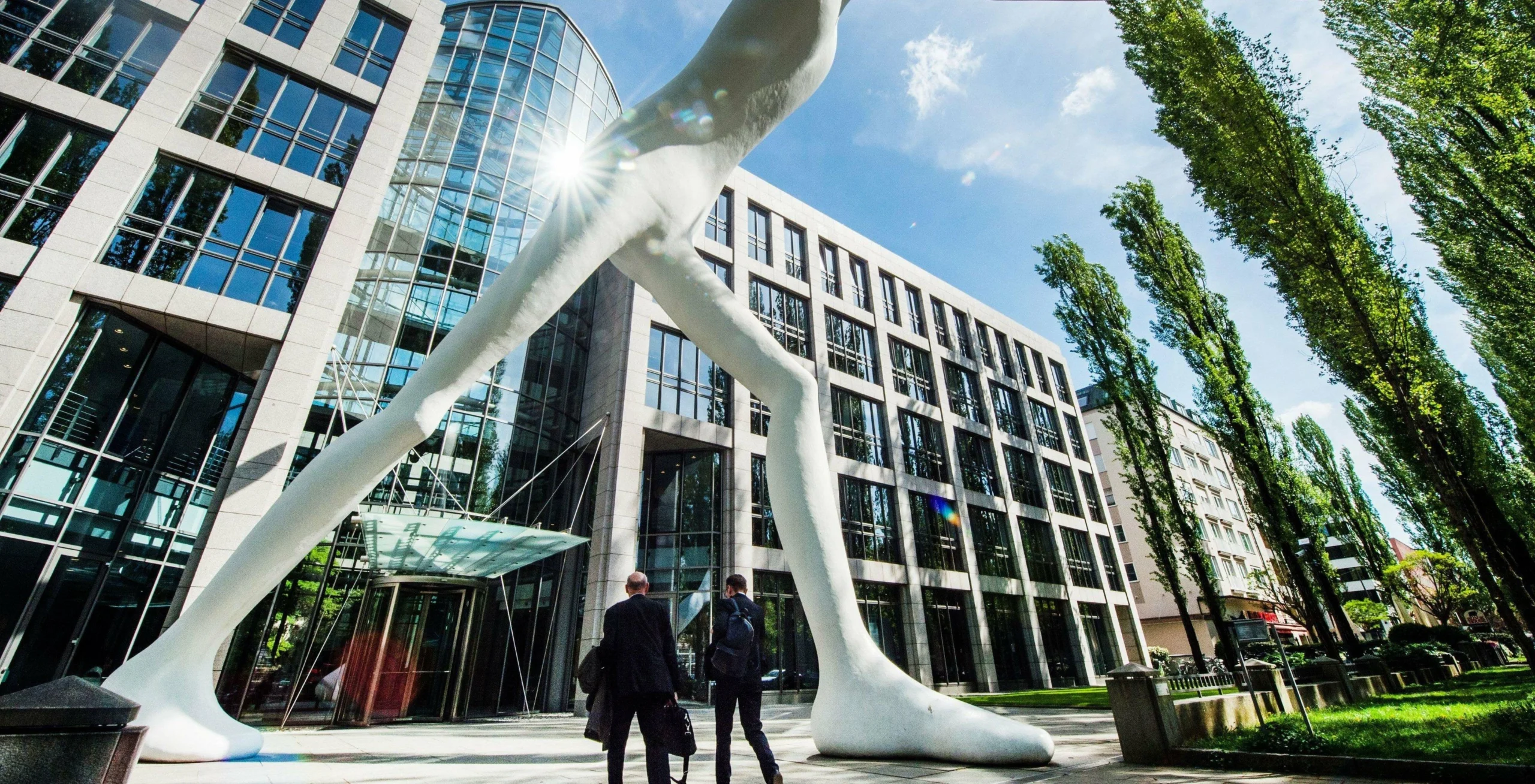
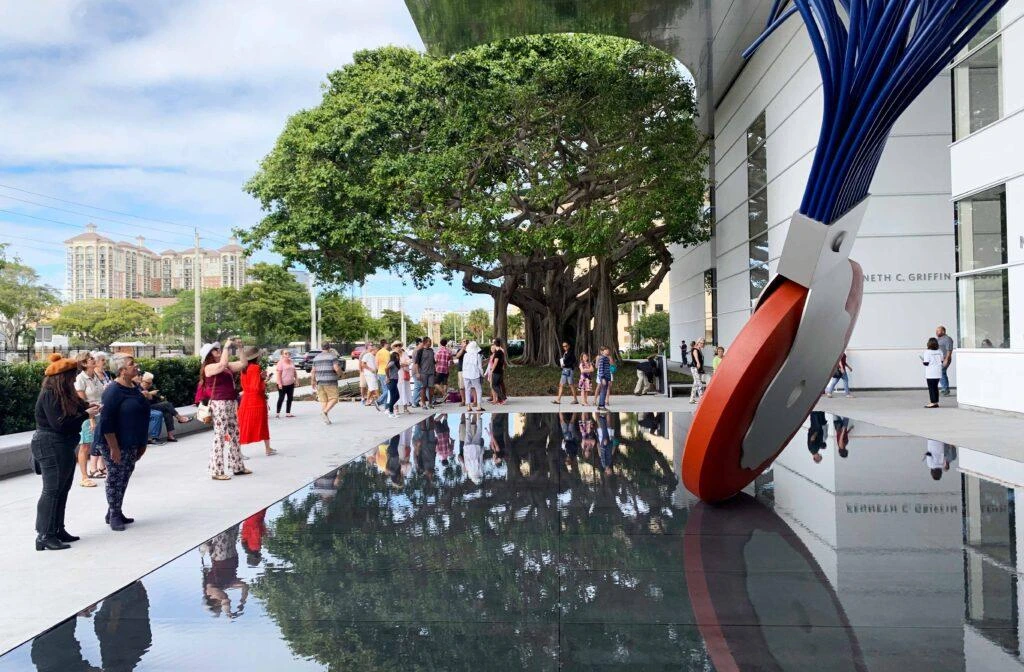
Monumental abstract works used as spatial anchors in city squares, public spaces and major entrances, where a strong silhouette and multi-directional viewing are important.
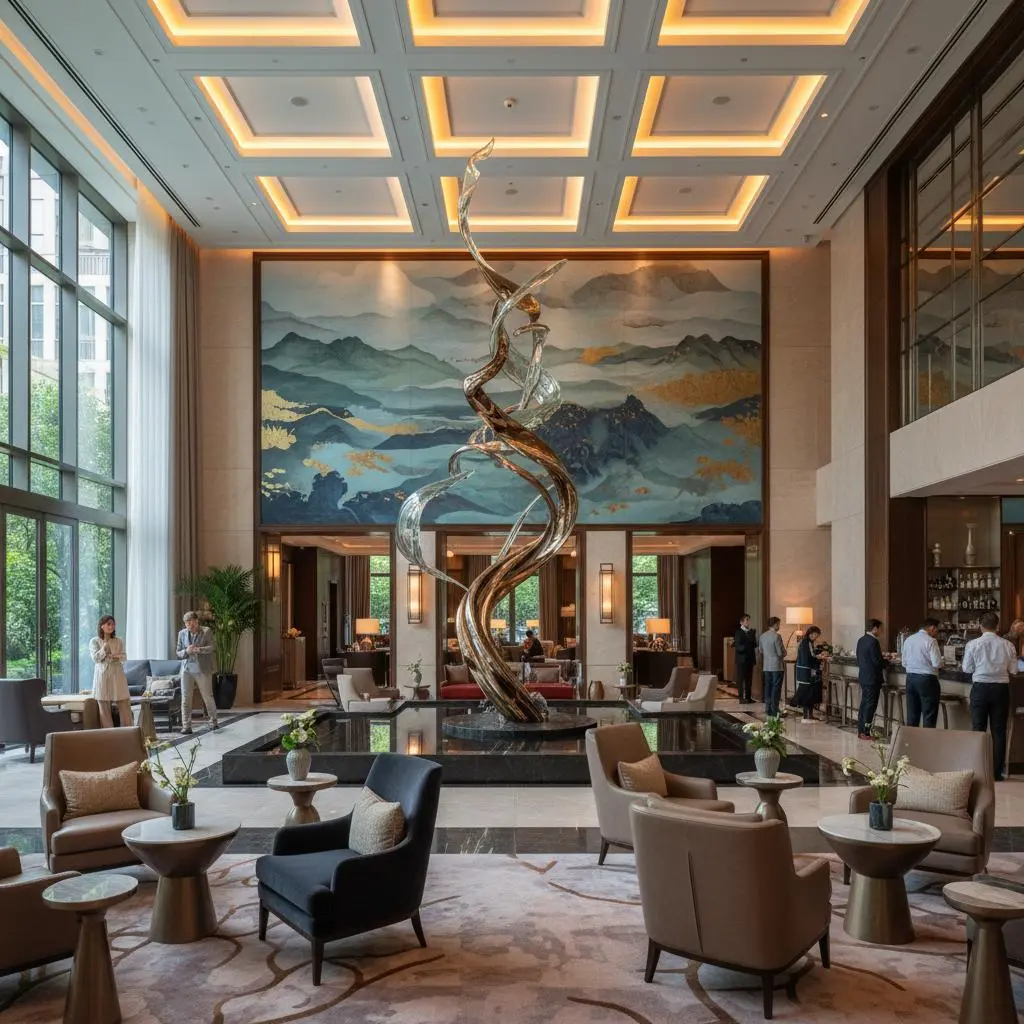
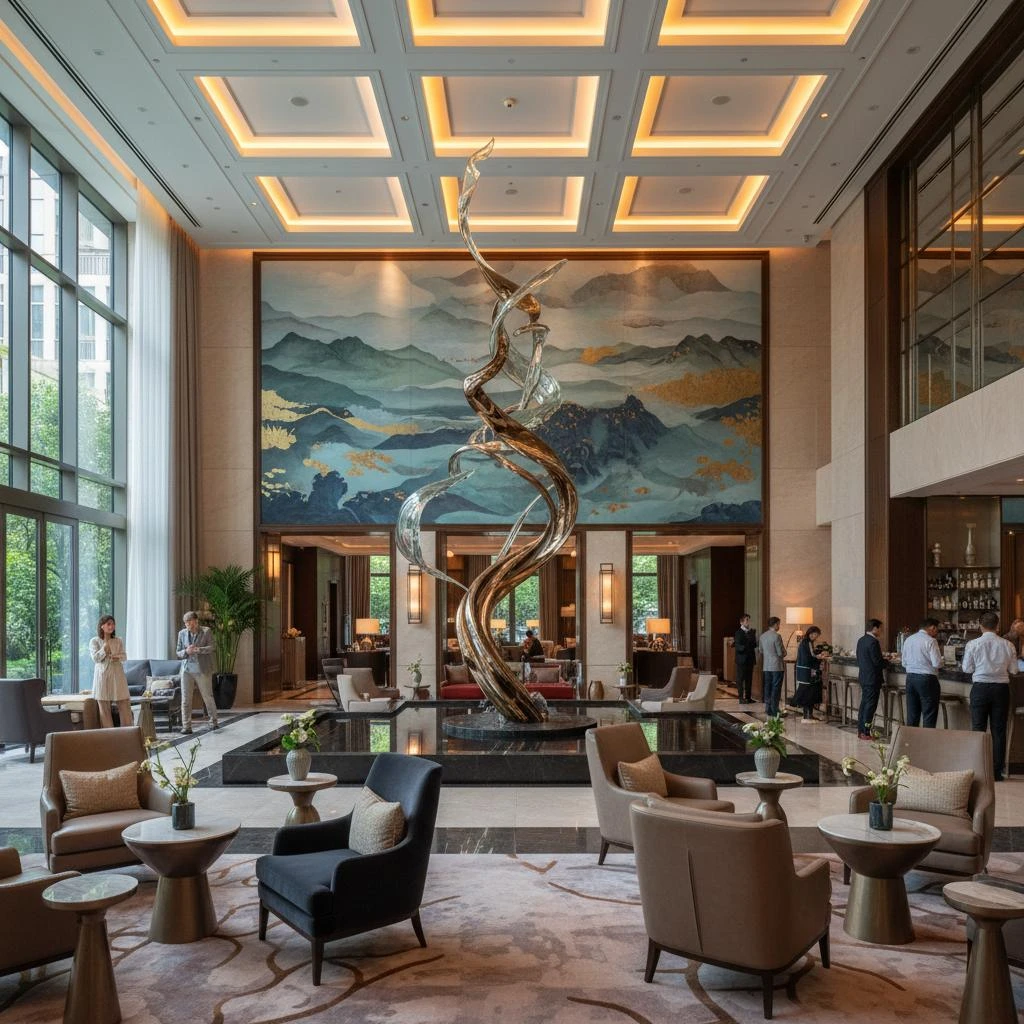
Hospitality & Commercial Architecture
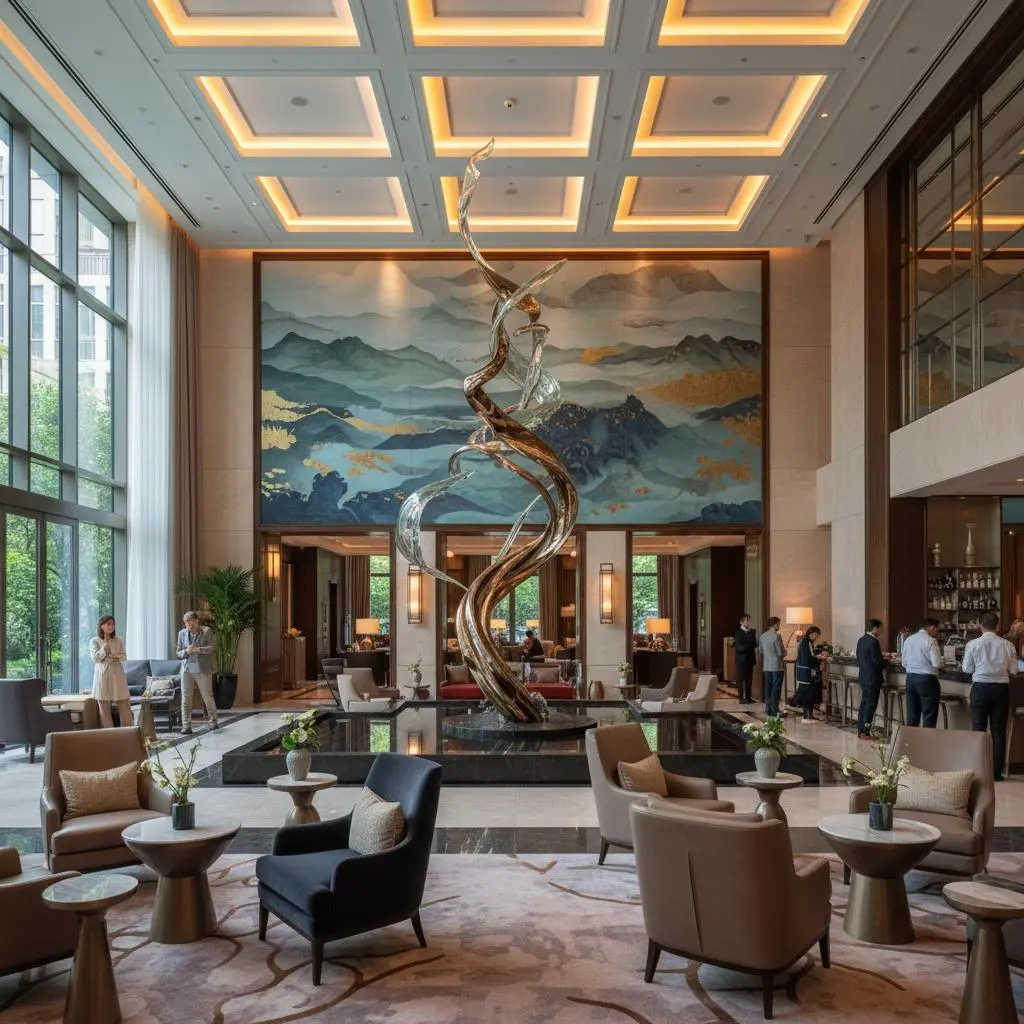
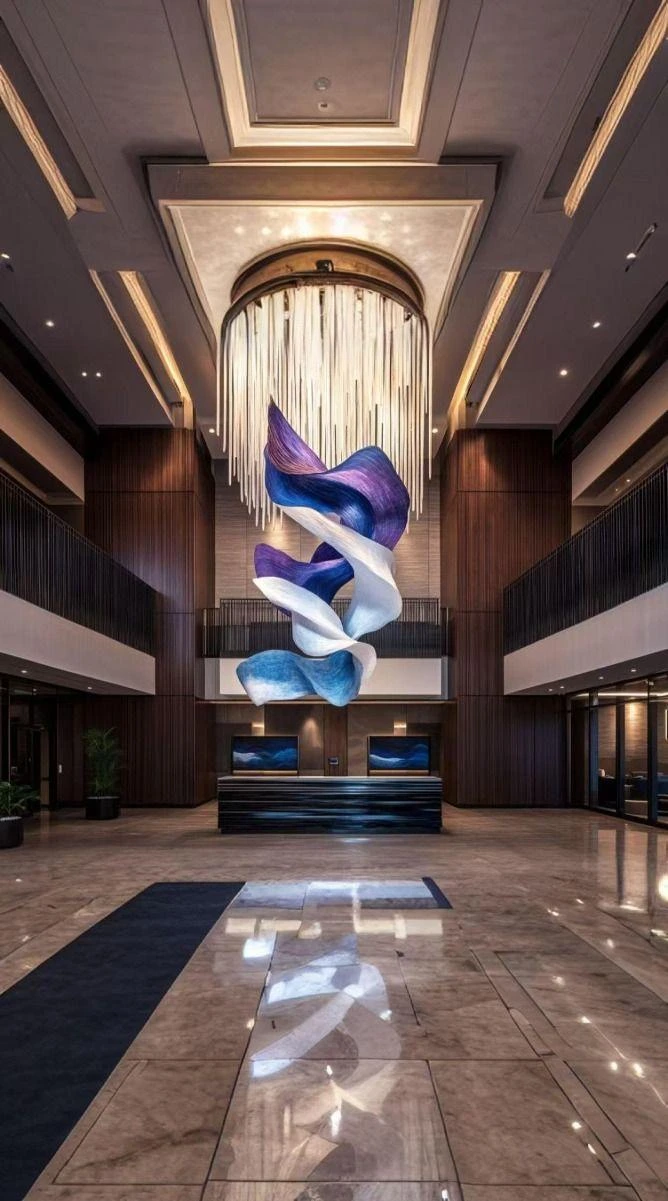
Statement sculptures for hotels, resorts, mixed-use developments and premium commercial environments, selected for how their form, reflection and scale interact with architecture.
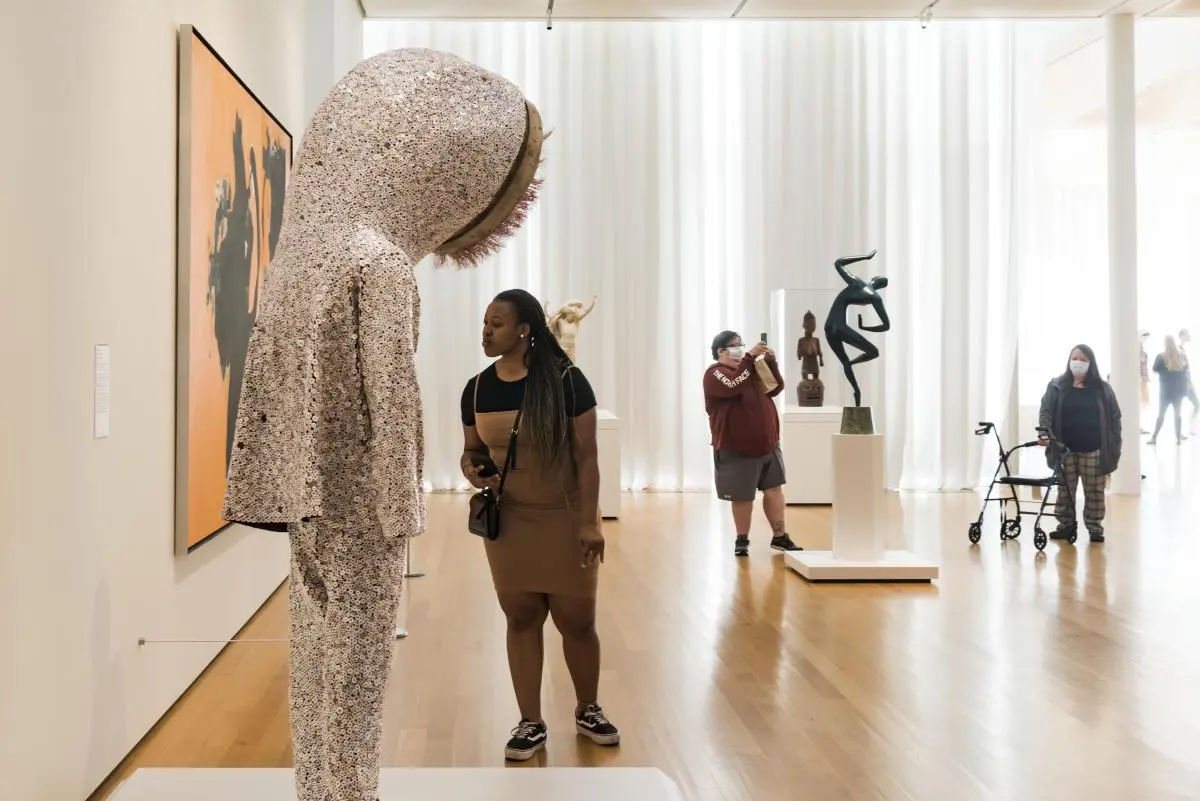
Corporate & Cultural Architecture
Contemporary abstract works for headquarters, campuses, museums, galleries and cultural buildings, where geometry and material expression become part of the architectural identity.
By Scale & Geometric Assembly
Interior / Feature Scale
Sculptures developed for atriums, lobbies, galleries and curated interior environments where controlled proportion and finish quality are central
Architectural Statement Scale
Large forms developed to maintain their intended proportion and negative-space relationships against façades, entrances, plazas and major interior volumes.
Monumental / Sectional Geometry
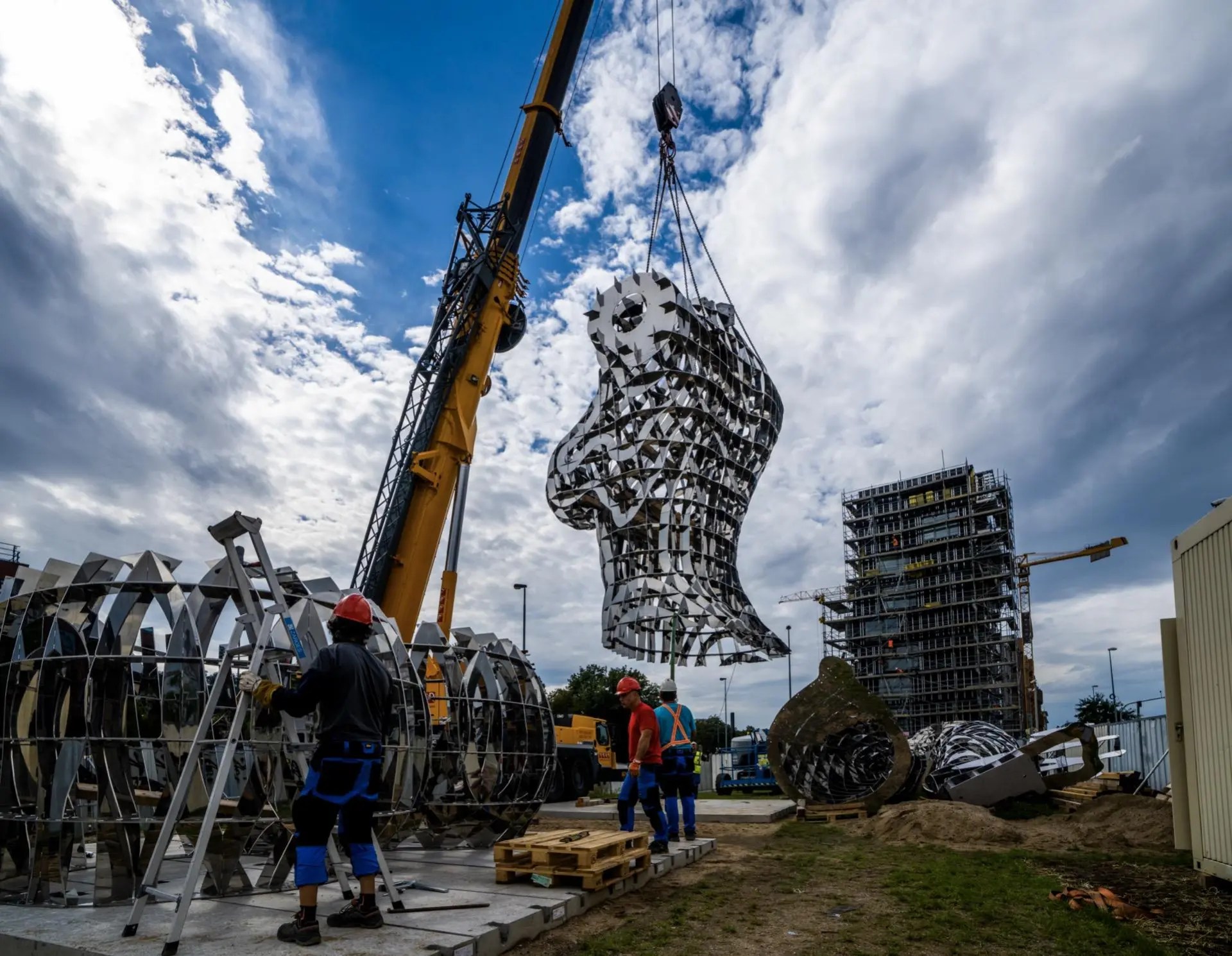
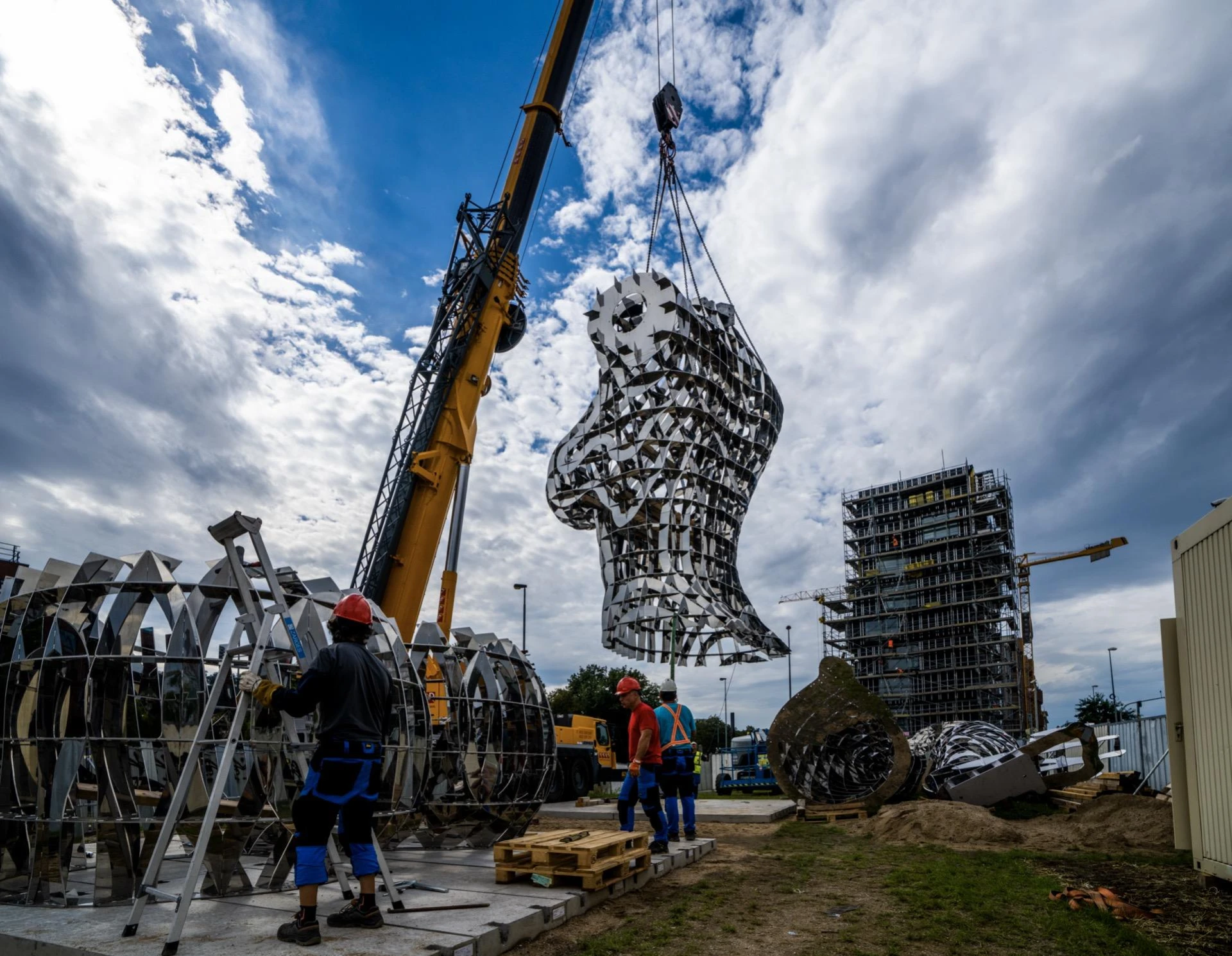
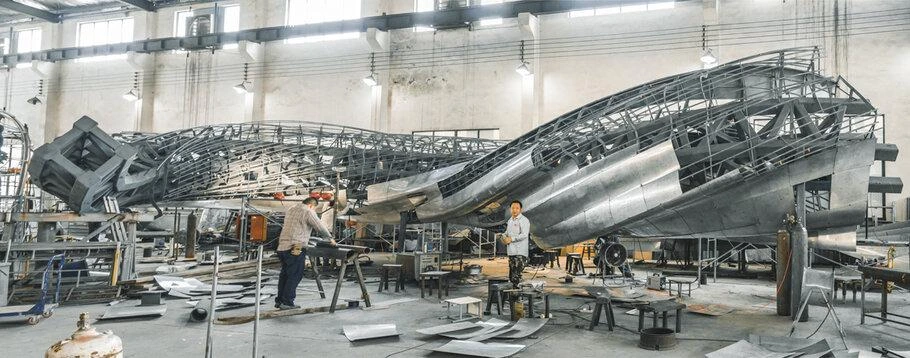
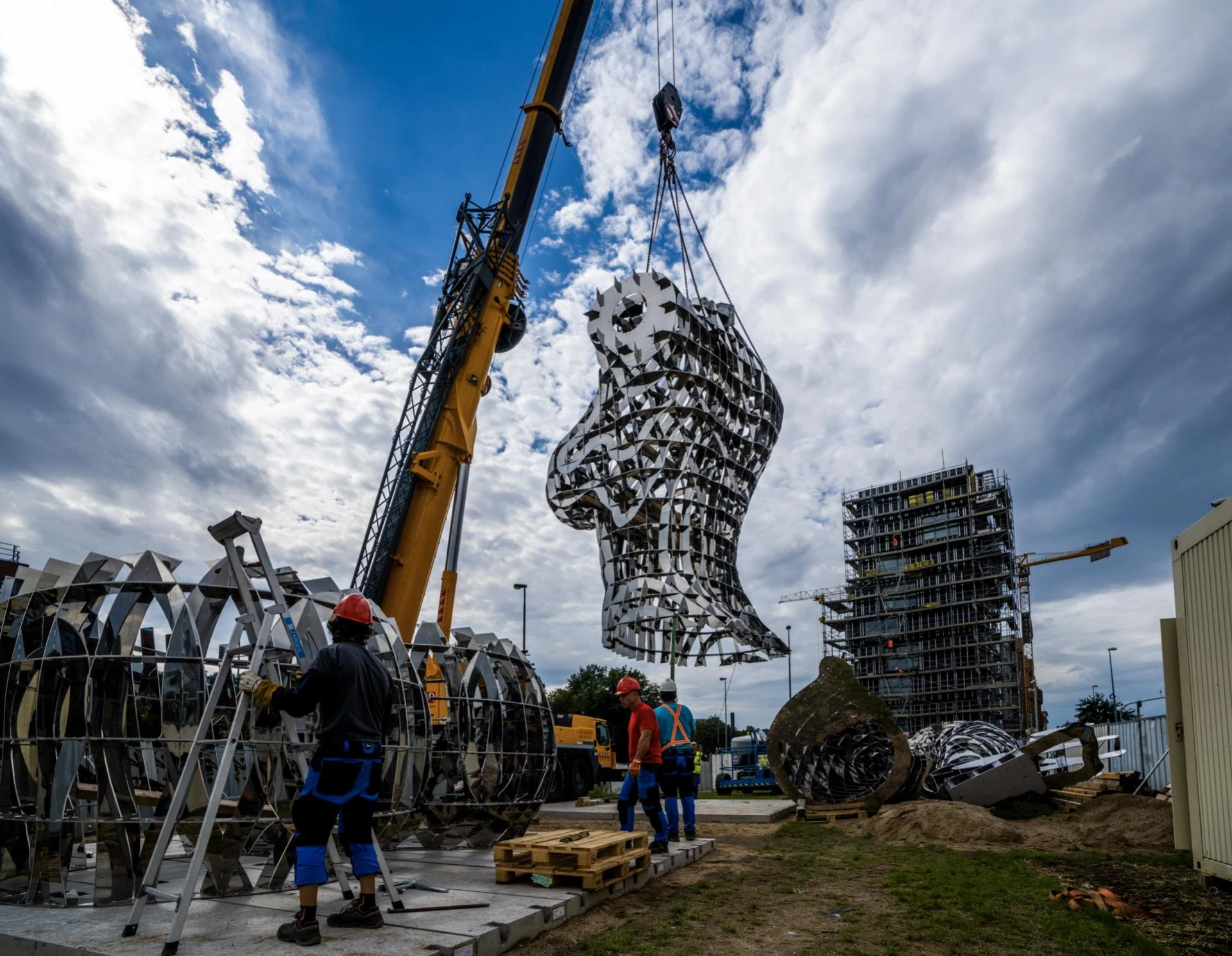
Oversized abstract works divided at engineered locations when freight, lifting or fabrication constraints require sectional production. Connection locations should preserve curve continuity, alignment and the intended surface read after assembly.
Materials as Part of Form, Reflection & Surface Continuity
Mirror-Polished Stainless Steel – Reflection & Distortion Control
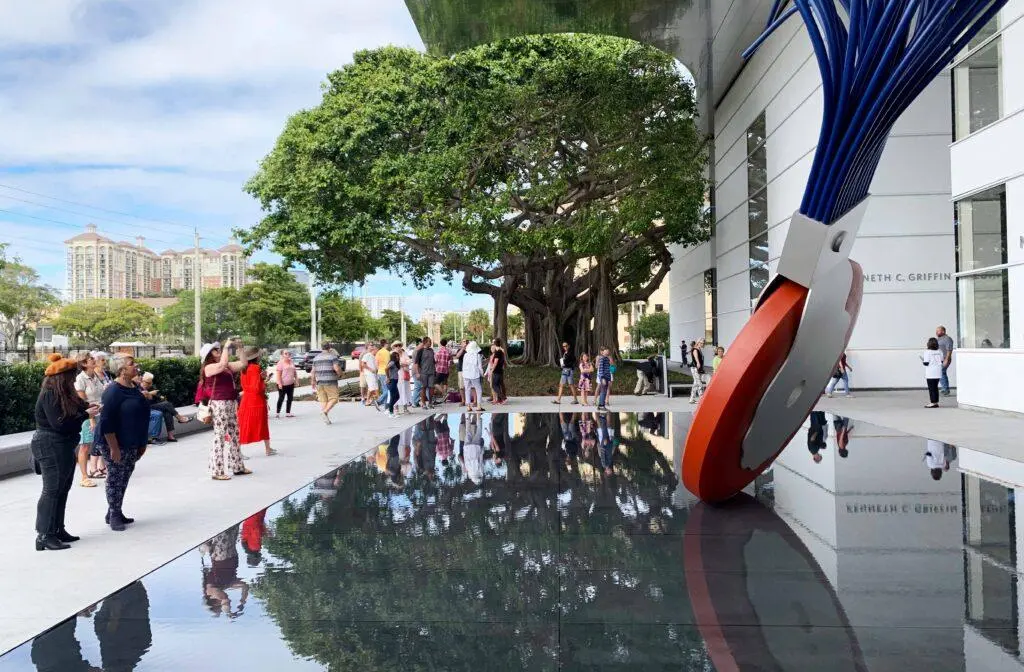
Mirror-polished stainless steel reflects sky, architecture and movement. Forming, welding, grinding and polishing help reduce visible distortion and seam read-through, with the final effect influenced by geometry, lighting and viewing angles.
Brushed and satin finishes reduce direct reflection while still revealing changes in geometry. Grain direction and surface treatment should remain visually consistent across panels, curves and welded transitions.
Bronze & Patinated Metal – Depth Across Complex Forms
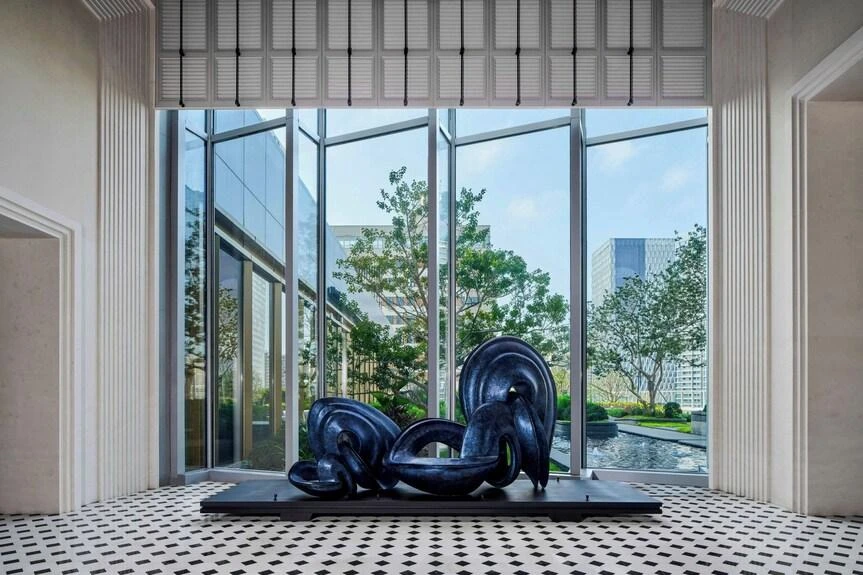
Bronze and patinated metals introduce tonal depth and tactile character to organic or geometric abstraction. Patina should reinforce the form and remain visually coherent across joined or cast sections.
Stone & Mixed Materials – Mass, Texture & Contrast
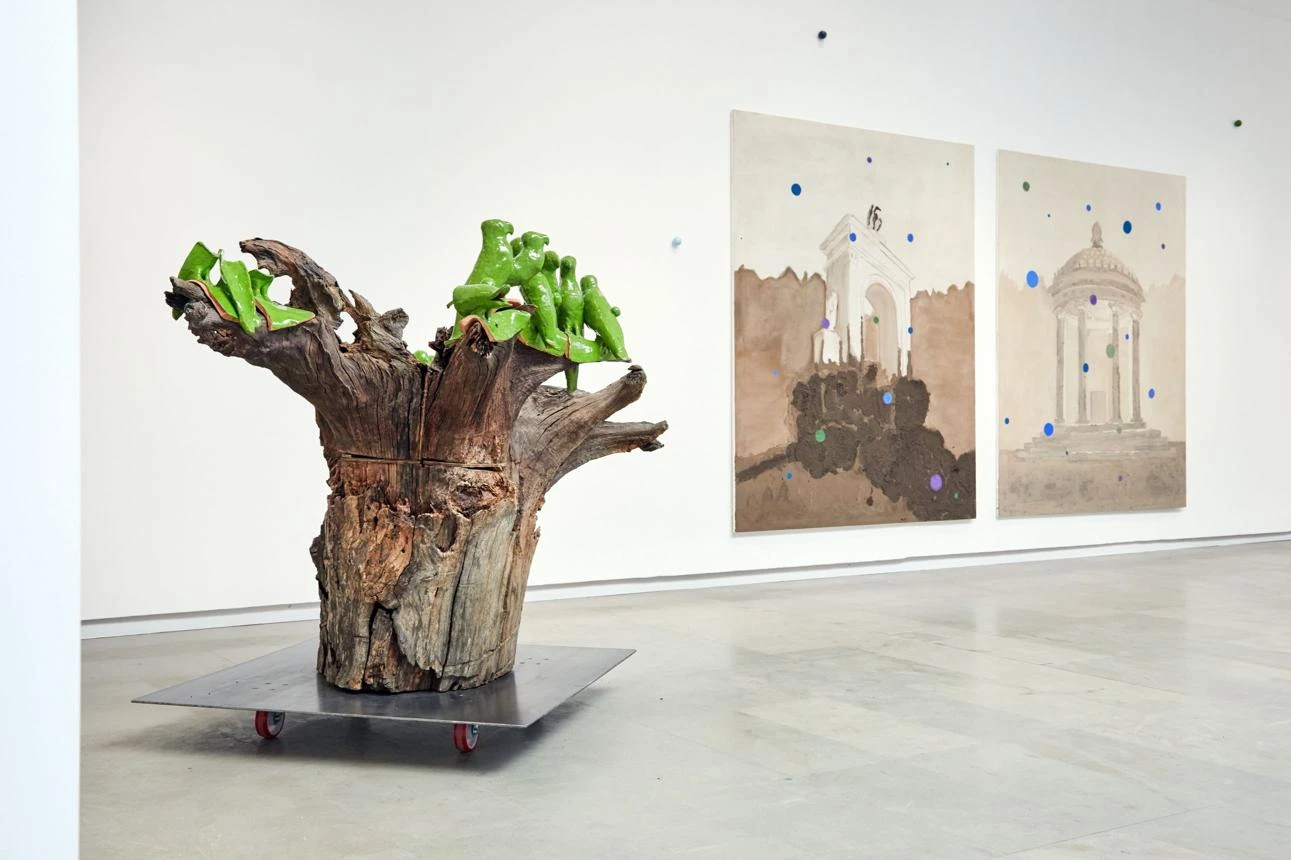
Stone and mixed-material compositions can use mass, texture, transparency or material contrast as part of the abstract language. Junctions between materials require careful detailing so the relationship appears intentional rather than mechanically assembled.
By Production Run
Bespoke One-Off Custom
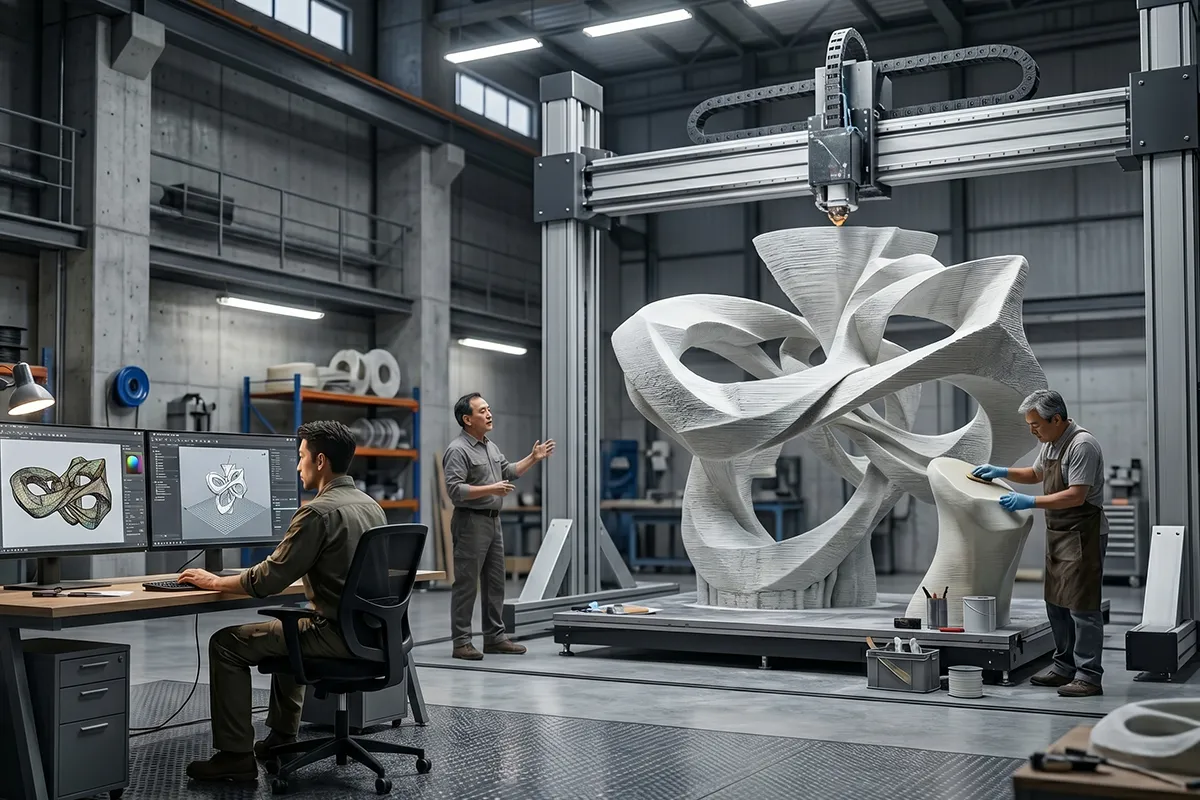
Exclusive 3D Modeling and One-Off Fabrication for Irreplicable Commercial Landmarks.
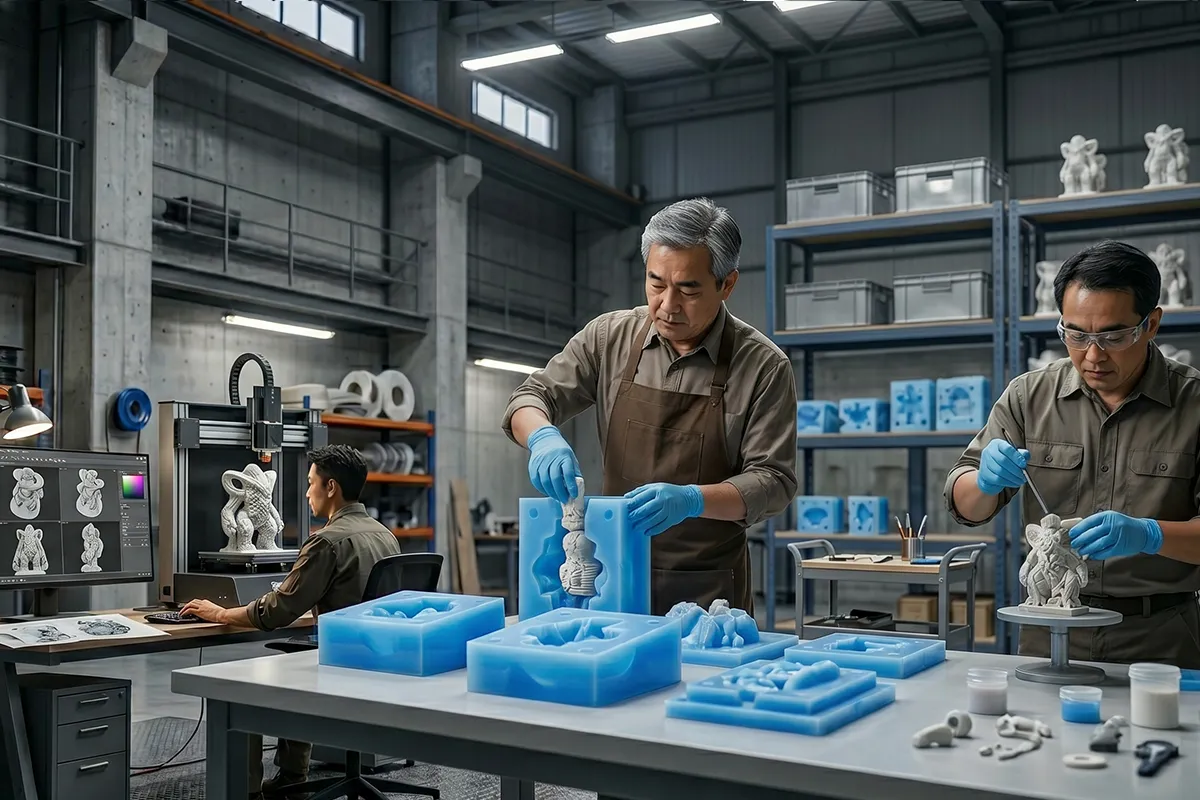
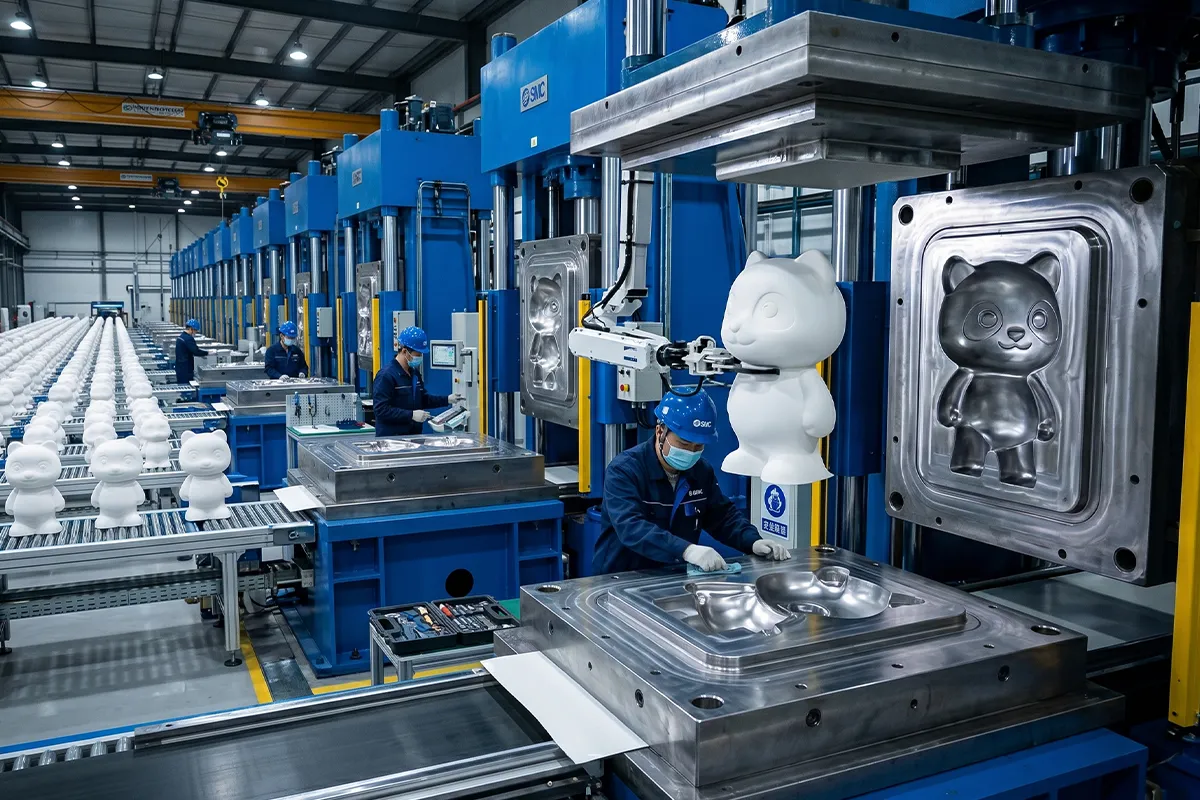
Low-Volume Precision Casting
Utilizing High-Durability Silicone Molds for Limited-Edition Art Toys and Premium Replica Runs Under 100 Units.
Industrial Mass Production
Steel or Reinforced FRP Master Molds Ensuring Extreme Consistency and Rapid Turnaround of Orders Exceeding 1,000 Units.
B2B Abstract Sculpture Advantages
Complex Geometry Translation
3D models, templates and dimensional checkpoints support fluid curves, openings, intersecting volumes and large-scale forms.
Negative-Space Control
Openings and voids are coordinated as primary design elements, not treated as leftover space between structural members.
Precision Metal Fabrication
Forming, rolling, welding, grinding and assembly are controlled around the approved geometry.
Surface & Reflection Control
Mirror, brushed, satin, patinated and textured finishes are developed around the intended visual effect and surface continuity.
Modular Accuracy & Global Delivery
Sectioning, trial assembly, connection alignment, packing and installation planning support large international projects.
End-to-End Abstract Sculpture Development & Manufacturing Process
Step 1: Concept Interpretation & Controlled 3D Geometry Develop the architect’s, artist’s or client’s sketch, maquette, reference or digital model into controlled geometry. Review silhouette, proportions, openings, curve flow and the key viewing angles before fabrication.
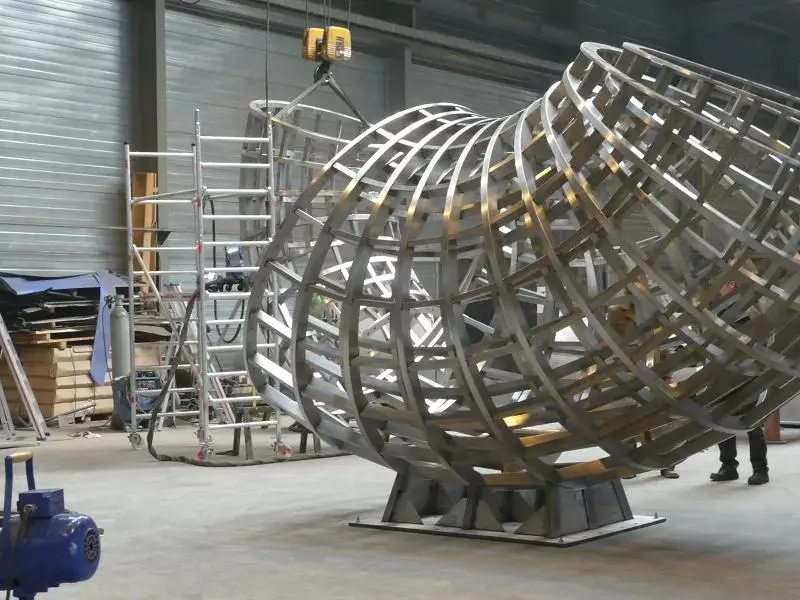
Step 2: Structural Logic Inside the Approved Form Coordinate centre of gravity, internal support, cantilevers, base connections and sectional breaks without allowing engineering requirements to unnecessarily alter the visible geometry.
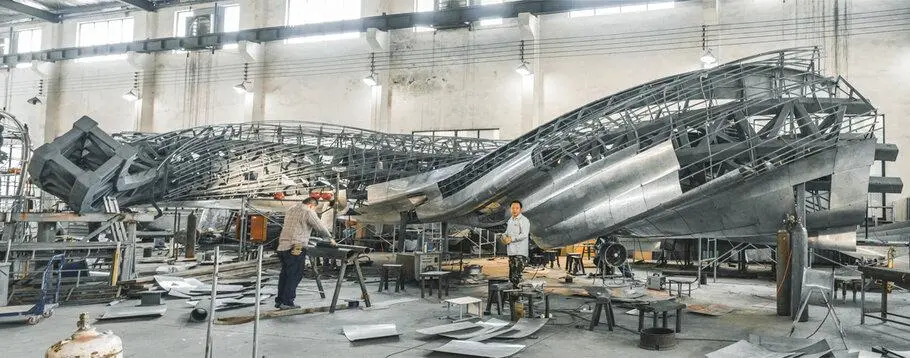
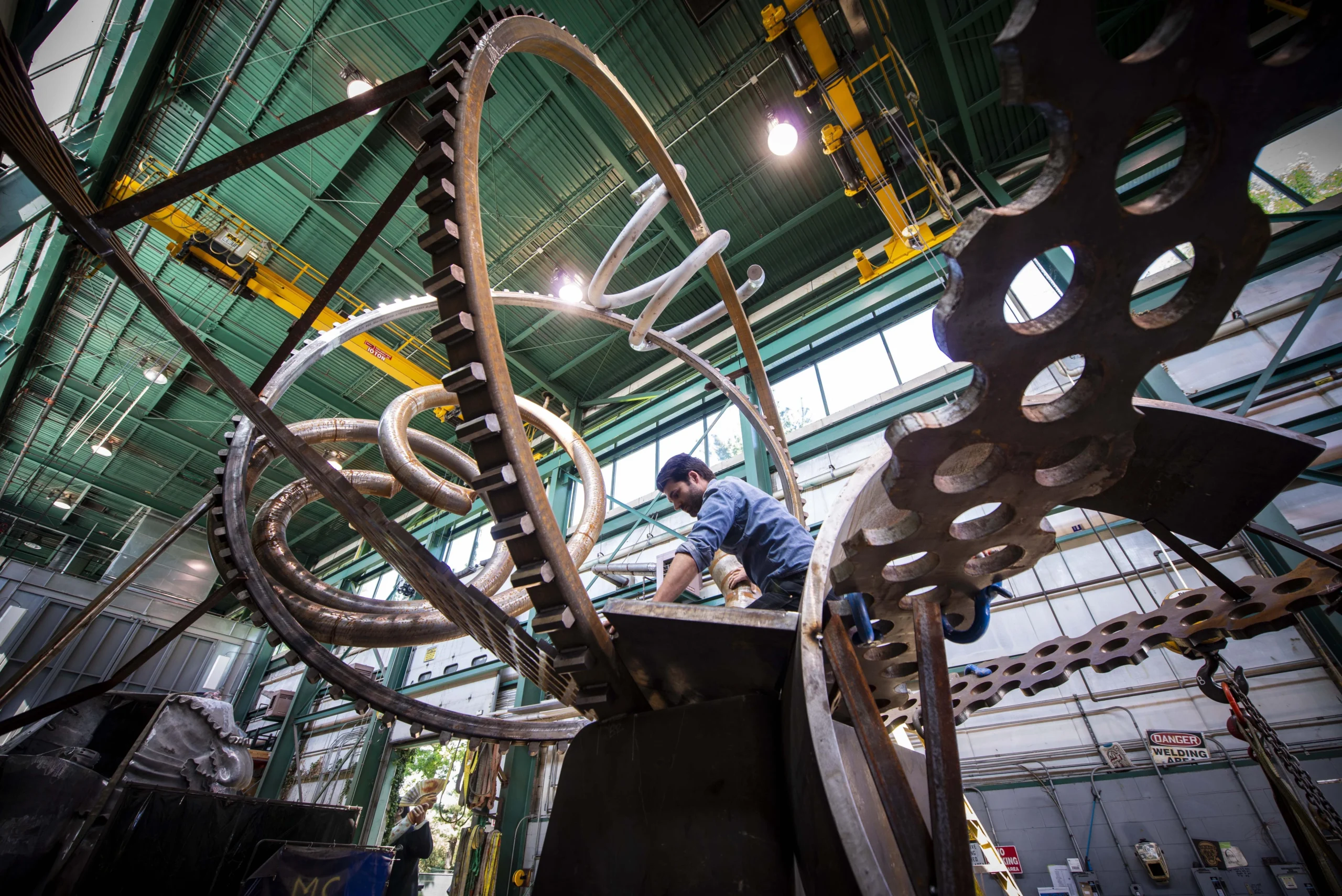
Step 3: Precision Forming, Sectioning & Welding Form, roll, cast, carve or assemble components using digital references and templates. For metal work, control panel shape and weld locations so the assembled geometry follows the approved model.
Step 4: Seam Integration & Surface Continuity Refine welds and panel transitions through controlled grinding, polishing, brushing, patination or texturing. Give particular attention to continuous curves and reflective surfaces where small inconsistencies become highly visible.
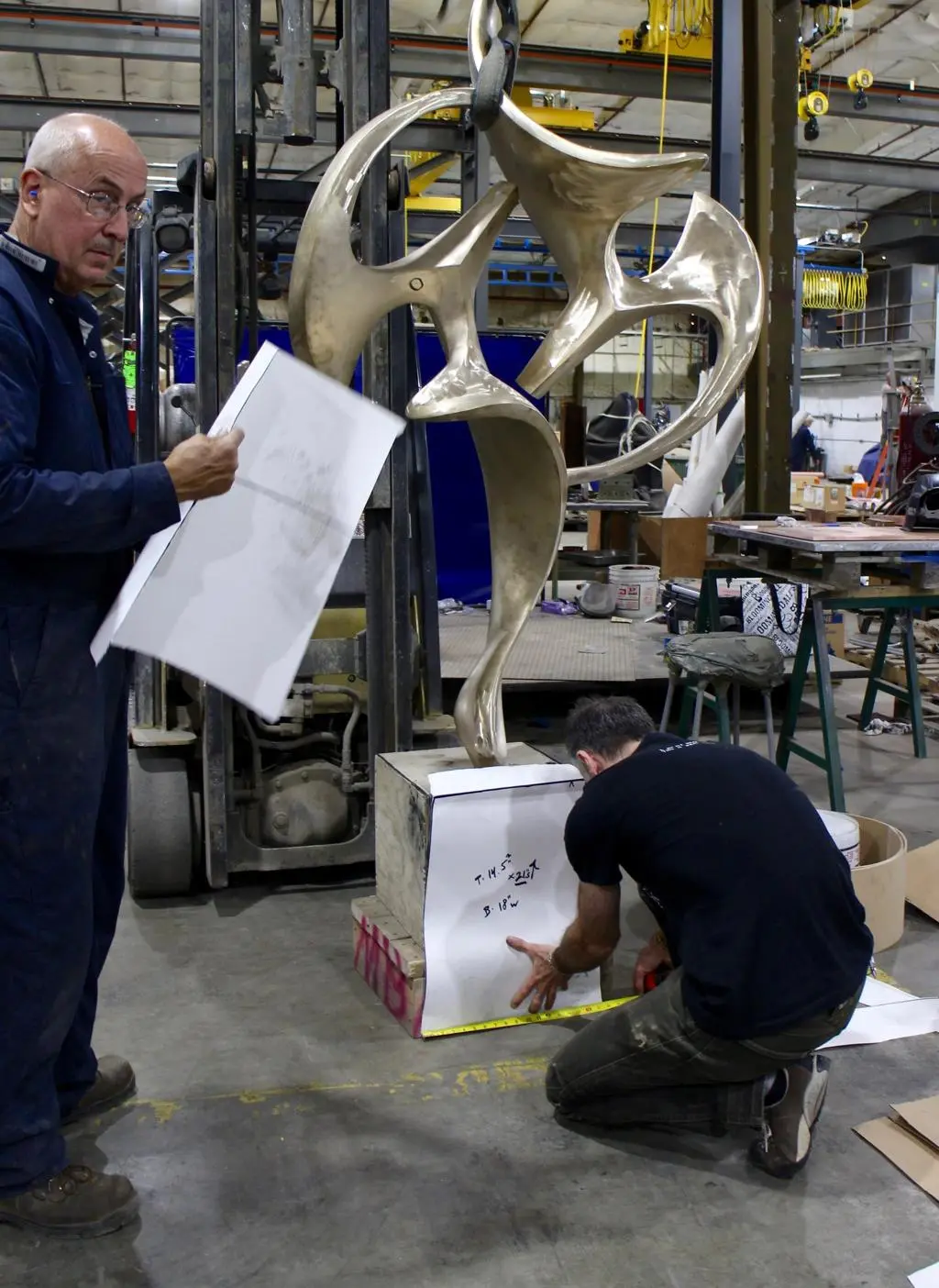
Step 5: Trial Assembly, Alignment & Final QC For sectional works, verify fit, opening geometry, connection accuracy, alignment and surface continuity before packing. Check the sculpture from relevant viewing angles rather than assessing isolated panels only.
Abstract Geometry & Fabrication Engineering System
1
Digital Geometry & Scale Control
3D models, templates, section profiles and dimensional checkpoints are used to translate complex curves, openings and proportions into full-scale fabrication while controlling deviation from the approved form.
Open forms, cantilevers and monumental geometries are reviewed for internal support, centre of gravity, base connections and installation forces while keeping the visible composition as clean as possible.
Weld locations, panel transitions, grinding and surface refinement are coordinated so separate fabricated sections read as one continuous sculptural form after finishing.
High-finish surfaces are checked for distortion, scratches, visible seams, inconsistent grain, waviness and alignment. QC should consider how light and reflections travel across the completed form.
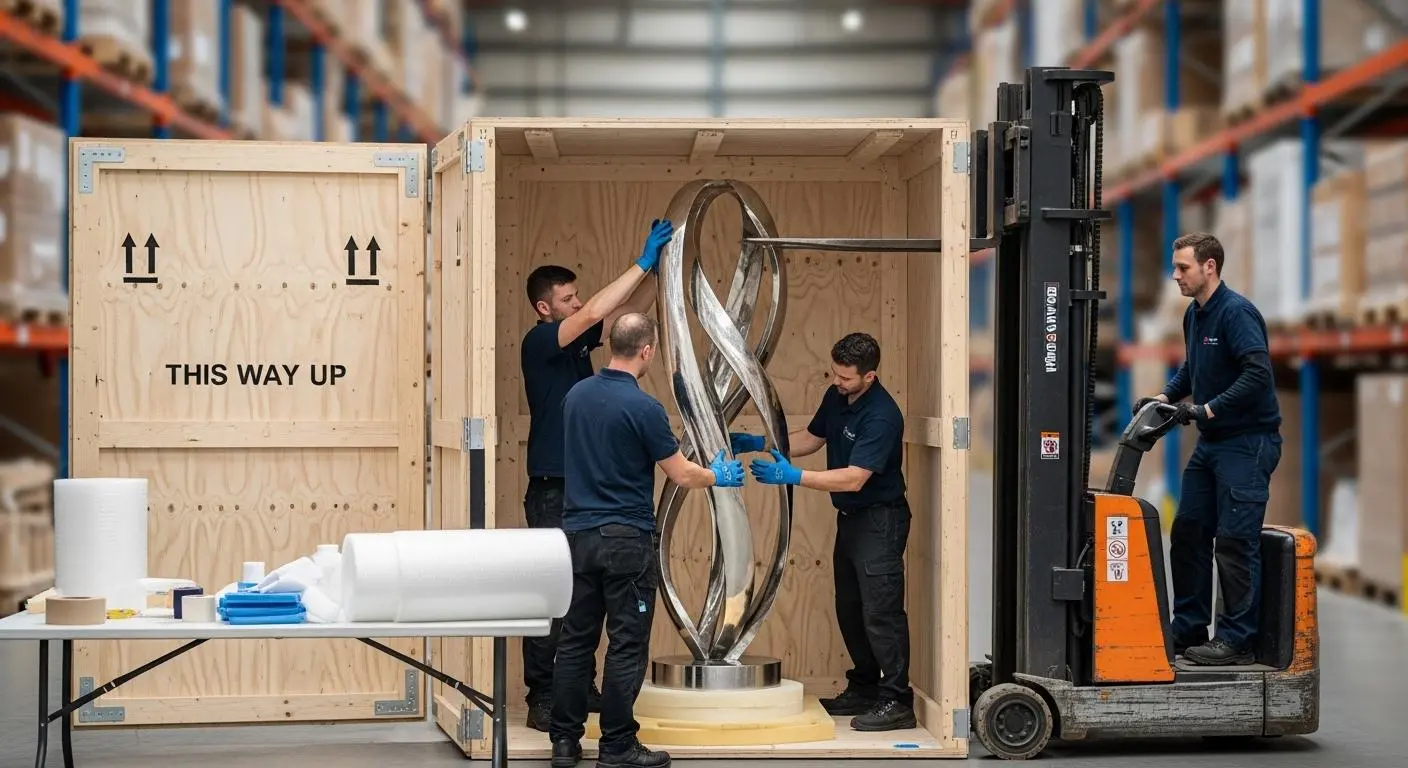
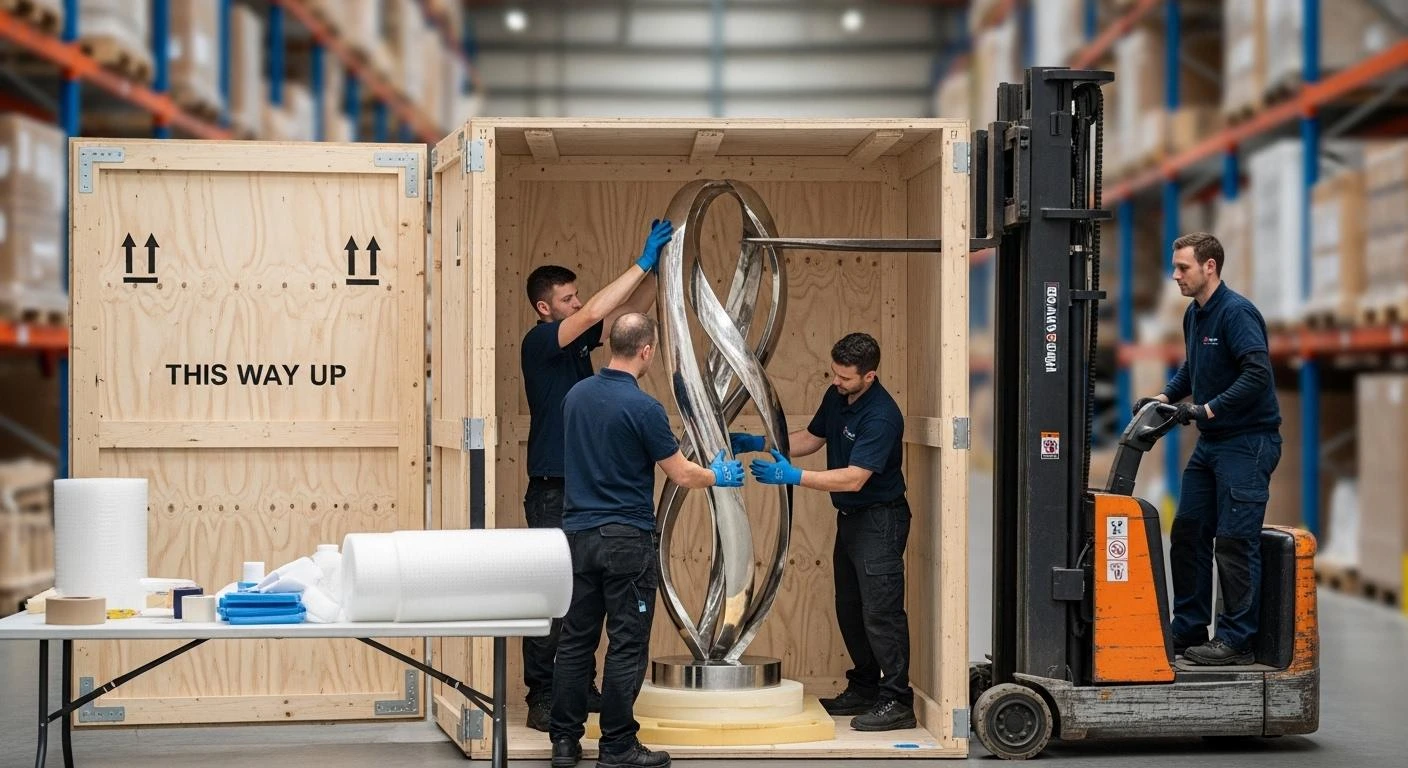
Abstract sculptures may contain polished surfaces, projecting edges, open geometries and sectional connections that are sensitive to handling and alignment. Packing and installation should protect both the finish and the geometry established during trial assembly.
Packaging
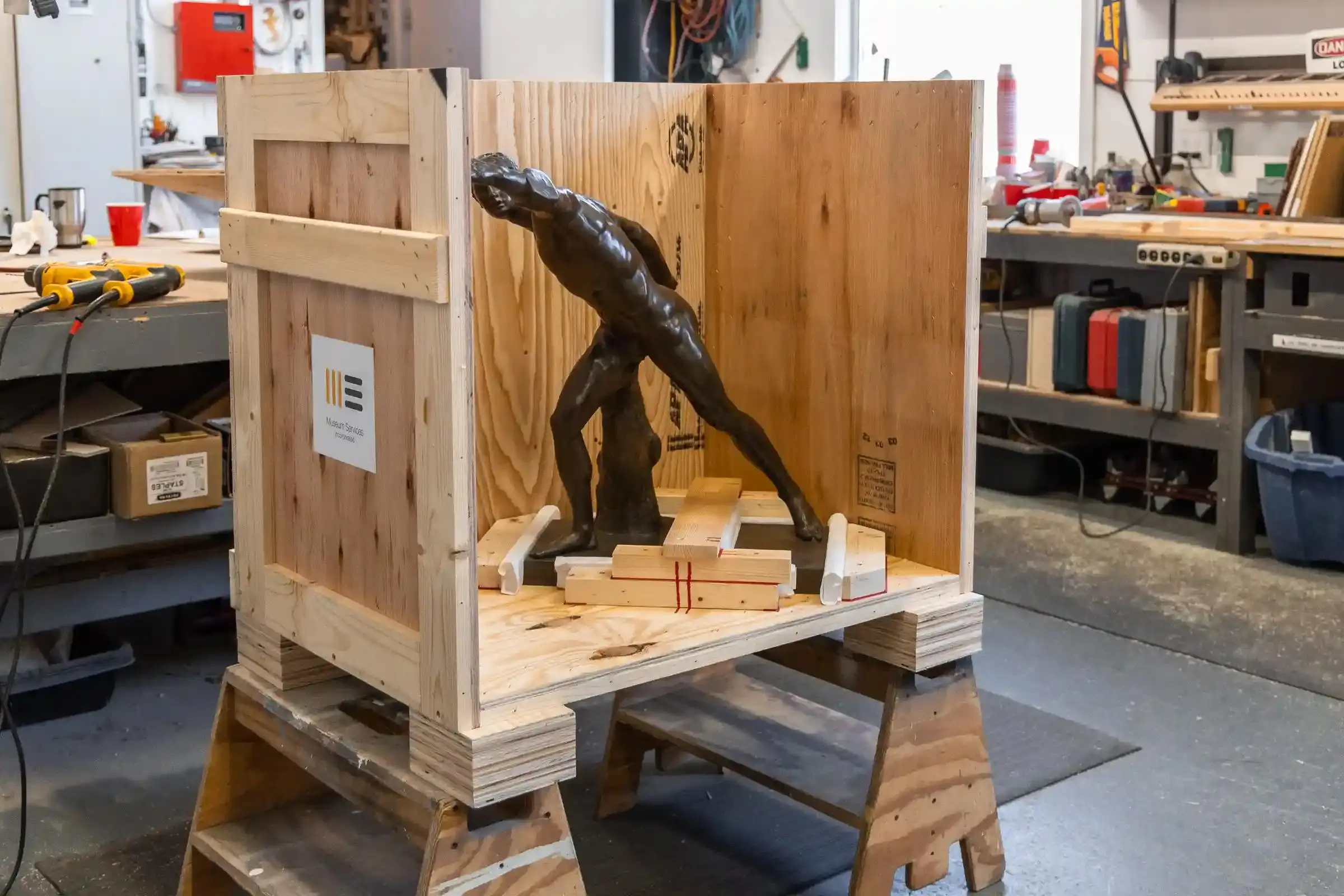
Museum-Grade Export Packaging
Installation
Precision Rigging & Architectural Placement
Finish & Edge Protection: Use non-abrasive wrapping, padded separation and supports that protect polished surfaces, sharp transitions and projecting elements.
Geometry-Specific Crating: Support the sculpture at appropriate structural locations without placing pressure on vulnerable curves, openings or finished edges.
Section & Connection Control: Clearly identify modular components, connection points and assembly sequence so the geometry established during trial assembly can be reproduced on site.
Alignment During Installation: Coordinate lifting points, base connection, orientation and final alignment so curves, openings and sectional transitions remain visually continuous after installation.
Q: Can Pegasus manufacture custom abstract sculptures from an architect's or artist's concept?
A: Yes. A project can begin from sketches, reference images, maquettes, CAD files or 3D models. The concept can then be developed into production-ready geometry while preserving the approved form, proportions and visual direction.
Q: How are complex curves and negative spaces controlled at full scale?
A: Digital geometry, section profiles, templates and dimensional checkpoints are used to control curves, openings and proportions during fabrication. Sectional works can also be trial-assembled to verify alignment before final finishing and packing.
Q: How are seams hidden on polished abstract metal sculptures?
A: Panel shape, weld placement, grinding and polishing are coordinated so transitions are progressively integrated into the surrounding surface. Reflective finishes require particularly careful surface control because distortion and seam read-through are more visible.
Q: What materials can be used for large abstract sculptures?
A: Material selection depends on geometry, scale, environment, finish, structural requirements and budget. Options can include stainless steel, bronze, stone and mixed-material systems according to the approved design.
Q: Can abstract sculptures be produced at monumental scale?
A: Yes. Large works can be engineered in transportable sections, with internal support, connection details, trial assembly, lifting and site installation considered before dispatch.
Q: Can mirror-polished stainless steel be used outdoors?
A: It can be considered for outdoor sculpture when the material specification, fabrication quality, surface treatment, site environment and maintenance requirements are appropriate to the project.
Q: How is surface quality checked before shipment?
A: Inspection can cover dimensional alignment, visible seams, weld refinement, scratches, finish consistency, reflective distortion, connection fit and the overall continuity of the completed form.
Q: Does Pegasus support international delivery and installation planning?
A: Yes. Project support can include export packing, modular transport planning and relevant lifting, assembly, base-connection, alignment and positioning information according to the project scope.
Common Questions
Most Popular Questions.
We have listed some questions you may ask. If you have more inquiries about our products, you can send an inquiry to contact us.